

Clear the Air: How to Make Up and Smile Together in Korean
Phase 1: Empathy (Story-Driven Opening)
안녕하세요! 매일한글 에디터입니다. (Hello! This is your Daily Hangul editor.)
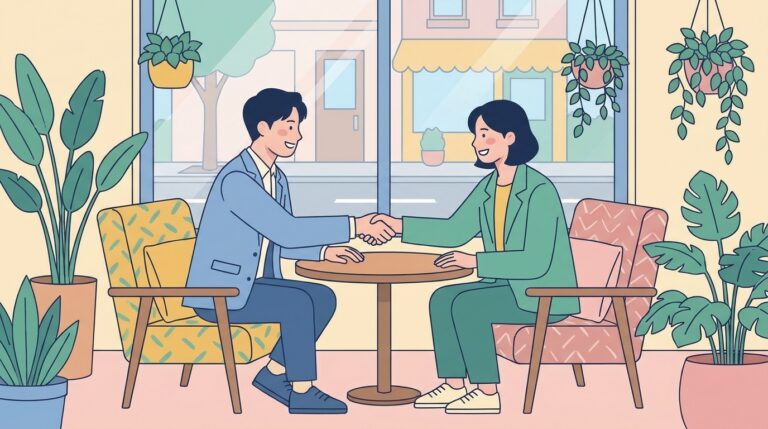
Have you ever experienced that excruciating, ice-cold silence with a Korean friend after a minor disagreement? Maybe you misread a message on KakaoTalk, or you accidentally used informal speech (banmal) when you should have been polite. Your chest feels tight, your palms sweat, and all you want to do is melt the frost, hold out your hand, and say, “Hey, we’re totally cool now, right?”
In Korean dramas, you’ve probably seen characters go from yelling in a street stall (pojangmacha) to clinking soju glasses and giggling together five minutes later. But in real life, bridging that gap feels terrifying when you don’t know the right words. Saying a textbook phrase like “I forgive you” (Dangsin-eul yongseohamnida) can sound overly dramatic—like you’re a judge handing down a verdict!
Don’t worry! This guide is crafted directly from real classroom experiences and feedback from learners just like you. By mastering natural ways to clear the air, you will not only repair misunderstandings effortlessly, but you’ll also build deeper, more authentic friendships with Koreans. Let’s learn how to shake hands, smile brightly, and leave any lingering awkwardness behind.
Phase 2: Top 3 Core Expressions Breakdown
1. 우리 이제 화해하자! (Uri ije hwahaehaja!)
- Pronunciation: Oo-ree ee-jeh hwa-hae-ha-ja! (Sounds like “wee” + “now” + “hwa-hae” with an energetic snap)
- Meaning: Literal: “Let’s reconcile now!” | Actual Nuance: “Let’s make up already and be buddies again!”
- K-Culture Moment: Think of high school K-Dramas where two besties poke each other’s cheeks, lock pinky fingers, and say this to break the sullen silence.
- Editor’s Insight: The noun 화해 (hwahae) means peaceful reconciliation. Adding -자 (-ja) makes it a warm, casual suggestion among friends. It cuts straight through stubborn pride.
- Situation Spectrum: Casual ✅ | Semi-formal ⚠️ (Use 우리 이제 화해해요 [Uri ije hwahaehaeyo]) | Formal 🚫
- 🤔 Think About It: In English, we often say “I’m sorry” to make up, but Korean frequently uses an active invitation to reconnect (화해하자). Why do you think Korean emphasizes moving forward together as a team rather than focusing solely on who was at fault?
2. 훌훌 털어버리자! (Hulhul teoreobeorija!)
- Pronunciation: Hool-hool tuh-ruh-buh-ri-ja! (Imagine shaking dust off your jacket with a rhythmic “whoosh-whoosh”)
- Meaning: Literal: “Let’s shake it off completely!” | Actual Nuance: “Let’s dust off the bad vibes and start fresh!”
- K-Culture Moment: An older mentor buying street food for a rookie colleague after a stressful workday, patting their back, and saying this with a hearty laugh.
- Editor’s Insight: 훌훌 (hulhul) is a delightful onomatopoeic word imitating the motion of shaking dust or wings free into the air. It brings a visual lightness that instantly relieves tension.
- Situation Spectrum: Casual ✅ | Semi-formal ✅ (Use 훌훌 털어버려요 [Hulhul teoreobeoryeoyo]) | Formal ⚠️
- 🤔 Think About It: Notice how physical metaphors in Korean help release emotional burdens. Does your native language compare negative emotions to dust or dirt?
3. 악수하고 웃자! (Aksuhago utja!)
- Pronunciation: Ahk-soo-ha-go oot-ja! (Sharp “ahk” like “lock”, smooth “soo”, followed by a smiling “oot”)
- Meaning: Literal: “Let’s shake hands and laugh/smile!” | Actual Nuance: “Let’s seal the deal with a handshake and smile it off!”
- K-Culture Moment: Two teammates who argued during dance practice finally clasp hands, burst into smiles, and hit the practice room again.
- Editor’s Insight: While handshakes in Western contexts can sometimes feel formal or corporate, pairing 악수 (handshake) with 웃자 (let’s smile) creates a playful, affectionate gesture of mutual respect.
- Situation Spectrum: Casual ✅ | Semi-formal ✅ (Use 악수하고 웃어요 [Aksuhago useoyo]) | Formal ⚠️
- 🤔 Think About It: A handshake combined with a smile seals friendship in Korea. How does physical touch vary across cultures when resolving a conflict?
Phase 3: Textbook Korean vs. Real Korean
Situation 1: Letting someone know you hold no hard feelings
- 📖 Textbook Korean: 당신의 실수를 용서합니다. (Dangsin-ui silsu-reul yongseohamnida. – “I forgive your mistake.”)
- 🗣️ Real Korean: 마음 다 풀렸어, 괜찮아! (Maeum da pullyeosseo, gwaenchana! – “My bad feelings are all melted away, no worries at all!”)
- 💡 Why the difference? Directly telling someone “I forgive you” sounds condescending in daily Korean conversation, as if placing yourself on a moral pedestal. Stating that your heart is untangled (마음이 풀리다) shows humility and empathy.
Situation 2: Suggesting to leave the argument in the past
- 📖 Textbook Korean: 과거의 오해를 잊읍시다. (Gwagweo-ui ohaereul ijeupsida. – “Let us forget past misunderstandings.”)
- 🗣️ Real Korean: 지난 일은 잊고 맛있는 거 먹으러 가자! (Jinan ireun itgo masinneun geo meogeureo gaja! – “Let’s forget what’s past and go grab some delicious food!”)
- 💡 Why the difference? Koreans love restoring harmony through food. Shifting focus immediately from past friction to sharing a meal is the quintessential cultural way to restore Jeong (affectionate bonding).
Phase 4: K-Culture Deep Dive & Non-Verbal Manners
4-1. Nunchi & Physical Etiquette: The Two-Handed Reconciliation Clasp
When you offer a handshake to make up in Korea, your non-verbal cues carry 80% of the message.
* The Two-Handed Clasp: If you are speaking with someone slightly older or a colleague, place your left hand gently under your right forearm or lightly cup their hand with both of yours. This signals deep sincerity and lack of ego.
* The Soft Smile & Eye Contact: Avoid staring intensely into their eyes right after a fight. Instead, maintain gentle eye contact, drop your shoulders, and let out a warm, audible exhale of relief accompanied by a shy smile. This subtle body language tells the other person: “The danger has passed; you are safe with me.”
4-2. The Healing Power of Food & Banchan
In Korean culture, negative emotions like grudge or resentment are often described as 뒤끝 (dwikkeut – lingering bad taste/aftermath). To dissolve this, Koreans rarely end a makeup session with just words. They go eat! Sharing hot stew (jjigae), grilling pork belly (samgyeopsal), or sharing a spicy bowl of tteokbokki physically synchronizes your actions and re-establishes solidarity. Dipping into the same shared pot signifies: “We are one team again.”
Phase 5: Real-World Roleplay Scenario
Setting: A quiet cafe in Hongdae. You and your Korean project partner, Min-jun, just finished a tense 30-minute talk clearing up a miscommunication over task deadlines.
- Min-jun: 아까 내가 목소리 높여서 미안해. 오해가 있었네. (Akka naega moksori nopyeoseo mianhae. Ohaega isseonne. – “I’m sorry for raising my voice earlier. There was a misunderstanding.”)
🎭 Looking down at his coffee cup with an apologetic expression. - You: 아니야, 나도 내 생각을 미리 설명 못 해서 미안했어. (Aniya, nado nae saenggageul miri seolmyeong mot haeseo mianhaesseo. – “No, I was also sorry that I didn’t explain my thoughts beforehand.”)
🎭 Leaning forward with open palms to reassure him. - Min-jun: 그래도 다 얘기하니까 마음이 훨씬 편하다. (Geuraedo da yaegihanikka maeumi hwolssin pyeonhada. – “Still, now that we’ve talked it all out, my mind feels so much lighter.”)
🎭 Sighing in relief and smiling softly. - You: 응! 서로 마음 다 풀렸으니까 이제 괜찮아. (Eung! Seoro maeum da pullyeosseumnikka ije gwaenchana. – “Yeah! Since both our hearts are clear now, it’s totally okay.”)
🎭 Nodding encouragingly. - Min-jun: 그럼 우리 다음 주 발표 준비 잘해볼까? (Geureom uri daeum ju balpyo junbi jalhaebolkka? – “Then shall we prepare well for next week’s presentation?”)
🎭 Tapping the laptop lightly with renewed energy. - You: 좋아! 악수하고 시원하게 웃자! (Joha! Aksuhago siwonhage utja! – “Sounds great! Let’s shake hands and have a good laugh!”)
🎭 Stretching your hand out across the table with a bright grin. - Min-jun: 하하, 좋아! 훌훌 털어버리자! (Haha, joha! Hulhul teoreobeorija! – “Haha, awesome! Let’s shake it clean off!”)
🎭 Firmly taking your hand with both of his, shaking it warmly. - You: 우리 화해 기념으로 떡볶이 먹으러 갈래? (Uri hwahae ginyeomeuro tteokbokki meogeureo gallae? – “Shall we go eat tteokbokki to celebrate making up?”)
🎭 Grabbing your jacket with enthusiasm.
🔀 Interactive Decision Point
How would you conclude this interaction if Min-jun still looked slightly hesitant?
- Option A: “누가 잘못했는지 확실히 메모해 두자.” (Nuga jalmothaenneunji hwaksilhi memohae duja. – “Let’s make sure to note down who was at fault.”)
Feedback: Bad. 🚫 This re-ignites blame and ruins the peaceful atmosphere instantly! - Option B: “지난 일은 훌훌 털고, 내가 맛있는 커피 살게!” (Jinan ireun hulhul teolgo, naega masinneun keopi salge! – “Let’s shake off what happened, and I’ll buy delicious coffee!”)
Feedback: Best! ✅ Perfect blend of emotional release and hospitality to break the remaining ice. - Option C: “앞으로 실수하지 마세요.” (Apeuro silsuhaji maseyo. – “Do not make mistakes in the future.”)
Feedback: High Risk. ⚠️ Grammatically correct, but extremely cold and patronizing between peers.
Phase 6: 10-Second Emotion Shadowing Drill
Practice matching the rhythm and emotional cues using the pauses (/):
[🤝 Sincere and calming]
서로 오해 풀었으니까 / 이제 괜찮아.
(Seoro ohae pureosseumnikka / ije gwaenchana.)
“Since we cleared the misunderstanding / it’s all fine now.”-
[😊 Bright and enthusiastic]
우리 악수하고 / 시원하게 웃자!
(Uri aksuhago / siwonhage utja!)
“Let’s shake hands / and smile big!” -
[🎉 Playful and relieving]
훌훌 털어버리고 / 맛있는 거 먹으러 가자!
(Hulhul teoreobeorigo / masinneun geo meogeureo gaja!)
“Let’s shake it clean off / and go grab something tasty!”
Phase 7: K-Culture Mini Dictionary
- 화해 (Hwahae) | Reconciliation / Making up
The formal and everyday concept of resolving conflict harmoniously so both parties can move forward without grudges. - 뒤끝 (Dwikkeut) | Lingering grudge / Bad aftertaste
A crucial social concept. Someone with 뒤끝 없다 (dwikkeut eopda) lets conflicts go instantly once addressed, which is considered an admirable personality trait. - 마음이 풀리다 (Maeumi pulrida) | Heart untangling / Anger dissolving
Literally “one’s heart is untangled.” Captures the sensation of heavy, knot-like anger softening into relief. - 속상하다 (Soksanghada) | To feel upset / distressed inside
Used when you aren’t necessarily angry at someone, but your feelings were hurt by a misunderstanding.
Phase 8: Traveler’s Survival Kit
Top 3 Survival Phrases for Navigating Misunderstandings
- 제가 오해했어요, 죄송해요! (Jega ohaehaesseoyo, joesonghaeyo!)
Meaning: “I misunderstood, I am sorry!”
Pro Tip: Perfect when you miscalculated a subway fare or mistook a shop queue. - 이제 다 풀렸어요! (Ije da pullyeosseoyo!)
Meaning: “Everything is cleared up now!”
Pro Tip: Use this accompanied by a warm smile when an awkward interaction with a host or barista is settled. - 기분 좋게 화해해요! (Gibun joke hwahaehaeyo!)
Meaning: “Let’s make up on a happy note!”
Pro Tip: Great for slightly tense bargaining situations or friendly disagreements during travel.
Editor’s Travel Note
When navigating busy streets or settling travel squabbles, having fast navigation avoids stress. Be sure to download Naver Map app for smooth navigation to prevent getting lost together in the first place—hunger and getting lost are the top causes of travel arguments! Remember, in Korean customer service, apologizing first with a humble bow instantly melts tension.
Phase 9: “One Step Deeper” (Reflective Essay)
In Korean culture, interpersonal relationships are defined by 우리 (Uri – “We”). Unlike highly individualistic societies where conflicts are treated as legalistic clashes between Person A and Person B, Korean disputes are viewed as knots in a shared emotional fabric. When Koreans make up, the goal is not to declare a winner and a loser, but to restore the flow of Jeong (warm communal affection). That’s why eating together, shaking hands, and declaring that “feelings are untangled” (마음이 풀렸다) matters far more than obsessing over who started it.
💬 Your Turn: Have you ever experienced an awkward misunderstanding with a Korean speaker or while traveling in Korea? How did you resolve it? Share your story in the comments below!
Phase 10: FAQ & Avoiding Misunderstandings
Q: Can I hug my Korean friend instead of shaking hands when we make up?
A: If you are close same-sex friends or romantic partners, a hug is sweet and welcome! However, among casual acquaintances, colleagues, or opposite-sex friends, an unexpected hug might cause fresh awkwardness. A two-handed handshake (악수) or a playful high-five accompanied by “화해하자!” is universally safe and warmly received.
Q: Is saying “미안해” (Mianhae) enough to clear the air?
A: 미안해 is a great first step, but by itself, it can sometimes sound like you just want to end the conversation quickly. Following it up with an active resolution like “마음 다 풀었지? 악수하자!” (Your feelings are all cleared, right? Let’s shake hands!) ensures both of you leave on positive terms.
Q: Can I use “화해하자” with my boss or professor?
A: No! -자 is an informal suggestion ending meant only for peers or younger people. With superiors, you should politely say: “오해를 풀어주셔서 정말 감사드립니다” (Thank you very much for helping clear up the misunderstanding).
🚨 Common Mistakes Warning Board
- Mistake 1: Saying “당신을 용서해요” (I forgive you).
Correct Action: Say “오해 풀려서 다행이에요” (I’m so glad we cleared up the misunderstanding). - Mistake 2: Crossing arms while listening to the apology.
Correct Action: Keep hands clasped in front or relaxed at your sides to show receptivity. - Mistake 3: Bringing up the issue again the next day.
Correct Action: Once you say “훌훌 털어버리자”, show zero 뒤끝 (lingering grudges) and treat your friend normally.
Phase 11: Action Mission & Engagement
- 🥉 Bronze Mission (Solo): Look into the mirror, practice your biggest friendly smile, extend your right hand, and say aloud three times: “악수하고 웃자!”
- 🥈 Silver Mission (Community): Leave a comment below translating your favorite way to resolve an argument from your native language into Korean!
- 🥇 Gold Mission (Real World): The next time you have a minor clash or miscommunication with a language exchange partner or friend, text them: “우리 맛있는 거 먹고 훌훌 털어버리자!”
🎮 K-Culture Mission: In the next episode of a K-Drama or variety show (like Running Man) you watch, listen for the moment cast members argue and make up. Spot whether someone says “화해해” or offers a pinky promise!
Phase 12: Interactive Quiz Challenge
Test your understanding before heading out into the real world!
- Situational Choice: You and your Korean classmate had a minor disagreement over a team project. You both talked it through. What is the most natural, friendly phrase to seal the peace?
- A) 당신의 죄를 용서합니다.
- B) 우리 악수하고 기분 좋게 웃자!
- C) 다음부터 절대 그러지 마세요.
- Fill in the Blank: Complete the onomatopoeia for dusting off bad feelings:
- “지난 일은 ______ 털어버리자!”
- True or False: Telling a Korean friend “당신을 용서합니다” is the warmest and most natural way to apologize in casual Korean.
Click to view answers and explanations!
-
Answer: B (우리 악수하고 기분 좋게 웃자!)
Explanation: Option A is too biblical/dramatic (“I forgive your sin”), and Option C is cold and scolding. Option B is warm, encouraging, and natural for A2 learners! -
Answer: 훌훌 (hulhul)
Explanation: 훌훌 털어버리다 paints the vivid picture of shaking off dust and negativity effortlessly. -
Answer: False
Explanation: Using 당신 (dangsin) and 용서합니다 sounds patronizing and overly formal. Stating that feelings are cleared (마음 다 풀렸어) is far more natural.







