

Korean Bank Counter Guide: How to Enter Your Account PIN Without Panic
Phase 1: 공감 (Story Immersion Opening)
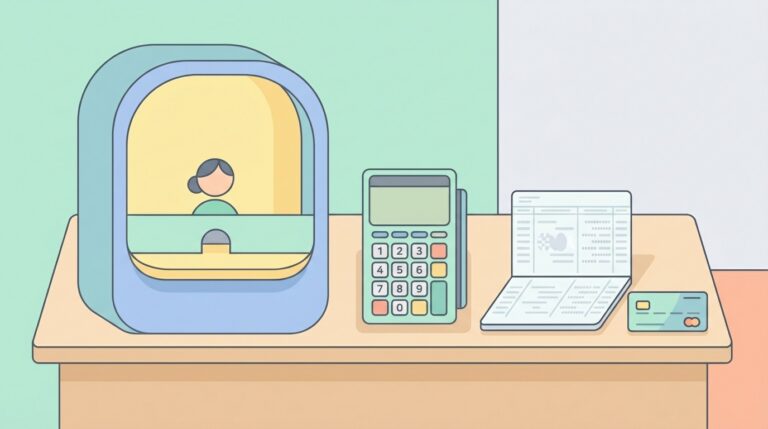
안녕하세요! 매일한글 에디터입니다. Picture this: you are finally standing inside a gleaming bank branch in Seoul, holding your passport and Alien Registration Card, determined to set up your everyday life in Korea. You pressed the queue machine, waited for your chime, and sat down before a friendly teller. Your heart rate settles—until the clerk slides a small black device toward you and says: “계좌 비밀번호 네 자리를 앞쪽 키패드에 입력해 주세요 (Gyejwa bimilbeonho ne jarireul apjjok kipaedeue ipryeokhae juseyo).” Suddenly, your mind freezes. Did they ask for a phone number? Your birthday? A resident code? Don’t worry! This is the most routine moment in Korean banking. Mastering this single interaction will turn your banking anxiety into effortless confidence.
Phase 2: 핵심 표현 3선 심층 분석 (Top 3 Core Expressions)
1. 계좌 비밀번호 네 자리를 입력해 주세요 (Gyejwa bimilbeonho ne jarireul ipryeokhae juseyo)
- Pronunciation: Gye-jwa bi-mil-beon-ho ne ja-ri-reul ip-ryeok-hae ju-se-yo (Sounds like: “Gyeh-jwa bee-meel bun-ho neh jah-ree-reul eep-ryuk-heh joo-seh-yo”)
- Meaning: Literal: “Please input the account secret number four digits.” / Nuance: “Please enter your 4-digit bank account PIN on the machine.”
- K-Culture Moment: Seen frequently in slice-of-life K-dramas like Misaeng or Start-Up whenever young workers open their first salary accounts at corporate counters.
- Editor’s Insight: Notice the ending
-해 주세요 (-hae juseyo). It is the gold standard of polite requests in Korean customer service. Whenever you hear this, the teller is asking you to take action. - Situation Spectrum: Casual 🚫 | Semi-formal ⚠️ | Formal ✅
- 🤔 Think About It: In many Western countries, PINs are mailed or generated on an app later. In Korea, you choose and punch in your PIN right at the counter for instant card issuance. How does this reflect Korea’s emphasis on speed and immediate service?
2. 앞쪽 키패드 (Apjjok kipaedeu)
- Pronunciation: Ap-jjok ki-pae-deu (Sounds like: “Ahp-johk kee-peh-dew”)
- Meaning: Literal: “Front direction keypad.” / Nuance: “The numeric keypad right in front of you.”
- K-Culture Moment: The small device mounted near your counter desk, usually fitted with rubber privacy shields.
- Editor’s Insight: The directional suffix
-쪽 (-jjok)means “side” or “direction.” You will hear it everywhere in Korea: 이쪽 (ijjok – this way), 오른쪽 (oreunjjok – right side), and 앞쪽 (apjjok – front side). - Situation Spectrum: Casual ✅ | Semi-formal ✅ | Formal ✅
- 🤔 Think About It: Korean service staff frequently specify spatial locations relative to you rather than themselves to prevent any confusion.
3. 한 번 더 입력해 주세요 (Han beon deo ipryeokhae juseyo)
- Pronunciation: Han beon deo ip-ryeok-hae ju-se-yo (Sounds like: “Hahn bun duh eep-ryuk-heh joo-seh-yo”)
- Meaning: Literal: “Please enter one more time.” / Nuance: “Please enter your PIN once again to confirm it.”
- K-Culture Moment: Just like confirming a password online, bank keypads beep and prompt a second confirmation entry.
- Editor’s Insight: “한 번 더 (Han beon deo – one more time)” is an essential survival phrase. You can also use it at karaoke for an extra song, or at a casual diner to ask for another serving!
- Situation Spectrum: Casual ✅ | Semi-formal ✅ | Formal ✅
- 🤔 Think About It: Why does the teller look down or turn their head while you type? It is deep-rooted Korean privacy manners in action.
Phase 3: 교과서 한국어 vs 진짜 한국어 (Textbook vs Real Korean)
Situation 1: Telling you to enter your PIN
- 📖 교과서 한국어: 귀하의 비밀번호 네 자리를 입력하여 주십시오. (Gwihaui bimilbeonho ne jarireul ipryeokhayeo jusipsio. – Please enter your four-digit password.)
- 🗣️ 진짜 한국어: 앞쪽에 비번 네 자리 눌러 주세요. (Apjjoge bibeon ne jari nulleo juseyo. – Please press your 4-digit PIN in front.)
- 💡 왜 다를까? In actual spoken Korean, 비밀번호 (bimilbeonho) is almost always shortened to 비번 (bibeon), and 입력하다 (ipryeokhada – to input) is naturally replaced by 누르다 (nureuda – to press).
Situation 2: Waiting for the card to be minted
- 📖 교과서 한국어: 잠시만 대기하여 주시기 바랍니다. (Jamsiman daegihayeo jusigi baramnida. – Please wait for a moment.)
- 🗣️ 진짜 한국어: 잠시만 기다려 주세요, 카드 바로 나와요. (Jamsiman gidaryeo juseyo, kadeu baro nawayo. – Just a moment please, your card is coming right out.)
- 💡 왜 다를까? Counter staff prefer friendly, active verbal markers with
-아요/어요over stiff, broadcast-style written announcements.
Phase 4: K-Culture 딥다이브 & 비언어적 매너 (Culture & Body Language)
4-1. 눈치 (Nunchi) & Gestures
- The Shielding Hand: Even though Korean counter keypads have silicone wings, Koreans always shield the keys with their non-dominant hand while typing with the index finger. It shows modesty, caution, and respect for security.
- Telling Eye-Contact: While you are typing, the teller will intentionally avoid looking at your hands, often staring at their monitor or bowing their head slightly. Don’t feel ignored—this is considerate Korean privacy manners (배려, baeryeo).
- Two-Hand Rule (두 손): Always receive and hand over your ID, payment card, and forms using both hands or with your right hand supported at the elbow by your left hand.
4-2. Cultural Code Analysis: The “Palli-Palli” Bank Miracle
In many countries, after applying for a debit card at a bank, you must wait up to two weeks for it to arrive by mail. In Korea, the Palli-Palli (빨리빨리 – hurry, hurry) philosophy combined with cutting-edge tech means your personalized debit card is physically printed, encoded, and handed to you in less than 15 minutes right at the counter desk!
Phase 5: 실전 롤플레이 시나리오 (Real-World Roleplay Scenario)
- Location: A clean Hana Bank branch near Hongik University Station.
- Characters: Min-ji (민지 – Bank Teller, warm and prompt) & Alex (알렉스 – International Student).
- Min-ji: 통장 개설 도와드릴게요. 신분증 먼저 보여주시겠어요? (Tongjang gaeseol dowadeurilgeyo. Sinbunjeung meonjeo boyeojusigesseoyo? – I will help you open an account. Could you show me your ID first?)
🎭 [Extends the document tray forward with both hands] - Alex: 네, 여기 외국인등록증 있어요. (Ne, yeogi oeguk-indeungrokjeung isseoyo. – Yes, here is my Alien Registration Card.)
🎭 [Passes the card using both hands politely] - Min-ji: 서류 확인되셨고요, 계좌 비밀번호 네 자리를 앞쪽 키패드에 입력해 주세요. (Seoryu hwagindoesyeotgoyo, gyejwa bimilbeonho ne jarireul apjjok kipaedeue ipryeokhae juseyo. – Documents verified. Please enter a four-digit account PIN on the keypad in front of you.)
🎭 [Points with an open palm toward the counter keypad] - Alex: 네, 알겠습니다. 지금 누르면 되나요? (Ne, algesseumnida. Jigeum nureumyeon doenayo? – Okay, I see. Should I press it now?)
🎭 [Places hand carefully over the keypad] - Min-ji: 네, 편하게 눌러 주시고, 한 번 더 확인 입력해 주세요. (Ne, pyeonhage nulleo jusigo, han beon deo hwagin ipryeokhae juseyo. – Yes, take your time, and please enter it once more to confirm.)
🎭 [Politely directs her gaze at her computer screen] - Alex: [삑- 삑- 삑- 삑-] 다 입력했어요! ([Bbik- bbik- bbik- bbik-] Da ipryeokhaesseoyo! – [Beep-beep-beep-beep] I have entered it all!)
🎭 [Nods gently with a relieved smile] - Min-ji: 네, 비밀번호 등록 완료되셨습니다. 체크카드도 바로 발급해 드릴게요. (Ne, bimilbeonho deungrok wanryodoesyeotsseumnida. Chekeukadeudo baro balgeubhae deurilgeyo. – Yes, PIN registration is complete. I will issue your debit card right away as well.)
🎭 [Inserts blank debit card into counter embossing machine] - Alex: 와, 당일 바로 나오네요! 감사합니다. (Wa, dang-il baro naoneyo! Gamsahamnida. – Wow, it comes out on the same day! Thank you so much.)
🎭 [Bows lightly with a bright smile]
🔀 인터랙티브 분기점 (Interactive Branching)
What should Alex do if the machine beeps twice with an error sound?
* Option A: “죄송한데 다시 입력해도 돼요? (Joesonghande dasi ipryeokhaedo dwaeyo? – Excuse me, may I enter it again?)”
👉 [Best Choice]: Polite, natural, and allows the teller to reset the keypad immediately.
* Option B: “비밀번호 몰라요! (Bimilbeonho mollayo! – I don’t know the password!)”
👉 [Bad Choice]: Confusing! The teller will think you forgot a password you are actually in the middle of creating.
* Option C: Pressing random buttons in frustration until it beeps loud red warnings.
👉 [Risk Choice]: Exceeding the error limit locks the system, requiring supervisor overrides and extra paperwork!
Phase 6: 10초 감정 섀도잉 드릴 (10-Second Shadowing Drill)
Practice these lines with rhythm, pausing at each / mark:
[😊 Polite & Calm]계좌 비밀번호 / 네 자리를 / 앞쪽 키패드에 / 입력해 주세요. (Gyejwa bimilbeonho / ne jarireul / apjjok kipaedeue / ipryeokhae juseyo.)[🛡️ Attentive & Careful]비밀번호 / 한 번 더 / 확인해 / 주세요. (Bimilbeonho / han beon deo / hwaginhae / juseyo.)[🙌 Cheerful & Relieved]네, / 비밀번호 / 다 입력했어요! (Ne, / bimilbeonho / da ipryeokhaesseoyo!)
Phase 7: K-Culture 미니 사전 (Core Keywords)
- 통장 (Tongjang) | Paper Bankbook / Passbook | A physical account booklet stamped with transactions. While Western banking has eliminated paper ledgers, Korean banks still give physical passbooks, often saved as sentimental keepsakes or business records.
- 체크카드 (Chekeukadeu) | Debit Card | Directly linked to your checking account. Used nationwide for retail purchases and instant contactless subway transit.
- 비밀번호 (Bimilbeonho / 비번 Bibeon) | PIN / Password | Literally “secret number.” Essential for bank keypads, door locks (도어락), and payment apps.
- 창구 (Changgu) | Counter / Teller Window | The customer service counter inside banks, post offices, and immigration offices where in-person administration happens.
Phase 8: 여행자를 위한 생존 키트 (Survival Kit)
Top 3 Survival Phrases
- “체크카드 발급해 주세요.” (Chekeukadeu balgeubhae juseyo. – Please issue a debit card.)
Pro Tip: Request this immediately when opening your account so you get your card on the spot. - “외국인도 계좌 만들 수 있나요?” (Oeguk-indo gyejwa mandeul su innayo? – Can foreigners open an account here?)
Pro Tip: Ask this at the security concierge desk before pulling a waiting ticket. - “인터넷 뱅킹도 신청할게요.” (Inteonet baengkingdo sincheonghalgeyo. – I would like to sign up for internet banking too.)
Pro Tip: Essential if you want to send money via mobile apps like KakaoPay or Toss.
Editor’s Travel Note
Before heading to the bank, consult the Naver Map app download for navigation to locate designated Global Branches (such as Hana Bank Global Centers in Myeongdong or Hyehwa) which offer dedicated English services. Check the official Hana Bank foreigner banking guide portal for updated documentation requirements. Remember: Korean bank branches close strictly at 4:00 PM!
Phase 9: “한 발 더 깊이” (Deep Cultural Reflection)
In South Korea, numeric PINs are not merely digital barriers; they are an everyday cultural ritual. From entering your apartment digital door lock to typing your PIN at the counter, Korean society seamlessly blends high-tech automated security with polite face-to-face service. The bank teller looking away while you press your four digits represents Ye-ui (예의 – courtesy)—granting invisible personal space inside a densely populated modern world.
💬 Your Turn: In your home country, do banks hand you a working debit card immediately across the counter, or do you have to wait for the postman? Tell us your experience in the comments below!
Phase 10: FAQ & 오해 방지 (FAQ Schema)
Q: Can I use my birthdate as my 4-digit bank account PIN?
A: Most Korean bank security systems will automatically reject PINs that match your birthdate, phone number, or simple sequences like 1234 or 7777 to protect you from fraud.
Q: What is the difference between 통장 비밀번호 and 체크카드 비밀번호?
A: Usually, they are set as the exact same 4-digit number during setup. However, 통장 비밀번호 is for bankbook withdrawals at teller windows, while 체크카드 비밀번호 is for store payments and ATM operations.
Q: What should I bring to the bank counter as an international student or expat?
A: Always bring your physical Passport, valid Alien Registration Card (ARC), proof of enrollment or employment, and a registered Korean phone number in your name.
🚨 흔한 실수 (Common Mistakes TOP 3)
- Saying your PIN out loud: Never say your four digits aloud to the clerk! Always punch them into the keypad quietly.
- Entering a 6-digit PIN: Most overseas cards use 6-digit PINs, but Korean domestic bank accounts strictly require a 4-digit PIN (네 자리, ne jari).
- Leaving the keypad unshielded: Avoid typing openly in clear view; cover your typing hand with your free hand to observe proper local banking etiquette.
Phase 11: 액션 미션 & 참여 유도 (Action Missions)
- 🥉 Bronze Mission (Solo Practice): Stand before a computer keyboard or calculator and practice reciting out loud: “비밀번호 네 자리 입력하겠습니다 (Bimilbeonho ne jari ipryeokhagessseumnida – I will enter my 4-digit PIN)” while miming the entry.
- 🥈 Silver Mission (Social Share): Share this guide with an exchange student friend or post on Threads/Instagram: “Mastered Korean banking terms today! 앞쪽 키패드에 비번 입력 완료! #DailyHangul #LivingInKorea”
- 🥇 Gold Mission (Real Life): Visit a Korean bank or convenience store ATM and pay conscious attention to keypad audio cues and screen prompts in Korean.
- 🎮 K-Culture Mission: Watch an episode of a modern K-drama and see if you spot the character pressing their apartment front door lock. Listen for the iconic numeric beeps!
Phase 12: 인터랙티브 퀴즈 챌린지 (Interactive Quiz Challenge)
1. Situation Quiz: The bank clerk points to the device on the desk and says: “앞쪽 키패드에 비번 눌러 주세요.” What should you do?
(A) Say your phone number out loud.
(B) Type your 4-digit PIN on the device in front of you.
(C) Hand over your apartment keycard.
2. Fill-in-the-Blank: Complete the teller’s instruction:
“계좌 _________ 네 자리를 앞쪽 키패드에 입력해 주세요.” (Hint: The word for password/PIN).
3. True or False: In Korea, you must always speak your bank PIN clearly so the teller can enter it into their computer terminal. (True / False)
👉 Click here to reveal the answers and explanations!
- 1. Answer: (B) The clerk is asking you to press (눌러 주세요) your 4-digit PIN (비번 네 자리) on the front keypad (앞쪽 키패드).
- 2. Answer: 비밀번호 (Bimilbeonho) Full sentence: 계좌 비밀번호 네 자리를 앞쪽 키패드에 입력해 주세요.
- 3. Answer: False! You should never say your PIN out loud. Korean banking protocol requires the customer to type the PIN privately on the encrypted counter keypad.






