

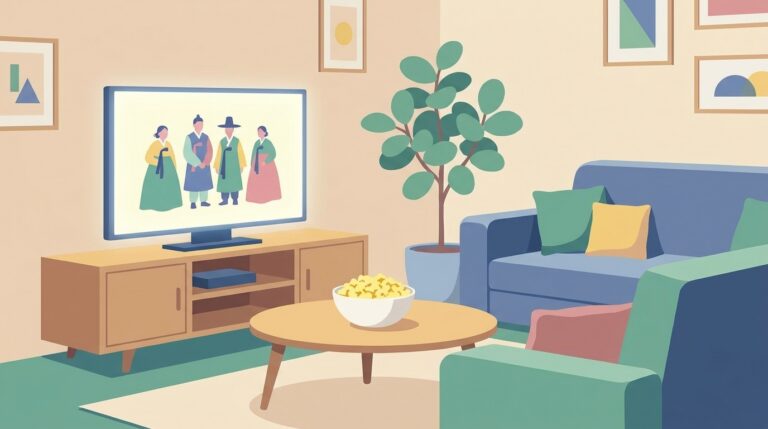
Talk K-Drama Like a Local: How to Discuss Hit Korean Series Without Sounding Stiff
Phase 1: Empathy (Story-Immersive Opening)
안녕하세요! It’s your Daily Hangul editor, your trusted cultural navigator and fellow drama addict.
Picture this: It is 2:30 AM on a Friday night. You just finished the finale of an incredible Korean original series like The Glory or Moving. Your heart is racing, your eyes are wide, and you are bursting with raw adrenaline from that heart-stopping plot twist. The next morning, you meet a Korean friend at a café, completely eager to rave about the show. You open your mouth, search your brain for textbook Korean, and end up saying:
“이 드라마는 매우 재미있습니다. 배우들이 연기를 잘했습니다.” (I drama-neun maeu jaemi-isseumnida. Bae-udeuri yeon-gireul jalhaetseumnida. / This drama is very interesting. The actors acted well.)
Suddenly, the thrilling energy evaporates. You sound like an automated robotic narrator from 1998! Your friend nods politely, but the lively sparks of the conversation fade away.
I hear this exact frustration from our intermediate learners every week: “I understand everything the characters say, but when I want to express my genuine hype about a series, my Korean sounds childish or overly formal!”
Korean OTT dramas have taken the global stage by storm because of their laser-sharp directing, layered scripts, and raw emotional depth. To truly connect over them, you need conversational tools that capture that exact same visceral excitement. Today, we are upgrading your drama review toolkit from stiff classroom Korean to the vivid, colorful idioms that locals use every day on social media and over coffee.
Phase 2: 3 Core Expressions for Drama Enthusiasts
1. 몰입감이 대박이에요 (Molipgami daebagieyo)
- Pronunciation: [Mol-ip-gga-mi dae-ba-gi-ye-yo] (Think of bowl-deep-gahm-ee followed by dae-bahk-ee-ye-yo)
- Meaning: Literal: “The feeling of immersion is jackpot.” | Real Nuance: “It pulls you in so intensely that you lose all track of time.”
- K-Culture Moment: You start Squid Game intending to watch just one episode before bed, and suddenly the sun is rising. That irresistible magnetic pull is 몰입감 (immersion).
- Editor’s Insight: 몰입 (immersion) combines with 감 (feeling). When paired with 대박 (jackpot/awesome), it expresses that the directing and pacing kept you glued to the screen without checking your phone once.
- Situation Spectrum: Casual: ✅ | Semi-formal: ✅ | Formal: ⚠️
- 🤔 Think About It: In English, we often say “it’s addictive” or “I couldn’t stop watching.” Korean focuses directly on the inner psychological state: how deeply the world of the drama swallowed your attention.
2. 연기력이 미쳤어요 (Yeongiryeogi michyeosseoyo)
- Pronunciation: [Yeon-gi-ryeo-gi mi-chyeo-sseo-yo] (Sounds like yahn-ghee-ryuh-gee me-chyo-ssuh-yo)
- Meaning: Literal: “The acting skill is insane/crazy.” | Real Nuance: “The performances are so unreal they give you goosebumps.”
- K-Culture Moment: Watching Lim Ji-yeon’s chilling villain portrayal in The Glory or Ryu Seung-ryong’s heartbreaking fatherhood in Moving.
- Editor’s Insight: While 미치다 literally means “to go crazy,” younger and intermediate speakers use it constantly as an intensifier for unbelievable talent. In semi-formal settings, adding -어요 makes it an expressive yet polite compliment.
- Situation Spectrum: Casual: ✅ | Semi-formal: ✅ | Formal: 🚫
- 🤔 Think About It: Calling something “crazy” in Korean culture used to be strictly taboo. Today, using it to describe transcendent creative skill highlights how pop culture redefined modern Korean vernacular.
3. 각본이 진짜 탄탄해요 (Gakboni jinjja tantanhaeyo)
- Pronunciation: [Gak-bo-ni jin-jja tan-tan-hae-yo] (Sounds like gahk-boh-nee jeen-jjah tahn-tahn-hae-yo)
- Meaning: Literal: “The script is truly solid and sturdy.” | Real Nuance: “The writing is airtight with zero plot holes or filler scenes.”
- K-Culture Moment: Describing how complex puzzle pieces click together seamlessly in mystery-thriller masterclasses like Stranger (비밀의 숲) or Signal.
- Editor’s Insight: 탄탄하다 conveys physical resilience and firmness—like an athletic build or solid foundation. Applying it to 각본 (screenplay/script) shows that you appreciate sophisticated storytelling rather than cheap jump scares.
- Situation Spectrum: Casual: ✅ | Semi-formal: ✅ | Formal: ✅
- 🤔 Think About It: Koreans place immense pride in writers (작가님), often treating top screenwriters like celebrities. Complimenting the script directly shows high cultural literacy.
Phase 3: Textbook Korean vs. Real Korean
Situation A: Explaining that the plot moves fast and keeps you hooked
- 📖 교과서 한국어: “줄거리가 흥미롭고 전개가 매우 빠릅니다.” (Julgeoriga heungmiropgo jeon-gaega maeu ppareumnida. / The plot is interesting and the development is very fast.)
- 🗣️ 진짜 한국어: “전개가 빨라서 쉴 틈이 없어요!” (Jeon-gaega ppallaseo swil teumi eopseoyo! / The pacing is so fast that you don’t even have room to breathe!)
- 💡 왜 다를까?: Native speakers describe physical sensations (running out of breath, having no downtime) rather than passive, detached book reviews.
Situation B: Admitting you watched the entire season in one night
- 📖 교과서 한국어: “어제 밤늦게까지 비디오를 계속 보았습니다.” (Eoje bamneutgekkaji bidioreul gyesok boasseumnida. / I continuously watched videos until late last night.)
- 🗣️ 진짜 한국어: “어젯밤에 정주행하느라 밤샜어요!” (Eojetbame jeongjuhaenghaneura bamsaesseoyo! / I stayed up all night binge-watching it!)
- 💡 왜 다를까?: The modern term 정주행 (bingeing from start to finish) and 밤새다 (pulling an all-nighter) are indispensable staples of Korean lifestyle vocabulary.
Phase 4: K-Culture Deep Dive & Non-Verbal Manners
4-1. 눈치 (Nunchi) & Spoiler Etiquette
In Korea, spoiling a show’s plot twist is considered a major social violation. Before you even whisper the first plot detail, display your 눈치 (social antenna) by checking their progress:
* The Non-Verbal Check: Lean forward slightly, tilt your head, make eye contact, and hold up your index and middle fingers to ask about the episode number before diving in.
* The Spoiler Defense Gesture: If someone starts sharing details you haven’t watched, hold both hands flat in front of your chest like a cross or stop sign and say playfully: “스포 금지! 아직 다 안 봤어요!” (Seupo geumji! Ajik da an bwasseoyo! / No spoilers! I haven’t finished it yet!)
4-2. The Cultural Code: “도파민 폭발” (Dopamine Explosion)
Korean OTT hits thrive on breakneck pacing, cliffhangers, and relentless emotional swings. Koreans jokingly categorize their entertainment habits by chemical reactions: if an episode ends on a shocking revelation, online comment sections flood with “도파민 폭발했다” (My dopamine just exploded!). Sharing this sentiment signifies that you aren’t just consuming the media—you are sharing in the collective national heartbeat.
Phase 5: Real-World Roleplay Scenario
Setting: A stylish café in Seongsu-dong. You are sharing an iced Americano with your Korean coworker Minho (민호) during Friday lunch break.
- 민호: “지우 씨, 주말에 넷플릭스 신작 시리즈 봤어요?” (Ji-u ssi, jumare netpeullikseu sinjak sirijeu bwasseoyo? / Jiwoo, did you watch that new Netflix series over the weekend?)
- 🎭 Taking a sip of coffee with an excited gleam in his eyes
- You: “아, 혹시 그 스릴러요? 어젯밤에 정주행하느라 밤샜잖아요!” (A, hoksi geu seurilleoyo? Eojetbame jeongjuhaenghaneura bamsaetjanayo! / Ah, do you mean that thriller? I stayed up all night binge-watching it!)
- 🎭 Shaking your head with an amused, exhausted smile
- 민호: “진짜요? 벌써 다 봤어요? 어땠어요?” (Jinjjayo? Beolsseo da bwasseoyo? Eottaesseoyo? / Really? You finished it already? How was it?)
- 🎭 Leaning forward with curious anticipation
- You: “솔직히 초반부터 몰입감이 대박이었어요.” (Soljiki chobanbuteo molipgami daebagieosseoyo. / Honestly, from the very beginning, the immersion was unreal.)
- 🎭 Widening your eyes and emphasizing ‘대박’
- 민호: “맞아요! 특히 3화 반전 때 소름 돋지 않았어요?” (Majayo! Teukhi sam-hwa banjeon ttae soreum dotji anasseoyo? / Exactly! Didn’t you get goosebumps during the twist in episode 3?)
- 🎭 Gently tapping the table for emphasis
- You: “완전요! 배우들 연기력이 진짜 미쳤더라고요.” (Wanjeonyo! Bae-udeul yeon-giryeogi jinjja michyeotdeoragoyo. / Totally! The actors’ performances were truly insane.)
- 🎭 Covering your chest with one hand as if reliving the shock
- 민호: “게다가 각본이 탄탄해서 결말까지 군더더기가 없었어요.” (Gedaga gakboni tantanhaeseo gyeol-malkkaji gundedeorigiga eopseosseoyo. / Plus, the script was so solid that right up to the ending there was zero fluff.)
- 🎭 Nodding in deep agreement
- You: “맞아요, 친구들한테도 무조건 보라고 추천했어요!” (Majayo, chin-gudeul-hantedo mujogeon borago chucheonhaesseoyo! / Exactly, I already told all my friends it’s a must-watch!)
- 🎭 Smiling proudly and raising a thumbs-up
🔀 Interactive Decision Point
Minho says: “다음 시즌 나오면 우리 같이 리뷰해요!” (When the next season drops, let’s review it together!)
- Choice A: “네, 저도 기대돼요! 나오자마자 바로 봐요.” (Best! Warm, enthusiastic, and seals a shared friendship hobby.)
- Choice B: “싫어요. 저는 혼자 보는 것을 더 선호합니다.” (Bad. Too blunt and dismissive; creates awkward social friction.)
- Choice C: “결말 이미 다 알아요. 제가 스포 해드릴까요?” (Risk! A dangerous spoiler threat that will make any drama fan cringe!)
Phase 6: 10-Second Emotion Shadowing Drill
Practice matching the cadence, natural pauses, and pitch curves of native speakers.
[😮 감탄과 흥분을 가득 담아서 - Full of awe and excitement]- Sentence: “첫 화부터 / 몰입감이 / 진짜 대박이에요!”
- (Cheot hwabuteo / molipgami / jinjja daebagieyo! / From the very first episode, the immersion is unreal!)
[😱 소름 돋는 표정으로 - With a goosebump-inducing whisper]- Sentence: “주연 배우 / 눈빛 연기가 / 완전 미쳤어요…”
- (Juyeon bae-u / nunbit yeon-giga / wanjeon michyeosseoyo… / The lead actor’s gaze acting was completely out of this world…)
[🤝 확신에 차서 단호하게 - Confident and firm recommendation]- Sentence: “스토리 전개가 빨라서 / 지루할 틈이 / 전혀 없어요.”
- (Seutori jeon-gaega ppallaseo / jiruhal teumi / jeonhyeo eopseoyo. / The plot moves so fast that there is zero room to be bored.)
Phase 7: K-Culture Mini Dictionary
- 정주행 (Jeongjuhaeng) [Noun/Verb]
- Meaning: Binge-watching a series sequentially from episode 1 to the end.
- Usage: Used widely across social media, texting, and casual workplace chats. “주말에 비밀의 숲 정주행했어요.” (I binge-watched Stranger over the weekend.)
- 떡밥 (Tteokbap) [Noun]
- Meaning: Foreshadowing, clues, or plot hooks (literally: fish bait).
- Usage: When a mystery series leaves breadcrumbs that pay off later: “떡밥 회수가 기가 막혀요.” (The way they resolved the foreshadowing was breathtaking.)
- 띵작 (Ttingjak) [Noun]
- Meaning: Masterpiece. Born as visual wordplay for 명작 (Myeongjak) because the Hangul characters ‘띵’ and ‘명’ look almost identical.
- Usage: Internet slang expressing deep admiration: “이 드라마는 내 인생 띵작이야.” (This drama is a certified masterpiece of my life.)
- 과몰입 (Gwamorip) [Noun]
- Meaning: Hyper-fixation or over-immersion in fictional characters and storylines.
- Usage: When viewers feel genuine heartbreak or anger on behalf of drama characters: “드라마 끝나도 과몰입에서 못 빠져나왔어요.” (Even after the drama ended, I couldn’t escape my hyper-fixation.)
Phase 8: Traveler’s Survival Kit
Top 3 Survival Phrases for Drama Lovers
- “스포하지 마세요! 아직 4화 보고 있어요.” (Seupohaji maseyo! Ajik sahwa bogo isseoyo. / Don’t spoil it! I’m only on episode 4.)
- Pro Tip: Keep this sentence loaded whenever coworkers gather around the water dispenser on Monday morning.
- “이거 꼭 보세요, 절대 후회 안 해요!” (Igeo kkok boseyo, jeoldae huhoe an haeyo! / You have to watch this, you won’t regret it!)
- Pro Tip: The ultimate phrase to endorse your favorite underrated K-content.
- “혹시 드라마 촬영지가 어디인지 아세요?” (Hoksi drama chwaryeongjiga eodi-inji aseyo? / By any chance, do you know where this drama filming location is?)
- Pro Tip: Perfect when asking locals or tourist info centers about iconic spots.
Editor’s Travel Note
Planning to visit famous drama sets in Seoul? Don’t rely on standard international map tools, which often lack updated filming location pins. Make sure you install the Naver Map navigation application to search drama filming names directly in Korean. Also, keep the Tving streaming platform on your radar for exclusive cable originals that aren’t available on global Netflix while traveling locally.
Phase 9: Going One Step Deeper
In Korea, television dramas and reality survival programs are rarely individual, solitary experiences. They function as a collective societal pulse. Because Korea’s urban density is high and digital connectivity is ubiquitous, a hit show like The Glory or Physical: 100 becomes the universal topic of conversation across subway rides, school cafeterias, and corporate meetings the following morning.
Discussing a drama isn’t just small talk about entertainment; it is an active bridge to emotional empathy (정, Jeong). When you tell someone that a show made your “dopamine explode” or that the acting gave you chills, you are inviting them to validate your emotional experience.
💬 Your Turn: What is the one Korean drama series that made you lose sleep or pulled you into complete 과몰입 (over-immersion)? Share your title and one Korean review phrase in the comments below!
Phase 10: FAQ & Avoiding Misunderstandings
Q: Can I use “미쳤어요” (michyeosseoyo) in front of my boss or professor?
A: While “연기력이 미쳤어요” is acceptable among coworkers or friendly seniors, you should avoid it in strictly formal presentations or academic settings. Instead, elevate your sentence to: “배우들의 연기력이 매우 뛰어납니다” (The actors’ performance ability is exceptionally outstanding) or “압도적입니다” (It is overwhelming).
Q: What is the difference between “재미있어요” and “몰입감이 좋아요”?
A: “재미있어요” is generic (“It’s fun/entertaining”). In contrast, “몰입감이 좋아요” specifically praises the craft: how well the directing, editing, sound design, and script keep the audience hooked without distraction.
Q: How do Koreans react when a drama ending falls flat?
A: Koreans have a dedicated cultural idiom for this: “용두사미” (Yong-du-sa-mi), meaning “a dragon’s head that ends in a snake’s tail” (started grandly, finished terribly). You can say: “초반엔 좋았는데 결말이 용두사미였어요.” (It was great at first, but the finale completely fizzled out.)
🚨 Common Mistakes Warning Board
- ❌ Mistake 1: Calling every TV show “영화” (Movie).
- Correct Action: Keep them distinct! Movies are 영화 (Yeonghwa), while episodic series are 드라마 (Deurama) or 시리즈 (Sirijeu).
- ❌ Mistake 2: Saying “비디오 봤어요” (I watched videos).
- Correct Action: “비디오” sounds like 1990s VHS tapes. Use “시리즈 정주행했어요” or “넷플릭스 봤어요”.
- ❌ Mistake 3: Using extreme informal slang like “존잼” with older adults.
- Correct Action: Stick to “진짜 꿀잼이에요!” or “몰입감이 대박이에요” which are polite yet lively.
Phase 11: Action Missions
- 🥉 Bronze Mission (Solo Practice): Stand in front of your mirror and practice the 3 emotion sentences from Phase 6 with hand gestures and genuine facial expressions.
- 🥈 Silver Mission (Social Connection): Log onto Instagram or X (Twitter), find an official clip from your favorite Korean OTT series, and leave a Korean comment using: “각본도 탄탄하고 연기력이 미쳤어요!”
- 🥇 Gold Mission (Real-World Execution): Next time you talk to a Korean tutor, language exchange partner, or friend, initiate small talk by asking: “혹시 요즘 넷플릭스에서 뭐 재미있는 거 정주행하고 계세요?” (By any chance, are you binge-watching anything good on Netflix these days?)
🎮 K-Culture Mission: Watch the first 10 minutes of any trending K-drama on Netflix with Korean subtitles enabled. Count how many times characters use conversational fillers like “대박”, “진짜”, or “말도 안 돼”!
Phase 12: Interactive Quiz Challenge
1. [Situation Judgment]
Your Korean friend warns you: “스포 당하기 싫으면 인터넷 끄세요!” What are they telling you to do?
* A) Delete your streaming account immediately.
* B) Stay off the internet if you want to avoid spoilers.
* C) Write an internet review about the finale.
2. [Fill in the Blank]
Choose the missing word to complete the natural compliment:
“각본이 빈틈없이 아주 (________)해요!”
* A) 단단
* B) 탄탄
* C) 뚱뚱
3. [True / False Cultural Check]
The phrase ‘정주행’ originally came from traffic terms meaning ‘driving in the correct direction,’ but is now standard Korean for binge-watching a series from start to finish. (True / False)
👉 Click for Answers & Explanations
- Answer: B
- Explanation: ‘스포’ comes from the English word ‘spoiler,’ and ‘스포 당하다’ means to suffer/receive a spoiler against your will.
- Answer: B (탄탄)
- Explanation: 탄탄하다 refers to solid, sturdy, well-structured writing. (단단하다 usually refers to physical hardness of materials like stones; 뚱뚱하다 means chubby).
- Answer: True
- Explanation: Exactly right! It transformed from forward driving into watching episodes chronologically without skipping!
- Explanation: Exactly right! It transformed from forward driving into watching episodes chronologically without skipping!







