

Phase 1: Empathy & Immersion
안녕하세요! 매일한글 에디터입니다.
Have you ever hit that intellectual glass ceiling in advanced Korean where your grammar is flawless, your vocabulary vast, but you still feel like you are reciting an academic dictionary rather than feeling the pulse of Korean philosophical wit? Just last week, Sarah—a doctoral fellow preparing for a symposium on Joseon literature—confided in me over roasted barley tea: “I can translate the Chinese characters, but I feel terrified of sounding like an arrogant 18th-century aristocrat whenever I discuss classic texts.”
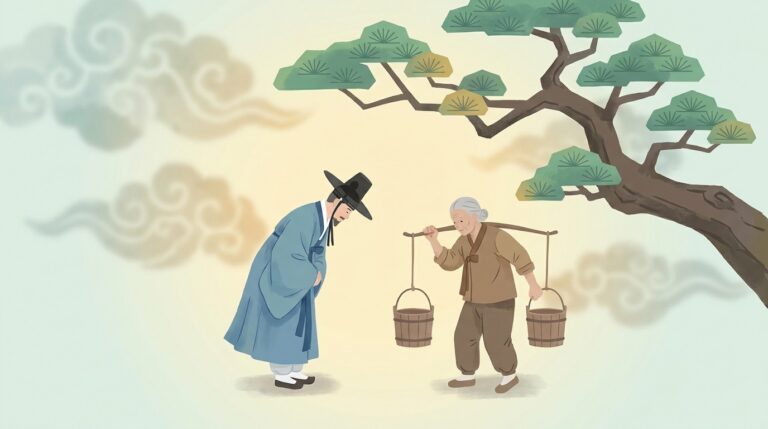
Her dilemma is universally shared among C2 learners. In Yeonam Pak Chi-won’s revolutionary satirical essay Yedeokseonsaengjeon (예덕선생전, ‘The Story of Master Yedeok’), our narrator does not seek enlightenment in high temples or courtly halls. Instead, he finds the pinnacle of Dao (도, the moral way) in Master Eom—a humble laborer carrying night-soil (똥거름) across the streets of Hanyang before dawn. To classical aristocrats, manure was vile; to Pak Chi-won, this laborer was the purest gentleman in Joseon because his quiet toil sustained the entire city’s agriculture without hypocrisy.
Mastering this rhetorical subversion—learning how Korean thinkers flip low and high, filthy and pure—is your ultimate passport from “fluent foreigner” to an intellectually resonant speaker. Drawing from ten years of coaching scholars and culture critics, this guide unpacks how you can employ classical inversion, conversational nuance, and rhetorical brilliance in real Korean discourse.
Phase 2: Core Expressions Deep Dive
1. 법고창신 (法古創新)
- Pronunciation: [Beop-go-chang-sin] (Think of the crisp, percussive rhythm: bup-go-chahng-sheen).
- Meaning: Literal: “Modeling after the old to innovate the new.” Real Nuance: Dialectical synthesis—creating bold, ground-breaking aesthetics rooted firmly in historical understanding rather than superficial trendiness.
- K-Culture Moment: Frequently invoked in historical television productions, contemporary art retrospectives, or musical projects like modern pansori fusion and avant-garde Hanbok fashion shows.
- Editor’s Insight: It is never mere conservatism. In Pak Chi-won’s rhetoric, beopgo prevents innovation from becoming empty novelty, while changsin keeps classical form from fossilizing into pedantry.
- Situation Spectrum: Casual 🚫 / Semi-formal ⚠️ / Formal ✅
- 🤔 Think About It: In English, “disruption” often celebrates destroying the past. How does the Korean synthesis of keeping the root while blossoming anew shift your creative mindset?
2. 격의 없다 (Gyeog-ui eopda)
- Pronunciation: [Gyeo-gui eop-da] (Pronounce the ‘k’ gliding seamlessly into ‘ui’: gyuh-gwee up-dah).
- Meaning: Literal: “To lack formal boundaries or ceremonial distance.” Real Nuance: A profound, authentic relationship free of superficial etiquette, status-consciousness, or pretense.
- K-Culture Moment: In modern dramas like My Mister, it characterizes bonds formed across stark social hierarchies where characters discard corporate titles to share raw humanity.
- Editor’s Insight: Foreign learners often fear that dropping formalities equates to being rude (버릇없다). Gyeog-ui eopda signifies the opposite: an earned intimacy where virtue renders social masks obsolete.
- Situation Spectrum: Casual ✅ / Semi-formal ✅ / Formal ✅
- 🤔 Think About It: Why does Korean elevate “lacking distance” into a marker of supreme virtue when the language itself is famous for strict honorific systems?
3. 오불관언 (吾不關焉)
- Pronunciation: [O-bul-gwan-eon] (Smooth and measured: oh-bool-gwahn-uhn).
- Meaning: Literal: “It is of no concern to me.” Real Nuance: Sublime detachment from the gossip, petty rivalries, and vain social climbing of mainstream society.
- K-Culture Moment: Used by weathered elders, eccentric indie directors, or stoic protagonists in historical dramas refusing to be dragged into factional politics.
- Editor’s Insight: While modern everyday usage can imply selfish indifference, in Pak Chi-won’s literary context it describes Master Eom’s unassailable dignity—he carries night-soil wholly undisturbed by what passing nobles think of his smell.
- Situation Spectrum: Casual 🚫 / Semi-formal ⚠️ / Formal ✅
- 🤔 Think About It: Can indifference be an act of moral rebellion rather than callousness?
Phase 3: Textbook Korean vs. Real Korean
Situation 1: Highlighting the nobility of blue-collar labor
- 📖 Textbook Korean: 그분의 직업은 비천하지만 매우 성실하십니다. (Geubun-ui jigeob-eun bicheonhajiman maeu seongsilhasimnida. / “Although his occupation is lowly, he is very diligent.”)
- 🗣️ Real C2 Korean: 허례허식을 털어내고 제 몫의 삶을 묵묵히 벼려내는 분이죠. (Heoryeheosig-eul teoreonaego je mok-ui salm-eul mungmukh-i byeoryeonaeneun bun-ijyo. / “He is someone who strips away hollow vanity and quietly tempers his own portion of life.”)
- 💡 Why the difference? Textbook phrasing relies on archaic, condescending classist adjectives like “비천하다” (base/lowly). Sophisticated native speakers praise existential authenticity and self-discipline using poetic verbs like “벼려내다” (to forge/temper).
Situation 2: Defining true intellectual companionship
- 📖 Textbook Korean: 저는 지위가 높은 사람보다는 착한 사람과 사귀고 싶습니다. (Jeoneun jiwiga nopeun sarambodaneun chakhan saramgwa sagwigo sipseumnida. / “Rather than people with high status, I want to associate with good people.”)
- 🗣️ Real C2 Korean: 이해타산으로 얽힌 인맥보다 결이 맞는 벗 하나가 낫지 않겠어요? (Ihetaesan-euro eolkhin inmaekboda gyeor-i manneun beot hanaga natji ankkess-eoyo? / “Wouldn’t a single companion sharing the same grain of soul be finer than a web of transactional networking?”)
- 💡 Why the difference? “착한 사람” sounds juvenile at a C2 level. Employing “이해타산” (calculating gains and losses) alongside the sensory metaphor “결이 맞다” (matching grains) displays literary maturity.
Phase 4: K-Culture Deep Dive & Non-Verbal Manners
4-1. Nunchi & Gestures: Embodying the “Yeonam Demeanor”
When discussing classic literature or philosophically charged topics in Korean scholarly circles, your physical stance speaks louder than your vocabulary:
* The Eyeline of Equals: When discussing Master Eom or everyday laborers, avoid the common trap of speaking with an elevated, chin-raised tone. Keep your gaze level, softening your facial muscles to radiate genuine respect (인자함).
* The Loose Gongsu (공수): Instead of modern business handshakes or animated Western gestures, loosely cup your hands just below your solar plexus when listening to an elder scholar’s interpretation, offering slow, contemplative head nods (묵직한 끄덕임).
4-2. Cultural Code Analysis: The Silhak Undercurrent in Modern Korea
Pak Chi-won’s Yeonam Group (연암파) were members of Silhak (Practical Learning), an intellectual revolt that questioned the empty dogmas of Neo-Confucian elites who could write flawless metered verse while the populace starved.
You see this exact cultural DNA today in Korean cinema and drama. Consider the celebrated scriptwriting of Park Hae-young (My Mister, My Liberation Notes): the moral center never belongs to corporate executives in Gangnam. It belongs to the cleaning woman who leaves candies on a desk, or the exhausted brothers running a janitorial cleaning company. When you understand Pak Chi-won’s inversion of “the gentleman and the scavenger,” you unlock the foundational ethical engine of modern Korean storytelling.
Phase 5: Real-World Roleplay Scenario
Setting: A secluded traditional tea house in Insadong, Seoul. Rain tapers off outside. Classical scholar Professor Min sits across from Julian, an advanced overseas researcher.
- Professor Min: 🎭 [찻잔을 천천히 돌리며 날카로운 눈빛으로] 줄리언 씨, 양반 사대부의 문집을 연구한다면서 어찌 예덕선생전 따위의 패관잡기에 그리 천착합니까? (Julian ssik, yangban sadaebu-ui munjib-eul yeon-guhandamyeonseo eojji yedeokseonsaengjeon ttawi-ui paegwanjapgie geuri cheonchakhamnikka? / “Julian, while researching Joseon literati anthologies, why obsess over vulgar fiction like the Tale of Master Yedeok?”)
- Julian: 🎭 [공손히 두 손으로 찻잔을 내려놓으며 미소를 띤다] 겉만 번지르르한 예법 뒤에 숨은 위선을 걷어내는 것이야말로 연암 문학의 진수 아니겠습니까? (Geotman beonjireureuhan yebeop dwie sum-eun wiseon-eul geodeonaeneun geos-iyamallo yeonam munhag-ui jinsu anigessseumnikka? / “Isn’t stripping away the hypocrisy hidden behind glossy etiquette the very essence of Yeonam’s literature?”)
- Professor Min: 🎭 [수염을 만지작거리며 헛기침을 한다] 흠, 그렇다 한들 똥거름을 지는 자를 ‘선생’이라 칭송한 것은 사대부의 도리를 저버린 파격이었소. (Heum, geureota handeul ttonggeoreum-eul jineun jareul ‘seonsaeng’ira chingsonghan geos-eun sadaebu-ui dorireul jeobeorin pagyeog-ieosso. / “Hm, even so, praising a night-soil carrier as a ‘Master’ was a shocking subversion that abandoned the duty of the literati.”)
- Julian: 🎭 [단호하면서도 겸양을 담은 어조로] 연암 선생은 거름을 져 밭을 기름지게 하는 실질(實質)에서 참된 덕을 보셨던 것입니다. (Yeonam seonsaeng-eun georeum-eul jyeo bat-eul gireumjige haneun siljil-eseo chamdoen deog-eul bosyeotdeon geos-imnida. / “Master Yeonam saw true virtue in the tangible substance that enriches the fields through carrying manure.”)
- Professor Min: 🎭 [흥미롭다는 듯 상체를 앞으로 기울이며] 실질이라… 그렇다면 자네가 생각하는 진정한 벗의 도리는 무엇인가? (Siljirira… geureotamyeon janega saenggakhaneun jinjeonghan beot-ui dorineun mueosinga? / “Tangible substance… Then what, in your view, is the true way of friendship?”)
- Julian: 🎭 [눈을 마주치며 담담하게] 권세나 이익으로 얽히지 않고, 각자의 삶을 지키며 격의 없이 통하는 마음입니다. (Gwonse-na iig-euro eolkhiji anko, gakja-ui salm-eul jikimyeo gyeog-ui eopsi tonghaneun ma-eum-imnida. / “It is a mind that communicates without barriers, preserving one’s path without entanglement in power or profit.”)
- Professor Min: 🎭 [만족스러운 미소를 지으며 차를 권한다] 하하, 푸른 눈의 학자가 연암의 법고창신을 온전히 꿰뚫어 보았구려. (Haha, pureun nun-ui hakjaga yeonam-ui beopgochangsin-eul onjeonhi kkweitulleo boatguryeo. / “Haha, a blue-eyed scholar has thoroughly pierced through Yeonam’s philosophy of creating the new from the old!”)
- Julian: 🎭 [가볍게 목례하며] 과찬이십니다. 교수님의 혜안 덕분에 길을 찾았을 뿐입니다. (Gwachan-isimnida. Gyosunim-ui hye-an deokbun-e gir-eul chajat-eul ppun-imnida. / “You flatter me. I merely found the path thanks to your discerning insight, Professor.”)
🔀 Interactive Branching Choice
At Turn 4, how would you respond if Professor Min asked: “Does modern society still need such unrefined outcasts as role models?”
* Option A: “시대가 바뀌었으니 현대에는 전문 경영인이나 지식인이 스승이 되어야지요.” (Times changed, so modern executives or intellectuals should be teachers.)
* Outcome: [Bad] You fall back into the very elitism Pak Chi-won criticized. Professor Min will view your literary analysis as shallow academic recitation.
* Option B: “물질적 풍요 속에서도 정신적 빈곤에 시달리는 오늘날, 엄행수의 청빈한 실천은 여전히 매서운 죽비 같습니다.” (Amidst modern material wealth, Master Eom’s austere integrity remains like a sharp wake-up strike for spiritual poverty.)
* Outcome: [Best] Brilliant! Using “죽비” (bamboo meditation stick) showcases top-tier metaphorical mastery and philosophical depth.
* Option C: “똥을 치우는 일은 누구나 기피하니까 월급을 더 많이 줘야 한다고 봅니다.” (Since everyone avoids clearing waste, I think they should just be paid higher wages.)
* Outcome: [Risk] Reduces a profound existential discussion into dry labor economics. Too utilitarian for a literary colloquium.
Phase 6: 10-Second Emotional Shadowing Drill
- Sentence 1: [🧐 학구적이고 진중하게]
- 옛것을 본받되 / 변통할 줄 알고, / 새것을 만들되 / 근본을 잃지 않아야 합니다.
- (Yet-geos-eul bonbatdoe / byeontonghal jul algo, / saegeos-eul mandeuldoe / geunbon-eul ilchi anaya hamnida.)
- “One must model after the old while knowing how to adapt, and create the new without losing the origin.”
- Sentence 2: [✨ 깨달음을 얻은 감탄조로]
- 가장 비천한 노동 속에서 / 지극한 도(道)를 길어 올린 / 연암의 시선이 실로 경이롭습니다.
- (Gajang bicheonhan nodong sog-eseo / jigeukhan do-reul gireo ollin / yeonam-ui siseon-i sil-ro gyeong-iropseumnida.)
- “Yeonam’s perspective, drawing sublime wisdom from the lowliest labor, is truly miraculous.”
- Sentence 3: [😌 담담하고 깊이 있는 어조로]
- 세상의 잣대에 휘둘리지 않고 / 묵묵히 제 몫을 다하는 이야말로 / 진정한 은자(隱者)입니다.
- (Sesang-ui jatdae-e hwidulliji anko / mungmukh-i je moks-eul dahaneun i-yamallo / jinjeonghan eunja-imnida.)
- “One who quietly fulfills one’s duty without being swayed by the world’s yardsticks is a true hermit-sage.”
Phase 7: K-Culture Mini Dictionary
- 법고창신 (法古創新, Beopgochangsin): Modeling after the classical tradition while inventing revolutionary forms. Indispensable in contemporary Korean critiques of architecture, fine arts, and branding.
- 선비정신 (Seonbijeongsin): The spirit of the righteous scholar who prioritizes moral rectitude, critical conscience, and public duty over personal wealth and power.
- 허례허식 (虛禮虛飾, Heoryeheosik): Empty etiquette and hollow ornamentation. Frequently used to critique ostentatious consumer trends, lavish weddings, or bureaucratic grandstanding.
- 결이 맞다 (Gyeori matda): Literally sharing the same wood grain. Describes people whose fundamental temperament, values, and ethical wavelength resonate in effortless harmony.
Phase 8: Traveler’s Survival Kit
Survival Expressions for Literary & Historic Sites
- Phrase 1: 이 유적에는 법고창신의 정신이 어떻게 깃들어 있나요? (I yujeog-eneun beopgochangsin-ui jeongsin-i eotteoke gitdeoreo innayo?)
- Pro Tip: Use this when touring modern renovations of historic palaces or traditional hanok villages to prompt museum curators for profound architectural narratives.
- Phrase 2: 연암 박지원 선생의 문학적 자취를 느낄 수 있는 답사 코스를 추천해 주시겠습니까? (Yeonam bakjiwon seonsaeng-ui munhakjeok jachwireul neukkil su inneun dapsa koseureul chucheonhae jusigessseumnikka?)
- Pro Tip: In Jongno or Inwangsan foothill cultural centers, this immediately signals that you are an academic traveler deserving of specialized local archival maps.
- Phrase 3: 당대의 격식에 얽매이지 않은 파격적인 조형미가 돋보입니다. (Dangdae-ui gyeoksig-e eongmae-iji aneun pagyeokjeogin johyeongmiga dotboimnida.)
- Pro Tip: A stellar phrase when admiring folk paintings (민화) or rustic buncheong ceramics in national museums.
Editor’s Travel Note
When tracing Silhak history, head beyond central Seoul to the Silhak Museum situated in Namyangju. To navigate rural bus schedules seamlessly, avoid relying on global map engines that fail in provincial alleys; install the [Naver Map app download] for precise walking trails. Furthermore, public transit to cultural outposts accepts standard T-Money cards, but smaller roadside craft shops and temple tea pavilions often prefer local bank transfers or physical credit cards.
Phase 9: “Step Deeper” (Reflective Essay)
In Western intellectual history, Diogenes held a lantern in broad daylight looking for an honest human, reveling in radical cynicism from inside a wine barrel. Pak Chi-won’s Master Eom achieves a comparable subversion, yet without cynical theatrics. He simply cleans out the human waste of an entire metropolis each dawn, whistling as he carries his buckets. His stench is physical, washing away with clean water; the stench of self-aggrandizing officials, Pak argues, clings to their souls forever. In a Korean society that historically measured individuals by clan registry (족보) and scholarly degree, Pak Chi-won redefined nobility not as an inherited tier, but as an existential posture of unpretentious labor.
💬 Your Turn: Who in your own society or daily routine mirrors Master Eom—quietly sustaining community life while remaining completely invisible to high-status headlines? Share your reflections below in Korean or English! Let’s discuss.
Phase 10: FAQ & Common Mistakes
Q: Can I use “격의 없다 (gyeog-ui eopda)” when meeting my professor or business superior for the first time?
A: No! While it has a glowing positive connotation, you should never state “우리 격의 없이 지냅시다” (Let’s drop distance) to a senior, as taking the initiative to dissolve formality belongs to the elder or superior. Instead, use it in the third person to describe an exceptional mentor: “저희 교수님은 제자들을 격의 없이 대해 주십니다” (Our professor treats his students with warm, barrier-free openness).
Q: What is the exact difference between “법고창신 (beopgochangsin)” and “온고지신 (on-go-ji-sin)”?
A: Both revere the past, but on-go-ji-sin (from the Analects of Confucius) emphasizes personal moral learning (“reviewing the old to gain new personal wisdom”). In contrast, beopgochangsin (championed by Pak Chi-won) is an aggressive aesthetic and sociopolitical rhetoric of creative production—breaking institutional molds to craft completely new literary or artistic forms.
Q: How can I refer to manual or municipal workers respectfully in modern Korean without sounding outdated?
A: Never use historic terms like “비천하다” (lowly) or outdated class descriptors. Modern respectful Korean uses honorific occupational terms such as “환경미화원님” (sanitation professional) or “현장 실무자분들” (on-site frontline practitioners).
🚨 Common Mistakes Board
- Mistake: Using “오불관언 (o-bul-gwan-eon)” to casually decline a minor favor from a friend.
- Correct Action: Reserve this idiom for social, philosophical, or systemic detachment. For personal favors, use “제가 미처 신경 쓰지 못했습니다” (I was unable to attend to that).
- Mistake: Confusing “파격 (pagyeok – breaking formality)” with “무례 (murye – rudeness)”.
- Correct Action: Pagyeok is an intentional, creative, and refreshing departure from stifling conventions. Never justify sheer bad manners or etiquette failures as pagyeok!
- Mistake: Mispronouncing “법고창신” by over-aspirating the consonants.
- Correct Action: Keep the transition from “법” [beop] to “고” [go] un-aspirated: tense the velar sound cleanly [벱꼬창신] without an English “p-h” puff of air.
Phase 11: Action Missions & Engagement
- 🥉 Bronze Mission (Solo Mastery): Record yourself reading the three 10-second shadowing drills in Phase 6. Listen back to your cadence, checking if your tone sounds thoughtful rather than aggressively pedantic.
- 🥈 Silver Mission (Social Connection): Choose an everyday scene—an artisanal bakery, a shoemaker’s stall, or a night subway cleaner—and write a two-sentence Korean reflection on your personal social feed using “결이 맞다” or “제 몫의 삶”. Tag a fellow Korean learner.
- 🥇 Gold Mission (Real-world Execution): In your next high-level Korean seminar, language exchange, or writing prompt, substitute the plain word “창의성 (creativity)” with “법고창신의 시각 (a perspective of creating the new from the old)” and defend your point.
- 🎮 K-Culture Media Mission: Watch Episode 3 of My Mister or the documentary Old Marine Boy. Pinpoint the moment where a blue-collar worker’s action exposes the spiritual shallowness of white-collar characters. Write down two Korean phrases that describe that contrast.
Phase 12: Interactive Quiz Challenge
1. Situational Judgment: You are writing an essay analyzing why an independent director’s modern remake of a classical pansori epic became a global hit. Which phrase captures this artistic triumph most elegantly?
* A) 허례허식을 타파하고 오불관언의 태도로 일관했다.
* B) 옛 가락의 본질을 잃지 않으면서 현대적 비트를 과감히 접목한 법고창신의 미학이다.
* C) 직업의 귀천을 따지지 않고 격의 없이 사람을 사귀었다.
2. Fill-in-the-Blank: Complete the critique of Master Eom’s philosophical standing:
“엄행수는 비록 똥을 치우는 노동을 하지만, 권세가들을 향해 아첨하지 않고 홀로 떳떳하니 실로 세상의 평판에 (____)하는 참된 인물이다.”
* A) 전전긍긍 (jeonjeongeunggeung)
* B) 오불관언 (obulgwaneon)
* C) 자화자찬 (jahwajachan)
3. True or False: In Yedeokseonsaengjeon, Pak Chi-won argues that one should drop all polite speech forms instantly whenever dealing with noble scholars.
* True / False
Click to reveal answers & explanations
- Answer: B. Beopgochangsin (법고창신) is the quintessential phrase for synthesizing classical heritage with avant-garde modern technique.
- Answer: B. Obulgwaneon (오불관언) captures Master Eom’s stoic indifference to societal mockery and vanity. Jeonjeongeunggeung means trembling with anxiety, and jahwajachan means self-praise.
- Answer: False. Pak Chi-won did not preach reckless disrespect; he condemned hypocritical formal etiquette that masqueraded as virtue while ignoring real human character. He advocated for authentic mutual respect, not thoughtless vulgarity.







