

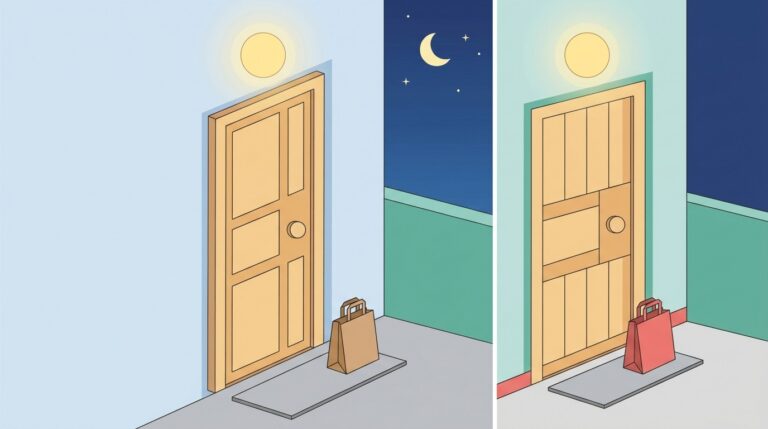
Master Korean Food Delivery Notes: How to Ask for a Quiet Knock Like a Local
Phase 1: Empathy & Storytelling Opening
안녕하세요! This is your Daily Hangul editor and your personal Korean culture guide. Imagine this scenario: It is 11:30 PM in Seoul. After a long day of exploring Hongdae or grinding through Korean study, you are cozied up in your bed watching your favorite K-drama. Your stomach rumbles, so you decide to participate in Korea’s legendary late-night food culture, yasik (야식). You open a delivery app, order mouthwatering sweet-and-spicy fried chicken, and wait excitedly.
There is just one problem. You live in a shared flat with roommates, an Airbnb with a sleeping toddler next door, or a modern studio apartment (officetel) where the walls are noticeably thin. If the delivery rider rings that piercing digital chime (ding-dong!), the entire floor will wake up, dogs will bark, and your peaceful midnight snack will turn into an awkward apology tour.
Many of our beginner students tell us: “I know how to say hello and thank you, but I freeze when looking at the blank ‘Special Requests’ (요청사항) box in the delivery app! How do I politely tell them not to ring the bell?” Don’t worry! Today, we will master the exact phrase native Koreans use every single day to keep deliveries smooth, quiet, and stress-free—plus what to do if the wrong order arrives at your door.
Phase 2: Top 3 Essential Expressions
1. 벨 누르지 마시고 노크만 살짝 해 주세요
- Pronunciation: Bel nureuji masigo nokeuman saljjak hae juseyo (Sounds like: bell noo-reu-ji ma-shi-go knock-man sal-jjak hae joo-seh-yo)
- Meaning: Literal: “Do not press the bell and please just knock lightly.” / Actual Nuance: “Please don’t ring the doorbell, just give a soft knock.”
- K-Culture Moment: In single-person household sitcoms and vlogs, you often see people writing this when they have sleeping pets or want to avoid loud digital chimes late at night.
- Editor’s Insight: The secret sauce here is 살짝 (saljjak), an adorable adverb meaning “lightly” or “gently.” Adding this word immediately softens your command from an abrupt order into a very polite, humble request.
- Situation Spectrum: Casual (⚠️ with friends, too formal) / Semi-formal (✅ perfect for delivery apps & service workers) / Formal (✅ respectful)
- 🤔 Think About It: Why does Korean combine negation (-지 마시고, don’t do X) with an alternative suggestion (노크해 주세요, please do Y) instead of just saying “No bell!”? Politeness in Korea often comes from offering a helpful alternative!
2. 문 앞에 두고 문자 주세요
- Pronunciation: Mun ape dugo munja juseyo (Sounds like: moon ap-eh doo-go moon-ja joo-seh-yo)
- Meaning: Literal: “Put it in front of the door and please give me a text.” / Actual Nuance: “Please leave it at the door and text me.”
- K-Culture Moment: Essential for contactless delivery (bi-dae-myeon bae-dal), popularized during recent years and now the absolute gold standard for introverts ordering food in Korea.
- Editor’s Insight: Delivery riders in Korea are extremely fast. They usually drop the food, take a quick snapshot, send an SMS, and run to the elevator within three seconds. Asking for a text ensures your food stays hot without needing direct face-to-face interaction.
- Situation Spectrum: Casual (⚠️) / Semi-formal (✅ ideal for riders) / Formal (✅)
- 🤔 Think About It: In your home country, do delivery drivers hand you the food personally, or do they drop and go? Notice how Korean apps prioritize contactless speed.
3. 주문한 음식이 잘못 왔어요
- Pronunciation: Jumunhan eumsigi jalmot wasseoyo (Sounds like: joo-moon-han eum-shik-ee jal-moht wah-sseo-yo)
- Meaning: Literal: “The ordered food came wrongly.” / Actual Nuance: “I received the wrong order / Something in my order is incorrect.”
- K-Culture Moment: The classic scene where a character opens a plastic bag expecting spicy tteokbokki, only to find black bean noodles meant for unit 402.
- Editor’s Insight: Notice how Korean speakers avoid saying “You brought the wrong item!” (기사님이 잘못 가져왔어요). Instead, they say “The food came wrongly” (음식이 잘못 왔어요). Framing the issue around the object rather than blaming the person prevents confrontation!
- Situation Spectrum: Casual (⚠️) / Semi-formal (✅ great for customer center or rider) / Formal (✅)
- 🤔 Think About It: How does shifting the blame away from the human subject change the emotional temperature of a customer service dispute?
Phase 3: Textbook Korean vs. Real-World Korean
Situation 1: Leaving delivery instructions
- 📖 Textbook Korean: 음식을 문 앞에 놓아 주십시오. (Eumsigeul mun ape noa jusipsio.) — “Please place the food in front of the door.”
- 🗣️ Real-World Korean: 문 앞 배송 부탁드려요. 벨 X 노크 O (Mun ap baesong butakdeuryeoyo. Bel X nokeu O) — “Front door drop-off please. Bell NO, Knock YES.”
- 💡 Why is it different?: Delivery apps have limited character boxes on mobile screens. Riders scan instructions in 0.5 seconds while riding scooters, so young Koreans use clean, symbolic shortcuts like “벨X 노크O”.
Situation 2: Reporting a missing side dish
- 📖 Textbook Korean: 제 주문에서 반찬 한 가지가 누락되었습니다. (Je jumun-eseo banchan han gajiga nurak-doeeotseumnida.) — “One type of side dish has been omitted from my order.”
- 🗣️ Real-World Korean: 사장님, 콜라가 하나 덜 왔어요! (Sajangnim, kollaga hana deol wasseoyo!) — “Boss, one cola is missing! (didn’t arrive!)”
- 💡 Why is it different?: Words like 누락 (nurak, omission) sound like an official government report. Real Koreans use 덜 왔다 (deol watda), which colloquially conveys that something arrived “less than full count.”
Phase 4: K-Culture Deep Dive & Non-Verbal Manners
4-1. Nunchi & Elevator Etiquette
If you requested contactless delivery, there is an unspoken Nunchi (눈치, situational awareness) rule: The 10-Second Pause.
Even if you hear the food bag rustle outside your door, do not yank the door open instantly! The rider might still be standing there checking their GPS app, which can make both of you jump in surprise. Korean apartment residents typically wait 5 to 10 seconds until they hear the elevator chime (ding!) indicating the rider has left the floor before quietly opening the door.
4-2. The Soundscape of Korean Apartments
Most Koreans live in high-rise apartments (apateu) or multi-family studio villas (villa). Because hallways echo intensely, the default high-pitch electronic door chime (pbi-ri-ri!) sounds like an air-raid siren at midnight. Requesting a soft knock (노크만 살짝) is considered high-level social consideration (baeryeo, 배려) for neighbors, roommates, and babies alike.
Phase 5: Real-World Roleplay Scenario
Setting: It is midnight. You ordered warm fried chicken via an app, but the driver calls your phone because they cannot enter the main building entrance.
- Rider (배달 기사님): 여보세요? 1층 공동현관 비밀번호가 뭐예요?
(Yeoboseyo? Il-cheung gongdong-hyeongwan bimilbeonhoga mwoyeyo?)
“Hello? What is the passcode for the 1st-floor main entrance?”
🎭 Breathing heavily after rushing up the entrance stairs -
You (나): 아, 네! 종 표시 누르시고 1234 눌러주세요.
(A, ne! Jong pyosi nureusigo il-i-sam-sa nulleojuseyo.)
“Ah, yes! Press the bell icon and then press 1234.”
🎭 Checking the intercom screen calmly -
Rider (배달 기사님): 네, 열렸습니다. 몇 호시죠?
(Ne, yeollyeotseumnida. Myeot hosijo?)
“Okay, it opened. Which unit number are you?” -
You (나): 302호예요. 문 앞에 놔주시면 돼요!
(Sam-baek-i-hoyeyo. Mun ape nwajusimyeon dwaeyo!)
“Unit 302. You can just leave it in front of the door!” -
Rider (배달 기사님): 벨 누를까요?
(Bel nureulkkayo?)
“Shall I ring the bell?” -
You (나): 아니요, 벨 누르지 마시고 노크만 살짝 해 주세요!
(Aniyo, bel nureuji masigo nokeuman saljjak hae juseyo!)
“No, please don’t ring the bell, just knock lightly!”
🎭 Speaking in a gentle, polite tone -
Rider (배달 기사님): 알겠습니다. 문 앞에 두고 문자 드릴게요.
(Algetseumnida. Mun ape dugo munja deurilgeyo.)
“Understood. I will leave it by the door and send a text.” -
You (나): 감사합니다! 수고하세요!
(Gamsahamnida! Sugohaseyo!)
“Thank you! Keep up the good work!”
🎭 Saying the classic Korean parting courtesy
🔀 Interactive Choice Point
You open the bag and realize: “Oh no, they gave me plain chicken instead of spicy seasoned chicken!” How do you call the store?
- Choice A: “저기요, 주문이 잘못 왔어요. 양념치킨 시켰는데 후라이드가 왔네요.” (Jeogiyo, jumuni jalmot wasseoyo. Yangnyeomchikin sikyeotneunde huraideuga watneyo.)
👉 Feedback [BEST]: Calm, objective, and clear. Stating what arrived vs. what was ordered gets instant replacement or refund. - Choice B: “야! 왜 치킨 잘못 줬어? 빨리 바꿔!” (Ya! Wae chikin jalmot jwosseo? Ppal-li bakkwo!)
👉 Feedback [BAD]: Extremely rude banmal (informal speech). This creates hostile conflict immediately. - Choice C: “치킨이 이상해요. 다시 오세요.” (Chikini isanghaeyo. Dasi oseyo.)
👉 Feedback [RISK]: Too vague. “The chicken is weird” might sound like the food is spoiled rather than a swapped menu item, causing unnecessary confusion.
Phase 6: 10-Second Emotion Shadowing Drill
Practice speaking these phrases with the indicated rhythm and emotion. Pause at the / marks!
[🤫 조용하고 부탁하듯이 / Whispering & gentle request]
벨 누르지 마시고 / 노크만 / 살짝 해 주세요!
(Bel nureuji masigo / nokeuman / saljjak hae juseyo!)-
[🏃 빠르고 싹싹하게 / Crisp & polite]
문 앞에 / 두고 / 문자 부탁드려요!
(Mun ape / dugo / munja butakdeuryeoyo!) -
[🥺 난감하지만 정중하게 / Puzzled yet respectful]
사장님, / 메뉴가 하나 / 덜 왔어요.
(Sajangnim, / menyuga hana / deol wasseoyo.)
Phase 7: K-Culture Mini Dictionary
- 요청사항 (Yo-cheong-sa-hang) | Special Requests / Notes
The crucial input box in delivery apps divided into “To Store Owner” (가게 사장님께) and “To Delivery Rider” (배달 기사님께). - 비대면 배달 (Bi-dae-myeon Bae-dal) | Contactless Delivery
Directly translating to “non-face-to-face delivery,” the standard setting in Korean city living. - 오배달 (O-bae-dal) | Misfelivery / Wrong Delivery
A compound of O (誤, wrong/error) and Baedal (delivery). Used when orders are swapped or dropped at the wrong address. - 공동현관 비밀번호 (Gong-dong-hyeon-gwan Bi-mil-beon-ho) | Main Entrance Passcode
The access code required to open the ground-floor security door of Korean apartment buildings.
Phase 8: Traveler’s Survival Kit
Top 3 Survival Expressions
- 1. 문 앞에 놔주세요. (Mun ape nwajuseyo.)
Pro Tip: The fastest 5-syllable phrase to request front-door drop-off without any fuss. - 2. 수고하세요! (Sugohaseyo!)
Pro Tip: The golden greeting to say to riders and service workers when hanging up or parting. It means “Thank you for your effort!” - 3. 소스 하나 빠졌어요. (Soseu hana ppajyeosseoyo.)
Pro Tip: Use this when a dipping sauce or drink was forgotten.
Editor’s Travel Note
When ordering in Korea without a local credit card, check out the Coupang Eats English setup guide or download the Yogiyo app. Most foreigners get stuck at the building passcode. In the rider request box, always type: 공동현관: #[code]* (호출) so the driver doesn’t get locked out outside!
Phase 9: A Step Deeper (Cultural Reflection)
Korea is internationally celebrated for Ppal-li-ppal-li (빨리빨리, hurry-hurry) culture. In food delivery, that speed is miraculous—often arriving within twenty minutes. However, the rise of single-person households and dense apartment complexes has birthed a contrasting value: hyper-privacy and quiet consideration. Notice how expressions like 노크만 살짝 (just knock softly) bridge these two worlds: you respect the rider’s tight delivery timetable while safeguarding your personal sanctuary.
💬 Your Turn: What is delivery culture like in your country? Do riders knock, ring, or call your phone? Drop your thoughts in the comments below!
Phase 10: FAQ & Common Mistakes
Q: Can I just write “노크 노크” (Knock knock) in the app request box?
A: While understandable, “노크 노크” sounds like a playful joke or a cartoon sound effect. Writing 노크해 주세요 (Please knock) or 노크 부탁드려요 (Knock, please) is much more natural and polite.
Q: What if the rider rings the bell anyway despite my note?
A: Don’t take it personally! Delivery riders fulfill dozens of orders per hour under severe time pressure and sometimes tap the bell by pure muscle memory. Simply accept the food with a warm 감사합니다.
Q: Where do I report an incorrect or missing order?
A: Instead of calling the delivery driver directly (who has already moved on to the next delivery), open the app and tap 고객센터 (Customer Center) or call the restaurant directly. They can instantly process a partial refund or dispatch a re-delivery.
🚨 Common Mistakes Warning Board
- Mistake: Writing the door request in the store owner box (가게 사장님께).
Correct Action: Ensure you write it under 라이더님께 / 배달 기사님께 (To Delivery Rider). The restaurant kitchen does not deliver your food! - Mistake: Saying 문 앞에 버려주세요 (Throw it at the door).
Correct Action: Use 문 앞에 놔주세요 (Place it at the door). 버리다 means to discard into the trash! - Mistake: Forgetting to write the entrance key symbol (# or ).
*Correct Action: Always include whether the passcode needs the bell icon, pound key, or star key.
Phase 11: Action Mission
- 🥉 Bronze Mission (Solo Shadowing): Practice saying “벨 누르지 마시고 노크만 살짝 해 주세요” 5 times in front of the mirror until it flows naturally in under 3 seconds.
- 🥈 Silver Mission (App Simulation): Open your notes app on your phone and type the full Korean note:
문 앞에 두고 문자 주세요. 벨 X 노크 Owithout looking at this guide! - 🥇 Gold Mission (Real-World Order): Next time you order takeout or delivery in Korea (or write to a Korean guesthouse host), use one of today’s phrases in real life!
- 🎮 K-Culture Mission: Watch a scene from a modern K-drama where someone receives food delivery (such as in Crash Landing on You or My Roommate is a Gumiho). Listen carefully for what they say when opening the door!
Phase 12: Interactive Quiz Challenge
1. Situation Judgment
You have a test tomorrow morning and need your late-night snack left silently outside your door. Which sentence is the most natural to type in the rider request box?
* A) 벨 눌러! (Bel nulleo!)
* B) 문 앞에 두고 벨 누르지 마세요. (Mun ape dugo bel nureuji maseyo.)
* C) 문 앞에 놔주시고, 노크만 살짝 해 주세요. (Mun ape nwajusigo, nokeuman saljjak hae juseyo.)
Click for Answer & Explanation
Correct Answer: C
Explanation: Option C perfectly combines polite drop-off instructions with the gentle request to knock lightly instead of ringing the chime. Option A is an informal command, and Option B sounds a bit blunt.
2. Fill-in-the-Blank
Complete the sentence to mean: “One side dish is missing (didn’t arrive)!”
사장님, 반찬이 하나 _____ 왔어요! (Sajangnim, banchani hana _____ wasseoyo!)
Click for Answer & Explanation
Correct Answer: 덜 (deol)
Explanation: “덜 왔어요” is the natural conversational way to say something arrived short of the full count or was omitted.
3. True or False Cultural Quiz
True or False: In Korea, it is considered polite to open the door immediately while the delivery rider is still standing in front of your doorstep.
Click for Answer & Explanation
Correct Answer: False
Explanation: For contactless orders, giving riders a brief 5 to 10-second window to depart creates comfortable boundaries and respects mutual privacy in shared residential corridors.







