

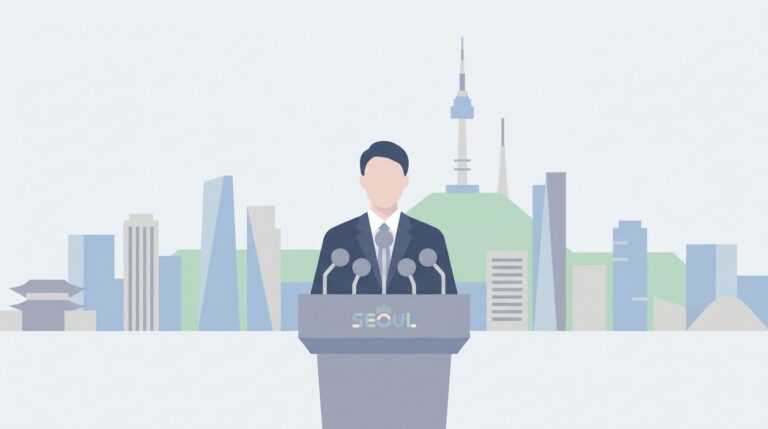
Mastering Korean Crisis PR: How to Deliver Decisive Press Briefings Like a Top Executive
Phase 1: Empathy & Storytelling Opening
안녕하세요! It’s your Daily Hangul editor and cultural navigator.
Imagine this high-stakes scenario: You are sitting in the executive boardroom of a major multinational tech firm overlooking Teheran-ro in Gangnam. It is 8:30 AM. A server blackout combined with an unauthorized data exposure has disrupted hundreds of thousands of Korean users. Your global headquarters in New York or London sends an urgent memo: “Do not release any public statement until forensics finishes the root-cause analysis in 72 hours. Avoid all legal liability.”
Meanwhile, the lobby downstairs is already swarming with over thirty broadcast journalists, flashing DSLRs, and demanding microphones. In Western corporate communications, waiting for irrefutable facts before speaking is standard legal prudence. In Korea, however, remaining silent for even twelve hours is universally branded as 늑장 대응 (tardy response) or outright 발뺌 (evasion). Public sentiment and digital news cycles move at breakneck speed. If you do not define the narrative in the first media cycle, the narrative will define—and destroy—you.
To survive and lead in high-stakes Korean business environments, you must master the delicate art of executive Crisis PR. The golden rule is clear: Even before root-cause analysis is concluded, you must publicly share confirmed facts and prioritize victim relief plans. This guide is built directly on C-suite briefing playbooks, veteran PR counselor insights, and feedback from foreign executives navigating Korea’s unique media landscape. Let’s equip you with the strategic phrasing, non-verbal gravity, and cultural intelligence needed to command the podium with confidence.
Phase 2: Core Expressions Deep Dive (C1 Advanced)
1. 정확한 원인 규명에 앞서, 확인된 사실관계부터 투명하게 밝히고자 합니다.
- Pronunciation: Jeong-hwak-han won-in gyo-myeong-e ap-seo, hwak-in-doen sa-sil-gwan-gye-bu-teo tu-myeong-ha-ge bal-ki-go-ja ham-ni-da. (Think of gyo-myeong like “k-yoh myung” and tu-myeong like “too-myung”)
- Meaning: “Prior to full root-cause verification, we wish to transparently disclose established facts first.”
- Nuance: Literal breakdown sounds factual, but strategically it signals: “We are not hiding behind technical delays; we respect the public’s right to know right now.”
- K-Culture Moment: Seen in boardroom dramas like Queenmaker or Agency, where the crisis director steps up to the podium amid intense flashbulbs to preempt media speculation before stock prices crash.
- Editor’s Insight: The phrase 원인 규명 (investigating root causes) coupled with 사실관계 (established factual relationships) shows advanced bureaucratic mastery. It prevents journalists from writing that the company is “covering up” while legally shielding the firm from speculative conclusions.
- Situation Spectrum:
- Casual: 🚫
- Semi-formal: ⚠️
- Formal / Executive Briefing: ✅
- 🤔 Think About It: In your home country, does a spokesperson speak before the full investigation is finished? How does immediate transparency impact public trust versus legal exposure?
2. 피해 최소화와 신속한 구제 조치를 최우선 과제로 삼겠습니다.
- Pronunciation: Pi-hae choe-so-hwa-wa sin-sok-han gu-je jo-chi-reul choe-u-seon gwa-je-ro sam-get-seum-ni-da. (Flow pi-hae smoothly into choe-so-hwa)
- Meaning: “We will make damage minimization and prompt relief measures our foremost priority.”
- Nuance: Prioritizing victim welfare over institutional self-defense. In Korea, public sentiment often weighs ethical responsibility higher than dry statutory compliance.
- K-Culture Moment: During massive service outages, corporate leaders issue nationwide statements stating this exact phrase to assuage furious consumers before regulatory agencies intervene.
- Editor’s Insight: Using 구제 조치 (relief/restitution measures) rather than simply 보상 (monetary compensation) implies comprehensive restoration—psychological, operational, and financial—positioning your firm as an empathetic, responsible stakeholder.
- Situation Spectrum:
- Casual: 🚫
- Semi-formal: ⚠️
- Formal / Executive Briefing: ✅
- 🤔 Think About It: Notice the word 최우선 과제 (highest priority task). Why is establishing corporate empathy so critical before discussing contractual terms in Korean culture?
3. 추가 피해가 발생하지 않도록 전사적 역량을 총동원하여 대응하고 있습니다.
- Pronunciation: Chu-ga pi-hae-ga bal-saeng-ha-ji an-to-rok jeon-sa-jeok yeong-ryang-eul chong-dong-won-ha-yeo dae-eung-ha-go it-seum-ni-da. (Chong-dong-won sounds like an energetic “chong-dong-wahn”)
- Meaning: “We are mobilizing company-wide resources to prevent secondary damage.”
- Nuance: Reassures stakeholders that this crisis is not being relegated to a low-level department; the entire enterprise from the board down is actively fixing it.
- K-Culture Moment: Delivered by corporate chief security officers during urgent midnight press conferences to prevent institutional panic among business partners and retail consumers.
- Editor’s Insight: 전사적 역량 (company-wide capability) and 총동원 (total mobilization) evoke institutional solidarity and decisive executive mobilization—a strong leadership virtue in Korea’s collective corporate ethos.
- Situation Spectrum:
- Casual: 🚫
- Semi-formal: ⚠️
- Formal / Executive Briefing: ✅
- 🤔 Think About It: How does this military-derived term (총동원) translate into corporate reassurance during peacetime crises?
Phase 3: Textbook Korean vs. Real Executive PR Korean
Situation 1: Explaining that the technical cause is still being analyzed
- 📖 Textbook Korean: 원인을 아직 모르니 조사가 끝날 때까지 기다려 주십시오. (We don’t know the cause yet, so please wait until the investigation ends.)
- 🗣️ Real Executive Korean: 현재 관계 당국과 긴밀히 협력하여 원인을 정밀 분석 중이며, 확인되는 즉시 한 점의 의혹도 없이 소통하겠습니다. (We are currently working closely with regulatory authorities to conduct a precise analysis of the cause, and as soon as facts are established, we will communicate transparently without a shadow of doubt.)
- 💡 Why is it different? The textbook phrase sounds dismissive and incompetent. Executive Korean highlights active cooperation with government agencies (관계 당국과 긴밀히 협력) and guarantees absolute transparency (한 점의 의혹도 없이).
Situation 2: Addressing compensation and victim support
- 📖 Textbook Korean: 나중에 법적으로 책임이 있다면 돈을 물어주겠습니다. (If we are legally responsible later, we will pay you money.)
- 🗣️ Real Executive Korean: 법적 책임을 떠나, 도의적 책임을 다하기 위해 선제적 피해 구제 전담 창구를 즉시 가동하겠습니다. (Setting aside legal liability, we will immediately activate a dedicated relief desk to fulfill our moral responsibilities proactively.)
- 💡 Why is it different? Saying “if legally responsible” triggers furious public backlash. Executive Korean appeals to 도의적 책임 (moral responsibility) and 선제적 대응 (proactive response), which instantly de-escalates public fury while preserving institutional dignity.
Phase 4: K-Culture Deep Dive & Non-Verbal Manners
4-1. Nunchi, Posture & Press Conference Etiquette
In a Korean crisis press briefing, your body language speaks five seconds before your voice reaches the microphone. The press corps will scrutinize every micro-expression.
* The Sincere Bow (정중한 사과 인사): Stand behind the podium, step to the side, look straight ahead with a solemn expression, and perform a deep 45-to-90-degree bow lasting 3 to 5 seconds. Do not look up prematurely. Maintain stillness. This is not an admission of criminal guilt; it is an acknowledgement of disrupted public peace.
* Eye Contact & Microphones: Never adjust the microphone aggressively. Keep both hands lightly resting on the podium or clasped in front of your lower torso. Maintain steady, humble eye contact with the press gallery. Rolling eyes, smirking, or whispering to your PR director off-mic will become a viral GIF within minutes.
* Attire: A dark navy or charcoal suit, crisp white shirt, muted tie (or no tie if it is an emergency site briefing), and no visible luxury accessories.
4-2. Cultural Code: The Golden Hour and Emotional Law (정서법)
In South Korea, public sentiment often acts alongside statutory jurisprudence—frequently referred to colloquially in corporate circles as 국민정서법 (The Law of National Sentiment). If a corporation acts defensively and hides behind evidentiary technicalities, the public boycotts begin immediately. However, if an executive steps up within the 골든타임 (Golden Hour – the first 24 hours), humbly bows, discloses undisputed facts, and outlines tangible victim relief steps before pointing fingers at external vendors, the media shift from aggressive hostility to cautious scrutiny. Speed and empathy protect brand equity.
Phase 5: Real-World Roleplay Scenario
Setting: The Grand Press Hall at the Korea Press Center in Seoul. Camera shutters click incessantly. Alex (Executive Vice President of Global Operations) faces veteran investigative journalist Han from a leading daily newspaper.
- Turn 1 (한 기자): 상무님, 시스템 마비로 소상공인 결제 피해가 눈덩이처럼 불어나고 있습니다. 메인 서버 결함입니까, 외부 해킹입니까? (Sang-mu-nim, si-seu-tem ma-bi-ro so-sang-gong-in gyeol-je pi-hae-ga nun-deong-i-cheo-reom bul-eo-na-go it-seum-ni-da. Me-in seo-beo gyeol-ham-im-ni-kka, oe-bu hae-king-im-ni-kka? / “Executive Director, small business payment damages are snowballing due to the system outage. Is it a main server defect, or external hacking?”)
- Turn 2 (알렉스 상무):
🎭 고개를 무겁게 끄덕이며 진중한 눈빛으로먼저 이번 사태로 극심한 불편과 피해를 겪으신 모든 이용자분들께 머리 숙여 사과드립니다. (Meon-jeo i-beon sa-tae-ro geuk-sim-han bul-pyeon-gwa pi-hae-reul gyeok-eu-sin mo-deun i-yong-ja-bun-deul-kke meo-ri su-gyeo sa-gwa-deu-rim-ni-da. / “First, I bow my head in apology to all users who have experienced extreme inconvenience and distress due to this incident.”) - Turn 3 (알렉스 상무):
🎭 마이크를 정돈하며정확한 원인 규명에 앞서, 확인된 사실관계부터 투명하게 말씀드리겠습니다. (Jeong-hwak-han won-in gyo-myeong-e ap-seo, hwak-in-doen sa-sil-gwan-gye-bu-teo tu-myeong-ha-ge mal-sseum-deu-ri-get-seum-ni-da. / “Prior to clarifying the exact cause, I wish to transparently share the facts confirmed so far.”) - Turn 4 (한 기자): 구체적으로 확인된 사실이 뭡니까? 왜 공지가 늦었습니까? (Gu-che-jeok-eu-ro hwak-in-doen sa-sil-i mwom-ni-kka? Wae gong-ji-ga neu-jeot-seum-ni-kka? / “What specifically has been confirmed? Why was the announcement delayed?”)
- Turn 5 (알렉스 상무): 오늘 오전 4시경 1차 백업 망에서 트래픽 병목이 확인되었으며, 개인정보 유출 정황은 현재까지 없습니다. (O-neul o-jeon ne-si-gyeong il-cha baek-eop mang-e-seo teu-rae-pik byeong-mok-i hwak-in-doe-eot-eu-myeo, gae-in-jeong-bo yu-chul jeong-hwang-eun hyeon-jae-kka-ji eop-seum-ni-da. / “Around 4:00 AM today, a traffic bottleneck was confirmed in the primary backup network, and there is no indication of personal data leakage to date.”)
- Turn 6 (한 기자): 자영업자들의 금전적 피해는 법적 소송이 끝나야 보상해 주실 겁니까? (Ja-yeong-eop-ja-deul-ui geum-jeon-jeok pi-hae-neun beop-jeok so-song-i kkeut-na-ya bo-sang-hae ju-sil geom-ni-kka? / “Will financial damages to small business owners only be compensated after legal lawsuits finish?”)
- Turn 7 (알렉스 상무): 아닙니다. 법적 책임을 떠나 도의적 책임을 다하기 위해, 전담 지원 센터를 즉각 개설하여 선제적 구제 조치에 착수하겠습니다. (A-nim-ni-da. Beop-jeok chaek-im-eul tteo-na do-ui-jeok chaek-im-eul da-ha-gi wi-hae, jeon-dam ji-won sen-teo-reul jeuk-gak gae-seol-ha-yeo seon-je-jeok gu-je jo-chi-e chak-su-ha-get-seum-ni-da. / “No. Setting aside legal liability, to fulfill our moral obligation, we will immediately launch a dedicated support center and initiate proactive relief measures.”)
- Turn 8 (한 기자):
🎭 고개를 끄덕이며 노트북에 빠르게 타이핑한다상생 협력 기금 조성도 포함되는 겁니까? (Sang-saeng hyeop-ryeok gi-geum jo-seong-do po-ham-doe-neun geom-ni-kka? / “Does that include establishing a mutual co-existence fund?”)
🔀 Interactive Decision Point
How should Alex answer Reporter Han’s unexpected question about establishing a fund?
- Option A (Best): “해당 방안을 포함하여, 피해 현장의 목소리를 반영한 종합 대책을 48시간 내에 추가 발표하겠습니다.” (Including that option, we will announce a comprehensive plan reflecting voices from the ground within 48 hours.)
Why: Shows open-minded responsiveness without committing to unapproved budgets on the fly. - Option B (Bad): “본사와 상의해 봐야 하지만 저희 잘못이 아니면 기금은 어렵습니다.” (I must consult headquarters, but if it is not our fault, a fund is unlikely.)
Why: Fatal error. Passing blame to headquarters and pre-calculating fault guarantees immediate critical headlines. - Option C (Risk): “노코멘트하겠습니다.” (No comment.)
Why: Severe danger. In Korean crisis PR, “No comment” is printed as an implicit admission of guilt and arrogance.
Phase 6: 10-Second Emotional Shadowing Drill
Practice these lines aloud. Focus on pausing precisely at the slashes (/) and channeling the executive gravitas indicated in the emotional guide.
Drill 1
[🏢 차분하고 단호한 어조 - Calm and Resolute Executive Tone]
정확한 원인 규명에 앞서, / 확인된 사실관계부터 / 언론인 여러분께 투명하게 밝히고자 합니다.
(Jeong-hwak-han won-in gyo-myeong-e ap-seo, / hwak-in-doen sa-sil-gwan-gye-bu-teo / eon-ron-in yeo-reo-bun-kke tu-myeong-ha-ge bal-ki-go-ja ham-ni-da.)
Drill 2
[🤝 진정성 있는 책임감 - Sincere and Accountable Tone]
법적 책임을 떠나, / 도의적 책임을 다하기 위해 / 선제적 피해 구제 방안을 즉각 실행하겠습니다.
(Beop-jeok chaek-im-eul tteo-na, / do-ui-jeok chaek-im-eul da-ha-gi wi-hae / seon-je-jeok pi-hae gu-je bang-an-eul jeuk-gak sil-haeng-ha-get-seum-ni-da.)
Drill 3
[🛡️ 전사적 결의 - Enterprise-wide Decisiveness]
추가 피해를 방지하고 / 조속한 정상화를 위해 / 전사적 역량을 총동원하고 있습니다.
(Chu-ga pi-hae-reul bang-ji-ha-go / jo-sok-han jeong-sang-hwa-reul wi-hae / jeon-sa-jeok yeong-ryang-eul chong-dong-won-ha-go it-seum-ni-da.)
Phase 7: K-Culture Mini Dictionary
- 골든타임 (Gol-deun-ta-im | The Golden Hour): Borrowed from medical emergency terminology, this refers to the critical initial hours after a crisis breaks. Missing the corporate golden time guarantees public condemnation.
- 도의적 책임 (Do-ui-jeok Chaek-im | Moral Responsibility): The ethical duty an organization accepts in Korea, intentionally distinct from legal liability (법적 책임). Embracing moral responsibility mitigates emotional anger from the public.
- 선제적 조치 (Seon-je-jeok Jo-chi | Proactive / Preemptive Measures): Taking action before being ordered to by government ministries or forced by class-action lawsuits. A badge of exemplary leadership.
- 유감 표명 (Yu-gam Pyo-myeong | Expression of Regret): A high-level diplomatic and corporate phrasing used to acknowledge an unfortunate circumstance with dignity while technical and legal parameters are still being settled.
Phase 8: Expat Executive Survival Kit
Survival Expressions TOP 3
- 사실관계를 명확히 확인한 뒤, 지체 없이 공유해 드리겠습니다. (Once facts are verified, we will share them without delay.)
Pro Tip: Use this when journalists corner you with unverified hearsay in the hallway. - 피해 접수 전담 창구를 24시간 체제로 가동하겠습니다. (We will operate a dedicated damage claims hotline 24/7.)
Pro Tip: Demonstrates operational readiness even before damage sums are quantified. - 고객과 국민 여러분께 큰 심려를 끼쳐드려 진심으로 송구스럽습니다. (We are truly remorseful for causing immense concern to our customers and the public.)
Pro Tip: 심려를 끼쳐드리다 is the highest, most respectful business idiom for expressing remorse for public worry.
Editor’s Executive Travel Note
When organizing emergency press briefings in Seoul, rely on trusted Korean professional infrastructures. Monitor press releases and real-time news coverage through portal systems and press aggregators like the BigKinds News Big Data Service operated by the Korea Press Foundation. For swift on-the-ground briefing setups near government offices in Gwanghwamun or the financial hub in Yeouido, download and utilize the Naver Map navigation app to find local conference centers and print bureaus that can produce crisis materials overnight.
Phase 9: “One Step Deeper” (Cultural Humanities Essay)
In Anglo-American jurisprudence, early apologies or public settlements are often restricted because legal teams dread them being admitted as evidence of negligence or liability in court. However, Korean corporate crises do not exist solely in courtrooms; they play out in the collective emotional forum known as 공론장 (public discourse arena). Korean culture values relational responsibility (공동체적 책임) over isolated individualism. When a corporate leader says “We will wait until our legal liability is proven,” society hears “We do not care about your pain until someone forces us to.” Paradoxically, declaring “Regardless of legal fault, we take moral responsibility to heal the harm first” often dissolves intense consumer anger, slashes prolonged litigation risks, and protects the firm’s long-term operating license in Korea.
💬 Your Turn: Have you ever seen a global company fail in Korea because they waited too long for a legal statement? Share your thoughts and reflections in the comments!
Phase 10: FAQ & Common Pitfalls
Q: Can acknowledging “moral responsibility” (도의적 책임) hurt us in a Korean court of law?
A: Korean commercial courts recognize the distinction between ethical customer support and formal admission of civil negligence. Corporate statements that specify “피해 구제와 고객 보호를 위한 도의적 지원” (moral support for victim relief and customer protection) demonstrate good faith without conceding technical culpability.
Q: What if reporters ask a question that we legitimately cannot answer yet?
A: Never use “No comment” or “We don’t know.” Instead say: “해당 사안은 현재 면밀히 확인 중이며, 정확한 사실이 파악되는 대로 투명하게 설명해 드리겠습니다.” (That matter is currently under rigorous review, and as soon as accurate facts are established, we will explain transparently.)
Q: Should foreign executives speak English or Korean at a Korean press briefing?
A: Opening greetings, the sincere bow, and the first statement of remorse (심려를 끼쳐드려 죄송합니다) make a massive positive impact when spoken in well-practiced Korean. The complex technical and policy Q&A can then proceed with consecutive professional executive interpretation.
🚨 Common Mistakes Board (흔한 실수)
- Mistake: Disappearing from public view until forensics completes (잠적 / 침묵 대응).
Correct Action: Step up within 12 hours with confirmed preliminary facts and emergency support hotlines. - Mistake: Blaming third-party vendors or local contractors (하청업체 탓하기).
Correct Action: Acknowledge supervisory oversight and mobilize enterprise support first. - Mistake: Smiling nervously or gesturing casually at the podium.
Correct Action: Maintain still posture, solemn eyes, and deliver a formal 90-degree bow.
Phase 11: Action Missions
- Bronze Mission (Solo Practice): Stand in front of a mirror. Deliver Phase 6 Shadowing Drill 1 with the solemn tone and posture of an executive. Record yourself on your phone.
- Silver Mission (PR Draft): Write a 3-sentence mock emergency opening statement in Korean incorporating 원인 규명, 사실관계, and 선제적 구제 조치 for a hypothetical delivery app crash.
- Gold Mission (Real Simulation): In your next business Korean tutoring session or with a native colleague, conduct a 3-minute roleplay where they play an aggressive reporter grilling your response plan.
- 🎮 K-Culture Mission: Watch an episode of a Korean business or legal drama (such as Queenmaker, Midas, or Hyena). Spot one scene where a spokesperson conducts a press briefing. Note their vocal pitch, bow angle, and keywords!
Phase 12: Interactive Quiz Challenge
Test your executive crisis management reflexes!
- Scenario Judgment: Your cloud service went down 2 hours ago. You know the hardware node that failed, but not why it failed. A major tech daily calls your office. What is the most culturally and strategically sound response?
- (A) “원인이 밝혀질 때까지 아무 말씀도 드릴 수 없습니다.” (No comment until the cause is found.)
- (B) “해당 노드 이상의 사실관계를 확인했으며, 이용자 피해 최소화를 위해 임시 우회 서버를 즉시 가동했습니다.” (We have confirmed an anomaly in that node, and immediately activated temporary rerouting servers to minimize user impact.)
- (C) “저희 잘못이 아니라 외국 통신사 망 문제입니다.” (It’s not our fault; it’s a foreign telecom provider’s network issue.)
- Fill-in-the-Blank: Complete the advanced PR phrase:
“법적 책임을 떠나, _______ 책임을 다하기 위해 선제적으로 구제 방안을 마련하겠습니다.” -
True / False: In Korea, a deep executive bow at a crisis press conference is legally classified as a formal confession of civil criminal negligence. (T / F)
Click here to reveal answers & C1 analysis
Answers & Strategic Analysis:
- Correct Answer: (B)
Analysis: Option (B) announces verified facts without speculation and immediately proves that the company has implemented active mitigation measures. Option (A) triggers public outrage, and (C) deflects blame without proof. -
Answer: 도의적 (Moral / Ethical)
Analysis: 도의적 책임 (moral responsibility) is the quintessential high-context concept that allows corporations to take ethical initiative without legally forfeiting technical defenses. -
Correct Answer: False
Analysis: The bow is an expression of social regret and relational empathy toward public disruption (사회적 도의). It is not an evidentiary admission of statutory negligence in civil litigation.
Stay prepared, stay empathetic, and command the podium with confidence. You’ve got this! 화이팅!







