

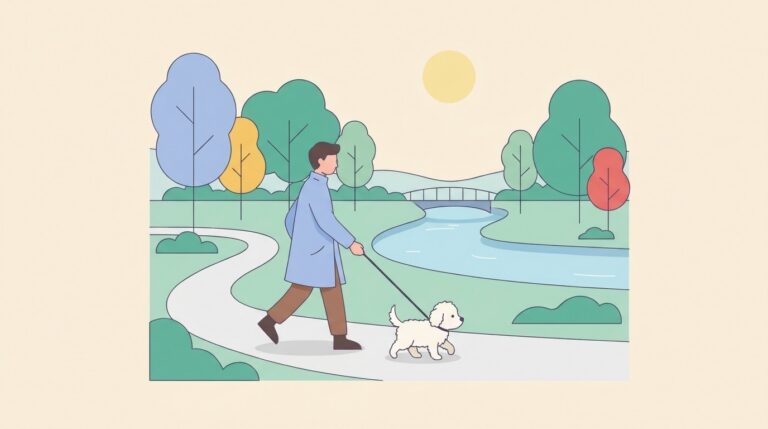
Phase 1: 공감 (Story Immersion Opening)
안녕하세요! 매일한글 에디터입니다. (Hello! This is your Daily Hangul editor.)
Picture this: It’s a crisp, sunny Sunday afternoon at Yeouido Hangang Park. You’re having the ultimate K-drama fantasy walk with an adorable golden retriever, breezy river winds fluttering, when suddenly a resident Seoulite jogger turns the corner. Their eyes widen in mild panic as your dog bounds happily forward on a 5-meter retractable lead. You want to reassure them, but the words stall. How do you say, “Don’t worry, he’s friendly!” without sounding dismissive? Did you remember the poop bag? And wait—why is there a city banner warning about a “2-meter leash rule”?
Welcome to South Korea’s era of 10 million pet owners! With roughly one in four households living with furry companions, cities like Seoul have undergone a rapid cultural transformation. Because Korea is predominantly an apartment-dense society where elevators and public paths are shared closely, public consideration—known as 펫티켓 (Petiquette)—isn’t just polite advice; it’s a social contract backed by strict municipal laws.
Many of our intermediate learners share this exact pain point: they know the dictionary words for “dog” and “leash,” but they freeze during split-second neighborhood interactions when they need to show courtesy to non-pet owners (비반려인). This guide is built directly from real expat experiences and Seoul civic etiquette standards. By mastering these expressions, you will not only navigate Han River parks and neighborhood strolls with effortless poise, but you’ll also win the immediate respect and smiles of local neighbors.
Phase 2: 핵심 표현 3선 심층 분석 (Top 3 Core Expressions)
1. 목줄 짧게 잡을게요 (Mokjul jjalpge jabeulgeyo)
- Pronunciation: [Mok-jul jjal-kke ja-beul-ge-yo] (Sound metaphor: Think of “Mok” like choking a tennis racket choke, “jjalp” like a sharp snap “jjal-k”, and “geyo” like the start of “get” with a soft ‘yo’)
- Meaning: Literally “I will hold the leash short.” In reality, it signals proactive consideration: “I’m reining my dog in so you can pass comfortably without worry.”
- K-Culture Moment: You’ll hear this instantly in dense residential areas when stepping into an apartment elevator. On reality shows like Dogs Are Incredible (개는 훌륭하다), Korea’s legendary trainer Kang Hyung-wook repeatedly emphasizes saying this to put passersby at ease.
- Editor’s Insight: By Korea’s Animal Protection Act revised in 2022, dog leashes in public hallways, elevators, and outdoor walking trails must be kept under 2 meters. Using the verb ending
-(으)ㄹ게요indicates your immediate intention to serve the listener’s comfort. - Situation Spectrum: Casual: ⚠️ | Semi-formal: ✅ | Formal: ✅
- 🤔 Think About It: In many Western countries, the focus is often on whether the dog is actually dangerous. In Korea, why does the mere sight of shortening the leash carry such high moral value even if the dog is tiny?
2. 우리 애 순해요, 안 물어요 (Uri ae sunhaeyo, an mureoyo)
- Pronunciation: [U-ri ae sun-hae-yo, an mu-reo-yo] (Sound metaphor: “Sun” rhymes with “soon” with a soft ‘u’; “mureoyo” sounds like “moo-raw-yo”)
- Meaning: Literally “Our child is gentle, (they) don’t bite.” Culturally: “Please don’t be frightened; my pup is completely docile.”
- K-Culture Moment: In K-dramas, whenever an elder neighbor jumps back at the sight of a dog in a narrow alleyway (golmok), the owner bows slightly and delivers this calming phrase with a warm smile.
- Editor’s Insight: Notice that owners refer to their dogs as 우리 애 (uri ae – our child/kid)! Treating pets as direct family members (반려인) is universal, but saying “our baby is gentle” softens the atmosphere instantly.
- Situation Spectrum: Casual: ✅ | Semi-formal: ✅ | Formal: ⚠️
- 🤔 Think About It: Why do Koreans default to “우리” (our/we) instead of “내” (my) even when talking about their personal dog to a total stranger?
3. 배변 봉투 챙기셨어요? (Baebyeon bongtu chaenggisyeosseoyo?)
- Pronunciation: [Bae-byeon bong-tu chaeng-gi-syeot-seo-yo?] (Sound metaphor: “Bae” like “bed”, “bongtu” like “bong-too”, and “chaeng-gi” rhymes with “sangria”)
- Meaning: “Did you bring / pack poop bags?”
- K-Culture Moment: Seen frequently at popular dog cafés (aegyeon kape) in Seongsu-dong or Yeouido Hangang Park, where pet owners playfully remind friends before heading out on a stroll.
- Editor’s Insight: Failing to pick up pet waste carries municipal fines up to 100,000 KRW in Korea. The verb
챙기다(chaenggida) is one of the most beloved Korean verbs—meaning to pack, take care of, or make sure not to forget something essential. - Situation Spectrum: Casual: ✅ | Semi-formal: ✅ | Formal: ✅
- 🤔 Think About It: How does the concept of communal cleanliness (gongdongche uisik) influence peer monitoring in urban public spaces?
Phase 3: 교과서 한국어 vs 진짜 한국어 (Textbook vs. Real Korean)
Situation 1: Reassuring a passerby who looks nervous
- 📖 교과서 한국어 (Textbook): “저의 개는 사람을 공격하지 않는 온순한 성격입니다.” (Jeo-ui gae-neun sarameul gonggyeokhaji anneun onsunhan seonggyeok-imnida. / My canine possesses a docile temperament that does not assault people.)
- 🗣️ 진짜 한국어 (Real-life): “죄송해요, 줄 바짝 잡을게요! 우리 애 안 물어요~” (Joesonghaeyo, jul bajjak jabeulgeyo! Uri ae an mureoyo~ / So sorry, I’ll pull the leash right in! Our little one doesn’t bite~)
- 💡 왜 다를까? (Why the difference?): Real Koreans apologize first (
죄송해요) to acknowledge the stranger’s discomfort, use the visual adverb바짝(tightly/close), and refer to their dog affectionately as우리 애.
Situation 2: Asking someone to clean up or asking for an extra bag
- 📖 교과서 한국어 (Textbook): “반려동물의 배설물을 즉각 수거하여 주십시오.” (Ballyeodongmul-ui baeseolmul-eul jeukgak sugeohayeo jusipsio. / Please collect your companion animal’s excrement immediately.)
- 🗣️ 진짜 한국어 (Real-life): “저기요, 혹시 배변 봉투 여유 있으세요? 깜빡해서요 ㅠㅠ” (Jeogiyo, hoksi baebyeon bongtu yeoyu isseuseyo? Kkamppakhaeseoyo… / Excuse me, do you happen to have a spare poop bag? I completely blanked on mine ㅠㅠ)
- 💡 왜 다를까? (Why the difference?): Street Korean uses conversational softeners like
혹시(by any chance) and여유 있으세요?(do you have an extra/leeway?) rather than rigid administrative vocabulary like수거(collection).
Phase 4: K-Culture 딥다이브 & 비언어적 매너 (Deep Dive & Non-Verbal Manners)
4-1. 눈치 (Nunchi) & Body Blocking in Public Spaces
In Korea, “good manners” with dogs is largely non-verbal. When you see an elderly person (eoreushin) or a toddler approaching on the sidewalk, do not wait for them to ask you to control your dog.
* The Body-Block Shield: Gently position your body between your dog and the passerby. Shorten the leash to within 1 meter and let your dog sit or walk on the outer curb side.
* The Elevator Rule: In residential apartment buildings, pick up small-to-medium dogs in your arms. For large dogs, hold the collar close to your thigh in the corner of the elevator and offer a slight head nod to neighbors entering.
4-2. The “Kang Hyung-wook Effect” (개통령 문해력)
South Korea’s pet culture was revolutionized by trainer Kang Hyung-wook, fondly nicknamed 개통령 (Gaetongryeong = Dog + President). Through national broadcasting, he popularized the concept that “There are no bad dogs, only bad guardians.” Because this show achieved massive mainstream viewership across all generations, even Koreans who don’t own dogs know what proper pet training looks like. Demonstrating high petiquette communicates that you are a responsible, modern civic member.
Phase 5: 실전 롤플레이 시나리오 (Real-Life Roleplay Scenario)
Setting: A peaceful Saturday afternoon trail along Mangwon Hangang Park. You are walking your spirited Corgi, Bori. Min-ji, a runner in sleek running gear, suddenly halts a few meters away, looking startled.
- 민지 (Min-ji): (깜짝 놀라며 발걸음을 멈추고) 어머, 깜짝이야! (Eomeo, kkamjjagiya! / Oh, you startled me!)
- 🎭 행동 지문: [Step forward slightly, placing yourself between Bori and Min-ji while tightening the leash.]
- 당신 (You): 아, 죄송합니다! 놀라셨죠? 줄 짧게 잡을게요. (A, joesonghamnida! Nollasyeotjyo? Jul jjalpge jabeulgeyo. / Ah, I’m so sorry! Did we startle you? I’ll hold the leash short.)
- 🎭 행동 지문: [Bori sits quietly by your sneakers looking up.]
- 민지 (Min-ji): (안도의 한숨을 쉬며) 아, 네… 감사해요. 제가 강아지를 조금 무서워해서요. (A, ne… Gamsahaeyo. Jega gang-ajireul jogeum museowohaeseoyo. / Ah, yes… Thank you. I’m just a bit scared of dogs.)
- 당신 (You): 이해해요! 우리 애 순해서 안 물지만, 지나가실 때까지 잡고 있을게요. 먼저 가세요! (Ihaehaeyo! Uri ae sunhaeseo an muljiman, jinagasil ttaekkaji japgo isseulgeyo. Meonjeo gaseyo! / I totally understand! Our dog is gentle and doesn’t bite, but I’ll hold him until you pass. Please go ahead first!)
- 민지 (Min-ji): (미소를 지으며) 매너가 정말 좋으시네요. 산책 잘 하세요! (Maeneoga jeongmal joeusineyo. Sanchaek jal haseyo! / You have such great manners. Have a wonderful walk!)
- 당신 (You): 감사합니다! 좋은 하루 보내세요! (Gamsahamnida! Joeun haru bonaeseyo! / Thank you! Have a great day!)
🔀 Interactive Decision Point
Suppose Min-ji looked hesitant and said, “어머, 깜짝이야!” What would you do?
- Option A: Smile brightly, let the retractable leash stay at 4 meters, and yell: “우리 개 안 물어요! 만져보실래요?” (He doesn’t bite! Wanna pet him?)
- Option B: Pull the leash under 1 meter immediately, step to the side of the trail, and say: “죄송합니다, 줄 바짝 잡을게요!” (Sorry, I’ll hold the leash tightly!)
- Option C: Ignore her reaction because the park is a public outdoor space and continue walking silently.
Feedback:
* Option A [Bad]: Forcing interaction on someone who just flinched violates personal boundary norms (눈치 없는 행동). It can provoke an argument.
* Option B [Best]: Perfect execution of Korean petiquette! You validate their feeling, physically control the distance, and dissolve tension.
* Option C [Risk]: High risk of receiving a passive-aggressive remark from passersby or even a report to park management if your leash exceeds 2 meters.
Phase 6: 10초 감정 섀도잉 드릴 (Emotion Shadowing Drill)
Practice these with natural rhythm and voice inflection. Follow the / pause marks:
[🚨 정중하고 다급하게 - Polite & Urgent]
“아, 죄송해요! / 줄 바로 짧게 잡을게요!”
(A, joesonghaeyo! / Jul baro jjalpge jabeulgeyo!)-
[😊 상냥하고 안심시키듯 - Gentle & Reassuring]
“걱정 마세요~ / 우리 애 순해서 / 사람 안 물어요.”
(Geokjeong maseyo~ / Uri ae sunhaeseo / saram an mureoyo.) -
[🤝 친절하고 배려 깊게 - Friendly & Courteous]
“먼저 지나가세요! / 여기서 얌전히 기다릴게요.”
(Meonjeo jinagaseyo! / Yeogiseo yamjeonhi gidarilgeyo.)
Phase 7: K-Culture 미니 사전 (Mini Dictionary)
-
펫티켓 (Petiquette)
Pronunciation: [Pet-ti-ket]
Meaning: Pet + Etiquette. The golden standard of modern Korean pet parenting. Refers to cleaning waste, keeping leashes under 2m, and using muzzles (im-mage) on designated designated aggressive breeds (maeng-gyeon). -
배변 봉투 (Baebyeon Bongtu)
Pronunciation: [Bae-byeon bong-tu]
Meaning: Poop bag / Pet waste bag. Often sold in cute pastel capsule dispensers hooked onto leashes across Korea. -
개통령 (Gaetongryeong)
Pronunciation: [Gae-tong-nyeong]
Meaning: “The Dog President.” A cultural honorific for top animal trainers who teach respectful coexistence between pets and humans. -
댕댕이 (Daengdaengi)
Pronunciation: [Daeng-daeng-i]
Meaning: Adorable internet slang for puppy/dog (멍멍이). The Korean characters for ‘멍멍’ look visually identical to ‘댕댕’ in modern font memes (Yaminjeongeum).
Phase 8: 여행자를 위한 생존 키트 (Traveler’s Survival Kit)
Top 3 Survival Expressions
- “혹시 반려견 동반 가능한가요?” (Hoksi ballyeogyeon dongban ganeunghangayo?)
- Meaning: “By any chance, is it pet-friendly here?”
- Pro Tip: Always ask this before entering trendy outdoor café terraces in Yeonnam-dong or Hannam-dong.
- “목줄 2미터 제한 있어요.” (Mokjul i-miteo jehan isseoyo.)
- Meaning: “There is a 2-meter leash restriction.”
- Pro Tip: Park rangers frequently patrol Olympic Park and Han River paths. Keep your lead adjusted!
- “배변 봉투 버리는 곳 어디예요?” (Baebyeon bongtu beorineun got eodiyeyo?)
- Meaning: “Where can I throw away the poop bag?”
- Pro Tip: Public trash cans are surprisingly rare in Seoul streets. You often need to carry it until you find a designated park waste station or return home.
Editor’s Travel Note
- Public Transit Rules: Pets are strictly prohibited on Seoul subways and public buses unless enclosed inside a pet carrier (idenghong cage) where no head or body parts peek out. Service dogs are the only exception.
- Helpful Apps: Check out the dog-friendly filter on the Naver Map Place Search application to find thousands of approved pet cafes, restaurants, and grooming salons across Korea.
Phase 9: “한 발 더 깊이” (Deep Cultural Essay)
In Korean apartment life, personal freedom is perpetually weighed against 남에게 피해를 주지 않는 배려 (consideration so as not to cause inconvenience to others). When an owner tightly reels in their leash on a public pathway, they are communicating far more than animal control: they are affirming that they respect the stranger’s mental peace. In a high-density society where personal bubbles are physically small, linguistic and behavioral courtesies serve as the invisible psychological cushions that make city life harmonious.
💬 Your Turn: In your home country, what is the #1 unspoken pet etiquette rule that surprised foreigners? Have you ever had a memorable dog-walking encounter in Korea? Share below!
Phase 10: FAQ & 오해 방지 (FAQ Schema)
Q: Can my small, well-trained Pomeranian run off-leash in secluded areas of the Han River park?
A: Absolutely not. Korea enforces zero tolerance for off-leash pets outside of gated dog parks (반려견 놀이터). You can be reported and fined immediately on the spot.
Q: What is the official fine for not cleaning up after my dog in Korea?
A: Under the Animal Protection Act, failing to clean up waste results in a 50,000 KRW fine for the first violation, scaling up to 100,000 KRW for repeated offenses.
Q: Do I need a muzzle for my dog in Korea?
A: Only five designated aggressive breeds (including Tosas, American Pit Bull Terriers, Rottweilers, and their mixes) are legally required to wear muzzles in public. However, if your dog tends to snap or bark aggressively when startled, putting a soft muzzle on shows great nunchi.
🚨 Common Mistakes (흔한 실수)
- Mistake: Using a 5-meter flexi-leash extended fully on sidewalks.
Correct Action: Lock your retractable leash at under 2 meters whenever you are within city limits. - Mistake: Throwing used poop bags into private residential recycling bins.
Correct Action: Carry pet waste back to your accommodation or dispose of it in designated municipal general waste bins (일반 쓰레기). - Mistake: Saying “우리 개 착해요!” while the dog jumps onto a passerby.
Correct Action: Prevent jumping entirely. Even friendly jumping is considered negligence in Korean civic etiquette.
Phase 11: 액션 미션 & 참여 유도 (Action Missions)
- 🥉 Bronze Mission (Solo Practice): Stand before a mirror with an imaginary leash. Deliver: “죄송합니다, 줄 짧게 잡을게요!” in 1.5 seconds flat with a courteous head nod.
- 🥈 Silver Mission (Social Share): Snap a photo of your pup’s travel kit (leash under 2m + poop bag pouch) and tag
@DailyHangulwith the hashtag#KoreanPetiquette. - 🥇 Gold Mission (Real-world Challenge): Next time you walk your pet or visit a Korean dog cafe, successfully use “혹시 배변 봉투 있어요?” or “줄 짧게 잡을게요” with a native speaker.
- 🎮 K-Culture Mission: Watch an episode of 개는 훌륭하다 (Dogs Are Incredible) on YouTube and spot how many times the host mentions the word 펫티켓.
Phase 12: 인터랙티브 퀴즈 챌린지 (Interactive Quiz)
1. Situational Judgment:
You enter an apartment elevator in Mapo-gu with your 6kg French Bulldog. An elderly couple is already inside. What is the most culturally respectful action?
* A) Let your dog sniff their shoes to make friends.
* B) Pick up your dog or hold the leash under 50cm in the corner, saying: “죄송합니다, 잡고 있을게요.”
* C) Tell them loudly: “우리 애 안 물어요!”
2. Fill-in-the-Blank:
산책할 때 목줄 길이는 최대 ____ 미터 이내로 유지해야 해요.
(When walking, leash length must be kept within a maximum of ____ meters.)
3. True or False:
In Korea, it is acceptable to bring small dogs onto city buses sitting on your lap without a carrier as long as they wear a harness.
👉 Click here to reveal Answers & Explanations!
-
Answer: B
Explanation: In Korean high-rise elevators, picking up the dog or holding them firmly in the corner prevents sudden fear or unexpected lunges. It demonstrates perfect consideration! -
Answer: 2 (2미터)
Explanation: The legal standard under Korea’s Animal Protection Act revised in February 2022 mandates leashes under 2 meters in public areas. -
Answer: False
Explanation: Pets must be fully enclosed in designated pet carriers/crates where their head and body are not visible to ride Korean city buses and subways.







