

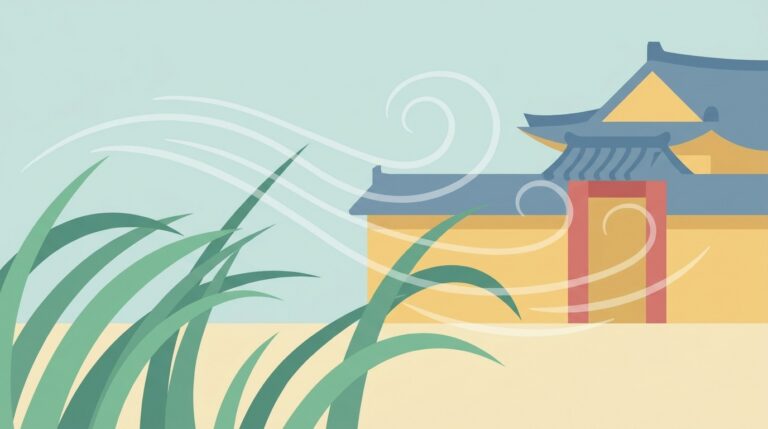
Awakening the Sleeping Giant: Mastering Post-War Korean Poetics and Kim Su-young’s Poetics of Resistance
Phase 1: Empathy & Immersion (The Awakening in Seochon)
안녕하세요! 매일한글 에디터입니다. (Hello! I’m your Daily Hangul editor.)
Imagine this: You are sitting in a weathered wooden hanok café tucked behind the ancient stone walls of Gyeongbokgung Palace in Seochon. Outside, rain softly pats the roof tiles, and inside, a group of Korean graduate students and veteran indie screenwriters are passionately debating a single line of poetry over steaming cups of ssanghwa-cha. You listen closely, hoping your C1/C2 Korean will effortlessly tune in. But suddenly, you hit a cultural wall. They aren’t discussing grammar or poetic rhymes; they are dissecting phrases like 온몸으로 밀고 나가다 (pushing forward with one’s entire physical existence) and lamenting their own 소시민적 비겁함 (petty-bourgeois cowardice) when faced with structural injustice.
You realize that the polished, polite Korean from standardized tests feels completely disarmed here. Modern Korean literature—forged through the crucible of liberation, the devastation of the Korean War (6·25 전쟁), and the democratic fervor of the April 19 Revolution (4·19 혁명)—is not passive. At the epicenter stands Kim Su-young (김수영), a legendary modernist who refused ivory-tower aestheticism and demanded poetry written with “one’s whole body” (온몸의 시학). Many advanced learners tell us: “I know how to converse politely in an office, but when Koreans talk about historical angst, social conscience, and intellectual hypocrisy, I feel tongue-tied.”
This masterclass is designed precisely for that bridge. By deconstructing Kim Su-young’s fierce poetics in masterpieces like Grass (풀) and One Day Leaving the Old Palace (어느 날 고궁을 나오면서), you will acquire the philosophical vocabulary, razor-sharp self-awareness, and nuanced social critique that command immediate respect in any sophisticated Korean intellectual circle.
Phase 2: Core Expressions Deep Dive (핵심 표현 3선)
1. 온몸으로 밀고 나가다 (Onmomeuro milgo nagada)
- Pronunciation: [On-mom-eu-ro mil-go na-ga-da] (Think of the heavy ‘on’ like ‘own’, followed by ‘mom’ sounding like a deep bell gong, then ‘mil’ like a stubborn windmill turning forward)
- Meaning: Literally “to push forward with one’s whole body”; idiomatically represents an uncompromising existential commitment where thought, physical action, and ethics converge without self-preservation.
- K-Culture Moment: Often heard in gritty social-realist films or democratic movement retrospectives (such as 1987: When the Day Comes or The Attorney) when an activist or whistleblower decides to confront state corruption despite guaranteed personal ruin.
- Editor’s Insight: Kim Su-young argued that real poetry isn’t crafted with neat ink on a desk; it is hammered out when life collides head-on with reality. In modern C2 conversation, using this phrase signals that you are not merely theorizing—you are putting your reputation, energy, and physical presence on the line.
- Situation Spectrum: Casual: ⚠️ (A bit intense for picking lunch) | Semi-formal: ✅ | Formal/Intellectual: ✅
- 🤔 Think About It: In English, we say “putting your neck on the line” or “going all in.” How does framing commitment as pushing with one’s entire physical body (온몸) reflect Korea’s intense modern history of embodied resistance?
2. 소시민적 비겁함 (Sosiminjeok bigeopam)
- Pronunciation: [So-si-min-jeok bi-geop-am] (Rhythmically: ‘So’ like solo, ‘si-min’ like citizen, ‘jeok’ like chalk, ‘bi-geop-am’ like a sharp inhale of self-reproach)
- Meaning: Literally “petty-bourgeois cowardice”; the poignant guilt of remaining silent before grand authoritarian tyranny while venting furious rage only at safe, trivial everyday slights.
- K-Culture Moment: In Kim Su-young’s iconic poem One Day Leaving the Old Palace (어느 날 고궁을 나오면서), the speaker laments that he cannot rage against the military dictatorship, yet he screams at a night-market vendor for giving him an undersized portion of pork trotters. In modern K-dramas, this captures an office worker who stays silent against a corrupt CEO but lashes out at a junior intern.
- Editor’s Insight: This is the ultimate weapon of modern self-reflection (자성, jaseong). When an intellectual or leader in Korea admits their 소시민적 비겁함, it disarms cynical criticism through ruthless self-exposure.
- Situation Spectrum: Casual: ⚠️ (Only among close intellectual friends) | Semi-formal: ✅ | Formal/Debate: ✅
- 🤔 Think About It: Why does self-awareness of one’s cowardice in Korean literature create moral authority rather than defeatism?
3. 바람보다 먼저 눕고 바람보다 먼저 일어난다 (Baramboda meonjeo nupgo baramboda meonjeo ireonanda)
- Pronunciation: [Ba-ram-bo-da meon-jeo nup-go ba-ram-bo-da meon-jeo i-reo-nan-da] (Flows like undulating reeds: ‘ba-ram’ [wind], soft dip at ‘nup-go’, rising crest at ‘i-reo-nan-da’)
- Meaning: “It lies down before the wind, and it rises before the wind.” The grass yields under external pressure faster than the wind blows, yet springs back up ahead of the storm—symbolizing the indestructible, resilient vitality of ordinary people (민중, minjung).
- K-Culture Moment: Quoted in modern editorial columns during times of economic crisis, mass peaceful protests (like the Candlelight Vigils in Gwanghwamun), or in K-historical dramas depicting the unbreakable spirit of the common folk.
- Editor’s Insight: Written in 1968 shortly before Kim Su-young’s untimely death, Grass (풀) transformed modernism from an abstract foreign import into an organic metaphor for grassroots Korean democracy.
- Situation Spectrum: Casual: 🚫 (Will sound like a walking manifesto) | Semi-formal: ✅ (Speeches/Essays) | Formal: ✅
- 🤔 Think About It: How does this dialectic between “submitting” (눕다) and “rising” (일어나다) redefine vulnerability as an ultimate form of political resistance?
Phase 3: Textbook Korean vs. Real Korean (교과서 한국어 vs 진짜 한국어)
Situation 1: Calling out hypocritical intellectual talk without action
- 📖 교과서 한국어 (Textbook):
“사회 문제에 대해 비판적인 태도를 취하고 실천해야 합니다.”
(Sahoe munje-e daehae bipanjeogin taedoreul chwihago silcheonhaeya hamnida.)
“We must adopt a critical attitude toward social problems and put it into practice.” - 🗣️ 진짜 한국어 (Real C2 Native):
“책상머리에서 말만 번지르르하게 늘어놓지 말고, 온몸으로 부딪쳐 봐야죠.”
(Chaeksangmeori-eseo malman beonjireureuhage neureonotji malgo, onmomeuro buditchyeo bwayajyo.)
“Stop spilling slick theories from behind a cozy desk; let’s throw our whole body into the collision of reality.” - 💡 왜 다를까? (Why the difference?):
Textbook phrases sound like sterile civil service manuals. Native Korean intellectuals despise 책상머리 이론 (desk-bound armchair theories) and prioritize raw physical engagement (온몸의 부딪침).
Situation 2: Confessing that someone’s critique painfully exposed your hypocrisy
- 📖 교과서 한국어 (Textbook):
“당신의 비판을 듣고 제 행동에 부끄러움을 느꼈습니다.”
(Dangsin-ui bipaneul deutgo je haengdong-e bukkeureoumeul neukkyeotseumnida.)
“Hearing your criticism, I felt ashamed of my behavior.” - 🗣️ 진짜 한국어 (Real C2 Native):
“방금 하신 말씀에 제 밑천이 다 드러나서 뼈를 세게 맞은 기분이에요.”
(Banggeum hasin malsseum-e je mitcheoni da deureonaso ppyeoreul sege majeun gibunieyo.)
“What you just said completely exposed my hollow bottom line; I feel thoroughly struck to the bone.” - 💡 왜 다를까? (Why the difference?):
Modern educated Koreans use expressive physical metaphors—such as 밑천이 드러나다 (having one’s limited capital/moral depth laid bare) and 뼈 맞다 (struck to the marrow)—to signal sophisticated self-deprecation without sounding overly defensive.
Phase 4: K-Culture Deep Dive & Non-Verbal Nuance
4-1. Nunchi & Physical Mannerisms: The Intellectual’s Self-Deprecation (자조의 미학)
When discussing post-war modernism or confronting moral ambiguity in Korean, verbal fluency alone is insufficient. Pay attention to these non-verbal cues:
* The Subdued SIGH (자조적인 한숨): Before delivering an incisive critique of one’s own hesitation or society’s inertia, Koreans often lower their gaze slightly, let out a short, contained sigh, and offer a half-smile (자조적 미소). This signals humility rather than arrogance.
* The Flattened Hand Gesture: When rejecting pretentious jargon (허세), native speakers often extend one hand flat, palm facing downward, gently pressing the air down twice. It visually commands: “Let’s ground ourselves in reality.”
* Avoid Pointing Fingers: Never point directly at someone when challenging their worldview. Direct your gaze downward toward the shared table or a page of text, phrasing critique in the collective first-person plural (“우리 스스로의 비겁함” – “our own cowardice”).
4-2. Cultural Code Analysis: From Kim Su-young to Modern K-Cinema
The DNA of Kim Su-young’s post-war modernist critique permeates contemporary Korean pop culture. Notice how Korea’s most critically acclaimed directors—Bong Joon-ho (Parasite), Lee Chang-dong (Burning), and Hwang Dong-hyuk (Squid Game)—rarely depict cartoonish villains. Instead, their narratives dissect the internal moral rot and petty anxieties of everyday people trapped in hyper-capitalist structures.
When Ki-taek in Parasite snaps at the lingering smell of contempt, or when the characters in Burning wander through modern Seoul paralyzed by alienation, they are reincarnations of Kim Su-young wandering out of Deoksugung Palace in 1965, furious at his own inability to rebel against macro-injustices. Grasping Kim Su-young gives you the cultural decoder ring to every critically acclaimed Korean cinematic masterpiece.
Phase 5: Real-World Roleplay Scenario (실전 롤플레이)
Setting: A dimly lit, indie poetry salon in Tongin-dong, Seoul. Outside, the rain drizzles. Across a worn zelkova table sits Min-seo (민서), a 30-something independent literary curator known for her piercing literary instincts and disarming honesty.
- 민서: “요즘 문학이나 예술이나, 다들 안전한 말만 골라서 하는 것 같지 않아요?”
(Yojeum munhag-ina yesurina, dadeul anjeonhan malman gollaseo haneun geot gatji anayo?)
🎭 행동 지문: 차 안경을 살짝 고쳐 쓰며, 찻잔을 천천히 내려놓는다.
“Don’t you feel that nowadays, both in literature and art, everyone only chooses the safest words?” -
You: “동감이에요. 현실의 부조리를 목격하면서도 다들 침묵하죠.”
(Donggamieyo. Hyeonsil-ui bujorireul mokgyeokhhamyeonseodo dadeul chimmukhajyo.)
🎭 행동 지문: 고개를 끄덕이며 진지한 눈빛으로 민서를 응시한다.
“I agree. Everyone witnesses the absurdities of reality, yet remains silent.” -
민서: “맞아요. 김수영 시인이 반세기 전에 ‘어느 날 고궁을 나오면서’에서 한탄했던 그 소시민성이 지금도 여전해요.”
(Majayo. Kim Su-young siini bansegi jeone ‘Eoneu nal gogung-eul naomyeonseo’eseo hantanhaetdeon geu sosiminseongi jigeumdo yeojeonhaeyo.)
🎭 행동 지문: 시집의 한 구절을 손가락 끝으로 톡톡 두드린다.
“Exactly. That very petty-bourgeois inertia Kim Su-young lamented half a century ago in ‘One Day Leaving the Old Palace’ is alive and well.” -
You: “거대한 권력 앞에서는 비겁해지면서, 사소한 일에만 분노하는 모습 말이죠?”
(Geodaehan gwallyeok apeseoneun bigeophaejimyeonseo, sasohan ireman bunnohaneun moseup marijyo?)
🎭 행동 지문: 씁쓸한 미소를 지으며 나직하게 읊조린다.
“You mean becoming cowardly before colossal power, while venting fury only over petty trivialities?” -
민서: “정곡을 찌르셨네요. 그래서 김수영은 시를 온몸으로 밀고 나가야 한다고 절규했나 봐요.”
(Jeonggogeul jjireusyeotneyo. Geuraeseo Kim Su-young-eun sireul onmomeuro milgo nagaya handago jeolgyuhaetna bwayo.)
🎭 행동 지문: 감탄한 듯 눈을 동그랗게 뜨며 미소를 짓는다.
“You struck the exact center. That must be why Kim Su-young cried out that poetry must be driven forward with one’s whole body.” -
You: “‘풀’처럼 묵묵히 견디며 끝내 다시 일어서는 생명력이 필요한 시대예요.”
(‘Pul’cheoreom mungmukhi gyeondimyeo kkeutnae dasi ireoseoneun saengmyeongryeogi piryohan sidaeyeyo.)
🎭 행동 지문: 두 손을 가볍게 모으며 단호한 어조로 말한다.
“It’s an era that desperately needs the resilience of ‘grass’—enduring in silence yet ultimately rising again.” -
민서: “단순히 시를 읽는 걸 넘어, 그 시대의 치열한 자성까지 꿰뚫어 보고 계시네요.”
(Dansunhi sireul ingneun geol neomeo, geu sidae-ui chiyeolhan jaseongkkaji kkwettureo bogo gyesineyo.)
🎭 행동 지문: 편안한 자세로 기대앉으며 깊은 공감을 표한다.
“Beyond merely reading the poetry, you are penetrating straight into the fierce self-reflection of that era.” -
You: “김수영의 언어는 박제된 과거가 아니라, 오늘의 우리를 비추는 거울이니까요.”
(Kim Su-young-ui eoneoneun bakjedoen gwageoga animyeo, oneul-ui urireul bichuneun geourinikkayo.)
🎭 행동 지문: 따뜻한 눈빛으로 화답하며 잔을 든다.
“Because Kim Su-young’s language is not taxidermied history; it is a mirror reflecting who we are today.”
🔀 Interactive Decision Point
How would you conclude this discussion when Min-seo asks: “그럼 오늘날 우리에게 ‘온몸의 시학’은 어떤 실천이어야 할까요?” (So for us today, what kind of real-world practice should this ‘poetics of the whole body’ be?)
- Choice A: “소셜 미디어에서 좋아요를 누르기보다, 불편한 진실을 마주할 때 자신의 기득권부터 내려놓는 용기 아닐까요?”
(Rather than hitting ‘like’ on social media, isn’t it the courage to let go of our own small privileges when confronting uncomfortable truths?)- Outcome (Best): Flawless C2 Insight! Min-seo is profoundly moved. You connected 1960s poetics with modern digital slacktivism, demonstrating master-level self-awareness.
- Choice B: “시인의 시집을 열심히 사서 읽고 외국어로 번역하는 일입니다.”
(It means buying the poet’s books diligently and translating them into foreign languages.)- Outcome (Risk): Too utilitarian and superficial. Min-seo will nod politely, but the intellectual connection will drop back to textbook level.
- Choice C: “저는 시인이 아니라서 그런 거창한 건 잘 모르겠고, 그냥 제 일이나 잘하려고요.”
(I’m not a poet so I don’t care about such grandiose things; I just focus on doing my own job.)- Outcome (Bad): You just embodied the exact 소시민적 무관심 (petty indifference) Kim Su-young criticized! The conversation terminates abruptly.
Phase 6: 10-Second Emotional Shadowing Drill (감정 섀도잉 드릴)
Read aloud along the pause markers / while channeling the distinct emotional tone designated for each phrase.
- [😔 자조 섞인 목소리로 – With introspective self-irony]
“거대한 권력 앞에서는 / 입 한 뻥긋 못 하면서 / 옹졸하게 / 밤길 포장마차 주인에게만 / 고래고래 소리를 질렀구나.”
(Geodaehan gwallyeok apeseoneun / ip han ppeonggeut mot hamyeonseo / ongjolhage / bamgil pojangmacha juin-egeman / goraegorae sorireul jilleotguna.)
“Before colossal power / I couldn’t utter a peep / yet in my utter pettiness / I screamed my lungs out / only at the midnight street-cart vendor.” -
[🌱 강인하고 묵직하게 – Resilient, low, and unbreakable]
“바람보다 늦게 누워도 / 바람보다 먼저 일어나고 / 바람보다 늦게 울어도 / 바람보다 먼저 웃는다.”
(Baramboda neutge nuwodo / baramboda meonjeo ireonago / baramboda neutge ureodo / baramboda meonjeo unneunda.)
“Though it lies down later than the wind / it rises before the wind / though it weeps later than the wind / it laughs before the wind.” -
[🔥 비장하고 단호하게 – Resolute, fierce, and unyielding]
“시는 머리로 쓰는 게 아니라 / 온몸으로 밀고 나가 / 삶의 밑바닥과 정면으로 부딪치는 것이다.”
(Sireun meoriro sseuneun ge anira / onmomeuro milgo naga / salm-ui mitbadakgwa jeongmyeon-euro buditchineun geosida.)
“Poetry is not written with the brain / but pushed forward with the entire body / colliding head-on with the bedrock of existence.”
Phase 7: K-Culture Mini Dictionary (핵심 키워드 4선)
-
참여문학 (Cham-yeo-mun-hak)
- Translation: Literature of Political Engagement / Littérature engagée.
- Real-world Usage: Contrasted with 순수문학 (pure/aesthetic literature). Used in socio-cultural critique whenever an artist, musician, or director steps out of their creative comfort zone to confront pressing social crises or authoritarian censorship.
- 소시민 (So-si-min)
- Translation: Petty bourgeois / The everyday passive citizen.
- Real-world Usage: Rarely used as an economic term today; rather, it describes someone preoccupied with their own mortgage, safety, and small comforts while ignoring broader structural injustice. Often used in self-admonishment: “나 역시 한 명의 무기력한 소시민에 불과하다” (I, too, am merely an inert petty citizen).
- 뼈 때리다 (Ppyeo ttae-ri-da)
- Translation: To strike right at the bone / To deliver a brutally accurate truth.
- Real-world Usage: Ubiquitous in modern media and intellectual debate. When someone pierces through self-deceit and highlights the core contradiction of your argument, Koreans say: “방금 그 말, 진짜 뼈 때린다” (That comment hit right to the bone).
- 모더니즘의 세례 (Mo-deo-ni-jeum-ui se-rye)
- Translation: The baptism of modernism.
- Real-world Usage: A scholarly and journalistic expression denoting an intellectual or generation fundamentally transformed by avant-garde existentialism, surrealism, or Western modernist thought, which they subsequently synthesized into local Korean realities.
Phase 8: Cultural Explorer & Traveler Survival Kit
Survival Expressions TOP 3
- “시인의 치열한 문제의식에 깊이 공감합니다.”
(Siin-ui chiyeolhan munjeeuisik-e gipi gonggamhamnida.)- Pro Tip: Use this when visiting independent bookshops or art galleries in Jongno or Hyehwa when discussing exhibitions. It instantly elevates your standing from tourist to discerning connoisseur.
- “작품 이면에 깔린 역사적 맥락을 조금 더 설명해 주실 수 있나요?”
(Jakpum imyeon-e kkallin yeoksajeok maengnageul jogeum deo seolmyeonghae jusil su innayo?)- Pro Tip: Perfect for docent-led tours in modern literature museums. Curators will often share unpublished backstories with great enthusiasm.
- “단순한 서정을 넘어서는 묵직한 울림이 있네요.”
(Dansunhan seojeong-eul neomeoseoneun mukjikhan ullimi itneyo.)- Pro Tip: Use this to praise any profound contemporary Korean movie, play, or poetic work that leaves a heavy emotional aftertaste.
Editor’s Travel Note: The Kim Su-young Pilgrimage
If you truly want to breathe the air that shaped post-war Korean modernism, escape the bustling shopping alleys of Myeongdong and head north to Dobong-gu. Here lies the Kim Su-young Literary Museum (김수영문학관), situated right where the poet spent his final creative years breeding poultry and wrestling with state tyranny.
* Navigation Guide: Open your map and look for 네이버 지도 앱에서 김수영문학관 길찾기. Take Subway Line 4 to Ssangmun Station (쌍문역), take Exit 2, and hop on local bus Dobong 07 straight to the museum entrance.
* Local Secret: After exploring the handwritten manuscripts, walk along the nearby Dobongsan footpaths. The jagged granite peaks against the Seoul sky will show you the exact rugged resilience that Kim Su-young channeled into Grass.
Phase 9: “한 발 더 깊이” (One Step Deeper: The Intellectual Essay)
In Western literary traditions, modernism often emerged as a fragmented, skeptical retreat from the horrors of industrial warfare—a turn inward toward the private stream of consciousness. But in post-war Korea, Kim Su-young revolutionized modernism by refusing this interior retreat. Shattered by brother-against-brother slaughter in the Korean War and having endured the harrowing Geoje POW camp, Kim realized that refined, delicate lyrical beauty (서정) was an irresponsible luxury in a wounded republic.
By fusing surrealist free-association with unyielding political resistance (참여), he established that the ultimate duty of the Korean language is not to comfort the comfortable, but to relentlessly disturb our complacency. He taught modern Koreans that to love one’s mother tongue is to constantly interrogate one’s moral cowardice.
- 💬 Your Turn: Have you ever noticed yourself getting furious over trivial everyday inconveniences (like bad Wi-Fi or slow elevators) while remaining completely passive toward massive injustices in the world? How does Kim Su-young’s 소시민적 비겁함 speak to your own life today? Share your thoughts below in Korean!
Phase 10: FAQ & Common Pitfalls
Q: Why did Kim Su-young reject the traditional lyrical style (서정시) of poets like Kim Sowol?
A: Kim Su-young didn’t despise lyrical poets; he believed that the idyllic, sorrowful resignation of pre-war lyricism could not process the industrial brutality, national division, and authoritarian coups of post-war Korea. To him, pretty rhymes were an evasion of reality; poetry had to become raw, abrasive, and physically disruptive.
Q: Can I use the word ‘소시민’ (sosimin) in a corporate presentation?
A: Yes, but with strict situational nuance. If you use it to describe customers (e.g., “소시민들의 소비 행태”), it will sound condescending and archaic. However, if used in corporate CSR debates or humanities seminars to reflect on civic responsibility (“소시민적 무관심을 넘어 연대로”), it carries powerful rhetorical weight.
Q: How do native speakers distinguish between ‘민중’ (minjung) and ‘시민’ (simin)?
A: 시민 (Simin) refers to modern legal/democratic citizens with constitutional rights in a civil society. 민중 (Minjung) carries a deep, populist, historically aggrieved resonance—referring to the unvarnished, enduring commoners who historically resisted dynastic oppression, colonial rule, and military dictatorships.
🚨 Common Mistakes Board (흔한 실수 주의보)
| Foreign Learner Mistake | What Native Speakers Hear | Correct C2 Action |
|---|---|---|
| Saying “저는 온몸으로 밀고 나갔어요” for finishing homework. | “I threw my physical body into the meat-grinder of state oppression to finish Page 3.” | Save this phrase for massive moral dilemmas, life-changing risks, or profound social advocacy. Use “혼신의 힘을 다했어요” (I gave it my all) for studies/work. |
| Using 소시민 as a synonym for ordinary, peaceful people (평범한 사람). | It sounds like you are subtly diagnosing them with moral spinelessness and passive apathy. | Use 보통 사람들 (ordinary people) or 평범한 시민들 (everyday citizens) unless you deliberately intend moral critique. |
| Pronouncing 풀 (Grass) like 불 (Fire) or 뿔 (Horn). | Totally changes the poetic meaning from botanical resilience to apocalyptic conflagration! | Ensure strong aspiration: release a distinct puff of air from both lips for 풀 [P-ul]. |
Phase 11: Action Missions (액션 미션)
- 🥉 Bronze Level (Solo Practice):
Recite the Phase 6 Shadowing Drill 3 times in front of a mirror. Pay close attention to facial muscles: loosen your brow for 자조 (self-mockery) and harden your jawline for 비장함 (fierce resolution). -
🥈 Silver Level (Community Connection):
Post a short 2-sentence reflection on Instagram or Threads quoting a line from Grass: “바람보다 먼저 눕고 바람보다 먼저 일어난다.” Add your own modern interpretation regarding personal resilience during burnout. -
🥇 Gold Level (Real-Life Mastery):
During your next conversation with a Korean friend, tutor, or colleague, introduce the concept of 소시민적 비겁함. Ask them: “혹시 살면서 스스로의 소시민적 비겁함에 깜짝 놀란 적 있으세요?” (Have you ever felt startled by your own petty cowardice in life?) Watch their eyes light up at the sheer depth of your question! -
🎮 K-Culture Mission:
Watch the acclaimed Korean historical film 1987: When the Day Comes or Bong Joon-ho’s Snowpiercer. Identify the exact character who represents the transformation from 소시민 (passive onlooker) to someone pushing forward 온몸으로 (with their whole being).
Phase 12: Interactive Quiz Challenge (인터랙티브 퀴즈)
1. Context Judgment Quiz
Which of the following situations is the most linguistically and culturally appropriate for the phrase “온몸으로 밀고 나가다”?
* (A) A university student rushing to catch the final subway before midnight.
* (B) An investigative journalist publishing an exposé on high-level corruption despite death threats and political blacklisting.
* (C) A baker kneading sourdough bread using traditional physical techniques.
* (D) A shopper squeezing through crowded crowds during the Black Friday discount rush.
2. Fill-in-the-Blank Quiz
In One Day Leaving the Old Palace, Kim Su-young despises his own _________ because he tolerates authoritarian oppression but curses furiously at a salon hair-dresser or restaurant vendor.
* Hint: [ㅅㅅㅁㅈ ㅂㄱㅎ]
3. Cultural True or False Quiz
- Statement: Kim Su-young’s poem Grass (풀) views the ‘grass’ as passive victims that are completely destroyed and permanently eradicated by the relentless ‘wind’. (True / False)
🔍 Click here to reveal the answers and explanations! (정답 및 해설 펼치기)
- Context Judgment Answer: (B)
- Explanation: 온몸으로 밀고 나가다 requires profound existential commitment where physical well-being and moral conscience collide against immense resistance. Catching a train or kneading bread involves physical effort, but completely lacks the ethical dimension of modern resistance poetics.
- Fill-in-the-Blank Answer: 소시민적 비겁함 (Sosiminjeok bigeopam)
- Explanation: The quintessential trademark of petty-bourgeois cowardice is venting disproportionate fury only against safe, powerless targets while bowing before towering structural dominance.
- Cultural True or False Answer: False
- Explanation: Although the grass lies down (눕는다) under the weight of the wind, it rises earlier (바람보다 먼저 일어난다) and laughs earlier (바람보다 먼저 웃는다). It represents the invincibility of grassroots vitality, not permanent victimhood!







