

Handling Traffic Surges Like a Pangyo Tech Lead: Cloud Auto-Scaling & Warm-Up in Korean
Phase 1: Empathy & Story Opening
안녕하세요! 매일한글 에디터입니다. (Hello! This is your Daily Hangul editor.)
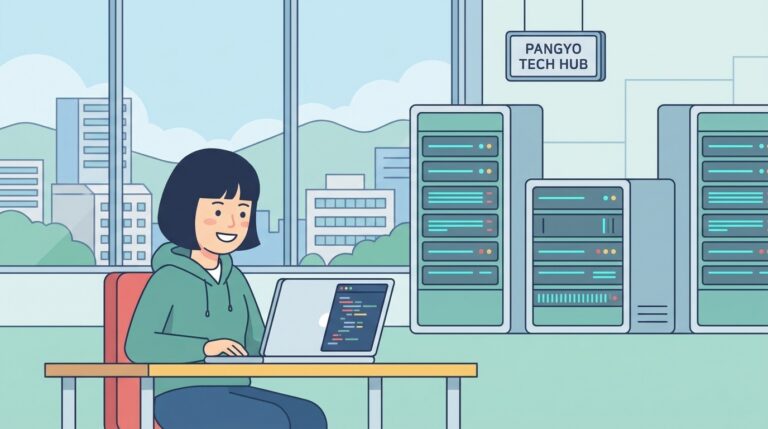
Picture this: It’s 7:55 PM on a chilly Thursday evening in Pangyo Techno Valley—the bustling Silicon Valley of South Korea. You are sitting in an open-plan engineering hub. On everyone’s second monitor is a massive countdown timer. At exactly 8:00 PM, tickets for the biggest K-Pop world tour of the decade go live on your company’s platform. Your team anticipates over 500,000 concurrent fans mashing the refresh button simultaneously.
Suddenly, your Korean infrastructure lead leans over your desk and asks with urgent eyes: “인스턴스 설정 어떻게 하셨어요? (Inseuteonseu seoljeong eotteoke hasyeosseoyo? – How did you configure the instances?)” If your tongue gets tied trying to explain threshold alarms, scaling policies, and pre-warming in textbook Korean, sweat starts dripping down your neck. Cloud engineering is hard enough, but articulating technical trade-offs between cost optimization and system availability in professional Korean feels like a whole different beast.
Over the past few years, dozens of global software engineers working at Korean tech giants like Naver, Kakao, Coupang, and fast-growing Web3 startups have reached out to us with the exact same pain point: “I know Kubernetes and AWS inside out, but in sprint planning, I sound like an intern because I don’t know the colloquial engineering terms Korean developers use every day.”
Don’t worry! In this guide, you will master the exact B2-level Korean expressions needed to set up auto-scaling thresholds, pre-warm instances, and balance infrastructure budgets like a battle-tested lead architect. Let’s make sure your servers—and your confidence—never crash!
Phase 2: Core Expressions Deep Dive
1. CPU 사용률이 60%를 넘어가면 서버를 자동으로 늘리도록 설정했어요
- Hangul & Romanization: CPU 사용률이 60%를 넘어가면 서버를 자동으로 늘리도록 설정했어요 (Sipi-yu sayongnyuri yuksip peosenteureul neomeogamyeon seobeoreul jadongeuro neullidorok seoljeonghaesseoyo)
- Pronunciation Analog: Think of yuksip like “yook-ship” and neomeogamyeon like “no-mo-ga-myun” (rhymes with fun).
- Meaning: Literal: “When CPU utilization exceeds 60%, I configured it to automatically increase servers.” | Natural nuance: “We’ve configured auto-scaling to spin up new instances once CPU load crosses 60%.”
- K-Culture Moment: You’ll hear this constantly in Korean tech dramas like Start-Up (스타트업) during demo days or server crash crisis scenes.
- Editor’s Insight: Korean developers use the native verb 늘리다 (neullida – to expand/increase) rather than complex Sino-Korean words when talking about adding server nodes.
- Situation Spectrum: Casual: ⚠️ | Semi-formal: ✅ | Formal: ✅
- 🤔 Think About It: In English, we say “spin up instances” or “scale out.” Why do you think Korean developers prefer concrete action verbs like “늘리다 (stretch/increase)” in verbal standups?
2. 이벤트 시작 30분 전에 서버를 미리 웜업(Warm-up)해 둘게요
- Hangul & Romanization: 이벤트 시작 30분 전에 서버를 미리 웜업해 둘게요 (Ibenteu sijak samsipbun jeone seobeoreul miri womeop-hae dulgeyo)
- Pronunciation Analog: Samsip-bun sounds like “sum-ship-boon”; miri sounds like “me-ree”.
- Meaning: Literal: “30 minutes before the event starts, I will warm up the servers in advance.” | Natural nuance: “I’ll pre-warm the instances half an hour before the flash sale kicks off.”
- K-Culture Moment: E-commerce mega-sales like Musinsa Black Friday or ticket drops on Interpark always require proactive pre-warming behind the scenes.
- Editor’s Insight: Notice the auxiliary pattern
-어 둘게요 (-eo dulgeyo). It denotes doing an action in advance and leaving it in that prepared state for peace of mind. It communicates high dependability. - Situation Spectrum: Casual: ⚠️ | Semi-formal: ✅ | Formal: ✅
- 🤔 Think About It: How does phrasing an action as an anticipatory service (
-아/어 두다) alter how your team members perceive your reliability?
3. 비용 폭탄을 방지하려면 최대 인스턴스 개수에 상한선을 걸어야 해요
- Hangul & Romanization: 비용 폭탄을 방지하려면 최대 인스턴스 개수에 상한선을 걸어야 해요 (Biyong poktaneul bangjiharyeomyeon choedae inseuteonseu gaesue sanghanseoneul georeoya haeyo)
- Pronunciation Analog: Pok-tan sounds like “poke-tahn” (literally bomb); sanghanseon sounds like “sahng-hahn-sun”.
- Meaning: Literal: “If we want to prevent a cost bomb, we must put an upper ceiling on the maximum instance count.” | Natural nuance: “To prevent cloud bill shock, we must set a hard cap on maximum instances.”
- K-Culture Moment: Korean tech blind communities (like Blind App) frequently post horror stories about startup interns forgetting to turn off GPU clusters and getting a “bill bomb” (요금 폭탄).
- Editor’s Insight: Koreans love the vivid metaphor “폭탄 (bomb)” for extreme surprises, especially unexpected expenses (yogeum poktan).
- Situation Spectrum: Casual: ✅ | Semi-formal: ✅ | Formal: ⚠️ (In an executive board meeting, replace 폭탄 with 예산 초과 [budget overrun]).
- 🤔 Think About It: Contrast the corporate caution of “risk mitigation” in Western enterprise with the expressive urgency of “preventing a bomb” in Korean startup culture.
Phase 3: Textbook Korean vs. Real Korean
Situation 1: Explaining Server Scale-Out
- 📖 교과서 한국어 (Textbook): 부하가 발생할 경우를 대비하여 가상 서버를 동적으로 할당하도록 정책을 수립하였습니다. (Buhaga balsaenghal gyeong-ureul daebihaeyeo gasang seobeoreul dongjeogeuro haldanghadorok jeongchaegeul suriphayeosseumnida. – In preparation for the occurrence of load, we have formulated a policy to dynamically allocate virtual servers.)
- 🗣️ 진짜 한국어 (Real-World): 트래픽 몰리면 서버 바로 늘어나게 오토스케일링 걸어뒀어요. (Teuraepik molrimyeon seobeo baro neureonage otoseukeilling georeodwosseoyo. – I hooked up auto-scaling so servers immediately spin up if traffic floods in.)
- 💡 왜 다를까?: Real tech workplaces avoid stiff bureaucratic Sino-Korean words like “가상 서버 동적 할당”. Instead, they combine standard tech loanwords (오토스케일링) with vivid descriptive verbs (몰리다, 걸어두다).
Situation 2: Warning About Cloud Overspending
- 📖 교과서 한국어 (Textbook): 클라우드 인프라 자원의 과도한 프로비저닝은 재무적 손실을 초래합니다. (Keulla-udeu inpeura jawon-ui gwadohan peurobijeonin-eun jaemujeok sonsireul choraehamnida. – Excessive provisioning of cloud infrastructure resources causes financial loss.)
- 🗣️ 진짜 한국어 (Real-World): 스케일 다운 안 되면 이번 달 클라우드 비용 폭탄 맞아요. (Seukeil daun an doemyeon ibeon dal keulla-udeu biyong poktan majayo. – If it doesn’t scale back down, we’re going to get hit with an insane cloud bill this month.)
- 💡 왜 다를까?: Pangyo tech culture values velocity and vivid clarity. Saying “폭탄 맞다 (get hit by a bomb)” instantly galvanizes teammates to check their idle resources.
Phase 4: K-Culture Deep Dive & Non-Verbal Manners
4-1. 눈치 (Nunchi) & Gestures in Tech War Rooms
In a Korean engineering sprint or during an active release deployment, body language carries immense weight:
* The Screen Alignment Lean: When discussing dashboards (like Grafana or CloudWatch), position your upper body angled towards your colleague’s screen, not square against their personal space. Nod slowly twice (끄덕끄덕) while reviewing metrics to show active cognitive synchronization.
* Handling Mistakes Softly: If someone forgets to set an auto-scaling cooldown period, avoid direct finger-pointing (“네가 설정 안 했잖아”). Instead, soften the criticism with passive framing: “어라, 쿨다운 설정이 살짝 빠져 있었네요! (Eora, kul-daun seoljeongi saljjak ppajyeo isseonneyeo! – Oh look, the cooldown setting slipped past!)”.
4-2. The High-Stakes World of “Piketing” (피켓팅)
In Korea, ticket purchasing for top idols, esports finals (like T1 in League of Legends LCK), and train bookings before Chuseok is known as 피켓팅 (Piketing = Blood + Ticketing). Millions of API requests hit load balancers within 300 milliseconds. If the platform returns an HTTP 504 Gateway Timeout, social media explodes within minutes with angry memes. Korean DevOps teams treat pre-warming and latency optimization not as theoretical architecture problems, but as front-line defense for the brand’s public reputation.
Phase 5: Real-World Roleplay Scenario
Setting: 4:30 PM at a Pangyo mobility tech startup. An upcoming flash coupon drop happens at 5:00 PM.
Characters:
* 민준 (Min-jun): Senior Lead DevOps Architect, calm under pressure.
* 알렉스 (Alex): Intermediate Cloud Engineer (You).
- 민준: 알렉스 씨, 5시 선착순 할인 이벤트 인프라 세팅 점검 끝났나요?
(Alex-ssi, daseot-si seonchak-sun harin ibenteu inpeura seting jeomgeom kkeutnannayo?)
“Alex, did you finish checking the infrastructure setup for the 5 PM first-come-first-served discount event?”
🎭 [태블릿 모니터링 화면을 넘겨보며 차분하게 묻는다] -
알렉스: 네, 민준 님! CPU 사용률 60% 기준으로 오토스케일링 규칙 걸어뒀습니다.
(Ne, Minjun-nim! Sipi-yu sayongnyul yuksip peosenteu gijuneuro otoseukeilling gyuchik georeodwotsseumnida.)
“Yes, Min-jun! I set up the auto-scaling rule based on a 60% CPU utilization threshold.”
🎭 [자신감 있게 모니터를 가리키며] -
민준: 60% 좋네요. 그런데 스파이크 트래픽은 스케일 아웃 속도가 못 따라갈 수도 있어요.
(Yuksip peosenteu jonneyo. Geureonde seupa-ikeu teuraepig-eun seukeil aut sokdoga mot ttaragal sudo isseoyo.)
“60% sounds good. But with spike traffic, the scale-out speed might not keep up in time.”
🎭 [턱을 매만지며 신중한 표정을 짓는다] -
알렉스: 맞습니다. 그래서 이벤트 시작 30분 전인 4시 반부터 최소 인스턴스를 10대로 미리 웜업해 둘 계획입니다.
(Matseumnida. Geuraeseo ibenteu sijak samsipbun jeonin nesi banbuteo choeso inseuteonseureul yeoldae-ro miri womeop-hae dul gyehoe-gimnida.)
“Exactly. That’s why I plan to pre-warm the fleet by raising the minimum instances to 10 starting at 4:30 PM, 30 minutes before kickoff.”
🎭 [일정표와 설정 화면을 함께 띄워 보여주며] -
민준: 완벽하네요! 혹시 최대 인스턴스 제한(Max capacity)도 걸어두셨죠?
(Wanbyeokhaneyo! Hoksi choedae inseuteonseu jehan-do georeodusyeotjyo?)
“Spot on! Did you also set a maximum instance capacity limit by any chance?”
🎭 [살짝 미소를 띠며 안도한다] -
알렉스: 그럼요. 예산 보호를 위해 최대 30대로 상한선을 묶어뒀습니다.
(Geureomyo. Yesan bohoreul wihae choedae soreundae-ro sanghanseoneul mukkeodwotsseumnida.)
“Of course. To protect our budget, I capped the ceiling at a maximum of 30 instances.”
🎭 [확인 체크박스를 클릭하며 단호하게] -
민준: 훌륭합니다. 이벤트 끝나고 트래픽 빠지면 스케일 인(Scale-in) 정책도 잘 도는지 같이 확인해요.
(Hullyunghamnida. Ibenteu kkeutnago teuraepik ppajimyeon seukeil in jeongchaekdo jal doneunji gachi hwaginhaeyo.)
“Excellent work. Once the event wraps up and traffic subsides, let’s verify together that the scale-in policy triggers properly.”
🎭 [가볍게 어깨를 토닥여 준다] -
알렉스: 알겠습니다. 모니터링 로그 계속 주시하고 있겠습니다!
(Algetseumnida. Moniteoring rogeu gyesok jusihago itgetseumnida!)
“Understood. I will keep monitoring the live logs closely!”
🎭 [키보드에 손을 올리며 미소 짓는다]
🔀 Interactive Branching Decision Point
Suppose Min-jun asks: “트래픽이 예상보다 3배 이상 폭증해서 30대 인스턴스로도 부족하면 어쩌죠? (What if traffic surges over 3x expectations and even 30 instances aren’t enough?)” How do you respond?
- Option A: “그냥 최대 인스턴스 제한을 무제한으로 풀어버릴게요! (Geunyang choedae inseuteonseu jehaneul mujehaneuro pureobeorilgeyo! – Let’s just remove the max instance cap completely!)”
- Feedback (Risk): ⚠️ Dangerous! Removing max limits risks a catastrophic AWS bill that could drain the startup’s monthly runway within hours.
- Option B: “API 대기열(Queue) 시스템을 켜서 트래픽 진입 속도를 조절하고, 필요시 상한을 50대까지 단계적으로 올리겠습니다. (API daegiyeol siseutemeul kyeoseo teuraepik jin-ip sokdoreul jojeolhago, piryosi sanghaneul osipdaekkaji dangyejeogeuro olligetseumnida.)”
- Feedback (Best): 🏆 Perfect! This demonstrates advanced architectural maturity—leveraging rate limiting/virtual waiting rooms while maintaining structured cost control.
- Option C: “서버 터지면 그때 가서 다시 생각해보죠. (Seobeo teojimyeon geuttae gaseo dasi saenggak-haebojyo. – If the server crashes, we can think about it then.)”
- Feedback (Bad): 🚫 Unprofessional. Korean team culture heavily prioritizes preemptive crisis prevention (사전 대비).
Phase 6: 10-Second Emotional Shadowing Drill
Practice these dynamic sentences out loud. Match the emotional tempo:
[🔥 비장하고 집중해서 / Solemn & Laser-focused]
“CPU 60% 넘어가면 / 바로 스케일 아웃되도록 / 트리거 걸어뒀습니다.”
(Sipi-yu yuksip peosenteu neomeogamyeon / baro seukeil aut-doedorok / teurigeo georeodwotsseumnida.)-
[😌 안도하며 자신감 있게 / Relieved & Confident]
“오픈 30분 전에 / 미리 웜업해 둬서 / 트래픽 튀어도 / 끄떡없을 거예요.”
(Opeun samsipbun jeone / miri womeop-hae dwoseo / teuraepik twieodo / kkeutteog-eopseul geoyeyo.) -
[⚠️ 단호하고 경계하며 / Firm & Cautious]
“아무리 급해도 / 최대 인스턴스 상한선은 / 꼭 걸어둬야 / 비용 폭탄 안 맞아요.”
(Amuri geuphaedo / choedae inseuteonseu sanghanseon-eun / kkok georeodwoya / biyong poktan an majayo.)
Phase 7: K-Culture Mini Dictionary
-
서버가 터지다 (Seobeoga teojida)
- Translation: The server explodes / crashes under heavy load.
- Usage: Widely used in developer sprint meetings and gaming forums when unexpected user concurrency takes down production servers.
- 피켓팅 (Piketing)
- Translation: Blood ticketing (피 [blood] + 티켓팅 [ticketing]).
- Usage: Used culturally to describe the brutal, hyper-competitive experience of booking concert tickets, university course registrations, or limited-run sneakers.
- 웜업하다 (Womeop-hada)
- Translation: To warm up (instances / cache / database connections).
- Usage: Standard tech loanword verb in Korean IT organizations used when provisioning hardware ahead of sudden batch jobs or marketing campaigns.
- 요금 폭탄 (Yogeum poktan)
- Translation: Bill bomb (Shockingly huge bill).
- Usage: Commonly used in both consumer life (summer electricity bills from air conditioning) and cloud engineering (unexpected AWS NAT Gateway or egress data charges).
Phase 8: Tech Professional Survival Kit
Top 3 Workplace Survival Expressions
- 모니터링 대시보드 링크 공유해 드릴게요.
(Moniteoring daesibodeu ringkeu gong-yuhae deurilgeyo.)
Pro Tip: Say this when joining a virtual war room or Slack huddle so everyone views the same telemetry. - 부하 테스트(Load Test) 결과 공유드립니다.
(Buha teseuteu gyeolgwa gong-yudeurimnida.)
Pro Tip: Essential phrase when attaching stress-testing reports before management approves infrastructure budget expansions. - 스케일 인 쿨다운 타임은 5분으로 잡을까요?
(Seukeil in kuldaun taimeun obuneuro jabeulkkayo?)
Pro Tip: Demonstrates your technical nuance regarding flapping—preventing servers from terminating too rapidly while load fluctuates.
Editor’s Travel & Tech Expat Note
If you are visiting or working in Pangyo or Gangnam’s tech districts, public Wi-Fi is everywhere, but setting up local tools makes workplace navigation effortless:
* Download the official KakaoWork enterprise messenger or Naver Works collaboration platform if onboarding at Korean corporate workplaces.
* Commuting to Pangyo Techno Valley? Use the KakaoBus public transit app to track the precise real-time arrival of commuter express buses (빨간 버스) directly to IT campus complexes.
Phase 9: A Step Deeper (한 발 더 깊이)
In Korean corporate software culture, infrastructure is rarely viewed through an individualistic lens. When an engineer configures cloud instances, their work is framed under the collective concept of “우리 서비스 (Our service)” rather than “내 코드 (My code)”. If an outage occurs due to an improperly configured auto-scaling trigger, the collective team gathers in a blameless post-mortem (회고 미팅) focusing on structural safeguards. The preemptive nature of phrases like -아/어 두다 reflects an unspoken cultural courtesy: doing preparatory work today so your teammates can sleep soundly tonight without middle-of-the-night PagerDuty alerts.
💬 Your Turn: Have you ever faced sudden traffic spikes or an unexpected cloud bill in your career? How would you describe that stressful moment to a Korean colleague using the phrase 서버가 터지다 or 비용 폭탄? Share your sentence in the comments below!
Phase 10: FAQ & Avoiding Misunderstandings
Q: Can I use pure Korean words instead of English loanwords like “오토스케일링” (Auto-Scaling)?
A: While theoretical academic terms like “자동 확장 (Jadong hwakjang)” exist, 95% of engineers in Korean startups and enterprise tech companies say “오토스케일링 (Auto-scaling)”, “스케일 아웃 (Scale-out)”, and “프로비저닝 (Provisioning)”. Using English tech loanwords paired with natural Korean verb conjugations makes you sound far more natural.
Q: What is the polite way to ask a colleague to double-check my threshold settings?
A: Say: “제가 설정한 임계값 한 번만 크로스체크해 주실 수 있나요? (Jega seoljeonghan imgyegap han beonman keuroseuchekeuhae jusil su innayo?)”. It uses polite humble forms (제가) and respects their time (한 번만).
Q: Does “웜업 (Warm-up)” only apply to servers in Korean tech offices?
A: No! It is used for cache pre-loading (캐시 웜업), JVM warm-up, and metaphorically before lengthy code reviews or design sprints (간단하게 웜업하고 시작할까요?).
🚨 Common Mistakes (흔한 실수)
- Mistake: Saying “서버를 죽였어요” when you meant you scaled down instances.
- Why it’s bad: Sounds like you accidentally crashed production.
- Correct Action: Say “서버 대수를 줄였어요 (I reduced the number of servers)” or “스케일 인 했어요 (I scaled in)”.
- Mistake: Confusing “증설하다 (expand capacity)” with “감설하다 (rarely used)”.
- Correct Action: For scaling up/out use “증설하다 (jeungseol-hada)” or “늘리다 (neullida)”; for scaling down use “축소하다 (chukso-hada)” or “줄이다 (jurida)”.
- Mistake: Using aggressive informal speech when the server is down.
- Why it’s bad: High stress requires maximum team cohesion.
- Correct Action: Use polite team-centric questions: “어디서 병목이 생겼는지 로그 같이 볼까요? (Shall we check the logs together to see where the bottleneck occurred?)”.
Phase 11: Action Missions
- 🥉 Bronze Mission (Solo Drill): Stand in front of your mirror and practice saying: “CPU 사용률 60% 기준으로 오토스케일링 걸어뒀습니다!” three times with crisp business pronunciation in under 10 seconds.
- 🥈 Silver Mission (Community Share): Leave a comment on our Daily Hangul blog or your personal study social media using
-어 둘게요to describe one preparation task you did today (e.g., “회의 전에 커피 미리 사 둘게요!”). - 🥇 Gold Mission (Real-World Application): In your next standup or tech exchange with a Korean colleague, slip in the phrase: “트래픽 급증에 대비해서 인스턴스 미리 웜업해 둘까요?”
🎮 K-Culture Mission: Watch Episode 5 of the K-Drama Start-Up (스타트업) or search YouTube for “개발자 브이로그 서버 점검” (Developer Vlog Server Maintenance). Spot how many times engineers say the words 트래픽 (traffic), 서버 (server), and 터지다 (crash/burst)!
Phase 12: Interactive Quiz Challenge
Test your mastery of Korean cloud and infrastructure terms!
1. Situation Judgment: You need to convince your tech lead to cap the maximum number of auto-scaled instances to prevent sudden runaway cloud expenses. Which phrase is best?
* (A) 서버 터지면 그냥 새로 사죠.
* (B) 요금 폭탄을 방지하기 위해 최대 인스턴스에 상한선을 걸어야 합니다.
* (C) 오토스케일링은 돈이 많이 드니까 아예 끄겠습니다.
2. Fill-in-the-Blank: Complete the sentence meaning: “I will warm up the server 30 minutes in advance.”
* “이벤트 시작 30분 전에 서버를 미리 ________ 둘게요.”
3. True or False: In Korean tech companies, using English loanwords like “스케일 아웃 (Scale-out)” and “쿨다운 (Cool-down)” is considered poor Korean and should strictly be translated to pure Korean words.
* [True / False]
👉 Click here to reveal answers & explanations!
- Answer: (B)
- Explanation: Mentioning 요금 폭탄 방지 (preventing a bill bomb) and 상한선 (upper ceiling limit) clearly articulates technical and fiscal responsibility.
- Answer: 웜업해 (womeop-hae)
- Explanation: Combines the loanword 웜업 with the auxiliary verb pattern
-아/어 두다to express anticipatory action.
- Explanation: Combines the loanword 웜업 with the auxiliary verb pattern
- Answer: False
- Explanation: Quite the opposite! Korean tech discourse seamlessly incorporates standardized international engineering terms. Insisting on obscure native translations will actually confuse teammates.
- Explanation: Quite the opposite! Korean tech discourse seamlessly incorporates standardized international engineering terms. Insisting on obscure native translations will actually confuse teammates.







