

Don’t Lean Forward! The Secret Rules of Watching Korean Musicals Like a Pro
Phase 1: Empathy & Story-Driven Opening
안녕하세요! 매일한글 에디터입니다. (Hello! I’m your Daily Hangul editor.)
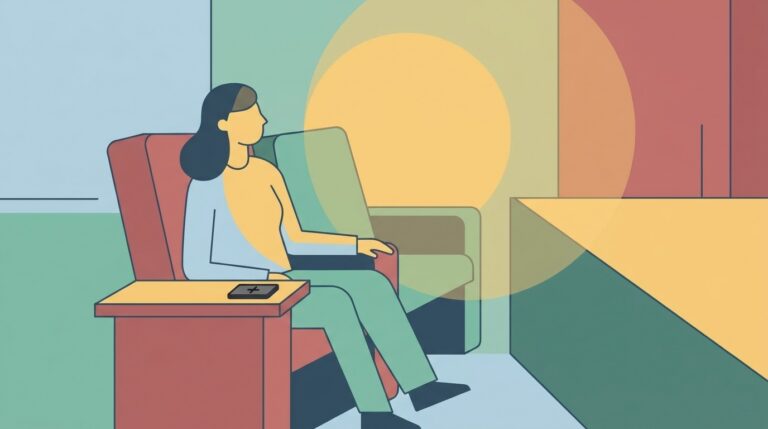
Picture this: You finally scored a coveted 5th-row center seat at a dazzling musical in Daehangno (대학로), Seoul’s theater mecca. Your heart races as the grand overture begins. To get a closer look at your favorite actor’s emotional teardrop, you instinctively lean forward, resting your elbows on your knees. But within three seconds, you feel a sharp, polite tap on your shoulder, or worse, you hear a collective, quiet gasp from the rows behind you.
Welcome to Korean theater culture! In Korea, performance etiquette is famous for being laser-focused. Audience members affectionately (and strictly!) call it 시체관극 (siche-gwangeuk)—literally ‘watching the show like a corpse’—meaning you sit completely still and keep your back glued to your seat. Even a faint chime or a split-second smartwatch glow is considered a major disruption to everyone’s 150,000 KRW immersion.
Don’t worry, you don’t need to feel terrified! With over ten years of navigating Seoul’s performing arts scene and coaching hundreds of global learners, I have created this foolproof survival guide. Today, you’ll learn the exact expressions, etiquette nuances, and unspoken rules so you can enjoy world-class Korean performances with absolute confidence.
Phase 2: Core 3 Expressions In-Depth
Here are three essential expressions you will hear from house ushers or fellow theatergoers.
1. 등받이에 등을 붙여 주세요 (Deungbadie deungeul buchyeo juseyo)
- Pronunciation: [Deung-ba-di-e deung-eul bu-chyeo ju-se-yo] (Think: “Dung” like dungarees + “bah-dee-eh” + “dung-eul” + “boo-chyeo joo-seh-yo”)
- Meaning: Literal: “Please stick your back to the seat back.” | Nuance: “Please lean all the way back so you don’t block the audience behind you.”
- K-Culture Moment: You will hear ushers murmuring this constantly before curtain up in historic, non-raked theaters across Daehangno and Grand Theaters like Charlotte Theater or Blue Square.
- Editor’s Insight: Notice the verb 붙이다 (buchida – to stick/attach). It is an active reminder to keep your spine flat against the backrest throughout the entire show.
- Situation Spectrum: Casual: ⚠️ (등 기대! – Only to close peers) | Semi-formal: ✅ | Formal: ✅ (등받이에 등을 밀착해 주시기 바랍니다)
- 🤔 Think About It: In many Western theaters, leaning forward slightly is seen as enthusiastic engagement. Why do you think Korean theatergoers perceive this as an obstruction of shared space?
2. 핸드폰 전원을 완전히 꺼 주세요 (Haendeupon jeonwoneul wanjeonhi kkeo juseyo)
- Pronunciation: [Haen-deu-pon jeon-won-eul wan-jeon-hi kkeo ju-se-yo] (Think: “Hand-phone” + “jun-won-eul” + “wahn-jun-hee” + “ggeo joo-seh-yo”)
- Meaning: Literal: “Please completely turn off the mobile phone power.” | Nuance: “Silent or vibrate mode is not enough; power it off completely.”
- K-Culture Moment: In pre-show safety announcements, celebrity actors often record voiceovers specifically saying: “진동 모드도 안 돼요! 전원을 완전히 꺼 주세요!” (Even vibrate mode isn’t okay! Please shut down power completely!)
- Editor’s Insight: Smartwatches are notorious offenders. Even if your phone is silent, an Apple Watch lighting up during a dark, dramatic scene creates what locals call ‘조명 테러’ (lighting terror).
- Situation Spectrum: Casual: 🚫 | Semi-formal: ✅ | Formal: ✅
- 🤔 Think About It: Does your native culture consider vibration mode acceptable during stage plays? What makes total darkness so sacred in modern Korean musicals?
3. 시야 방해하지 않게 조심해 주세요 (Siya banghaehaji anke josimhae juseyo)
- Pronunciation: [Si-ya bang-hae-ha-ji an-ke jo-sim-hae ju-se-yo] (Think: “See-yah” + “bahng-hae-hah-jee” + “ahn-keh” + “jo-seem-hae joo-seh-yo”)
- Meaning: Literal: “Please be careful not to obstruct the field of vision.” | Nuance: “Could you mind your posture/hair/hat so people behind you can see?”
- K-Culture Moment: Used by ushers or polite seat neighbors if an oversized headband, tall bun hairstyle, or tilted head blocks the stage sightline.
- Editor’s Insight: The term 시야 방해 (siya banghae – sight obstruction), often abbreviated to 시방 (sibang) in theater fan forums, is a high-priority concept in ticket booking and seat reviews.
- Situation Spectrum: Casual: ⚠️ | Semi-formal: ✅ | Formal: ✅
- 🤔 Think About It: How does considering the person sitting directly behind you reflect the Korean cultural value of communal harmony (배려, baeryeo)?
Phase 3: Textbook Korean vs. Real-Life Korean
Let’s see how textbook phrases compare to what you actually encounter in Korean theaters.
Situation 1: Warning someone about leaning forward
- 📖 교과서 한국어 (Textbook): 몸을 앞으로 숙이지 마십시오. (Momeul apeuro sugiji masipsio. / Do not lean your body forward.)
- 🗣️ 진짜 한국어 (Real-Life): 수그리 하시면 뒤에서 안 보여요. (Sugeuri hasimyeon dwieseo an boyeoyo. / If you slouch forward, people behind can’t see anything.)
- 💡 왜 다를까? (Why the difference?): Theater fans created the slang term 수그리 (sugeuri) from the verb 숙이다 (to bend/lean). Using this word immediately flags you as someone who knows the golden theater rule.
Situation 2: Checking phone guidelines
- 📖 교과서 한국어 (Textbook): 휴대폰을 진동으로 바꾸세요. (Hyudaeponeul jindongeuro bakkuseyo. / Change your mobile phone to vibrate.)
- 🗣️ 진짜 한국어 (Real-Life): 스마트워치랑 핸드폰 비행기 모드 말고 아예 꺼 주세요. (Seumateuwochirang haendeupon bihaenggi modeu malgo aye kkeo juseyo. / Please turn off smartwatches and phones completely, not just airplane mode.)
- 💡 왜 다를까? (Why the difference?): In quiet acoustic theaters, the low buzz of a vibrating phone echoes off the floorboards. Ushers explicitly request a complete system shutdown.
Phase 4: K-Culture Deep Dive & Non-Verbal Manners
4-1. 눈치 (Nunchi) & Body Language: The “Glued Back” Stance
When you sit down in a Korean theater, observe your neighbors. You will notice everyone sliding their hips back until their tailbone hits the seat corner, keeping their spine aligned with the cushion.
* The Head Check: Never rest your chin on your hands, tilt your head sideways onto a companion’s shoulder, or wear puffy beanies. Doing so blocks sight angles in flat auditoriums.
* Smartwatch Trick: If you cannot turn off your smartwatch, twist the watch face to the inside of your wrist or cover it with a dark cuff.
4-2. Cultural Code Analysis: The “Siche-gwangeuk” (시체관극) Phenomenon
Why are Korean musical fans (뮤덕, Myudeok) so intense about etiquette? In Korea, musical theater is a premier high-culture fandom. Tickets for headliners like Cho Seung-woo or Kim Jun-su sell out in less than 30 seconds (피켓팅 – blood ticketing) and cost upwards of $130 USD. For fans who invested immense time and money, total sensory silence and zero visual blockage are non-negotiable. Respecting this atmosphere earns instant goodwill from locals.
Phase 5: Real-Life Roleplay Scenario
Setting: Daehangno Art Center, 5 minutes before the matinee of a famous musical.
Characters:
* Minji (민지): The sharp, polite House Usher.
* Alex (알렉스): An excited B1 Korean learner watching his first live show.
1. 민지: 관객 여러분, 공연 5분 전입니다. 휴대폰은 비행기 탑승 모드가 아닌 전원을 완전히 꺼 주시기 바랍니다.
(Gwangwaek yeoreobun, gong-yeon obun jeon-imnida. Hyudaeponeun bihaenggi tapseung modeuga anin jeonwoneul wanjeonhi kkeo jusigi baramnida.)
“Ladies and gentlemen, 5 minutes before the show. Please power down your phones completely, not just on airplane mode.”
🎭 Checking row by row with a flash baton held downward.
2. 알렉스: 저기요, 죄송한데 진동으로 해 두면 안 될까요?
(Jeogiyo, joesonghande jindong-euro hae dumyeon an doelkkayo?)
“Excuse me, sorry, but is it okay if I leave it on vibrate mode?”
🎭 Holding phone hesitantly while looking at Minji.
3. 민지: 죄송하지만 극장 내부가 매우 조용해서 진동 소리도 크게 울립니다. 전원을 꺼 주세요.
(Joesonghajiman geukjang naebuga maeu joyonghaeseo jindong sorido keuge ullimnida. Jeonwoneul kkeo juseyo.)
“I’m sorry, but our theater is very quiet, so vibration buzz echoes loudly. Please turn it off completely.”
🎭 Speaking in a quiet, firm, respectful whisper.
4. 알렉스: 아, 그렇군요! 지금 바로 끌게요. 스마트워치도 꺼야 하죠?
(A, geureokgunyo! Jigeum baro kkeulgeyo. Seumateuwochido kkeoya hajyo?)
“Ah, I see! I will turn it off right now. Should I turn off my smartwatch too?”
🎭 Powering down phone and tapping the watch screen.
5. 민지: 네, 감사합니다! 화면 불빛이 다른 관객의 몰입을 방해할 수 있거든요.
(Ne, gamsahamnida! Hwamyeon bulbichi dareun gwangwaegui moribeul banghaehal su itgeodeunyo.)
“Yes, thank you! The screen glow can break other audience members’ immersion.”
🎭 Smiling warmly and bowing her head slightly.
6. 알렉스: 네, 다 껐어요. 혹시 공연 중에 사진 촬영은 가능한가요?
(Ne, da kkeosseoyo. Hoksi gong-yeon jung-e sajin chwaryeong-eun ganeunghangayo?)
“Yes, all turned off. By the way, is photo taking allowed during the show?”
🎭 Pointing gently toward the stage.
7. 민지: 본 공연 중에는 불가능하고요, 커튼콜 데이 안내가 있을 때만 커튼콜 촬영이 가능합니다.
(Bon gong-yeon jung-eneun bulganeunghagoyo, keoteunkol dei annaega isseul ttaeman keoteunkol chwaryeong-i ganeunghamnida.)
“It is prohibited during the main performance; you may only shoot during the curtain call if it is an official Curtain Call Day.”
🎭 Gesturing toward the lobby notice board.
8. 알렉스: 이해했어요. 그리고 등받이에 등을 꼭 붙이고 관람할게요!
(Ihaehaesseoyo. Geurigo deungbadie deungeul kkok buchigo gwanramhalgeyo!)
“Understood. And I will make sure to keep my back glued to the backrest!”
🎭 Sitting upright and sliding back into the seat.
🔀 Interactive Decision Point!
During Act 1, the lead actor belts a climactic high note. The audience is mesmerized. Suddenly, your foot is asleep, and your lower back aches. What do you do?
- Option A: Bend forward, rest your chin on your hands, and lean close to the front seat to stretch your spine.
👉 Feedback (Bad): You just created a massive blind spot for the person behind you! Expect a stern shoulder tap or an usher intervention. - Option B: Silently adjust your hips without lifting your upper torso away from the seat back, waiting for intermission to stand and stretch.
👉 Feedback (Best): Excellent! You maintained the backrest rule and protected the sightline of everyone behind you. - Option C: Quickly check your phone under your jacket to see how many minutes remain in Act 1.
👉 Feedback (Risk): Even under fabric, a bright LED screen leaks blue light across pitch-black theater rows. Neighboring fans will notice immediately.
Phase 6: 10-Second Emotional Shadowing Drill
Practice these natural rhythm pauses (/) and tones aloud:
[🙏 정중하고 차분하게 - Polite and calm]
등받이에 / 등을 꼭 붙여서 / 관람해 주세요.
(Deungbadie / deungeul kkok buchyeoseo / gwanramhae juseyo.)
“Please keep your back / firmly against the seatback / while watching.”-
[🤫 속삭이듯 단호하게 - Whispering but firm]
불빛 때문에 / 몰입이 깨지니까 / 전원 꺼 둘게요.
(Bulbit ttaemune / moribi kkaejinikka / jeonwon kkeo dulgeyo.)
“Because of the light / it ruins immersion / so I’ll power it off.” -
[😊 안도하며 상냥하게 - Relieved and pleasant]
커튼콜 때는 / 박수 많이 치고 / 사진 찍어요!
(Keoteunkol ttaeneun / baksu mani chigo / sajin jjigeoyo!)
“During curtain call / let’s clap lots / and take pictures!”
Phase 7: K-Culture Mini Dictionary
- 시체관극 (Siche-gwangeuk): Literally “corpse-style viewing.” The etiquette of sitting motionless without coughing, talking, or shifting posture to ensure collective sonic and visual perfection.
- 수그리 (Sugeuri): The act of leaning forward in your seat; strictly taboo in Korean theaters because it blocks the diagonal sightline of audience members in the rear.
- 캐스팅 보드 (Caes-ting Bo-deu): The physical cast photo board in theater lobbies displaying today’s lineup. Taking a verification selfie here before curtain up is a must-do ritual.
- 어셔 (Eo-syeo / Usher): The theater house staff members who monitor seat lines, enforce photo bans, and assist patrons.
Phase 8: Traveler’s Survival Kit
Top 3 Survival Phrases
- 캐스팅 보드 줄 어디예요? (Caes-ting bo-deu jul eodiyeyo?)
Pro Tip: The photo line for the cast board can take 20+ minutes. Ask this the second you enter the lobby to snap your proof shot quickly. - 물 반입 가능한가요? (Mul ban-ip ganeunghangayo?)
Pro Tip: Most Korean theaters allow bottled water with a secure lid inside the hall, but forbid coffee cups, soda, or snacks. - 오페라글라스 대여 되나요? (O-pe-ra-geul-la-seu daeyeo doenayo?)
Pro Tip: Binocular rentals sell out rapidly. Head straight to the service desk as soon as lobby doors open.
Editor’s Travel Note
Before heading to the Daehangno theater district (Hyehwa Station, Subway Line 4), download your tickets through the 인터파크 티켓 모바일 앱 다운로드. Keep your physical passport ready at the box office window when exchanging digital vouchers for real paper tickets. Subway announcements often play near Hyehwa station alerting theatergoers of curtain timings!
Phase 9: “A Deeper Step” (한 발 더 깊이)
In Western performance spaces, quiet audible reactions, chuckling, or shifting posture are often seen as natural human responses to art. In contrast, Korean theater culture places immense value on 배려 (baeryeo – considerate mindfulness). Because a theater auditorium is an enclosed shared space where everyone bought an equal stake in the emotional atmosphere, avoiding anything that intrudes upon someone else’s senses is viewed as the ultimate form of respect. Experiencing this intense, uninterrupted focus can elevate the performance into an unforgettable, quasi-spiritual communal event.
💬 Your Turn: Have you ever experienced a super quiet audience in Korea or your home country? What is your personal theater pet peeve? Share your story in the comments below!
Phase 10: FAQ & Common Mistakes
Q: Can I keep my phone on silent mode if I turn the screen face down on my lap?
A: No. If an emergency alert or alarm sounds, silent mode can still trigger audio or vibration. Furthermore, any accidental shift reveals the bright screen glow. Completely power it off.
Q: Can I take photos of the empty stage before the show begins?
A: In most Korean licensed and original productions, taking photos of the stage set—even before the show starts—is strictly forbidden due to stage design copyright. Only take photos if an usher explicitly says “빈 무대 촬영 가능합니다” (Empty stage photography allowed).
Q: What should I do if I get a bad coughing fit during the musical?
A: Quietly press a handkerchief or sleeve over your mouth. If the cough doesn’t stop, slip out toward the rear exit during a loud musical number. Ushers will help you re-enter at designated transition cues.
🚨 흔한 실수 (Common Mistakes) Checklist
- ❌ Mistake 1: Wearing tall hair buns, big hats, or chunky headbands.
👉 Correct Action: Take off hats and keep hair tied low behind your neck. - ❌ Mistake 2: Whispering explanations to your friend during dialogue.
👉 Correct Action: Korean theaters are whisper-silent. Save all commentary for intermission (인터미션). - ❌ Mistake 3: Taking out your phone immediately during curtain calls.
👉 Correct Action: Look around first. Unless the show declared an official “커튼콜 위크 (Curtain Call Week),” photos during curtain calls are typically barred.
Phase 11: Action Missions
- 🥉 Bronze Mission (Solo Practice): Sit in a chair at home, press your back flat against the cushion, and repeat out loud: “등받이에 등을 꼭 붙여 주세요” three times.
- 🥈 Silver Mission (Social Share): Find a photo of a Korean musical casting board on Instagram or X (Twitter) and leave a comment in Korean: “캐스팅 보드 보니까 기대돼요! (Looking at the casting board makes me excited!).”
- 🥇 Gold Mission (Real-life Use): On your next visit to a Seoul theater or cinema, proactively power down your phone and smartwatch 10 minutes before showtime!
- 🎮 K-Culture Mission: Watch an episode of a theater-themed K-Drama or variety show (like Hospital Playlist cast members doing stage shows) and spot the ushers holding signboards in the theater lobby!
Phase 12: Interactive Quiz Challenge
1. Situational Judgment:
You are seated in row 8 of a musical. The person in row 7 starts leaning forward with their elbows on their knees, blocking the main actor from your view. What is the most polite, natural response?
* A. Shout loudly: “앉아! (Sit down!)”
* B. Tap their shoulder and politely say: “죄송한데, 등받이에 기대어 주시겠어요?”
* C. Kick their chair continuously until they sit back.
🔍 Click for Answer & Explanation
Correct Answer: B
Politely requesting “죄송한데, 등받이에 기대어 주시겠어요?” (Excuse me, but could you please lean back against your seat?) is the standard, polite way to solve sightline issues without causing a scene.
2. Fill-in-the-Blank:
“공연장 안에서는 불빛 테러를 막기 위해 핸드폰 전원을 ______ 꺼 주세요.”
(Inside the theater, please turn off your mobile phone power ______ to prevent light terror.)
* A. 대충 (daechung – roughly)
* B. 완전히 (wanjeonhi – completely)
* C. 가끔 (gakkeum – sometimes)
🔍 Click for Answer & Explanation
Correct Answer: B (완전히)
“완전히” means “completely” or “thoroughly.” Ushers always emphasize turning devices completely off!
3. True or False:
In Korea, you can always film the curtain call on your smartphone without checking any announcements.
🔍 Click for Answer & Explanation
Correct Answer: False (X)
Filming curtain calls is strictly prohibited in most Korean musical theaters unless specified as a special “Curtain Call Day” (커튼콜 데이).







