

Master Data-Driven Korean: How to Slay SQL Dashboard Meetings and Cohort Analysis
Phase 1: 공감 (Story-Driven Opening)
안녕하세요! 매일한글 에디터입니다. (Hello! I’m your Daily Hangul editor.)
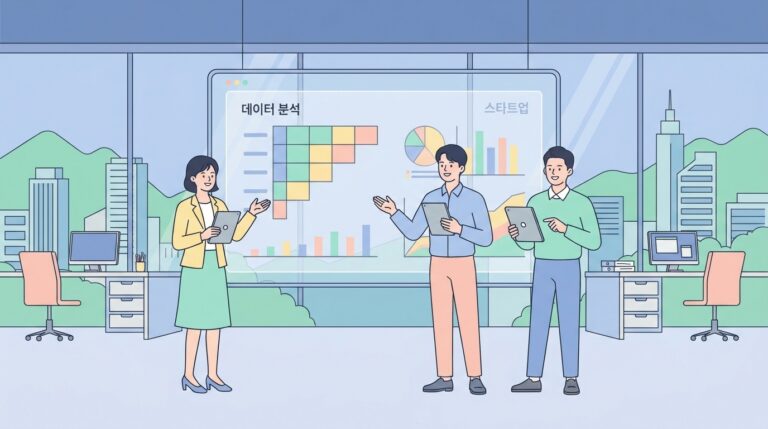
Picture this: You are sitting in a glass-walled conference room in Pangyo Techno Valley—South Korea’s vibrant Silicon Valley. You’ve just presented your SQL-generated dashboard to the growth marketing squad. You smile proudly, pointing at a shiny metric showing overall user engagement is up by 14%. But just as you reach for your iced Americano, the lead developer adjusts his glasses, frowns at the chart, and murmurs: “전체 평균만 보면 착시가 생길 수 있는데요… 코호트로 쪼개보셨나요?” (If we only look at the overall average, there could be an illusion… Did you slice it by cohort?)
A cold sweat runs down your neck. You know SQL, and you know statistics, but how do you explain Simpson’s paradox and cohort segmentation smoothly in Korean without sounding like a robotic machine translation?
Navigating business metrics in a Korean tech company requires more than just grammar; it demands the linguistic dexterity to challenge high-level assumptions with politeness and data rigor. This comprehensive B2-level guide was built from real feedback from foreign software engineers and data analysts working at Seoul startups. By the time you finish this guide, you will be dissecting dashboards and leading cohort discussions with the confidence of a seasoned Korean product manager!
Phase 2: 핵심 표현 3선 심층 분석 (Top 3 Core Expressions)
1. 전체 평균만 보면 착시가 생겨요 (Jeonche pyeong-gyun-man bo-myeon chak-si-ga saeng-gyeo-yo)
- Pronunciation: [Jeon-che pyeong-gyun-man bo-myeon chak-si-ga saeng-gyeo-yo] (Sounds like “chun-cheh pyung-gyun-mahn bo-myun chahk-she-gah seng-gyuh-yo”)
- Meaning: “Looking only at the overall average creates an illusion.” (Actual nuance: Warning the team about Simpson’s Paradox or aggregate bias without directly calling anyone’s analysis wrong).
- K-Culture Moment: Seen in startup dramas like Start-Up (스타트업), where Nam Do-san tactfully questions a misleading chart during an investor demo pitch.
- Editor’s Insight: The word 착시 (chaksi) literally means optical illusion, but in Korean business tech circles, it is the standard, polite way to flag statistical distortion or aggregate skewing.
- Situation Spectrum:
- Casual: ⚠️ (Sounds too formal for a quick chat with peers)
- Semi-formal / Scrum: ✅ (Perfect for daily standups)
- Formal Board Meeting: ✅ (Standard professional phrase)
- 🤔 Think About It: In English, we often say “The aggregate data is misleading.” Korean uses the sensory metaphor of an “optical illusion” (착시), shifting the blame from the person who made the chart to the visual nature of the metric itself. How does this protect professional harmony?
2. 코호트별로 쪼개서 볼 필요가 있어요 (Ko-ho-teu-byeol-lo jjo-gae-seo bol pil-yo-ga i-sseo-yo)
- Pronunciation: [Ko-ho-teu-byeol-lo jjo-gae-seo bol pi-ryo-ga i-sseo-yo] (Sounds like “ko-ho-teu-byul-lo cho-geh-suh bohl peel-yo-gah ee-ssuh-yo”)
- Meaning: “We need to slice and examine it by cohorts.” (Literal: “By cohort, breaking apart and seeing is necessary.”)
- K-Culture Moment: Frequently heard during rapid sprint retrospectives when discussing user drop-offs after a major UI redesign.
- Editor’s Insight: The verb 쪼개다 (jjogaeda) means to split or chop wood, but Korean product teams routinely use it for granular data slicing (e.g., segmenting by OS, sign-up date, or age).
- Situation Spectrum:
- Casual: ✅ (Natural with work buddies)
- Semi-formal: ✅ (The golden standard in agile tech meetings)
- High-formal Presentation: ⚠️ (Replace with 세분화하여 분석할 필요가 있습니다 [se-bun-hwa-ha-yeo bun-seok-hal pil-yo-ga it-seum-ni-da])
- 🤔 Think About It: Why do you think modern tech teams prefer visceral action verbs like 쪼개다 (to split/chop) over academic words like 분류하다 (to classify)?
3. 유입 시기랑 기기별로 세그먼트를 나눠보죠 (Yu-ip si-gi-rang gi-gi-byeol-lo se-geu-meon-teu-reul na-nwo-bo-jyo)
- Pronunciation: [Yu-ip si-gi-rang gi-gi-byeol-lo se-geu-meon-teu-reul na-nwo-bo-jyo] (Sounds like “you-eep she-gee-rahng gee-gee-byul-lo seh-geu-mun-teu-reul nah-nwoh-boh-jyo”)
- Meaning: “Let’s segment it by sign-up cohort timing and device type.” (Nuance: A collaborative call to action that invites the team to dive deeper into the database).
- K-Culture Moment: The standard phrase a data analyst drops into a Slack thread right before running an ad-hoc SQL query.
- Editor’s Insight: The ending -보죠 (-bo-jyo) strikes the ultimate balance between polite leadership and proactive teamwork. It says “let’s do this together” rather than issuing a top-down order.
- Situation Spectrum:
- Casual: ✅ (Very collegial)
- Semi-formal: ✅ (Recommended for sprint planning)
- Ultra-formal: 🚫 (Use 나눌 것을 제안합니다 [na-nul geos-eul je-an-ham-ni-da])
- 🤔 Think About It: Notice how English business loanwords like segment (세그먼트) blend seamlessly with native particles like -랑 (and). How does your native language handle tech loanwords?
Phase 3: 교과서 한국어 vs 진짜 한국어 (Textbook vs. Real-Life Korean)
Situation 1: Suggesting a deeper inspection of the database
- 📖 교과서 한국어 (Textbook Korean):
데이터를 상세히 분석해 봅시다. (De-i-teo-reul sang-se-hi bun-seok-hae bop-si-da.)
“Let us analyze the data in detail.” - 🗣️ 진짜 한국어 (Real-Life Korean):
데이터 한번 뜯어보죠. (De-i-teo han-beon tteud-eo-bo-jyo.)
“Let’s unpack and tear into the data.” - 💡 왜 다를까? (Why is it different?): Textbook phrasing sounds like an excerpt from a university syllabus. In Korean tech corridors like Pangyo or Gangnam, engineers use 뜯어보다 (literally “to tear open and inspect”), reflecting the agile culture of getting hands dirty with raw logs.
Situation 2: Pointing out that an average is skewing the reality
- 📖 교과서 한국어 (Textbook Korean):
평균값에 오류가 있을 가능성이 있습니다. (Pyeong-gyun-gap-se o-ryu-ga it-seul ga-neung-seong-i it-seum-ni-da.)
“There is a possibility of error in the average value.” - 🗣️ 진짜 한국어 (Real-Life Korean):
완전 평균의 함정이에요. (Wan-jeon pyeong-gyun-ui ham-jeong-i-e-yo.)
“It’s totally the trap of averages.” - 💡 왜 다를까? (Why is it different?): Saying someone’s metric has an “error” (오류) implies incompetence. Saying it’s 평균의 함정 (“the trap of averages”) blames the statistical paradox itself, keeping the conversation collaborative and friendly.
Phase 4: K-Culture 딥다이브 & 비언어적 매너 (Culture Deep Dive & Non-verbal Manners)
4-1. 눈치 (Nunchi) & Gestures in Tech Meetings
When questioning a metric presented by a senior manager or colleague in Korea, body language is your safety net.
* The Softened Gaze: Never stare dead-eyed into someone’s eyes while declaring an average misleading. Look at the dashboard monitor, tilt your head slightly (approx. 15 degrees) as if you are puzzled by the chart alongside them, not attacking their effort.
* The Two-Finger Pointer: Point toward the screen with your index and middle finger held gently together, or use the back of a pen. Pointing with an aggressive single index finger can feel confrontational.
* Softening Tone (Hedge Phrases): Prefix your findings with “제가 보기에는…” (Je-ga bo-gi-e-neun… / As far as I can see…) or end with “~인 것 같아요” (~in geot gat-a-yo / It seems to be…)”. In Korean business meetings, absolute assertions can trigger defensive reactions; hedging signals collegiality.
4-2. 문화 코드 분석 (Startup Culture Code: Pangyo & Teatime)
In the Korean tech scene, major analytical disagreements are rarely settled by shouting in public sprint meetings. Instead, teams rely on the 커피챗 (Coffee Chat) or 티타임 (Tea Time). If you spot a major Simpson’s Paradox issue in a colleague’s query, you don’t embarrass them in front of the VP. You buy them a vanilla latte at the company cafe, sit down at a standing bar, and say: “아까 지표 보니까 유입 시기별로 차이가 꽤 크던데요? 코호트 쿼리 같이 짜볼까요?” (Looking at the metrics earlier, the difference by inflow timing was quite big. Shall we write the cohort SQL query together?). This protects face (체면) while elevating product quality.
Phase 5: 실전 롤플레이 시나리오 (Real-Life Roleplay Scenario)
Setting: 4:00 PM sprint review room at “HyperGrowth Korea”, a booming food-delivery app company.
Characters:
* Team Lead Min-soo (민수 팀장): Sharp, metric-driven, but prone to rushing product launches.
* Alex (알렉스 – You): Intermediate-level data analyst presenting the Q3 conversion dashboard.
- Turn 1 (민수):
알렉스 님, 이번 업데이트 이후 전체 재방문율이 20%나 올랐네요! 바로 마케팅 예산 증액할까요?
(Alex-nim, i-beon eop-de-i-teu i-hu jeon-che jae-bang-mun-ryul-i i-sip-peo-sen-teu-na ol-lat-ne-yo! Ba-ro ma-ke-ting ye-san jeung-aek-hal-kka-yo?)
“Alex, overall retention jumped by 20% after this update! Shall we increase the marketing budget right away?”
🎭 Taps his tablet energetically with a satisfied grin. -
Turn 2 (알렉스):
팀장님, 그 수치만 보면 약간 착시가 생길 수 있습니다.
(Tim-jang-nim, geu su-chi-man bo-myeon yak-gan chak-si-ga saeng-gil su it-seum-ni-da.)
“Team Lead, looking only at that number might create a bit of an illusion.”
🎭 Calmly switches the dashboard screen to display a multi-line graph. -
Turn 3 (민수):
착시요? 전체 평균이 분명히 우상향하고 있잖아요?
(Chak-si-yo? Jeon-che pyeong-gyun-i bun-myeong-hi u-sang-hyang-ha-go it-jjan-a-yo?)
“An illusion? The overall average is clearly trending upward to the right, isn’t it?”
🎭 Frowns slightly, crossing his arms and leaning forward. -
Turn 4 (알렉스):
네, 하지만 가입 시기별 코호트로 쪼개보면 이야기가 달라집니다.
(Ne, ha-ji-man ga-ip si-gi-byeol ko-ho-teu-ro jjo-gae-bo-myeon i-ya-gi-ga dal-la-jim-ni-da.)
“Yes, but if we slice it by sign-up cohort timing, the story changes.”
🎭 Points at the cohort heat-map with the tip of his stylus pen. -
Turn 5 (민수):
어라… 신규 유저 리텐션은 오히려 떨어지고 있네요?
(Eo-ra… sin-gyu yu-jeo ri-ten-syeon-eun o-hi-ryeo tteol-eo-ji-go it-ne-yo?)
“Wait… new user retention is actually dropping?”
🎭 Squints at the screen, eyes widening in surprise. -
Turn 6 (알렉스):
맞습니다. 헤비 유저 유입이 일시적으로 평균을 끌어올린 평균의 함정이었어요.
(Mat-seum-ni-da. He-bi yu-jeo yu-ip-i il-si-jeok-eu-ro pyeong-gyun-eul kkeul-eo-ol-lin pyeong-gyun-ui ham-jeong-i-eot-eo-yo.)
“Exactly. It was a trap of averages where an influx of heavy users temporarily inflated the mean.”
🎭 Nods empathetically, maintaining a composed and helpful tone. -
Turn 7 (민수):
큰일 날 뻔했네요. 그럼 기기별, 연령대별 세그먼트 데이터도 바로 볼 수 있을까요?
(Keun-il nal ppeon-haet-ne-yo. Geu-reom gi-gi-byeol, yeon-ryeong-dae-byeol se-geu-meon-teu de-i-teo-do ba-ro bol su it-seul-kka-yo?)
“That was a close call. Then could we also look at segment data by device and age group right away?”
🎭 Sighs in relief and scratches his forehead playfully. -
Turn 8 (알렉스):
네, SQL 쿼리 수정해서 연령대랑 OS별로 세분화된 대시보드 바로 공유해 드리겠습니다!
(Ne, SQL kwo-ri su-jeong-hae-seo yeon-ryeong-dae-rang OS-byeol-lo se-bun-hwa-doen dae-si-bo-deu ba-ro gong-yu-hae deu-ri-get-seum-ni-da!)
“Sure thing! I will adjust the SQL queries and share the dashboard segmented by age and OS immediately!”
🎭 Smiles warmly while typing the query command on his laptop.
🔀 인터랙티브 분기점 (Interactive Decision Point)
How should Alex respond if Min-soo insists: “Still, our investors love big averages. Can’t we just show this single chart?”
- Option A: “안 돼요. 그건 사기예요!” (An dwae-yo. Geu-geon sa-gi-ye-yo! / No way. That’s fraud!)
- Feedback: 🚫 Bad: Accusing your manager or company of fraud destroys psychological safety instantly. You’ll shut down communication.
- Option B: “투자자분들이 코호트 리텐션을 물어보시면 설명이 꼬일 위험이 있어요. 보조 지표로 함께 제시하는 게 안전합니다.” (Tu-ja-ja-bun-deul-i ko-ho-teu ri-ten-syeon-eul mu-reo-bo-si-myeon seol-myeong-i kko-il wi-heom-i it-seo-yo. Bo-jo ji-pyo-ro ham-kke je-si-ha-neun ge an-jeon-ham-ni-da.)
- Feedback: 🏆 Best: Politely highlights business risk (getting tangled up under investor Q&A) and provides a pragmatic win-win solution (supporting metrics).
- Option C: “팀장님 마음대로 하세요. 저는 상관없습니다.” (Tim-jang-nim ma-eum-dae-ro ha-se-yo. Jeo-neun sang-gwan-eop-seum-ni-da. / Do whatever you want. I don’t care.)
- Feedback: ⚠️ Risk: Shows complete disengagement and passive aggression, harming your evaluation as a proactive teammate.
Phase 6: 10초 감정 섀도잉 드릴 (10-Second Emotion Shadowing Drill)
Practice these natural pacing pauses (/) and adopt the indicated emotional mindset!
[🧐 차분하고 분석적으로 - Calm & Analytical]
전체 평균만 보면 / 착시가 생기기 쉬우니까 / 코호트로 쪼개봐야 해요.
(Jeon-che pyeong-gyun-man bo-myeon / chak-si-ga saeng-gi-gi swi-u-ni-kka / ko-ho-teu-ro jjo-gae-bwa-ya hae-yo.)
“Looking only at the average / easily creates an illusion, / so we must slice it by cohort.”-
[💡 번뜩이는 발견을 공유하며 - Bright Eureka Moment]
유입 시기별로 나눠보니까 / 신규 유저 이탈 원인이 / 딱 드러나네요!
(Yu-ip si-gi-byeol-lo na-nwo-bo-ni-kka / sin-gyu yu-jeo i-tal won-in-i / ttak deu-reo-na-ne-yo!)
“When we split it by sign-up window / the exact cause of new user churn / reveals itself clearly!” -
[🤝 든든하고 신뢰감 넘치게 - Reassuring & Reliable Colleague]
제가 연령대랑 기기별 세그먼트 / SQL 쿼리 바로 짜서 / 대시보드에 붙여둘게요.
(Je-ga yeon-ryeong-dae-rang gi-gi-byeol se-geu-meon-teu / SQL kwo-ri ba-ro jja-seo / dae-si-bo-deu-e bu-chyeo-dul-ge-yo.)
“I will write the SQL query for age and device segments right now / and attach it to the dashboard.”
Phase 7: K-Culture 미니 사전 (Core Tech Keywords)
- 코호트 (Ko-ho-teu) | Cohort
- Everyday/Business Usage: In Korean data circles, this refers strictly to user groups sharing common temporal characteristics (e.g., “8월 1주 차 가입 코호트” = 1st week of August sign-up cohort).
- 착시 현상 (Chak-si hyeon-sang) | Optical Illusion (Simpson’s Paradox)
- Everyday/Business Usage: Beyond its art/science meaning, this is the #1 Korean business idiom for misleading dashboard summaries that disguise underlying micro-trends.
- 쪼개보다 (Jjo-gae-bo-da) | To slice / drill down into data
- Everyday/Business Usage: A ubiquitous colloquial verb among Korean product managers and BI engineers instead of the stiff “세분화하다 (subdivide)”.
- 유입 시기 (Yu-ip si-gi) | Acquisition window / Inflow timing
- Everyday/Business Usage: Used across Korean growth hacking to analyze which specific marketing campaigns or seasonal windows brought in high-LTV (생애 가치) users.
Phase 8: 여행자를 위한 생존 키트 (Professional Expat Survival Kit)
TOP 3 Tech Office Survival Phrases
- 1. 쿼리 다시 돌려볼게요. (Kwo-ri da-si dol-lyeo-bol-ge-yo.)
- Pronunciation: [Kwo-ri da-si dol-lyeo-bol-ge-yo]
- Pro Tip: If numbers look funky in a live meeting, say this! It buys you 5 minutes to check your WHERE clause or JOIN statement.
- 2. 지표가 좀 튀네요. (Ji-pyo-ga jom twi-ne-yo.)
- Pronunciation: [Ji-pyo-ga jom twi-ne-yo]
- Pro Tip: Literally means “The metric is bouncing/splattering.” Perfect colloquial Korean for identifying extreme outliers or sudden anomalous spikes.
- 3. 슬랙으로 대시보드 링크 쏴드릴게요! (Seul-raek-eu-ro dae-si-bo-deu ring-keu sswa-deu-ril-ge-yo!)
- Pronunciation: [Seul-raek-eu-ro dae-si-bo-deu ring-keu sswa-deu-ril-ge-yo]
- Pro Tip: The verb 쏘다 (ssoda) means to shoot a bullet, but in Korean office slang, it means shooting someone a quick DM, file, or web link.
Editor’s Office Life Note
If you are visiting Seoul tech headquarters or networking at co-working spaces like WeWork Gangnam or Front1 Mapo, make sure you download the 원티드 Wanted 채용 앱 for tech career insights and the 네이버 지도 앱 to find cozy meeting cafes near Pangyo Station Exit 1. Most Korean startup developers order drinks beforehand using mobile pickup services like Mega MGC Coffee or Compose Coffee app to avoid waiting during crunch hours!
Phase 9: “한 발 더 깊이” (Cultural Reflection Essay)
In Western business cultures, pointing out a flaw in an aggregate metric is frequently seen as a pure, objective exercise: “The numbers are wrong; let’s fix them.” However, in the Korean corporate framework, communication is fundamentally relational (관계 중심). Because collective harmony is prized, directly telling someone “Your chart is misrepresenting reality” can cause severe loss of face (체면 손상).
Notice how modern Korean tech professionals skillfully navigate this dynamic using the concept of 착시 (illusion) and collective invitations like -보죠 (let us try). By defining the paradox as an “optical illusion” that naturally trips people up, the analyst frees their colleague from blame. You are not battling each other; you are teaming up to conquer the deceptive nature of aggregate data together.
💬 Your Turn: Have you ever noticed aggregate averages hiding an inconvenient truth in your work or daily life? How would you diplomatically bring it up to your supervisor in your native language?
Phase 10: FAQ & 오해 방지 (FAQ & Mistakes)
Q: Can I use the word “심슨의 역설 (Simpson’s Paradox)” directly in Korean meetings?
A: Absolutely! Korean data engineers and PMs know the term 심슨의 역설 (Sim-seun-ui yeok-seol) very well. However, in cross-functional meetings with marketing, design, or sales, using 전체 평균의 착시 (the illusion of overall averages) or 평균의 함정 (trap of averages) is far more intuitive and less pedantic.
Q: Is “쪼개보다 (to slice)” considered rude or slang in front of executives?
A: It is informal spoken jargon (구어체). In front of C-level executives or board members, switch to formal business Korean: “유입 시기별로 세분화하여 분석했습니다” (We analyzed it segmented by sign-up timing).
Q: Why do Korean tech workers use “~인 것 같아요” so often even when looking at factual SQL data?
A: This is the quintessential Korean conversational hedge (완곡어법). Even when the SQL query has run 100% bug-free, saying “리텐션이 떨어진 것 같아요” (It seems retention has dropped) sounds humble, collaborative, and invites peer verification.
🚨 Common Mistakes Checklist
- ❌ Mistake 1: Calling someone’s dashboard “틀렸어요” (It is wrong).
- 👉 Correct Action: Say “전체 평균만 보면 착시가 생길 수 있어요” (Looking only at the average might cause an illusion).
- ❌ Mistake 2: Translating “cohort” phonetically as “코호르트”.
- 👉 Correct Action: The established loanword spelling in South Korea is 코호트 (Ko-ho-teu).
- ❌ Mistake 3: Saying “데이터를 자르다” for slicing data.
- 👉 Correct Action: “자르다” means to cut with scissors or sever ties (or fire someone!). Use 쪼개다 (to split/slice) or 나누다 (to divide).
Phase 11: 액션 미션 & 참여 유도 (Action Missions)
- 🥉 Bronze Mission (Solo Vocal Drill): Practice saying “전체 평균만 보면 착시가 생겨요” 5 times in front of the mirror, matching the polite 15-degree head-tilt.
- 🥈 Silver Mission (Social Learning): Open your preferred database tool or spreadsheet, take a screenshot of any cohort chart, and share a note on social media using the caption: “오늘도 코호트별로 쪼개서 데이터 뜯어보는 중! 📊” (Tearing into data sliced by cohorts today too!).
- 🥇 Gold Mission (Real-Life Implementation): In your next standup or project message, replace “Let’s analyze the numbers” with “유입 시기랑 기기별로 세그먼트 나눠서 보죠!”.
🎮 K-Culture Mission: Watch an episode of a Korean business or legal drama (like Start-Up or Extraordinary Attorney Woo). Listen closely for when a character challenges an opponent’s evidence. Did they use the word 착시 (chaksi) or 함정 (hamjeong)? Write it down in your study journal!
Phase 12: 인터랙티브 퀴즈 챌린지 (Interactive Quiz Challenge)
Test your Pangyo-level business Korean skills!
1. Situational Judgment
Your teammate says overall app usage increased by 30%, but you suspect it’s only because of high-spending Android users during a flash sale. What is the most natural, polite way to suggest looking deeper?
* (A) 그 분석 완전 틀렸는데요? 다시 하세요.
* (B) 기기별이랑 유입 시기 코호트로 쪼개서 볼 필요가 있을 것 같아요.
* (C) 안드로이드 유저는 다 가짜예요.
2. Fill in the Blank
전체 수치에 속지 않으려면 데이터를 유입 시기별로 세그먼트를 ________ 보죠.
(To avoid being deceived by overall numbers, let’s ________ the segments by sign-up timing.)
* (A) 찢어 (jjij-eo)
* (B) 버려 (beo-ryeo)
* (C) 나눠 (na-nwo)
3. True / False Cultural Fact
In a Korean agile startup, using polite hedging like “~인 것 같아요” when describing data insights means the analyst is incompetent and uncertain about their work.
* (True / False)
👉 Click here for answers and explanations!
- Answer: (B)
- Explanation: (B) uses the natural professional idiom 코호트로 쪼개서 볼 필요가 있을 것 같아요 while keeping the tone polite and collaborative. (A) is an aggressive attack, and (C) is statistically absurd.
- Answer: (C) 나눠
- Explanation: Combined with -보죠, 나눠 보죠 (let’s divide/segment) forms the standard expression. “찢어” means to rip paper, and “버려” means to throw away.
- Answer: False
- Explanation: In Korean business culture, hedging expressions like “~인 것 같아요” are linguistic courtesy markers (완곡어법) that protect team dynamics while inviting healthy discussion. It is a sign of high emotional intelligence (눈치), not incompetence!
- Explanation: In Korean business culture, hedging expressions like “~인 것 같아요” are linguistic courtesy markers (완곡어법) that protect team dynamics while inviting healthy discussion. It is a sign of high emotional intelligence (눈치), not incompetence!
Keep crunching those numbers, and see you in the next Daily Hangul sprint! 화이팅! 🚀







