

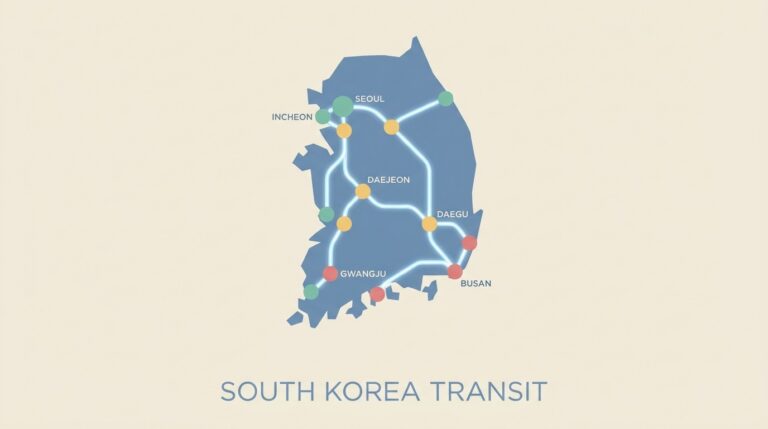
Beyond Seoul: Master High-Level Korean Megacity and Regional Extinction Debates
Phase 1: Empathy (Story-Driven Opening)
안녕하세요! 매일한글 에디터입니다. (Annyeonghaseyo! Maeil Hangul editeo-imnida. / “Hello! This is your Daily Hangul editor.”)
Picture this: You are having an evening cup of tea with Korean colleagues or graduate school friends after a long day in Yeouido or Gangnam. Someone sighs while looking at a news report on their smartphone showing the latest population statistics. The headline flashes: “지방 소멸 위험 가속화… 청년층 수도권 유입 지속” (Accelerating risk of regional extinction… Youth influx into the capital continues). Suddenly, the room shifts into an animated debate. Someone brings up the suffocating 90-minute commute from Gyeonggi Province, reminiscent of the cult-favorite drama My Liberation Notes (나의 해방일지). Another colleague counters that without high-density clusters, Korea cannot compete globally in tech, while a friend originally from Busan laments how their hometown’s vibrant neighborhoods are turning gray.
You want to chime in. You have opinions about urban centralization, regional economies, and how transportation infrastructure reshapes society. But you freeze. Everyday conversational Korean doesn’t quite supply the nuanced vocabulary needed to unpack complex socio-economic paradigms like “super-regional megacity strategies” or “unipolar metropolitan dominance.” You end up nodding politely, saying: “맞아요, 서울에 사람이 너무 많아요” (That’s right, there are too many people in Seoul). While accurate, it doesn’t capture the intellectual depth you possess in your native tongue.
Learning to discuss national balanced development (국가 균형 발전) and urban restructuring isn’t just for politicians; it is the ultimate rite of passage into C1-level Korean fluency. It allows you to participate in the exact conversations shaping the future of Korean society, housing, transit, and culture. This guide is crafted directly from our real-world tutoring archives, addressing the exact roadblocks advanced learners face when moving from intermediate fluency to sophisticated discourse.
Phase 2: Top 3 Core Expressions (In-Depth Analysis)
Here are the three foundational expressions you need to articulately dissect Korea’s regional development dilemma.
1. 수도권 일극 체제 (Sudogwon ilgeuk cheje)
- Pronunciation: [Su-do-gwon il-geuk che-je] (Think: “Soo-doh-gwon eel-geuk cheh-jeh” – crisp, short vowels with a definitive ending)
- Meaning:
- Literal: Capital area single-pole system
- Nuanced Reality: The extreme concentration of population, economic capital, top-tier universities, and political power exclusively within the Greater Seoul Metropolitan Area (Seoul, Incheon, Gyeonggi-do).
- K-Culture Moment: Seen on current affairs talk shows like JTBC’s 썰전 (Ssulzun) or political investigative dramas like Queenmaker, where characters discuss why young people feel compelled to compete in Seoul despite astronomical real estate costs.
- Editor’s Insight: Use this phrase instead of merely saying “서울 집중” (Seoul concentration). “일극 체제” (unipolar system) carries a sharp analytical punch that instantly marks your analysis as academically informed.
- Situation Spectrum: Casual: ⚠️ | Semi-formal: ✅ | Formal: ✅
- 🤔 Think About It: In many Western countries, political capitals (e.g., Washington D.C., Canberra) and economic capitals (e.g., New York, Sydney) are geographically separated. How does Korea’s all-in-one concentration shape the collective psyche of urgency and competition?
2. 초광역 메가시티를 구축하다 (Chogwang-yeok megasitireul guchukhada)
- Pronunciation: [Cho-gwang-yeok me-ga-si-ti-reul gu-chuk-ha-da] (Pronounce ‘chogwang’ with aspiration like ‘cho-gwang’, and ‘guchuk’ with clear, non-aspirated velar stops)
- Meaning:
- Literal: To construct a super-wide-area megacity
- Nuanced Reality: Strategically linking major non-capital provincial hubs (such as Busan, Ulsan, and South Gyeongsang Province into “Bu-Ul-Gyeong”) through high-speed rail networks and economic alliances to create an urban counterweight rivaling Seoul.
- K-Culture Moment: Frequently featured in economic policy briefings, town hall debates, and investigative features by KBS 시사기획 창 covering youth migration trends.
- Editor’s Insight: Pair the verb “구축하다” (to establish/build up systems or infrastructure) rather than “만들다” (to make). In C1 Korean, matching systemic concepts with rigorous Sino-Korean verbs is critical for authoritative tone.
- Situation Spectrum: Casual: 🚫 | Semi-formal: ✅ | Formal: ✅
- 🤔 Think About It: How does your home country manage transit between neighboring cities? Does interconnectivity revitalize rural peripheries or drain them into the central hub?
3. 국가 균형 발전을 도모하다 (Gukga gyunhyeong baljeoneul domohada)
- Pronunciation: [Guk-gga gyun-hyeong bal-jeo-neul do-mo-ha-da] (Note the tensification: ‘Guk’ causes ‘gyun’ to be articulated tightly as [Guk-kya])
- Meaning:
- Literal: To plan/promote national balanced development
- Nuanced Reality: Actively pursuing policies that distribute wealth, industrial infrastructure, and public institutions evenly across provinces to prevent peripheral communities from dying out.
- K-Culture Moment: The core slogan behind administrative relocation projects, such as moving government ministries to Sejong Special Self-Governing City or building Innovation Cities (혁신도시).
- Editor’s Insight: “도모하다” implies a sustained, strategic pursuit of an ideal outcome that requires coordinated institutional effort. Using this verb demonstrates that you understand balanced development is an active policy struggle, not an accidental occurrence.
- Situation Spectrum: Casual: ⚠️ | Semi-formal: ✅ | Formal: ✅
- 🤔 Think About It: Does true “equality” among regions mean equal spending, or tailoring growth to each province’s unique cultural and geographical assets?
Phase 3: Textbook Korean vs. Real Korean
Elevate your discourse from literal, textbook phrasing to natural, sophisticated expressions used by native intellectuals.
Situation 1: Expressing the severity of regional depopulation
- 📖 교과서 한국어 (Textbook Korean):
서울에 사람이 너무 많아서 다른 지역이 소멸되고 있습니다.
(Seoul-e sarami neomu manhaseo dareun jiyeogi somyeoldoego itseumnida. / “Because there are too many people in Seoul, other regions are becoming extinct.”) - 🗣️ 진짜 한국어 (Real Korean):
수도권 쏠림 현상이 심화되면서 지방은 소멸 위기에 직면해 있어요.
(Sudogwon ssolim hyeonsangi simhwadoemyeonseo jibangeun somyeol wigie jigmyeonhae isseoyo. / “With the intensifying concentration toward the capital area, regional provinces are directly facing the risk of extinction.”) - 💡 왜 다를까? (Why the difference?):
Textbook Korean relies on simple cause-and-effect clauses with elementary verbs. Real-world Korean utilizes nominalized concepts like “쏠림 현상” (skewed clustering phenomenon) and the evocative idiom “위기에 직면하다” (to be faced head-on with a crisis).
Situation 2: Proposing integrated transit networks as a solution
- 📖 교과서 한국어 (Textbook Korean):
기차를 빠르게 만들어서 도시들을 연결하면 경제가 좋아질 것입니다.
(Gichareul ppareuge mandeureoseo dosideureul yeongyeolhamyeon gyeongjega joajil geosimnida. / “If we make trains fast and connect cities, the economy will become good.”) - 🗣️ 진짜 한국어 (Real Korean):
광역 급행 철도망으로 거점 도시들을 묶어야 수도권에 맞설 자생력이 생겨요.
(Gwang-yeok geuphaeng cheoldomang-euro geojeom dosideureul muk-eoya sudogwone matseol jasaengnyeogi saenggyeoyo. / “We need to tie regional hub cities together with express regional rail networks so they can gain the self-sustaining viability to counter the capital region.”) - 💡 왜 다를까? (Why the difference?):
Native speakers use compound infrastructure terms like “광역 급행 철도망” (regional express rail network) and conceptual nouns like “자생력” (self-sustaining viability/competitiveness), which accurately delineate modern urban planning policies.
Phase 4: K-Culture Deep Dive & Non-Verbal Manners
4-1. Nunchi & Physical Gestures in High-Level Korean Discussions
When discussing socio-economic divides in Korean, emotional intelligence (눈치, nunchi) is just as important as your lexicon.
* The Non-Absolute Hand Gesture: When stating a firm policy perspective, avoid pointing your finger or chopping down with an open palm. Instead, hold your hand open at a 45-degree angle, palm tilted slightly upward, gently moving it up and down as you make your point. This signals: “I am laying this perspective on the table for our collective consideration.”
* The Empathetic Gaze: When talking about “지방 소멸” (regional extinction), maintain a measured, respectful facial tone. Many Koreans living in Seoul have aging parents or hometown roots in rural provinces like Jeolla-do, Gangwon-do, or Gyeongsang-do. Treating the decline of non-Seoul regions purely as a numerical statistic without acknowledging human displacement can come across as callous.
4-2. Cultural Code Analysis: From My Liberation Notes to High-Speed Transit
In the hit drama My Liberation Notes (나의 해방일지), the protagonist siblings live in the fictional town of Sanpo in Gyeonggi Province. Their daily routine is dictated by the unforgiving rhythm of the subway: having to sprint to catch the last train, experiencing physical exhaustion before the workday even begins, and feeling culturally marginalized because their social lives are restricted by transit timetables.
This reflects the grim everyday reality of the capital’s expansion. However, the mirror image of Sanpo’s commuter exhaustion is the hollowing out of regional centers like Daegu, Gwangju, or Busan. Young people migrate to Seoul seeking corporate employment, cultural diversity, and networking hubs, even if it means sacrificing living space for cramped studio apartments (원룸).
The debate over “초광역 메가시티” (Super-Regional Megacities)—such as the proposed Bu-Ul-Gyeong triangle linked by high-speed transit lines—is essentially Korea’s attempt to solve both problems at once: relieving Seoul’s crushing population pressure while preventing southern cities from becoming economic ghost towns.
Phase 5: Real-Life Roleplay Scenario
Setting: A quiet cafe near the National Assembly in Yeouido. You (Alex, an urban planning policy analyst) are sharing a project debrief with your senior Korean colleague, Min-woo 선배.
Turn 1
민우 선배 (Min-woo):
알렉스 씨, 이번 균형발전 세미나 발제문 검토해 봤어요? 수도권 집중 문제를 다루는 시각이 꽤 신선하더라고요.
(Alex-ssi, ibeon gyunhyeong-baljeon semina baljemun geomtohye bwasseoyo? Sudogwon jipjung munje-reul dareuneun sigagi kkwae sinseonhaderagoyo.)
“Alex, did you review the presentation draft for the balanced development seminar? The perspective on capital concentration issues was quite fresh.”
Turn 2
Alex (You):
🎭 (Leaning forward slightly, placing a finger on the notebook page)
네, 선배님. 하지만 단순히 공공기관을 지방으로 이전하는 것만으로는 한계가 분명해 보입니다.
(Ne, seonbaenim. Hajiman dansunhi gonggonggigwaneul jibang-euro ijeonhaneun geos-man-eoroneun hangyega bunmyeonghae boimnida.)
“Yes, Sunbae. However, simply relocating public agencies to rural provinces clearly seems to have its limitations.”
Turn 3
민우 선배 (Min-woo):
그렇죠. 과거 혁신도시 모델도 결국 주말마다 서울로 올라가는 ‘주말 부부’만 양산했다는 비판이 많았으니까요. 그럼 대안이 뭐라고 생각해요?
(Geureochyo. Gwagwo hyeoksin-dosi model-do gyeolguk jumal-mada Seoul-ro ollaganeun ‘jumal bubu’-man yangsanhaetdaneun bipani manhatseunikkayo. Geureom dae-ani mworago saenggak-haeyo?)
“Exactly. The past Innovation City models were heavily criticized for just creating ‘weekend couples’ who rush back to Seoul every weekend anyway. So what do you think is the alternative?”
Turn 4
Alex (You):
🎭 (Speaking with measured, confident inflection)
저는 개별 중소도시 지원을 넘어 거점 대도시들을 묶는 ‘초광역 메가시티’ 전략으로 패러다임을 전환해야 한다고 봅니다.
(Jeoneun gaebyeol jungso-dosi jiwoneul neomeo geojeom daedosideureul muk-neun ‘chogwang-yeok megasiti’ jeollyag-euro paereodaimeul jeonhwanhaeya handago bomnida.)
“I believe we must shift the paradigm toward a ‘super-regional megacity’ strategy that links key urban hubs rather than funding isolated smaller towns.”
Turn 5
민우 선배 (Min-woo):
메가시티라… 취지는 좋지만 자칫 광역 교통망이 수도권으로의 유출을 더 가속하는 ‘빨대 효과’를 낳지 않을까요?
(Megasitira… Chwijineun jojiman jachit gwang-yeok gyotongmangi sudogwon-euro-ui yuchureul deo gaseokhaneun ‘ppaldae hyogwa’-reul najji aneulkkayo?)
“A megacity… The intention is fine, but wouldn’t express transit networks potentially trigger a ‘straw effect’ that accelerates the brain drain directly into Seoul?”
Turn 6
Alex (You):
🎭 (Gently gesturing with an open palm toward the notes)
그 우려도 일리가 있습니다. 그래서 서울과의 연결보다는 부울경처럼 지방 대도시권 내부를 촘촘히 잇는 순환 교통망 구축이 선행되어야 합니다.
(Geu uryeodo illiga itseumnida. Geuraeseo Seoul-gwa-ui yeongyeol-bodaneun Bu-Ul-Gyeong-cheoreom jibang daedosi-gwon naebureul chomchomhi inneun sunhwan gyotongmang guchugi seonhaeng-doe-eoya hamnida.)
“That concern is valid. That is why constructing an internal circular transit network—tightly linking provincial metros like Bu-Ul-Gyeong rather than linking them back to Seoul—must come first.”
Turn 7
민우 선배 (Min-woo):
듣고 보니 설득력이 있네요. 1시간대 생활권이 형성되어야 산업과 인재가 그 지역에 머물 수 있는 독자적 생태계가 마련되겠군요.
(Deutgo boni seoldeuknyeogi itneyo. Han-sigan-dae saenghwalgwoni hyeongseong-doe-eoya saneop-gwa injaega geu jiyeoge meomul su inneun dokjajeok saengtaegyega maryeon-doegetgunyo.)
“Hearing that, it sounds convincing. Once a one-hour commuting zone is formed, an independent ecosystem can finally emerge where industries and talent stay rooted.”
Turn 8
Alex (You):
🎭 (Smiling thoughtfully with a polite affirmative nod)
맞습니다. 규모의 경제를 갖추어야 수도권 일극 체제에 실질적으로 대항할 수 있는 힘이 생깁니다.
(Matseumnida. Gyumo-ui gyeongjereul gatchu-eoya sudogwon ilgeuk chejee siljiljeog-euro daehanghal su inneun himi saenggimnida.)
“Precisely. Only when economies of scale are achieved can regions build the real leverage to counter the capital’s unipolar dominance.”
🔀 Interactive Branching Point
During Turn 6, if Min-woo presses you further on whether local regional politicians will actually cooperate:
- Option A: “지방 자치단체장들의 정치적 이해관계를 조율할 강력한 특별지방자치단체 거버넌스가 뒷받침되어야 합니다.”
(Jibang jachidanchejangdeului jeongchijeok ihaegwangyereul joyulhal gangryeokhan teukbyeol-jibangjachidanche geobeoneonseuga dwitbatchimdoe-eoya hamnida. / “A robust special metropolitan governance framework must back this up to coordinate the political interests of local municipal leaders.”)
👉 [Best Choice]: Demonstrates exceptional C1 mastery of administrative vocabulary and structural nuance. -
Option B: “정치인들이 싸우지 말고 그냥 법으로 강제 집행하면 됩니다.”
(Jeongchiindeuri ssauji malgo geunyang beob-euro gangje jiphaenghamyeon doemnida. / “Politicians shouldn’t fight; they should just forcefully execute it by law.”)
👉 [Bad Choice]: Overly simplistic and blunt; fails to appreciate the democratic complexities of municipal politics. -
Option C: “안 되면 어쩔 수 없죠. 서울로 다 모여 사는 게 더 효율적일지도 모릅니다.”
(An doemyeon eojjeol su eopjyo. Seoul-ro da moyeo saneun ge deo hyoyuljeog-ilji-do moreumnida. / “If it doesn’t work, nothing can be done. Maybe everyone living in Seoul is more efficient anyway.”)
👉 [Risk Choice]: Defeatist tone that invalidates your entire argument for national balanced development.
Phase 6: 10-Second Emotion Shadowing Drill
Practice these three lines out loud. Focus on the pause markers (/) and embody the prescribed emotion tag.
- [🔥 단호하고 설득력 있게 – Firm & Persuasive]
수도권 중심의 발전 방식은 / 이제 명백히 / 한계에 봉착했습니다.
(Sudogwon jungsim-ui baljeon bangsik-eun / ije myeongbaekhi / hangyee bongchak-haetseumnida.)
“The capital-centric model of growth / has now clearly / hit a brick wall.” -
[🤔 깊이 고뇌하며 – Reflective & Analytical]
단순한 예산 지원을 넘어 / 거점 도시 간의 연계성을 / 극대화해야 합니다.
(Dansunhan yesan jiwoneul neomeo / geojeom dosi gan-ui yeongyesang-eul / geukdaehwahae-ya hamnida.)
“Going beyond simple budgetary subsidies, / we must maximize / the systemic connectivity between hub cities.” -
[💡 희망차고 비전 제시하듯 – Visionary & Confident]
초광역 교통망이 구축된다면 / 지역 청년들에게도 / 새로운 기회의 장이 열릴 것입니다.
(Chogwang-yeok gyotongmangi guchukdoendamyeon / jiyeok cheongnyeondeuregedo / saeroun gihoe-ui jangi yeollil geosimnida.)
“Once a super-regional transit network is built, / a brand-new arena of opportunity / will open up for local youth.”
Phase 7: K-Culture Mini Dictionary (4 Key Terms)
-
부울경 (Bu-Ul-Gyeong)
- Romanization: [Bu-Ul-Gyeong]
- Translation: Busan-Ulsan-Gyeongnam metropolitan area
- Usage Breakdown: A portmanteau representing the southeastern industrial belt of Korea. It is the primary testing ground for Korea’s first genuine “초광역 특별연합” (Super-Regional Special Coalition), aiming to function as a southern economic powerhouse.
- 지방 소멸 위험 지수 (Jibang somyeol wiheom jisu)
- Romanization: [Ji-bang so-myeol wi-heom ji-su]
- Translation: Regional Extinction Risk Index
- Usage Breakdown: A demographic metric calculated by dividing the population of women aged 20–39 by the population aged 65 and older. If the ratio drops below 0.5, that municipality is officially classified as facing extinction risk—a staple term in Korean socio-economic reporting.
- 빨대 효과 (Ppaldae hyogwa)
- Romanization: [Ppal-dae hyo-gwa]
- Translation: The Straw Effect
- Usage Breakdown: An urban planning metaphor where high-speed transit inadvertently “sucks” purchasing power, medical patients, and students out of smaller peripheral cities into the dominant metropolis like a drinking straw, rather than fostering mutual prosperity.
- 통근 지옥 (Tonggeun jiok)
- Romanization: [Tong-geun ji-ok]
- Translation: Commuter Hell
- Usage Breakdown: The daily ordeal faced by millions traveling across provincial borders between Gyeonggi-do/Incheon and central Seoul on packed subways (like the infamous Gimpo Goldline) or long-distance red express buses.
Phase 8: Traveler’s Survival Kit
If you step outside of Seoul to explore Korea’s vibrant regional hubs, equip yourself with these expressions:
- Top 1: 광역 환승 할인이 적용되나요?
(Gwang-yeok hwanseung harini jeokyongdoenayo?)
Pro Tip: Use this when transferring between regional buses and suburban subway lines (e.g., between Busan and Yangsan or Daegu and Gyeongsan) to ensure inter-city transfer discount benefits apply. -
Top 2: 시외버스터미널과 KTX 역 사이에 연계 셔틀이 운행하나요?
(Siwoebeoseuteomineolgwa KTX yeok saie yeongye syeoteuri unhaenghanayo?)
Pro Tip: Regional hubs often separate older intercity bus hubs from newly built high-speed rail stations; this phrase gets you directly to the transit link. -
Top 3: 이 지역 청년 창업 허브나 복합 문화 공간은 어디에 주로 형성되어 있나요?
(I jiyeok cheongnyeon changeop heobeuna bokhap munhwa gongganeun eodie juro hyeongseongdoeeo itnayo?)
Pro Tip: Great for asking local cafe owners, coworking managers, or guides where dynamic, youth-driven revitalization projects are blossoming outside Seoul.
Editor’s Travel Note
- Navigating provincial transport is seamless if you install the dedicated 코레일톡 (KorailTalk) 모바일 앱 for intercity bullet trains (KTX) and SRT apps for southern lines originating from Suseo.
- For inter-provincial bus transit, download the 티머니 시외버스 예매 애플리케이션. Remember: while T-Money is universal, transit transfer policies between different provincial jurisdictions can vary slightly, so keeping local transit cards or mobile payment active is vital.
Phase 9: “One Step Deeper” (Reflective Cultural Inquiry)
Korea’s severe metropolitan centralization cannot be understood solely as an economic byproduct of modern capitalism; it is also rooted in centuries of administrative and cultural history. Since the Joseon Dynasty, the concept of 한양 (Hanyang – old Seoul) was not just the seat of government, but the definitive epicenter of bureaucratic prestige, scholar-official examinations, and elite family networks.
Modern industrialization accelerated this dynamic through an efficiency-driven paradigm that poured finite capital into the Seoul-Incheon corridor. Today, reversing this unipolar gravity requires dismantling the deeply ingrained societal conviction that “Seoul equals success.” When Koreans advocate for regional megacities, they are not merely debating high-speed rail tracks—they are debating how to redefine national prestige beyond the borders of the capital.
💬 Your Turn: In your home country, is life heavily centered around a single dominant metropolis, or are resources balanced across regional hubs? What policies successfully revived your regions? Share your thoughts below in Korean!
Phase 10: FAQ & Avoiding Common Pitfalls (FAQ Schema)
Q: What is the difference between ‘지방’ (Jibang) and ‘수도권’ (Sudogwon)?
A: ‘수도권’ refers strictly to the Seoul Metropolitan Area, which includes Seoul Special City, Incheon Metropolitan City, and Gyeonggi Province. ‘지방’ literally translates to “regions/provinces” and encompasses everything outside the capital area. While ‘지방’ is standard administrative parlance, avoid using it in a derogatory manner that implies non-Seoul regions are unrefined backwaters.
Q: Can I use the term ‘메가시티’ (Megacity) in formal academic or business writing in Korea?
A: Yes! ‘초광역 메가시티’ (Super-regional Megacity) is a recognized government policy designation in Korea used by the Presidential Committee for Balanced National Development and various regional government alliances.
Q: Why do people refer to the Busan-Ulsan-Gyeongnam alliance as ‘부울경’ instead of using their full names?
A: In Korean public administration and media, compounding regional names into 2–3 character acronyms is standard practice for efficiency (e.g., 부울경 for Busan-Ulsan-Gyeongnam, 대경권 for Daegu-Gyeongbuk, 충청권 for Chungcheong province hubs).
🚨 Common Mistakes (흔한 실수)
- Mistake: Saying “서울 밖에는 아무것도 없어요” (There is nothing outside Seoul).
- Correct Action: This dismissive hyperbole sounds naive in professional or intellectual contexts. Say instead: “지방 대도시는 산업 기반에 비해 문화·의료 인프라의 확충이 더 필요한 실정입니다” (Regional hub cities are in a situation where they need greater cultural and healthcare infrastructure relative to their industrial base).
- Mistake: Confusing 광역도시 (Metropolitan City) with 초광역 메가시티 (Super-regional Megacity).
- Correct Action: A 광역도시 (like Busan or Daegu) is a single municipality with over 1 million people. A 초광역 메가시티 is an integrated economic zone that binds multiple metropolitan cities and provinces together.
- Mistake: Overusing elementary adjectives like “좋다/나쁘다” when evaluating regional policy.
- Correct Action: Use precise evaluative verbs such as “효용성이 크다” (has great utility/effectiveness), “부작용이 우려된다” (side effects are concerning), or “실효성을 재검토해야 한다” (practical effectiveness must be re-examined).
Phase 11: Action Mission & Engagement
- 🥉 Bronze Mission (Solo Practice): Read the Phase 6 Emotion Shadowing sentences aloud three times while recording your voice. Focus on the pitch drop after Sino-Korean nominal clauses.
- 🥈 Silver Mission (Social Sharing): Write a 2-sentence comment on Instagram, Threads, or X using the phrase “수도권 쏠림 현상” and “국가 균형 발전”, expressing your take on urban density.
- 🥇 Gold Mission (Real-World Application): Next time you speak with your Korean tutor or language exchange partner, ask them this exact question:
“선배님/친구야, 부울경 메가시티 같은 초광역 전략이 수도권 집중을 막는 데 실효성이 있을까요?” (Do you think super-regional strategies like the Bu-Ul-Gyeong Megacity will be effective in preventing capital concentration?)
🎮 K-Culture Mission: Watch an episode of a documentary series like EBS 다큐 시선 or search YouTube for “지방 소멸과 메가시티”. Notice how frequently keywords like 자생력 (self-sustainability) and 생활권 (living/commuting sphere) are spoken!
Phase 12: Interactive Quiz Challenge
Test your mastery of C1 policy vocabulary with these three quick questions.
1. Context Judgment
Which sentence is most appropriate for a formal panel presentation on regional development?
* A) 서울이 너무 짱이라서 지방 사람들이 다 도망치고 있어요.
* B) 수도권 일극 체제를 극복하기 위해 거점 중심의 초광역 연계가 시급합니다.
* C) 지방에 돈을 조금씩 나누어 주면 자연스럽게 문제가 해결될 거예요.
2. Fill-in-the-Blank
고속철도 개통이 오히려 주변 도시의 인구와 자본을 대도시로 흡수해 버리는 부작용을 가리켜 ‘( ) 효과’라고 부른다.
(Hint: Think of a common tool used for drinking beverages!)
3. True / False Cultural Check
“혁신도시(Innovation City) 모델은 공공기관 이전만으로도 수도권 인구 집중을 완벽히 해결했다는 평가를 받고 있다.” (True / False)
🔍 Click here to reveal the Quiz Answers & Explanations!
- Correct Answer: B
Explanation: Option B uses precise, formal academic vocabulary (수도권 일극 체제, 거점 중심, 초광역 연계, 시급하다). Option A uses casual slang (‘짱’, ‘도망치다’), and Option C offers a naive and grammatically colloquial assessment. -
Correct Answer: 빨대 (The Straw Effect / 빨대 효과)
Explanation: Just as liquid is sucked up through a straw, high-speed rail links sometimes siphon local resources into the bigger metropolis instead of fostering regional independence. -
Correct Answer: False
Explanation: While Innovation Cities succeeded in decentralizing physical offices, many employees chose to commute weekly rather than moving their entire households, proving that transit and local education/cultural ecosystems must be developed simultaneously.







