

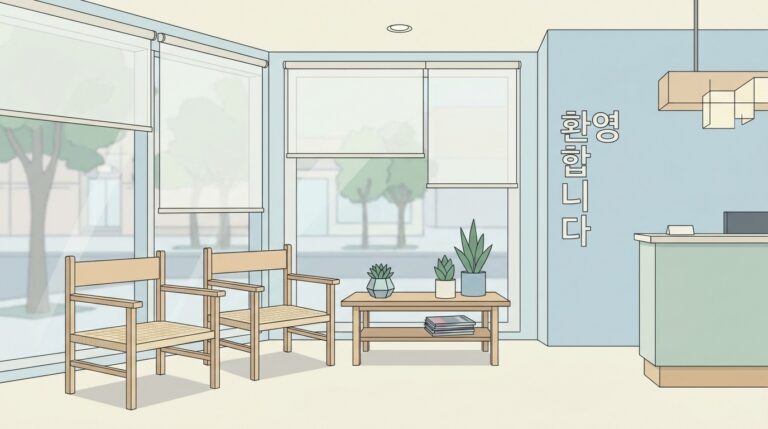
Master the Tricky Korean Vowel UI: Speak Like a Native at the Clinic
Phase 1: Empathy (Opening Story)
안녕하세요! 매일한글 에디터입니다. (Annyeonghaseyo! Maeil Hangul editor-imnida. – Hello! This is your Daily Hangul editor.)
Picture this: You are curled up on your sofa binge-watching Hospital Playlist (슬기로운 의사생활) on a cozy Friday night. The drama reaches its climax, someone collapses in the emergency ward, and a frantic bystander cries out: “의사 선생님! (Uisa seonsaengnim! – Doctor!)” Inspired, you pause the screen, lean forward, and try repeating it aloud. But instead of that crisp, melodious Seoul cadence, your facial muscles freeze, your lips pucker awkwardly, and what tumbles out sounds like “wee-sa” or “oo-ee-sa.”
If that sounds painfully familiar, take a deep breath: you are definitely not alone! In my ten years guiding absolute beginners through the maze of Korean phonetics, 한글 복합 모음 (Hangul Compound Vowels)—and especially the notorious vowel 의 (ui)—trigger the single biggest groan of frustration. It looks like an innocent horizontal bar sitting atop a vertical line (ㅡ + ㅣ), yet learners often describe pronouncing it as “trying to smile and frown at the exact same second.”
Here is the secret: 의 is the linguistic chameleon of the Korean alphabet. It shifts its personality depending on where it appears in a sentence. Today, we are conquering this stubborn sound once and for all using one of the most practical and comforting situations imaginable: visiting a Korean medical clinic (내과) and speaking with an 의사 (uisa – doctor). Drawing directly from real classroom breakthroughs, this friendly guide will rewire your tongue, give you natural conversation scripts, and make you feel right at home in modern Seoul. Let’s dive in!
Phase 2: Core 3 Expressions Breakdown
1. 의사 (Doctor)
- Pronunciation: [uisa] (Sound analogy: Start with flat, grinning lips making the tight “eu” sound from pull, then immediately slide into the bright “ee” of see. Say “eu-ee-sa” smoothly in one single breath!)
- Meaning: Doctor / Physician (Literal: “Master of healing arts” vs Real Nuance: A respected professional whom you will almost always address directly as 의사 선생님 rather than just 의사).
- K-Culture Moment: Every heart-racing medical drama scene where medical staff rush through swinging hospital doors shouting, “의사 선생님 오셨어요! (Uisa seonsaengnim osyeosseoyo! – The doctor has arrived!)”
- Editor’s Insight: The most frequent mistake beginners make is saying “위사 (wisa)”. Remember: 위 (wi) rounds your lips into a circle like you’re blowing a kiss, but 의 (ui) demands a wide, flat, unapologetic grin from ear to ear!
- Situation Spectrum: Casual: ⚠️ (Only when talking about doctors in general) | Semi-formal: ✅ | Formal: ✅
- 🤔 Think About It: In English, we routinely call someone “Doctor Miller” or “Doc.” Why does Korean culture practically forbid calling a doctor by their bare job title 의사 when speaking face-to-face?
2. 의자 (Chair)
- Pronunciation: [uija] (eu-ee-ja)
- Meaning: Chair / Seat
- K-Culture Moment: Walking into a cozy neighborhood cafe in Hongdae or a spotless Seoul dental office and hearing the polite instruction: “여기 편한 의자에 앉으세요. (Yeogi pyeonhan uijae anjeuseyo. – Please sit in this comfortable chair.)”
- Editor’s Insight: Once you nail the vowel in 의사, 의자 uses the exact same initial mouth position! The second syllable 자 (ja) is gentle and unvoiced, like a soft tap of the tongue against the roof of your mouth.
- Situation Spectrum: Casual: ✅ | Semi-formal: ✅ | Formal: ✅
- 🤔 Think About It: Notice that in Korean, physical inanimate objects like chairs never take honorific suffixes, but the action verbs directed at the humans using them change dramatically based on age and social hierarchy.
3. 의미 (Meaning / Significance)
- Pronunciation: [uimi] (eu-ee-mi)
- Meaning: Meaning / Significance (Literal: Intention and taste vs Real Nuance: Personal emotional value or significance).
- K-Culture Moment: A dramatic K-Pop ballad lyric or a confession scene under cherry blossoms: “너는 나에게 특별한 의미야. (Neoneun na-ege teukbyeolhan uimiya. – You have a special meaning to me.)”
- Editor’s Insight: When 의 sits at the beginning of a word like 의미, you must maintain that distinct diphthong glide (eu-ee). However, when 의 appears in later syllables of other words, native speakers often lazily pronounce it as a simple [이 (i)]!
- Situation Spectrum: Casual: ✅ | Semi-formal: ✅ | Formal: ✅
- 🤔 Think About It: Why are K-Pop lyrics so obsessed with 의미 (meaning)? Korean poetic lyricism places immense value on fate (인연) and the deeper cosmic purpose behind small everyday encounters.
Phase 3: Textbook Korean vs Real Korean
Situation 1: Explaining your symptoms to the doctor
- 📖 교과서 한국어 (Textbook Korean):
“의사 선생님, 저는 감기에 걸렸습니다. (Uisa seonsaengnim, jeoneun gamgie geollyeotsseumnida. – Doctor, I have caught a cold.)” - 🗣️ 진짜 한국어 (Real Native Korean):
“선생님, 목이 따갑고 미열이 좀 있어요. (Seonsaengnim, mogi ttagapgo miyeori jom isseoyo. – Doctor, my throat is stinging and I have a slight fever.)” - 💡 왜 다를까? (Why is it different?): Native speakers drop the noun 의사 entirely when speaking directly to their doctor and address them warmly as 선생님 (Teacher). Furthermore, instead of diagnosing themselves with rigid textbook verbs like 걸렸습니다, real patients describe tangible bodily sensations using the friendly -아요/어요 style.
Situation 2: Asking where to sit in the waiting room
- 📖 교과서 한국어 (Textbook Korean):
“의자에 앉아도 됩니까? (Uijae anjato doemnikka? – Am I permitted to sit on the chair?)” - 🗣️ 진짜 한국어 (Real Native Korean):
“여기서 기다리면 될까요? (Yeogiseo gidarimyeon doelkkayo? – Should I wait right here?)” - 💡 왜 다를까? (Why is it different?): Asking literal permission to use furniture sounds overly stiff and robotic, almost like a military inspection! Locals naturally ask about the procedural flow (“Should I wait here?”) rather than asking permission to sit on a chair.
Phase 4: K-Culture Deep Dive & Non-Verbal Manners
4-1. 눈치 (Nunchi) & Clinic Body Language
When you step into a neighborhood clinic (동네 의원) in South Korea, the atmosphere is whisper-quiet, tidy, and impeccably organized. Practicing proper 눈치 (social awareness) will immediately put the staff at ease:
* The Two-Handed Handover: When handing over your alien registration card (ARC) or passport at reception, never flick it with one hand. Present it with both hands, or support your right wrist/forearm with your left hand. This subtle gesture screams respect.
* The Seated Micro-Bow: When entering the doctor’s private office, make gentle eye contact, take your seat, and offer a soft 15-degree seated head nod while saying 안녕하세요 (Hello).
* Personal Space & Respect: Keep your feet tucked under the chair; kicking your legs out or leaning elbows on the doctor’s consultation desk is considered disrespectful body language.
4-2. Cultural Code: The Friendly Neighborhood “내과 (Internal Medicine)”
Unlike many Western countries where booking a primary care visit takes three weeks of bureaucracy, Korea operates on hyper-efficiency. You can wake up with a scratchy throat on a Tuesday morning, walk into an 이비인후과 (ENT) or 내과 (Internal Medicine) without an appointment, be thoroughly examined by an experienced 의사 선생님, pick up custom blister-packed medications at the pharmacy downstairs, and walk out 15 minutes later having spent under $10-$15. In Korean culture, local doctors aren’t distant authority figures; they are community caretakers who treat everyone from school kids to neighborhood grandmothers (할머니).
Phase 5: Real-World Roleplay Scenario
Setting: A sun-drenched, spotless local medical clinic in Mapo-gu, Seoul.
Characters:
* 민우 (Min-woo): A kind, attentive clinic receptionist with a welcoming smile.
* 사라 (Sarah): An international student visiting a Korean clinic for the first time with a sore throat.
Turn 1
민우 (Min-woo): “안녕하세요! 처음 오셨나요? 신분증 보여주세요. (Annyeonghaseyo! Cheoeum osyeonnayo? Sinbunjeung boyeojuseyo. – Hello! Is this your first time here? Please show me your ID.)”
🎭 Bows politely from behind the polished counter with fingers interlaced.
Turn 2
사라 (Sarah): “네, 처음이에요. 여기 여권 있어요. (Ne, cheoeumieyo. Yeogi yeogwon isseoyo. – Yes, it’s my first time. Here is my passport.)”
🎭 Hands over the passport with both hands, smiling appreciatively.
Turn 3
민우 (Min-woo): “감사합니다. 저쪽 의자에 편하게 앉아서 기다려 주세요. (Gamsahamnida. Jeojjok uijae pyeonhage anjaseo gidaryeo juseyo. – Thank you. Please sit comfortably on that chair over there and wait.)”
🎭 Gestures smoothly toward a row of cushioned lounge chairs near the water purifier.
Turn 4
사라 (Sarah): “네, 알겠습니다. 감사합니다! (Ne, algessumnida. Gamsahamnida! – Yes, understood. Thank you!)”
🎭 Nods lightly and walks over to sit quietly in the chair.
Turn 5
민우 (Min-woo): “사라 님! 1번 진료실 의사 선생님께 들어가시면 됩니다. (Sarah-nim! Il-beon jinryosil uisa seonsaengnim-kke deureogasimyeon doemnida. – Sarah! You may go inside to see the doctor in consultation room 1.)”
🎭 Calls Sarah’s name in a gentle, melodic tone and holds open the consultation door.
Turn 6
사라 (Sarah): “선생님, 안녕하세요. 어제부터 목이 너무 아파요. (Seonsaengnim, annyeonghaseyo. Eojebuteo mogi neomu apayo. – Hello, doctor. My throat has been hurting a lot since yesterday.)”
🎭 Enters the room with a polite seated bow as she sits across from the doctor.
Turn 7
의사 (Doctor): “아, 그러세요? 여기 의자에 바짝 앉으시고, 입을 아~ 벌려보세요. (A, geureoseyo? Yeogi uijae bajjak anjeusigo, ibeul a~ beollyeoboseyo. – Ah, is that so? Please slide forward on this chair and open your mouth wide saying ‘Ah~’.)”
🎭 Adjusts the medical light gently and smiles warmly to calm her nerves.
Turn 8
사라 (Sarah): “아~~~ (A~~~ – Ah~~~)”
🎭 Opens mouth wide without feeling awkward or anxious.
🔀 Interactive Choice Point
The doctor gently looks down at his notes and asks you: “언제부터 열이 났어요? (Eonjebuteo yeori nasseoyo? – Since when did you have a fever?)” How do you respond?
- Option A: “어젯밤부터 열이 났어요. (Eojetbambuteo yeori nasseoyo. – I’ve had a fever since last night.)”
- 👉 Feedback (Best!): Perfect! It is respectful, uses accurate time markers, and gives the doctor the exact clinical clarity needed.
- Option B: “어젯밤. (Eojetbam. – Last night.)”
- 👉 Feedback (Bad): Too blunt! Dropping your polite endings (반말) when speaking to an older professional sounds rude, even if accidental.
- Option C: “몰라요! (Mollayo! – I don’t know!)”
- 👉 Feedback (Risk): While grammatically polite, shouting “I don’t know!” sounds frustrated and defensive. If you aren’t sure, it is much better to say: “잘 모르겠는데, 어제 같기도 해요 (I’m not completely sure, but maybe yesterday).”
Phase 6: 10-Second Emotional Shadowing Drill
Repeat these three lines aloud! Follow the / pause markers and tune your voice to match the emotional cues inside the brackets.
- [😊 Soft, clear, and reassuring]
“저쪽 의자에 / 앉아서 / 편하게 기다려 주세요. (Jeojjok uijae / anjaseo / pyeonhage gidaryeo juseyo. – Please sit on that chair over there / and wait comfortably.)” -
[🥺 Vulnerable and seeking help]
“선생님, / 어제부터 / 목이 너무 따가워요. (Seonsaengnim, / eojebuteo / mogi neomu ttagawoyo. – Doctor, / since yesterday / my throat stings so much.)” -
[🩺 Calm, warm, and professional]
“의사 선생님이 / 곧 / 진료해 주실 거예요. (Uisa seonsaengnim-i / got / jinryohae jusil geoyeyo. – The doctor / will / examine you very shortly.)”
Phase 7: K-Culture Mini Dictionary
- 의사 선생님 (Uisa seonsaengnim) | Respected Doctor | In real Korean society, no patient walks up to a doctor and calls them just “의사.” Adding 선생님 (teacher/mentor) reflects the deep cultural respect embedded in Korean honorific systems.
- 처방전 (Cheobangjeon) | Prescription Slip | The paper sheet handed to you at checkout. You take this directly to the independent pharmacy (약국) right next door to pick up your medicine.
- 내과 (Naegwa) | Internal Medicine Clinic | The ultimate lifesaver for travelers and expats. If you have stomach trouble, food poisoning, a flu, or a sore throat, this is the first clinic sign you should look for.
- 약국 (Yakguk) | Pharmacy | Universally recognized by the bold, glowing red or green Korean letter 약 (Yak) hanging on street corners across Korea.
Phase 8: Traveler’s Survival Kit
Top 3 Clinic Survival Phrases
- “감기약 주세요. (Gamgiyak juseyo. – Please give me cold medicine.)”
Pro Tip: In a rush and don’t need a full doctor’s exam? Walk into any 약국 (Pharmacy), say this sentence, and the pharmacist will hand you effective over-the-counter medicine on the spot. - “어디가 아프세요? (Eodiga apeuseyo? – Where does it hurt?)”
Pro Tip: The number one phrase doctors and pharmacists will ask you. You can simply point and say “목 (throat)”, “배 (stomach)”, or “머리 (head)” followed by “아파요 (it hurts)”. - “식후 30분에 드세요. (Sikhu samsipbune deuseyo. – Please take this 30 minutes after meals.)”
Pro Tip: You will find this printed on almost every individual paper medicine pouch handed to you by Korean pharmacists.
Editor’s Travel Note
Before stepping onto the plane for Incheon, make sure to complete your [Naver Map app download for foreign travelers]. Google Maps is famously restricted in South Korea, making Naver Map your essential lifesaver for locating the nearest neighborhood clinics (내과) and late-night weekend pharmacies (휴일지킴이약국). Also, rest easy: Korean neighborhood clinics readily accept foreign credit cards, so you will never need wads of physical cash during an emergency!
Phase 9: “One Step Deeper”
Why do Koreans call their medical doctors 선생님 (Seonsaengnim – Teacher) instead of simply 의사 (Doctor)? In traditional Korean philosophy, social titles are not merely cold descriptions of someone’s corporate payroll duty; they are moral mirrors reflecting human connection and relational harmony. A doctor doesn’t just dispense pills; they teach you how to preserve your health and shepherd you out of pain. By affixing 선생님 to their title, Korean culture strips away the cold, clinical distance of the hospital room and replaces it with shared warmth, trust, and community safety.
💬 Your Turn: How are medical practitioners addressed in your home country? Do you use formal academic titles like “Doctor [Last Name],” or do you have affectionate community words for them? Share your cultural perspective in the comments below!
Phase 10: FAQ & Mistake Prevention
Q: Why does the vowel 의 sound like “ee” (이) or “eh” (에) in some words?
A: This is the golden rule of Korean phonetics! When 의 begins a word (like 의사 or 의자), it retains its original compound glide sound [ui]. However, when it appears in the middle or end of a word (like 회의 – meeting), native speakers naturally pronounce it as [이 (i)], sounding like [회이]. And when 의 is used as the possessive particle meaning “‘s” (such as 나의 책 – my book), it transforms completely into the vowel sound [에 (e)]!
Q: Can I just address the doctor as “의사 씨 (Uisa-ssi)”?
A: Never use -씨 (ssi) with doctors, professors, or bosses! While -씨 is commonly translated as “Mr./Ms.” in early beginner textbooks, using it with someone of higher status or professional expertise sounds condescending and dismissive. Always use 선생님 (Seonsaengnim) or 원장님 (Wonjangnim – Clinic Director).
Q: How can I stop my lips from rounding when I say 의?
A: Place a finger lightly across your lips horizontally. Now smile widely as if saying cheese, pull your tongue backward slightly to make the throat sound “eu”, and glide straight into “ee”. If your lips push your finger forward into a circle, you’re accidentally saying 위 (wi)! Keep that smile wide and taut.
🚨 Common Mistakes Warning Board
- Mistake: Rounding your lips into an “O” shape -> Result: You say “위사 (wisa)” instead of “의사 (uisa)”.
Correct Action: Flash an exaggerated horizontal grin before producing any sound! - Mistake: Shouting “의사! (Doctor!)” to get someone’s attention -> Result: You sound aggressive and disrespectful.
Correct Action: Raise your hand slightly and say “선생님! (Seonsaengnim!)” with a gentle rising pitch. - Mistake: Over-stressing possessive 의 in fast speech -> Result: Saying [na-ui] instead of the natural [na-e] for 나의.
Correct Action: Pronounce the possessive particle 의 as a breezy, relaxed [에 (e)].
Phase 11: Action Missions
- 🥉 Bronze Mission (Solo Practice): Stand before a mirror and pronounce “의사” (uisa) and “의자” (uija) 5 times each, actively checking that your lips stay flat and never round into an O.
- 🥈 Silver Mission (Social Sharing): Record a 5-second voice memo saying “선생님, 의자에 앉을게요 (Doctor, I will sit on the chair)” and send it to your Korean study group or language exchange partner for feedback!
- 🥇 Gold Mission (Real Life Execution): Next time you walk into a Korean market, restaurant, or pharmacy, make a conscious effort to greet the staff using clear, resonant vowels with warm two-handed manners.
- 🎮 K-Culture Mission: Watch any medical K-Drama episode (such as Dr. Romantic or Ghost Doctor) and keep a tally of how many times you hear patients call out “선생님!” instead of “의사!”
Phase 12: Interactive Quiz Challenge
Quiz 1: Situational Judgment
You walk into a quiet medical clinic in Seoul. The receptionist points across the room and says: “저쪽 의자에 앉아주세요. (Jeojjok uijae anjajuseyo.)” What should you do?
A) Give your medication to the receptionist.
B) Walk over and sit down on the chair over there.
C) Knock loudly on the doctor’s office door immediately.
Quiz 2: Fill-in-the-Blank
Fill in the missing word:
“선생님, 머리가 너무 아파서 ___ 선생님을 만나러 왔어요.”
(Doctor, my head hurt so much that I came to see the doctor.)
Word options: [의자 / 의사 / 처방전]
Quiz 3: Cultural True or False
True or False: In a Korean consultation room, it is polite and customary to address your physician directly by shouting “의사! (Uisa!)”
👉 Click here to reveal the answers and explanations!
- Quiz 1 Answer: B) Walk over and sit down on the chair over there.
Explanation: 의자 (uija) means chair, and 앉아주세요 (anjajuseyo) means please sit down. - Quiz 2 Answer: 의사 (uisa – doctor)
Explanation: When referring to the profession of medicine, you use 의사. Together with 선생님, it forms 의사 선생님 (doctor). - Quiz 3 Answer: False!
Explanation: Calling a doctor “의사!” without honorifics is extremely rude. You should always address them as 선생님 (Seonsaengnim) or 원장님 (Wonjangnim).







