

Phase 1: Empathy (Story-Immersive Opening)
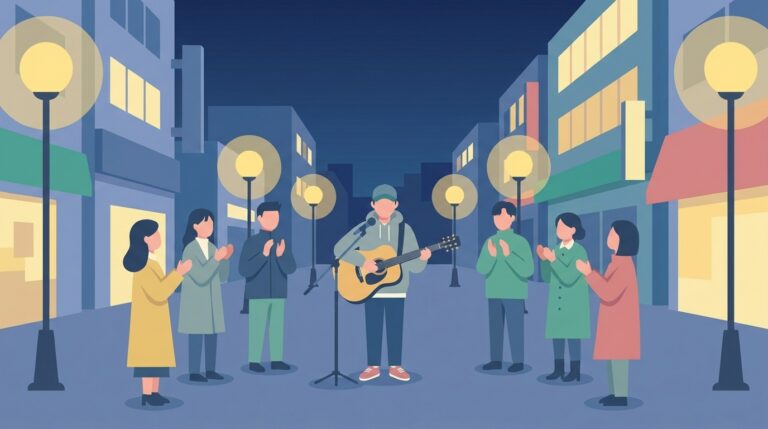
안녕하세요! 매일한글 에디터입니다. (Hello! I’m your Daily Hangul editor.) Imagine this: you’ve spent an aesthetic afternoon sipping Einspänner at a sunlit cafe in Yeonnam-dong. As twilight settles over Seoul, you follow the upbeat bassline towards the bustling heart of Hongdae’s Eoulmadang-ro. Suddenly, you’re swept into a lively circle of hundreds of people. In the center, a group of charismatic young dancers is nailing a synchronized K-Pop routine, followed by a solo indie singer whose soulful voice gives you literal goosebumps.
You want to cheer them on, clap, and maybe ask what song they just played so you can add it to your playlist. But your mind goes blank. Should you speak English? Is shouting “Good!” weird? You stand there clutching your iced coffee, wishing you knew just two or three natural Korean phrases to show your appreciation without feeling awkward.
Don’t worry—you are definitely not alone! This guide is crafted directly from real student stories and local street tips to give you the exact words, body language, and cultural etiquette you need. By the end of this post, you’ll blend seamlessly into Hongdae’s energetic street culture like a true local.
Phase 2: 3 Key Expressions Deep-Dive
1. 노래 너무 잘해요! (Norae neomu jalhaeyo!)
- Pronunciation: noh-ray nuh-moo jal-hae-yo (Think of “noh-ray” like a musical note ray, and “nuh-moo” like saying ‘number’ without the ‘b’).
- Meaning: Literal: “Singing too well!” / Real Nuance: “You sing so amazingly well!”
- K-Culture Moment: You often hear fans shouting this during acoustic live clips on YouTube or outdoor street stages in K-Dramas like Record of Youth.
- Editor’s Insight: In Korean, 너무 (neomu) historically meant “excessively,” but in modern everyday speech, it functions just like “so” or “super.” Pairing it with 잘해요 (jalhaeyo – you do well) is the most natural, heartwarming compliment you can give an indie artist.
- Situation Spectrum: Casual: ⚠️ | Semi-formal (Polite): ✅ | Formal: ⚠️
- 🤔 Think About It: In English, we often say “I love your voice!” (focusing on personal preference). Korean compliments frequently focus on the artist’s competence or effort—”You do [activity] so well!” How does this reflect Korea’s cultural appreciation for hard work and practice?
2. 춤 진짜 멋있어요! (Chum jinjja meosisseoyo!)
- Pronunciation: choom jin-jja muh-sheess-uh-yo (Rhymes with “room”, followed by a punchy “jin-jja” like ‘gin-jah’).
- Meaning: Literal: “Dancing really cool!” / Real Nuance: “Your dance moves are seriously so cool!”
- K-Culture Moment: Street dance crews in Hongdae performing covers of SEVENTEEN or NewJeans will break into huge grins when the crowd yells this right after a dance break.
- Editor’s Insight: 멋있어요 (meosisseoyo) means “stylish,” “cool,” or “impressive.” Adding 진짜 (jinjja – really/truly) makes it sound heartfelt rather than polite flattery.
- Situation Spectrum: Casual: ⚠️ | Semi-formal (Polite): ✅ | Formal: ⚠️
- 🤔 Think About It: Notice how Korean allows you to omit pronouns like “you” or “your.” Saying just 춤 진짜 멋있어요! naturally assumes the performer is the recipient without needing unnecessary pronouns.
3. 이 노래 제목이 뭐예요? (I norae jemogi mwoyeyo?)
- Pronunciation: ee noh-ray je-mo-gi mwo-ye-yo (“ee” as in ‘see’, “je-mok” sounds like ‘jay-moke’).
- Meaning: Literal: “This song title what is it?” / Real Nuance: “What is the title of this song?”
- K-Culture Moment: When a busker covers an underrated indie ballad or debuts an original track, curious listeners often ask this between song breaks.
- Editor’s Insight: 제목 (jemok) means “title.” The particle 이 (i) attaches because 제목 ends in a consonant. It is polite, concise, and perfectly understandable even amidst background street noise.
- Situation Spectrum: Casual: ⚠️ | Semi-formal (Polite): ✅ | Formal: ✅
- 🤔 Think About It: Why do you think asking for the song title is considered the ultimate compliment to an indie busker anywhere in the world?
Phase 3: Textbook Korean vs. Real Korean
Situation 1: Cheering when an artist hits a crazy high note or performs a killer choreo
- 📖 교과서 한국어 (Textbook Korean): 공연이 매우 감동적입니다. (Gongyeoni maeu gamdongjeogimnida. – “The performance is very touching.”)
- 🗣️ 진짜 한국어 (Real Korean): 대박! 소름 돋았어요! (Daebak! Soreum dodasseoyo! – “Awesome! I got literal goosebumps!”)
- 💡 왜 다를까? (Why the difference?): Textbook phrasing sounds like an official theater review. Real street crowds react visceral and fast using slang like 대박 (daebak) and physiological expressions like 소름 돋았어요 (soreum dodasseoyo – goosebumps popped up).
Situation 2: Asking the busker for one more song at the end
- 📖 교과서 한국어 (Textbook Korean): 앙코르를 요청합니다. (Angkoreureul yocheonghamnida. – “I request an encore.”)
- 🗣️ 진짜 한국어 (Real Korean): 앵콜! 한 곡 더 불러주세요! (Aengkol! Han gok deo bulleojuseyo! – “Encore! Please sing one more song!”)
- 💡 왜 다를까? (Why the difference?): Street crowds in Korea simply shout the Konglish word 앵콜 (aengkol) with rhythmic clapping, followed by the friendly, polite request 한 곡 더 (han gok deo – one more song).
Phase 4: K-Culture Deep-Dive & Non-Verbal Manners
4-1. 눈치 (Nunchi) & Street Etiquette
Watching busking in Hongdae is all about collective harmony and shared space:
* The Semicircle Rule: Always maintain at least a 2-meter buffer from the performer’s speakers and gear. If the crowd steps forward, step forward together; if they sit, sit down so people behind you can see.
* Smartphone Etiquette: It’s totally fine to film (fancams are welcomed by buskers!). But turn off flash, keep your screen at chest height instead of blocking others’ sightlines, and never stand directly in front of the artist’s tripod camera.
* Cheering Rhythms: Koreans often show support by turning on their phone flashlight and swaying rhythmically during slow acoustic ballads. Join in! It transforms the street corner into an intimate concert hall.
4-2. The Hongdae Busking Phenomenon
Busking (버스킹) in Hongdae isn’t just amateur hobbyists playing guitar; it’s a launchpad for future K-Pop idols, indie singer-songwriters, and world-class street dancers. The designated busking zones along Hongdae Festival Street (어울마당로) have nurtured prominent artists like 10cm and AKMU. For many artists, busking is their main stage to test new music and build a dedicated fanbase through direct Instagram interactions.
Phase 5: Real-Life Roleplay Scenario
Setting: 8:30 PM on Hongdae Busking Street. A gentle breeze is blowing. You are standing in the front row watching an acoustic guitarist and singer named Minji (민지).
- Turn 1 (Minji): 감사합니다! 이번 곡은 여기까지였습니다. (Gamsahamnida! Ibeon gogeun yeogikkajiyeotseumnida. / “Thank you! That was the end of this song.”)
🎭 Wiping sweat with a towel and smiling warmly at the crowd. - Turn 2 (You): 노래 너무 잘해요! (Norae neomu jalhaeyo! / “You sing so well!”)
🎭 Clapping hands above your head enthusiastically. - Turn 3 (Minji): 어머, 정말요? 너무 감사합니다! (Eomeo, jeongmalyo? Neomu gamsahamnida! / “Oh my, really? Thank you so much!”)
🎭 Bowing slightly with both hands on her chest. - Turn 4 (You): 진짜 감동받았어요. 이 노래 제목이 뭐예요? (Jinjja gamdongbadasseoyo. I norae jemogi mwoyeyo? / “I was really touched. What is the title of this song?”)
🎭 Leaning slightly forward with an eager smile. - Turn 5 (Minji): 제 자작곡인데, 제목은 ‘홍대의 밤’이에요. (Je jajakgoginde, jemogeun ‘Hongdae-ui Bam’ieyo. / “It’s my self-composed song, titled ‘Hongdae Night.'”)
🎭 Pointing shyly at the handwritten signboard with her social media handle. - Turn 6 (You): 와, 대박! 음원 사이트에도 있어요? (Wa, daebak! Eum-won saiteuedo isseoyo? / “Wow, awesome! Is it on music streaming sites too?”)
🎭 Taking out your phone to search for the song. - Turn 7 (Minji): 네! 다음 달에 나와요. 인스타그램 팔로우해 주시면 소식 들을 수 있어요! (Ne! Daeum dare nawayo. Inseutageuraem pallowuhae jusimyeon sosik deureul su isseoyo! / “Yes! It drops next month. If you follow my Instagram, you can get updates!”)
🎭 Pointing towards her QR code sign on the guitar case. - Turn 8 (You): 지금 바로 팔로우할게요. 한 곡 더 불러주세요! (Jigeum baro pallowuhalgeyo. Han gok deo bulleojuseyo! / “I’ll follow right now. Please sing one more song!”)
🎭 Scanning the QR code and chanting with a big grin.
🔀 Interactive Choice Point
The performance finishes, and Minji packs her guitar. You want to tip or show support. What do you do?
- Option A: Approach quietly, drop 5,000 KRW into her open guitar case, smile, bow, and say “오늘 공연 최고였어요!” (Oneul gongyeon choegoyeosseoyo! – “Today’s show was the best!”)
- Option B: Run up abruptly, grab her arm to take a selfie while holding up a V sign without asking.
- Option C: Stand silently at the back, stare from afar, and leave without clapping or looking at her social media sign.
Feedback:
* Option A (Best!): Perfect etiquette! Buskers love kind verbal feedback and small cash tips or Instagram tags. You respected her personal boundaries while giving genuine encouragement.
* Option B (Bad): Risk of startling the artist. In Korea, personal touch without permission is considered invasive, especially when an artist is packing up delicate audio equipment.
* Option C (Risk): While not offensive, you miss out on a wonderful cultural exchange. Buskers perform for connection—a quick clap or follow makes a world of difference!
Phase 6: 10-Second Emotion Shadowing Drill
Practice these lines out loud with the designated emotional flow! The slash (/) indicates a natural micro-pause.
[🤩 감탄하며 / In awe]
노래 / 너무 잘해요! / 진짜 최고예요!
(Norae / neomu jalhaeyo! / Jinjja choegoyeyo!)
“You sing / so well! / Seriously the best!”-
[🔥 신나고 열정적으로 / Excited & pumped]
춤 진짜 / 멋있어요! / 대박!
(Chum jinjja / meosisseoyo! / Daebak!)
“Your dancing is / really cool! / Awesome!” -
[🥺 아쉽고 애교 섞어서 / Longing & enthusiastic]
가지 마세요! / 앵콜! / 한 곡 더요!
(Gaji maseyo! / Aengkol! / Han gok deoyo!)
“Don’t go yet! / Encore! / Just one more song!”
Phase 7: K-Culture Mini Dictionary
-
버스킹 (Beoseuking)
Meaning: Busking / Street Performance.
Usage: A staple of youth nightlife in Hongdae and Sinchon. You will often hear people ask: “오늘 홍대 버스킹 보러 갈래?” (Shall we go watch Hongdae busking today?). -
떼창 (Ttechang)
Meaning: Crowd sing-along.
Usage: Composed of 떼 (tte – group/crowd) + 창 (chang – singing). It describes Korea’s world-famous concert and street busking phenomenon where the entire audience sings along in unison. -
직캠 (Jikkaem)
Meaning: Direct cam / Fancam.
Usage: Short for 직접 찍은 카메라 (jikjeop jjigeun kamera). Audiences frequently upload vertical 4K jikkaem videos of talented street performers to YouTube Shorts or TikTok, occasionally making them viral sensations overnight. -
팬서비스 (Paenseobiseu)
Meaning: Fan service.
Usage: When street dancers or singers make direct eye contact, wave, or make finger hearts toward audience members while performing.
Phase 8: Traveler’s Survival Kit
Survival Expressions TOP 3
- 사진 찍어도 돼요? (Sajin jjigeodo dwaeyo?)
Romanization: Sah-jin jjee-guh-doh dwae-yo?
Pro Tip: Always ask this before taking close-up portraits of buskers. 99% of the time they will enthusiastically nod yes! - 인스타 아이디 알려주세요! (Inseuta aidi allyeojuseyo!)
Romanization: In-seu-ta ah-ee-dee ahl-lyuh-joo-seh-yo!
Pro Tip: Most buskers display their Instagram ID on a small acrylic stand or guitar case. Asking for it is the ultimate way to stay connected. - 목소리가 너무 좋아요. (Moksoriga neomu joayo.)
Romanization: Moke-so-ree-gah nuh-moo joh-ah-yo.
Pro Tip: “Your voice is so beautiful.” The single most touching compliment for indie acoustic singers.
Editor’s Travel Note
- Where to go: Head towards Hongdae Walking Street (near Hongik University Station, Exit 9). The pedestrian zone stretching between exits 7, 8, and 9 features designated performance zones.
- Best Timing: Friday to Sunday, between 6:30 PM and 10:00 PM. Weekday performances exist, but weekend nights boast the peak festival atmosphere.
- Navigation Tip: Seoul’s alleys can be labyrinthine. Make sure to download and use the official Naver Map app navigation instead of international map apps for pinpoint real-time walking directions in Hongdae.
- Tipping Tip: Cash is great (1,000 KRW to 5,000 KRW bills), but many younger Korean artists now display KakaoPay or Toss QR codes. If you don’t have local mobile pay, an Instagram follow and tagging them in your story is equally appreciated.
Phase 9: “One Step Deeper” (Reflective Essay)
In Korean culture, the concept of Heung (흥) refers to an innate, collective joy and playful energy that surfaces when people gather to enjoy music and movement. Hongdae’s street busking circle is one of the clearest modern manifestations of this ancient spirit. When you cheer, clap, or shine your phone light, you are not merely a detached spectator; you become an active co-creator of the performance. Korean crowds value this mutual responsiveness, showing that true appreciation in Korea is always a two-way connection.
💬 Your Turn: Have you ever stumbled upon a memorable street performance while traveling? What song or dance style would make you stop in your tracks in Hongdae? Let us know in the comments below!
Phase 10: FAQ & Common Mistakes
Q: Can I tip Hongdae buskers with foreign currency or credit cards?
A: Credit cards cannot be swiped at busking spots, and foreign coins are difficult for students to exchange. If you want to tip, use Korean Won cash (1,000 or 5,000 KRW bills). Alternatively, following their social media accounts and leaving supportive comments is considered just as valuable as money!
Q: Are the dance buskers actual K-Pop idols?
A: Most are talented dance trainees, university dance club members, or indie choreography teams. However, famous trainees and debuted idols occasionally make surprise guerilla appearances in Hongdae to promote upcoming album releases!
Q: What time does street busking legally end in Hongdae?
A: Due to local noise regulations and residential neighborhood proximity, amplified music and dance busking in the Hongdae Special Tourist Zone must conclude strictly by 10:00 PM.
🚨 Common Mistakes Warning Board
- ❌ Mistake 1: Stepping over the busker’s cables or stepping into their performance square to take a selfie while they are performing.
Correct Action: Stay behind the boundary line marked by audience members or speakers. - ❌ Mistake 2: Using informal 반말 (banmal) like “잘해!” (jalhae!) to an artist younger than you.
Correct Action: Always use polite 존댓말 (jondaetmal) with -요 (-yo), such as 노래 너무 잘해요! (Norae neomu jalhaeyo!). - ❌ Mistake 3: Loudly talking on the phone right next to an acoustic singer’s microphone.
Correct Action: Step back a few meters outside the audience circle before taking a phone call.
Phase 11: Action Missions
- 🥉 Bronze Level (Solo Practice): Practice saying “노래 너무 잘해요!” and “춤 진짜 멋있어요!” 5 times out loud in your room while imagining yourself in the front row of a Hongdae crowd.
- 🥈 Silver Level (Social Media Discovery): Search the hashtag
#홍대버스킹(Hongdae Busking) on Instagram or TikTok. Find one busker video you like and leave a comment: “노래 너무 좋아요! 응원해요!” (Your singing is so good! Cheering for you!). - 🥇 Gold Level (Real-Life Action): On your next trip to Hongdae, pause at a busking circle for at least two songs, clap enthusiastically, and say “감사합니다! 최고였어요!” as you drop a tip or follow their account.
🎮 K-Culture Mission: Watch an episode of a K-Drama featuring Hongdae street scenes (like Record of Youth or Do Do Sol Sol La La Sol) and spot how the spectators cheer for the performers!
Phase 12: Interactive Quiz Challenge
1. Situation Judgment
You just watched an unbelievable street dancer finish an intense routine in Hongdae. What is the most natural, polite compliment to shout?
* A) 춤을 즉시 멈추세요! (Stop dancing immediately!)
* B) 춤 진짜 멋있어요! (Your dancing is really cool!)
* C) 춤이 매우 규격적입니다! (Your dancing is very standardized!)
2. Fill-in-the-Blank
Complete the sentence to ask for the title of the song:
“이 노래 _______ 뭐예요?” (What is the title of this song?)
* Hint: It’s the Korean word for “title.”
3. Cultural True/False
(True / False): In Hongdae, you should always push through to the center of the artist’s gear circle to ensure your phone camera gets the best possible angle.
👉 Click here to reveal answers & explanations!
-
Answer: B) 춤 진짜 멋있어요!
Explanation: Option B is natural, warm, and polite. Option A means telling them to stop, and Option C is robotic textbook language. -
Answer: 제목이 (jemogi)
Explanation: The full sentence is “이 노래 제목이 뭐예요?” (I norae jemogi mwoyeyo?). 제목 means title, and -이 is the subject marking particle. -
Answer: False
Explanation: Entering the artist’s performance boundary disrupts their movement, risks damaging expensive equipment, and blocks other spectators. Always maintain the natural semicircle buffer!







