

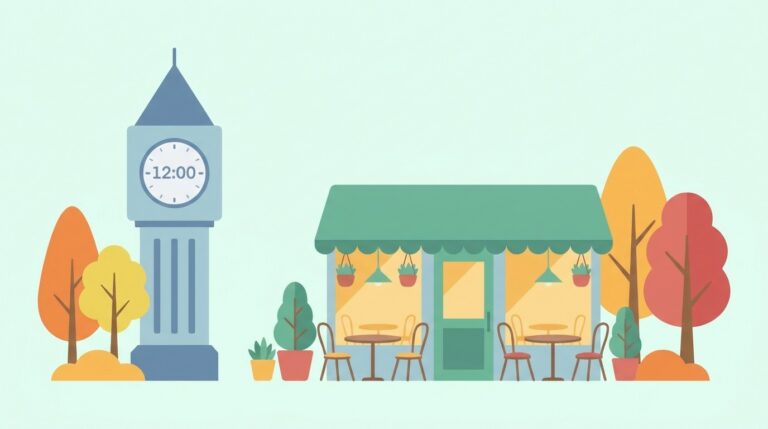
Master Telling Time in Korean: It’s 12:00 Noon! (정오 열두 시예요)
Phase 1: Empathy (Welcome to the Noon Rush!)
안녕하세요! 매일한글 에디터입니다. (Hello! I’m your Daily Hangul editor!)
Picture this: You are standing right outside Exit 3 of Anguk Station in central Seoul. It is 11:58 AM on a crisp autumn weekday. Suddenly, the revolving glass doors of nearby high-rise buildings spin frantically. A flood of trendy office workers in matching lanyards streams into the alleys, walking with brisk determination. Your Korean friend glances at their watch, looks at you with wide eyes, and blurts out: “열두 시예요! (Yeoldu siyeeyo!)”
Panic kicks in. You studied numbers, right? But was twelve sip-i (십이) or yeol-du (열두)? Did your friend say “정오” (jeong-o) or “열두 시” (yeoldu si)? And why does everyone look like they are running a marathon just because the clock struck noon?
If you have ever frozen in place when someone asked you for the time in Korean, take a deep breath. You are not alone! In fact, telling time is one of the most infamous stumbling blocks for beginner Korean learners because Korean uses two different number systems in the very same breath. But mastering “It is 12:00 noon” is your ultimate superpower in Korea—it unlocks lunch appointments, coffee dates, and punctuality respect. Based on years of tutoring A1 beginners, I’ve distilled this guide so you will never second-guess your clock again. Let’s make telling time feel like second nature!
Phase 2: Core 3 Expressions Breakdown
Here are the three foundational phrases you will hear and use constantly when midday arrives.
1. 열두 시예요 (Yeoldu siyeeyo)
- Pronunciation: Yeoldu siyeeyo (Think: yull-doo she-yeh-yo)
- Meaning: Literal: “It is twelve o’clock.” | Actual Nuance: A natural, polite, and clean way to declare 12 o’clock in everyday conversation.
- K-Culture Moment: In workplace K-dramas like Misaeng, a weary junior employee looks up from their desk monitor, checks the corner clock, and exclaims softly, “열두 시예요! (Yeoldu siyeeyo!)” signaling it’s time to escape for lunch.
- Editor’s Insight: Korean hours always use Native Korean numbers (하나, 둘, 셋, 넷… 열둘). When paired with the counter 시 (si, hour), 열둘 (yeoldul) drops its final consonant to become 열두 (yeoldu). Never say sip-i si (십이 시)—that will instantly puzzle native speakers!
- Situation Spectrum:
- Casual (Friends/peers): 열두 시야 (Yeoldu siya) ✅
- Semi-formal (Polite default): 열두 시예요 (Yeoldu siyeeyo) ✅
- Formal (News/presentations): 열두 시입니다 (Yeoldu siimnida) ✅
- 🤔 Think About It: Does your native language modify number words when counting hours versus counting general items? Notice how Korean smoothly shapes words to make them easier to pronounce!
2. 지금 몇 시예요? (Jigeum myeot siyeeyo?)
- Pronunciation: Jigeum myeot siyeeyo? (Think: jee-geum myut-she-yeh-yo)
- Meaning: Literal: “Now, how many hours is it?” | Actual Nuance: “What time is it right now?”
- K-Culture Moment: You will hear idol group members ask the stage manager backstage before a live music broadcast: “감독님, 지금 몇 시예요? (Gamdongnim, jigeum myeot siyeeyo? – Director, what time is it now?)”
- Editor’s Insight: Notice the sound liaison here: 몇 (myeot) ends with a ‘t’ sound, but when followed directly by 시 (si), it flows together into a crisp [몇씨 / myut-ssi]. Keep it light and snappy!
- Situation Spectrum:
- Casual: 지금 몇 시야? (Jigeum myeot siya?) ✅
- Semi-formal: 지금 몇 시예요? (Jigeum myeot siyeeyo?) ✅
- Formal: 지금 몇 시입니까? (Jigeum myeot siimnikka?) ✅
- 🤔 Think About It: In English, we often ask indirectly: “Do you have the time?” In Korean, asking directly “What hour is it right now?” with polite endings (-요) is completely respectful and friendly.
3. 열두 시에 만나요 (Yeoldu sie mannayo)
- Pronunciation: Yeoldu sie mannayo (Think: yull-doo she-eh mahn-nah-yo)
- Meaning: Literal: “At twelve o’clock, let’s meet.” | Actual Nuance: “Let’s meet at 12:00!”
- K-Culture Moment: When romantic leads in a romance drama text each other before a weekend brunch in Seongsu-dong, the screen graphic almost always flashes: “우리 내일 열두 시에 만나요! (Let’s meet tomorrow at 12!)”
- Editor’s Insight: The tiny syllable 에 (e) is your essential time anchor! It functions just like the English preposition “at” in time phrases. Put it directly after the time: 열두 시 + 에 = 열두 시에 (yeoldu sie).
- Situation Spectrum:
- Casual: 열두 시에 만나 (Yeoldu sie manna) ✅
- Semi-formal: 열두 시에 만나요 (Yeoldu sie mannayo) ✅
- Formal: 열두 시에 만납시다 (Yeoldu sie mannapsida) ⚠️ (Can sound slightly stiff/authoritative)
- 🤔 Think About It: Notice how Korean places the time marker first and the verb at the very end. The focus lands immediately on punctuality!
Phase 3: Textbook Korean vs. Real Korean
Let’s see how school books compare to real life in the vibrant streets of Seoul.
Situation 1: Confirming that it is 12:00 PM (Noon)
- 📖 교과서 한국어 (Textbook): 현재 시각은 정오 열두 시 정각입니다. (Hyeonjae sigageun jeong-o yeoldu si jeong-gag-imnida. – “The current time is precisely 12:00 noon on the dot.”)
- 🗣️ 진짜 한국어 (Real-life): 지금 낮 열두 시예요! (Jigeum nat yeoldu siyeeyo! – “It’s 12 in the afternoon right now!”) or simply “열두 시예요!”
- 💡 왜 다를까? (Why the difference?): While 정오 (jeong-o) means “noon,” everyday Koreans usually just say 낮 열두 시 (nat yeoldu si – daytime 12) to distinguish it from 밤 열두 시 (bam yeoldu si – midnight), skipping stiff terms like hyeonjae sigak (current time).
Situation 2: Suggesting lunch at noon
- 📖 교과서 한국어 (Textbook): 우리 열두 시에 점심 식사를 합시다. (Uri yeoldu sie jeomsim siksareul hapsida. – “Let us partake in lunchtime dining at twelve o’clock.”)
- 🗣️ 진짜 한국어 (Real-life): 열두 시에 밥 먹어요! (Yeoldu sie bap meogeoyo! – “Let’s eat lunch at 12!”)
- 💡 왜 다를까? (Why the difference?): In Korea, meals are warmly referred to as 밥 (bap – literally cooked rice, meaning food/meal). Saying jeomsim siksareul hapsida sounds like a corporate memorandum from the 1980s!
Phase 4: K-Culture Deep Dive & Non-Verbal Manners
4-1. 눈치 (Nunchi) & Gestures: The Art of Checking the Time
In Korean social etiquette, checking your phone or smartwatch repeatedly while someone is speaking can communicate disinterest or impatience. If you want to check the time during a conversation:
* The Glance: Briefly look down at your phone lock screen while nodding to acknowledge what the other person is saying.
* The Confirmation Gesture: When agreeing on a meeting time (like 12:00), Koreans frequently tap the index finger of one hand against the palm of the other, or offer a slight double nod with eye contact to signal: “Confirmed!”
4-2. The 11:50 AM Dash (점심시간 러시)
Why is 12:00 noon so intensely revered in Korea? In major business hubs like Yeouido, Gangnam, and Gwanghwamun, standard lunchtime (점심시간, jeomsim-sigan) runs strictly from 12:00 PM to 1:00 PM. By 12:05 PM, popular eateries—from hot Kimchi Jjigae spots to K-BBQ lunch sets—already boast 30-minute waiting lines! Office workers literally develop “Nunchi strategies” to pack up laptops at 11:55 AM so they can hit the restaurant door the second it strikes 12:00. Being five minutes late to a 12:00 PM lunch appointment might mean losing the table entirely!
Phase 5: Interactive Real-Life Role-Play Scenario
Setting: You are exploring Bukchon Hanok Village with your Korean language exchange partner, Min-woo (민우). Your stomach starts grumbling.
- 민우 (Min-woo): 배고파요. 지금 몇 시예요? (Baegopayo. Jigeum myeot siyeeyo?)
- 🎭 Holds his stomach with an exaggerated hungry frown.
- “I’m hungry. What time is it now?”
- You (학습자): 잠깐만요… 열두 시 5분 전이에요! (Jamkkanmanyo… Yeoldu si o-bun jeon-ieyo!)
- 🎭 Checks phone screen and tilts it toward Min-woo.
- “Wait a second… It’s 5 minutes before 12:00!”
- 민우 (Min-woo): 와, 벌써 열두 시예요? 시간 진짜 빠르네요. (Wa, beolsseon yeoldu siyeeyo? Sigan jinjja ppareuneyo.)
- 🎭 Widely opens eyes in surprise.
- “Wow, is it already 12:00? Time flies so fast.”
- You (학습자): 우리 점심 뭐 먹어요? (Uri jeomsim mwo meogeoyo?)
- 🎭 Smiles inquisitively.
- “What are we eating for lunch?”
- 민우 (Min-woo): 근처 칼국수 맛집 갈래요? 근데 열두 시 넘으면 줄 서야 해요! (Geuncheo kalguksu matjip gallaeyo? Geunde yeoldu si neomeumyeon jul seoya haeyo!)
- 🎭 Points hurriedly toward an alleyway.
- “Wanna go to a famous handmade noodle place nearby? But if it passes 12:00, we have to wait in line!”
- You (학습자): 앗, 그래요? 그럼 서둘러요! (At, geuraeyo? Geureom seodulleoyo!)
- 🎭 Nods with quick urgency.
- “Oh, really? Then let’s hurry!”
- 민우 (Min-woo): 좋아요! 열두 시 정각에 들어가요. (Joayo! Yeoldu si jeong-gage deureogayo.)
- 🎭 Speeds up his walking pace with a chuckle.
- “Great! Let’s get in right at 12:00 sharp.”
- You (학습자): 네, 열두 시에 밥 먹어요! (Ne, yeoldu sie bap meogeoyo!)
- 🎭 Follows along happily with a brisk step.
- “Yes, let’s eat at 12!”
🔀 Your Interactive Branching Choice!
Min-woo asks: “칼국수집에 열두 시에 만날까요, 아니면 지금 바로 갈까요? (Should we meet at the noodle restaurant at 12:00, or head over right now?)” How do you respond?
- Option A: “열두 시에 만나요!” (Yeoldu sie mannayo! – Let’s meet at 12:00!)
- Feedback [Risk]: While grammatically perfect, in busy Seoul dining spots, arriving right at 12:00 means the line has already formed around the corner!
- Option B: “지금 바로 가요!” (Jigeum baro gayo! – Let’s go right now!)
- Feedback [Best]: 100 points! You show incredible cultural Nunchi. Getting there 5 minutes before 12:00 secures you the best booth before the rush.
- Option C: “십이 시에 만나요!” (Sip-i sie mannayo!)
- Feedback [Bad]: Oh no! Remember, Korean hours NEVER use Sino-Korean numbers (sip-i). Min-woo will know what you mean, but it will sound unnatural.
Phase 6: 10-Second Emotion Shadowing Drill
Read these aloud, hitting the rhythm pauses marked with / and embodying the emotion!
- [😊 Excited & Hungry]
지금 / 열두 시예요! / 밥 먹으러 가요!
(Jigeum / yeoldu siyeeyo! / bap meogeureo gayo!)
“It’s 12 o’clock right now! / Let’s go grab food!” -
[👀 Surprised & Shocked]
벌써 / 열두 시예요? / 시간 / 진짜 빠르다!
(Beolsseo / yeoldu siyeeyo? / sigan / jinjja ppareuda!)
“Already 12 o’clock? / Time / is seriously fast!” -
[🤝 Warm & Trustworthy]
그럼, / 내일 낮 / 열두 시에 / 만나요!
(Geureom, / naeil nat / yeoldu sie / mannayo!)
“Then, / tomorrow afternoon / at 12:00 / let’s meet!”
Phase 7: K-Culture Mini Dictionary
- 정오 (Jeong-o) | Noun: High Noon / Midday
- Usage: Primarily used in news broadcasts, train schedules, weather reports, and formal business notices. In casual speech, people prefer 낮 12시 (nat yeoldu si).
- 점심시간 (Jeomsim-sigan) | Noun: Lunch Break
- Usage: Typically 12:00 PM to 1:00 PM. Many government offices, bank counters, and clinics operate with rotating staff or paused desk services during this golden hour.
- 정각 (Jeong-gak) | Noun: On the dot / Sharp
- Usage: Combined directly after the hour to emphasize exactness: 열두 시 정각 (yeoldu si jeong-gak – 12:00 sharp).
- 칼퇴 (Kal-twae) | Slang: Leaving work sharp on the dot
- Usage: Derived from 칼 (knife/blade), meaning cutting out of work precisely at quitting time. Similarly, office workers joke about 칼점심 (knife-sharp lunch dash) the second it hits 12:00!
Phase 8: Survival Kit for Travelers
TOP 3 Emergency Noon Phrases
- 몇 시에 문 열어요? (Myeot sie mun yeoreoyo?)
- Meaning: “What time do you open the doors?”
- Pro Tip: Many famous Seoul cafes and boutique shops open precisely at 12:00 PM. Ask this when waiting outside!
- 열두 시 예약이에요. (Yeoldu si yeyak-ieyo.)
- Meaning: “I have a reservation at 12 o’clock.”
- Pro Tip: Say this as you enter restaurants with reservation systems.
- 점심 특선 돼요? (Jeomsim teukseon dwaeyo?)
- Meaning: “Is the lunch special available?”
- Pro Tip: Between 11:30 AM and 2:00 PM, many Korean restaurants offer high-value lunch specials (점심 특선) that include complimentary stews or side dishes!
🧳 Editor’s Travel Note: Apps & Transit
- Booking Ahead: Download the CatchTable reservation app to secure popular noon dining slots in Hongdae or Gangnam without waiting on the curb.
- Noon Transit Tip: Seoul subways and cross-town buses quiet down between 10:00 AM and 11:45 AM, but right at 12:00 PM, short-distance transit around business districts (Yeouido, Euljiro) experiences a mini-rush. Tap your transit card smoothly and stay right on the escalators!
Phase 9: “One Step Deeper” (한 발 더 깊이)
In Western cultures, time is often viewed as an objective, independent measurement—a mechanical grid on our calendars. But in Korea, time is deeply relational and communal. The hour of 12:00 noon does not merely represent twelve rotations of a minute hand; it represents collective restoration. In Korea, asking someone if they have eaten (식사하셨어요?) is equivalent to asking “How are you doing?” When the clock hits 12:00, solitary work halts, and coworkers, classmates, and friends gather around a simmering pot of stew, sharing side dishes and camaraderie.
Time in Korean culture is a shared rhythm that binds people together. When you tell a friend, “열두 시에 만나요!”, you are not just scheduling a meeting—you are welcoming them into your shared day.
💬 Your Turn: What time do you usually eat lunch in your country, and who do you usually share that time with? Share your favorite lunch hour stories in the comments below!
Phase 10: FAQ & Common Mistakes
Q: Can I say “십이 시 (Sip-i si)” if I forget the Native Korean number?
A: While a native speaker will logically decode that you mean 12:00, it sounds very jarring to Korean ears! Hours strictly take Native Korean numbers (열두 시). Always use yeol-du for the hour, and save sip-i for minutes (e.g., 12분 = sip-i bun).
Q: What is the difference between “낮 열두 시” and “정오”?
A: Both mean 12:00 PM! However, 정오 (jeong-o) is a Sino-Korean term mostly seen in formal texts, news broadcasts, or written schedules. In casual spoken Korean, people naturally say 낮 열두 시 (nat yeoldu si – daytime twelve) or just 열두 시 (yeoldu si).
Q: How do I say 12:30 PM in Korean?
A: You can say either 열두 시 삼십 분 (Yeoldu si samsip bun) using the Sino-Korean number for 30 minutes, or the more casual and common 열두 시 반 (Yeoldu si ban), where 반 (ban) literally means “half”!
🚨 Common Mistakes Alert Board
- Mistake: Mixing up hour numbers with Sino-Korean numbers.
- Wrong: 일 시, 이 시, 십이 시 (Il si, I si, Sip-i si)
- Correct Action: 한 시, 두 시, 열두 시 (Han si, Du si, Yeoldu si)
- Mistake: Dropping the time marker particle when setting plans.
- Wrong: 우리 열두 시 만나요. (Uri yeoldu si mannayo – sounds awkward/incomplete)
- Correct Action: 우리 열두 시에 만나요. (Uri yeoldu si-e mannayo.)
- Mistake: Confusing noon (낮 12시) with midnight (밤 12시 / 자정).
- Correct Action: Specify 낮 (nat, day) or 밤 (bam, night) if there’s any chance of ambiguity!
Phase 11: Action Missions & Community
Put your new skills into immediate action with this 3-tier challenge:
- 🥉 Bronze Mission (Solo Practice): Set an alarm on your phone for 12:00 PM today. When it rings, look at the screen and shout aloud with good energy: “지금 열두 시예요! (Jigeum yeoldu siyeeyo!)”
- 🥈 Silver Mission (Social Share): Snap a photo of your lunch today and post it on your Instagram Story or X (Twitter) with the Korean caption: “열두 시에 밥 먹어요! 🍚 #DailyHangul”
- 🥇 Gold Mission (Real Interaction): Send a message to your Korean friend, language partner, or tutor proposing a catch-up: “우리 내일 낮 열두 시에 만나요! (Let’s meet tomorrow at 12 noon!)”
- 🎮 K-Culture Media Mission: Next time you watch an office or school K-Drama, listen closely around lunchtime scenes. Spot whether the characters say “열두 시” or “밥 먹으러 가요” and comment the drama title below!
Phase 12: Interactive Quiz Challenge
Test your midday Korean mastery! Try to solve all three before checking the answers.
1. [Situational Judgement]
You want to invite your Korean classmate to have lunch at 12:00 sharp. Which sentence is the most natural and polite?
* (A) 정오 십이 시에 식사를 드십시오.
* (B) 낮 열두 시에 밥 먹어요!
* (C) 열두 시 정각을 만나요!
2. [Fill in the Blank]
Fill in the missing native Korean number and time particle:
“지금은 ________ 시예요. 우리 열두 시________ 만나요!”
(It is 12 o’clock right now. Let’s meet at 12 o’clock!)
3. [True or False]
In Korean, both the hour and the minute are counted using Native Korean numbers (하나, 둘, 셋…). (True / False)
👉 Click here to reveal answers & explanations!
- Answer: (B) 낮 열두 시에 밥 먹어요!
- Explanation: (A) uses incorrect Sino-Korean numbers for the hour and sounds overly robotic; (C) uses the wrong object particle (reul) instead of the time particle (e). (B) is warm, natural, and accurate!
- Answer: 열두 / 에 (Yeoldu / e)
- Sentence completed: “지금은 열두 시예요. 우리 열두 시에 만나요!”
- Answer: False!
- Explanation: This is the classic trap! In Korean, the hour uses Native Korean numbers (열두 시), but the minutes use Sino-Korean numbers (십 분, 이십 분, 삼십 분…). Keep them separated in your mental filing cabinet!
- Explanation: This is the classic trap! In Korean, the hour uses Native Korean numbers (열두 시), but the minutes use Sino-Korean numbers (십 분, 이십 분, 삼십 분…). Keep them separated in your mental filing cabinet!
Keep practicing your clock phrases with pride, and remember: whenever the clock strikes 12, it’s always time for delicious food and friendly Korean conversation! 다음 시간에 또 만나요! (See you next time!)






