

Handling a Parking Lot Scrape in Korea: The Friendly Guide to Calling Insurance
Phase 1: Empathy (Story-Immersive Opening)
안녕하세요! 매일한글 에디터입니다. (Hello! I’m your Daily Hangul editor.)
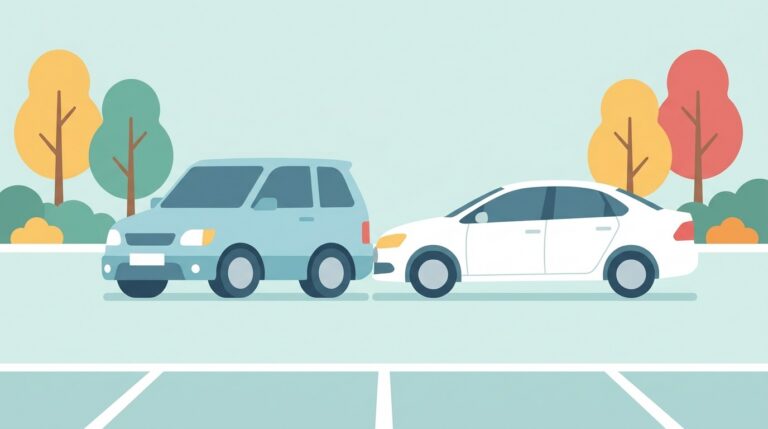
Picture this: You are having an absolute dream vacation driving a sleek rental car around Jeju Island or exploring a charming seaside town like Gangneung. You pull out of an aesthetic cafe parking lot, your favorite K-drama soundtrack humming gently through the speakers. You shift into reverse, check your rearview mirror, and ease back. Then—skrrrt—a sudden, heart-stopping noise. Your stomach drops instantly. You step out into the crisp Korean air and look down: your rental car’s rear bumper has lightly kissed the bumper of the parked white Hyundai next to you, leaving a noticeable grey scratch.
In a split second, panic sets in: “Will they call the police? How do I talk to my rental car company? What if the owner gets angry? Do I even know how to say ‘fender-bender’ in Korean?!”
Take a deep breath! You are not the first traveler to bump a bumper in Korea’s notoriously tight parking spots, and you certainly won’t be the last. In Korea, minor parking scrapes (접촉 사고) happen every single day, and there is a very organized, calm, and civilized protocol for dealing with them. Learning how to express what happened politely and request insurance dispatch will not only save you thousands of won, but it will also turn a potential travel nightmare into an empowering moment of cultural competence. This guide is built directly on real learner experiences and local road wisdom so you can navigate the situation with poise and zero tears!
Phase 2: Core Expressions in Deep Analysis
1. 주차하다가 범퍼를 살짝 긁었어요. (Juchahadaga beompeoreul saljjak geulgeosseoyo.)
- Pronunciation: Joo-cha-ha-da-ga beom-peo-reul sal-jjak geul-geo-sseo-yo. (Sounds like: joo-cha as in ‘juice’ without the ‘s’, and saljjak with a quick pop on ‘jjak’ like snapping fingers.)
- Meaning: Literal: “While parking, I slightly scratched the bumper.” vs Real Nuance: “I had a very minor parking mishap and grazed the bumper—nothing catastrophic, but I want to report it honestly.”
- K-Culture Moment: You hear this line in countless slice-of-life K-dramas whenever a rookie driver calls their older sibling or insurance agent after trying to squeeze into a tight villa parking space.
- Editor’s Insight: The magic word here is 살짝 (saljjak), meaning ‘lightly’ or ‘slightly’. Adding 살짝 instantly softens the alarm bells for the listener, signaling that nobody is hurt and the structural damage is cosmetic.
- Situation Spectrum: Casual: ⚠️ (too formal for close friends) | Semi-formal: ✅ | Formal: ✅
- 🤔 Think About It: In English, we often say “I hit a car,” which sounds severe. Why do you think Korean emphasizes the process (
-다가, while doing) and degree (살짝, lightly) when describing accidents?2. 보험사 출동 기사님 좀 보내주세요. (Boheomsa chuldong gisanim jom bonaejuseyo.)
- Pronunciation: Bo-heom-sa chool-dong gi-sa-nim jom bo-nae-joo-se-yo. (Analogy: gisanim sounds like ‘key-sa-neem’, the universal polite title for professional drivers or technicians.)
- Meaning: Literal: “Please send an insurance company dispatch driver/agent.” vs Real Nuance: “Please send an insurance claim specialist to inspect the scene.”
- K-Culture Moment: In Korea, insurance companies boast emergency dispatch response times within 15 to 20 minutes nationwide. Dialing your rental insurance helpline and dropping this line brings help faster than takeout chicken!
- Editor’s Insight: Attaching 님 (-nim) to 기사 (gisa) shows respect to the field technician, while 좀 (jom) acts as a linguistic cushion that turns a direct command into a warm, polite request.
- Situation Spectrum: Casual: 🚫 | Semi-formal: ✅ | Formal: ✅
- 🤔 Think About It: In many Western countries, drivers handle minor paint swaps purely among themselves. Why does Korea rely so heavily on immediate third-party insurance dispatch (출동)?
3. 사진 먼저 찍고 차를 뺄게요. (Sajin meonjeo jjikgo chareul ppaelgeyo.)
- Pronunciation: Sa-jin meon-jeo jjik-go cha-reul ppael-ge-yo. (Analogy: jjik rhymes with ‘quick’ with a sharp, crisp ‘jj’ click.)
- Meaning: Literal: “I will take photos first and then move the car.” vs Real Nuance: “Let’s document the evidence thoroughly, and then I’ll move my car so we don’t block traffic.”
- K-Culture Moment: Seen in variety shows when cast members navigate parking missions: taking clear smartphone snapshots of tire angles, bumper paints, and ground markings before freeing up the lane.
- Editor’s Insight: In Korea’s dense alleys, blocking parking aisles creates gridlock in minutes. Saying 차를 뺄게요 (I’ll pull the car out) assures nearby drivers that you are considerate and aware of shared communal space.
- Situation Spectrum: Casual: ⚠️ | Semi-formal: ✅ | Formal: ✅
- 🤔 Think About It: Notice the sequence of actions: evidence first, movement second. How does this reflect modern Korea’s high trust in digital proof?
Phase 3: Textbook Korean vs. Real Korean
Situation 1: Calling the other car owner or rental company to announce the scratch
- 📖 교과서 한국어 (Textbook Korean): 제 차가 귀하의 자동차 범퍼와 충돌 사고를 일으켰습니다. (Je chaga gwiha-ui jadongcha beompeowa chungdol sagoreul ireukyeotseumnida. – My automobile caused a collision incident with your vehicle bumper.)
- 🗣️ 진짜 한국어 (Real Korean): 안녕하세요, 후진하다가 범퍼를 살짝 긁어서 연락드렸어요. (Annyeonghaseyo, hujinhadaga beompeoreul saljjak geulgeoseo yeollakdeuryeosseoyo. – Hello, I’m calling because I slightly scraped your bumper while reversing.)
- 💡 왜 다를까? (Why is it different?): Textbook phrases sound like an official police charge sheet! Real Koreans state their intent immediately and soften the description using the conversational past linker
-어서(because/so).
Situation 2: Suggesting insurance settlement rather than arguing on the street
- 📖 교과서 한국어 (Textbook Korean): 귀하의 손해액을 보상하기 위해 보험 처리를 개시합시다. (Gwiha-ui sonhae-aegeul bosanghagi wihae boheom cheorireul gaesihapsida. – Let us initiate insurance settlement procedures to compensate for your monetary losses.)
- 🗣️ 진짜 한국어 (Real Korean): 렌터카 보험 접수번호 바로 보내드릴게요! (Renteoka boheom jeopsubeonho baro bonaedeurilgeyo! – I will send you the rental car insurance claim number right away!)
- 💡 왜 다를까? (Why is it different?): In Korea, nobody tallies cash on the asphalt. Everything flows smoothly through an official claim registration number (접수번호), making this phrase the ultimate tension-defuser.
Phase 4: K-Culture Deep Dive & Non-verbal Manners
4-1. 눈치 (Nunchi) & Body Language: How to Stand and Speak
When an accident happens in Korea, your non-verbal cues determine 80% of how smoothly the interaction goes.
* The Sincere Nod-Bow: As soon as the other car owner walks over, give a slight, apologetic 30-degree bow. You do not need to fall to your knees, but keeping your hands clasped politely in front of your waist signals: “I am a reasonable, respectful human being.”
* Eye Contact: Avoid a frozen stare (which looks combative) or looking down at your smartphone the entire time (which looks irresponsible). Look at the bumper together, then make brief, soft eye contact while nodding.
* The Golden Dashcam Rule: You will notice a flashing LED camera mounted on the windshield of almost every car in Korea. That is the 블랙박스 (Black Box / Dashcam). Do not touch or block it. It is silently recording everything, including sound, so maintain a calm and courteous tone.
4-2. Cultural Code: The Windshield Phone Number (주차 전화번호)
Ever wonder why parked cars in Korea display small phone numbers on pretty acrylic plates behind the front windshield? Because Korean parking spaces are notoriously tight (double parking in residential zones is common), owners expect to be reachable. When you scratch an unattended parked car, you do not need to call the police right away; you simply look at the driver’s front windshield, find their 주차 번호 (parking phone number), send a text with a photo, and call them politely.
Phase 5: Real-Life Roleplay Scenario
- Location: Cozy, crowded gravel parking lot of a mandu restaurant in Sokcho.
- Characters:
- Alex (B1 Korean Learner / Rental Car Driver): Calm, polite, wanting to do the right thing.
- Mr. Choi (Local Car Owner): Surprised, inspecting his car bumper with an iced Americano in hand.
- Alex: 🎭 Giving a polite nod with hands lightly folded
안녕하세요, 혹시 이 차 차주분이세요?
(Annyeonghaseyo, hoksi i cha chajubuniseyo?)
“Hello, by any chance, are you the owner of this car?” -
Mr. Choi: 🎭 Looking up from his phone, slightly startled
네, 맞는데요. 무슨 일 있으신가요?
(Ne, manneundeyo. Museun il itsseusingayo?)
“Yes, that’s me. Did something happen?” -
Alex: 🎭 Pointing down carefully toward the corner bumper
제가 후진으로 차를 빼다가 옆 범퍼를 살짝 긁었어요. 정말 죄송합니다.
(Jega hujineuro chareul ppaedaga yeop beompeoreul saljjak geulgeosseoyo. Jeongmal joesonghamnida.)
“While backing out, I scraped your side bumper slightly. I am truly sorry.” -
Mr. Choi: 🎭 Squatting down to inspect the scratch closely
아이고, 페인트가 조금 벗겨졌네요. 많이 안 다치셨어요?
(Aigo, peinteuga jogeum beotgyeojyeonneyo. Mani an dachisyeosseoyo?)
“Oh dear, the paint peeled a little bit. Were you hurt at all?” -
Alex: 🎭 Shaking head gently
저는 괜찮습니다! 제가 렌터카 보험사에 출동 요청 바로 했어요.
(Jeoneun gwaenchanhseumnida! Jega renteoka boheomsaye chuldong yocheong baro haesseoyo.)
“I am fine! I already called the rental car insurance for an on-site dispatch.” -
Mr. Choi: 🎭 Nodding approvingly at Alex’s quick initiative
잘하셨네요. 기사님 오실 때까지 사진 몇 장 찍어둘까요?
(Jalhasyeonneyo. Gisanim osil ttaekkaji sajin myeot jang jjigeodulkkayo?)
“You handled that well. Shall we take a few photos while we wait for the technician?” -
Alex: 🎭 Holding phone camera horizontally to capture car angles
네, 바퀴 방향이랑 번호판 나오게 전체 사진 먼저 찍을게요.
(Ne, bakwi banghyang-irang beonhopan naoge jeonche sajin meonjeo jjigeulgeyo.)
“Yes, I will take overall shots showing the wheel angle and license plate first.” -
Mr. Choi: 🎭 Smiling faintly, relaxed
날씨도 더운데 카페 안에서 시원한 차 마시면서 기다립시다.
(Nalssido deounde kape aneseo siwonhan cha masimyeonseo gidaripsida.)
“It’s hot outside; let’s wait inside the cafe with a cold tea until they arrive.”
🔀 Interactive Decision Point
Suppose you just scraped the car, and the owner is nowhere in sight. What do you do?
* Choice A: Drive away quickly. The scratch is tiny, and nobody saw you.
* Choice B: Take clear pictures of both cars, find the phone number on their windshield, send a text with the photos, and call your rental company.
* Choice C: Leave a 50,000 KRW bill under their windshield wiper and speed off.
Feedback:
* Choice A (Bad / Illegal): 🚫 Danger! Under Korean Road Traffic Act Article 54, leaving the scene of an unattended vehicle accident without leaving contact info is classified as 물피도주 (hit-and-run on parked vehicle), leading to heavy fines and black marks on your record. Black boxes will catch you!
* Choice B (Best): ✅ Perfection! You documented evidence, preserved driver contacts, and upheld Korean road etiquette. 99% of disputes resolve cleanly through this step.
* Choice C (Risk): ⚠️ Risky. Cash under a wiper might blow away, get stolen, or fail to cover repainting costs, leading the owner to report a hit-and-run anyway. Always exchange verified contact information!
Phase 6: 10-Second Emotional Shadowing Drill
Practice speaking like a native speaker under slight pressure! Pay attention to pauses marked by /.
[😟 당황스럽지만 차분하게 / Flustered but Composed]
“저기요, / 후진하다가 / 범퍼를 살짝 긁은 것 같아요. / 한번 봐주시겠어요?”
(Jeogiyo, / hujinhadaga / beompeoreul saljjak geulgeun geot gat-ayo. / Hanbeon bwajusigesseoyo?)
“Excuse me, / while reversing / I think I grazed the bumper. / Could you take a look?”-
[📞 명확하고 신속하게 / Clear and Prompt]
“렌터카 접촉 사고가 났는데요, / 현장 출동 기사님 / 바로 보내주실 수 있나요?”
(Renteoka jeopchok sagoga nanneundeyo, / hyeonjang chuldong gisanim / baro bonaejusil su innayo?)
“I had a minor rental car scrape, / an on-site technician / could you dispatch one right away?” -
[🤝 정중하고 배려심 넘치게 / Respectful and Caring]
“날씨가 많이 추운데, / 연락처 먼저 교환하고 / 따뜻한 곳에서 기다리실까요?”
(Nalssiga mani chunde, / yeollakcheo meonjeo gyohwanhago / ttatteutan gos-eseo gidarisilkkayo?)
“The weather is cold, / so shall we exchange contact numbers first / and wait somewhere warm?”
Phase 7: K-Culture Mini Dictionary
- 블랙박스 (Beullaekbakseu – Dashcam): While English uses “black box” primarily for airplane flight recorders, in Korean it universally refers to a car’s dashboard camera. It is the definitive judge of accident liability.
- 문콕 (Munkok – Door Ding): A compound word combining 문 (door) and the onomatopoeia 콕 (a little poke/jab). Refers to when someone opens their car door too wide and dings the adjacent car’s side.
- 물피도주 (Mulpidoju – Parked Car Hit-and-Run): The specific legal term for scraping a parked car and driving away without notifying the owner. Extremely frowned upon and strictly penalized via security footage.
- 슈퍼자차 (Syupeojacha – Super CDW / Zero Deductible Collision Damage Waiver): The holy grail for foreign rental drivers in Korea! Purchasing this optional insurance upgrade means you pay zero deductible fees even for minor scrapes.
Phase 8: Survival Kit for Travelers
Top 3 Immediate Survival Phrases
- 보험 접수번호 나왔어요. (Boheom jeopsubeonho nawasseoyo.)
- Pronunciation: Bo-heom jeop-soo-beon-ho na-wa-sseo-yo.
- Pro Tip: Once your rental firm generates the claim number, say this and text the number to the other driver. Tension evaporates immediately!
- 다친 곳은 없으세요? (Dachin goseun eopseuseyo?)
- Pronunciation: Da-chin go-seun eop-seu-se-yo?
- Pro Tip: Asking “Are you hurt anywhere?” shows immense empathy and defuses any lingering frustration.
- 블랙박스 영상 확인해볼게요. (Beullaekbakseu yeongsang hwaginhaebolgeyo.)
- Pronunciation: Beul-laek-bak-seu yeong-sang hwa-gin-hae-bol-ge-yo.
- Pro Tip: Use this when assessing liability with the insurance technician.
Editor’s Travel Note
- Navigation & Emergency Call: Keep your rental agreement sheet in the glove compartment! It lists the dedicated 24-hour emergency number (사고 접수 센터).
- Download Naver Map App: You will need to drop a precise pin for the dispatch driver. Use the 네이버 지도 앱 다운로드 to share your exact location via KakaoTalk or SMS instead of trying to describe unfamiliar Korean crossroads over the phone.
- Zero Deductible is King: When renting with companies like Lotte Rent-a-Car or SK Rent-a-Car, never skip 완전면책 (Full Coverage / Super CDW). It costs around 10,000 to 20,000 KRW extra per day and gives total peace of mind.
Phase 9: A Step Deeper (Reflective Prompt)
In many countries, an auto accident on the street quickly escalates into shouting, blaming, and dramatic posture. But in Korea, you will be struck by how quiet accident scenes usually are. Drivers step out, inspect the mark, trade business cards or phone numbers, and call their respective insurance dispatchers. This restraint stems from a strong collective value: maintaining public order (공공질서) and relying on systemic, verified technology (dashcams and insurance mediators) rather than individual confrontation.
💬 Your Turn: Have you ever experienced or witnessed a minor fender-bender abroad? How does your home country’s post-accident etiquette compare to Korea’s calm insurance-dispatch culture? Share your thoughts below!
Phase 10: FAQ & Avoiding Misunderstandings
Q: Do I need to call 112 (Korean Police) for a tiny parking scrape?
A: If it is a minor scratch in a private parking lot or alley with no bodily injuries and both drivers are in mutual agreement, calling the police is usually unnecessary. Reporting it to your rental insurance provider is sufficient. However, if the other party is uncooperative, aggressive, or if you scraped public street furniture (like guardrails), dial 112.
Q: The other driver is asking me for 300,000 KRW in cash right now. Should I pay?
A: No, never pay cash on the spot! Always say: “렌터카 보험 처리할게요” (Renteoka boheom cheorihalgeyo – I will process it through rental car insurance). Unofficial cash settlements leave no paper trail, and unscrupulous drivers could still submit a claim or claim hit-and-run later.
Q: What if I don’t speak enough Korean to talk to the insurance dispatcher on the phone?
A: Rental companies that cater to foreigners (like Lotte or SK) provide English interpretation services. If not, state clearly: “영어 상담원 연결 부탁드립니다” (Yeongeo sangdamwon yeongyeol butakdeurimnida – Please connect me to an English-speaking agent) or use the free 1330 Korea Travel Hotline for three-way interpretation.
🚨 Common Mistakes Checklist
- ❌ Mistake 1: Moving the car before photographing wide angles.
- Correct Action: Take 4 photos: (1) Close-up of scratch, (2) Wide angle showing both cars’ positions, (3) Tire direction, (4) License plates.
- ❌ Mistake 2: Leaving only a generic handwritten note without a phone call.
- Correct Action: Always text the photos to their windshield number and call to make verbal contact so there is proof of notification.
- ❌ Mistake 3: Admitting “100% my fault” (제 잘못 100%입니다) on the scene.
- Correct Action: Apologize for the inconvenience (불편을 드려 죄송합니다), but let the dashcam footage and insurance assessors determine legal fault percentages (과실 비율).
Phase 11: Action Missions
- 🥉 Bronze Mission (Solo Vocal Drill): Stand in front of your mirror and practice repeating: “주차하다가 살짝 긁었어요. 보험 접수해 드릴게요.” three times without stumbling.
- 🥈 Silver Mission (Social/Study Share): Share this guide or your favorite Korean driving term (문콕 or 블랙박스) on Instagram or with your Korean study partner.
- 🥇 Gold Mission (Real Life / Immersion): Next time you watch a modern K-drama, listen carefully for scenes where characters drive or park. Spot the phone number plate on the dashboard or see if someone mentions 보험 출동!
- 🎮 K-Culture Bonus Mission: Look up a clip of a Korean variety show (like Omniscient Interfering View or Hangout with Yoo) where celebrities parallel park in Seoul. Notice how passengers step out to guide them saying “오라이~ 오라이~” (All right / Back back) and “스톱!” (Stop!).
Phase 12: Interactive Quiz Challenge
1. Situational Judgment:
You accidentally graze the side mirror of a parked Genesis in a Jeju underground garage. The driver isn’t there. What is your very first step?
* A) Leave immediately because Jeju has little traffic.
* B) Snap clear photos of the damage and check the front windshield for a contact phone number.
* C) Wipe the scratch with your sleeve and hope it disappears.
2. Fill-in-the-Blank:
When calling your rental car customer service, complete the sentence to ask for a dispatch agent:
“보험사 _______ 기사님 좀 보내주세요.” (Please dispatch an insurance technician.)
* A) 배달 (Baedal – Delivery)
* B) 출동 (Chuldong – Dispatch/Emergency response)
* C) 여행 (Yeohaeng – Travel)
3. True or False Cultural Question:
True or False: In Korea, a vehicle dashboard camera is universally called a 블랙박스 (Black Box), and it is standard practice to review its footage when settling accident liability.
* A) True
* B) False
👉 Click to reveal answers & explanations!
- Answer: B. Always photograph the scene from multiple angles and look for the owner’s dashboard contact number to avoid being charged with 물피도주 (hit-and-run on parked property).
- Answer: B (출동). 출동 (Chuldong) specifically refers to sending emergency personnel or service technicians to a physical site. (배달 is food/parcel delivery!).
- Answer: A (True). Dashcams are installed in nearly 95% of Korean passenger cars and serve as the ultimate objective witness.
Safe travels, and keep practicing your smooth Korean on the road! You’ve got this! 화이팅!







