

Shopping for Clothes in Korea: How to Ask About Fabric, Fit, and Care Like a Local
Phase 1: Empathy (Real Shopping Moments in Seoul)
안녕하세요! Daily Hangul editor here, your 10-year local culture navigator!
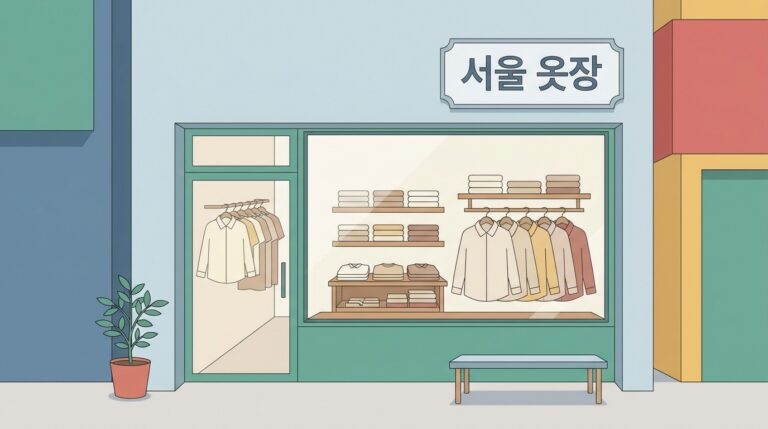
Imagine this: You are strolling through a trendy, minimalist boutique tucked into the brick alleys of Seongsu-dong or the bustling fashion streets of Hongdae. You spot an oversized ivory shirt hanging elegantly on a rack. You run your fingers across the fabric—it feels heavenly. But your sensitive skin immediately makes you pause. Is this pure cotton, or is it synthetic? Will it shrink into a doll shirt if I wash it at home? How do I ask the staff without typing frantically into a translation app while they politely stare at me?
If you have ever felt nervous shopping in Korea, you are not alone! Many of our A2 learners tell us: “I know colors and numbers, but describing how fabric feels or asking about laundry care makes my mind go blank.”
Today, you will master the exact phrase native Koreans use when inspecting quality: “소재가 면 백 퍼센트라서 피부에 닿는 느낌이 부드러워요” (It’s 100% cotton, so it feels soft against the skin). By the end of this guide, you will browse Korean fashion boutiques with total confidence, ask store staff smart questions, and keep your new favorite K-fashion pieces safe from laundry disasters!
Phase 2: Core Expressions Deep Dive
1. 소재가 면 백 퍼센트예요? (한글)
- Pronunciation: [So-jae-ga myeon baek peo-sen-teu-ye-yo?] (Think of it sounding like: “So-jeh-gah myun back per-cent-eh-yo?”)
- Meaning:
- Literal: Is the material cotton 100 percent?
- Real Nuance: “Is this pure 100% cotton?” (Checking natural composition politely).
- K-Culture Moment: You will hear idol stylists in behind-the-scenes fitting vlogs carefully checking the tags of stage outfits and saying, “소재가 면 백 퍼센트라 땀 흡수가 잘돼요” (It’s 100% cotton, so it absorbs sweat well).
- Editor’s Insight: In Korean shopping culture, introducing your inquiry with the word 소재 (sojae – material/fabric) signals that you care about quality and craftsmanship.
- Situation Spectrum: Casual: ⚠️ | Semi-formal: ✅ | Formal: ✅
- 🤔 Think About It: In English, we often just say “Is this cotton?” In Korean, specifying “소재” (material) before the fiber name creates a respectful, attentive tone toward the item.
2. 피부에 닿는 느낌이 부드러워요 (한글)
- Pronunciation: [Pi-bu-e dan-neun neu-kkim-i bu-deu-reo-wo-yo] (Think of it like: “Pee-boo-eh dahn-neun nuh-kheem-ee boo-deu-ruh-woh-yo”)
- Meaning:
- Literal: The feeling touching the skin is soft.
- Real Nuance: “It feels gentle and soft against my skin.”
- K-Culture Moment: In K-Dramas where the lead character gifts a scarf or knit sweater to someone special, they almost always touch the collar and say, “피부에 닿는 느낌이 정말 좋지?” (Doesn’t it feel so nice against the skin?).
- Editor’s Insight: Notice the combination 피부에 닿다 (to touch the skin) + 느낌 (feeling). Koreans frequently describe comfort through sensory touch rather than simply saying “This shirt is good.”
- Situation Spectrum: Casual: ✅ | Semi-formal: ✅ | Formal: ✅
- 🤔 Think About It: Korean has dozens of tactile descriptors for fabric (보들보들, 까슬까슬, 쫀득쫀득). Why do you think skin sensation is so emphasized in Korean aesthetic culture?
3. 물세탁 해도 돼요? (한글)
- Pronunciation: [Mul-se-tak hae-do dwae-yo?] (Analogy: “Mool-seh-tahk heh-doh dweh-yo?”)
- Meaning:
- Literal: Is water-washing okay to do?
- Real Nuance: “Can I wash this at home in water, or does it need dry cleaning?”
- K-Culture Moment: On reality shows like I Live Alone (나 혼자 산다), celebrities often ruin expensive designer knitwear because they forgot to check if 물세탁 (water washing) was allowed!
- Editor’s Insight: 물세탁 (mulsetak) refers to regular machine or hand washing with water, contrasting directly with 드라이클리닝 (deuraikeullining – dry cleaning).
- Situation Spectrum: Casual: ⚠️ | Semi-formal: ✅ | Formal: ✅
- 🤔 Think About It: Korean homes typically wash clothes with cold water and air-dry on racks. Asking about water washing is an everyday household survival skill.
Phase 3: Textbook Korean vs Real Korean
Let’s compare stiff, robotic textbook translations with what native Koreans actually say on a shopping trip:
Situation 1: Asking if the garment will shrink in the wash
- 📖 교과서 한국어 (Textbook): 이 옷은 세탁 후에 수축됩니까? (I oseun setak hue suchukdoebnikka? / Does this garment contract after laundering?)
- 🗣️ 진짜 한국어 (Real Life): 이거 빨면 많이 줄어들어요? (Igeo ppalmyeon mani jureodeureoyo? / If I wash this, does it shrink a lot?)
- 💡 왜 다를까? (Why the difference?): “수축” (shrinkage/contraction) is a technical Sino-Korean term found in lab reports or manuals. Everyday shoppers use the active verb 빨다 (to wash/launder) and 줄어들다 (to shrink).
Situation 2: Praising how comfortable the clothes feel
- 📖 교과서 한국어 (Textbook): 이 의류의 착용감은 대단히 안락합니다. (I uiryui chagyonggameun daedanhi anrakhabnida. / The wearability sensation of this apparel is exceedingly comfortable.)
- 🗣️ 진짜 한국어 (Real Life): 입었을 때 완전 편하고 가벼워요! (Ibeosseul ttae wanjeon pyeonhago gabyeowoyo! / When I wear it, it’s super comfortable and lightweight!)
- 💡 왜 다를까? (Why the difference?): Nobody uses written words like “안락합니다” (comfortable/cozy) when trying on a tee. Natural spoken Korean uses 입었을 때 (when worn) coupled with casual intensifiers like 완전 (totally/super).
Phase 4: K-Culture Deep Dive & Non-Verbal Manners
4-1. 눈치 (Nunchi) & Gestures in Korean Boutiques
- Touch with care: When inspecting fabric in independent boutiques, gently hold the edge of the hem between your thumb and index finger rather than crumpling the center of the garment.
- The White Shirt Rule: If a top is white, ivory, or delicate silk, always make eye contact with the clerk and ask: “만져봐도 돼요?” (Manjyeobwado dwaeyo? / May I touch this?) or “입어봐도 돼요?” (Ibeobwado dwaeyo? / May I try this on?) before handling it.
- The Face Cover (페이스 커버): When trying on pullover tops in Korean fitting rooms, staff will hand you a disposable spunbond fabric hood. This prevents makeup or foundation stains on the collar! Putting it on willingly shows high-level shopping etiquette.
4-2. Cultural Code: Korea’s Fabric Sensibility
Korea experiences four extreme seasons: scorching, humid summers and freezing, dry Siberian winters. Because of this, locals are hyper-aware of textile properties. In summer, everyone hunts for breathable 면 (cotton) and 린넨 (linen), while winter shopping revolves around soft cashmeres and thermal fleece. Complimenting a shop owner on the fabric texture shows you appreciate the practical craftsmanship of their curation!
Phase 5: Real-Life Roleplay Scenario
Setting: A hip, warm-toned clothing boutique near Seongsu Station. Soft indie lo-fi beats play in the background. You are eyeing an oversized unisex cotton shirt.
Characters:
* 민지 (Minji): Friendly, fashion-forward boutique clerk wearing a linen apron.
* You (쇼핑객 / Shopper): Looking for comfortable, skin-friendly daily wear.
- 민지: 안녕하세요! 편하게 둘러보세요.
(Annyeonghaseyo! Pyeonhage dulleoboseyo.)
“Hello! Please feel free to look around at your own pace.”
🎭 미소를 지으며 살짝 목례를 한다 (Smiles and bows lightly) -
You: 저기요, 이 셔츠 소재가 면 백 퍼센트예요?
(Jeogiyo, i syeocheu sojaega myeon baek peosenteuyeyo?)
“Excuse me, is this shirt material 100% cotton?”
🎭 셔츠 소매 끝을 조심스럽게 가리키며 (Gently pointing toward the shirt sleeve hem) -
민지: 네! 면 백 퍼센트라서 피부에 닿는 느낌이 부드러워요.
(Ne! Myeon baek peosenteuraseo pibue danneun neukkimi budeureowoyo.)
“Yes! It’s 100% cotton, so it feels really soft against the skin.”
🎭 원단을 부드럽게 쓰다듬어 보이며 (Lightly stroking the fabric to showcase the texture) -
You: 한번 입어봐도 돼요? 피부가 좀 예민해서요.
(Hanbeon ibeobwado dwaeyo? Pibuga jom yeminhaeseoyo.)
“May I try it on once? My skin is a bit sensitive.”
🎭 옷걸이를 가볍게 들어 보이며 (Holding up the hanger slightly) -
민지: 그럼요! 탈의실은 안쪽에 있어요. 페이스 커버 착용해 주세요!
(Geureomyo! Taruisireun anjjoge isseoyo. Peiseu keobeo chagyonghae juseyo!)
“Of course! The fitting room is inside. Please put on a face cover!”
🎭 페이스 커버를 건네며 피팅룸을 손으로 안내한다 (Hands over a face cover and points to the room) -
You: 핏이 딱 맞고 편하네요. 세탁은 어떻게 해요?
(Pisi ttak matgo pyeonhaneyo. Setageun eotteoke haeyo?)
“The fit is just right and comfy. How should I wash this?”
🎭 거울을 보며 소매 핏을 만족스럽게 살핀다 (Checking the sleeve fit in the mirror with satisfaction) -
민지: 찬물로 물세탁 하시면 돼요. 건조기는 줄어들 수 있으니 피해주세요!
(Chanmullo mulsetak hasimyeon dwaeyo. Geonjogineun jureodeul su isseuni pihaejuseyo!)
“You can machine wash in cold water. Please avoid the dryer as it might shrink!”
🎭 안쪽 세탁 라벨을 함께 확인해주며 (Checking the interior laundry tag together) -
You: 알겠습니다! 이걸로 계산해 주세요.
(Algetseumnida! Igeollo gyesanhae juseyo.)
“Understood! I’ll take this one, please.”
🎭 두 손으로 카드를 준비하며 카운터로 이동한다 (Heading to the register holding payment card in both hands)
🔀 Interactive Decision Point: What would you say next?
Imagine Minji just said: “면 백 퍼센트라서 피부에 닿는 느낌이 부드러워요.” How will you respond?
- Option A: “이거 물세탁 해도 절대 안 줄어들죠?” (Will this definitely NEVER shrink in water?)
- ⚠️ Feedback (Risk): Natural 100% cotton almost always contracts slightly on its first wash. Demanding a guarantee that it won’t shrink might make the staff flustered or uncomfortable.
- Option B: “오, 진짜 부드럽네요! 한번 입어봐도 될까요?” (Oh, it really is soft! Could I try it on?)
- ✅ Feedback (Best!): Perfect natural reaction! You confirm their recommendation with an emotional reaction and politely ask permission to use the fitting room.
- Option C: “너무 비싸요. 깎아주세요!” (Too expensive. Give me a discount!)
- 🚫 Feedback (Bad): Fixed-price boutiques in Korea do not bargain. Asking for discounts in boutique shops is considered awkward and rude.
Phase 6: 10-Second Emotion Shadowing Drill
Practice saying these rhythmic chunks aloud with emotion. Follow the pause markers (/)!
[😊 호기심 가득하고 다정하게 - Curious & gentle]
“소재가 / 면 백 퍼센트예요? / 만져봐도 돼요?”
(Sojaega / myeon baek peosenteuyeyo? / Manjyeobwado dwaeyo?)-
[✨ 감탄하며 기분 좋게 - Delighted & admiring]
“면 백 퍼센트라서 / 피부에 닿는 느낌이 / 완전 부드러워요!”
(Myeon baek peosenteuraseo / pibue danneun neukkimi / wanjeon budeureowoyo!) -
[🧐 꼼꼼하고 실용적으로 - Thoughtful & practical]
“집에서 / 찬물로 / 물세탁 해도 돼요?”
(Jibeseo / chanmullo / mulsetak haedo dwaeyo?)
Phase 7: K-Culture Mini Dictionary
| # | Term (Hangul + Romanization) | Translation | Real-Life / Boutique Usage |
|---|---|---|---|
| 1 | 소재 (Sojae) | Material / Fabric | Used when asking what a piece is made of: “이 옷 소재가 뭐예요?” (What is this made of?) |
| 2 | 면 (Myeon) | Cotton | The gold standard for basic t-shirts, hoodies, and socks in Korean stores. |
| 3 | 물세탁 (Mulsetak) | Water/Machine Wash | Look for this on Korean care tags. It means hand-washing or delicate machine-washing with water is safe. |
| 4 | 착용감 (Chagyonggam) | Fit & Feel on Body | Refers to how the fabric hugs or drapes over your body: “착용감이 편해요” (It wears comfortably). |
Phase 8: Survival Kit for Travelers
Top 3 Essential Shopping Phrases
- 입어봐도 돼요? (Ibeobwado dwaeyo? / May I try this on?)
Pro Tip: Gesture toward the fitting room as you say this to avoid confusion. - 다른 색상도 있어요? (Dareun saeksangdo isseoyo? / Do you have this in other colors?)
Pro Tip: Often shops display only one sample on the rack; they might have black or navy stored in back drawers. - 건조기 돌려도 돼요? (Geonjogi dollyeodo dwaeyo? / Can I run this in the clothes dryer?)
Pro Tip: The verb 돌리다 (to run/spin) is used for appliances like washing machines and tumble dryers.
Editor’s Travel Note
- Navigate Like a Seoulite: Don’t rely on generic global maps; download the local standard using this 네이버 지도 앱 다운로드 안내 to find hidden boutique ateliers in Seongsu and Yeonnam-dong.
- Card Etiquette: Korea is virtually cashless. Hand over your credit card with both hands at the checkout counter—it is the quickest way to show warm local respect!
Phase 9: A Step Deeper (Reflective Insight)
In many shopping cultures, consumers assess clothing through brand names or visual graphics. In Korea, however, there is a cultural reverence for 피부 건강 (skin health) and sensory ease. The phrase “피부에 닿는 느낌” reflects an intimacy between body and garment. Koreans view everyday fashion not just as an aesthetic statement, but as a protective, breathable extension of one’s personal skin care routine.
💬 Your Turn: Have you ever bought a shirt abroad only to accidentally ruin it in the laundry? What fabric do you look for when shopping? Share your shopping stories in the comments below!
Phase 10: FAQ & Avoiding Misunderstandings
Q: Can I try on white or cream-colored t-shirts in Korean stores?
A: In many small boutiques and department stores, trying on plain white or ivory tops is restricted due to makeup or deodorant stains. Always point and ask: “흰색도 입어볼 수 있어요?” (Can I try the white one on too?). If they say no, you can test the fit using a colored sample (like black or gray) of the same design.
Q: How do I read Korean laundry labels for 100% cotton?
A: Look at the small interior white tag near the bottom left seam. You will see: “면 100%” or “겉감: 면 100%” (Outer fabric: Cotton 100%). If it says “폴리에스터” (Polyester) or “레이온” (Rayon), it is a synthetic blend.
Q: What should I say if the clothes feel scratchy or itchy?
A: You can say: “조금 까슬거려요” (Jogeum kkaseulgeoryeoyo / It’s a bit scratchy) or simply “피부에 좀 따가워요” (It stings my skin a little).
🚨 흔한 실수 (Common Mistakes) Notice Board
- Mistake: Forgetting to use the Face Cover when trying on clothes.
Correct Action: Slip the fabric hood over your head before pulling garments over your face. - Mistake: Assuming all cotton garments can be thrown into high-heat tumble dryers.
Correct Action: Korean cotton is often untreated to keep it soft; always ask: “건조기 써도 돼요?” or air-dry on a rack. - Mistake: Saying “깎아주세요” (Discount please) in standard brand shops.
Correct Action: Reserve bargaining exclusively for traditional outdoor markets (like Dongdaemun fabric market or Namdaemun). Boutique prices are strictly fixed.
Phase 11: Action Missions & Engagement
- 🥉 Bronze Mission (Solo Practice): Stand in front of your wardrobe, touch three different shirts, and say out loud: “소재가 면 백 퍼센트예요” or “피부에 닿는 느낌이 부드러워요.”
- 🥈 Silver Mission (Social/Study Journal): Write down the 4 Mini Dictionary words (소재, 면, 물세탁, 착용감) on sticky notes and label your favorite clothes tag.
- 🥇 Gold Mission (Real Life Shopping): Next time you enter a clothing store or shop on a Korean shopping site (like Musinsa or Zigzag), find a product detail page and identify whether the fabric is 면 100%!
- 🎮 K-Culture Mission: Watch a fashion haul vlog by your favorite K-Pop idol or YouTuber and listen for the words 소재 (sojae) and 핏 (fit)!
Phase 12: Interactive Quiz Challenge
Test what you learned today before you head out on your next shopping spree!
1. Situational Judgment
You love a sweater, but you hate dry cleaning bills. What question should you ask the store clerk?
* A) 이거 드라이클리닝만 돼요?
* B) 집에서 찬물로 물세탁 해도 돼요?
* C) 페이스 커버 어디 있어요?
2. Fill in the Blank
Complete the sentence to explain why the shirt is comfortable for sensitive skin:
“소재가 면 백 퍼센트라서 피부에 닿는 느낌이 _________.”
* A) 무거워요 (heavy)
* B) 부드러워요 (soft)
* C) 까슬거려요 (scratchy)
3. Cultural True or False
- Statement: In trendy boutique dressing rooms, you can put on pullover sweaters without using the provided face cover as long as you are careful.
- (True / False)
👉 Click to reveal answers & explanations!
- Answer: B (집에서 찬물로 물세탁 해도 돼요?)
Explanation: Asking if water washing is allowed lets you know if you can skip the dry cleaners. - Answer: B (부드러워요)
Explanation: “부드러워요” means soft and smooth, perfectly matching the comfort of 100% natural cotton! - Answer: False
Explanation: You should always wear the provided face cover to protect shop garments from makeup, sunscreen, and sweat stains!
Keep practicing with Daily Hangul, and your next Seoul shopping trip will feel just like hanging out with your local best friend!







