

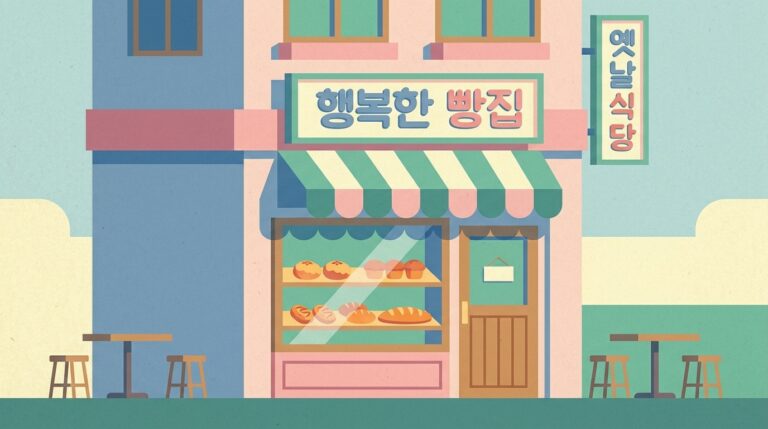
Conquer Korea’s Bakery Pilgrimage and Vintage Eateries Like a True Local
Phase 1: Empathy (Welcome to the Real Korean Food Scene!)
안녕하세요! (Annyeonghaseyo!) It’s your Daily Hangul editor here!
Picture this: You step off the morning KTX train into Daejeon or wander down an unassuming, rust-colored alleyway in Seoul’s Euljiro district. Ahead of you stands a humble restaurant whose faded plastic awning looks decades old, yet there is a lively line of trendy twentysomethings standing beside local seniors, chatting excitedly while clutching brown paper bags filled with artisanal pastries. You pull out your smartphone, ready to order using textbook phrases like “메뉴판을 주시겠습니까?” (Menyupaneul jusigesseumnikka? / Would you please give me the menu?), but the atmosphere around you is humming with completely different vocabulary. People are whispering about their ppangji sunrye route, debating whether a savory black sesame bun fits their Halmaenial palate, and raving about how this 50-year-old nopo serves broth that warms the soul without causing a massive blood sugar spike.
If you have ever felt hesitant stepping into a historic hole-in-the-wall eatery or struggled to understand why vintage snacks are taking Korean social media by storm, you are certainly not alone. Hundreds of our intermediate learners share the same frustration: traditional textbooks teach you how to ask for water or beef bulgogi, but they leave you unprepared for the vibrant, nostalgic food culture dominating Korea today. Exploring regional bakeries and historic eateries is now a major cultural pastime across the country. Master these expressions, and you won’t just order food—you will connect with the warmth, wit, and heritage of Korean dining culture.
Phase 2: Top 3 Core Expressions Deep Dive
1. 할매니얼 (Halmaenial)
- Pronunciation: [Hal-mae-ni-eol] (Think of blending the “Hal” in Halloween, “May”, and “Near-all”)
- Meaning: Literal: Grandmother (할머니) + Millennial (밀레니얼). Nuance: A young person who passionately loves traditional, comforting, retro flavors (like black sesame, mugwort, injeolmi rice cakes, and yakgwa) once stereotyped as elderly snacks.
- K-Culture Moment: On popular lifestyle variety shows such as I Live Alone, you often see celebrities raiding traditional market stalls for grain cookies, proudly declaring, “I can’t resist this—I have a complete Halmaenial taste!”
- Editor’s Insight: This word is a badge of honor, never an insult. It reflects how contemporary youth embrace warmth, wholesome ingredients, and nostalgic comfort in an otherwise fast-paced digital world.
- Situation Spectrum: Casual: ✅ | Semi-formal: ✅ | Formal: ⚠️
- 🤔 Think About It: In many Western societies, calling food “grandma-like” implies it is bland or outdated. Why do you think Korean youth transformed grandma flavors into a chic, premium culinary trend?
2. 노포 (Nopo)
- Pronunciation: [No-po] (Sounds crisp, like “Noh-poh”)
- Meaning: Literal: Old shop / legacy store (老鋪). Nuance: A time-honored, family-run eatery that has stood in the exact same location for decades, boasting authentic recipes and weathered charm.
- K-Culture Moment: Celebrity food connoisseurs like singer Sung Si-kyung feature hidden nopo locations on YouTube, drawing immense crowds who appreciate culinary heritage over flashy interior aesthetics.
- Editor’s Insight: Calling an establishment a nopo conveys deep respect. It signals that the restaurant survived rapid modernization purely through dedication to flavor and honest hospitality.
- Situation Spectrum: Casual: ✅ | Semi-formal: ✅ | Formal: ✅
- 🤔 Think About It: How does the concept of a nopo compare to “diners” or historic bistros in your home country? What preserves their soul over decades?
3. 빵지순례 (Ppangji sunrye)
- Pronunciation: [Ppang-ji sun-rye] (Combine “Ppang” with “jee-soon-ryay”)
- Meaning: Literal: Bread (빵) + Pilgrimage (성지순례). Nuance: An adventurous gourmet trip dedicated specifically to visiting famous regional bakeries across the country to sample their signature treats.
- K-Culture Moment: Weekend morning travel vlogs frequently showcase foodies boarding early trains to cities like Daejeon, Gunsan, or Daegu equipped with insulated tote bags dedicated exclusively to their ppangji sunrye hauls.
- Editor’s Insight: This phrase showcases how food travel in Korea has evolved into a dedicated hobby. It is playful yet treated with serious culinary passion.
- Situation Spectrum: Casual: ✅ | Semi-formal: ✅ | Formal: ⚠️
- 🤔 Think About It: Why has baked bread—historically a Western staple—become the centerpiece of modern domestic travel quests in South Korea?
Phase 3: Textbook Korean vs. Real-Life Korean
Situation 1: Expressing Your Desire to Visit an Authentic Vintage Spot
- 📖 교과서 한국어: “역사가 오래된 유명한 식당에 가고 싶어요.” (Yeoksaga oraedoen yumyeonghan sikdange gago sipeoyo. / I want to go to a famous restaurant with a long history.)
- 🗣️ 진짜 한국어: “근처에 찐 노포 맛집 있어요?” (Geuncheoe jjin nopo matjip isseoyo? / Is there an authentic, genuine vintage eatery around here?)
- 💡 왜 다를까? Textbook Korean sounds like a tourist reading from an encyclopedia. Real locals use the prefix 찐 (jjin – real/authentic) alongside 노포 맛집 (nopo matjip) to uncover hidden culinary gems.
Situation 2: Inquiring About Traditional Earthy Flavors at a Cafe or Bakery
- 📖 교과서 한국어: “전통 곡물 맛 디저트를 추천해 주세요.” (Jeontong gokmul mat dijeoteureul chucheonhae juseyo. / Please recommend a traditional grain-flavored dessert.)
- 🗣️ 진짜 한국어: “제가 할매니얼 입맛인데, 흑임자 빵 있나요?” (Jega halmaeni-eol immmasinde, heugimja ppang innayo? / I have grandma-millennial tastes—do you have any black sesame bread?)
- 💡 왜 다를까? Identifying yourself with “할매니얼 입맛” (grandma-millennial palate) instantly builds rapport with bakery staff and precisely explains your flavor preference for nutty, subtle sweetness.
Phase 4: K-Culture Deep Dive & Non-Verbal Manners
4-1. Nunchi (눈치) & Table Manners in Heritage Eateries
Visiting a true nopo requires understanding their unique, unwritten rhythm:
1. The Friendly Counter Call: Legacy spots rarely feature digital buzzers or modern QR codes. When you need extra side dishes (banchan) or water, do not snap your fingers or yell loudly. Catch the owner’s eye with a warm smile and gently call out: “사장님~” (Sajangnim~ / Boss/Owner) or “이모님~” (Imo-nim~ / Auntie) while raising one hand halfway.
2. Two-Handed Respect: In these cozy shops, the owner is often elderly. Always accept bowls, sizzling hot stone pots (ttukbaegi), or payment cards using two hands, or place your left hand gently supporting your right forearm.
3. Bakery Line Etiquette: During a ppangji sunrye, bakeries get packed. Grab a clean tray and tongs lined with wax paper immediately at the entrance, keep the flow moving clockwise, and never touch displayed pastries with bare hands.
4-2. Cultural Code: The Balancing Act Between Indulgence and Health
While ppangji sunrye represents maximum indulgence, notice another booming catchphrase in Korea: 혈당 스파이크 (hyeoldang seupaikeu / blood sugar spike) and the obsession with 제로슈거 (zero-sugar) drinks. Korean foodies love to balance their carb-heavy bakery excursions by washing treats down with iced Americanos or zero-sugar teas, turning health consciousness into a collective cultural habit.
Phase 5: Real-World Roleplay Scenario
Setting: Outside Eunha Bakery, a legendary 45-year-old shop in Daejeon known for sweet red bean buns and black sesame twists.
Characters:
* Minseo: Your enthusiastic Korean friend and self-proclaimed bakery pilgrim.
* Alex (You): An intermediate learner ready to put new culinary slang into practice.
- Minseo: 🎭 (Stretching on tiptoes to inspect the line) 와, 오늘 주말이라 빵지순례 온 사람들 진짜 많다! 알렉스, 각오했지?
(Wa, oneul jumal-ira ppangjisunrye on saramdeul jinjja manta! Alex, gago-haetji?)
“Wow, there are so many people here on a bread pilgrimage today since it’s the weekend! Alex, are you ready?” -
Alex: 🎭 (Holding a tray with determined eyes) 당연하지! 나 오늘 빵지순례 제대로 하려고 아침도 굶었어.
(Dang-yeonhaji! Na oneul ppangjisunrye jedaero haryeogo achimdo gulmeosseo.)
“Of course! I even skipped breakfast so I could do this bread pilgrimage properly today.” -
Minseo: 🎭 (Giggling, pointing toward the fresh tray of pastries) 저기 봐! 갓 나온 흑임자 크림빵 나왔어. 너 저런 꼬소한 맛 좋아해?
(Jeogi bwa! Gat naon heugimja keurimppang nawasseo. Neo jeoreon gkosohan mat joahae?)
“Look over there! The freshly baked black sesame cream bread just came out. Do you like that savory, nutty flavor?” -
Alex: 🎭 (Nodding enthusiastically) 응, 나 완전 할매니얼 입맛이잖아. 쑥이랑 흑임자 들어간 빵부터 담을래.
(Eung, na wanjeon halmaeni-eol immmasijana. Ssuk-irang heugimja deureogan ppangbuteo dameullae.)
“Yeah, you know I have a total grandma-millennial palate. I’m grabbing the mugwort and black sesame breads first.” -
Minseo: 🎭 (Winking playfully) 좋아! 빵 다 사고 나면 근처에 50년 된 칼국수 노포 있는 거 알지?
(Joa! Ppang da sago namyeon geuncheoe osimnyeon doen kalguksu nopo inneun geo alji?)
“Great! You know there’s a 50-year-old handmade noodle nopo nearby once we buy all this bread, right?” -
Alex: 🎭 (Eyes lighting up) 대박, 찐 노포 맛집? 빵 먹고 바로 칼국수라니, 혈당 스파이크 오겠는데?
(Daebak, jjin nopo matjip? Ppang meokgo baro kalguksura-ni, hyeoldang seupaikeu ogetneunde?)
“Awesome, an authentic legacy eatery? Bread and then right into kalguksu—my blood sugar spike is going to be real!” -
Minseo: 🎭 (Laughing warmly) 괜찮아, 이따가 동네 한 바퀴 산책하고 제로 음료 마시면 돼!
(Gwaenchana, ittaga dongne han bakwi sanchaekhago jero eumryo masimyeon dwae!)
“No worries! We can walk around the neighborhood later and grab a zero-sugar drink!” -
Alex: 🎭 (Smiling proudly) 완벽한 계획이다. 가자, 우리 차례야!
(Wanbyeokhan gyehoegida. Gaja, uri charyeya!)
“That is a perfect plan. Let’s go, it’s our turn!”
🔀 Interactive Branching Moment
You arrive at the bakery register. The counter staff notices your tray filled with retro sesame and yakgwa treats. How do you respond?
- Option A (Best): “여기 흑임자 빵이 제일 유명하다고 해서 빵지순례 왔어요! 제가 완전 할매니얼 입맛이거든요.”
Feedback: Best! You use friendly slang accurately, compliment their specialty, and bring an immediate smile to the cashier’s face. - Option B (Bad): “이 빵 설탕 많이 들어가면 혈당 스파이크 오니까 설탕 빼고 다시 구워주세요.”
Feedback: Bad! Demanding a commercial bakery re-bake ready-made display items without sugar is unreasonable and creates awkward friction. - Option C (Risk): “할머니, 여기 노포 느낌 나는데 빵 하나 서비스로 덤 주세요.”
Feedback: Risk! Calling a bakery owner “할머니” directly or explicitly begging for free extras (deom) can sound disrespectful and intrusive.
Phase 6: 10-Second Emotional Shadowing Drill
Practice speaking with authentic emotion and natural pausing (marked with /).
- [😊 Joyful & Excited]
이번 주말에 / 친구들이랑 / 빵지순례 가기로 했어요!
(Ibeon jumare / chingudeurirang / ppangjisunrye gagiro haesseoyo!)
“This weekend / with my friends / I decided to go on a bread pilgrimage!” -
[😋 Savory & Deeply Satisfied]
이 집은 / 40년 된 찐 노포라 / 국물 맛이 진짜 깊어요.
(I jibeun / sasimnyeon doen jjin nopora / gungmul masi jinjja gipeoyo.)
“This place / is an authentic 40-year-old nopo / so the broth flavor is truly deep.” -
[😉 Witty & Confident]
저 완전 할매니얼이라 / 약과랑 흑임자가 / 제일 맛있더라고요!
(Jeo wanjeon halmaeni-eorira / yakgwarang heugimjaga / jeil masitdeoragoyo!)
“I have a total grandma-millennial palate / so yakgwa and black sesame / taste the absolute best to me!”
Phase 7: K-Culture Mini Dictionary
-
할매니얼 (Halmaenial)
Meaning: Grandma-Millennial taste.
Daily Usage: Used when ordering desserts, shopping for retro snacks, or playfully explaining why you prefer savory grains over sweet frostings. -
노포 (Nopo)
Meaning: Historic, legacy restaurant.
Daily Usage: Frequently searched on navigation maps and food apps to locate time-tested dining spots run by veteran cooks. -
빵지순례 (Ppangji sunrye)
Meaning: Bread tour / bakery pilgrimage.
Daily Usage: Used by food travelers sharing weekend travel itineraries, Instagram tags, or road-trip destinations centering on famous bakeries. -
혈당 스파이크 (Hyeoldang seupaikeu)
Meaning: Blood sugar spike.
Daily Usage: Humorous modern health slang used among young adults after eating excessive carbs, justifying a walk or choosing a zero-sugar beverage.
Phase 8: Traveler’s Survival Kit
Survival Expressions TOP 3
- “여기 시그니처 빵이 뭐예요?”
(Yeogi sigeunicheo ppangi mwoyeyo? / What is the signature bread here?)
Pro Tip: Use this at legendary bakeries when the shelves are overwhelmed with dozens of choices. - “포장해 갈게요.”
(Pojanghae galgeyo. / I will take it to go.)
Pro Tip: Perfect for busy heritage bakeries where seating is scarce. - “갓 나온 빵 언제 나와요?”
(Gat naon ppang eonje nawayo? / When does the freshly baked bread come out?)
Pro Tip: Bakeries restock throughout the day. Asking this ensures you bite into warm, fresh crusts.
Editor’s Travel Note
- Navigation Guide: Before heading out, refer to the Naver Map app download to save curated lists of regional bakeries and bookmark local heritage restaurants with high visitor review ratings.
- Transit Tip: Many iconic bakeries (like Sung Sim Dang in Daejeon or Lee Sung Dang in Gunsan) are accessible via KTX or express buses. Arrive before 11:00 AM on weekends to avoid sold-out specialty items!
Phase 9: One Step Deeper (Cultural Reflection)
In many fast-developing metropolises, old buildings and mom-and-pop shops are quickly demolished in favor of sleek skyscrapers. Yet in South Korea, the surging popularity of nopo and Halmaenial treats demonstrates a collective desire to preserve cultural memories and generational warmth. When a twenty-year-old student sits across from a grandfather in a 50-year-old broth shop, food becomes a living bridge between past and present.
💬 Your Turn: Have you ever visited a multi-generational legacy restaurant in your country, or are you eager to taste traditional Korean black sesame and red bean treats? Share your favorite nostalgic food memories in the comments below!
Phase 10: FAQ & Common Mistakes
Q: Can I call the restaurant owner ‘할머니’ (Halmeoni) if it is a classic nopo?
A: It is much safer to stick with “사장님” (Sajangnim – Owner) or “이모님” (Imo-nim – Auntie). Even if the owner is senior, calling them “할머니” can sometimes feel overly personal or unintentionally imply that they look too old.
Q: Is ‘할매니얼’ only used for food and desserts?
A: While it started in food trends, Halmaenial now also describes fashion choices like cozy cardigans, floral quilting patterns, and vintage home decor loved by younger generations.
Q: How can I ask for zero-sugar drinks at casual eateries?
A: Simply ask: “혹시 제로 음료나 제로 콜라 있어요?” (Hoksi jero eumryona jero kolla isseoyo? / Do you happen to have any zero-sugar beverages or zero Coke?). Most modern Korean shops stock them regularly.
🚨 Common Mistakes Warning Board
- ❌ Mistake 1: Calling every old building a nopo.
Correct Action: Use nopo specifically for establishments that have operated with culinary continuity for at least 20 to 30 years. - ❌ Mistake 2: Assuming “Halmaenial” means old-fashioned in a negative way.
Correct Action: Treat it as a trendy compliment indicating rich, nutty, and artisanal tastes. - ❌ Mistake 3: Touching unwrapped bakery pastries with your hands before purchase.
Correct Action: Always use the tongs and paper-lined trays provided near the entrance.
Phase 11: Action Missions
- 🥉 Bronze Mission (Solo Shadowing): Practice saying “제가 할매니얼 입맛이라 흑임자 빵을 진짜 좋아해요” aloud three times using the shadowing guide in Phase 6.
- 🥈 Silver Mission (Community Challenge): Look up your favorite Korean dessert or cafe item on social media and leave a comment using the hashtag #할매니얼 or #빵지순례.
- 🥇 Gold Mission (Real-Life Quest): Visit a local Korean grocery store or bakery in your area, find a pastry with red bean, injeolmi, or black sesame, and order or purchase it using your new vocabulary!
- 🎮 K-Culture Mission: Watch an episode of a Korean food travel show on YouTube (such as Sung Si-kyung’s Meogultende) and spot how often nopo is mentioned.
Phase 12: Interactive Quiz Challenge
1. Situational Judgment:
You want to describe your friend who prefers savory roasted grain lattes and traditional rice snacks over sugary chocolate cake. Which word best describes them?
(a) 오마카세 (Omakase)
(b) 할매니얼 (Halmaenial)
(c) 빵지순례 (Ppangji sunrye)
2. Fill in the Blank:
“대전에 있는 유명한 빵집들을 다 돌아보는 [______]를 다녀왔어요!”
(I went on a [______] touring all the famous bakeries in Daejeon!)
3. True or False:
Calling a 40-year-old soup restaurant a “노포” (Nopo) is considered informal and rude to the owner. (True / False)
Click here to reveal answers and explanations
-
Answer: (b) 할매니얼 (Halmaenial)
Explanation: Halmaenial refers to millennials or Gen Z who enjoy nostalgic, traditional flavors like roasted grains and black sesame. -
Answer: 빵지순례 (Ppangji sunrye)
Explanation: Traveling around to visit signature regional bakeries is called a “bread pilgrimage” (빵지순례). -
Answer: False
Explanation: Calling a restaurant a nopo is a high compliment acknowledging its rich history, enduring culinary quality, and authenticity!







