

Master Tech Shopping in Korea: How to Compare Storage Like a Local
Phase 1: 공감 (Story Opening)
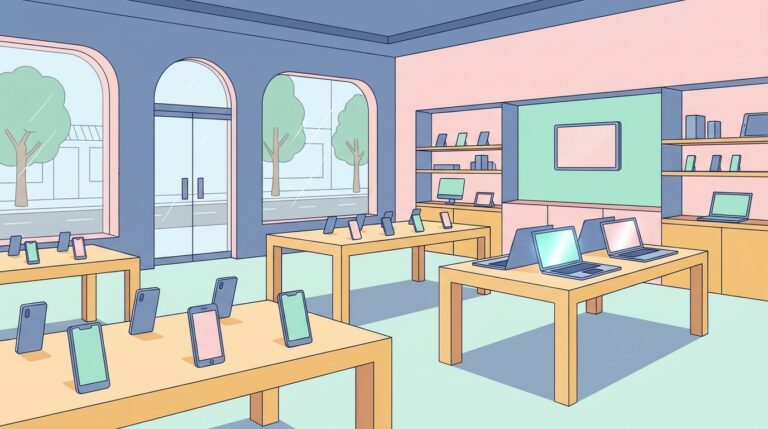
안녕하세요! 매일한글 에디터입니다. Have you ever walked into a gleaming multi-story electronics department store in Gangnam or an Apple or Samsung flagship store in Hongdae, surrounded by gorgeous, futuristic gadgets, only to freeze when deciding between two models?
You are standing in front of the newest smartphone or ultralight laptop. The glossy display beckons, and you are debating: Do I need 256GB, or should I go with 512GB? Just as you furrow your brow, an energetic store clerk approaches with a bright smile: “찾으시는 거 있으세요?” (Looking for anything in particular?)
Panic sets in! You want to ask which storage size regular people actually choose, but your textbook only taught you stiff phrases like “Which one do you recommend?” In real Korean stores, asking what is popular or what other shoppers actually buy is the ultimate secret to getting honest, insider advice. Over my 10 years of mentoring foreign students in Seoul, learners who master this one natural question feel an instant boost in confidence. Today, you will learn how to ask like a true local and walk out with the perfect gadget!
Phase 2: 핵심 표현 3선 심층 분석 (Top 3 Key Expressions)
1. 용량은 256기가랑 512기가 중에 어떤 걸 많이 사요?
- Pronunciation: Yong-ryang-eun ee-baek-o-ship-yuk-gi-ga-rang oh-baek-ship-ee-gi-ga jung-e eo-tteon geol mah-nee sah-yo? (Think: Yong-ryang sounds like “young ryang”, and gi-ga sounds just like “giga” in gigabyte!).
- Meaning: Literal: “As for capacity, between 256GB and 512GB, which one do people buy a lot?” / Actual Nuance: “Between the 256GB and 512GB versions, which one is the more popular choice?”
- K-Culture Moment: Seen in lifestyle K-Dramas whenever a character upgrades their gear at a modern tech showroom before starting a new job or university semester.
- Editor’s Insight: Instead of asking “What is best?” (어떤 게 제일 좋아요?), asking what people buy a lot (어떤 걸 많이 사요?) avoids sales pitches. Store staff will tell you the real buying trend without pushing the most expensive model on you.
- Situation Spectrum: Casual ⚠️ | Semi-formal (Clerk & Customer) ✅ | Formal ✅
- 🤔 Think About It: In English, we often ask “What do you recommend?” In Korean, asking what people collectively buy (많이 사요) is culturally favored. What does this reveal about Korea’s trend-conscious collective wisdom?
2. 이거 두 개 차이가 뭐예요?
- Pronunciation: I-geo du gae cha-i-ga mwo-ye-yo? (Sounds like: Ee-guh doo ge chah-ee-gah mwoh-yeh-yo?)
- Meaning: Literal & Nuance: “What is the difference between these two?”
- K-Culture Moment: Crucial when comparing laptops that look identical on the outside but have different processors or battery sizes.
- Editor’s Insight: Short, punchy, and polite. Notice the counter 개 (gae) for things. Keep it in your pocket whenever two gadgets look identical to you.
- Situation Spectrum: Casual ⚠️ | Semi-formal ✅ | Formal ✅
- 🤔 Think About It: Notice how Korean gets straight to the point: 차이 (difference) + 뭐예요 (what is it?) without requiring complex relative clauses.
3. 보통 어떤 용도로 많이 쓰세요?
- Pronunciation: Bo-tong eo-tteon yong-do-ro ma-ni sseu-se-yo?
- Meaning: “What purpose do you usually use it for?”
- K-Culture Moment: The polite counter-question a thoughtful tech store employee will ask you back to help you decide.
- Editor’s Insight: Even though you won’t say this sentence, understanding it is vital! 용도 (yong-do) means “usage/purpose”. When the clerk asks this, you can reply simply with: 유튜브 봐요 (I watch YouTube) or 사진 많이 찍어요 (I take lots of photos).
- Situation Spectrum: Casual 🚫 | Semi-formal ✅ | Formal ✅
- 🤔 Think About It: High honorific endings like -세요 show that the retail worker is treating you as a respected guest.
Phase 3: 교과서 한국어 vs 진짜 한국어 (Textbook vs. Real Korean)
Situation 1: Inquiring about popularity
- 📖 교과서 한국어: 256기가바이트와 512기가바이트 중 어느 것을 추천합니까? (I-baek-o-sip-yuk giga-ba-i-teu-wa o-baek-sip-i giga-ba-i-teu jung eo-neu geos-eul chu-cheon-ham-ni-kka?)
- 🗣️ 진짜 한국어: 256기가랑 512기가 중에 어떤 걸 많이 사요? (I-baek-o-sip-yuk-gi-ga-rang o-baek-sip-i-gi-ga jung-e eo-tteon geol ma-ni sa-yo?)
- 💡 왜 다를까?: Real Koreans abbreviate “기가바이트 (gigabyte)” to just “기가 (giga)”, swap formal “와/과” for conversational “랑 (rang)”, and replace textbook “추천합니까 (do you recommend)” with the practical “많이 사요 (do people buy a lot)”.
Situation 2: Asking if there’s any promotion or discount
- 📖 교과서 한국어: 할인을 받을 수 있는 방법이 존재합니까? (Ha-rin-eul ba-deul su it-neun bang-beob-i jon-jae-ham-ni-kka?)
- 🗣️ 진짜 한국어: 혹시 추가 할인 되는 거 있어요? (Hok-si chu-ga ha-rin doe-neun geo iss-eo-yo?)
- 💡 왜 다를까?: The magic word 혹시 (by any chance) softens the question, and 되는 거 있어요? (is there anything that works?) sounds conversational and humble rather than demanding.
Phase 4: K-Culture 딥다이브 & 비언어적 매너 (Nunchi & Tech Culture)
4-1. 눈치 (Nunchi) & Body Language
- Don’t Point with an Index Finger: When comparing two phones on a counter, gesture toward them with an open palm or gently touch the side of the display stand rather than stabbing your index finger directly at the screen.
- The Tech Nod: When the clerk explains specs like RAM and storage, nod rhythmically while murmuring “아, 네네~” (Ah, yes, yes). It shows you are actively following along, which encourages them to give you bonus accessories or free screen protectors!
4-2. The “Daese” (대세) Culture in Korean Electronics
In Korea, electronics shopping is deeply connected to 대세 (daese – the prevailing trend or crowd favorite). Because Koreans upgrade phones quickly and rely heavily on digital cameras for social media and Vlogs, 256GB is considered the standard entry baseline, while 512GB is the 대세 for photo and video enthusiasts. Clerks expect customers to ask about trends, so asking 어떤 걸 많이 사요? instantly makes you sound like a savvy local consumer.
Phase 5: 실전 롤플레이 시나리오 (Real Roleplay Scenario)
- Setting: A high-tech flagship electronics store in Gangnam.
- Characters: Min-woo (Store Specialist) & Alex (You, looking for a new smartphone).
- Min-woo: 🎭 Smiling politely with hands clasped in front
안녕하세요! 새로운 스마트폰 보러 오셨어요? (An-nyeong-ha-se-yo! Sae-ro-un seu-ma-teu-pon bo-reo o-syeoss-eo-yo? – Hello! Did you come to check out the new smartphones?) - Alex: 🎭 Glancing at the two display models
네, 이거 보고 있는데요. 용량은 256기가랑 512기가 중에 어떤 걸 많이 사요? (Ne, i-geo bo-go it-neun-de-yo. Yong-ryang-eun i-baek-o-sip-yuk-gi-ga-rang o-baek-sip-i-gi-ga jung-e eo-tteon geol ma-ni sa-yo? – Yes, I’m looking at this one. Between 256GB and 512GB storage, which one do people buy more?) - Min-woo: 🎭 Gesturing toward the 256GB model with an open palm
보통 가볍게 쓰시는 분들은 256기가를 많이 사세요. (Bo-tong ga-byeop-ge sseu-si-neun bun-deul-eun i-baek-o-sip-yuk-gi-ga-reul ma-ni sa-se-yo. – Usually, people who use it lightly buy the 256GB.) - Alex: 🎭 Tapping chin thoughtfully
아, 그래요? 512기가는 어떤 분들이 사요? (Ah, geu-rae-yo? O-baek-sip-i-gi-ga-neun eo-tteon bun-deul-i sa-yo? – Ah, really? What kind of people buy the 512GB?) - Min-woo: 🎭 Pointing gently at the high-resolution camera specs
사진이나 동영상 촬영 많이 하시는 분들이 512기가를 선택하세요. (Sa-jin-i-na dong-yeong-sang chwal-yeong ma-ni ha-si-neun bun-deul-i o-baek-sip-i-gi-ga-reul seon-taek-ha-se-yo. – People who take lots of photos or videos choose 512GB.) - Alex: 🎭 Realizing own habits
저 사진 진짜 많이 찍어요! 여행도 자주 다니고요. (Jeo sa-jin jin-jja ma-ni jji-geo-yo! Yeo-haeng-do ja-ju da-ni-go-yo. – I take really a lot of photos! And I travel often too.) - Min-woo: 🎭 Nodding encouragingly
그러시면 512기가가 훨씬 편하실 거예요. 용량 걱정이 없거든요. (Geu-reo-si-myeon o-baek-sip-i-gi-ga-ga hwol-ssin pyeon-ha-sil geo-ye-yo. Yong-ryang geok-jeong-i eopt-geo-deun-yo. – In that case, 512GB will be much more comfortable for you. You won’t have to worry about storage.) - Alex: 🎭 Smiling with decision made
좋아요! 그럼 512기가로 할게요. 혹시 사은품도 있어요? (Jo-a-yo! Geu-reom o-baek-sip-i-gi-ga-ro hal-ge-yo. Hok-si sa-eun-pum-do iss-eo-yo? – Great! Then I will take the 512GB. By any chance, are there any promotional freebies too?)
🔀 인터랙티브 분기점 (Interactive Decision Point)
At turn 8, how should you respond if you realize 512GB is over your budget?
* Choice A: “조금 비싸네요. 그냥 256기가로 할게요!” (Jo-geum bi-ssa-ne-yo. Geu-nyang i-baek-o-sip-yuk-gi-ga-ro hal-ge-yo!) – “It’s a bit pricey. I’ll just go with the 256GB!”
👉 [Best Choice]: Honest, polite, and directly communicates your budget boundary without awkwardness.
* Choice B: “너무 비싸요! 반값으로 깎아주세요!” (Neo-mu bi-ssa-yo! Ban-gaps-eu-ro kka-kka-ju-se-yo!) – “Too expensive! Cut it half price!”
👉 [Risk / Cultural Faux Pas]: Big electronics retail chains in Korea have fixed corporate pricing. Haggling like you’re at a traditional fish market will make everyone uncomfortable.
* Choice C: “아무거나 그냥 주세요.” (A-mu-geo-na geu-nyang ju-se-yo.) – “Just give me whatever.”
👉 [Bad Choice]: Sounds indifferent or slightly irritated, leaving the salesperson puzzled.
Phase 6: 10초 감정 섀도잉 드릴 (10-Second Emotion Shadowing)
Practice reading these out loud with natural rhythm and feeling:
[😊 호기심 가득하고 친근하게 / Curious & Friendly]
“용량은 / 256기가랑 / 512기가 중에 / 어떤 걸 많이 사요?”
(Yong-ryang-eun / i-baek-o-sip-yuk-gi-ga-rang / o-baek-sip-i-gi-ga jung-e / eo-tteon geol ma-ni sa-yo?)-
[🤔 진지하게 고민하며 / Thoughtfully Weighing Options]
“사진을 많이 찍어서 그런데… / 둘 중에 뭐가 나을까요?”
(Sa-jin-eul ma-ni jji-geo-seo geu-reon-de… / dul jung-e mwo-ga na-eul-kka-yo?)
“I take lots of photos, so… between the two, which would be better?” -
[✨ 시원하고 확신에 차서 / Decisive & Cheerful]
“추천해 주신 / 512기가로 / 결정할게요!”
(Chu-cheon-hae ju-sin / o-baek-sip-i-gi-ga-ro / gyeol-jeong-hal-ge-yo!)
“I’ll decide on the 512GB that you recommended!”
Phase 7: K-Culture 미니 사전 (Mini Dictionary)
- 용량 (Yong-ryang) | Storage Capacity | Used for phone memory, laptop SSDs, battery size, and even drink volume.
- 스펙 (Seu-pek) | Specifications / Specs | Loanword from “specifications”. Used constantly in Korea for gadgets, cars, and even job resumes!
- 가성비 (Ga-seong-bi) | Price-to-Performance Ratio | An abbreviation of 가격 대비 성능. Koreans love gadgets with high 가성비 (great value for money).
- 자급제 (Ja-geup-je) | Unlocked Phone (SIM-free) | Vital for travelers and expats! A phone you buy outright without a domestic carrier contract.
Phase 8: 여행자를 위한 생존 키트 (Traveler’s Survival Kit)
Top 3 Survival Phrases
- 이거 자급제 폰 맞아요? (I-geo ja-geup-je pon maj-a-yo?)
Pro Tip: Always verify this so you can pop your home country’s SIM card straight in! - 텍스 리펀 돼요? (Tek-seu ri-peon dwae-yo?)
Pro Tip: Major electronics stores offer instant tax refunds on the spot for tourists showing a foreign passport. - 색상 다른 것도 볼 수 있어요? (Saek-sang da-reun geot-do bol su iss-eo-yo?)
Pro Tip: Display counters might not show all stock colors (e.g., Titanium Silver or Phantom Green).
Editor’s Travel Note
Before heading out, download the Naver Map App Download to search for nearby 하이마트 (Himart), 일렉트로마트 (Electro Mart), or 삼성스토어 (Samsung Store). In Korea, credit cards (Visa, Mastercard) and Apple Pay are accepted almost everywhere, but remember to bring your physical passport if you want that sweet tax refund discount!
Phase 9: “한 발 더 깊이” (Deep Cultural Thought)
Why do Koreans care so much about what other people buy? In many Western cultures, asking what everyone else buys might feel like giving up your individuality. But in Korean society, asking 어떤 걸 많이 사요? is an expression of social trust and practical wisdom. It acknowledges that popular consensus often weeds out lemons and identifies true 가성비. When you ask this question, you aren’t just shopping—you are participating in a communal validation system that makes decision-making effortless.
💬 Your Turn: In your home country, do you prefer asking for personal recommendations or checking the bestseller list first? Share your thoughts below!
Phase 10: FAQ & 오해 방지 (FAQ Schema)
Q: Can I haggle over prices at electronics department stores in Seoul?
A: No. Large retailers like Hi-Mart, Electro Mart, and official brand showrooms have fixed computerized prices. However, you can politely ask if there are promotional gifts or free accessory bundles by asking “사은품 있어요?” (Are there free gifts?).
Q: How do I say numbers like 256 and 512 without stumbling?
A: Korean uses Sino-Korean numbers for storage: 256 is 이백오십육 (i-baek-o-sip-yuk) and 512 is 오백십이 (o-baek-sip-i). If your tongue gets tied, you can point to the signs and say “이거랑 이거요!” (This one and this one!).
Q: What does ‘자급제’ mean and why is it important for foreigners?
A: 자급제 (Ja-geup-je) means factory-unlocked device. If you buy a phone linked to a carrier (통신사), it might come tied to Korean telecom payment plans that require a resident registration card.
🚨 흔한 실수 (Common Mistakes) Alert
- Mistake: Pronouncing gigabyte as English “gigabytes”.
Correct Action: Shorten it to 기가 (giga). It sounds much crisper and native! - Mistake: Asking “깎아주세요” (discount please) in flagship stores.
Correct Action: Ask “추가 할인 되는 카드 있어요?” (Are there any cards with additional discounts?) instead. - Mistake: Assuming all display models are in stock.
Correct Action: Ask “이거 지금 바로 가져갈 수 있어요?” (Can I take this one right now?) to confirm stock.
Phase 11: 액션 미션 & 참여 유도 (Action Missions)
- 🥉 Bronze Mission: Practice saying “256기가랑 512기가 중에 어떤 걸 많이 사요?” in front of a mirror three times.
- 🥈 Silver Mission: Leave a comment below naming your current phone’s storage size in Korean (e.g., 제 폰은 128기가예요!).
- 🥇 Gold Mission: Walk into a Korean gadget store or visit an online Korean shopping site (like Coupang) and find the “베스트 (Best)” or “인기 (Popular)” tag!
- 🎮 K-Culture Mission: Watch a Korean tech unboxing vlog on YouTube and listen for how many times they say the words 용량 (capacity) and 스펙 (specs)!
Phase 12: 인터랙티브 퀴즈 챌린지 (Interactive Quiz)
1. Situation Quiz: You want to ask a clerk which laptop model is more popular between two choices on the table. What do you say?
* A) 이거 두 개 당장 환불해 주세요.
* B) 이 두 개 중에 어떤 걸 많이 사요?
* C) 아무거나 제일 비싼 걸로 주세요.
2. Fill-in-the-Blank: Complete the question:
용량은 256기가랑 512기가 ________ 어떤 걸 많이 사요?
(Hint: The word for ‘between’ or ‘among’)
3. True or False: In Korea, asking a clerk what other customers buy is considered rude and invasive.
* [ ] True
* [ ] False
👉 Click to reveal answers & explanations!
- Answer: B (이 두 개 중에 어떤 걸 많이 사요? is the natural way to ask which model customers buy more).
- Answer: 중에 (jung-e) – meaning “between/among”.
- Answer: False! It is considered completely normal, polite, and practical to ask about customer trends in Korean stores!







