

Wash Away the Day: How to Talk About Evening Chores in Korean Like a Local
Phase 1: Empathy (Story-Immersive Opening)
안녕하세요! 매일한글 에디터입니다. (Hello! This is your Daily Hangul editor.)
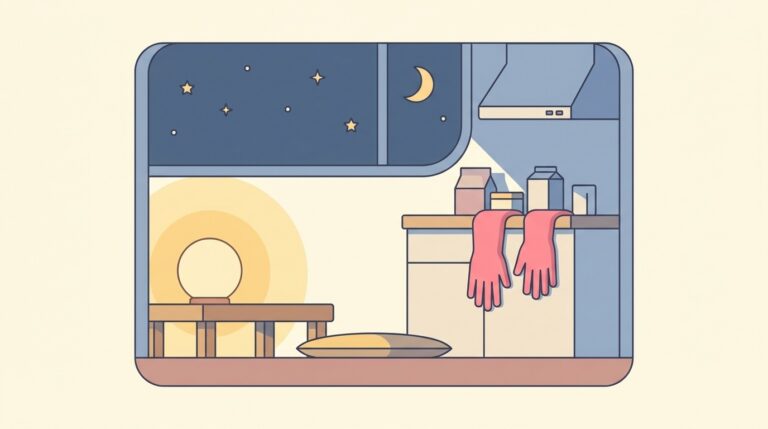
Picture this: You’ve just collapsed onto your floor mattress or sofa after a whirlwind day exploring Hongdae or finishing a long shift at work. You kick off your sneakers at the entryway, sigh in relief, and then—boom—you see it. A towering stack of ramyeon bowls in the sink and clean laundry scattered across your bed like confetti. If you watch K-dramas like My Liberation Notes or reality shows like I Live Alone (나 혼자 산다), you know this iconic scene all too well. Every Korean hero and heroine eventually stands before the kitchen sink wearing oversized pink rubber gloves, staring down the mountain of plates.
For beginner learners, describing this mundane evening routine can feel frustratingly clunky. You might know words like “water” or “room,” but how do real Koreans naturally say “I’m tackling the dishes” or “I need to tidy up before crashing”? As someone who has coached hundreds of expat beginners through the bewildering world of Korean studio apartments (원룸) and strict waste-sorting routines, I promise that mastering these simple home-chore expressions will instantly make your daily Korean life feel authentic and grounded. Let’s turn your nightly cleanup into your easiest language win yet!
Phase 2: Top 3 Core Expressions In-Depth Analysis
1. 설거지해요 (Seolgeojihaeyo)
- Pronunciation: [Seol-geo-ji-hae-yo] (Think of the word “sul”-king, then “guh-jee” like “gee whiz”, and “hae-yo”)
- Meaning: Literal: “Do the dishwashing” | Real Nuance: “Washing the dishes / Doing the dishes after eating”
- K-Culture Moment: In almost every romantic K-drama, when the main couple finishes a cozy home-cooked dinner, one character gallantly says, “Sit back, 내가 설거지할게 (I will do the dishes)!”
- Editor’s Insight: 설거지 specifically means cleaning eating utensils, pots, and dishware. You don’t use it for washing hands or cleaning countertops—it is reserved exclusively for the post-meal sink battle.
- Situation Spectrum:
- Casual (to close friends/roommates): 설거지해 (Seolgeojihae) ✅
- Polite/Standard (everyday friendly): 설거지해요 (Seolgeojihaeyo) ✅
- Formal (workplace/public announcement): 설거지합니다 (Seolgeojihamnida) ⚠️ (A bit too stiff for a home setting)
- 🤔 Think About It: In English, we “wash” or “do” dishes, using a general verb. Why do you think Korean has a unique dedicated noun (설거지) specifically for post-meal washing? What does this say about the importance of meal culture in Korea?
2. 방 청소해요 (Bang cheongsohaeyo)
- Pronunciation: [Bang cheong-so-hae-yo] (Pronounce “Bang” like a gentle door sound, “cheong” like “ch-young”, and “so” like “soap”)
- Meaning: Literal: “Do room cleaning” | Real Nuance: “I am tidying up / cleaning my room”
- K-Culture Moment: The dreaded Sunday evening phone call from mom: “Are you eating well? 방 청소는 하고 사니? (Are you even cleaning your room?)”
- Editor’s Insight: 방 means “room” and 청소 means “cleaning/vacuuming/sweeping”. When combined, it covers everything from vacuuming floor dust to wiping down tables. If you’re picking up clothes and straightening things out, Koreans often say 방 정리해요 (Bang jeongnihaeyo – room organizing).
- Situation Spectrum:
- Casual: 방 청소해 (Bang cheongsohae) ✅
- Polite/Standard: 방 청소해요 (Bang cheongsohaeyo) ✅
- Formal: 방 청소합니다 (Bang cheongsohamnida) ⚠️
- 🤔 Think About It: In Korean homes where people take off shoes and sit or sleep on the floor, “cleaning the room” almost always implies sweeping and wet-mopping the floor surface. How does your home’s flooring culture shape your idea of “cleaning”?
3. 쓰레기 버려요 (Sseuregi beoryeoyo)
- Pronunciation: [Sseu-re-gi beo-ryeo-yo] (Start with a crisp “Ss” like a hissing snake, “ray-gee”, then “buh-ryuh-yo”)
- Meaning: Literal: “Throw away trash” | Real Nuance: “Taking out the garbage / throwing away waste”
- K-Culture Moment: Late at night in residential alleys, you’ll spot neighbors in padded jackets clutching color-coded bags, diligently doing their nightly 쓰레기 버리기 chore.
- Editor’s Insight: 버리다 means “to discard” or “throw away.” Taking out trash in Korea is an art form due to the strict volume-rate garbage bag system. Saying this phrase implies completing a vital civic duty before bedtime!
- Situation Spectrum:
- Casual: 쓰레기 버려 (Sseuregi beoryeo) ✅
- Polite/Standard: 쓰레기 버려요 (Sseuregi beoryeoyo) ✅
- Formal: 쓰레기 버립니다 (Sseuregi beorimnida) ⚠️
- 🤔 Think About It: Discarding trash in Korea requires precise sorting. Why does language around daily maintenance reflect social responsibility more heavily in collective societies?
Phase 3: Textbook Korean vs. Real Korean
Situation 1: Saying you are washing the dishes
- 📖 교과서 한국어 (Textbook): “저는 지금 부엌에서 설거지를 하고 있습니다.” (Jeoneun jigeum bueo-keseo seolgeojireul hago itseumnida.) — I am currently washing dishes in the kitchen.
- 🗣️ 진짜 한국어 (Real-life): “저 설거지 얼른 하고 쉴게요!” (Jeo seolgeoji eolleun hago swilgeyo!) — I’ll quickly do the dishes and rest!
- 💡 왜 다를까? (Why the difference?): Nobody states their location (“in the kitchen”) while talking to people in the same house! Natural Korean drops unnecessary pronouns and focuses on intent (얼른 하고 쉴게요 = quickly finish and rest).
Situation 2: Explaining that the room is a mess and needs tidying
- 📖 교과서 한국어 (Textbook): “방이 매우 더럽기 때문에 청소를 해야 합니다.” (Bangi maeu deoreopgi ttaemune cheongsoreul haeya hamnida.) — Because the room is very dirty, I must clean it.
- 🗣️ 진짜 한국어 (Real-life): “방 치우고 잘게요.” (Bang chiugo jalgeyo.) — I’ll tidy up the room and go to bed.
- 💡 왜 다를까? (Why the difference?): Native speakers favor the casual, direct verb 치우다 (chiuda – to tidy up/clear away) instead of formal cause-and-effect grammar when winding down at night.
Phase 4: K-Culture Deep Dive & Non-Verbal Manners
4-1. 눈치 (Nunchi) & Chore Etiquette
- The Rubber Glove Armor: Never wash dishes bare-handed if you are living in a shared Korean flat or homestay! Koreans almost universally use 고무장갑 (gomujanggap – heavy-duty pink/yellow rubber gloves). Skipping them makes elders or flatmates wince and say “Your hands will get ruined!”
- The Bedtime Noise Nunchi: Korean apartments (아파트/원룸) have notoriously acoustic walls and floors. Vacuuming (청소기 돌리기) past 9:00 PM is a huge social taboo (민폐 – minpye). If you clean late at night, use a silent microfiber wipe or hand-sweep with a broom gently.
4-2. The Holy Grail of Waste: 분리수거 (Bunrisugeo)
Sorting garbage in Korea is a nationwide masterclass in recycling. Food waste (음식물 쓰레기) goes into designated yellow or green bags (or special electronic bins), while plastic, cans, and paper are strictly rinsed and separated. When you tell your host or friend “쓰레기 버리고 올게요” (I’ll go take out the trash and come back), you gain instant respect as someone who understands and respects the neighborhood ecosystem.
Phase 5: Real-Life Roleplay Scenario
Setting: 9:30 PM. A cozy studio apartment near Sinchon. You and your Korean flatmate, Minji, just finished a late delivery dinner of Tteokbokki. The sink is full, and the coffee table is cluttered.
- 민지 (Minji): “아, 배부르다! 오늘 진짜 피곤했지?”
(Ah, baebureuda! Oneul jinjja pigonhaetji?)
“Ah, I’m so full! Today was truly exhausting, right?”
🎭 [Rubbing her neck and leaning back on the sofa cushion] -
나 (You): “네, 맞아요. 그래도 얼른 정리해요!”
(Ne, majayo. Geuraedo eolleun jeongnihaeyo!)
“Yes, that’s right. Still, let’s tidy up quickly!”
🎭 [Smiling gently while rolling up your hoodie sleeves] -
민지 (Minji): “그럴까? 내가 음식물 쓰레기 버리고 올게.”
(Geureolkka? Naega eumsikmul sseuregi beorigo olge.)
“Shall we? I’ll go take out the food waste.”
🎭 [Picking up the small food waste bag and slipping on her slippers] -
나 (You): “그럼 제가 설거지할게요!”
(Geureom jega seolgeojihalgeyo!)
“Then I will do the dishes!”
🎭 [Grabbing the bright pink rubber gloves by the kitchen sink] -
민지 (Minji): “고마워! 장갑 꼭 끼고 해. 찬물 쓰지 마!”
(Gomawo! Janggap kkok kkigo hae. Chanmul sseuji ma!)
“Thanks! Make sure to wear the gloves. Don’t use cold water!”
🎭 [Pointing caring eyes toward the kitchen sink tap] -
나 (You): “네, 걱정 마세요. 방 청소도 금방 끝나요.”
(Ne, geokjeong maseyo. Bang cheongsodo geumbang kkeutnayo.)
“Yes, don’t worry. Cleaning the room will be over quickly too.”
🎭 [Nodding warmly and turning on the warm water tap] -
민지 (Minji): “다 하고 시원한 보리차 한잔 마시자!”
(Da hago siwonhan boricha hanjan masija!)
“When everything is done, let’s have a glass of cold barley tea!”
🎭 [Stepping outside into the hallway with a cheerful grin] -
나 (You): “좋아요, 얼른 끝내고 쉬어요!”
(Joayo, eolleun kkeunnaego swieoyo!)
“Sounds great, let’s finish fast and rest!”
🎭 [Giving a determined thumbs-up while humming softly]
🔀 Interactive Branching: Minji returns and sees the sparkling clean sink!
What will you say to her?
* Option A: “설거지 다 했어요! 이제 방 청소할까요?” (Seolgeoji da haesseoyo! Ije bang cheongsohalkkayo? – I finished dishes! Shall we clean the room now?)
* Outcome: Best! Demonstrates proactive teamwork, polite -요 style, and keeps the evening smooth.
* Option B: “청소 싫어요. 그냥 잘래요.” (Cheongso sireoyo. Geunyang jallaeyo. – I hate cleaning. I just want to sleep.)
* Outcome: Bad. A bit blunt and grumpy; might make your flatmate feel uncomfortable or burdensome.
* Option C: “야! 쓰레기 왜 안 버렸어?” (Ya! Sseuregi wae an beoryeosseo? – Hey! Why didn’t you throw away the trash?)
* Outcome: Risk! Using 야! is extremely informal and aggressive unless you are lifelong childhood besties. Avoid!
Phase 6: 10-Second Emotion Shadowing Drill
Repeat each sentence out loud, pausing at the / marks to capture the natural breathing rhythm of Korean native speakers:
[😫 지치고 피곤하지만, 다짐하며]
“오늘 진짜 피곤하지만 / 설거지는 / 하고 자야 돼요.”
(Oneul jinjja pigonhajiman / seolgeojineun / hago jaya dwaeyo.)
Even though I’m so tired today / the dishes / I really must do before sleeping.-
[😊 쾌활하고 다정하게]
“제가 그릇 닦을 테니까 / 편하게 쉬세요!”
(Jega geureut dakkeul tenikka / pyeonhage swiseyo!)
I’ll wipe the bowls / so please rest comfortably! -
[✨ 개운하고 뿌듯하게]
“방 청소 다 끝났다! / 이제 드디어 / 눕는다!”
(Bang cheongso da kkeunnatda! / Ije deudieo / numneunda!)
Room cleaning is all done! / Now finally / I get to lie down!
Phase 7: K-Culture Mini Dictionary
-
고무장갑 (Gomujanggap)
Translation: Pink rubber dishwashing gloves.
Usage: Found in 99.9% of Korean sinks. Essential for protecting your skin from harsh dish soap and hot water in cold winters. -
분리수거 (Bunrisugeo)
Translation: Waste sorting / Recyclable separation.
Usage: Daily civic duty in Korea. Separating plastics, glass, paper, styrofoam, and vinyl into individual collection bins. -
종량제 봉투 (Jongnyangje bongtu)
Translation: Government volume-rate prepaid trash bag.
Usage: General domestic waste must be thrown away inside these official regional bags purchased at local convenience stores. -
원룸 (Wonrum)
Translation: Studio apartment (One-room).
Usage: The ubiquitous compact living space for Korean college students and young singles, where kitchen and bed share the same zone.
Phase 8: Survival Kit for Travelers & Expats
Top 3 Survival Phrases
- “종량제 봉투 10리터(십 리터) 주세요.”
(Jongnyangje bongtu sip-riteo juseyo.)
Pro Tip: Say this at any convenience store counter to buy the official 10-liter trash bag for your Airbnb or flat. - “음식물 쓰레기는 어디에 버려요?”
(Eumsikmul sseuregineun eodie beoryeoyo?)
Pro Tip: Ask your guesthouse host or building manager this exact phrase to avoid steep municipal sorting fines. - “수세미 새것 있어요?”
(Susemi saegeot isseoyo?)
Pro Tip: “Is there a new dish sponge?” Handy when staying in long-term rentals or homestays.
Editor’s Travel Note
- Digital Tool: Before heading to the local mega-mart or Daiso for cleaning supplies, search on the Naver Map app for household cleaning sections nearby.
- Real-Life Hack: Always check the color of your trash bags! A bag bought in Mapo-gu cannot be thrown away in Gangnam-gu. Each district has its own designated 종량제 봉투.
Phase 9: “One Step Deeper” (Reflective Thought)
In many Western cultures, chores are strictly private, solitary tasks tucked behind closed doors. In Korea, however, tidying up—whether in school classrooms, military barracks, or shared officetels—carries a deep cultural imprint of communal care and 정 (Jeong). From elementary school, Korean kids take turns as 청소 당번 (cleaning duty officers), scrubbing classroom floors side-by-side with classmates. Cleaning your room and finishing your dishes before bed isn’t just about hygiene; it is an act of restoring order and showing courtesy to those sharing your living space.
💬 Your Turn: How does chore culture work in your country? Do you clean dishes immediately after dinner, or do you leave them until the next morning? Share your routine in the comments below!
Phase 10: FAQ & Avoiding Misunderstandings
Q: Can I use “빨래해요” (Ppallaehaeyo) to mean cleaning the room?
A: No! 빨래해요 specifically means “doing laundry / washing clothes.” For general room cleaning, always use 방 청소해요 or 방 정리해요.
Q: What is the difference between 청소 (Cheongso) and 정리 (Jeongni)?
A: 청소 is active sanitation—sweeping, vacuuming, and scrubbing dirt. 정리 is tidying and organizing items—folding blankets, putting books onto shelves, and clearing desk clutter.
Q: Why do Koreans get so stressed if I throw banana peels into the general trash?
A: In Korea, organic food that farm animals can theoretically consume is classified as 음식물 쓰레기 (food waste), not general trash! Fruit peels, leftover rice, and vegetable scraps must go into separate food waste receptacles.
🚨 Common Mistakes Warning Board
- Mistake 1: Saying “그릇 씻어요” (I wash the bowls) instead of “설거지해요”.
Correct Action: While technically understandable, 설거지해요 is the natural, idiomatic standard. - Mistake 2: Running the vacuum cleaner late at night in an apartment.
Correct Action: Use wet wipes (물티슈) or a dry dust pad at night to avoid noise complaints (층간소음). - Mistake 3: Putting chicken bones into the food waste bag.
Correct Action: Hard bones, clamshells, and onion skins are classified as 일반 쓰레기 (general waste), not food waste!
Phase 11: Action Mission & Engagement
- 🥉 Bronze Mission (Solo): Stand in front of your sink tonight, put your hands together, and say out loud three times: “설거지 얼른 하고 쉴게요!” (I’ll do the dishes quickly and rest!)
- 🥈 Silver Mission (Social): Snap a quick photo of your sparkling clean sink or tidy desk and post it with the Korean caption: “오늘의 방 청소 끝! ✨” (Today’s room cleaning is done!)
- 🥇 Gold Mission (Real-Life): Next time you stay at an Airbnb or talk with a Korean friend, offer to clean up by saying: “제가 설거지할게요!” (I’ll do the dishes!)
- 🎮 K-Culture Mission: Watch an episode of MBC’s 나 혼자 산다 (Home Alone) and count how many times celebrities wear pink rubber gloves at the kitchen sink!
Phase 12: Interactive Quiz Challenge
1. Situation Challenge: You just finished dinner with your Korean roommate. What is the most polite and natural way to volunteer for dish duty?
* A) 방 청소할게요.
* B) 제가 설거지할게요.
* C) 쓰레기 안 버려요.
2. Fill in the Blank: Complete the evening routine sentence:
* “저녁 먹고 방을 ______.” (I eat dinner and clean the room.)
* Hint: Use the polite present tense of 청소하다.
3. True or False: In Korea, you can throw general trash into any grocery plastic bag you receive from the supermarket.
* True / False
👉 Click here to check the answers and explanations!
-
Answer: B) 제가 설거지할게요.
Explanation: “설거지” means dishwashing, and “-할게요” means “I will do it.” Choice A means cleaning the room, and Choice C means “I won’t throw away trash.” -
Answer: 청소해요 (Cheongsohaeyo)
Explanation: Combining the noun 청소 with the friendly polite verb 해요 gives you 청소해요 (I clean). -
Answer: False
Explanation: General domestic trash must be placed strictly in official regional 종량제 봉투 (prepaid volume-rate garbage bags) purchased specifically for your neighborhood district.







