

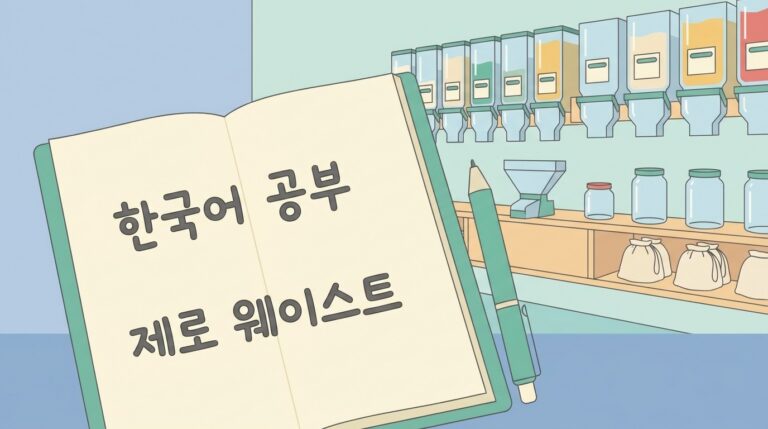
Zero-Waste in Seoul: How to Refill Laundry Detergent Like a Local Eco-Warrior
Phase 1: Empathy (Story-Driven Opening)
안녕하세요! 매일한글 에디터입니다. (Hello! This is your Daily Hangul editor.)
Picture this: You are strolling through the trendy backstreets of Mangwon-dong or Seongsu-dong, clutching two clean, empty plastic bottles in your canvas tote bag. You have decided to embrace eco-friendly living in Seoul by visiting a local 리필 스테이션 (refill station) to buy laundry detergent and fabric softener by weight. But the moment you slide open the glass door and smell the fresh lavender and rosemary scents, your heart starts racing. There are sleek digital scales, giant dispensers with stainless steel spouts, and handwritten Korean labels everywhere. You wonder: Do I just pour it myself? Do I weigh the bottle first? How on earth do I say ‘tare weight’ in Korean?!
Take a deep breath! You are not alone. Many of our intermediate learners tell us that shopping at specialty eco-shops feels much more intimidating than a standard supermarket checkout because it requires spontaneous, descriptive communication. Today, we will break down the essential expressions and cultural etiquette you need so you can confidently buy laundry supplies by weight, practice zero-waste living, and impress local shopkeepers like a true Seoulite.
Phase 2: 3 Key Expressions In-Depth
1. 용기 무게 먼저 잴게요 (Hangul) / Yonggi muge meonjeo jaelgeyo
- Pronunciation: [Yong-gi moo-geh meon-jeo jel-geh-yo] (Sounds like “Yong-key” + “moo-geh” + “mun-jaw” + “jell-kay-yo”)
- Meaning: “I will weigh the container first.”
- K-Culture Moment: Seen frequently in Korean eco-vlogs and reality programs like I Live Alone (나 혼자 산다) when guests bring their glass tumblers or jars to neighborhood refill stations.
- Editor’s Insight: 용기 (yonggi) is a fascinating homonym. It means both “bravery/courage” and “container/vessel.” In refill shops, it refers to your bottle or jar. 재다 (jaeda) means “to measure/weigh.” Using the future intention ending -ㄹ게요 (-lgeyo) shows polite consideration, signaling to the staff that you are setting the tare weight before pouring.
- Situation Spectrum: Casual: ⚠️ (용기 무게 먼저 잴게) | Semi-formal: ✅ (용기 무게 먼저 잴게요) | Formal: ✅ (용기 무게를 먼저 측정하겠습니다)
- 🤔 Think About It: In English, we usually ask the clerk, “Could you tare this?” In Korean, customers often announce their action proactively using -ㄹ게요. What does this reveal about personal initiative in communal spaces?
2. 세탁세제 300그램만 소분해 갈게요 (Hangul) / Setak-seje sambaek-geuraemman sobunhae galgeyo
- Pronunciation: [Seh-tak seh-jeh sahm-baek geu-rem-mahn soh-boon-heh gal-geh-yo]
- Meaning: “I will portion out and take just 300 grams of laundry detergent.”
- K-Culture Moment: Eco-conscious K-indie artists sharing their minimalist pantry restocking routines on YouTube Studio vlogs.
- Editor’s Insight: 소분하다 (sobunhada) translates to “subdividing” or “portioning into smaller amounts.” Combining it with -어 가다 (-eo gada) indicates taking the portioned item with you. The particle 만 (-man) means “only/just,” making your request precise and clear.
- Situation Spectrum: Casual: ⚠️ (300그램만 소분해 갈게) | Semi-formal: ✅ (300그램만 소분해 갈게요) | Formal: ✅ (300그램만 소분하여 구매하겠습니다)
- 🤔 Think About It: Why does Korean have a dedicated single verb like 소분하다 for buying bulk items in small amounts, whereas English requires multi-word phrasing?
3. 영점 조절은 어떻게 해요? (Hangul) / Yeongjeom jojeoreun eotteoke haeyo?
- Pronunciation: [Young-jeom jo-jeo-leun uh-tteo-keh heh-yo?] (Think “Young-jum” + “Joe-jurl-un”)
- Meaning: “How do I tare the scale (zero out the weight)?”
- K-Culture Moment: A newcomer in a quiet indie zero-waste shop politely asking the clerk behind the wooden counter for help with an automated digital scale.
- Editor’s Insight: 영점 (yeongjeom) literally means “zero point,” and 조절 (jojeol) means “adjustment/control.” Asking 어떻게 해요? is the friendliest, most natural way at the B1 level to seek operational instructions without sounding stiff.
- Situation Spectrum: Casual: ⚠️ (영점 조절 어떻게 해?) | Semi-formal: ✅ (영점 조절은 어떻게 해요?) | Formal: ✅ (영점 조절 방법을 알려주시겠습니까?)
- 🤔 Think About It: Notice how Korean focuses on reaching the “zero point” (영점) rather than the verb “to tare.” How does this change the way you visualize the action?
Phase 3: Textbook Korean vs. Real Korean
Situation 1: Asking if you can fill your own container
- 📖 교과서 한국어 (Textbook): 여기에 세제를 담아도 됩니까? (Yeogie sejereul damado doebnikka? / Is it permissible to put detergent here?)
- 🗣️ 진짜 한국어 (Real-life): 제가 가져온 통에 바로 담으면 될까요? (Jega gajweoon tonge baro dameumyeon doelkkayo? / Can I just pour it directly into the container I brought?)
- 💡 왜 다를까? (Why the difference?): While the textbook phrase sounds like an interrogation manual, native speakers use 통 (tong – bottle/container) and the gentle question ending -면 될까요? to sound warm and conversational.
Situation 2: Checking the price by weight
- 📖 교과서 한국어 (Textbook): 이 섬유유연제는 100그램당 가격이 얼마입니까? (I seomyu-yuyeonjeneun baek-geuraemdang gagyeogi eolmaibnikka? / How much is the price per 100 grams for this fabric softener?)
- 🗣️ 진짜 한국어 (Real-life): 이거 100그램에 얼마예요? (Igeo baek-geuraeme eolmayeyo? / How much is this per 100 grams?)
- 💡 왜 다를까? (Why the difference?): Real-world shopping drops bureaucratic particles like ~당 (~dang) in favor of simple dative particles like ~에 (~e).
Phase 4: K-Culture Deep Dive & Non-Verbal Manners
4-1. 눈치 (Nunchi) & Body Gestures at Refill Stations
Refill shops in Korea are community-driven sanctuaries. When entering, offer a light 15-degree bow with a friendly 안녕하세요! (Annyeonghaseyo!). When weighing your container, place both hands flat beside the scale or step back half a step to allow the clerk to observe the digital display. When you finish filling the liquid soap, hold the container neck with two hands and tilt it gently to ensure not a single drop spills on the stainless steel counter.
4-2. The Cultural Phenomenon: 용기내 챌린지 (Yongginae Challenge)
In Korea, sustainability took off culturally with the viral #용기내챌린지 (Yonggi-nae Challenge). Celebrities like actor Ryu Jun-yeol popularized bringing your own multi-use containers to traditional markets, bakeries, and refill shops. The movement is beloved because 용기내 is a delightful double pun: it literally means “produce/bring a container” (용기를 내다), but it also sounds identical to “muster your courage” (용기를 내다). Stepping into an eco-shop with your own empty bottles shows you have both environmental care and personal courage!
Phase 5: Real-World Roleplay Scenario
Setting: ‘Almengi Market’ (알맹상점), a sunlit refill station in Seoul filled with natural wood, large glass pump jars, and dried loofahs.
Characters:
* 민지 (Minji): The kind, eco-minded shop manager wearing a linen apron.
* 알렉스 (Alex): A B1 Korean learner holding an empty laundry bottle and a glass jar.
- 턴 1 (민지): 어서 오세요! 리필 스테이션 이용해 보신 적 있으세요?
(Eoseo oseyo! Ripil seuteisyeon yonghae bosin jeok isseuseyo?)
“Welcome! Have you used our refill station before?”
🎭 따뜻한 미소를 지으며 저울 옆에서 인사한다.(Greets beside the scale with a warm smile.) -
턴 2 (알렉스): 처음이에요! 집에서 빈 병 두 개 가져왔는데, 세탁세제랑 섬유유연제 사려고요.
(Cheoeumieyo! Jibeseo bin byeong du gae gajyeowanneunde, setaksejerang seomyu-yuyeonje saryeogoyo.)
“It’s my first time! I brought two empty bottles from home to buy laundry detergent and fabric softener.”
🎭 에코백에서 깨끗이 씻어온 빈 병들을 꺼내어 보여준다.(Pulls out the washed empty bottles from the tote bag.) -
턴 3 (민지): 멋지네요! 먼저 저울에 빈 병을 올려서 영점 조절부터 해 주시면 돼요.
(Meotjineyo! Meonjeo jeoure bin byeongeul ollyeoseo yeongjeom jojeolbuteo hae jusimyeon dwaeyo.)
“Wonderful! First, put your empty bottle on the scale to tare the weight.” -
턴 4 (알렉스): 네, 용기 무게 먼저 잴게요. 영점 버튼 누르면 0g이 되네요!
(Ne, yonggi muge meonjeo jaelgeyo. Yeongjeom beoteun nureumyeon yeong-geuraemi doeneyo!)
“Okay, I’ll weigh the container first. Pressing the zero button resets it to 0g!”
🎭 신기한 듯 조심스럽게 버튼을 누른다.(Carefully presses the button with curiosity.) -
턴 5 (민지): 맞아요. 세제 펌프로 원하는 만큼 직접 담으신 뒤에 다시 무게를 재시면 됩니다.
(Majayo. Seje peompeuro wonhaneun mankeum jikjeop dameusin dwie dasi mugereul jaesimyeon doebnida.)
“That’s right. Dispense as much detergent as you want with the pump, then weigh it again.” -
턴 6 (알렉스): 세탁세제는 500그램 담았고, 섬유유연제는 300그램만 소분해 갈게요.
(Setaksejeneun obaek-geuraem damatgo, seomyu-yuyeonjeneun sambaek-geuraemman sobunhae galgeyo.)
“I filled 500g of laundry detergent, and I’ll take just 300g of fabric softener.”
🎭 펌프를 눌러 정량만큼 깔끔하게 채운다.(Pumps the liquid neatly to the exact amounts.) -
턴 7 (민지): 깔끔하게 잘 담으셨네요! 바코드 스티커 출력해 드릴 테니 카운터로 오세요.
(Kkalkkeumhage jal dameusyeotneyo! Bakodeu seutikeo chullyeokhae deuril teni kaunteoro oseyo.)
“You filled them so neatly! I will print the barcode stickers, so please head to the counter.” -
턴 8 (알렉스): 필요한 만큼만 살 수 있어서 진짜 좋네요. 감사합니다!
(Piryohan mankeumman sal su isseoseo jinjja jotneyo. Gamsahamnida!)
“It’s so great that I can buy only what I need. Thank you!”
🎭 두 손으로 병을 받아 가방에 담으며 가볍게 목례한다.(Takes the bottles with both hands, places them in the bag, and nods respectfully.)
🔀 Interactive Branching Moment
After filling your bottles, you notice a few drops of detergent spilled on the stainless steel tray. What do you do?
* Option A: You quietly pretend you didn’t notice and rush to the cashier.
Feedback: Bad. In Korean refill stations, communal cleanliness is paramount. Leaving a spill makes extra work for fellow zero-waste shoppers.
* Option B: You grab a nearby cloth towel provided by the station and say: 제가 살짝 흘렸는데, 행주로 닦아도 될까요? (Jega saljjak heullyeonneunde, haengjuro dakkado doelkkayo? / I spilled a little, may I wipe it with this cloth?)
Feedback: Best! Demonstrates incredible 눈치 (nunchi), manners, and fluency. The staff will adore you.
* Option C: You pour water directly onto the tray to wash it away.
Feedback: Risk. Many electronic scales are embedded into the table. Getting water underneath might damage the scale sensors.
Phase 6: 10-Second Emotion Shadowing Drill
Practice speaking naturally with rhythm pauses (/) and authentic emotion:
[😊 설레고 호기심 어린 목소리로 / Excited & curious]
빈 병 가져왔는데 / 여기서 세제 소분할 수 있나요?
(Bin byeong gajyeowanneunde / yeogiseo seje sobunhal su innayo?)
“I brought an empty bottle / can I refill detergent here?”-
[🤔 진지하고 신중하게 / Focused & careful]
용기 무게 먼저 재고 / 영점 맞춘 다음에 담을게요.
(Yonggi muge meonjeo jaego / yeongjeom matchun da-eume dameulgeyo.)
“I’ll weigh the container first / tare the scale, and then pour it in.” -
[💖 뿌듯하고 감격스럽게 / Proud & satisfied]
플라스틱 쓰레기도 안 나오고 / 필요한 무게만큼만 살 수 있어서 최고예요!
(Peullaseutik sseuregido an naogo / piryohan mugemankeumman sal su isseoseo choegoyeyo!)
“No plastic waste is generated / and buying just the weight I need is the best!”
Phase 7: K-Culture Mini Dictionary
-
리필 스테이션 (Ripil Seuteisyeon)
Translation: Refill Station.
Usage: Modern eco-friendly shops across Korean cities where liquids, grains, soaps, and body products are sold by gram rather than in pre-packaged plastic. -
소분 (Sobun)
Translation: Subdividing / portioning out.
Usage: Essential in single-person household (1인 가구) culture in Korea. Used for groceries, bulk buying, and zero-waste portioning. -
다회용기 (Dahoeyonggi)
Translation: Multi-use container / Reusable container.
Usage: Frequently seen in food delivery apps (Baemin/Yogiyo) and refill shops encouraging customers to ditch single-use items (일회용품). -
영점 조절 (Yeongjeom jojeol)
Translation: Tare adjustment / Zeroing a scale.
Usage: Practical technical vocabulary that guarantees seamless weighing when buying dry goods or liquid cleaners.
Phase 8: Traveler’s Survival Kit
Top 3 Survival Phrases for Eco-Conscious Travelers
- 뚜껑 꽉 닫아주세요. (Ttukkeong kkwak dadajuseyo.)
“Please close the lid tightly.” (Crucial when carrying laundry detergent in your luggage or backpack!) - 스티커는 병에 바로 붙일까요? (Seutikeoneun byeonge baro buchilkkayo?)
“Shall I stick the price label directly on the bottle?” - 영수증은 모바일로 받을게요. (Yeongsujeungeun mobaillo badeulgeyo.)
“I will receive the receipt on my mobile/electronically.” (Paperless habit)
Editor’s Travel Note
Looking for eco-friendly shops in Seoul? Search for keywords like 제로웨이스트샵 or 리필스테이션 on the 네이버 지도 앱 다운로드 (Naver Map App Download). Most shops won’t provide plastic bags even if you pay extra, so keep a foldable cloth pouch (장바구니) handy. Payment is nearly 100% card-only or mobile pay (Apple Pay/Samsung Pay); paper cash is often declined at indie eco-stores.
Phase 9: “One Step Deeper” (Reflective Question)
In historical Korea, neighborhood markets revolved around sharing and minimal waste—tofu was bought in ceramic bowls (뚝배기) and grain in woven baskets. As industrialization sparked convenience, single-use plastic skyrocketed. However, today’s young Koreans are reviving mindful consumption not as an inconvenience, but as an aesthetic and civic virtue (착한 소비). Taking the time to wash an empty bottle and weigh detergent is a gentle rebellion against disposable speed culture.
💬 Your Turn: Have you ever brought your own jar or bottle to buy supplies in your home country? How does the experience in Korea compare to your hometown? Share your thoughts below!
Phase 10: FAQ & Avoiding Misunderstandings
Q: Can I bring any random plastic bottle, like a leftover soda bottle, to refill detergent?
A: While technically possible, most Korean refill stations require containers to be completely clean, dry, and free of food smells for safety and chemical stability. For laundry detergent, bringing an empty shampoo or old detergent bottle with a secure cap is strongly recommended!
Q: What should I do if I accidentally pour more detergent than I planned?
A: Never pour it back into the dispenser spigot! That contaminates the store’s bulk batch. Instead, politely inform the staff: 생각보다 조금 많이 담겼네요! 그냥 이대로 계산해 주세요. (Saenggakboda jogeum mani damgyeonneyo! Geunyang idaero gyesanhae juseyo. / I poured a bit more than planned! Please just charge me for this amount.)
Q: Are refill stations cheaper than regular supermarkets?
A: Gram for gram, high-quality hypoallergenic or eco-certified detergents at refill stations are often equal to or slightly cheaper than premium brand packaged items. Plus, you save money by only purchasing the exact amount you need!
🚨 Common Mistakes Alert
- Mistake: Pouring liquid before zeroing the tare weight.
Correct Action: Always place the empty bottle on the scale and press 영점 first! - Mistake: Forgetting to shake or stir viscous concentrates.
Correct Action: Check the dispenser note—some plant-based softeners separate naturally and require a gentle swirl. - Mistake: Leaving the spout wet.
Correct Action: Use the cotton wipe sitting by the dispenser pump to wipe the nozzle cleanly for the next person.
Phase 11: Action Missions
- 🥉 Bronze Level (Solo Drill): Look at an empty bottle in your room right now and practice saying aloud three times: 용기 무게 먼저 잴게요! (Yonggi muge meonjeo jaelgeyo!)
- 🥈 Silver Level (Community Connection): Next time you carry a reusable tumbler or container, take a photo and post it on Instagram or your study journal with the hashtag #용기내챌린지 and a one-sentence Korean caption.
- 🥇 Gold Level (Real-World Mission): Visit a refill station or bakery in Korea, hand over your container, and use the phrase: 제가 가져온 통에 소분해 갈게요! (Jega gajweoon tonge sobunhae galgeyo!)
- 🎮 K-Culture Mission: Watch an episode of an eco-themed Korean variety show or YouTube vlog, and spot how many times the word 용기 appears on screen as a subtitle pun!
Phase 12: Interactive Quiz Challenge
Test your zero-waste Korean skills before heading out!
- Situation Judgment: You placed your glass jar on the scale, and the screen displays
180g. Before filling it with liquid detergent, what should you do?- A) Immediately pump the detergent to 500g.
- B) Press the 영점 (Tare) button until it reads
0g. - C) Pay for 180g first at the register.
- Fill in the Blank: “I will purchase only 200 grams partitioned in my jar.”
제 병에 200그램만 ______ 갈게요.- A) 버려 (beoryeo)
- B) 소분해 (sobunhae)
- C) 포장해 (pojanghae)
- True or False: In the trendy phrase 용기내 챌린지, the word 용기 only means “bravery” and has no connection to kitchen containers.
- (True / False)
👉 Click here to reveal the Answer Key & Explanations!
- Answer: B
Explanation: You must adjust the tare weight (영점 조절) so that you don’t pay for the weight of your own glass container! - Answer: B (소분해)
Explanation: 소분해 갈게요 means to portion out and carry away in smaller amounts. 버려 means throw away, and 포장해 is used for standard restaurant takeout wrapping. - Answer: False
Explanation: 용기내 is famous specifically because it’s a creative double pun meaning both “show courage” (용기를 내다) and “bring a container” (용기[容器]를 내다)!







