

Phase 1: Empathy (Story-Immersive Opening)
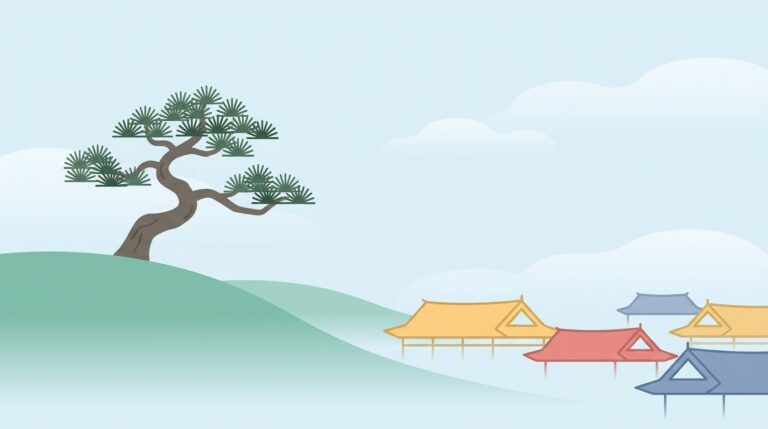
안녕하세요! 매일한글 에디터입니다. Have you ever watched a poignant K-drama where the glamorous eldest child conquers corporate Seoul, while the quiet, seemingly unremarkable sibling stays behind in the countryside tending to the aging parents and the family estate? In a hyper-competitive society often characterized by blazing ambition and fast results, foreign professionals and advanced learners frequently feel crushed by the expectation to constantly outshine everyone. Yet deep within Korea’s cultural soil lies a surprising, paradoxical antidote: “굽은 나무가 선산을 지킨다 (Gubeun namuga seonsaneul jikkinda)”—literally, “The crooked tree guards the ancestral mountain.” Our advanced learners often share that discovering this ancient idiom transformed their understanding of Korean resilience, shifting their perspective from superficial flashiness to the enduring nobility of steadfast presence.
Phase 2: Deep Dive into 3 Essential Paradoxical Expressions
1. 굽은 나무가 선산을 지킨다 (Gubeun namuga seonsaneul jikkinda)
- Pronunciation: [Goo-beun na-moo-ga seon-san-eul jik-kin-da] (Think of goo like “gooey”, namu like “tree”, and jik-kinda like a firm rhythmic drumbeat on the double kk).
- Meaning: Literal: “A crooked tree protects the ancestral burial mountain.” Nuance: Flawless, straight timber is quickly cut down for palace pillars and expensive furniture, leaving only the twisted, humble pine to survive the axe, endure centuries of storms, and faithfully guard the ancestral resting grounds. True value belongs to those who quietly endure rather than those who burn out early.
- K-Culture Moment: In the classic rural drama Our Blues or family epics like My Golden Life, an elder family matriarch gently comforts a hardworking, uncelebrated child who stayed by the family business while flashy siblings dispersed overseas.
- Editor’s Insight: This proverb balances Confucian filial devotion with ancient Daoist philosophical undertones regarding the “usefulness of uselessness.” It is not a lament of mediocrity; it is a supreme vindication of endurance.
- Situation Spectrum: Casual: ✅ | Semi-formal: ✅ | Formal: ✅
- 🤔 Think About It: Does your native culture elevate individual brilliance over long-term loyalty, or do you have a parallel saying for unglamorous persistence?
2. 모난 돌이 정 맞는다 (Monan dori jeong manneunda)
- Pronunciation: [Mo-nan do-ri jeong man-neun-da] (Jeong sounds similar to “young” with a sharp j).
- Meaning: Literal: “A jagged stone gets struck by the chisel.” Nuance: Standing out too aggressively invites scrutiny, conflict, or social friction.
- K-Culture Moment: Frequently murmured in office dramas like Misaeng when an ambitious rookie tries to bypass established workplace protocol without building consensus first.
- Editor’s Insight: Paired with our unit’s proverb, this explains why Korean society traditionally valued humility and adaptability over sharp, individualistic edges.
- Situation Spectrum: Casual: ✅ | Semi-formal: ✅ | Formal: ⚠️ (Can sound cynical if directed at a senior executive)
- 🤔 Think About It: Is conformity viewed as harmony or stagnation in your professional sphere?
3. 가늘고 길게 가다 (Ganeulgo gilge gada)
- Pronunciation: [Ga-neul-go gil-ge ga-da] (Ganeulgo flows smoothly like “gull-go”).
- Meaning: Literal: “To go thin and long.” Nuance: Choosing a stable, low-profile, and enduring career rather than burning bright and burning out prematurely.
- K-Culture Moment: Often toasted between exhausted corporate workers over late-night samgyeopsal and soju, celebrating steady job retention over risky startup ventures.
- Editor’s Insight: While historical proverbs carry poetic gravitas, this modern idiom is its everyday colloquial cousin. It honors sustainable survival over flashy risk.
- Situation Spectrum: Casual: ✅ | Semi-formal: ✅ | Formal: 🚫
- 🤔 Think About It: In modern work culture, has “going thin and long” become smarter than chasing rapid fame?
Phase 3: Textbook Korean vs. Real Native Korean
Situation 1: Commending a steady colleague who stayed loyal during a corporate crisis
- 📖 교과서 한국어 (Textbook): 충성스러운 직원이 회사의 위기 상황에서 가장 큰 기여를 합니다. (Chungseongseureoun jig-woni hoesaui wigi sanghwang-eseo gajang keun giyeoreul hamnida. / “Loyal employees make the greatest contribution during corporate crises.”)
- 🗣️ 진짜 한국어 (Real Native): 잘난 사람들은 이직하기 바쁜데, 결국 굽은 나무가 선산 지킨다고 과장님이 끝까지 버텨주셨네요. (Jallan saramdeureun ijikhagi bappeunde, gyeolguk gubeun namuga seonsan jikkindago gwajangnimi kkeutkkaji beotyeojusyeonneyo. / “The high-flyers were all busy jumping ship, but just as the crooked tree guards the ancestral mountain, you held the fort to the very end, Manager.”)
- 💡 왜 다를까? (Why the Difference?): Textbook phrasing relies on abstract, dry Westernized business terms, whereas authentic advanced Korean invokes vivid metaphorical proverbs that simultaneously validate loyalty and convey deep cultural warmth.
Situation 2: Consoling someone who feels unaccomplished compared to their peers
- 📖 교과서 한국어 (Textbook): 조급해하지 마세요. 당신도 언젠가는 가치를 인정받을 것입니다. (Jogeupheo-haji maseyo. Dangsindo eonjen-ganeun gachireul injeongbadeul geosimnida. / “Do not be impatient. Your value will also be recognized someday.”)
- 🗣️ 진짜 한국어 (Real Native): 밖에서 화려하게 날뛰는 동기들 부러워할 것 없어. 굽은 나무가 선산 지키듯, 묵묵히 제자리 지키는 네가 진짜 이 조직의 기둥이야. (Bakk-eseo hwaryeohage nalttwineun dong-gideul bureowohal geot eopseo. Gubeun namuga seonsan jikkideut, mungmukhil jejari jikkineun nega jinjja i jojigui gidung-iya. / “Don’t envy your peers showing off outside. Like the crooked tree guarding the ancestral mountain, you standing your ground quietly make you the true pillar of this organization.”)
- 💡 왜 다를까? (Why the Difference?): Native Koreans prefer grounding comfort in spatial stability (
제자리,기둥) and ancestral natural imagery, turning perceived lack of ambition into honorable steadfastness.
Phase 4: K-Culture Deep Dive & Non-Verbal Manners
4-1. 눈치 (Nunchi) & Gestures
When invoking 굽은 나무가 선산을 지킨다, delivery requires measured emotional subtlety. Never proclaim it with boisterous pride or condescending pity. Instead, adopt a reflective gaze, a subtle nod of the head, and soften your posture. Keep your hands relaxed, lightly clasped or resting on the table. The expression is delivered with a warm, knowing half-smile—communicating, “I see through the shallow glitter of the world, and I honor your endurance.”
4-2. Cultural Code: The Sacred Mountain and the Twisted Pine
In Korean heritage, a 선산 (Seonsan – ancestral mountain) is the sacred locus of filial piety, where generational burial mounds (봉분 – bongbun) reside under the protective canopy of pine trees (소나무). Historically, imperial carpenters requisitioned every tall, straight pine to construct palaces, fortresses, and warships. The gnarled, twisted pines were spared because they held no lumber value. Ironically, those “useless” crooked trees became the sole living witnesses to centuries of family history, shielding ancestral graves from windstorms, erosion, and grave robbers. This concept mirrors modern Korean life: while elite graduates often emigrate or switch companies rapidly, the steady worker who remains through restructuring becomes the soul of the institution.
Phase 5: Real-World Roleplay Scenario
- Setting: A tranquil, tea-scented traditional hanok café in Gyeongju at dusk. Warm lantern light reflects off antique wooden pillars.
- Characters:
- Hansol (한솔): A calm, grounded artisan who stayed behind in his hometown to preserve his family’s generational pottery workshop.
- Minwoo (민우): A burned-out venture-backed tech founder who left for Seoul ten years ago, now visiting home in existential exhaustion.
- Dialogue:
- 민우 (Minwoo): 🎭 (한숨을 깊게 내쉬며 찻잔을 만지작거린다 / Deeply sighing while turning his teacup) 서울에서 밤낮없이 투자 유치하고 달렸는데, 남은 건 번아웃이랑 탈모뿐이야. (Seo-ureseo bamnat-eopsi tuja yuchihago dallyeonneunde, nameun geon beon-aus-irang talmoppuniya. / “I ran day and night in Seoul securing VC funding, but all I have left is burnout and hair loss.”)
- 한솔 (Hansol): 🎭 (온화한 미소로 따뜻한 차를 따라주며 / Pouring warm tea with a gentle smile) 몸도 마음도 많이 상했네. 그래도 큰물에서 이름 한 번 크게 날렸잖아. (Momdo maeumdo mani sang-haenne. Geuraedo keunmureseo ireum han beon keuge nallyeotjana. / “Your body and mind have taken a beating. Still, you made quite a name for yourself in the big pond.”)
- 민우 (Minwoo): 🎭 (씁쓸하게 웃으며 고개를 젓는다 / Bitterly smiling and shaking his head) 겉만 화려했지 속은 텅 비었어. 오히려 고향에서 묵묵히 도자기 빚으며 가업 지킨 네가 훨씬 대단해 보여. (Geotman hwaryeohaetji sogeun teong bieosseo. Ohiryeo gohyang-eseo mungmukhil dojagi bijeumyeo gaeop jikkin nega hwolssin daedanhae boyeo. / “It was flashy on the outside, but completely hollow inside. Honestly, you seem so much more admirable, quietly making pottery and preserving the family craft here in town.”)
- 한솔 (Hansol): 🎭 (찻잔을 조용히 내려놓으며 / Quietly setting down his teacup) 어릴 땐 다들 나보고 욕심도 없고 바보 같다고 했어. 똑똑한 너희들은 다 서울로 떠났으니까. (Eoril ttaen dadeul nabogo yoksimdo eopgo babo gatdago haesseo. Ttokttokhan neohuideureun da Seo-ullo tteonasseunikka. / “When we were young, everyone said I had no ambition and called me foolish because all the brilliant kids left for Seoul.”)
- 민우 (Minwoo): 🎭 (미안한 눈빛으로 한솔을 바라본다 / Looking at Hansol with apologetic eyes) 그때는 세상 물정을 너무 몰랐지. 떠난 놈들이 잘난 줄 알았어. (Geuttaeneun sesang muljeong-eul neomu mollatji. Tteonan nomdeuri jallan jul arasseo. / “Back then, we were completely naive about the world. We thought the ones who left were the superior ones.”)
- 한솔 (Hansol): 🎭 (시선을 마주치며 따뜻하게 위로한다 / Meeting his eyes and speaking with warm reassurance) 옛말에 굽은 나무가 선산을 지킨다고 하잖아. 난 그냥 내 자리를 지킨 것뿐이야. (Yenmare gubeun namuga seonsaneul jikkindago hajana. Nan geunyang nae jarireul jikkin geotppuniya. / “As the old saying goes, ‘The crooked tree guards the ancestral mountain.’ I simply guarded my rightful spot.”)
- 민우 (Minwoo): 🎭 (어깨의 짐이 내려앉듯 안도하며 / Relieved, as if a weight lifted from his shoulders) 그 말이 오늘따라 가슴을 치네. 굽은 나무 덕분에 내가 이렇게 돌아올 고향이 남아있었구나. (Geu mari oneulttara gaseumeul chine. Gubeun namu deokbune naega ireoke doraol gohyang-i nama-isseotguna. / “Those words strike my heart so deeply today. Thanks to that crooked tree, I actually have a home to return to.”)
- 한솔 (Hansol): 🎭 (민우의 어깨를 가볍게 툭 치며 / Lightly patting Minwoo’s shoulder) 힘 다 빠졌으면 며칠 쉬다 가. 선산의 나무는 어디 안 가니까. (Him da ppajyeosseumyeon myeochil swida ga. Seonsanui namuneun eodi an ganikka. / “If your strength is spent, rest here a few days before you go. The tree on the ancestral mountain isn’t going anywhere.”)
🔀 Interactive Decision Point
If Minwoo later laments, “I wasted ten years chasing ghosts in Seoul,” how should you, as Hansol, reply using your C2 insight?
- Option A: “잘난 척하더니 꼴좋다. 서울 떠나지 말았어야지.” (Jallan cheokhadeoni kkoljota. Seoul tteonaji marasseoyaji. / “Serves you right after acting so smart. You shouldn’t have left Seoul.”)
- Feedback: ❌ Bad (Relationship Breaker): Harsh, spiteful, and completely ignores Korean social warmth (정 – Jeong).
- Option B: “바깥바람 쐬고 온 곧은 나무도 있어야 산이 울창해지는 법이야. 네 경험도 값진 거다.” (Bakkatbaram ssoego on godeun namudo iss-eoya sani ulchanghaejineun beobiya. Ne gyeongheomdo gapjin geoda. / “A mountain needs tall trees that weathered outside winds to become a lush forest. Your journey is deeply valuable too.”)
- Feedback: 🏆 Best (Mastery of Nuance): Brilliantly expands the arboreal metaphor to affirm both staying and leaving, elevating the conversation with supreme emotional intelligence.
- Option C: “그럼 지금이라도 당장 회사 그만두고 여기서 흙이나 파.” (Geureom jigimirado dangjang hoesa geumandugo yeogiseo heulg-ina pa. / “Then quit your company right now and just dig dirt here.”)
- Feedback: ⚠️ Risk (Unbalanced Advice): Overly blunt and presumes too much without acknowledging his complex career dilemma.
Phase 6: 10-Second Emotional Shadowing Drill
Practice matching native phrasing with authentic emotional cadence. Markings indicate rhythm pauses (/).
- [😌 차분하고 깊은 깨달음으로 / With calm, deep philosophical realization]
- 화려한 재주보다 / 묵묵한 끈기가 / 결국 마지막까지 남는 법이에요.
- (Hwaryeohan jaejuboda / mungmukhan kkeun-giga / gyeolguk majimakkkaji namneun beobieyo.)
- “Rather than flashy talent / silent persistence / is what endures until the very end.”
- [🍵 온화하고 위로하듯이 / With gentle, comforting warmth]
- 굽은 나무가 / 선산을 지킨다고 하잖아요. / 너무 자책하지 마세요.
- (Gubeun namuga / seonsaneul jikkindago hajanayo. / Neomu jachaekhaji maseyo.)
- “As they say, the crooked tree / guards the ancestral hill. / Please don’t be so hard on yourself.”
- [🤝 단단한 자부심을 담아 / With quiet, resolute pride]
- 남들이 뭐라 해도, / 내 자리를 지켜온 시간이 / 결코 헛되지 않았습니다.
- (Namdeuri mwora haedo, / nae jarireul jikyeo-on sigani / gyeolko heotdoeji anatseumnida.)
- “No matter what others say, / the time spent defending my post / has never been in vain.”
Phase 7: K-Culture Mini Dictionary
- 선산 (Seonsan) [Seon-san]: Ancestral burial hill/mountain. In traditional sociology, owning and safeguarding the family seonsan represents filial duty (효 – Hyo) and the ultimate root of one’s lineage.
- 존버 (Jonbeo) [Jon-beo]: Extremely popular modern slang derived from vulgar roots, now widely used to describe surviving through agonizing grit, economic downturns, or holding onto stock investments until recovery. Modern slang equivalent to enduring like the crooked pine.
- 진국 (Jinguk) [Jin-guk]: Literally rich, slow-boiled, hearty broth (like seolleongtang). Figuratively describes a human being who is sincere, honest, unpretentious, and becomes more admirable the longer you know them.
- 입신양명 (Ipsinyangmyeong) [Ip-sin-yang-myeong]: Four-character idiom (사자성어) meaning “rising in the world and making one’s name known.” The societal antithesis of the quiet crooked tree, representing classical Confucian bureaucratic ambitions.
Phase 8: Traveler’s Survival Kit
Top 3 Cultured Survival Phrases for Historic & Rural Korea
- 이곳의 오랜 역사가 참 평온하게 느껴집니다. (Igosui oraen yeoksaga cham pyeong-onhage neukkyeojimnida.)
- English: “The ancient history of this place feels remarkably serene.”
- Pro Tip: Use when visiting traditional villages like Andong Hahoe or historic temples. Elders will admire your elevated vocabulary.
- 대를 이어 자리를 지켜오신 모습이 존경스럽습니다. (Dae-reul ieo jarireul jikyeo-osin moseubi jongyeongseureopseumnida.)
- English: “I deeply respect your steadfast dedication to preserving this place across generations.”
- Pro Tip: Use when visiting multi-generational traditional bakeries, pottery kilns, or old restaurants (노포 – Nopo).
- 주변 풍경과 소나무가 조화롭게 어우러지네요. (Jubyeon punggyeong-gwa sonamuga johwaropge eoureojineyo.)
- English: “The surrounding scenery and the pine trees blend in exquisite harmony.”
- Pro Tip: A sophisticated conversational icebreaker when walking through historic gardens or royal tombs.
Editor’s Travel Note
When venturing out to experience authentic cultural sites such as the ancient royal tombs in Gyeongju or secluded mountain temples in Gangwon-do, foreign credit cards frequently glitch on regional transit. Keep a physical T-money transportation card topped up with cash. To avoid getting stranded along rural mountain trails where global map tools fail, download the official Naver Map Route Navigation App before departing major cities.
Phase 9: One Step Deeper (Humanities Essay)
The paradox of 굽은 나무가 선산을 지킨다 represents a brilliant convergence of Confucian filial responsibility and Daoist non-utility (장자의 무용지용 – Zhuangzi’s ‘Use of Uselessness’). While Confucianism demands duty toward ancestors and filial continuity, Daoism cautions against the perils of high visibility and conventional perfection. The straight tree is quickly felled to become a beam for someone else’s hall; the twisted tree, deemed “useless” by merchants, lives out its natural lifespan and fulfills the spiritual duty of guarding the dead. In modern hyper-accelerated society, this proverb asks whether true success is the blinding flame that burns out in the city, or the rooted trunk that endures across generations.
💬 Your Turn: Have you ever felt like the “crooked tree” in your family, career, or language learning journey, only to discover later that your steady persistence outlived the flashy sprints of others? Share your story in the comments below!
Phase 10: FAQ & Avoiding Common Misunderstandings
Q: Can I use this proverb directly to praise my Korean boss or CEO?
A: Exercise extreme caution! If you tell your boss, “부장님은 굽은 나무 같으십니다” (Manager, you are like a crooked tree), they may misinterpret it as calling them incompetent, unattractive, or lacking marketable talent. Instead, use it self-deprecatingly about yourself, or when reminiscing with a close colleague about your collective endurance.
Q: Does this phrase imply that successful people who leave are ungrateful or bad?
A: Not inherently. It is less of an attack on those who venture out and more of an affectionate, retrospective exoneration of those who remained. It acknowledges the historical reality that ambitious sons often died in distant battles or political purges, leaving the “unremarkable” sibling as the sole preserver of the family.
Q: What is the difference between 존버 (Jonbeo) and 굽은 나무가 선산을 지킨다?
A: 존버 is contemporary, gritty, informal internet slang used primarily for high-stress endurance (crypto volatility, harsh corporate jobs). 굽은 나무가 선산을 지킨다 is an elevated, literary proverb carrying deep emotional, familial, and philosophical resonance.
🚨 Common Mistakes Alert
- Calling someone “crooked” (굽은 사람) directly: Never call an individual a “crooked person.” In modern Korean, 굽은 사람 or 꼬인 사람 denotes a twisted, cynical, or passive-aggressive personality.
- Correct Action: Keep the proverb intact as an idiomatic unit (“굽은 나무가 선산 지킨다는 말처럼…”).
- Confusing 선산 (Ancestral mountain) with 일반 산 (General mountain): Do not replace 선산 with 뒷산 (back hill) or 북한산 (Bukhansan). The word 선산 (先山) is indispensable because it carries sacred ancestral duty.
- Using it in celebratory first-time introductions: Announcing this proverb when meeting someone for the first time sounds oddly mournful. Reserve it for reflective, deep conversations (깊은 대화).
Phase 11: Action Missions
- 🥉 Bronze Level: Write down the sentence “굽은 나무가 선산을 지킨다” three times in a notebook, repeating the pronunciation drill from Phase 6 aloud until the rhythmic pause feels natural.
- 🥈 Silver Level: Share an Instagram Story or social post about a personal goal you are pursuing slowly, captioning it: “화려하진 않아도 묵묵히 제자리를 지키는 중! 🌲 (Not flashy, but steadfastly holding my ground!)”
- 🥇 Gold Level: Next time an advanced Korean friend or language exchange partner confesses they feel exhausted or behind their peers, comfort them using the refined phrasing from Phase 3.
- 🎮 K-Culture Mission: Watch an episode of a grounded K-drama (My Mister, Our Blues, or Reply 1988) and identify which character embodies the “crooked pine tree.” Notice how the narrative ultimately honors their steady existence.
Phase 12: Interactive Quiz Challenge
1. Situational Judgment:
Your longtime business partner is dejected because their rival startup gained viral social media fame, while your company grows slowly via loyal repeat clients. What is the most culturally profound reassurance?
* A) “우리도 인스타그램 바이럴 마케팅에 돈을 쏟아붓자.” (Let’s pour money into viral marketing too.)
* B) “결국 굽은 나무가 선산을 지킨다고, 흔들리지 말고 우리 내실을 다져가자.” (As the crooked tree guards the mountain, let’s not waver and solidify our internal substance.)
* C) “모난 돌이 정 맞으니까 그냥 아무것도 하지 마.” (Since protruding stones get chiseled, do nothing.)
2. Fill in the Blank:
화려하게 뻗은 곧은 나무는 재목으로 베어지지만, (________) 나무는 끝까지 남아 선산을 지킨다.
3. True or False:
Calling your CEO “굽은 나무” in an official annual performance review is an unambiguous, universally appreciated compliment.
* (True / False)
Click to reveal answers & explanations
- Answer: B — Reassures your partner with classical paradoxical wisdom, validating steady retention over transient viral fame.
- Answer: 굽은 — Meaning “crooked” or “bent” (굽다 in modifier form).
- Answer: False — Calling a senior corporate executive a “crooked tree” can insult their professional capability. It should only be used self-deprecatingly or in intimate philosophical reflection.







