

Mastering the Art of Korean Self-Deprecating Wit with Grace and Emotional Intelligence
Phase 1: 공감 (Story-Driven Opening)
안녕하세요! 매일한글 에디터입니다. (Hello! I’m your Daily Hangul editor.)
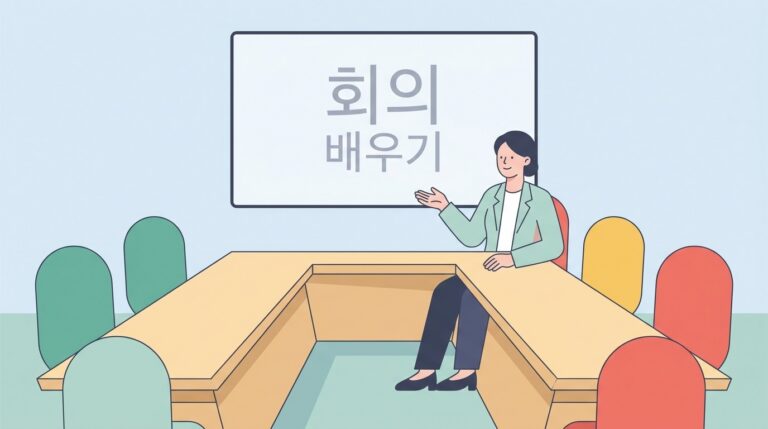
Picture this: You are sitting in an impeccably polished conference room on the 24th floor of a Gangnam high-rise. The tension is palpable. Senior executives in crisp charcoal suits are scrutinizing quarterly figures, and someone just dropped a blunt critique about market timing. A junior team member freezes; the room turns arctic. Then, a veteran senior director leans back, smiles wryly, and says with effortless poise: “제가 헛다리 짚는 데는 또 남다른 재능이 있어서, 기가 막히게 피해 갈 줄 알았더니 딱 걸렸네요.” (I have an extraordinary talent for barking up the wrong tree; I thought I’d miraculously dodged it this time, but I got caught red-handed.) In two seconds, chuckles ripple across the mahogany table. The suffocating tension evaporates, replaced by collaborative warmth.
Here lies the mastery of C2-level communication in South Korea. Crude sarcasm or mocking others (남을 깎아내리는 유머) instantly marks a speaker as insecure and unrefined. In contrast, purposeful, high-eq self-deprecating wit (자조적 해학) demonstrates unshakable self-assurance, profound cultural empathy, and conversational mastery. If you can playfully take ownership of a human flaw without groveling, you instantly captivate your Korean peers.
Phase 2: 핵심 표현 3선 심층 분석 (Top 3 Core Expressions)
1. 제가 헛다리 짚는 데는 도가 텄습니다 (Je-ga heotdari jimneun deneun doga teotsseumnida)
- Pronunciation: [Je-ga heot-da-ri jim-neun de-neun do-ga teot-seum-ni-da] (Think of heot-da-ri like a misstep on an uneven step, and doga teot-da sounding like achieving enlightenment in an art).
- Meaning: Literal: “I have reached the master’s level of the Dao in stepping on the wrong leg.” / Nuance: “I have a PhD in barking up the wrong tree / making the wrong guess, so don’t feel bad!”
- K-Culture Moment: Seen frequently in variety shows like You Quiz on the Block, where host Yoo Jae-suk diffuses an awkward prediction mistake by declaring himself the grandmaster of misreading situations.
- Editor’s Insight: This phrase uses the exalted Buddhist/Daoist idiom 도가 트다 (to attain spiritual mastery) ironically applied to a blundering action. It turns an intellectual error into an endearing rhetorical quirk.
- Situation Spectrum: Casual ✅ | Semi-formal ✅ | Formal ✅ (Used skillfully during high-level meetings to smooth over an inaccurate forecast).
- 🤔 Think About It: In your native tongue, does claiming expertise over your own mistakes read as weakness, or does it signal untouchable confidence?
2. 제가 또 은근히 손이 많이 가는 스타일이라서요 (Je-ga tto eungeunhi son-i mani ganeun seutail-iraseoyo)
- Pronunciation: [Je-ga tto eun-geun-hi son-i ma-ni ga-neun seu-ta-il-i-ra-seo-yo] (Son-i mani gada carries the rhythm of ‘hands constantly reaching out’).
- Meaning: Literal: “I’m subtly the type of person who requires a lot of hands.” / Nuance: “As you might have noticed, I’m secretly quite high-maintenance / prone to minor clumsy mishaps.”
- K-Culture Moment: Common in romantic K-Dramas where a high-powered CEO or lead character sheepishly drops their coffee sleeve or fumbles with chopsticks, laughing off their perfectionist facade.
- Editor’s Insight: 손이 가다 refers to something requiring frequent tending or care (like an intricate bonsai or a toddler). Using this on oneself signals disarming humility (허당미).
- Situation Spectrum: Casual ✅ | Semi-formal ✅ | Formal ⚠️ (Too intimate for a podium keynote, but golden for team dinners).
- 🤔 Think About It: Why does acknowledging your own need for occasional assistance foster collective camaraderie (정, Jeong) in Korean society?
3. 제가 눈치만 백단이고 실속은 영 허당입니다 (Je-ga nunchiman baekdan-igo silsog-eun yeong heodang-imnida)
- Pronunciation: [Je-ga nun-chi-man baek-dan-i-go sil-so-geun yeong heo-dang-im-ni-da] (Baek-dan evokes 100th-degree black belt; heodang lands with a soft, hollow thud).
- Meaning: Literal: “My Nunchi is 100th-dan black belt, but my practical substance is totally empty.” / Nuance: “I can read the atmosphere like a hawk, but don’t count on me to be flawless under pressure!”
- K-Culture Moment: A witty team leader caught making a calculation blunder in an office drama like Misaeng, using it to encourage subordinates to check their work freely.
- Editor’s Insight: It pairs hyper-competence (눈치 백단) with charming vulnerability (허당), signaling that you don’t take your sharp intuition too seriously.
- Situation Spectrum: Casual ✅ | Semi-formal ✅ | Formal ⚠️
- 🤔 Think About It: How does balancing praise of your perceptive skills with acknowledgment of human flaws break defensive barriers in a hierarchical workplace?
Phase 3: 교과서 한국어 vs 진짜 한국어 (Textbook vs. Real-World Korean)
Situation A: When you spill tea or fumble an iPad presentation during a client pitch
- 📖 교과서 한국어: 죄송합니다. 제가 실수를 저질렀습니다. 너그럽게 용서해 주십시오. (Joesonghamnida. Jega silsureul jeojilleotseumnida. Neogeureopge yongseohae jusipsio. – I apologize. I have committed an error. Please generously forgive me.)
- 🗣️ 진짜 한국어: 아휴, 제 최첨단 아날로그 손가락이 또 말썽을 부리네요. 너그럽게 넘어가 주시면 감사하겠습니다. (Ahyu, je choecheomdan anallogeu songaragi tto malsseong-eul burineyo. Neogeureopge neomeoga jusimyeon gamsahagesseumnida. – Ah, my state-of-the-art analog fingers are acting up again. I’d appreciate your kind indulgence as we proceed.)
- 💡 왜 다를까? Textbook Korean sounds like a formal court confession, making listeners deeply uncomfortable. The native real-world phrasing reframes the mistake with ironic wit (“high-tech analog fingers”), easing collective anxiety while maintaining decorum.
Situation B: When you get completely turned around navigating a trendy alleyway in Seongsu-dong
- 📖 교과서 한국어: 저는 길을 잃어버렸습니다. 저는 방향 감각이 없습니다. (Jeoneun gireul ireobeoryeotseumnida. Jeoneun banghyang gamgagi eopseumnida. – I have lost the way. I have no sense of direction.)
- 🗣️ 진짜 한국어: 제가 이 구역의 소문난 ‘인간 내비게이션’인데, 오늘은 인공위성이랑 통신이 잠깐 끊겼나 봅니다. (Jega i guyeogui somunnan ‘ingan naebigeisyeon’inde, oneureun ingong-wiseong-irang tongsini jamkkan kkeunkkyeonna bomnida. – I’m this district’s renowned ‘human navigation system’, but I suppose my satellite uplink just suffered an unexpected outage.)
- 💡 왜 다를까? Plain self-deprecation without wit can sound pitiful. Sarcastic self-aggrandizement (“human navigation”) followed by a playful breakdown turns a spatial error into shared laughter.
Phase 4: K-Culture 딥다이브 & 비언어적 매너 (Non-Verbal Nuance & Context)
4-1. 눈치(Nunchi) & 제스처 (The Micro-Manners of Self-Deprecation)
- The Self-Effacing Tilt: When dropping a self-deprecating line, never cross your arms or maintain an unblinking, deadpan glare. Tilt your head slightly (approximately 5-10 degrees), pair it with a fleeting, gentle smile, and slightly open your palms outward.
- Eye Contact Modulation: Drop your gaze toward your own hands or the table for a split second as you deliver the self-directed barb, then immediately re-engage your audience with warm, steady eye contact. This signals: “I am sharing a laugh at myself with you, not seeking pity.”
- The Subtle Hand Fan: Gently fluttering one hand toward your neck or cheek (손부채질) when confessing a silly blunder underlines modesty and softens potential embarrassment.
4-2. 문화 코드 분석: The Philosophy of ‘해학’ (Haehak)
In traditional Korean folk theater (Talchum) and modern Korean talk shows, humor has never centered on destructive mockery (비하). Instead, Korean cultural DNA cherishes 해학 (Haehak)—the compassionate, self-aware laughter born from acknowledging life’s imperfections. When Korean leaders or celebrities show 허당미 (Heodangmi)—the endearing clumsy gap in someone otherwise brilliant—the public falls in love. Perfection alienates; controlled imperfection builds emotional bonds.
Phase 5: 실전 롤플레이 시나리오 (High-Stakes Dinner Dialogue)
Setting: An upscale Hanok dining room in Samcheong-dong. You are wrapping up an important collaboration dinner with Director Park (박 이사), a seasoned executive known for his razor-sharp discernment, and your colleague Minji (민지).
- Turn 1 (Director Park): 🎭 Setting down his brass chopsticks, wiping his hands with a warm towel, and looking intently across the table. “오늘 브리핑은 흠잡을 데 없이 탄탄했습니다. 그런데 후반부 데이터 분석에서 예상보다 마진율을 너무 보수적으로 잡으신 건 아닙니까?” (Oneul beuriping-eun heumjabeul de eopsi tantanhaesseumnida. Geureonde hubanbu deiteo bunseogeseo yesangboda majinnyureul neomu bosujeogeuro jabeusin geon animnikka? – Today’s briefing was impeccably solid. However, in the latter data analysis, didn’t you estimate the profit margins a bit too conservatively?)
-
Turn 2 (You): 🎭 Smiling comfortably, offering a slight nod of acknowledgment without becoming defensive. “역시 이사님의 매서운 안목은 피해 갈 수가 없네요. 제가 돌다리도 백 번 두들겨 보고 결국 안 건너는 스타일이라 그렇습니다.” (Yeogsi isanimui maeseoun anmogeun pihae gal suga eomneyo. Jega doldarido baek beon dudeulgyeo bogo gyeolguk an geonneoneun seutail-ira geureoseumnida. – As expected, there is no dodging your sharp eye, Director. It’s because I’m the type who knocks on a stone bridge a hundred times and then decides not to cross anyway.)
-
Turn 3 (Director Park): 🎭 His stoic expression softens into an amused smirk. “하하! 돌다리를 두들기다 못해 부술 기세였단 뜻이군요? 그래도 리스크 관리는 확실하겠어요.” (Haha! Doldarireul dudeulgida mothae busul giseyeottan tteus-igunyo? Geuraedo riseukeu gwanrineun hwaksilhagesseoyo. – Haha! So you mean you were about to smash the stone bridge from over-knocking? Well, it certainly proves your risk management is watertight.)
-
Turn 4 (Minji): 🎭 Chiming in with a bright grin, pouring barley tea. “저희 팀장님이 워낙 신중하셔서, 가끔은 저희 팀원들이 뒤에서 슬쩍 등을 떠밀어야 전진합니다.” (Jeohui timjangnimi wonak sinjunghasyeoseo, gakkeumeun jeohui timwondeuri dwieseo seuljjeok deung-eul tteomireoya jeonjinhamnida. – Our team lead is so prudent that sometimes we team members have to give a gentle nudge from behind to make progress.)
-
Turn 5 (You): 🎭 Holding your cup with both hands, chuckling softly. “맞습니다. 제 유일한 단점이 바로 팀원들의 젊은 패기 없이는 한 걸음도 못 뗀다는 점이죠.” (Matseumnida. Je yuilhan danjeomi baro timwondeurui jeolmeun paegi eopsineun han georeumdo mot ttendaneun jeom-ijyo. – Exactly right. My single fatal flaw is that without our team members’ youthful bold spirit, I can hardly take a single step.)
-
Turn 6 (Director Park): 🎭 Nodding slowly with deep approval, tapping the table rhythmically. “겸손하면서도 팀원들을 챙기는 품격이 아주 인상적입니다. 그런 여유가 진짜 실력이지요.” (Gyeomsonhamyeonseodo timwondeureul chaenggineun pumgyeogi aju insangjeogimnida. Geureon yeoyuga jinjja sillyeog-ijiyo. – Displaying such dignity by staying humble while elevating your team is very impressive. That kind of composure is true competence.)
-
Turn 7 (You): 🎭 Bowing your head slightly in respect, maintaining a calm smile. “과찬이십니다. 이사님의 통찰력 덕분에 오늘 저녁 식사가 백 배는 더 유익해졌습니다.” (Gwachanisipnida. Isanimui tongchallyeok deokbune oneul jeonyeok sigsaga baek baeneun deo yu-ikhaejeotseumnida. – You flatter me generously. Thanks to your insights, Director, this dinner has become a hundred times more rewarding.)
-
Turn 8 (Director Park): 🎭 Raising his glass toward you. “자, 그럼 이 ‘돌다리’ 프로젝트, 기분 좋게 본격적으로 시작해 봅시다!” (Ja, geureom i ‘doldari’ peurojekteu, gibun jotge bongyeokjeogeuro sijakhae bopsida! – Right then, let’s kick off this ‘Stone Bridge’ project in high spirits!)
🔀 Interactive Choice Point
At Turn 2, how would you respond if Director Park questioned your conservative numbers?
* Option A: “제가 워낙 소심하고 능력이 부족해서 숫자를 낮게 잡았습니다. 죄송합니다.” (I am so timid and lacking in ability that I put low numbers. I’m sorry.)
* Feedback: [Bad] Over-apologizing and excessive self-deprecation without wit reads as unconfident incompetence at C2 level.
* Option B: “제가 돌다리도 백 번 두들겨 보고 결국 안 건너는 스타일이라 그렇습니다.” (I’m the type who taps a stone bridge 100 times and then doesn’t cross.)
* Feedback: [Best] Brilliantly turns a potential weakness into a testament to prudence and risk-management, disarming the critic with classic Korean proverbial wit.
* Option C: “이사님이 마진을 너무 공격적으로 보신 것 같은데요? 제 계산이 맞습니다.” (I think you’re viewing margins too aggressively, Director; my math is correct.)
* Feedback: [Risk] Overly confrontational. It risks publicly challenging a senior executive’s judgment in a hierarchical culture.
Phase 6: 10초 감정 섀도잉 드릴 (Emotional Shadowing Drill)
[😊 능청스럽고 여유 있게 / Playfully self-effacing and composed]
“제가 헛다리 짚는 데는 / 거의 인간 문화재 수준이라서요 / 너그럽게 봐주십시오.”
(Je-ga heotdari jimneun deneun / geoui ingan munhwajae sujun-iraseoyo / neogeureopge bwajusipsio.)-
[🤝 동료애를 담아 따뜻하게 / Warmly, elevating the team]
“제가 혼자 두면 / 은근히 손이 많이 가는 타입이라 / 우리 팀원들이 고생이 많습니다.”
(Je-ga honja dumyeon / eungeunhi son-i mani ganeun taip-ira / uri timwondeuri gosaeng-i manseumnida.) -
[🍷 세련된 모임에서 가볍게 긴장을 풀며 / Elegantly breaking the ice at a gathering]
“제 뛰어난 미모 때문에 / 제 지성이 가끔 가려지는데 / 오늘도 딱 그 짝이네요.”
(Je ttwieonan mimodaemune / je jiseong-i gakkeum garyeojineunde / oneuldo ttak geu jjag-ineyo.)
Phase 7: K-Culture 미니 사전 (Core Cultural Vocabulary)
- 너스레 (Neoseure) | Charming blather / disarming banter
- Meaning: The verbal art of rambling with good humor, playful exaggeration, or harmless feigned modesty to smooth over awkward moments.
- 허당 (Heodang) | Endearingly clumsy intellectual
- Meaning: A person who appears impeccably capable or formidable on the outside, yet demonstrates innocent, harmless clumsiness.
- 자조적 해학 (Jajojeok Haehak) | Refined self-deprecating wit
- Meaning: The philosophical ability to illuminate human fallibility through self-mockery without degrading personal dignity.
- 낮춤의 미학 (Natchum-ui Mihak) | The aesthetics of intentional self-lowering
- Meaning: A Confucian-rooted linguistic and social principle where proactively lowering oneself paradoxically elevates one’s status in the eyes of peers.
Phase 8: 여행자를 위한 생존 키트 (Sophisticated Navigator Survival Kit)
Survival Expressions TOP 3
- “제가 길치계의 전설이라 그런데, 여기가 맞나요?” (Je-ga gilchigye-ui jeonseor-ira geureonde, yeogiga mannayo?)
- Pro Tip: Use this with shop owners or transit staff. Calling yourself a “legendary directionally-challenged individual” (길치계의 전설) brings an instant, warm smile.
- “제가 한국어 욕심만 많아서 혀가 마음을 못 따라가네요!” (Je-ga hangugeo yoksimman manaseo hyeoga ma-eumeul mot ttaraganeyo!)
- Pro Tip: Deliver this when your tongue trips over an honorific ending. It honors the language while forgiving yourself.
- “주문이 좀 복잡하죠? 제가 워낙 까다로운 입맛을 타고나서 죄송합니다!” (Jumuni jom bokjaphajyo? Je-ga wonak kkadareoun immaseul tagonaseo joesonghamnida!)
- Pro Tip: Use at specialty cafes when ordering customized drinks to instantly disarm busy baristas.
Editor’s Travel Note
When wandering dynamic Seoul neighborhoods like Ikseon-dong or Euljiro, you will inevitably navigate maze-like alleyways. Ensure you complete the Naver Map app installation guide prior to arrival. When asking locals for directions, using self-deprecating wit (“제가 방향 감각이 제로라서요!”) turns a cold inquiry into a heartwarming cultural exchange.
Phase 9: “한 발 더 깊이” (Deep Sociocultural Reflection)
In hierarchical cultures, wit is often mistaken for a high-risk gamble. Yet in Korea, self-deprecating humor operates on a fascinating paradox of power dynamics. When someone of genuine competence willingly reveals a small, harmless flaw, it signals safety to those lower in rank and demonstrates emotional security to superiors. It is not an admission of defeat; it is the ultimate flex of conversational poise. By de-escalating interpersonal tension through playful self-awareness, you honor the collective harmony (화합, Hwahap) that Korean social architecture cherishes.
💬 Your Turn: In your home culture, is self-deprecating humor considered a sign of high confidence or self-doubt? Share your perspective in the comments below!
Phase 10: FAQ & Common Mistakes (FAQ Schema)
Q: 자조적 유머를 쓸 때 자칫 무능해 보이지 않을까요? (Does self-deprecating humor risk making me look incompetent?)
A: It depends entirely on what you target. Never joke about your fundamental core ethical duties, professional integrity, or essential technical competencies. Instead, poke fun at universal human quirks—like your directional confusion (길치), technological blunders, reliance on caffeine, or an overabundance of caution (돌다리도 두들겨 보는 성격).
Q: 비즈니스 공식 석상에서 유머를 먼저 던져도 예의에 어긋나지 않나요? (Is it rude to initiate humor in formal Korean business settings?)
A: If it is aggressive or sarcastic humor directed outwards, yes—it is catastrophic. However, a well-timed, self-effacing remark (너스레) that softens tense atmosphere is viewed by senior Korean executives as extraordinary emotional intelligence (노련함).
Q: 한국어 초급자도 이런 자조적 유머를 활용할 수 있나요? (Can beginners use this style of humor?)
A: Absolutely! Even simple lines like “제가 한국어는 1단인데, 밥 먹는 건 9단입니다!” (I am 1st-dan in Korean, but 9th-dan in eating rice!) break the ice seamlessly.
🚨 흔한 실수 (Common Mistakes) 경고판
- Mistake: Deprecating someone else to create humor (e.g., pointing out a colleague’s mispronunciation).
- Correct Action: Turn the focus onto your own listening comprehension or language journey.
- Mistake: Slumping into excessive, pitiful self-pity (e.g., “전 원래 바보입니다”).
- Correct Action: Keep it light, ironic, and stylized (e.g., “제가 헛다리 짚는 데는 도가 텄습니다”).
- Mistake: Forgetting the respectful honorific ending (존댓말) while attempting to be funny.
- Correct Action: Wit without honorifics sounds like arrogance. Always anchor your jokes in pristine -요 or -습니다 endings.
Phase 11: 액션 미션 & 참여 유도 (Action Missions)
- 🥉 Bronze Mission (Solo Practice): Stand before a mirror, practice the slight 5-degree head tilt, and deliver: “제가 또 은근히 손이 많이 가는 스타일이라서요!” three times with an effortless smile.
- 🥈 Silver Mission (Social Connect): Leave a comment on your favorite Korean creator’s YouTube channel or Instagram post using the phrase: “제가 눈치만 백단이고 실속은 영 허당입니다.”
- 🥇 Gold Mission (Real-World Application): During your next conversational exchange or business call in Korean, when an awkward pause occurs, use: “제가 헛다리 짚는 데는 도가 텄습니다” to bring a smile to your conversational partner.
- 🎮 K-Culture Mission: Watch an episode of a Korean talk show (You Quiz on the Block or Salon Drip) and count how many times the host diffuses guest anxiety by lowering themselves rather than poking fun at the guest.
Phase 12: 인터랙티브 퀴즈 챌린지 (Interactive Quiz)
Q1. [상황 판단] A senior manager remarks that your presentation was very meticulous, but perhaps slightly repetitive. Which response best demonstrates C2-level self-deprecating wit?
1. “원래 완벽주의자라 어쩔 수 없습니다.” (I’m originally a perfectionist, so it can’t be helped.)
2. “제가 돌다리도 부서질 때까지 두들기는 스타일이라 그렇습니다. 핵심만 추려 다시 정돈하겠습니다!”
3. “다음부터는 대충 하겠습니다. 죄송합니다.”
Q2. [빈칸 채우기] Fill in the cultural term:
“겉으로는 완벽하고 빈틈없어 보이지만, 알고 보면 귀여운 실수를 자주 저지르는 반전 매력을 일컬어 한국어로 (_____)미라고 부른다.”
Q3. [True / False] In Korean corporate communication, self-deprecating humor should ideally target your core competence and critical data reliability to show modesty.
👉 정답과 해설 보기 (Click to view answers and explanations)
- Q1 정답: 2번.
- 해설: 2번은 한국의 고유 속담인 ‘돌다리도 두들겨 보고 건넌다’를 재치 있게 과장하여 자신의 지나친 신중함을 유쾌하게 인정하면서도 개선 의지를 보여주는 최고의 품격 있는 답변입니다. 1번은 오만하게 들리고, 3번은 극단적 수동공격성을 띱니다.
- Q2 정답: 허당 (Heodang)
- 해설: ‘허당’ 또는 ‘허당미’는 지적인 카리스마 뒤에 숨은 사랑스러운 인간미와 허점을 뜻합니다.
- Q3 정답: False.
- 해설: 직무의 핵심 역량이나 윤리적 책임에 대해 자조적 유머를 쓰면 무능하거나 무책임해 보입니다. 사소한 습관, 성격적 신중함, 가벼운 신체적 서투름 등에 국한하여 구사해야 품격을 유지할 수 있습니다.
- 해설: 직무의 핵심 역량이나 윤리적 책임에 대해 자조적 유머를 쓰면 무능하거나 무책임해 보입니다. 사소한 습관, 성격적 신중함, 가벼운 신체적 서투름 등에 국한하여 구사해야 품격을 유지할 수 있습니다.






