

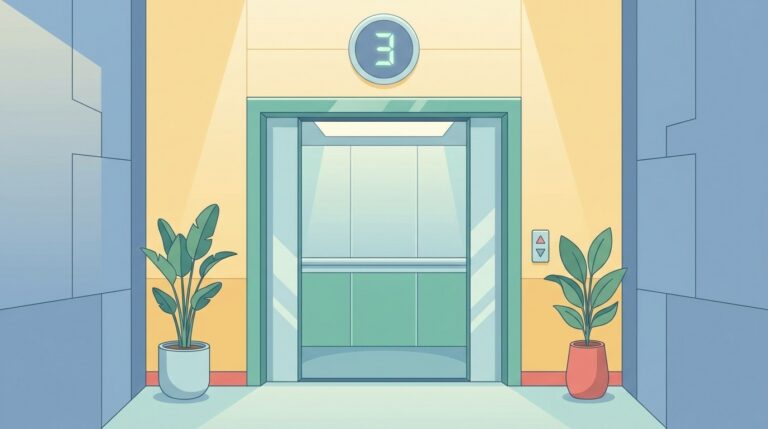
Master Korean Numbers: 3층으로 가세요 (Go to the 3rd Floor)
Phase 1: Empathy (Story Immersion Opening)
안녕하세요! 매일한글 에디터입니다. Picture this: you step into a sleek building in Seongsu-dong to visit a buzzing K-pop pop-up store. You rush into a crowded elevator, and someone politely asks: “몇 층 가세요?” (Myeot cheung gaseyo? / Which floor are you going to?). Another friendly person points up and advises: “3층으로 가세요” (Sam-cheung-euro gaseyo / Go to the 3rd floor). Suddenly, your mind freezes. Is three hana, dul, set or il, i, sam?
Over the past ten years of coaching learners in Seoul, elevator panic is undeniably where beginners freeze the most. Korea uses two distinct number systems, and using the wrong one can leave you feeling lost between floors. This guide is built directly from real learner struggles to ensure you never hesitate in front of a Korean elevator panel again. By mastering Sino-Korean numbers from 1 to 100, you will glide through department stores, subway exits, and café towers like a seasoned Seoulite!
Phase 2: Deep Dive into 3 Key Expressions
1. 3층으로 가세요 (Sam-cheung-euro gaseyo)
- Pronunciation: Sam-cheung-eu-ro ga-se-yo (Think of “Sam” like Uncle Sam, “cheung” rhyming with young, “euro” like the currency euro, and “gaseyo” as gah-say-yo).
- Meaning: Literal: “Go toward the 3rd floor.” | Real Nuance: “Please head up to the 3rd floor” (a polite, helpful direction).
- K-Culture Moment: In workplace K-dramas like King the Land, whenever an intern asks the concierge where the executive lounge or meeting room is, you will hear a polite “OO층으로 가세요.”
- Editor’s Insight: The particle -(으)로 denotes direction (“toward”). Since 층 (cheung) ends in a consonant (ㅇ), we attach 으로 (euro). For numbers ending without a batchim when attached to vowel-ending counters, you’d use 로 (ro).
- Situation Spectrum:
- Casual (반말): 3층으로 가 (3-cheung-euro ga) 🚫 (Too blunt for strangers)
- Semi-formal (존댓말): 3층으로 가세요 (3-cheung-euro gaseyo) ✅ (Standard polite)
- Formal (격식체): 3층으로 가십시오 (3-cheung-euro gasipsio) ✅ (Official service staff tone)
- 🤔 Think About It: In English, we use ordinal numbers (“third floor”), but Korean uses cardinal Sino-Korean numbers directly attached to “floor” (3 + 층 = 3층). How does this streamline navigation in fast-moving urban spaces?
2. 몇 층이에요? (Myeot cheung-ieyo?)
- Pronunciation: Myeot cheung-i-e-yo (Sounds like “Myut-chung-ee-eh-yo”).
- Meaning: Literal: “How many floors is it?” | Real Nuance: “Which floor is it on?” or “What floor are we on?”
- K-Culture Moment: When meeting friends at a multi-level café in Hongdae, you call them as soon as you step inside and ask this exact phrase.
- Editor’s Insight: 몇 (myeot) is the magical question word used with counting units. When paired with 층, the hidden ‘t’ sound links naturally into ‘ch’, sounding crisp.
- Situation Spectrum:
- Casual: 몇 층이야? (Myeot cheung-iya?) ⚠️ (Close friends only)
- Semi-formal: 몇 층이에요? (Myeot cheung-ieyo?) ✅ (Safe everywhere)
- Formal: 몇 층입니까? (Myeot cheung-imnikka?) ✅ (Front desk inquiry)
- 🤔 Think About It: Korean attaches question words directly to units (몇 층, 몇 번, 몇 시). Notice how Korean prioritizes the specific measurement category right up front!
3. 1층에서 만나요 (Il-cheung-eseo mannayo)
- Pronunciation: Il-cheung-e-seo man-na-yo (Pronounce “Il” like eel, and “eseo” like eh-suh).
- Meaning: Literal: “Meet at 1st floor.” | Real Nuance: “Let’s meet on the ground / first floor.”
- K-Culture Moment: The classic K-romance trope where the leads agree on a lobby meetup spot before heading out on their first date.
- Editor’s Insight: Remember that in Korea, the ground floor is almost always called 1층 (il-cheung), not the “ground floor” as in the UK or parts of Europe.
- Situation Spectrum:
- Casual: 1층에서 만나 (1-cheung-eseo manna) ⚠️ (Peer-to-peer)
- Semi-formal: 1층에서 만나요 (1-cheung-eseo mannayo) ✅ (Friendly & polite)
- Formal: 1층에서 뵙겠습니다 (1-cheung-eseo boepgetseumnida) ✅ (Business formal)
- 🤔 Think About It: How does setting a precise floor number reflect Korea’s high-density vertical city architecture compared to your hometown?
Phase 3: Textbook Korean vs Real Korean
Situation 1: Asking where a store is inside a mall
- 📖 Textbook Korean: 이 매장은 몇 층에 위치하고 있습니까? (I maejang-eun myeot cheung-e wichi-hago itseumnikka? / On which floor is this shop situated?)
- 🗣️ Real Korean: 여기 몇 층이에요? (Yeogi myeot cheung-ieyo? / Which floor is this?) or 저기… OO 매장 몇 층이에요? (Jeogi… OO maejang myeot cheung-ieyo? / Excuse me, what floor is [Brand]?)
- 💡 Why it’s different: Spoken Korean drops heavy Sino-verbs like “위치하다” (to be situated) during everyday inquiries. A simple “몇 층이에요?” gets you an answer ten times faster.
Situation 2: Asking someone in the elevator to press your floor
- 📖 Textbook Korean: 저를 위해 4층 버튼을 눌러 주시겠습니까? (Jeoreul wihae sa-cheung beoteun-eul nulleo jusigetseumnikka? / Would you please press the 4th floor button for me?)
- 🗣️ Real Korean: 4층 눌러 주세요! (Sa-cheung nulleo juseyo! / 4th floor, please!)
- 💡 Why it’s different: Korean elevator culture moves at lightning speed (ppalli-ppalli). Polite brevity with “~해 주세요” is respected far more than long, winding requests.
Phase 4: K-Culture Deep Dive & Non-Verbal Manners
4-1. Nunchi (눈치) & Elevator Etiquette
In Korea, whoever stands closest to the elevator buttons automatically becomes the “Captain.” If you end up near the control panel, keep your finger hovering near the 열림 (Open) button so the doors don’t close on people entering. If someone asks you to press a floor, press it promptly and give a brief 15-degree nod. If someone presses a button for you, say “감사합니다 (Gamsahamnida)” with a slight nod. Avoid loud phone calls inside elevators; keeping quiet is considered essential nunchi.
4-2. Culture Code: The “F” Floor and Mega Towers
Have you ever stepped into a Korean elevator and noticed that the button between 3 and 5 is marked F instead of 4? This is due to tetraphobia. In the Sino-Korean number system, 4 is 사 (sa), which sounds identical to the Hanja character for death (死 – sa). While modern skyscrapers now use ‘4’, many residential apartments and hospitals still use ‘F’ (Fourth). Furthermore, in spots like COEX or Seongsu, entire retail universes exist underground—marked as B1 (지하 1층 – Jiha il-cheung) or B2 (지하 2층 – Jiha i-cheung)!
Phase 5: Real-Life Roleplay Scenario
Setting: A trendy 5-story cosmetic pop-up store in Seongsu. Staff member Min-ji is standing beside the directory board.
- Min-ji: 안녕하세요! 무엇을 찾으세요? (Annyeonghaseyo! Mueos-eul chaj-euseyo?)
🎭 [Warmly bowing with hands folded in front]
“Hello! What are you looking for?” - Learner: 저기… 립스틱 보고 싶어요. (Jeogi… ripseutik bogo sipeoyo.)
🎭 [Pointing gently toward the display]
“Excuse me… I’d like to see lipsticks.” - Min-ji: 아, 색조 화장품은 위층에 있어요! (A, saekjo hwajangpum-eun wicheung-e isseoyo!)
🎭 [Gesturing toward the glass elevator]
“Ah, color cosmetics are on the upper floors!” - Learner: 몇 층이에요? (Myeot cheung-ieyo?)
🎭 [Tilted head, curious expression]
“Which floor is it?” - Min-ji: 3층으로 가세요. 엘리베이터 타시면 돼요. (Sam-cheung-euro gaseyo. Ellibe-iteo tasimyeon dwaeyo.)
🎭 [Smiling and showing three fingers briefly]
“Please go to the 3rd floor. You can take the elevator.” - Learner: 감사합니다! 3층이요. (Gamsahamnida! Sam-cheung-iyo.)
🎭 [Nodding gratefully]
“Thank you! 3rd floor, got it.” - Min-ji: 네, 3층에서 테스트해 보세요! (Ne, sam-cheung-eseo teseuteuhae boseyo!)
🎭 [Cheerfully pointing to the lift doors opening]
“Yes, feel free to test them on the 3rd floor!” - Learner: 네, 올라갈게요! (Ne, ollagalgeyo!)
🎭 [Stepping into the elevator with a smile]
“Okay, I’ll head up!”
🔀 Interactive Decision Point
You step into the elevator. A passenger standing near the buttons asks you: “몇 층 가세요?” (Which floor are you going to?)
- Choice A: “셋층이요!” (Set-cheung-iyo!)
- Choice B: “3층 눌러 주세요.” (Sam-cheung nulleo juseyo.)
- Choice C: “3층으로 가세요.” (Sam-cheung-euro gaseyo.)
Feedback:
* Choice A (Risk): “셋” (Set) is a Native Korean number! Korean floors exclusively take Sino-Korean numbers. The passenger might hesitate before figuring out you mean 3.
* Choice B (BEST!): Polite, natural, and crystal-clear. You correctly used the Sino-Korean number 삼 (sam) and politely asked them to press the button.
* Choice C (Bad): This means “You go to the 3rd floor!” You’d be giving instructions to the passenger instead of stating your own destination.
Phase 6: 10-Second Emotion Shadowing Drill
Practice speaking with real emotional pauses (/)!
[👀 Inquiring & Polite]
저기요, / 실례지만 / 몇 층이에요?
(Jeogiyo, / sillyejiman / myeot cheung-ieyo?)-
[😊 Bright & Confident]
3층으로 / 가세요! / 엘리베이터 있어요.
(Sam-cheung-euro / gaseyo! / ellibe-iteo isseoyo.) -
[🏃 Quick & Courteous]
감사합니다, / 7층 / 눌러 주세요!
(Gamsahamnida, / chil-cheung / nulleo juseyo!)
Phase 7: K-Culture Mini Dictionary
- 층 (cheung) | Noun | Floor / Story. Attached directly to Sino-Korean numbers (e.g., 1층 [il-cheung], 2층 [i-cheung], 10층 [sip-cheung]).
- 엘리베이터 (ellibe-iteo) | Noun | Elevator. Used daily; occasionally abbreviated to “엘베” (el-be) in casual text chats with Korean friends.
- 지하 (jiha) | Noun | Basement / Underground. Combined with numbers for underground floors: B1 is 지하 1층 (jiha il-cheung).
- 계단 (gyedan) | Noun | Stairs. When elevators are crowded, signs will prompt: “계단을 이용해 주세요” (Please use the stairs).
Phase 8: Traveler’s Survival Kit
Top 3 Survival Phrases
- 화장실 몇 층이에요? (Hwajangsil myeot cheung-ieyo?)
Pro Tip: In Korean cafes, restrooms are often on different floors with passcode locks printed at the bottom of your receipt! - 엘리베이터 어디 있어요? (Ellibe-iteo eodi isseoyo?)
Pro Tip: Essential when exploring expansive subway stations with heavy luggage. - 올라가요? (Ollagayo?)
Pro Tip: Ask this before stepping into a crowded elevator to confirm if it is going up.
Editor’s Travel Note
When navigating modern Korean shopping complexes like The Hyundai Seoul or Starfield Suwon, Google Maps often struggles with indoor elevation. Instead, download the Naver Map app navigation guide or use KakaoMap to look up detailed floor-by-floor directories (층별 안내). Keep in mind that elevator doors close remarkably fast in Korea; never try to block closing doors with your foot or arm—always tap the 열림 button instead!
Phase 9: “One Step Deeper” (Reflective Essay)
Language is never just vocabulary; it reflects how a society organizes reality. Korean utilizes Sino-Korean numbers for floors, money, and minutes because these roots originated from Chinese administrative records, bringing standardized architectural precision. In contrast, Native Korean numbers are grounded in human scale, historically used for counting people, objects, and hours of the day. When you say 3층 (sam-cheung), you are participating in centuries of structured spatial design.
💬 Your Turn: Does your native language distinguish between counting tangible items and naming structural levels? Drop your language and thoughts in the comments below!
Phase 10: FAQ & Common Mistakes
Q: Why do we use Sino-Korean numbers for floors instead of Native Korean?
A: Floors are viewed as institutional measurements rather than informal physical objects. Sino-Korean numbers (일, 이, 삼, 사…) are systematically used for dates, currency, minutes, and building levels.
Q: How do I say high floors like 14th floor or 23rd floor?
A: Simply combine the numbers! 14 is 10 (십) + 4 (사) = 14층 (sip-sa-cheung). 23 is 2 (이) x 10 (십) + 3 (삼) = 23층 (i-sip-sam-cheung).
Q: Is ground floor 0층 in Korea?
A: No. Korea follows the East Asian/American convention where street level is 1층 (il-cheung). The first underground level is 지하 1층 (B1).
🚨 Common Mistakes Warning Board
- Mistake: Saying “세 층” (se cheung) or “셋층” (set cheung) when meaning 3rd floor.
Correct Action: Always use Sino-Korean! Say 3층 (sam-cheung). - Mistake: Pronouncing 1층 as one-cheung.
Correct Action: Replace English completely with 일층 (il-cheung). - Mistake: Confusing 1 (일 – il) and 2 (이 – i) on noisy speakerphones.
Correct Action: Emphasize the final “L” sound in 일 (il), or hold up fingers if asking someone face-to-face.
Phase 11: Action Mission & Engagement
- 🥉 Bronze Mission: Count from 1st floor to 10th floor out loud right now using Sino-Korean: 일층, 이층, 삼층, 사층, 오층, 육층, 칠층, 팔층, 구층, 십층!
- 🥈 Silver Mission: Leave a comment below telling us what floor your bedroom or office is on in Korean (e.g., “저는 5층에 살아요!”).
- 🥇 Gold Mission: Next time you take an elevator, silently announce the floor number in Korean before the chime rings!
🎮 K-Culture Mission: Watch an episode of your favorite office K-drama (like Business Proposal or Misaeng). Listen carefully during hallway or elevator scenes and spot whenever a character says “OO층”!
Phase 12: Interactive Quiz Challenge
Test what you’ve learned before you step into your next Seoul skyscraper!
- Situation Judgment: You are meeting a friend at a rooftop café on the 8th floor. How do you tell them to go there?
- (A) 8층으로 가세요 (Pal-cheung-euro gaseyo)
- (B) 여덟 층으로 가세요 (Yeodeol-cheung-euro gaseyo)
- (C) 8층에 오세요 (Pal-cheung-e oseyo)
- Fill in the Blank: “실례지만, 화장실이 _____ 층이에요?” (Excuse me, which floor is the restroom on?)
-
True / False Culture Check: In Korean elevators, the letter ‘F’ stands for ‘Front Desk’. (True / False)
👉 Click here to reveal answers and explanations!
-
Answer: (A) 8층으로 가세요
Explanation: Sino-Korean 8 is 팔 (pal), and combining it with 층 and direction particle 으로 creates “팔층으로 가세요”. Option B incorrectly uses native Korean numbers. -
Answer: 몇 (myeot)
Explanation: “몇 층이에요?” is the set phrase for asking “which floor?” -
Answer: False
Explanation: ‘F’ stands for ‘Four’ (4th floor), used to avoid the number 4 (사), which is phonetically linked to the word for death (死).







