

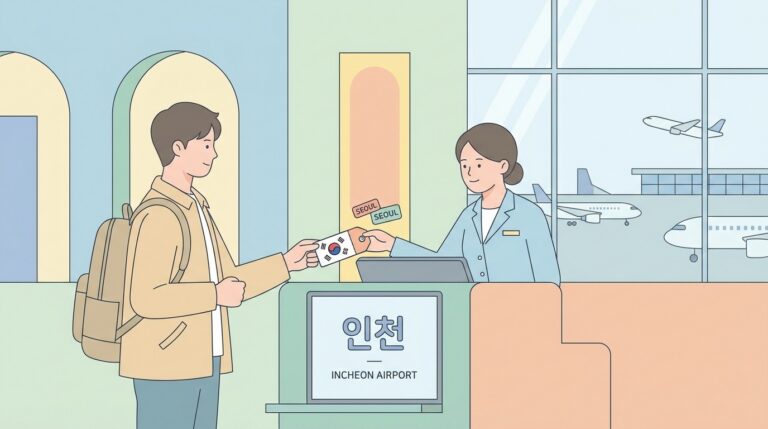
How to Handle Missing Transfer Baggage at Incheon Airport: A B1 Friendly Guide
Phase 1: Empathy & Storytelling Opening
안녕하세요! 매일한글 에디터입니다. (Hello! This is your Daily Hangul editor.)
Picture this: You just touched down at Incheon International Airport after a grueling 15-hour journey connecting through a bustling hub like Tokyo or Hong Kong. Your playlist is blasting NewJeans, your phone is locked and loaded with a downloaded Seoul subway map, and you can practically smell sizzling Korean BBQ waiting for you in Hongdae. You stand near Baggage Carousel 12, watching bags drop one by one. The carousel hums… then screeches to a dead halt. The crowd disperses. Your suitcase—the one containing your favorite skincare, your trendy outfits, and that cozy travel hoodie—is nowhere to be found.
A wave of cold sweat hits your neck. You walk up to the airline baggage counter with shaky hands. How do you explain in Korean that your luggage probably didn’t make the tight transfer window without sounding rude or panicky?
Take a deep breath! You are not alone. In our Daily Hangul student surveys, airport hiccups rank as the #1 moment where travelers freeze up. But here is the secret: In Korea’s hyper-efficient system, showing the tiny claim tag sticker behind your boarding pass instantly turns confusion into a systematic search. Today, we will master the exact intermediate (B1) Korean expressions you need to turn this travel nightmare into a smooth, stress-free resolution.
Phase 2: 3 Key Expressions Deep Dive
1. 수하물 태그 여기 있어요. 확인해 주시겠어요? (Suhamul taegeu yeogi isseoyo. Hwaginhae jusigesseoyo?)
- Pronunciation: [Su-ha-mul tae-geu yeo-gi i-sseo-yo. Hwa-gin-hae ju-si-ge-sseo-yo?] (Think: ‘Sue-ha-mool’ + tag + ‘yuh-gi’ + ‘hwa-geen-hae jew-she-get-so-yo’)
- Meaning: Literal: “Baggage tag is here. Could you check it?” / Real Nuance: “Here is my baggage claim sticker; could you please track it in your system?”
- K-Culture Moment: You will see characters in Korean travel vlogs or dramas hand over their boarding pass with both hands while using this courteous
-아/어 주시겠어요?(would you please) form. - Editor’s Insight: Saying just “이거 보세요” (Look at this) sounds blunt and demanding. Adding
확인해 주시겠어요?shows respect and invites helpfulness from the ground crew. - Situation Spectrum: Casual 🚫 | Semi-formal ⚠️ | Formal ✅
- 🤔 Think About It: In English, we often say “Can you find my bag?” Why does Korean prefer “Could you check?” (확인)? Notice how asking for verification rather than demanding immediate results keeps the interaction collaborative.
2. 환승 공항에서 짐이 누락된 것 같아요. (Hwanseung gonghang-eseo jimi nurakdoen geot gat-ayo.)
- Pronunciation: [Hwan-seung gong-hang-e-seo ji-mi nu-rak-doen geot ga-ta-yo] (Think: ‘Hwan-seung’ sounds like ‘swan’ with an ‘h’, ‘nurak’ rhymes with ‘two rock’)
- Meaning: Literal: “It seems the luggage was omitted/missed at the transfer airport.” / Real Nuance: “I suspect my bag didn’t make the transfer flight.”
- K-Culture Moment: The verb
누락되다(to be missed/left out) is commonly heard in Korean corporate and service settings when an item or record slips through the cracks. - Editor’s Insight: Instead of accusing the airline with “You lost my bag!” (짐을 잃어버렸어요), using the passive expression
누락된 것 같아요softens the statement while sounding remarkably mature and fluent. - Situation Spectrum: Casual 🚫 | Semi-formal ✅ | Formal ✅
- 🤔 Think About It: Why does Korean culture lean heavily on tentative phrasing like
~것 같아요(it seems like) when stating a problem?
3. 짐을 찾으면 호텔로 배송받을 수 있나요? (Jimeul chajeumyeon hotello baesongbadeul su innayo?)
- Pronunciation: [Ji-meul cha-jeu-myeon ho-tel-lo bae-song-ba-deul su in-na-yo?] (Rhyme ‘bae-song’ with English ‘bay song’)
- Meaning: Literal: “If you find the bag, can I receive delivery to the hotel?” / Real Nuance: “Once located, can you courier it directly to my accommodation?”
- K-Culture Moment: South Korea is world-renowned for its lightning-fast
택배(taekbae – courier) logistics. Airlines routinely deliver delayed baggage directly to your hotel front desk. - Editor’s Insight: Notice the combination of
배송(delivery) +받다(to receive). Using배송받다clarifies that you expect door-to-door delivery rather than coming back to the airport. - Situation Spectrum: Casual 🚫 | Semi-formal ✅ | Formal ✅
- 🤔 Think About It: How does your home country handle delayed luggage delivery compared to Korea’s ultra-reliable hotel delivery system?
Phase 3: 교과서 한국어 vs 진짜 한국어
Situation 1: Presenting your baggage tag
- 📖 교과서 한국어 (Textbook Korean): 제 수하물 표를 확인하십시오. (Je suhamul pyoreul hwaginhashipsio. – Please inspect my luggage ticket.)
- 🗣️ 진짜 한국어 (Real Korean): 체크인할 때 받은 스티커인데, 조회 좀 부탁드려요. (Chekeu-inhal ttae badeun seutikeo-inde, johwoe jom butakdeuryeoyo. – This is the sticker from check-in; could you please search it up for me?)
- 💡 왜 다를까? (Why is it different?): Native speakers use loanwords like
스티커(sticker) and conversational request phrases like조회 좀 부탁드려요instead of stiff imperative endings like-십시오.
Situation 2: Asking when the luggage will arrive
- 📖 교과서 한국어 (Textbook Korean): 제 가방은 몇 시에 도착합니까? (Je gabangeun myeot sie dochakhamnikka? – At what hour will my bag arrive?)
- 🗣️ 진짜 한국어 (Real Korean): 혹시 오늘 안으로 받아볼 수 있을까요? (Hoksi oneul aneuro badabol su isseulkkayo? – Might it be possible to receive it sometime today?)
- 💡 왜 다를까? (Why is it different?): Starting with
혹시(by any chance) and asking for a realistic window (오늘 안으로) sounds far more natural than demanding an exact hour.
Phase 4: K-Culture 딥다이브 & 비언어적 매너
4-1. 눈치 (Nunchi) & Gestures
- The Two-Handed Tag Handover (두 손 건네기): When presenting your passport and baggage claim sticker, always hold the item with both hands or support your right elbow with your left hand. This subtle gesture signals respect and instantly sets a cooperative tone.
- The Empathetic Nod: When the agent types furiously on their keyboard, maintain calm eye contact and give slight nods. In Korea, ground staff take missing bags very seriously; aggressive huffing or finger-pointing triggers defensiveness rather than speed.
4-2. Cultural Code: The ‘Ppalli-Ppalli’ (빨리빨리) vs. Baggage Tracing
Korea is synonymous with speed, but international baggage tracking relies on worldwide airport networks (WorldTracer). While the ground agent cannot make the previous airport move faster, they will leverage Korea’s incredible internal logistics once the bag arrives. Most delayed bags landing on the next flight are dispatched via express courier straight to your hotel reception before midnight. Trust the process, fill out the form accurately, and let Korea’s delivery miracle do the heavy lifting!
Phase 5: 실전 롤플레이 시나리오
- Setting: Incheon International Airport Terminal 2, Baggage Service Counter (수하물 분실 서비스 카운터).
- Characters:
- You (민우 / Min-woo): An anxious traveler whose bag stayed behind in Frankfurt.
- Agent Park (박 지은 / Park Ji-eun): A calm, efficient ground services specialist.
Turn 1
* 민우: 저기요, 수하물이 다 나왔는데 제 짐이 안 보여서요.
(Jeogiyo, suhamuri da nawanneunde je jimi an boyeoseoyo.)
“Excuse me, all the luggage seems to be out, but I cannot spot mine.”
🎭 [안절부절못하며 카운터로 다가간다 - Approaching the counter with an anxious expression]
Turn 2
* 박 지은: 고객님, 많이 당황하셨죠? 탑승권 뒤에 부착된 수하물 태그 보여주시겠어요?
(Gogaengnim, mani danghwanghasyeotjyo? Tapseunggwon dwie buchakdoen suhamul taegeu boyeojusigesseoyo?)
“You must be startled, customer! Could you show me the baggage tag attached to the back of your boarding pass?”
🎭 [미소를 띠며 손을 내민다 - Offering a reassuring smile and extending a hand]
Turn 3
* 민우: 네, 체크인할 때 받은 태그 스티커 여기 있어요.
(Ne, chekeu-inhal ttae badeun taegeu seutikeo yeogi isseoyo.)
“Yes, here is the tag sticker I received during check-in.”
🎭 [두 손으로 조심스럽게 건넨다 - Handing it over carefully with both hands]
Turn 4
* 박 지은: 네, 잠시만요… 아, 고객님. 환승 공항에서 짐 연결이 누락된 것으로 확인됩니다.
(Ne, jamsimanyo… Ah, gogaengnim. Hwanseung gonghang-eseo jim yeongyeori nurakdoen geoseuro hwagindoemnida.)
“Yes, just a moment… Ah, I see. It is confirmed that your bag transfer was missed at the transit airport.”
🎭 [화면을 진지하게 응시하며 타이핑한다 - Gazing seriously at the monitor while typing]
Turn 5
* 민우: 아… 환승 시간이 촉박하긴 했어요. 그럼 제 짐은 언제 오나요?
(Ah… hwanseung sigani chokbakhagin haesseoyo. Geureom je jimeun eonje onayo?)
“Ah… the layover was indeed very tight. Then around when will my luggage arrive?”
🎭 [한숨을 살짝 내쉬며 묻는다 - Letting out a soft sigh and asking]
Turn 6
* 박 지은: 다음 항공편으로 오고 있어서 오늘 저녁 8시에 인천에 도착합니다.
(Daeum hanggongpyeoneuro ogo isseoseo oneul jeonyeok yeodeolsie Incheone dochakhamnida.)
“It is scheduled on the next flight, so it will land in Incheon at 8 PM tonight.”
🎭 [메모지에 도착 시간을 적어주며 - Jotting down the arrival time on a notepad]
Turn 7
* 민우: 다행이네요! 짐이 도착하면 숙소로 바로 배송받을 수 있을까요?
(Dahaeng-ineyoyo! Jimi dochakhamyeon sukso-ro baro baesongbadeul su isseulkkayo?)
“What a relief! Once it arrives, could it be couriered directly to my hotel?”
🎭 [가슴을 쓸어내리며 안도한다 - Brushing chest in relief]
Turn 8
* 박 지은: 물론입니다. 여기 분실 신고서에 한국 내 체류지 주소와 연락처를 적어주세요.
(Mollonimnida. Yeogi bunsil singgoseoe hanguk nae cheryuji jusowa yeollakcheoreul jeogeojuseyo.)
“Certainly. Please write your Korean accommodation address and contact number on this report form.”
🎭 [펜과 양식을 정중히 건넨다 - Politely offering a pen and official claim document]
🔀 인터랙티브 분기점 (What would you say next?)
Now, Agent Park hands you the Property Irregularity Report form. What is your best response?
- Option A: “지금 당장 제 가방 찾아오세요! 화가 나네요!” (Find my bag right this second! I am furious!)
- Option B: “호텔 주소를 한글로 적어야 하나요, 아니면 영어로 적어도 되나요?” (Should I write the hotel address in Hangul, or is English okay?)
- Option C: “필요 없어요. 제가 내일 아침에 다시 공항 와서 찾아갈게요.” (No need. I will just come back to the airport tomorrow morning to pick it up myself.)
Feedback:
* Choice A (Bad): Ground staff at Incheon have no direct physical control over an aircraft still mid-air from Europe or America. Being combative creates unnecessary tension without speeding up the plane.
* Choice B (Best ✅): Proactive and practical! Delivery couriers in Korea operate faster with Korean addresses, but English is accepted for international tourists. Asking this ensures your bag isn’t misrouted.
* Choice C (Risk): Commuting between central Seoul and Incheon Airport takes 1 to 1.5 hours each way and costs extra money. Letting the airline courier it for free is 100% standard and safe.
Phase 6: 10초 감정 섀도잉 드릴
Read these aloud, pausing at the / marks to master the rhythm!
[🥺 당황스럽지만 정중하게 - Flustered yet courteous]
수하물 태그 스티커를 / 보여드릴 테니, / 확인 한 번 / 부탁드립니다.
(Suhamul taegeu seutikeoreul / boyeodeuril teni, / hwagin han beon / butakdeurimnida.)-
[🙏 간절하고 또박또박하게 - Earnest and clear]
환승 공항에서 / 짐이 안 실린 것 같은데, / 조회 가능할까요?
(Hwanseung gonghang-eseo / jimi an sillin geot gateunde, / johwoe ganeunghalkkayo?) -
[😊 안도하며 감사하게 - Relieved and grateful]
호텔 프런트에 / 맡겨주시면 / 정말 감사하겠습니다.
(Hotel peuronteue / matgyeojusimyeon / jeongmal gamsahagessumnida.)
Phase 7: K-Culture 미니 사전
- 수하물 태그 (Suhamul taegeu) | Baggage Claim Tag
The barcode sticker stuck to your boarding pass stub. Without this, tracking a misplaced bag takes twice as long. - 환승 공항 (Hwanseung gonghang) | Transfer / Transit Airport
The intermediate hub where you switched planes. Most missing luggage cases occur here during tight layovers under 60 minutes. - 누락되다 (Nurakdoeda) | To be omitted / left behind
A formal, professional verb used when baggage or data records fail to load into the intended manifest. - 배송 주소 (Baesong juso) | Delivery Address
Your hotel, guesthouse, or Airbnb address in Korea where the courier will deliver your recovered suitcase.
Phase 8: 여행자를 위한 생존 키트
서바이벌 표현 TOP 3
- 짐 분실 신고서 작성하고 싶어요. (Jim bunsil singgoseo jakseonghago sipeoyo.)
Pronunciation: [Jim bun-sil sin-go-seo jak-seong-ha-go si-peo-yo.]
Pro Tip: Use this when approaching the general information desk to be directed to the correct airline agent. - 지연 보상 키트나 지원금이 있나요? (Jiyeon bosang kiteuna jiwongeumi innayo?)
Pronunciation: [Ji-yeon bo-sang ki-teu-na ji-won-geu-mi in-na-yo?]
Pro Tip: Many major airlines provide emergency overnight amenities (t-shirt, toothbrush) or emergency stipends. - 짐이 도착하면 문자로 연락 주실 수 있나요? (Jimi dochakhamyeon munjaro yeollak jusil su innayo?)
Pronunciation: [Ji-mi do-chak-ha-myeon mun-ja-ro yeol-lak ju-sil su in-na-yo?]
Pro Tip: If you bought a local Korean SIM or eSIM with incoming SMS capability, request a text notification.
Editor’s Travel Note
- Check your destination address on your phone before queueing. You can download the [Naver Map app for route and address checks] to display the exact Korean road-name address (
도로명 주소) directly to the airport desk clerk. - Keep your passport, hotel reservation sheet, and any expensive electronics/prescriptions in your carry-on backpack so a delayed suitcase never ruins your first evening in Korea.
Phase 9: “한 발 더 깊이” (Reflective Humanities Essay)
In Western languages, we often frame lost luggage actively: “The airline lost my suitcase!” But in Korean culture, notice how natural it feels to employ passive and collective phrasing: 짐이 누락되었어요 (The luggage became omitted) or 연결이 안 되었어요 (The connection wasn’t made). Rather than pointing an aggressive finger at the individual sitting behind the desk, Korean linguistic nuance separates the unfortunate mishap from the human being trying to help you. By phrasing your concern constructively, you tap into Korea’s deep sense of Jeong (정) and mutual respect—turning a bureaucratic worker into a dedicated ally determined to reunite you with your possessions.
💬 Your Turn: Have you ever experienced lost luggage during an international transit? How would you react in Korean? Share your story in the comments below!
Phase 10: FAQ & 오해 방지
Q: What if I lost the physical baggage claim sticker?
A: Don’t panic! Present your passport, your electronic e-ticket confirmation number, and a photo of your bag if you took one prior to departure. The agent can still search the system manifest manually.
Q: Does the airline charge me for hotel courier delivery?
A: No. If your bag was delayed due to airline or transfer handling faults, door-to-door courier delivery to your accommodation is provided free of charge.
Q: Can the courier drop my bag off if I am out sightseeing?
A: Yes! Almost all hotels and front-desk guesthouses in Korea will gladly sign for luggage delivered by airline couriers and hold it safely until you return.
🚨 흔한 실수 (Common Mistakes) 경고판
- Mistake 1: Leaving the baggage claim area before filing the report.
Correct Action: Once you exit customs into the public arrival hall, re-entering the baggage claim carousel is strictly forbidden due to border control. File the claim inside the baggage reclaim hall immediately! - Mistake 2: Giving a vague hotel name without the district (Gu/Dong).
Correct Action: Korea has dozens of hotels with identical names (e.g., “Hotel Ibis Styles Myeongdong” vs. “Yongsan”). Always provide the full road-name address and contact phone number. - Mistake 3: Not taking a photo of the completed Property Irregularity Report (PIR).
Correct Action: Snap a photo of the claim sheet and file reference number on your phone before handing the paperwork over.
Phase 11: 액션 미션 & 참여 유도
- 🥉 Bronze Mission (Solo Shadowing): Practice saying “수하물 태그 여기 있어요. 확인해 주시겠어요?” three times into your phone voice memo app until it sounds smooth and effortless.
- 🥈 Silver Mission (Community Share): Leave a comment below translating your own accommodation type (e.g., 호텔, 게스트하우스, 에어비앤비) into our practice sentence: “[숙소]로 배송받을 수 있나요?”
- 🥇 Gold Mission (Real-Life Roleplay): On your next flight to Korea, keep your baggage claim sticker in your pocket and mentally rehearse the sentence while walking past the baggage service desk!
- 🎮 K-Culture Mission: Watch an episode of a travel variety show like Europe Outside Your Tent or an airport vlog, and spot how Korean celebrities ask for assistance using the polite
-아/어 주시겠어요?grammar pattern.
Phase 12: 인터랙티브 퀴즈 챌린지
1. 상황 판단 (Situational Judgment)
You waited 40 minutes, the carousel stopped, and your bag is missing. You approach the baggage service counter. Which sentence should you say first?
* (A) 빨리 제 가방 내놓으세요! (Ppalli je gabang naenoh-euseyo!)
* (B) 체크인할 때 받은 태그인데, 짐 조회 좀 부탁드려요. (Chekeu-inhal ttae badeun taegeu-inde, jim johwoe jom butakdeuryeoyo.)
* (C) 경찰을 불러 주세요. (Gyeongchareul bulleo juseyo.)
2. 빈칸 채우기 (Fill in the Blank)
“환승 공항에서 짐이 _________ 것 같아요.” (It seems my luggage was missed/omitted at the transfer airport.)
* (A) 누락된 (nurakdoen)
* (B) 청소된 (cheongsodoen)
* (C) 탑승한 (tapseunghan)
3. True / False 문화 퀴즈
- In Korea, if your bag is delayed due to airline transit error, the airline expects you to take a taxi back to Incheon Airport the next day to retrieve it at your own expense. (True / False)
👉 정답과 해설 확인하기 (Click to reveal answers & explanations)
-
정답: (B)
해설: (B) is polite, provides the tracking tag immediately, and requests a lookup. (A) is aggressive and rude, while (C) is unnecessary as this is an airline operational issue, not a police matter. -
정답: (A) 누락된
해설:누락되다specifically means to be missed or left off a list or shipment. (B) means cleaned, and (C) means boarded. -
정답: False
해설: Airlines arrange complimentary courier delivery directly to your hotel or residence once the bag arrives in Korea!







