

Phase 1: Empathy (Story-Immersive Opening)
안녕하세요! 매일한글 에디터입니다.
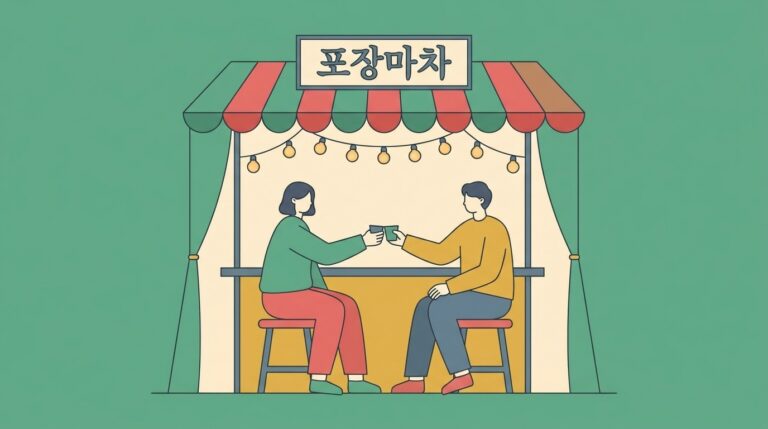
Picture this classic K-Drama scene: You are sitting at a bustling pojangmacha (street tent bar) or a cozy K-BBQ restaurant surrounded by the clatter of green soju bottles, sizzling pork belly, and lively laughter. Your Korean friends or coworkers say “Geonbae!” (Cheers!), the vibe is amazing, and you feel completely welcomed. But the next morning, your eyes open, your head is throbbing, and suddenly a wave of panic hits you: Did I pour my own drink with one hand? Did I accidentally speak casually (banmal) to my manager? What did I say before leaving?
If you have ever felt that burning embarrassment—what Koreans affectionately call ibul-kik (kicking your blanket in bed from sheer cringe)—you are definitely not alone. Alcohol is deeply tied to social bonding in Korea, but navigating the subtle unspoken rules while tipsy can feel like an Olympic sport for Korean learners.
Don’t worry! Over my ten years mentoring international students and expats in Seoul, I have seen every possible drinking mishap. Making mistakes is a universal part of socializing. The secret isn’t being perfect; it’s knowing how to recover with humor, humility, and authentic Korean expressions. Let’s turn your awkward morning-after dread into a cultural connection point.
Phase 2: Core Expressions in Depth
1. 필름이 끊겼어요 (Pilreumi kkeunkyeosseoyo)
- Pronunciation: [Pil-reum-i kkeun-kyeo-sseo-yo] (Think of the English word ‘film’ followed by ‘ee’, then ‘kkoon-gyo-ssuh-yo’ like snapping a guitar string)
- Meaning: Literally “The movie film snapped” vs. Actual Nuance: “I completely blacked out / I lost my memory from drinking.”
- K-Culture Moment: Seen constantly in romantic comedies when the protagonist wakes up at someone else’s house and clutches their head trying to piece together the night.
- Editor’s Insight: Koreans metaphorically view their memory during a drinking night as a roll of 35mm film reel running continuously. Saying this shows you aren’t hiding your drunkenness, but admit you have a memory gap.
- Situation Spectrum: Casual ✅ | Semi-formal ✅ | Formal ⚠️ (Best replaced with ‘어제 기억이 잘 안 납니다’ in high business settings)
- 🤔 Think About It: Does your native language view memory loss as an electrical blackout, a mechanical break, or something else? How does “cutting a film roll” reflect the cinematic way Koreans frame funny memories?
2. 어제 제가 실수를 좀 했어요 (Eoje jega silssureul jom haesseoyo)
- Pronunciation: [Eo-je je-ga sil-ssu-reul jom hae-sseo-yo] (Sounds like ‘uh-jeh jeh-gah seal-soo-reul jom hae-ssuh-yo’)
- Meaning: Literally “Yesterday I made a bit of a mistake” vs. Actual Nuance: “I acted out of line / I drank a bit too much and goofed up.”
- K-Culture Moment: Used the next morning in the office when sliding an iced coffee or hangover drink over to a colleague before starting your shift.
- Editor’s Insight: The word 좀 (jom, a little/bit) is the magic softener here. Even if you dropped a glass or talked too loudly, adding jom lowers the tension and signals that you recognize your blunder with modesty.
- Situation Spectrum: Casual ✅ | Semi-formal ✅ | Formal ✅
- 🤔 Think About It: In many Western contexts, an apology explicitly lists what went wrong right away. Why do you think Korean favors softening particles like jom before getting into specifics?
3. 흑역사를 만들었어요 (Heug-yeoksareul mandeureosseoyo)
- Pronunciation: [Heuk-yeok-sa-reul man-deu-reo-sseo-yo] (Like ‘hook-yuck-sah-reul mahn-doo-ruh-ssuh-yo’)
- Meaning: Literally “I manufactured dark history” vs. Actual Nuance: “I created an embarrassing moment I will never live down.”
- K-Culture Moment: Frequently featured on Korean variety shows when idols and actors rewatch their rookie days or funny drunken karaoke clips.
- Editor’s Insight: This internet-born slang combines 흑 (black/dark) and 역사 (history). It is playful and self-deprecating. Admitting you created heug-yeoksa immediately disarms the other person and makes them laugh.
- Situation Spectrum: Casual ✅ | Semi-formal ✅ | Formal 🚫
- 🤔 Think About It: Why is self-deprecating humor often the fastest way to relieve awkward hierarchical tension in group-oriented cultures?
Phase 3: Textbook Korean vs. Real Korean
Situation A: Explaining that you were drunk the next day
- 📖 교과서 한국어 (Textbook):
- “어제 술에 많이 취해서 죄송합니다.”
(Eoje sure mani chwihaeseo joesonghamnida.) — “I apologize for being heavily intoxicated yesterday.”
- “어제 술에 많이 취해서 죄송합니다.”
- 🗣️ 진짜 한국어 (Real-life Korean):
- “어제 제가 정신줄을 완전히 놓았나 봐요. 죄송해요!”
(Eoje jega jeongsinjureul wanjeonhi noanna bwayo. Joesonghaeyo!) — “I think I completely let go of my sanity cord yesterday. I’m so sorry!”
- “어제 제가 정신줄을 완전히 놓았나 봐요. 죄송해요!”
- 💡 왜 다를까? (Why the difference?):
The textbook version sounds like a formal court statement. Real native speakers use colorful idioms like 정신줄을 놓다 (jeongsinjureul nota – to let go of the mental tether) to sound human, relatable, and genuinely apologetic.
Situation B: Describing a friend who knocked out at the table
- 📖 교과서 한국어 (Textbook):
- “친구는 술을 과음해서 잠이 들었습니다.”
(Chinguneun sureul gwaeumhaeseo jami deureotseumnida.) — “My friend drank excessively and fell asleep.”
- “친구는 술을 과음해서 잠이 들었습니다.”
- 🗣️ 진짜 한국어 (Real-life Korean):
- “제 친구 어제 완전 뻗었어요 / 떡실신했어요.”
(Je chingu eoje wanjeon ppeodeosseoyo / tteok-silsinhaesseoyo.) — “My friend totally stretched out flat / passed out cold.”
- “제 친구 어제 완전 뻗었어요 / 떡실신했어요.”
- 💡 왜 다를까? (Why the difference?):
Korean drinking slang loves physical imagery. 뻗다 (ppeod-da) describes passing out flat on a couch or floor, while 떡실신 (tteok-silsin) humorously compares an unconscious person to a limp rice cake.
Phase 4: K-Culture Deep Dive & Non-verbal Manners
4-1. 눈치 (Nunchi) & The Physical Etiquette of Apologizing
In Korea, alcohol etiquette is governed by nunchi (social sensing). If you made a faux pas—such as pouring your own drink (자작, jajak) or clinking your glass higher than your senior’s—the recovery relies heavily on body language:
* The Two-Handed Handover: When apologizing or handing someone a morning coffee/drink, place your left hand gently under your right wrist or forearm. It conveys sincere deference.
* The Slight Bow of Shame: A 15-degree head dip combined with a light smile while saying “어제 죄송해요” (Eoje joesonghaeyo) signals that you are not proud of your behavior, turning awkwardness into camaraderie.
4-2. The Cultural Meaning of “Somaek” & Second Rounds (2차)
Korean drinking culture is rarely about savoring a single vintage glass; it’s about collective synchrony. When people mix beer and soju (somaek), the alcohol hits faster, lowering social barriers. It is widely understood that people might get a bit loud during round two (2차) or at Noraebang (노래방). Koreans have high tolerance for small drunken slips as long as you acknowledge them the next day before noon.
Phase 5: Real-World Roleplay Scenario
Setting: 11:30 AM at a company cafeteria or university lounge in Hongdae. You run into your senior coworker, Minho, whom you shared drinks with last night.
- Turn 1 (Minho):
- “어, 지우 씨! 몸은 좀 괜찮아요? 어제 진짜 많이 마셨잖아요.”
(Eo, Jiwoo ssi! Momeun jom gwaenchannayo? Eoje jinjja mani masyeotjannayo.) - “Hey, Jiwoo! Are you feeling okay? You drank quite a lot yesterday.”
🎭 Smiling gently while holding a hot tumbler
- “어, 지우 씨! 몸은 좀 괜찮아요? 어제 진짜 많이 마셨잖아요.”
- Turn 2 (You):
- “민호 선배, 좋은 아침이에요… 사실 저 어제 필름이 좀 끊겼어요.”
(Minho seonbae, joeun achimieyo… sasil jeo eoje pilreumi jom kkeunkyeosseoyo.) - “Good morning, Minho Sunbae… To be honest, my film kind of snapped last night.”
🎭 Rubbing the back of your neck with an embarrassed smile
- “민호 선배, 좋은 아침이에요… 사실 저 어제 필름이 좀 끊겼어요.”
- Turn 3 (Minho):
- “진짜요? 2차 노래방에서 엄청 신나게 춤추던 것도 기억 안 나요?”
(Jinjyayo? I-cha noraebang-eseo eomcheong sinnage chumchudeon geotdo gieok an nayo?) - “Really? You don’t even remember dancing super excitedly during round two at the karaoke?”
🎭 Chuckling knowingly
- “진짜요? 2차 노래방에서 엄청 신나게 춤추던 것도 기억 안 나요?”
- Turn 4 (You):
- “네? 제가 춤까지 췄어요? 세상에… 흑역사를 제대로 만들었네요.”
(Ne? Jega chumkkaji chwosseoyo? Sesang-e… heug-yeoksareul jedaero mandeureonneyo.) - “What? I even danced? Oh my goodness… I truly created dark history.”
🎭 Covering your face with both hands in shock
- “네? 제가 춤까지 췄어요? 세상에… 흑역사를 제대로 만들었네요.”
- Turn 5 (Minho):
- “하하, 괜찮아요. 다들 재미있어했어요. 실수한 건 전혀 없으니까 걱정 마요.”
(Haha, gwaenchannayo. Dadeul jaemi-isseohaesseoyo. Silssuhan geon jeonhyeo eopseunikka geokjeong mayo.) - “Haha, it’s totally fine. Everyone had fun. You didn’t make any serious mistakes at all, so don’t worry.”
🎭 Waving hand dismissively to reassure you
- “하하, 괜찮아요. 다들 재미있어했어요. 실수한 건 전혀 없으니까 걱정 마요.”
- Turn 6 (You):
- “휴, 다행이네요. 그래도 어제 제가 너무 주책부린 건 아닌지 죄송해요.”
(Hyu, dahaeng-ineyo. Geuraedo eoje jega neomu juchaekburin geon aninji joesonghaeyo.) - “Phew, what a relief. Still, I’m sorry if I acted a bit too ridiculous yesterday.”
🎭 Bowing slightly with palms clasped together
- “휴, 다행이네요. 그래도 어제 제가 너무 주책부린 건 아닌지 죄송해요.”
- Turn 7 (Minho):
- “에이, 술자리가 다 그런 거죠! 우리 점심에 얼큰한 콩나물국밥 먹으러 갈래요?”
(Ei, suljariga da geureon geojyo! Uri jeomsime eolkeunhan kongnamul-gukbap meogeureo gallaeyo?) - “Ayy, that’s what drinking gatherings are for! Shall we go grab some spicy bean sprout soup for lunch to cure our hangover?”
🎭 Pointing towards the restaurant alley enthusiastically
- “에이, 술자리가 다 그런 거죠! 우리 점심에 얼큰한 콩나물국밥 먹으러 갈래요?”
- Turn 8 (You):
- “우와, 해장국밥이요? 진짜 좋아요! 점심은 제가 살게요 선배!”
(Uwa, haejang-gukbap-iyo? Jinjja joayo! Jeomsimeun jega salgeyo seonbae!) - “Wow, hangover soup? I would love that! Lunch is on me today, Sunbae!”
🎭 Eyes lighting up with gratitude
- “우와, 해장국밥이요? 진짜 좋아요! 점심은 제가 살게요 선배!”
🔀 Interactive Choice Point
Imagine your drinking partner says: “어제 2차에서 선배한테 반말한 거 기억나요?” (Do you remember speaking casually/banmal to the senior during round two?)
- Option A: “술 취해서 그런 건데 그냥 넘어가 주세요.” (I was drunk, so please just overlook it.)
- Feedback [Bad]: Deflecting blame onto alcohol sounds dismissive and rude in Korean hierarchy.
- Option B: “헉, 진짜요? 제가 정신이 나갔었나 봐요. 정말 죄송합니다!” (Gasp, really? I must have lost my mind. I am so sincerely sorry!)
- Feedback [Best]: Immediate acknowledgement with dramatic self-blame disarms the senior instantly and displays sincere respect.
- Option C: “기억 안 나니까 없던 일로 해요!” (I don’t remember, so let’s pretend it never happened!)
- Feedback [Risk]: Unless you are close friends outside of work, this can make you look unaccountable.
Phase 6: 10-Second Emotion Shadowing Drill
Practice these lines with exaggerated pitch and authentic pauses (/ indicates a natural breath pause):
[🥺 Apologetic & Sheepish]- “어제 실수가 / 좀 많았죠? / 정말 죄송해요…”
(Eoje silssuga / jom manatjyo? / Jeongmal joesonghaeyo…) - “I made quite a few mistakes yesterday, didn’t I? I am truly sorry…”
- “어제 실수가 / 좀 많았죠? / 정말 죄송해요…”
[😱 Surprised & Exasperated with Yourself]- “세상에, / 제가 진짜 / 필름이 끊겼나 봐요!”
(Sesang-e, / jega jinjja / pilreumi kkeun-gyeonna bwayo!) - “Good heavens, / I think / I really had a blackout!”
- “세상에, / 제가 진짜 / 필름이 끊겼나 봐요!”
[🤤 Exhausted & Desperate for Hangover Relief]- “저 지금 / 해장이 / 너무 시급해요…”
(Jeo jigeum / haejang-i / neomu sigeuphaeyo…) - “Right now, / hangover soup / is urgently needed…”
- “저 지금 / 해장이 / 너무 시급해요…”
Phase 7: K-Culture Mini Dictionary
- 이불킥 (Ibul-kik) | Blanket Kick
- Meaning: Kicking your blankets frantically in bed when you recall an embarrassing blunder from the previous night. Used daily among young Koreans to describe late-night cringe.
- 해장 (Haejang) | Hangover Chasing / Relieving
- Meaning: The ritual of drinking warm soup or eating soothing foods the morning after drinking. Essential for understanding Korean food culture like Haejang-guk (hangover stew).
- 꼰대 (Kkondae) | Condescending Senior / Boomer
- Meaning: An older person or senior who forces junior colleagues to drink, finish shots, or strictly follow obsolete etiquette. A term to be careful with, but vital to know!
- 2차 (I-cha) | Round Two
- Meaning: The second location in a multi-round drinking evening (often transitioning from dinner to a bar or karaoke). Most mistakes happen between 2차 and 3차!
Phase 8: Survival Kit for Travelers
Top 3 Drinking Survival Phrases
- 1. 제 주량을 넘었어요 (Je juryang-eul neomeosseoyo)
- [Je ju-ryang-eul neo-meo-sseo-yo]
- Pro Tip: Use this when someone keeps pouring you drinks. It means “I’ve exceeded my alcohol capacity” and politely refuses further shots without insulting the host.
- 2. 물 한 잔만 주세요 (Mul han jan-man juseyo)
- [Mul han jan-man ju-se-yo]
- Pro Tip: When your table is filled with soju, firmly ask the restaurant staff for cold water to pace yourself.
- 3. 먼저 들어가 보겠습니다 (Meonjeo deureoga bogesseumnida)
- [Meon-jeo deu-reo-ga bo-ge-sseum-ni-da]
- Pro Tip: The golden exit line. It means “I shall head home first.” Use this if you sense the gathering is getting too wild.
Editor’s Travel Note
- Safe Transit: Never take unlicensed street taxis when intoxicated. Keep your location tracked by using the official Kakao T taxi booking app on your phone.
- Hangover Remedies: If your stomach is churning, walk into any convenience store (CU, GS25, 7-Eleven) and head to the beverage fridge for “Condition” (컨디션) or “Morning Care” (모닝케어)—popular Korean herbal hangover drinks.
Phase 9: Going Deeper (Cultural Thought)
In Western dining, drinking is frequently viewed as an individual leisure activity where people drink at their own pace and pay their own tabs. In Korea, however, a drinking table (suljari) acts as a temporary pressure release valve for a strictly hierarchical society. The act of pouring for each other (sudat-jan) and matching rhythms fosters Jeong (deep relational affection). Because the social pressure to bond is high, society has developed a surprisingly forgiving attitude toward minor drunken mistakes, provided the offender demonstrates humility the following morning.
💬 Your Turn: Have you ever experienced an awkward social misunderstanding while dining or drinking with people from another culture? How did you resolve it? Let us know in the comments below!
Phase 10: FAQ & Avoiding Misunderstandings
Q: What should I do if I accidentally pour my own drink in front of older Koreans?
A: Don’t panic! Simply giggle lightly and say: “앗, 제 버릇이 나와서요! 다음 잔은 선배님이 채워주세요!” (Ah, my old habit came out! Please fill my next glass, Sunbae!). Self-pouring (자작, jajak) is jokingly believed to bring bad luck or make your partner lonely, but foreigners are readily forgiven.
Q: Is it truly rude to turn down a drink offered by a boss or elder?
A: Outright saying “싫어요” (I dislike it) is considered blunt. Instead, accept the glass with two hands, touch it to your lips without swallowing, or cite health reasons: “제가 오늘 약을 먹어서 술을 못 마셔요” (I am taking medication today so I cannot drink alcohol).
Q: When is the best time to apologize for a drinking faux pas?
A: Always before lunchtime the very next day. A quick KakaoTalk message before 11:00 AM saying “선배님, 어제 잘 들어가셨나요? 어제 제가 너무 취해서 실례가 많았습니다!” sets everything right before rumors spread.
🚨 Common Mistakes Alert
- Mistake: Pouring or receiving soju with one hand when drinking with seniors.
- Correct Action: Support your pouring arm with your other hand at the elbow or wrist, and hold your receiving cup with both hands.
- Mistake: Drinking head-on facing an elder directly.
- Correct Action: Slightly turn your torso and head 45 degrees away from the elder and cover your glass discreetly with your hand while drinking.
- Mistake: Clinking glasses directly at the senior’s glass rim level.
- Correct Action: Ensure the rim of your glass touches slightly below the senior’s glass rim as a gesture of humility.
Phase 11: Action Missions
- 🥉 Bronze Mission: Practice saying “어제 필름이 끊겼어요” out loud 5 times in front of the mirror with an apologetic expression.
- 🥈 Silver Mission: Share your favorite hangover food (해장 음식) in the comments below using the Korean word 해장.
- 🥇 Gold Mission: Next time you watch a K-Drama with a drinking scene (like Work Later, Drink Now or Itaewon Class), spot whether the characters turn their heads to drink and tag us on Instagram with your observation!
- 🎮 K-Culture Mission: Listen to standard K-Pop variety shows (like IU’s Palette or Suchwita) and listen for when guests mention their 흑역사 (dark history)!
Phase 12: Interactive Quiz Challenge
Test your drinking culture recovery skills! Check your answers below.
1. Situational Judgment:
You accidentally spilled some soup on a senior colleague’s sleeve after drinking too much soju. What is the most culturally graceful immediate reaction?
* A) Laugh loudly and high-five them.
* B) Grab napkins with both hands, bow apologetically, and say: “어떡해요, 선배님! 정말 죄송합니다! 제가 완전히 정신이 없었네요.”
* C) Say nothing and pretend it was someone else.
2. Fill in the Blank:
Next morning, to express that you kicked your blanket in bed out of deep embarrassment, you would describe it as:
* “오늘 아침에 완전히 __________(을)를 했어요.”
3. True or False:
In Korea, it is considered polite to clink your glass significantly higher than an older colleague’s glass to show your elevated enthusiasm. (True / False)
👉 Click to Reveal Answers & Explanations!
- Correct Answer: B
- Explanation: Quick ownership with dual-handed assistance and self-blaming humility instantly diffuses tension in Korea.
- Correct Answer: 이불킥 (Ibul-kik)
- Explanation: Ibul-kik refers to kicking the blanket in retroactive cringe.
- Correct Answer: False
- Explanation: You should always keep your glass rim slightly lower than the senior’s glass rim as a sign of respect.
- Explanation: You should always keep your glass rim slightly lower than the senior’s glass rim as a sign of respect.







