

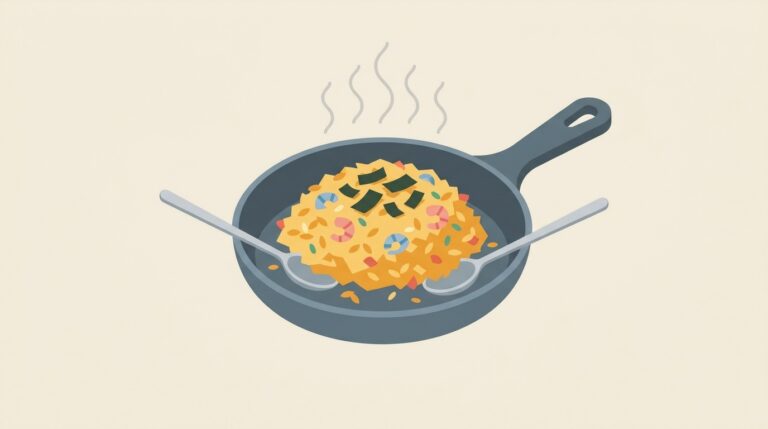
The Sacred Finale: How to Order and Devour Bokkeumbap After Haemul-jjim Like a True Seoulite
Phase 1: 공감 (Story Opening)
안녕하세요! 매일한글 에디터입니다.
Picture this: You are sitting at a bustling seafood restaurant in Mapo, surrounded by the aromatic steam of a mountain of spicy, braised seafood—Haemul-jjim (해물찜). You have battled giant octopus legs, peeled succulent shrimp, and conquered bean sprouts coated in fiery crimson sauce. You feel full. You think you are done. Just as you are about to reach for your coat, your Korean dining partner gasps in horror: “Wait! Are you really going to leave without frying the rice?!”
In Korea, eating Haemul-jjim without finishing with Bokkeumbap (볶음밥) is culturally equivalent to leaving a blockbuster movie right before the final climax. Yet, many intermediate Korean learners freeze at this exact moment. When should I order it? How much sauce do I leave behind? What if I accidentally offend the busy restaurant auntie by scraping the pan too early?
Don’t worry. This guide is crafted directly from real learner feedback and years of dining across Seoul’s liveliest back alleys. By mastering this ritual, you won’t just order food—you will unlock the ultimate communal bonding experience of Korean dining culture.
Phase 2: 핵심 표현 3선 심층 분석 (3 Core Expressions)
1. 밥 볶아 주세요 (Bap bokkeoa juseyo)
- Pronunciation: [Bap bok-keo-ah joo-seh-yo] (Sounds like saying “Bop” followed by “poke-ah” with a crisp ‘k’ sound)
- Meaning: Literal: “Please fry the rice.” / Nuance: “We are ready for the grand finale—take our leftover sauce and work your culinary magic!”
- K-Culture Moment: You will hear this exact triumphant phrase in almost every K-food variety show like Delicious Guys (맛있는 녀석들) the moment the main dish hits the 20% mark.
- Editor’s Insight: Timing is everything. Do not wait until the pan is completely dry! The server needs that precious concentrated seafood broth to season the rice, perilla leaves, and toasted seaweed (gim).
- Situation Spectrum: Casual (✅) / Semi-formal (✅) / Formal (⚠️ – In upscale dining, table-side frying is less common)
- 🤔 Think About It: In many Western dining styles, combining leftovers with a new starch dish at the very end would be unusual. Why does Korean dining treat the savory pan residue as a sacred base rather than waste?
2. 양념 좀 남겨 둘까요? (Yangnyeom jom namgyeo dulkkayo?)
- Pronunciation: [Yang-nyeom jom nahm-gyeo dool-kkah-yo?] (Think of “young-neom” with a soft ‘m’ close, followed by “doom” with an ‘l’ glide)
- Meaning: Literal: “Should we leave some sauce behind?” / Nuance: “Let’s make sure we don’t accidentally lick the pan clean before the staff can make the fried rice.”
- K-Culture Moment: Seen in K-Dramas whenever a thoughtful character plays the role of the dining table captain, carefully guarding the remaining sauce with their chopsticks.
- Editor’s Insight: Using
~ㄹ까요?indicates your consideration for group harmony. It shows you understand the mechanics of the meal and invites everyone to agree on the pace. - Situation Spectrum: Casual (✅) / Semi-formal (✅) / Formal (✅)
- 🤔 Think About It: Notice how Korean dining questions often center on mutual agreement rather than individual desires. How does this reflect the collectivist ethos (jeong) of Korean dining?
3. 누룽지 긁어 먹어야 제맛이죠 (Nurungji geulgeo meogeoya jemas-ijyo)
- Pronunciation: [Noo-roong-jee geul-geo meo-geo-yah je-mah-see-jyo] (“Noo-roong-ji” rhymes with smooth energy; “geul-geo” mimics the physical scraping sound)
- Meaning: Literal: “Scraping and eating the scorched rice is the real flavor.” / Nuance: “The crispy, caramelized layer stuck to the bottom of the pan is the true culinary jackpot!”
- K-Culture Moment: When celebrities on travel shows scrape the bottom of the black iron skillet with metal spoons until their wrists ache, beaming with pure joy.
- Editor’s Insight:
제맛(je-mat) refers to the quintessential, authentic taste of something. Calling scorched rice je-mat elevates you from a standard tourist to a seasoned food connoisseur. - Situation Spectrum: Casual (✅) / Semi-formal (✅) / Formal (🚫 – A bit too colloquial for strict formal dinners)
- 🤔 Think About It: Is there a comfort food in your culture where the slightly “burnt” or caramelized edge is prized over the soft center?
Phase 3: 교과서 한국어 vs 진짜 한국어
Situation 1: Calling the server to make fried rice
- 📖 교과서 한국어 (Textbook): 여기에 밥을 볶아 주실 수 있나요? (Yeogie babeul bokkeoa jusil su innayo? / Can you fry rice here?)
- 🗣️ 진짜 한국어 (Real Native): 사장님, 여기 밥 두 개 볶아 주세요! (Sajangnim, yeogi bap du gae bokkeoa juseyo! / Boss, please fry two orders of rice here!)
- 💡 왜 다를까?: In Korean restaurants, counting orders of fried rice relies on counting portions like bap han gae (one order) or bap du gae (two orders), rather than asking hypothetical possibility questions with ~ㄹ 수 있나요.
Situation 2: Reminding your friend not to eat all the sauce
- 📖 교과서 한국어 (Textbook): 소스를 남겨야 합니다. (Soseureul namgyeoya hamnida. / One must leave the sauce.)
- 🗣️ 진짜 한국어 (Real Native): 양념 다 먹지 말고 좀 덜어 놔! (Yangnyeom da meokji malgo jom deoreo nwa! / Don’t finish all the sauce, scoop some into a side plate!)
- 💡 왜 다를까?: Real foodies don’t just leave sauce—they proactively scoop leftover sauce into personal bowls (deoreo nwa) before the server whisks the big pan away to the kitchen.
Phase 4: K-Culture 딥다이브 & 비언어적 매너
4-1. 눈치 (Nunchi) & Gestures
When the server brings back the pan with sizzling fried rice flattened into a disk, resist the urge to eat immediately!
* The Waiting Nunchi: The fried rice needs 60 to 90 seconds over low heat to form the crispy base (nurungji). If you dig in immediately with your spoon, your Korean friends will playfully reprimand your lack of patience.
* The Spoon Tilt: When scraping the bottom, tilt your spoon at a 45-degree angle. Never touch the hot cast-iron pan with your bare hands; use a napkin or silicone tongs if you need to steady the pan while scraping.
4-2. Cultural Code: The Carbohydrate “K-Dessert”
In the West, dessert means sugar, pastries, or fruit. In South Korea, carbs are the true finale. Koreans jokingly call fried rice “K-디저트” (K-Dessert). No matter how spicy, savory, or heavy the main dish was—whether it’s Dak-galbi, Samgyeopsal, Gamja-tang, or Haemul-jjim—the meal is considered fundamentally incomplete without rice pressed into the seasoned pan.
Phase 5: 실전 롤플레이 시나리오
- Setting: Friday night at Donghae Haemul-jjim, a buzzing eatery in Jongno. Smoke rises, soju glasses clink.
- Characters:
- You (민우 / Minwoo): Intermediate Korean learner on a mission.
- 지수 (Jisoo): Your Korean foodie co-worker.
- 이모님 (Imo-nim): The sharp, affectionate veteran restaurant owner.
- Turn 1 (민우): 지수 씨, 해물 거의 다 먹었는데 이제 밥 볶을까요?
(Jisoo ssi, haemul geoui da meogeonneunde ije bap bokkeulkkayo?)
🎭Looking closely at the remaining bean sprouts in the pan
“Jisoo, we ate almost all the seafood. Shall we get the rice fried now?” -
Turn 2 (지수): 완전 찬성이에요! 근데 양념 그릇에 좀 덜어 놔요. 나중에 볶음밥 찍어 먹어야 하거든요.
(Wanjeon chanseong-ieyo! Geunde yangnyeom geureuse jom deoreo nwayo. Najunge bokkeumbap jjigeo meogeoya hageodeunyo.)
🎭Handing you a pair of large spoons
“Totally agree! But let’s ladle some sauce into side bowls first. We need to dip the fried rice in it later.” -
Turn 3 (민우): 아, 그렇군요! 사장님, 여기 밥 두 개만 볶아 주세요!
(A, geureokgunyo! Sajangnim, yeogi bap du gaeman bokkeoa juseyo!)
🎭Raising right hand cleanly at shoulder height
“Ah, good point! Boss, please fry two orders of rice here!” -
Turn 4 (이모님): 네~ 냄비 가져가서 맛있게 볶아 올게요! 양념 딱 좋게 남겼네!
(Ne~ naembi gajyeogaseo mas-itge bokkeoa olgeyo! Yangnyeom ttak joke namgyeon-ne!)
🎭Skillfully scooping the hot pan away with thick heat pads
“Sure thing~ I’ll take the pan to the kitchen and fry it up delicious! You left the perfect amount of sauce!” -
Turn 5 (민우): 오, 냄새 진짜 대박이다… 참기름 냄새나요.
(O, naemsae jinjja daebak-ida… Chamgireum naemsaenayo.)
🎭Sniffing the air as the sizzling pan returns covered in seaweed flakes
“Oh, the aroma is incredible… It smells like toasted sesame oil.” -
Turn 6 (이모님): 불 약하게 켜둘 테니까 1분 이따가 불 끄고 긁어먹어요~
(Bul yak-hage kyeodul tenikka il-bun ittaga bul kkeugo geulgeo-meogeoyo~)
🎭Flattening the rice neatly across the skillet with a spatula
“I’ll keep the flame on low, so wait one minute, turn it off, and scrape it up~” -
Turn 7 (민우): 누룽지 긁어 먹어야 제맛이죠! 제가 긁어 볼게요.
(Nurungji geulgeo meogeoya jemas-ijyo! Jega geulgeo bolgeyo.)
🎭Gripping the metal spoon with a determined grin
“Scraping the scorched rice is where the real flavor is! Let me try scraping it.” -
Turn 8 (지수): 와, 민우 씨 한국 사람 다 됐네요!
(Wa, Minwoo ssi hanguk saram da dwaenneyo!)
🎭Clapping hands enthusiastically and smiling
“Wow, Minwoo, you’ve turned into a complete Korean!”
🔀 Interactive Choice Point
The pan is set in front of you, sizzling gently. What do you do?
- Option A: Immediately start shoveling the soft rice from the center into your mouth with a metal spoon.
- Option B: Patiently wait about a minute until you hear the crisp crackling sound, turn the gas dial off, and begin scraping the bottom.
- Option C: Turn off the fire instantly and pour water into the pan to make traditional broth porridge.
Feedback:
* Option A (Risk): You miss out on the legendary nurungji texture, and the center is piping hot. The auntie might even walk by and shake her head!
* Option B (BEST!): Pure perfection. You allow the Maillard reaction to work its magic, achieving the crispy crunch that earns you instant street cred.
* Option C (Bad): Never pour water into a spicy seafood stir-fry skillet! Traditional scorched rice broth (sungnyung) is for stone-pot white rice, not greasy, spicy fried rice pans!
Phase 6: 10초 감정 섀도잉 드릴 (10-Second Shadowing Drill)
Practice reading these out loud, observing the pauses (/) and feeling the emotional tags:
[😋 침 꼴깍 삼키며 - Salivating & Eager]
사장님, / 여기 밥 두 개만 / 볶아 주세요!
(Sajangnim, / yeogi bap du gaeman / bokkeoa juseyo!)-
[🤫 속닥이며 꿀팁 전수 - Whispering an insider secret]
양념 다 먹지 말고, / 미리 그릇에 / 좀 덜어 놔!
(Yangnyeom da meokji malgo, / miri geureuse / jom deoreo nwa!) -
[🔥 비장하고 확신에 찬 목소리로 - Confident & Triumphant]
바닥에 눌어붙은 누룽지 / 긁어 먹어야 / 진짜 제맛이지!
(Badage nureobeuteun nurungji / geulgeo meogeoya / jinjja jemas-iji!)
Phase 7: K-Culture 미니 사전 (Mini Dictionary)
- 누룽지 (Nurungji) | Scorched Crispy Rice
The crust of browned rice formed at the bottom of the pan. Highly prized for its nutty, smoky flavor (gosohan mat). - K-디저트 (K-Dijeoteu) | The Korean Dessert
A modern slang referencing fried rice ordered at the end of a savory meal, humorously contrasting Western sweet desserts. - 이모님 (Imo-nim) | Auntie / Server honorific
Literally “maternal aunt.” A warm, polite way to address female middle-aged restaurant owners that fosters instant friendliness. - 김가루 (Gimgaru) | Seaweed Flakes
Finely shredded roasted seasoned seaweed sprinkled lavishly over fried rice to add umami and savory saltiness.
Phase 8: 여행자를 위한 생존 키트 (Traveler’s Survival Kit)
Survival Phrases Top 3
- 덜 맵게 볶아 주세요 (Deol maepge bokkeoa juseyo)
Pro Tip: If the Haemul-jjim was already pushing your spice tolerance, say this so they balance the fried rice with extra sesame oil and seaweed. - 불 꺼도 돼요? (Bul kkeodo dwaeyo?)
Pro Tip: “Can I turn off the stove now?” If the pan starts smoking or smells like it is burning beyond crispy, verify with the staff. - 포장도 돼요? (Pojangdo dwaeyo?)
Pro Tip: Over-ordered fried rice? Most seafood places will happily pack leftover fried rice into a takeout container for your midnight snack.
Editor’s Travel Note
- App Recommendation: To locate hidden local gems instead of overpriced tourist spots, search for “해물찜 맛집” directly on the 네이버 지도 앱 다운로드. Look for places where reviews mention “볶음밥 필수” (Fried rice is mandatory!).
- Payment & Culture: In Korean communal spots, the table bill is almost always settled near the entrance counter, not at the table. Grab the plastic receipt board from the edge of your table and take it to the register.
Phase 9: “한 발 더 깊이” (Cultural Essay)
In Korean food culture, sharing a singular pan of bokkeumbap is the supreme expression of Jeong (정, emotional affection). Unlike individual plated courses in Western gastronomy, scraping scorched rice forces diners into an intimate, shared rhythm where spoons gently collide over the hot iron skillet. Leaving behind food on your plate used to signal satiety in some traditions, but in modern Korea, leaving an empty, thoroughly scraped pan honors both the chef and the fellowship at the table.
💬 Your Turn: What is your favorite dish to turn into fried rice in Korea, or what equivalent “clean-the-pot” ritual exists in your culture? Drop your thoughts in the comments below!
Phase 10: FAQ & 오해 방지 (FAQ Schema)
Q: Can I order just one portion of fried rice for a party of three or four?
A: Yes, absolutely! Portion counts are flexible. Saying 밥 하나만 볶아 주세요 (Just fry one rice portion) is totally acceptable if your group is already full from the seafood. The server will still provide all the seaweed and sesame oil toppings.
Q: Do servers always make the fried rice at the table or take the pan away?
A: With Haemul-jjim, because the large ceramic or metal serving platters can be heavy and hot, servers usually take the pan to a dedicated kitchen burner to fry it up rapidly before bringing it back sizzling.
Q: What should I do if the sauce is already completely eaten?
A: If you ate all the sauce, the kitchen can still make fried rice by adding their house chili paste (gochujang) or seasoned kimchi base, but it won’t taste nearly as rich. Always leave at least 3-4 tablespoons of sauce and bean sprouts!
🚨 흔한 실수 (Common Mistakes)
| Mistake | Why It Happens | Correct Action |
|---|---|---|
| 1. Throwing away the bean sprouts | Assuming only the liquid sauce is needed. | Keep a handful of crunchy bean sprouts (kongnamul); they give the fried rice an incredible bite! |
| 2. Scraping with chopsticks | Fear of scratching the skillet or burning hand. | Use the flat edge of your stainless steel spoon at a steady angle; metal spoons are built for scraping. |
| 3. Leaving the flame on high heat | Thinking higher heat makes crispier nurungji faster. | Keep it on low heat (yak-bul). High heat burns the rice black and creates bitter char instead of savory crunch. |
Phase 11: 액션 미션 & 참여 유도 (Action Missions)
- 🥉 Bronze Level: Practice saying “사장님, 여기 밥 두 개 볶아 주세요!” smoothly in front of a mirror three times without pausing.
- 🥈 Silver Level: On your social media story, share a photo of your next meal with the caption “누룽지 긁어 먹어야 제맛이죠!” and tag a foodie friend.
- 🥇 Gold Level: Visit a Korean restaurant, preserve three spoonfuls of sauce, and successfully order table-fried rice entirely in Korean!
- 🎮 K-Culture Mission: Watch an episode of Baek Jong-won’s Alley Restaurant or a Korean food vlog and spot the exact moment the diners shout “밥 볶을까요?”
Phase 12: 인터랙티브 퀴즈 챌린지 (Quiz Challenge)
1. Situational Judgment:
You have finished the octopus and crab in your Haemul-jjim, but you notice the sauce is disappearing fast. What should you tell your friends?
A) 양념 다 버려주세요!
B) 양념 다 먹지 말고 좀 덜어 놔!
C) 물을 더 부어 주세요!
2. Fill in the Blank:
“바닥에 눌어붙은 ______ 긁어 먹어야 제맛이죠!” (Crispy scorched rice)
3. True or False:
True or False: In Korea, it is considered bad manners to scrape the bottom of the fried rice pan because it produces scratching noise.
👉 Click to view Answers & Explanations
- Answer: B — 양념 다 먹지 말고 좀 덜어 놔! Reminding friends to save sauce in side plates ensures the fried rice has maximum flavor.
- Answer: 누룽지 (Nurungji) — The crunchy scorched rice layer prized as the highlight of the meal.
- Answer: False — Far from bad manners, scraping the nurungji together is considered the ultimate sign of enjoying the meal to its fullest!







