

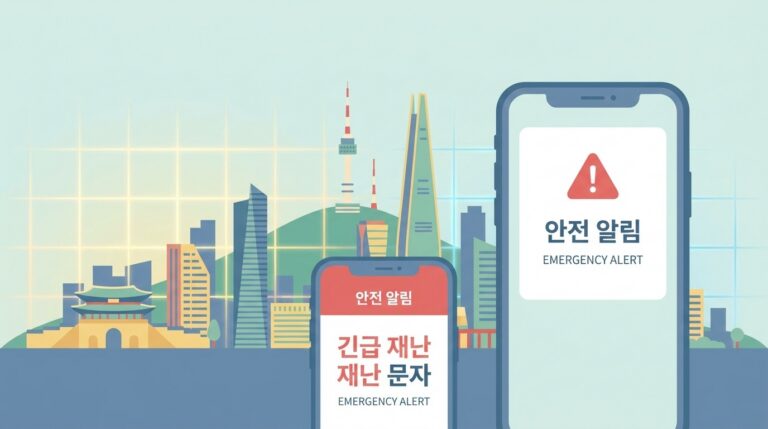
Phase 1: 공감 (Empathy & Opening Story)
안녕하세요! 매일한글 에디터입니다.
Imagine this scenario: You are sitting in an ultra-modern cafe in Pangyo Techno Valley, sipping an iced Americano while finalizing a critical cross-border enterprise contract on your laptop. Suddenly, your screen flashes an ominous system error. Your mobile data drops from 5G to ‘No Service’, the barista’s digital POS terminal lets out a panicked continuous chime, and nearby subway gates freeze into deadlock. Within minutes, social channels buzz with breaking alerts: an unprecedented distributed denial-of-service (DDoS) strike and ransomware breach have crippled the national transit backbone and financial clearinghouses.
In South Korea—one of the most hyper-connected, cashless societies in the world—a network collapse (전산 마비) is not merely a mild tech inconvenience; it completely paralyzes civic infrastructure, cloud-dependent healthcare, and corporate operations. While everyday conversational Korean covers coffee runs and K-drama tropes, navigating a mission-critical cybersecurity incident demands sophisticated, authoritative language. As an advanced C1 learner, you need the lexical precision to articulate security vulnerabilities, assess collateral operational damage, and coordinate crisis containment protocols. Drawing from real-world post-incident debriefs and corporate crisis drills, this guide offers you the exact linguistic toolkit needed to command respect and restore order when digital Korea goes dark.
Phase 2: 핵심 표현 3선 심층 분석 (Top 3 Core C1 Expressions)
1. 전산망이 전면 마비되었습니다. (Jeonsanmangi jeonmyeon mabidoeeotseumnida.)
- Pronunciation: Jeon-san-mang-i jeon-myeon ma-bi-doe-eot-seum-ni-da (Think of jeon like “jun” in junior, and mabi sounding close to “mah-bee”).
- Meaning: Literal: “The computer network has been entirely paralyzed.” | Real Nuance: Used by institutional spokespersons, IT directors, or news anchors to declare a catastrophic, system-wide technical outage across all digital endpoints.
- K-Culture Moment: Frequently heard in tech-thriller K-Dramas like Ghost (유령) or corporate legal dramas where an adversary infiltrates a conglomerate’s mainframe right before market opening.
- Editor’s Insight: Advanced speakers use ‘전면 마비’ (total paralysis) instead of colloquial phrases like ‘컴퓨터가 꺼졌어요’ (the computer turned off). It conveys structural systemic failure.
- Situation Spectrum: Casual: 🚫 | Semi-formal: ⚠️ | Formal: ✅
- 🤔 Think About It: Why does Korean institutional speech employ somatic medical terms like ‘마비’ (paralysis) to describe electrical grid or database failure? What does this reveal about viewing technological networks as living civic organisms?
2. 해킹 정황이 포착되어 긴급 점검 중입니다. (Haeking jeonghwangi pochakdoe-eo gingeup jeomgeom jung-imnida.)
- Pronunciation: Hae-king jeong-hwang-i po-chak-doe-eo gin-geup jeom-geom jung-im-ni-da (pochak rhymes with “po-chawk”).
- Meaning: Literal: “Circumstances of hacking have been captured, so emergency inspection is underway.” | Real Nuance: “Indicators of unauthorized intrusion have been detected, and rapid mitigation/audit procedures are in progress.”
- K-Culture Moment: The classic press briefing given by chief security officers (CISO) in political dramas when confidential state dossiers get siphoned off by unknown black-hat entities.
- Editor’s Insight: Notice the nominal precision: ‘정황’ (circumstantial evidence/indications) paired with ‘포착되다’ (to be detected/spotted). It avoids premature definitive legal claims while clearly sounding high alert.
- Situation Spectrum: Casual: 🚫 | Semi-formal: ⚠️ | Formal: ✅
- 🤔 Think About It: In English crisis PR, organizations often say “we detected unauthorized activity.” How does the Korean formulation emphasizing ‘정황’ (contextual indications) balance legal liability with urgent transparency?
3. 2차 피해를 방지하기 위해 계정을 즉시 비활성화해야 합니다. (Icha pihaereul bangjihagi wihae gyejeong-eul jeuksi bihwal-seonghwahaeya hamnida.)
- Pronunciation: I-cha pi-hae-reul bang-ji-ha-gi wi-hae gye-jeong-eul jeuk-si bi-hwal-seong-hwa-hae-ya ham-ni-da.
- Meaning: Literal: “To prevent secondary damage, the account must be deactivated immediately.” | Real Nuance: Immediate incident containment mandate to isolate compromised access credentials before downstream exploit expansion.
- K-Culture Moment: Spoken sharply by the head of security operations in corporate crisis rooms to halt lateral movement across financial databases.
- Editor’s Insight: At the C1 tier, distinguishing between ‘1차 피해’ (direct/primary breach) and ‘2차 피해’ (secondary exploitation, credential stuffing, extortion) showcases nuanced risk governance.
- Situation Spectrum: Casual: ⚠️ | Semi-formal: ✅ | Formal: ✅
- 🤔 Think About It: Why is the concept of ‘2차 피해’ (secondary harm) such a central legal and ethical keyword in Korean digital compliance and victim-protection protocols?
Phase 3: 교과서 한국어 vs 진짜 한국어 (Textbook vs. Real Native Korean)
Situation 1: System Crash Under Load or Attack
- 📖 교과서 한국어: 트래픽이 많아서 웹사이트 서버가 중단되었습니다. (Teuraepigi manhaseo wepsaiteu seobeoga jungdandoeeotseumnida. / Because there is heavy traffic, the website server has stopped.)
- 🗣️ 진짜 한국어: 디도스 공격 맞고 트래픽 몰려서 서버가 완전히 터졌어요. (Diddoseu gong-gyeok matgo teuraepik mollyeoseo seobeoga wanjeonhi teojyeosseoyo. / We got hit by a DDoS attack, traffic flooded in, and the server blew up completely.)
- 💡 왜 다를까?: In active tech environments, Koreans vividly say servers ‘터지다’ (burst/explode) rather than using static textbook verbs like ‘중단되다’. It communicates an acute, chaotic incident.
Situation 2: Total Communication Outage
- 📖 교과서 한국어: 통신 장비에 오류가 생겨 연락이 불가능합니다. (Tongsin jangbie oryuga saenggyeo yeollagi bulganeunghamnida. / An error occurred in the telecommunications equipment, making contact impossible.)
- 🗣️ 진짜 한국어: 통신망 다운돼서 메신저고 뭐고 싹 다 먹통이에요. (Tongsinmang da-undwaeseo mesinjeogo mwogo ssak da meoktong-ieyo. / The network grid went down, so messengers and everything else are stone-dead.)
- 💡 왜 다를까?: ‘먹통’ (an ink bottle; metaphor for an utterly unresponsive, blacked-out device) coupled with ‘싹 다’ (wholly, clean sweep) captures the real frustration of an unyielding outage.
Phase 4: K-Culture 딥다이브 & 비언어적 매너 (Deep Dive & Non-Verbal Manners)
4-1. 눈치 (Nunchi) & Crisis Decorum During IT Grid Paralysis
During a massive digital infrastructure crash, customer-facing counters (banks, transit hubs, convenience stores) instantly revert to paper receipts (수기 영수증) and manual ledgers. Panicking, demanding immediate explanations, or raising your voice violates cultural Nunchi. Instead, demonstrate collaborative composure:
* Demeanor & Eye Contact: Maintain focused, level eye contact. Avoid hovering directly over the IT technician’s shoulder or cashier’s screen, which creates unnecessary psychological pressure.
* Body Posture: Adopt a slight forward lean showing readiness to cooperate, often holding cash or identity documents in both hands (두 손) to ease manual administrative processing.
* Verbal Restraint: Replace demanding questions like “Why isn’t this working?” with cooperative statements like “수기 작성으로 진행해 드릴까요?” (Shall we proceed with manual pen-and-paper processing?).
4-2. Cultural Code: Hyper-Connectivity and the ‘Kakao Outage’ Collective Memory
South Korea’s extraordinary administrative efficiency hinges on hyper-integrated public-private digital infrastructure. The watershed 2022 Pangyo data center fire—which crippled KakaoTalk, KakaoPay, taxi hailing, and government login portals—instilled an acute national awareness regarding digital resilience. In Korean public discourse, cyber disruptions are treated with the same solemn gravity as national defense emergencies. Demonstrating fluency in these protocols positions you as an astute, socially integrated insider.
Phase 5: 실전 롤플레이 시나리오 (High-Stakes Roleplay Scenario)
- Background: Head of IT Security Command Center at a major Seoul fintech corporation during a zero-day ransomware breach and server outage.
- Characters:
- 지훈 (Ji-hoon): Chief Information Security Officer (CISO), stressed but analytical.
- 당신 (You): Senior Incident Response Lead.
Dialogue (8 Turns):
- 지훈: [🎭 모니터 수십 대를 번갈아 응시하며 다급한 목소리로] 현재 코어 데이터베이스 접근이 전면 차단됐습니다. 랜섬웨어 감염 가능성이 농후합니다. (Hyeonjae koeo deiteobeiseu jeopgeuni jeonmyeon chadandwaetseumnida. Raenseomwe-eo gam-yeom ganeungseongi nonghuhamnida. / Access to the core database is currently completely cut off. The probability of ransomware infection is extremely high.)
- 당신: [🎭 상황판 로그를 재빠르게 확인하며 냉철하게] 비인가 IP로부터의 비정상 트래픽 유입 정황이 확인되었습니다. 망 분리 조치부터 즉각 단행해야 합니다. (Bi-ing-ga aipirobuteoui bijeongsang teuraepik yuip jeonghwangi hwagindoeeotseumnida. Mang bulli jochibuteo jeukgak danhaenghaeya hamnida. / Indications of abnormal traffic inflow from unauthorized IPs have been verified. We must enact network isolation immediately.)
- 지훈: [🎭 관자놀이를 누르며 탄식하듯] 내부 결제망과 대고객 서비스 전산망이 이미 마비 상태입니다. 2차 피해 확산 속도가 너무 빠릅니다. (Naebu gyeoljemanggwa daegogaek seobiseu jeonsanmangi imi mabi sangtae-imnida. Icha pihae hwaksan sokdoga neomu ppareumnida. / The internal payment network and customer-facing service grids are already paralyzed. The spread of secondary damage is too rapid.)
- 당신: [🎭 단호한 제스처로 엔터 키를 누르며] 2차 피해를 방지하기 위해 전사 관리자 계정을 즉시 비활성화하고, 백업 서버를 오프라인으로 격리하겠습니다. (Icha pihaereul bangjihagi wihae jeonsa gwallija gyejeong-eul jeuksi bihwal-seonghwahago, baegeop seobeoreul opeuraineuro gyeorihagetseumnida. / To prevent secondary damage, I will immediately deactivate all company-wide administrator credentials and isolate backup servers offline.)
- 지훈: [🎭 고개를 끄덕이며 전산실 인터폰을 들고] 피해 규모 파악과 복구 매뉴얼 가동을 병행합시다. 고객 데이터 유출 징후는 어떻습니까? (Pihae gyumo pa-akgwa bokgu maenyueol gadong-eul byeonghaenghapsida. Gogaek deiteo yuchul jinghuneun eotteoseumnikka? / Let us proceed simultaneously with assessing damage scale and activating recovery manuals. What are the indicators regarding customer data leaks?)
- 당신: [🎭 메모를 넘기며 차분히 보고하듯] 현재까지 DB 암호화는 진행 중이나, 외부 반출 정황은 아직 포착되지 않았습니다. 패킷 분석을 지속하겠습니다. (Hyeonjaekkaji dibi amhohwaneun jinhaeng jung-ina, oebu banchul jeonghwangeun ajik pochakdoeji anatseumnida. Paekit bunseog-eul jisokhagetseumnida. / DB encryption is in progress, but no signs of external exfiltration have been captured yet. I will continue packet analysis.)
- 지훈: [🎭 안도의 한숨을 얇게 내쉬며] 다행입니다. 관계 기관과 한국인터넷진흥원(KISA)에 침해사고 신고 접수는 마쳤습니까? (Dahaeng-imnida. Gwangye gigwangwa hangu-inteonetjinheung-wone chimhaesago singo jeopsuneun machyeotseumnikka? / Thank goodness. Have you finalized the incident reporting with relevant authorities and KISA?)
- 당신: [🎭 보고서를 태블릿에 띄우며 확신에 찬 어조로] 네, 초동 조치 보고서 송부를 완료했습니다. 이제 핫픽스 패치와 전산망 정상화에 총력을 기울이겠습니다. (Ne, chodong jochi bogoseo songbureul wallyohaetseumnida. Ije hatpikseu paechiwa jeonsanmang jeongsanghwa-e chongryeo-geul giurigetseumnida. / Yes, the transmission of the initial response report is complete. We will now focus all efforts on deploying hotfix patches and normalizing the network.)
🔀 인터랙티브 분기점 (Choose Your Action):
The attack vector shifts, targeting customer login gateways in real time. How do you respond?
- Option A: “지금 전산망이 완전히 터졌으니 그냥 서버 플러그를 다 뽑아버리죠!” (Jigeum jeonsanmangi wanjeonhi teojyeosseuni geunyang seobeo peulleogeureul da ppob-abeorijyo!)
- Feedback (Bad): High operational panic. Pulling hardware plugs abruptly destroys audit logs, causes raw data corruption, and violates proper disaster recovery governance protocols.
- Option B: “비정상 접근 IP 대역을 방화벽에서 즉시 드롭하고, 전 서비스에 걸쳐 비상 안내 공지를 띄운 뒤 시스템을 단계적 점검 모드로 전환하겠습니다.” (Bijeongsang jeopgeun aipi daeyeog-eul banghwabyeogeseo jeuksi deurophago, jeon seobiseue geolchyeo bisang annae gongjireul ttiun dwi siseutem-eul dangyejeok jeomgeom modeuro jeonhwanhagetseumnida.)
- Feedback (Best): Impeccable C1 executive handling. Combines network perimeter containment, clear user communication, and controlled incident triage.
- Option C: “조금 더 로그를 지켜보면서 해커가 무엇을 요구하는지 협상 메시지를 기다려 봅시다.” (Jogeum deo rogeureul jikyeobomyeonseo haekeoga mueos-eul yoguhaneunji hyeopsang mesijireul gidaryeo bopsida.)
- Feedback (Risk): Passivity allows the exploit to achieve domain dominance across all child subnets. In Korean cyber compliance, failure to report and mitigate promptly incurs punitive administrative penalties.
Phase 6: 10초 감정 섀도잉 드릴 (Emotional Shadowing Drill)
- [🚨 다급하고 결단력 있게 / Urgent and Decisive]
- “전산망 마비로 인한 피해를 막으려면 / 망 분리 조치를 / 지금 즉시 단행해야 합니다!”
- (Jeonsanmang mabiro inan pihaereul mageuryeomyeon / mang bulli jochireul / jigeum jeuksi danhaenghaeya hamnida!)
- [🛡️ 차분하고 권위 있게 / Calm, Authoritative, and Reassuring]
- “비정상 트래픽 유입 정황이 포착되었으나, / 백업 체계를 가동하여 / 2차 피해를 철저히 차단하겠습니다.”
- (Bijeongsang teuraepik yuip jeonghwangi pochakdoeeotseuna, / baegeop chegyereul gadonghayeo / icha pihaereul cheoljeohi chadanhagetseumnida.)
- [💼 정중하면서도 단호하게 고객 대응 / Formal, Respectful Customer Crisis Advisory]
- “현재 시스템 전산 장애로 인해 / 서비스 이용이 일시 중단되었사오니, / 수기 접수로 전환해 주시기 바랍니다.”
- (Hyeonjae siseutem jeonsan jang-aero inhae / seobiseu iyongi ilsi jungdandoeeotsaoni, / sugi jeopsuro jeonhwanhae jusigi baramnida.)
Phase 7: K-Culture 미니 사전 (Key Vocabulary Dossier)
- 전산 마비 (Jeonsan Mabi)
- Translation: System Paralysis / Computer Network Outage
- Usage: Refers formally to institutional grid collapse affecting banking, public utilities, transit, or company-wide mainframes.
- 먹통 (Meoktong)
- Translation: Dead in the water / Inoperative
- Usage: Vivid conversational term describing any frozen app, malfunctioning card terminal, or unresponsive communication channel.
- 정황 (Jeonghwang)
- Translation: Circumstantial context / Indications
- Usage: Vital C1 vocabulary for forensic assessment (‘유출 정황’ = indications of leak; ‘침입 정황’ = indications of unauthorized intrusion).
- 수기 결제 (Sugi Gyeolje)
- Translation: Manual pen-and-paper billing
- Usage: Essential emergency procedure when online card processing terminals and mobile payment barcodes disconnect.
Phase 8: 여행자를 위한 생존 키트 (Traveler’s Survival Kit)
Survival Expressions TOP 3:
- 통신 마비 때문에 카드 결제가 안 되나요? 현금으로 할게요.
- (Tongsin mabi ttaemune kadeu gyeoljega an doenayo? Hyeon-geumeuro halgeyo.)
- Pro Tip: During network blackouts, convenience stores and taxis cannot read mobile wallets. Cash is king.
- 전산 장애 때문에 탑승권 수기 발권이 가능한가요?
- (Jeonsan jang-ae ttaemune tapseunggwon sugi balgwoni ganeunghangayo?)
- Pro Tip: Use at KTX stations or airports when automated ticketing kiosks crash.
- 오프라인 지도로 길을 확인할 수 있는 방법이 있습니까?
- (Opeurain jidoro gireul hwag-inhal su inneun bangbeobi isseumnikka?)
- Pro Tip: When 4G/5G goes dark, paper transit schematics or cached vector files are essential.
Editor’s Travel Note: Digital Survival in Korea
To prepare for unforeseen national or regional cyber outages, always keep at least 50,000 KRW in cash in your wallet. Download an offline PDF map via the 네이버 지도 오프라인 기능 가이드 (Naver Map Offline Features) and bookmark the emergency protocol notices provided by the 국가사이버안보센터 안전 수칙 안내 (National Cyber Security Center Safety Guidelines). Also, keep a physical T-money transit card handy; physical smartcard chips often still process basic subway gate taps locally even when cellular networks shudder.
Phase 9: “한 발 더 깊이” (Deep Cultural Reflection)
Korea’s relentless drive for “Palli-Palli” (빨리빨리, speed and dynamism) has forged the world’s most interconnected municipal and digital society. Everything from smart-city streetlights to residential door locks is digitalized. However, this hyper-centralization introduces unique shared vulnerabilities. When digital threads unravel, Koreans do not succumb to widespread panic; instead, an innate communal solidarity (공동체 의식) takes over, with citizens patiently cooperating with handwritten logs and sharing offline hotspots. Mastering the language of cyber crises reveals how technology and human solidarity intersect in contemporary Korean society.
💬 Your Turn: Has your home country ever experienced a nationwide digital or banking blackout? How would you articulate that crisis using the Korean concept of ‘전산 마비’? Share your thoughts in the comments below!
Phase 10: FAQ & 흔한 실수 방지 (FAQ & Mistakes)
Q: Can I simply say “컴퓨터 고장 났어요” instead of “전산 마비” in a professional setting?
A: Saying “컴퓨터 고장 났어요” (The computer is broken) implies a physical hardware failure on a single desk computer. In a corporate environment or enterprise outage, using ‘전산 마비’ (network/system paralysis) or ‘시스템 장애’ (system error/outage) accurately reflects institutional infrastructure.
Q: What is the exact difference between ‘해킹’ and ‘사이버 테러’?
A: ‘해킹’ (hacking) can refer to any illicit intrusion or penetration testing regardless of scale. ‘사이버 테러’ (cyber terrorism) specifically denotes politically motivated, organized, large-scale assaults engineered to disrupt national security, financial grids, or critical public utilities.
Q: When is it appropriate to use ‘먹통’ in workplace discussions?
A: While ‘먹통’ is expressive, reserve it for informal communication among teammates (e.g., “지금 사내 메신저 다 먹통이에요”). When reporting upward to executives, clients, or authorities, always utilize formal terms such as ‘통신 두절’ (communication cut-off) or ‘서비스 장애’ (service disruption).
🚨 흔한 실수 (Common Mistakes) 경고판:
- Mistake 1: Translating “The system is hacked” literally as “시스템이 해킹했어요” (This means the system did the hacking!).
- Correct Action: Use passive causative morphology: “시스템이 해킹당했습니다” (The system was hacked) or “해킹 정황이 발견되었습니다” (Indications of hacking were discovered).
- Mistake 2: Confusing ‘1차 피해’ with ‘2차 피해’.
- Correct Action: ‘1차 피해’ is the initial data lock/theft; ‘2차 피해’ refers to extortion, identity theft, or financial siphoning that results later.
- Mistake 3: Using low-level colloquialisms like “서버 죽었어요” in official incident reports.
- Correct Action: Elevate your C1 register to “서버 접속 장애가 발생했습니다” (Server connection disruption has occurred).
Phase 11: 액션 미션 & 참여 유도 (Action Missions)
- 🥉 Bronze Mission (Solo Practice): Stand in front of your mirror and practice the 3 Shadowing Drill sentences with firm, authoritative intonation and clear diction.
- 🥈 Silver Mission (Social/Writing Challenge): Write a 3-sentence disaster notification in Korean announcing a temporary server shutdown for security checks and post it to your study log.
- 🥇 Gold Mission (Real-life Execution): Next time an app or Wi-Fi hotspot experiences latency or disconnection, resist saying “안 돼요”—describe it as “일시적인 네트워크 장애 정황이 있네요!”
- 🎮 K-Culture Mission: Watch an episode of a tech-focused K-Drama (like Voice or Stranger) and identify at least two scenes where emergency system terminology is utilized.
Phase 12: 인터랙티브 퀴즈 챌린지 (Interactive Quiz)
1. 상황 판단 (Situational Judgment)
Your corporate network goes completely dark, files are being encrypted by malware, and customer payments are dropping. What is the most professionally appropriate alert to announce to the leadership committee?
* A) 컴퓨터가 다 고장 나서 오늘 일 못 하겠습니다.
* B) 전산망이 전면 마비되었으며, 해킹 정황이 포착되어 긴급 망 분리를 단행했습니다.
* C) 인터넷이 조금 느려진 것 같으니 재부팅해 보세요.
정답 및 해설 보기 (Click for Answer)
정답: B
해설: Option B demonstrates sophisticated C1 crisis terminology (‘전산망 전면 마비’, ‘해킹 정황 포착’, ‘긴급 망 분리 단행’). Option A is overly casual and unprofessional, while Option C completely misdiagnoses an existential cyber disaster.
2. 빈칸 채우기 (Fill in the Blank)
- “고객 개인정보의 유출로 인한 ( )를 방지하기 위해, 모든 계정의 비밀번호 초기화 조치를 시행합니다.”
- Hint: Concept referring to subsequent, downstream derivative damage or exploitation.
정답 및 해설 보기 (Click for Answer)
정답: 2차 피해 (Icha pihae)
해설: When credentials are leaked, preventative measures are deployed to avert downstream exploitation, universally termed ‘2차 피해’ in Korean legal and IT frameworks.
3. 문화 팩트 체크 (True or False)
- 문제: South Korea’s payment systems are completely immune to telecommunication disruptions because all card readers operate offline by law. (True / False)
정답 및 해설 보기 (Click for Answer)
정답: False
해설: Because South Korea relies heavily on real-time VAN networks and cloud clearinghouses, severe network paralysis immediately freezes digital terminals, necessitating fallback cash transactions or manual paper receipts (수기 결제).







