

Phase 1: 공감 (스토리 몰입형 오프닝)
안녕하세요! 매일한글 에디터입니다.
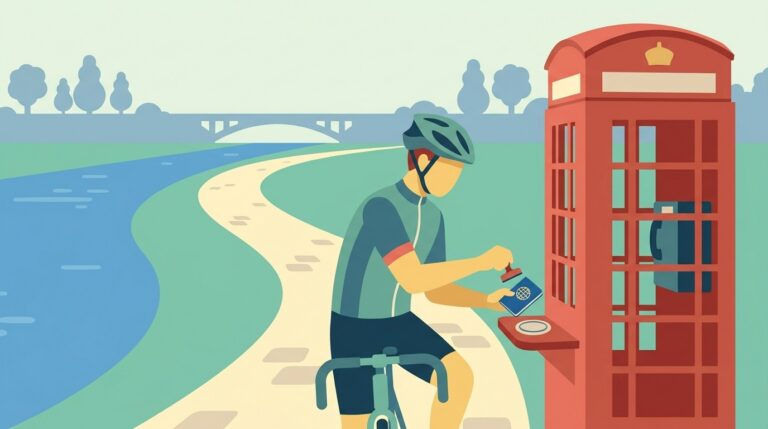
Picture this: You have just pedaled over 120 kilometers along the scenic Namhan River path. Your quads are on fire, sweat is dripping down your helmet strap, and the dusk sun is casting an amber glow across the ridgelines of Yangpyeong. You finally spot that iconic red telephone-booth-style structure standing proudly beside the bike path—the coveted 자전거 국토 종주 인증센터 (Bicycle Cross-Country Certification Booth). You fumble through your handlebar bag, pull out your royal blue certification passport (종주 수첩), and slam down the stamp, only to find… the ink pad is bone dry. Or worse, the stamp mechanism is jammed, and you need to verify your ride on the mobile app before the GPS track expires.
Suddenly, an experienced Korean ajusshi rider pulls up beside you in full Lycra gear, greeting you with a brisk nod. You want to ask whether you can substitute the physical stamp with a QR scan, whether your tracking app will be recognized at the final booth in Busan, or how to register an omitted checkpoint without repeating the climb. But your tongue freezes. You know how to say “bicycle” and “help,” but navigating the bureaucratic yet thrilling world of Korea’s official 633km Cross-Country Cycling Certification requires nuanced, C1-level communicative competence.
Having guided dozens of international cyclists along the Ara Waterway, Four Rivers, and Nakdonggang trails, I have compiled this practical linguistic playbook. Today, you won’t just learn textbook phrases—you will master the authentic jargon, administrative nuances, and trail etiquette needed to complete Korea’s ultimate cycling pilgrimage with absolute confidence.
Phase 2: 핵심 표현 3선 심층 분석
1. 스탬프 잉크가 말라 있어서 그러는데, QR 코드로 대체 인증이 가능한가요?
- Pronunciation: Seutaempeu inkkega malla isseoseo geureoneunde, kyu-al kodeuro daeche injeung-i ganeunghangayo? (Think of the rhythm: seutaem-peu ink-ka mal-la… dae-che in-jeung gahn-eung-hahn-ga-yo?)
- Meaning: “The stamp ink has dried out; can I substitute it with a QR code verification?”
- K-Culture Moment: A frequent plot point in cycling vlogs and the popular cycling webtoon Wind Breaker (윈드브레이커), where riders reach remote mountain passes only to find the analog ink pad weathered by seasonal humidity.
- Editor’s Insight: At the C1 level, notice the softening conjunction -는데 (neunde) used here to set context smoothly before making a request. The word 대체 인증 (daeche injeung) specifically denotes official administrative alternative verification, demonstrating fluent operational vocabulary.
- Situation Spectrum:
- Casual: ⚠️ (Sounds too formal among peers)
- Semi-formal: ✅ (Perfect for trail volunteers and booth managers)
- Formal: ✅ (Fully acceptable for official K-Water customer support)
- 🤔 Think About It: Why does Korea maintain physical rubber stamps alongside cutting-edge GPS apps? It reflects a cultural passion for tangible memorabilia (doshang kkaegi) blended seamlessly with digital efficiency.
2. 중간에 페이스가 무너져서 봉크 올 뻔했는데, 겨우 회복했어요.
- Pronunciation: Junggan-e peiseuga muneojyeoseo bongkeu ol ppeonhaenneunde, gyeou hoebokhaesseoyo. (Pronounce bong-keu like the English athletic slang “bonk” with a crisp Korean unreleased stop k).
- Meaning: “I lost my pacing halfway through and almost completely bonked (hit the wall), but I barely managed to recover.”
- K-Culture Moment: Often heard on outdoor variety shows like 2 Days & 1 Night (1박 2일) when cast members hit extreme physical plateaus while riding uphill passes like Ihwaryeong (이화령).
- Editor’s Insight: 봉크 (bongkeu) is authentic peloton slang borrowed from cycling terminology for glycogen depletion. Pairing it with -을 뻔했다 (-eul ppeonhaetta) expresses a close call with high naturalness.
- Situation Spectrum:
- Casual: ✅ (Riders love this level of authentic trail talk)
- Semi-formal: ✅ (Great for chatting at convenience store rest stops)
- Formal: 🚫 (Too colloquial for formal administrative documents)
- 🤔 Think About It: Notice how Korean sports subcultures adopt English loanwords but grammaticalize them with rich Korean auxiliary verbs. How does this reflect the dynamic adaptability of modern Korean speech?
3. 낙동강하구둑 종점에 도착하면 완주 메달 각인이랑 인증서 발급을 바로 받을 수 있나요?
- Pronunciation: Nakdonggang-haguduk jongjeom-e dochakhamyeon wanju medar-irang injeungseo balgeub-eul baro badeul su innayo?
- Meaning: “Once I arrive at the Nakdonggang Estuary Dam terminus, can I receive my engraved completion medal and certificate right away?”
- K-Culture Moment: Reaching the end of the 633km trail in Busan is a celebratory milestone celebrated across Korean social media with the hashtag #국토종주완주.
- Editor’s Insight: 각인 (gakin) means “engraving”—specifically referring to having your name and completion date laser-etched onto the commemorative medal at the final certification office.
- Situation Spectrum:
- Casual: ⚠️ (A bit wordy for casual banter)
- Semi-formal: ✅ (Standard inquiry at information desks)
- Formal: ✅ (Appropriate for customer inquiries)
- 🤔 Think About It: How does the public ceremonial recognition of athletic endurance reflect collective Korean values regarding diligence and completed goals?
Phase 3: 교과서 한국어 vs 진짜 한국어
Situation 1: Describing Complete Exhaustion on an Uphill Pass
- 📖 교과서 한국어: 저는 매우 지쳐서 더 이상 자전거를 탈 체력이 없습니다. (Jeoneun maeu jichyeoseo deo isang jajeon-georeul tal cheryeog-i eopseumnida. – “I am very tired and do not have stamina to ride a bicycle anymore.”)
- 🗣️ 진짜 한국어: 다리가 완전히 잠겨서 페달이 안 돌아가요. 끌바 해야겠어요. (Dariga wanjeonhi jamgyeoseo pedari an doragayo. Kkeulba haeyagesseoyo. – “My legs are totally locked up; the pedals won’t turn. I have to push-walk the bike.”)
- 💡 왜 다를까? Native riders use 끌바 (kkeulba)—a compound portmanteau of 끌고 가다 (kkeulgo gada, to drag/push) and 바이크 (bike)—rather than formal descriptions of exhaustion.
Situation 2: Inquiring About Certification Processing
- 📖 교과서 한국어: 제 종주 기록이 유효한지 확인해 주십시오. (Je jongju girog-i yuhyohanji hwaginhae jusipsio. – “Please verify whether my tour record is valid.”)
- 🗣️ 진짜 한국어: 수첩에 누락된 스탬프가 하나 있는데, GPX 로그로 소급 인정 되나요? (Sucheobe nurakdoen seutaempeuga hana inneunde, GPX rogeuro sogeup injeong doenayo? – “I have one missed stamp in my booklet; can it be retroactively approved using my GPX log?”)
- 💡 왜 다를까? Advanced communication requires precise bureaucratic terms like 누락 (nurak, omission) and 소급 인정 (sogeup injeung, retroactive recognition) to resolve actual administrative exceptions.
Phase 4: K-Culture 딥다이브 & 비언어적 매너
4-1. 눈치(Nunchi) & Trail Etiquette
- The Pelotón Greeting: When passing oncoming riders on narrow riverside levees, don’t scream or vigorously wave both hands. Give a subtle head nod (mok-rye) paired with a brief left-hand lift (keeping your palm flat at chest height).
- Booth Nunchi: The red certification phone booths are compact. Never lean your bike directly across the booth door while stamping your passport. Prop your bike on its kickstand or rest the rear tire against the external rail, stamp briskly, and step back so following riders can access the stamp table without awkward delays.
- The Bell Courtesy: In Korea, furiously dinging your bell can come across as aggressive. Instead, use a single light tap from 20 meters away, or gently announce: 먼저 지나가겠습니다! (Meonjeo jinagagesseumnida! – “Passing through first!”).
4-2. Cultural Code: The “Dojang Kkaegi” (도장 깨기) Phenomenon
Originally referring to martial arts masters traveling to rival dojos to defeat their masters one by one, 도장 깨기 (dojang kkaegi) has evolved in modern Korean pop culture into systematically conquering every checkpoint on a list. The Ministry of Land, Infrastructure and Transport and K-Water tapped directly into this cultural mindset by transforming decommissioned red telephone boxes into official certification points along the Four Rivers. Collecting these ink stamps inside a genuine blue passport taps into the nation’s passion for systematic achievement, tangible proof, and celebratory finish-line rituals involving convenience store ramen and cold brew.
Phase 5: 실전 롤플레이 시나리오
Setting: Ara West Sea Lock Certification Office (아라서해갑문 인증센터), the starting/finishing terminal of the cross-country route. The afternoon sea breeze is whistling outside.
Characters:
* Alex (알렉스): An overseas cyclist seeking final verification.
* Manager Park (박 소장님): A seasoned trail official and cycling veteran with a warm, encouraging smile.
- 알렉스: 🎭 (인쇄된 종주 수첩과 스마트폰을 카운터에 정중히 올려놓으며) 안녕하세요, 소장님! 국토종주 수첩 최종 검수받으러 왔습니다.
(Annyeonghaseyo, sojangnim! Guktojongju sucheop choejong geomsubadeureo watseumnida.)
“Hello, Manager! I have arrived to get the final inspection for my cross-country tour passport.” -
박 소장님: 🎭 (수첩을 펼쳐 각 페이지의 스탬프를 꼼꼼히 대조하며) 아이고, 부산에서부터 여기까지 올라오셨어요? 대단하시네! 어디 봅시다…
(Aigo, Busan-eseobuteo yeogikkaji olla-osyeosseoyo? Daedanhasine! Eodi bopsida…)
“Oh my, did you ride all the way up here from Busan? Impressive! Let’s take a look…” -
알렉스: 🎭 (살짝 긴장한 표정으로 특정 페이지를 가리키며) 그런데 문경새재 구간 부스 스탬프가 훼손되어 있어서 QR 코드로 찍었거든요. 연동 확인이 가능할까요?
(Geureonde Mungyeongsaejae gugan buseu seutaempeuga hwesondoeeo isseoseo kyu-al kodeuro jjigeotgeodeunyo. Yeondong hwagani ganeunghalkkayo?)
“However, the stamp at the Mungyeongsaejae section was damaged, so I logged it with a QR code. Could you verify if it synced properly?” -
박 소장님: 🎭 (모니터 단말기에 시리얼 번호를 조회하며 고개를 끄덕인다) 네, ‘자전거 행복나눔’ 앱 전산망에 정상적으로 업로드되어 있네요. 소급 처리해 드렸습니다.
(Ne, ‘Jajeon-geo Haengboknaneum’ aep jeonsanmang-e jeongsangjeog-euro eopeurodeu-doeeo inneyo. Sogeup cheorihae deuryeotseumnida.)
“Yes, it has been uploaded normally to the ‘Bike Korea’ system network. I have processed retroactive approval for you.” -
알렉스: 🎭 (안도의 한숨을 내쉬며 미소를 짓는다) 다행이네요! 완주 인증 스티커 부착하고 메달 각인 신청도 여기서 바로 되나요?
(Dahaeng-ineyyo! Wanju injeung seutikeo buchakhago medar gakin sincheongdo yeogiseo baro doenayo?)
“What a relief! Can I get the completion sticker attached and apply for the engraved medal right here?” -
박 소장님: 🎭 (인증 스티커를 꺼내 정성껏 수첩에 붙이며) 물론이죠. 메달 뒷면에 새길 영문 성함이랑 완주 일자 이 신청서에 또박또박 적어주세요.
(Mullon-ijyo. Medar dwinmyeon-e saegil yeongmun seongham-irang wanju ilja i sincheongseoe ttobak-ttobak jeogeojuseyo.)
“Of course. Please write your English name and completion date clearly on this application form to be engraved on the back of the medal.” -
알렉스: 🎭 (펜을 건네받아 작성하며) 633킬로미터 달리는 동안 역풍 때문에 고생 많았는데, 인증 스티커 보니까 피로가 싹 가시네요.
(Yukbaeksamsipsam-killomiteo dallineun dongan yeokpung ttaemune gosaeng mananneunde, injeung seutikeo bonikka piroga ssak gasineyyo.)
“I suffered so much from headwinds during the 633 kilometers, but looking at this certification sticker makes all the fatigue melt away.” -
박 소장님: 🎭 (환하게 웃으며 완성된 수첩을 두 손으로 건넨다) 그 맛에 종주하는 거죠! 진심으로 완주를 축하드립니다. 오늘 저녁에 맛있는 거 많이 드세요!
(Geu mase jongjuhaneun geojyo! Jinsim-euro wanju-reul chukhadeurimnida. Oneul jeonyeog-e masinneun geo mani deuseyo!)
“That’s the thrill of cross-country touring! Hearty congratulations on finishing. Eat lots of delicious food tonight!”
🔀 인터랙티브 분기점 (Interactive Branching Point)
Imagine Manager Park pauses at turn 3 and says: “어라? 여기 이화령 구간 스탬프도 없고 앱 기록도 비어 있네요?” (Wait? There is no stamp for Ihwaryeong and the app record is blank too?)
- Option A: “부스에 사람도 없고 비가 너무 와서 그냥 지나쳤는데, 그냥 도장 찍어주시면 안 돼요?” (Nobody was at the booth and it rained so I skipped it; can’t you just stamp it for me?)
- ❌ Bad: Asking an official to fabricate a national trail certification violates safety standards and puts the staff member in a compromising position.
- Option B: “제가 스트라바(Strava) 앱으로 주행 로그를 기록해 두었는데, GPX 파일과 현장 사진으로 증빙할 수 있을까요?” (I recorded my ride log on Strava; may I provide proof via the GPX file and on-site photos?)
- ✅ Best: Demonstrates C1 problem-solving using proper documentation terminology (주행 로그, 증빙), which officials routinely accept upon review.
- Option C: “스탬프 하나 빠졌다고 완주 인정 안 해주는 건 너무 융통성 없는 것 아닌가요?” (Isn’t it too inflexible not to grant completion just because one stamp is missing?)
- ⚠️ Risk: Confrontational and displays poor nunchi. Bureaucratic procedures in Korea require verifiable data, not emotional appeals.
Phase 6: 10초 감정 섀도잉 드릴
Practice these lines with native cadences using emotional anchors and pause markers (/):
- [🔥 지쳤지만 자부심 넘치게 – Exhausted but glowing with pride]
드디어 633킬로미터 / 완주 인증 스티커를 / 손에 넣었습니다!
(Deudieo yukbaek-samsipsam killomiteo / wanju injeung seutikeoreul / son-e neo-eotseumnida!) -
[😅 아쉽고 정중하게 상황을 수습하며 – Polite & resolving a technical hiccup]
비 때문에 수첩이 젖어서 그러는데, / 모바일 인증 기록과 / 대조해 주실 수 있나요?
(Bi ttaemune sucheob-i jeojeoseo geureoneunde, / mobail injeung girok-gwa / daejohae jusil su innayo?) -
[🤝 길 위에서 마주친 라이더를 따뜻하게 응원하며 – Cheering on a fellow rider]
이제 마지막 고개 하나 남았어요! / 끝까지 안라하세요!
(Ije majimak gogae hana namasseoyo! / Kkeutkkaji anrahaseyo!)
Phase 7: K-Culture 미니 사전 (핵심 키워드 4개)
-
국토종주 (Guktojongju) | Cross-Country Traverse
- Meaning: Cycling traversing the entire national territory, most famously the 633km route from Incheon’s Ara West Sea Lock to Busan’s Nakdonggang Dam.
- Usage: Used in proud introductions: 이번 휴가 때 국토종주 도전하려고요. (I’m taking on the cross-country challenge this vacation.)
- 인증부스 (Injeungbuseu) | Certification Booth
- Meaning: Distinctive red telephone-style booths equipped with rubber stamps, ink pads, and QR plaques spaced every 20–40 km along the paths.
- Usage: 다음 인증부스까지 몇 킬로 남았어요? (How many kilometers left until the next certification booth?)
- 끌바 (Kkeulba) | Push-Biking / Walking the Bike
- Meaning: A slang compound of 끌다 (to push/drag) and 바이크 (bike), describing dismounting and pushing the bicycle up brutal hill inclines.
- Usage: 경사도가 너무 심해서 결국 끌바 했어요. (The gradient was so steep that I ended up push-walking.)
- 안라 (Anra) | Safe Riding (Abbreviation)
- Meaning: Short for 안전 라이딩 (Safe Riding). The ubiquitous farewell greeting among Korean cyclists.
- Usage: 오늘 날씨 좋은데 다들 안라하세요! (Weather is great today; safe riding everyone!)
Phase 8: 여행자를 위한 생존 키트
서바이벌 표현 TOP 3
- 혹시 스탬프 인포패드 보충액 있나요?
(Hoksi seutaempeu inpopaedeu bochung-aek innayo?)- Pro Tip: Use this at local bike pit-stops or trail kiosks if the booth stamp ink is completely dried up.
- 주말에 지하철 맨 앞/뒤 칸에 자전거 승차 가능한가요?
(Jumare jihaecheol maen ap/dwi kane jajeon-geo seungcha ganeunghangayo?)- Pro Tip: Seoul Subway lines permit non-folding bikes only on weekends and public holidays in designated end cars.
- 공기압 체크기랑 육각 렌치 좀 빌릴 수 있을까요?
(Gong-giap chekeugirang yuk-gak renchi jom billil su isseulkkayo?)- Pro Tip: Ideal when dropping by riverside certified bike maintenance stations (자전거 정비소).
Editor’s Travel Note
Before heading out, download the official 자전거 행복나눔 (Bike Korea) 모바일 앱 for seamless cyber QR certification. Furthermore, use 네이버 지도 자전거 경로 내비게이션 rather than generic global maps, as Naver Map accurately displays elevation profiles and differentiates dedicated cycling paths from perilous national highways.
Phase 9: “한 발 더 깊이” (생각 질문)
In many Western cycling cultures, completing an epic long-distance route relies on individual GPS tracks uploaded quietly to Strava or Komoot. In contrast, Korea’s cross-country framework revolves around the physical certification passport, administrative checkpoints, and public commemorative recognition. This reflects the deep-rooted Korean cultural tradition of tangible documentation, structured communal achievement, and dojang kkaegi (conquering milestones step by step). Validating your journey through both physical rubber ink and government servers turns personal grit into shared cultural respect.
💬 Your Turn: Have you ever participated in a certification rally like this? How does having physical stamps along your journey change your psychological endurance compared to just tracking digital miles?
Phase 10: FAQ & 오해 방지 (FAQ Schema)
Q: What should I do if a stamp at an official booth is broken or missing?
A: Take a clear photo of your bicycle with the distinctive red certification booth plaque visibly in the frame. Alternatively, open the ‘자전거 행복나눔’ app and scan the QR code located inside the booth. The photo will be accepted at final verification centers as valid proof.
Q: Can I take my bicycle on the KTX or express buses if I cannot finish the tour?
A: On express buses (고속버스), you can place your bike horizontally in the lower luggage hold for free. On KTX bullet trains, standard bicycles are not permitted unless fully disassembled and placed in a dedicated bike travel bag (Rinko bag).
Q: Where do I purchase the physical certification passport (종주 수첩)?
A: Passports can be bought for 4,500 KRW at primary certification centers such as Ara West Sea Lock (Incheon), Ttukseom (Seoul), or Nakdonggang Estuary Dam (Busan), as well as online via the Bike Korea website.
🚨 흔한 실수 (Common Mistakes) 경고판
- Stamping the wrong page in the passport:
- Wrong Action: Stamping any blank square you see.
- Correct Action: Each route (e.g., 한강, 남한강, 새재, 낙동강) has dedicated labeled boxes. Stamping out of sequence can delay final medal certification.
- Riding without headlight and taillight at night:
- Wrong Action: Relying on ambient moonlight along riverside paths.
- Correct Action: Riverside bike paths outside major cities have zero streetlights. Always equip front white lights and rear flashing red lights to avoid severe collisions.
- Ignoring weekend train regulations:
- Wrong Action: Boarding the middle train cars during rush hours.
- Correct Action: Board strictly at the frontmost or rearmost car, and only on weekends unless riding Line 7 on designated weekday hours.
Phase 11: 액션 미션 & 참여 유도
- Bronze Mission (혼자 연습): Stand in front of a mirror and recite the sentence: “스탬프 잉크가 말라서 QR 코드로 인증했습니다” without hesitation in under 5 seconds.
- Silver Mission (SNS 공유): Take a photo of your bicycle at your local trail and post it with the Korean cycling hashtag: #안라하세요 and tag us at @DailyHangul.
- Gold Mission (실전 사용): Visit any of Korea’s certification booths or a local bike shop and ask: “공기압 체크기 좀 빌릴 수 있을까요?” completely in Korean.
- 🎮 K-Culture Mission: Watch an episode of cycling webtoon adaptations or travel variety shows and spot the moment a character complains about hitting a 봉크 (bonk)!
Phase 12: 인터랙티브 퀴즈 챌린지
1. Situational Judgment: You arrive at the Nakdonggang River terminal and discover that you missed a stamp 40 km back. What is the most appropriate C1-level inquiry to make at the service desk?
* (A) “그냥 한 번만 봐주시면 안 될까요?”
* (B) “해당 지점 통과 사진과 GPX 주행 로그로 소급 인증이 가능한지 여쭙고 싶습니다.”
* (C) “기계가 고장 난 건 제 잘못이 아니잖아요.”
2. Fill-in-the-Blank: 경사가 너무 심해서 자전거를 타고 올라갈 수가 없어서 결국 (____)을 했습니다.
* (A) 안라
* (B) 끌바
* (C) 봉크
3. True or False: In Korea, you can take an assembled full-sized road bike onto any subway car on Monday mornings as long as you have a cross-country passport.
* (True / False)
👉 Click to view answers and explanations
- Answer: (B)
- Explanation: Option (B) uses sophisticated, respectful bureaucratic discourse (소급 인증, 주행 로그, 여쭙고 싶습니다), which enables staff to evaluate objective route data legitimately.
- Answer: (B) 끌바
- Explanation: 끌바 is the cyclist compound noun meaning push-walking the bicycle when grades become insurmountable.
- Answer: False
- Explanation: Bicycles are strictly barred from most metro systems on weekday peak hours regardless of cycling passport status, except on specified lines under strict conditions.
- Explanation: Bicycles are strictly barred from most metro systems on weekday peak hours regardless of cycling passport status, except on specified lines under strict conditions.







