

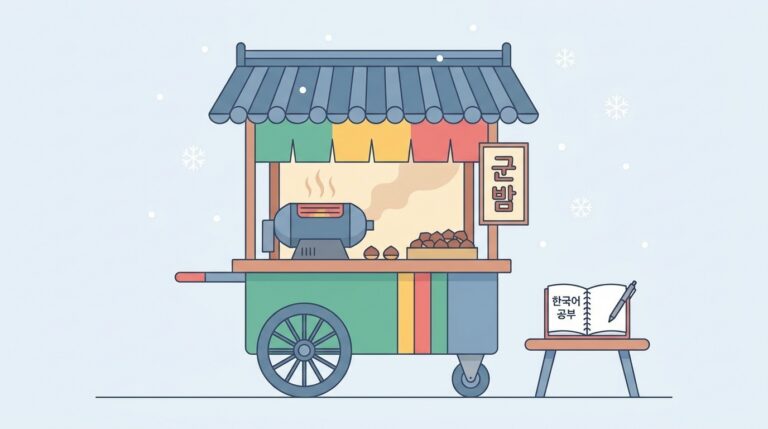
The Ultimate Winter Street Food Hack: How to Order and Peel Roasted Chestnuts Like a True Seoulite
Phase 1: 공감 (Story-Immersive Opening)
안녕하세요! 매일한글 에디터입니다. Picture a freezing winter night in Seoul. Your nose catches an irresistible aroma: smoky, caramelized, and sweet. Following the scent, you find a steel drum cart where a vendor roasts 군밤 (Gunbam – roasted chestnuts). You excitedly buy a warm paper bag, but immediately hit a wall: the shell won’t budge, inner skins stick like glue, and your fingers turn pitch black while your Korean friend pops whole golden gems with ease. You wonder, ‘Did I get a bad batch, or is there a secret?’ Peeling roasted chestnuts is a quintessential Korean street experience. This curated guide turns that messy frustration into pure winter comfort.
Phase 2: 핵심 표현 3선 심층 분석
1. 까기 쉬워요? (Kkagi swiwoyo?)
- Pronunciation: [Kkagi swiwoyo?] (Think of a crisp, sharp kka like ‘cracker’, followed by gi, then a soft swi-wo-yo like a gentle sigh).
- Meaning: Literal: “Is peeling easy?” vs. Real Nuance: “Are the shells scored properly so they pop open cleanly without crumbling into pieces?”
- K-Culture Moment: In winter slice-of-life K-dramas, street-smart protagonists always ask this before handing over their money at street carts.
- Editor’s Insight: The difference between a joyful snack and blackened fingernails is 칼집 (kaljip – knife slits). Asking this shows the vendor you know quality street food.
- Situation Spectrum: Casual: ✅ | Semi-formal: ✅ | Formal: ⚠️ (까기 쉽습니까? sounds bizarrely rigid for street snacks!)
- 🤔 Think About It: In many Western street markets, asking whether food is easy to eat might sound skeptical. In Korea, asking practical questions creates instant, warm rapport with vendors. How does direct inquiry build trust in your culture?
2. 따뜻할 때 드세요 (Ttatteushal ttae deuseyo)
- Pronunciation: [Ttatteushal ttae deuseyo] (A snappy double tt like a plucked guitar string, bouncing rhythmically: tta-tteut-hal ttae de-se-yo).
- Meaning: Literal: “Eat when warm.” vs. Real Nuance: “Savor this right now while it tastes best, because once it cools, the peel turns rock-hard!”
- K-Culture Moment: The vendor hands you a steaming brown envelope on a sub-zero night, sharing this parting phrase like an affectionate auntie.
- Editor’s Insight: Korean food culture revolves around 온도감 (ondogam – temperature sensation). Heat isn’t just about warmth; it’s considered part of the seasoning and hospitality.
- Situation Spectrum: Casual: ✅ (따뜻할 때 먹어) | Semi-formal: ✅ | Formal: ✅ (따뜻할 때 드십시오)
- 🤔 Think About It: Why is temperature linked so closely to care (jeong) in Korean culinary hospitality compared to room-temperature grab-and-go snacks in the West?
3. 껍질 잘 벗겨져요 (Kkeopjil jal beotgyeojyeoyo)
- Pronunciation: [Kkeopjil jal beotgyeojyeoyo] (Kkeop pops firmly, followed by jil, then jal, ending in beot-gyeo-jyeo-yo).
- Meaning: Literal: “The peel comes off well.” vs. Real Nuance: “Look at this—the whole shell slipped right off in one satisfying piece!”
- K-Culture Moment: Eating snacks on Korean variety shows or mukbangs where someone proudly holds up a flawless, golden chestnut kernel to the camera.
- Editor’s Insight: Notice that 벗겨지다 (beotgyeojida) is a passive verb. You are not praising your peeling skills; you are praising the chestnut for shedding its own skin smoothly!
- Situation Spectrum: Casual: ✅ (껍질 잘 벗겨져) | Semi-formal: ✅ | Formal: ⚠️
- 🤔 Think About It: Why does Korean frequently attribute actions to objects using passive constructions rather than saying “I peeled it well”?
Phase 3: 교과서 한국어 vs 진짜 한국어
Situation 1: Ordering your portion
- 📖 교과서 한국어: “군밤 일 인분을 주십시오.” (Gunbam il inbuneul jusipsio. – Please give me one portion of roasted chestnuts.)
- 🗣️ 진짜 한국어: “이모, 군밤 오천 원어치만 주세요!” (Imo, gunbam ocheon woneochiman juseyo! – Auntie, just five thousand won worth of roasted chestnuts, please!)
- 💡 왜 다를까? Street vendors rarely measure snacks in textbook ‘portions’ (인분). They sell by bill denominations (오천 원, 만 원). Addressing vendors as 이모 (Auntie) or 사장님 (Boss) builds instant friendliness.
Situation 2: Warning a friend about the scorching shell
- 📖 교과서 한국어: “주의하십시오. 온도가 매우 높습니다.” (Juuihasipsio. Ondoga maeu nopeumnida. – Caution. The temperature is extremely high.)
- 🗣️ 진짜 한국어: “앗, 조심해! 이거 방금 나와서 진짜 엄청 뜨거워.” (At, josimhae! Igeo banggeum nawaseo jinjja eomcheong tteugeowo. – Ah, watch out! These just came out, they’re super hot.)
- 💡 왜 다를까? Textbook Korean sounds like an automated public announcement. Real native speech relies on sensory exclamations like 앗 (at!) and descriptive intensifiers like 엄청 (eomcheong).
Phase 4: K-Culture 딥다이브 & 비언어적 매너
4-1. 눈치 (Nunchi) & Street Etiquette
- Don’t Tear the Bag Wide Open: Freezing wind will ruin your chestnuts in three minutes. Fold down the mouth of the brown paper bag like a collar to keep steam trapped inside.
- The Two-Thumb Pop: Never bite the shell! Look for the pre-sliced 칼집 (slit). Place both thumbs on either side of the seam and squeeze inward until it clicks open cleanly.
- The Shell Bag Courtesy: Street trash cans are scarce in Korea. Keep your broken shells tucked into a corner of the main paper bag or ask the vendor for an extra small bag rather than holding scraps in your hands.
4-2. 문화 코드 분석: Winter Nostalgia & Sharing Warmth
In Korean culture, 군밤 carts alongside 군고구마 (roasted sweet potato) roasters are emblems of seasonal nostalgia (추억, chueok). Seen frequently in classic K-dramas set in winter, cracking open a steaming chestnut and offering the pristine, unbroken nut to someone else is a universal, unspoken gesture of deep affection.
Phase 5: 실전 롤플레이 시나리오
Setting: A cold December night outside Jongno 3-ga Station Exit 4. Thick aromatic smoke curls out of a blackened rotating drum roaster manned by Master Bae (배 사장님), an energetic street vendor with thick cotton mittens.
- You: 안녕하세요, 사장님! 군밤 냄새가 너무 좋아요. (Annyeonghaseyo, sajangnim! Gunbam naemsaega neomu joayo. – Hello, boss! The roasted chestnut smell is so good.) 🎭 [Rubbing cold hands together and smiling warmly]
- Master Bae: 어서 와요! 방금 불에서 꺼내서 아주 기가 막히게 익었어. (Eoseo wayo! Banggeum buleseo kkeonaeseo aju giga makhige igeosseo. – Welcome! Just pulled them off the fire, roasted to perfection.) 🎭 [Shaking a wire basket of steaming chestnuts with a grin]
- You: 혹시 껍질 까기 쉬워요? 잘 안 벗겨질까 봐요. (Hoksi kkeopjil kkagi swiwoyo? Jal an beotgyeojilkkabwayo. – By any chance, are they easy to peel? I was worried the skin might stick.) 🎭 [Inspecting the visible cuts on the shells with interest]
- Master Bae: 걱정 마! 칼집을 깊게 넣어놔서 손으로 톡 누르면 쏙 빠져. (Geokjeong ma! Kaljibeul gipge neoeonwaseo soneuro tok nureumyeon ssok ppajyeo. – Don’t worry! I put deep slits in them, so if you press lightly, they pop right out.) 🎭 [Snapping one open with his thumbs to show the clean golden kernel]
- You: 와, 대박이네요! 그럼 오천 원어치만 포장해 주세요. (Wa, daebagineyo! Geureom ocheon woneochiman pojanghae juseyo. – Wow, amazing! Please pack five thousand won worth for me.) 🎭 [Pulling out a crisp 5,000 won banknote respectfully]
- Master Bae: 그래, 날 추운데 학생 맛있게 먹어. 덤도 몇 개 더 넣었어! (Geurae, nal chuunde haksaeng masitge meogeo. Deomdo myeot gae deo neoeosseo! – Sure thing! It’s freezing out, enjoy dear. I tossed in a few bonus ones too!) 🎭 [Scooping an extra heaping handful into your brown paper bag]
- You: 감사합니다! 따뜻할 때 친구랑 바로 나눠 먹을게요. (Gamsahamnida! Ttatteushal ttae chingurang baro nanwo meogeulgeyo. – Thank you so much! I’ll share them with my friend right away while they’re warm.) 🎭 [Receiving the paper bag with both hands and bowing slightly]
- Master Bae: 조심해서 가요! 식으면 껍질 딱딱해지니까 얼른 먹어! (Josimhaeseo gayo! Sigeumyeon kkeopjil ttakttakhaejinikka eolleun meogeo! – Take care! The shells turn rock hard once cold, so eat up quick!) 🎭 [Waving his gloved hand before turning back to the embers]
🔀 인터랙티브 분기점 (Interactive Choice)
Your friend picks up a scalding chestnut from the bag and struggles to open it. What do you say?
- Choice A: “가운데 칼집 잡고 양손 엄지로 살짝 눌러봐!” (Gaunde kaljip japgo yangson eomjiro saljjak nulleobwa! – Hold the center slit and press gently with both thumbs!)
- 🏆 Best: Perfect street food technique! The chestnut pops out cleanly without burned fingertips or crumbly mess.
- Choice B: “그냥 이빨로 껍질을 깨물어 봐.” (Geunyang ippallo kkeopjileul kkaemureo bwa. – Just bite the shell with your teeth.)
- 🚫 Bad: Ouch! The charred outer shell will cover your friend’s lips in black soot and risk chipping a tooth.
- Choice C: “식으면 먹자, 지금은 너무 뜨거우니까.” (Sigeumyeon meokja, jigeumeun neomu tteugeounikka. – Let’s eat when it cools down, it’s too hot right now.)
- ⚠️ Risk: Sounds cautious, but cold roasted chestnuts contract; the fuzzy inner skin adheres like glue to the nut, making it impossible to peel cleanly.
Phase 6: 10초 감정 섀도잉 드릴
[🤤 군침을 삼키며 감탄하듯이 - Drooling with excitement]
“와, / 냄새 진짜 미쳤다… / 군밤 오천 원어치만 주세요!” (Wa, / naemsae jinjja michyeotta… / gunbam ocheon woneochiman juseyo!)[🤔 호기심 가득하고 조심스럽게 - Curious and polite]
“사장님, / 이거 칼집 잘 들어가서 / 껍질 쏙 벗겨져요?” (Sajangnim, / igeo kaljip jal deureogaseo / kkeopjil ssok beotgyeojyeoyo?)[🥰 따뜻하고 감동받은 목소리로 - Touched and grateful]
“덤까지 주시다니, / 정말 감사해요! / 따뜻할 때 바로 먹을게요.” (Deomkkaji jusidani, / jeongmal gamsahaeyo! / Ttatteushal ttae baro meogeulgeyo.)
Phase 7: K-Culture 미니 사전
- 군밤 (Gunbam): Roasted chestnuts. The prefix 군 comes from 구운 (baked/roasted). A winter street staple sold from metal barrel roasters.
- 칼집 (Kaljip): Knife scoring/slit. Essential cuts made across chestnut shells before roasting to let trapped steam escape and ensure peelability.
- 종이봉투 (Jong-ibongtu): Brown paper envelope. Breathable paper packaging that retains roasting heat while preventing condensation from making the nuts soggy.
- 덤 (Deom): A complimentary bonus portion. The traditional Korean custom of tossing in extra items without extra charge to express generosity (jeong).
Phase 8: 여행자를 위한 생존 키트
Survival Expressions TOP 3
- 현금 결제만 되나요? (Hyeongeum gyeoljeman doenayo? – Is it cash only?)
- Pro Tip: Traditional street carts rarely accept foreign cards. Having crisp 1,000 and 5,000 KRW bills ready is essential.
- 껍질 버릴 봉투 하나만 더 주실 수 있나요? (Kkeopjil beoril bongtu hanaman deo jusil su innayo? – Could you give me one extra bag for the peels?)
- Pro Tip: Asking for a scrap bag early keeps your coat pockets clean while walking through Seoul.
- 제일 따뜻한 걸로 골라주세요! (Jeil ttatteushan geollo golrajuseyo! – Please pick out the warmest ones!)
- Pro Tip: Vendors will happily scoop from the middle of the heated drum where roasting coals are warmest.
Editor’s Travel Note
Always carry 5,000 to 10,000 KRW in cash for winter street vendors. While local Koreans pay using bank transfers, international visitors rely on cash. To discover bustling street food markets near you, check the 네이버 지도 앱 다운로드 to locate historic night markets like Jongno, Namdaemun, or Mangwon.
Phase 9: “한 발 더 깊이” (생각 질문)
Korean street food culture is built upon 온기 (ongi – radiant physical and human warmth). When the biting wind blows through Seoul, gathering near a glowing charcoal drum roaster dissolves boundaries between vendors and strangers. Peeling a scorching chestnut and handing the golden kernel to a loved one represents an everyday ritual of affection (jeong). Food in Korea is rarely just fuel; warmth is an interactive community experience.
💬 Your Turn: Does your culture have a seasonal comfort food that people gather around in the cold? How do you tell someone to enjoy their food while it’s fresh and hot? Let’s chat in the comments below!
Phase 10: FAQ & 오해 방지 (FAQ Schema)
Q: How can I tell if street chestnuts are freshly roasted or have been sitting out?
A: Look at the drum and shell sheen. Freshly roasted chestnuts have a glossy, dark caramel coat with active steam drifting from the basket. Stale ones appear matte, dry, and shrunken.
Q: Can I use an international credit card at street food carts?
A: No. The vast majority of mobile street carts do not possess card readers. Always carry physical cash (현금, hyeongeum).
Q: What should I do if the chestnut shell is totally stuck to the meat?
A: If the shell refuses to crack, gently roll the chestnut between your palms to crack the brittle outer hull, then pull the inner skin along the ridge.
🚨 흔한 실수 (Common Mistakes) 경고판
- Biting the shell directly with teeth: Never do this! The scorched shell is rock-hard and covered in fine soot. Correct Action: Squeeze the scored slit (칼집) with both thumbs.
- Tossing shells onto the sidewalk: Street littering can incur fines. Correct Action: Save empty shells inside the brown bag or use an extra paper cup until you find a bin.
- Leaving the bag wide open to cool: Leaving the bag unsealed turns inner skins leathery. Correct Action: Fold the bag opening down to seal in warmth between bites.
Phase 11: 액션 미션 & 참여 유도
- Bronze Mission: Stand before a mirror and practice saying: “군밤 오천 원어치만 주세요!” (Gunbam ocheon woneochiman juseyo!) with rhythm and confidence.
- Silver Mission: Take a photo of your favorite winter street snack and post it with the caption: “따뜻할 때 드세요! #DailyHangul #KoreanStreetFood”.
- Gold Mission: Order from a real Korean street cart, ask “까기 쉬워요?” (Kkagi swiwoyo?), and peel your chestnut cleanly on the first try!
- 🎮 K-Culture Mission: Watch a winter scene from a K-drama like Reply 1988 and spot the street food cart. Listen carefully to what phrase the characters use when buying snacks!
Phase 12: 인터랙티브 퀴즈 챌린지
- Situational Judgment: Your friend sets aside their warm bag of roasted chestnuts to eat three hours later at their hotel. What is the most natural Korean advice?
- A) “차갑게 식혀서 먹어야 맛있어!” (Chagapge sikhyeoseo meogeoya masisseo!)
- B) “따뜻할 때 먹어야 껍질이 잘 벗겨져!” (Ttatteushal ttae meogeoya kkeopjili jal beotgyeojyeo!)
- C) “내일 아침에 전자레인지에 돌려먹자.” (Naeil achime jeonjareinjie dollyeomeokja.)
- Fill-in-the-Blank: 사장님, 군밤 껍질이 잘 ( _____ ) 칼집 깊게 넣어주세요! (Boss, please score them deeply so the peel comes off well!)
- A) 벗겨지게 (beotgyeojige)
- B) 찢어지게 (jjijeojige)
- C) 깨지게 (kkaejige)
- True or False Culture Quiz: In Korea, asking for or receiving 덤 (deom – extra bonus chestnuts) is considered rude and greedy.
- [True / False]
👉 Click here to reveal the answers and explanations!
- Answer: B – Roasted chestnuts become rigid and sticky as they cool; advising someone to eat them while warm (따뜻할 때) guarantees easy peeling.
- Answer: A (벗겨지게) – The natural verb for peeling skin/shells cleanly in Korean is 벗겨지다.
- Answer: False – 덤 is a cherished expression of street generosity (jeong). Vendors happily toss in bonus snacks to warmhearted customers!







