

Phase 1: Empathy & Storytelling Opening
안녕하세요! 매일한글 에디터입니다. (Hello! It is your Daily Hangul editor.)
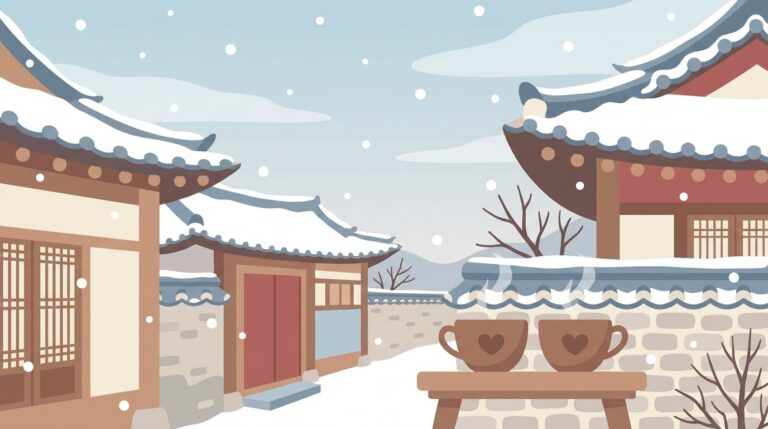
Picture this: you are nestled in a warm, wood-accented café in Seoul’s Ikseon-dong on a crisp December afternoon. You are sipping a steaming cup of yuzu tea when suddenly, a collective gasp ripples through the room. Someone near the window whispers excitedly, “첫눈 온다!” (It’s the first snow!). Within seconds, people pull out their phones, smiles spreading across their faces. Then, your phone buzzes. It is a KakaoTalk message from that Korean friend—or maybe someone you have been subtly flirting with—saying:
“우리 첫눈 오면 만나기로 한 거 기억해?” (Uri cheotnun omyeon mannagi-ro han geo gieokhae? / Do you remember our promise to meet when the first snow falls?)
Panic kicks in. Is this an affectionate joke? An official romantic confession? Why does the entire country treat the first snowfall as if the nation walked straight onto a K-drama set? Over the past ten years coaching intermediate learners, I have watched so many students freeze up during this exact cultural moment. In Korea, the arrival of “첫눈” (cheotnun) is not merely a meteorological update; it is an emotionally charged social ritual layered with unspoken affection, vulnerability, and romantic folklore.
By mastering these B2-level conversational patterns, you will navigate winter romance with elegance, understand native subtext instantly, and speak with the refined warmth of a true Seoul insider.
Phase 2: Core Expressions Deep Dive
1. 첫눈 오면 뭐 해? (Cheotnun omyeon mwo hae?)
- Pronunciation: [Cheot-nun o-myeon mwo hae?] (Sounds like Chut-noon oh-myeon mwo hae — think of English “shut” with a ‘ch’ sound followed by “noon”)
- Meaning: Literal: “What do you do when the first snow falls?” | Real Nuance: “Are you free to spend the magical first snow with me?” (Subtle invitation/romantic temperature check)
- K-Culture Moment: The quintessential scene in campus romance dramas where the lead character casually asks their crush this question while pretending to look at their class schedule.
- Editor’s Insight: Asking someone about their first snow plans in Korea is never neutral small talk. Because of the cultural belief that love sparked during the first snow endures, asking this question implies you want that shared memory with them.
- Situation Spectrum: Casual: ✅ | Semi-formal: ⚠️ | Formal: 🚫
- 🤔 Think About It: Why do cultures link fleeting seasonal phenomena to romantic permanence instead of permanent things like statues or buildings?
2. 설레어서 잠이 안 와 (Seolleeoseo jami an wa)
- Pronunciation: [Seol-le-eo-seo ja-mi an wa] (Sounds like Seoul-leh-uh-suh jah-mee ahn wah — smooth liquid ‘l’ sound)
- Meaning: Literal: “Because my heart flutters, sleep doesn’t come” | Real Nuance: “I am so giddy with butterflies that I can’t sleep at all.”
- K-Culture Moment: The late-night phone call in an indie K-drama after two characters agree to meet tomorrow morning in the snow.
- Editor’s Insight: Korean has diverse terms for excitement. “신나다” (sinnada) is high-energy, bouncy excitement (like going to a concert), while “설레다” (seolleda) captures sweet, heart-fluttering anticipation laden with vulnerability.
- Situation Spectrum: Casual: ✅ | Semi-formal: ✅ | Formal: ⚠️
- 🤔 Think About It: How does your native language distinguish active energetic joy from quiet romantic anticipation?
3. 눈 오니까 네 생각나더라 (Nun onikka ne saeng-gaknadeora)
- Pronunciation: [Nun o-ni-kka ne saeng-gang-na-deo-ra] (Sounds like Noon oh-nee-kkah neh seng-gahk-nah-duh-rah)
- Meaning: Literal: “Because it is snowing, I thought of you” | Real Nuance: “The snow gave me the perfect emotional excuse to admit you have been on my mind.”
- K-Culture Moment: The bittersweet winter text sent across a quiet distance that rekindles an unresolved romance.
- Editor’s Insight: The retrospective ending “-더라” (-deora) frames the realization as a reflective epiphany that came naturally to the speaker, reducing the awkward pressure on the listener.
- Situation Spectrum: Casual: ✅ | Semi-formal: ⚠️ | Formal: 🚫
- 🤔 Think About It: How do indirect grammatical endings in Korean allow speakers to lower the social risk of emotional honesty?
Phase 3: Textbook Korean vs. Real Korean
Situation 1: Suggesting a spontaneous meetup on a snowy evening
* 📖 교과서 한국어: 첫눈이 내릴 때 우리 만납시다. (Cheotnuni naeril ttae uri mannapsida. / Let us meet when the first snow falls.)
* 🗣️ 진짜 한국어: 첫눈 오면 무조건 접선하는 거다? (Cheotnun omyeon mujogeon jeopseonhaneun geoda? / When the first snow falls, we are definitely linking up, deal?)
* 💡 왜 다를까?: The verb “접선하다” (jeopseonhada), which originally meant clandestine rendezvous in espionage, is playfully used by young Koreans to make meeting up sound like a thrilling, conspiratorial adventure.
Situation 2: Admiring the aesthetic winter atmosphere
* 📖 교과서 한국어: 눈이 오는 날씨가 매우 아름답습니다. (Nuni oneun nalssiga maeu areumdapseumnida. / Snowy weather is very beautiful.)
* 🗣️ 진짜 한국어: 와, 눈 내리는 거 보니까 완전 감성 터진다. (Wa, nun naerineun geo bonikka wanjeon gamseong teojinda. / Wow, watching the snow fall brings out all the aesthetic nostalgic feels!)
* 💡 왜 다를까?: “감성 터지다” (gamseong teojinda) captures that modern Korean sentiment where sensory stimuli (snow, warm café lights, music) trigger intense aesthetic and emotional nostalgia.
Phase 4: K-Culture Deep Dive & Non-verbal Manners
4-1. 눈치 (Nunchi) & Body Language
When someone brings up the first snow in front of you, aggressive direct eye contact can feel overwhelming. Instead, use soft, shared sightlines: look toward the falling snowflakes together outside the window, tilting your head slightly. If someone catches a snowflake in their gloved palm and shows it to you, leaning in slightly with a quiet smile is the ultimate non-verbal confirmation that you understand and share the mood. High-fives or loud jokes at this moment break the fragile romantic spell!
4-2. Cultural Code: The First Snow Folklore
Why does Korea obsess over first snow? Traditional folklore holds that the first snowfall blankets all old dust, purifying misunderstandings and sins. Modern popular culture transformed this belief into a tender romance code: confessions uttered under the first snowfall will never fail, and couples who witness it together will enjoy long-lasting bonds. Classic winter dramas like Goblin (도깨비) and Winter Sonata (겨울연가) cemented this urban romance myth across modern Asia.
Phase 5: Real-Life Roleplay Scenario
Setting: A cozy hanok café overlooking the stone walls of Samcheong-dong. Steam rises from two mugs. Heavy snowflakes drift past the window. Your Korean colleague/crush, Min-woo (민우), gazes outside.
- 민우 (Min-woo): 밖을 봐, 대박… 창밖에 눈 날리기 시작했어. (Bakkeul bwa, daebak… changbakke nun nalligi sijakhaesseo. / Look outside, incredible… snow started fluttering past the window.) [🎭 Leaning forward, eyes bright with excitement]
- You: 와, 진짜네! 이게 올해 첫눈인가? (Wa, jinjjane! Ige olhae cheotnun-inga? / Wow, it really is! Is this the first snow of the year?) [🎭 Pressing both hands against the warm mug and looking out]
- 민우 (Min-woo): 응, 맞아. 근데 우리 예전에 한 약속 기억나? (Eung, maja. Geunde uri yejeone han yaksok gieongna? / Yeah, it is. By the way, do you remember the promise we made before?) [🎭 Smiling shyly while tracing the rim of his cup]
- You: 무슨 약속? 내가 깜빡했나 봐. (Museun yaksok? Naega kkamppakhaenna bwa. / What promise? I must have spaced out.) [🎭 Tilting head with curiosity]
- 민우 (Min-woo): 첫눈 오면 무조건 제일 먼저 만나기로 했잖아. (Cheotnun omyeon mujogeon jeil meonje mannagi-ro haetjana. / We promised that when the first snow falls, we’d meet each other before anyone else.) [🎭 Looking directly into your eyes with genuine sincerity]
- You: 아, 맞다! 설마 그거 진심이었어? (A, matda! Seolma geugeo jinsim-ieosseo? / Ah, right! Don’t tell me you were being completely serious?) [🎭 Chuckling softly to mask a sudden heart flutter]
- 민우 (Min-woo): 난 완전 진심이었는데. 오늘은 딴 사람 만나지 마. (Nan wanjeon jinsim-ieonneunde. Oneureun ttan saram mannaji ma. / I was completely serious. Don’t meet anyone else today.) [🎭 Lowering his voice to a tender, teasing tone]
- You: 알겠어. 그럼 오늘 저녁은 네가 책임지는 거지? (Algesseo. Geureom oneul jeonyeogeun nega chaegimjineun geoji? / Deal. Then you’re taking full responsibility for dinner tonight, right?) [🎭 Beaming with playful warmth]
🔀 Interactive Choice Point
How would you keep this romantic momentum going?
* Choice A: “그럼 우리 눈사람 만들러 갈래? 동심으로 돌아가자!” (Geureom uri nunsaram mandeulleo gallae? Dongsimeuro doragaja! / Then should we go build a snowman? Let’s be kids again!)
* Feedback (Best): Perfect balance! Playful, romantic, and inviting shared physical activity without being awkwardly intense.
* Choice B: “근데 저녁에 친구랑 약속 있는데 어쩌지…” (Geunde jeonyeoge chin-gurang yaksok inneunde eojjeoji… / But I have plans with a friend this evening, what should I do…)
* Feedback (Bad): Mood killer. Completely disregards the cultural subtext of his gentle confession.
* Choice C: “그럼 우리 이제부터 1일인 거야?” (Geureom uri ijebuteo iririn geoya? / So are we officially dating starting from day one today?)
* Feedback (Risk): A bit too hasty. Skipping the delicate “some” (flirting) stage can startle the other person.
Phase 6: 10-Second Emotion Shadowing Drill
[😊 기쁘고 신나게 / Joyful and bubbly]
“창밖 좀 봐! / 드디어 / 첫눈 온다!” (Changbak jom bwa! / Deudieo / cheotnun onda! / Look out the window! Finally, the first snow is falling!)-
[🥺 아쉽고 애교 섞어서 / Longing with sweet aegyo]
“첫눈 오면 보기로 해놓고… / 왜 연락도 없어?” (Cheotnun omyeon bogiro haenoko… / wae yeollakdo eopseo? / We agreed to meet on the first snow… how come you didn’t even message?) -
[💖 조심스럽고 다정하게 / Tender and vulnerable]
“눈 오니까… / 문득 네 얼굴이 / 제일 먼저 떠오르더라.” (Nun onikka… / mundeuk ne eolguri / jeil meonje tteooreudeora. / Because it’s snowing… your face was the very first thing that crossed my mind.)
Phase 7: K-Culture Mini Dictionary
- 첫눈 (Cheotnun) | First snowfall of the winter | Far more than weather; it signifies a cultural reset button, clean slates, and tender confessions.
- 낭만 (Nangman) | Romance / Poetic mood | Used in phrases like “낭만 있다” (It possesses poetic romance), celebrating aesthetic winter moments.
- 접선 (Jeopseon) | Secret link-up / Rendezvous | Slang among close friends and crushes meaning to meet up excitedly on special days.
- 눈맞춤 (Nunmatchum) | Eye contact (also wordplay with snow) | Sharing a synchronized visual gaze; culturally tied to romantic winter connection.
Phase 8: Traveler’s Survival Kit
Survival Phrases TOP 3
- 오늘 첫눈 올 확률 높대요! (Oneul cheotnun ol hwangryul nopdaeyo!)
- Meaning: “They say there’s a high chance of first snow today!”
- Pro Tip: An unbeatable icebreaker with café baristas or taxi drivers on freezing mornings.
- 눈길 조심해서 들어가세요. (Nungil josimhaeseo deureogaseyo.)
- Meaning: “Watch your step on the icy roads on your way home.”
- Pro Tip: The warmest, most thoughtful way to say goodbye to acquaintances on snowy nights.
- 눈 오는데 사진 한 장만 찍어주실래요? (Nun oneunde sajin han jangman jjigeojusillaeyo?)
- Meaning: “Since it’s snowing, could you please take a photo of me?”
- Pro Tip: Use this at royal palaces like Gyeongbokgung for instant, friendly assistance.
Editor’s Travel Note
When Seoul’s first snow lands, hilly neighborhoods like Haebangchon, Itaewon, and Bukchon quickly turn slippery. Download the [Naver Map app transit guide] to keep track of real-time bus detour announcements and subway schedules. Relying on subways over taxis will save your schedule during snowy gridlock!
Phase 9: 한 발 더 깊이 (One Step Deeper)
In hyper-connected, high-density Korean society, shared atmospheric changes create collective emotional waves. When snow falls across Seoul, millions of people look at the exact same sky through apartment windows and office towers simultaneously. The obsession with “첫눈” reflects the deep Korean concept of 인연 (in-yeon)—destined human connections. Because the first snow melts away so quickly, promising to spend that fleeting moment with someone turns everyday time into something sacred and unforgettable.
💬 Your Turn: Does your home culture have a seasonal event that serves as an excuse for romance or reconnecting? Tell me in the comments below!
Phase 10: FAQ & Common Mistakes
Q: Does asking someone out on the first snow always mean a romantic confession?
A: Not 100%, but it carries at least an 80% romantic implication among single people of opposite or preferred genders! Between platonic friends, it is framed playfully as a joke or an excuse to eat hot food and drink makgeolli.
Q: If it snows at 3:00 AM while everyone is asleep, does that count as 첫눈?
A: Officially yes, but culturally no! The true emotional “첫눈” is the first snowfall that people actively see and share during daylight or conscious evening hours.
Q: Can I say “첫눈 오면 만나요” to my workplace boss or senior colleagues?
A: Be careful! Unless you share an unusually close sibling-like bond, asking a supervisor this can lead to awkward misunderstandings due to the phrase’s romantic baggage.
🚨 Common Mistakes Alert
- Mistake 1: Confusing pronunciation of 눈 (Snow vs. Eye). While spelled identically, snow traditionally carried a longer vowel sound in standard dialect, though context will almost always save you.
- Mistake 2: Using overly rigid formal verb endings with romantic interests. Saying “첫눈이 내리니 저와 교제합시다” sounds like a 19th-century historical drama. Keep it natural with intermediate colloquial endings like “-자” or “-ㄹ래(요)?”.
- Mistake 3: Ignoring a first snow text as spam. If a Korean friend texts you “눈 온다!”, they are extending an affectionate emotional antenna. Always reply with warmth!
Phase 11: Action Missions
- 🥉 Bronze Mission (Solo): Stand before a mirror and practice Phase 6’s Shadowing Drill 3 three times with gentle, nostalgic eyes.
- 🥈 Silver Mission (Social): Share a photo of winter weather on your Instagram or Threads story with the Korean caption: 올해 첫눈은 누구랑 볼까? ❄️ (Who will I watch this year’s first snow with?).
- 🥇 Gold Mission (Real-Life): The very next time snowflakes fall, text a Korean friend or crush: 눈 오니까 네 생각나더라. (Because it’s snowing, I thought of you.)
- 🎮 K-Culture Mission: Stream EXO’s iconic winter song “첫눈 (The First Snow)” or listen to a winter drama OST and identify how the artists pronounce “첫눈” and “설레다”.
Phase 12: Interactive Quiz Challenge
1. Situational Judgment:
Your Korean crush texts you a photo of snowflakes outside their window with the message: “창밖 봐봐! 첫눈 오네…” What is the most culturally savvy intermediate response?
a) “네, 일기예보에서 눈 온다고 했습니다.” (Yes, the weather forecast said it would snow.)
b) “우와, 진짜 예쁘다! 우리 따뜻한 거 마시러 갈래?” (Wow, it’s so pretty! Want to go grab something warm to drink?)
c) “운전 조심하세요. 빙판길 위험합니다.” (Drive carefully. Icy roads are dangerous.)
Click for the Answer & Explanation
Correct Answer: b)
Explanation: Option b acknowledges the aesthetic magic of the snow and uses the shared emotional moment to propose a cozy date. Option a is stiff like a robot, and option c sounds like an automated public safety alert!
2. Fill-in-the-Blank:
눈 오는 거 보니까 옛날 추억이 생각나서 완전 _______ 터진다.
(Hint: The modern Korean phrase for overflowing aesthetic and emotional nostalgic sentiment)
Click for the Answer & Explanation
Correct Answer: 감성 (Gamseong)
Explanation: “감성 터지다” is the exact modern expression used when seasonal atmospheres evoke profound emotional nostalgia.
3. True or False Culture Check:
True or False: In Korea, romantic promises made during the first snow are considered meaningless small talk with zero emotional weight.
Click for the Answer & Explanation
Correct Answer: False
Explanation: Korean urban culture and media endow the first snow with heavy romantic symbolism representing truthful confessions and lasting love.







