

Phase 1: Empathy (Story Immersion Opening)
안녕하세요! 매일한글 에디터입니다.
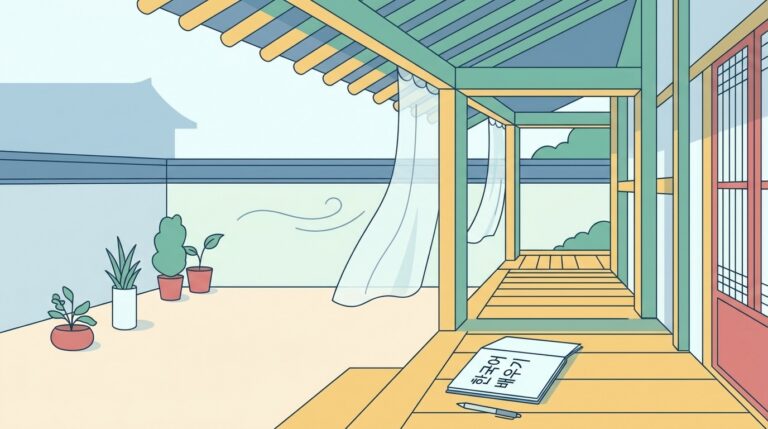
Have you ever found yourself standing in the scorching, humid heat of a Korean midsummer, wondering how people survived before modern air conditioning? A student of mine, David, recently visited an old Hanok village in Andong during late July. The humidity was over 85%, and he felt completely drained. But the moment his Korean host invited him to take off his shoes and step onto the Daecheongmaru (대청마루, open wooden hall), David felt an instantaneous, refreshing breeze sweeping right across his skin. His host casually remarked, “여기 맞바람이 솔솔 쳐서 시원하죠?” (Yeogi matbaram-i solsol chyeoseo siwonhajyo? / “A cross-breeze is gently blowing through here, so it feels cool, right?”).
David froze. He knew the basic word for wind (baram), but idioms like matbaram (맞바람) and advanced sensory descriptions of Hanok architectural physics were nowhere to be found in his standard intermediate flashcards. That is exactly where advanced C1 fluency begins: connecting Korea’s profound architectural philosophy—where houses are built not to block nature, but to invite it in—with vibrant, sensory Korean expressions. This guide is crafted from real classroom debriefs and architectural field trips to equip you with sophisticated conversational tools while understanding the ingenious thermal engineering of Hanok.
Phase 2: Core Expressions Deep Dive
1. 맞바람이 치다 (Matbaram-i chida)
- Pronunciation: [Mat-ba-ram-i chi-da] (Think of mat like the English word ‘mutt’, baram like ‘bah-rahm’, and chi-da like the beginning of ‘cheetah’)
- Meaning: Literal: “A front-facing collision wind strikes.” / Nuanced: Two opposing airflow drafts create an invigorating cross-breeze through an open space.
- K-Culture Moment: In period dramas like Mr. Sunshine, elders open both front and rear sliding lattice doors to let the breeze flow seamlessly while sipping barley tea.
- Editor’s Insight: While baram-i bulda (바람이 불다) merely states that wind is blowing, matbaram-i chida illustrates fluid spatial ventilation where front and back air currents collide and harmonize.
- Situation Spectrum: Casual: ✅ | Semi-formal: ✅ | Formal: ✅
- 🤔 Think About It: Why does Korean emphasize directional confrontation (mat-) turning into natural comfort? How does your native language describe opposing drafts?
2. 마루에 걸터앉다 (Maru-e geolteon-anda)
- Pronunciation: [Ma-ru-e geol-teo-an-da] (Pronounce maru as ‘mah-roo’, geol like ‘gull’, and anda like ‘ahn-tah’)
- Meaning: Literal: “To sit straddled on the wooden floor edge.” / Nuanced: To sit comfortably with your legs dangling freely off the elevated floor ledge, taking in the courtyard breeze.
- K-Culture Moment: Seen in modern slice-of-life K-dramas (like Our Beloved Summer) when characters sit thoughtfully on the edge of a veranda with a glass of iced tea.
- Editor’s Insight: Geolteoda implies perching effortlessly on an elevated edge rather than formal cross-legged floor sitting (yangban-dari). It conveys leisure, openness, and spontaneous pause.
- Situation Spectrum: Casual: ✅ | Semi-formal: ✅ | Formal: ⚠️
- 🤔 Think About It: What cultural value connects physical posture with architectural boundaries between the indoors and outdoors?
3. 자연을 거스르지 않다 (Jayeon-eul geoseureuji anta)
- Pronunciation: [Ja-yeon-eul geo-seu-reu-ji an-ta] (Say jayeon like ‘jah-yuhn’, geoseureu like ‘guh-seu-reu’, and anta like ‘ahn-tah’)
- Meaning: Literal: “To not defy or go against nature.” / Nuanced: Designing or living in complete harmony with natural environmental currents and rhythms.
- K-Culture Moment: Frequently used in architectural documentaries on Arirang TV and historical dramas when master carpenters explain Hanok’s positioning.
- Editor’s Insight: This phrase captures the core philosophy of Korean aesthetics: working alongside wind, topography, and sunlight rather than dominating the landscape.
- Situation Spectrum: Casual: ⚠️ | Semi-formal: ✅ | Formal: ✅
- 🤔 Think About It: In Western architecture, humans often insulate themselves against nature. How does your language express humility toward natural landscapes?
Phase 3: Textbook Korean vs. Real Korean
Situation 1: Explaining how cool the open hallway feels
* 📖 교과서 한국어: “이 구조는 통풍이 잘되어서 매우 시원합니다.” (I gujoneun tongpung-i jaldoe-eoseo maeu siwonhamnida. / “This structure has good ventilation, so it is very cool.”)
* 🗣️ 진짜 한국어: “앞뒤 문을 다 여니까 맞바람 쳐서 에어컨 튼 것처럼 서늘하네요!” (Apdwi muneul da yeonikka matbaram chyeoseo eeokeon teun geotcheoreom seoneulhaneyo! / “Opening both front and back doors brings such a cross-breeze; it’s chillingly cool just like turning on an air conditioner!”)
* 💡 왜 다를까? Native speakers favor tactile and kinetic imagery (matbaram chida, seoneulhada) over sterile engineering terminology (tongpung-i jaldoeda).
Situation 2: Admiring the environmental architectural design
* 📖 교과서 한국어: “한옥은 친환경적인 건축 양식입니다.” (Hanog-eun chinhwan-gyeongjeog-in geonchuk yangsig-imnida. / “Hanok is an eco-friendly architectural style.”)
* 🗣️ 진짜 한국어: “바람길을 그대로 터줘서 자연을 전혀 거스르지 않는 구조네요.” (Baramgireul geudaero teojwoseo jayeoneul jeonhyeo geoseureuji anneun gujoneyo. / “It clears the path for the wind directly, truly embodying a structure that doesn’t resist nature.”)
* 💡 왜 다를까? C1 discourse incorporates visual poetic idioms like baramgil (wind road) and philosophical verbs like geoseureuji anta.
Phase 4: K-Culture Deep Dive & Non-Verbal Manners
4-1. Nunchi & Physical Posture
Stepping onto a Hanok’s Daecheongmaru demands keen socio-cultural awareness (nunchi). The wooden surface is made of polished pine or zelkova (marubadak), treated with natural perilla oil.
* Always slip out of your footwear at the stone stepping threshold (didimdol, 디딤돌) and step up with bare or clean socked feet.
* Never step on the wooden door sills (munteok, 문턱)—traditionally believed to guard household fortune.
* When sitting on the Daecheongmaru edge, dangle your legs calmly without swinging them aggressively, maintaining poised eye contact with your host.
4-2. Cultural Code: The Microclimate Physics of Baesanimsu
The ventilation of Daecheongmaru isn’t mere luck; it is empirical physics rooted in Baesanimsu (mountains behind, river in front). The sunny front courtyard (madang) is left bare with pale sand, heating up quickly to create rising warm air. Meanwhile, the shaded rear garden (dwittul) tucked under the mountain stays cool. When you lift open the suspended paper doors (deureoyeolgaemun), the pressure difference between the hot front and cool back sucks a constant, natural draft right across the Daecheongmaru.
Phase 5: Real-Life Roleplay Scenario
Setting: You are visiting an antique Hanok residence in Gangneung on an August afternoon with Master Carpenter Han (한 대목장).
- Master Han: “날이 참 무덥지요? 이리 올라와서 대청마루에 걸터앉으세요.” (Nari cham mudeopjiyo? Iri ollawaseo daecheongmarue geolteon-anseyeo. / “It’s quite sweltering today, isn’t it? Come up here and perch on the wooden hall.”)
- You: 🎭 [Nodding courteously, taking off shoes at the didimdol] “감사합니다, 대목장님. 마루에 앉자마자 발바닥부터 시원해지네요.” (Gamsahamnida, daemokjangnim. Marue anjjamaja balbadakbuteo siwonhaejineyo. / “Thank you, Master Carpenter. As soon as I sit on the floor, it feels cooling from the soles of my feet up.”)
- Master Han: 🎭 [Points toward the backyard tree line] “뒤뜰 쪽 문을 좀 들어 올려볼 테니 바람이 어떻게 도는지 느껴보세요.” (Dwittul jjok muneul jom deureo ollyeobol teni barami eotteoke doneunji neukkyeoboseyo. / “I’ll lift open the rear courtyard doors; feel how the wind circulates.”)
- You: 🎭 [Gazing through the opened lattice doors] “와, 앞뒤가 통하니까 맞바람이 확 치는 게 느껴져요!” (Wa, apdwiga tonghanikka matbarami hwak chineun ge neukkyeojyeoyo! / “Wow, with the front and rear connecting, I can feel a rush of cross-ventilation sweeping through!”)
- Master Han: “허허, 바로 그겁니다. 인위적으로 막지 않고 바람길을 터주는 게 우리 한옥의 묘미지요.” (Heoheo, baro geugeomnida. Inwijeogeuro makji anko baramgireul teojuneun ge uri hanogui myomijiyo. / “Haha, that’s precisely it. Clearing the wind’s natural path without artificially blocking it is the true beauty of our Hanok.”)
- You: “정말 자연을 거스르지 않는 조상들의 지혜가 피부로 와닿습니다.” (Jeongmal jayeoneul geoseureuji anneun josangdeurui jihyega piburo wadatsumnida. / “The wisdom of your ancestors living in harmony with nature truly touches my senses.”)
- Master Han: 🎭 [Handing you a cup of iced persimmon punch] “그렇게 깊이 이해해주니 집을 지은 보람이 납니다. 시원하게 목 좀 축이세요.” (Geureoke gipi ihaehaejuni jibeul jieun borami namnida. Siwonhage mok jom chugiseyo. / “Hearing you understand it so deeply makes building this house worthwhile. Refresh your throat with this cold drink.”)
- You: 🎭 [Holding the cup with two hands, bowing slightly] “시원한 바람과 귀한 차까지 대접해주셔서 정말 감사합니다.” (Siwonhan baramgwa gwihan chakaji daejeophaejusyeoseo jeongmal gamsahamnida. / “Thank you so much for treating me to both the cooling breeze and this precious tea.”)
🔀 Interactive Decision Point: How should you respond if asked how Hanok compares to Western modern houses?
* Choice A: “현대식 집은 밀폐해서 에어컨을 틀지만, 한옥은 바람길을 열어 상생하는 점이 경이롭습니다.” (Best: Philosophical, demonstrates advanced vocabulary sangsaeng and architectural comparison)
* Choice B: “에어컨이 없어도 살 수 있어서 전기세가 덜 나와 좋네요.” (Risk: Overly practical, misses the cultural aesthetic tone)
* Choice C: “한옥풍 아파트에 살면 좋겠어요.” (Bad: Casual non sequitur that disregards the host’s philosophical insight)
Phase 6: 10-Second Emotional Shadowing Drill
Practice reading these out loud, observing cadence pauses marked by /.
- Drill 1:
[😌 감탄하며 평온하게]“앞뒤 문을 활짝 여니 / 맞바람이 솔솔 불어서 / 더위가 싹 가시네요.” (Apdwi muneul hwaljjak yeoni / matbarami solsol bureoseo / deowiga ssak gasineyo. / “Opening both doors wide / brings a gentle cross-breeze / that completely chases away the heat.”) - Drill 2:
[🧐 지적이고 감명받은 어조로]“바람길을 억지로 틀지 않고 / 자연의 결을 따르는 것이 / 대청마루의 진가군요.” (Baramgireul eokjiro teulji anko / jayeonui gyeoreul ttareuneun geosi / daecheongmaruui jingagunyo. / “Not forcing the wind’s route / but following the grain of nature / is the true value of the Daecheongmaru.”)
Phase 7: K-Culture Mini Dictionary
- 대청마루 (Daecheongmaru) | Central elevated wooden hall | The unheated central wooden porch in traditional Hanok connecting inner rooms while serving as the primary summer cooling station.
- 들어열개문 (Deureoyeolgaemun) | Suspended lift-up lattice doors | Hanok doors hinged at the top that can be hoisted upward and hooked onto the ceiling beams to unite indoor and outdoor spaces.
- 바람길 (Baramgil) | Windway / Natural wind corridor | Architectural or topographical channels thoughtfully left unobstructed to encourage continuous natural ventilation.
- 차경 (Chagyeong) | Borrowed scenery | The traditional East Asian landscape philosophy of using windows and open halls as empty picture frames that bring nature inside.
Phase 8: Traveler’s Survival Kit
- Survival Phrase 1: “혹시 문을 들어 올려서 고정해도 될까요?” (Hoksi muneul deureo ollyeoseo gojeonghaedo doelkkayo? / “Could I lift and hook these doors up to the ceiling?”)
- Pro Tip: Never force traditional wooden latches; always ask your Hanok host first.
- Survival Phrase 2: “마루 바닥이 미끄러우니 조심하세요.” (Maru badagi mikkeureouni josimhaseyo. / “The wooden floor is slippery, so please be careful.”)
- Pro Tip: Newly oiled maru floors can be slippery when wearing cotton socks.
- Survival Phrase 3: “뒤뜰 바람이 참 상쾌하네요.” (Dwittul barami cham sangkwaehaneyo. / “The breeze from the rear garden is delightfully crisp.”)
- Pro Tip: Complimenting the rear garden (dwittul) shows elite knowledge of Hanok thermal architecture.
Editor’s Travel Note: To locate authentic historical Hanok stays preserving genuine wooden craftsmanship, search directly through the official 네이버 지도 앱 다운로드 platform using keywords like ‘고택 스테이’ (Gotaek Stay).
Phase 9: “One Step Deeper” (Reflective Essay)
In traditional Western architecture, walls exist to define boundaries and conquer the harsh outdoors through tight insulation. In contrast, the Korean Hanok views the threshold not as a barrier, but as a dynamic membrane. The Daecheongmaru is neither purely interior nor exterior; it is an architectural void designed to be filled by the living atmosphere of nature. When you open the deureoyeolgaemun, you are not simply cooling a room—you are dissolving the ego of human architecture into the surrounding mountains and courtyard.
💬 Your Turn: Does your native culture feature architectural spaces that deliberately embrace seasonal climate flows rather than blocking them? Leave your thoughts in the comments below!
Phase 10: FAQ & Common Mistakes (FAQ Schema)
Q: Isn’t a Hanok uncomfortably cold during winter because of this open ventilation?
A: Hanok utilizes a brilliant dual system: the Ondol (온돌, underfloor radiant stone heating) in sleeping rooms for freezing winters, and the Daecheongmaru (대청마루, elevated cool timber floor) for humid summers. They coexist in one building.
Q: What is the linguistic difference between ‘맞바람’ (matbaram) and ‘역풍’ (yeokpung)?
A: While matbaram describes two opposing natural wind currents creating refreshing ventilation, yeokpung (역풍) is a Sino-Korean term referring to an adverse headwind, widely used metaphorically for socio-political backlash or financial headwinds.
Q: Can I wear shoes onto the Daecheongmaru if they are clean outdoor slippers?
A: No. The Daecheongmaru is treated as a clean indoor living area. Even pristine outdoor shoes will damage the historic natural varnish and cause grave cultural offense.
🚨 흔한 실수 (Common Mistakes) 경고판:
1. Mistake: Stepping onto the wooden threshold (munteok) when walking across the maru.
* Correct Action: Step clear over the raised threshold onto the open floorboards.
2. Mistake: Using the basic word tongpung (ventilation) during emotional, poetic conversations.
* Correct Action: Use baramgil (바람길) or matbaram (맞바람) to evoke native sensory imagery.
3. Mistake: Leaving the suspended doors (deureoyeolgaemun) unlatched on a gusty day.
* Correct Action: Secure the heavy bronze hanging hooks (geolsoe) tightly onto the rafters.
Phase 11: Action Missions
- Bronze Level: Read the shadowing drill sentences out loud three times, paying attention to the pitch break at 맞바람이 / 솔솔 불어서.
- Silver Level: Share a picture of a scenic breeze spot or Hanok on your Instagram story with the caption: “자연을 거스르지 않는 바람길 🌿”.
- Gold Level: Visit a local Hanok cafe or stay, sit calmly on the maru edge, and tell the barista/host: “여기는 앞뒤로 맞바람이 쳐서 정말 시원하네요!”
- 🎮 K-Culture Mission: Watch an episode of a historical K-drama (like The King’s Affection or Alchemy of Souls) and spot the exact moment an elder hooks up the suspended doors on a Daecheongmaru.
Phase 12: Interactive Quiz Challenge
1. Situational Judgment: You enter an old Hanok guesthouse on a hot afternoon. Which phrase best demonstrates sophisticated C1 appreciation to the owner?
* (A) “에어컨 리모컨 어디 있어요?”
* (B) “창문을 여니 맞바람이 쳐서 참 청량하네요.”
* (C) “이 집은 환기 기계가 좋군요.”
2. Fill in the Blank: 한옥은 자연을 (_______) 않고, 바람길을 터주는 지혜로운 건축물이다.
* Hint: Verb meaning ‘to not go against / to not defy’.
3. True or False: Deureoyeolgaemun (들어열개문) are sliding doors that can only slide horizontally.
* (T / F)
Click to reveal answers & explanations
- Answer: (B) – Demonstrates elevated sensory vocabulary (matbaram-i chida, cheongryanghada / refreshing).
- Answer: 거스르지 (geoseureuji) – Formed from the root verb geoseureuda (거스르다).
- Answer: False – Deureoyeolgaemun are hoisted upwards toward the rafters using ceiling hooks, completely opening the perimeter of the room!







