

How to Check Korean Public Holidays Like a Local: Your Guide to Red Days
Phase 1: Empathy (Story-Driven Opening)
안녕하세요! 매일한글 에디터입니다. (Hello! I’m your Daily Hangul editor.)
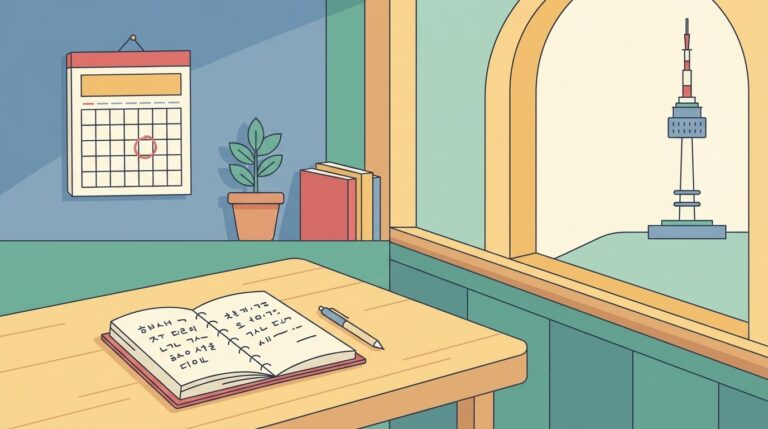
Picture this: It is a crisp, sunny Monday morning in Seoul. You wake up energized, ready to grab that viral honey butter toast at a famous hanok cafe in Ikseon-dong, only to find the street unusually quiet. The heavy wooden gate is locked tight. A small wooden board hangs out front with a handwritten sign you can’t quite decipher, while a nearby calendar on a newspaper stand reveals a bright crimson circle around today’s date. Your stomach rumbles, your Google Maps insists the venue is “Open Now,” and you are left wondering: Did everyone in the city secretly agree to take the day off?
You have just bumped into one of Korea’s beloved “Red Days” (빨간 날). In Korea, national holidays and festival seasons shift store hours, subway timetables, and street vibes dramatically. Missing this detail can turn your dream travel day into a frustrating trek across shuttered neighborhoods. But here is the good news: asking whether a shop is open or confirming an upcoming holiday takes just a few breezy, natural words. Based on real feedback from dozens of our A2 beginner learners, this practical guide will turn holiday confusion into an effortless conversation starter.
Phase 2: Top 3 Core Expressions Deep Dive
Let’s unpack the three most versatile phrases you will ever need when navigating Korean holidays.
1. 오늘 빨간 날이에요? (Oneul ppalgan narieyo?)
- Pronunciation: [Oh-neul ppal-gahn nah-ree-eh-yo?] (Think of ppal as popping a bubbly “p” sound, followed by “pal-gahn”).
- Meaning: Literal: “Is today a red day?” | Actual Nuance: “Is today an official public holiday?”
- K-Culture Moment: You will see this constantly in office K-dramas when coworkers gather by the water cooler on a Friday afternoon, checking if next Monday is circled in red on the wall calendar.
- Editor’s Insight: Korean printed calendars display Sundays and national holidays in bold red font. Because of this visual quirk, Koreans rarely say the formal term “public holiday” in casual speech; they affectionately call them “Red Days” (빨간 날).
- Situation Spectrum: Casual ✅ | Semi-formal ✅ | Formal (official business proposal) ⚠️
- 🤔 Think About It: Does your native language nickname holidays after a color, like “Bank Holiday” in the UK or “Red-letter day”? Notice how Korean culture anchors the name directly to the visual ink on the calendar!
2. 내일 문 열어요? (Naeil mun yeoreoyo?)
- Pronunciation: [Nay-eel moon yuh-ruh-yo?] (Mun sounds like the English word “moon”, and yeoreoyo rolls smoothly like “yuh-ruh-yo”).
- Meaning: Literal: “Does the door open tomorrow?” | Actual Nuance: “Are you open for business tomorrow?”
- K-Culture Moment: Stepping up to a cozy neighborhood bunshik (snack bar) stall right before Chuseok, asking the friendly Imo (auntie chef) if she will be serving tteokbokki tomorrow.
- Editor’s Insight: Textbook Korean often teaches formal verbs like 영업하다 (yeongeophada – to operate a business). However, native speakers overwhelmingly use the physical imagery of opening doors (문 열다) in daily chats.
- Situation Spectrum: Casual ✅ | Semi-formal ✅ | Formal ✅
- 🤔 Think About It: Instead of abstract concepts like “business hours,” Korean frequently relies on tangible physical actions (opening/closing a door) to express daily routines.
3. 이번 주 연휴예요? (Ibeon ju yeonhyuyeyo?)
- Pronunciation: [Ee-beon joo yeon-hyoo-yeh-yo?] (Yeon-hyu rhymes with “sun-hue”).
- Meaning: Literal: “Is this week consecutive holidays?” | Actual Nuance: “Is it a long weekend / holiday weekend this week?”
- K-Culture Moment: Airport news broadcasts showing packed departure gates at Incheon International Airport whenever a “Golden Holiday” (황금연휴) rolls around.
- Editor’s Insight: 연휴 (yeonhyu) refers to two or more consecutive days off—such as a public holiday connected to a weekend. It carries a vibe of joyful anticipation.
- Situation Spectrum: Casual ✅ | Semi-formal ✅ | Formal ✅
- 🤔 Think About It: Notice the prefix 연 (yeon), which implies a continuous chain. How does having grouped holidays change a society’s travel and recharge culture compared to single days off?
Phase 3: Textbook Korean vs. Real Korean
Let’s see how textbook Korean compares to the colorful, natural expressions used on the street.
Situation 1: Checking if today is an official holiday
- 📖 교과서 한국어 (Textbook): 오늘이 법정 공휴일입니까? (Oneuri beopjeong gonghyuirimnikka? – “Is today a statutory public holiday?”)
- 🗣️ 진짜 한국어 (Real-life): 오늘 빨간 날이에요? (Oneul ppalgan narieyo? – “Is today a red day?”)
- 💡 왜 다를까? (Why the difference?): “법정 공휴일” sounds like an attorney presenting in a courtroom or a government spokesperson giving a press conference. Everyday locals find “빨간 날” infinitely warmer and more natural.
Situation 2: Asking if a local store will close for the holiday
- 📖 교과서 한국어 (Textbook): 내일 휴무 계획이 있으십니까? (Naeil hyumu gyehoegei isseusimnikka? – “Do you have plans to take a business recess tomorrow?”)
- 🗣️ 진짜 한국어 (Real-life): 내일 쉬어요? (Naeil swieoyo? – “Are you resting/closed tomorrow?”)
- 💡 왜 다를까? (Why the difference?): Spoken Korean avoids heavy Sino-Korean nouns when asking simple questions. The humble verb 쉬다 (swida – to rest) covers both a person resting and a business taking the day off.
Phase 4: K-Culture Deep Dive & Non-Verbal Manners
4-1. 눈치 (Nunchi) & Gestures
When walking up to a restaurant or convenience store counter to ask about holiday hours, subtle physical manners go a long way:
* The Gentle Tilt: Make polite eye contact and give a slight 15-degree head bow (목례, mongnye) before asking. Do not shout across the store.
* Two-Handed Inquiries: If pointing toward a printed business schedule on the door or counter, use an open palm with your fingers together, gently supported by your other hand near the wrist. Avoid pointing with a single index finger directly at the shopkeeper.
* Reading the Room (Nunchi): If other businesses along the alleyway have their metal roller shutters pulled down completely, assume high holiday closure rates. Always double-check before making long trips!
4-2. Culture Code: The “Substitute Holiday” (대체공휴일)
In recent years, Korea expanded the 대체공휴일 (daeche gonghyuil – Alternative Holiday) system. If a major national holiday like Children’s Day, National Liberation Day, or Hangul Day lands on a weekend, the following Monday automatically turns into a paid “Red Day.” When this happens, local express trains (KTX) sell out weeks in advance, and downtown areas fill with domestic travelers enjoying a 황금연휴 (hwanggeum yeonhyu – Golden Holiday).
Phase 5: Real-Life Roleplay Scenario
Setting: A sunlit bakery cafe in Mangwon-dong smelling of roasted drip coffee and fresh pain au chocolat. A vintage paper calendar hangs near the register with a red pen circle around Monday.
Characters:
* Alex (A2 Korean Learner): A curious traveler wanting to visit again tomorrow.
* Minji (Friendly Barista & Owner): Always cheerful, wiping down the steam wand.
- Turn 1 (Alex): 안녕하세요! 저기… 질문 하나 해도 돼요? (Annyeonghaseyo! Jeogi… jilmun hana haedo dwaeyo?)
🎭 Hands clasped politely, leaning in slightly with an apologetic smile.
(“Hello! Excuse me… may I ask a quick question?”) -
Turn 2 (Minji): 네, 그럼요! 편하게 물어보세요. (Ne, geureomyo! Pyeonhage mureoboseyo.)
🎭 Smiles warmly, placing the towel down.
(“Yes, of course! Feel free to ask.”) -
Turn 3 (Alex): 내일 여기 문 열어요? (Naeil yeogi mun yeoreoyo?)
🎭 Points gently toward the cafe entrance with an open palm.
(“Are you open here tomorrow?”) -
Turn 4 (Minji): 아, 내일은 대체공휴일이라서 쉬어요! (A, naeireun daechegonghyuiriraseo swieoyo!)
🎭 Taps the calendar circle lightly with a laugh.
(“Ah, tomorrow is an alternative holiday, so we are closed/resting!”) -
Turn 5 (Alex): 아! 내일 빨간 날이에요? (A! Naeil ppalgan narieyo?)
🎭 Eyes widening in pleasant surprise, tilting head.
(“Ah! Tomorrow is a red day?”) -
Turn 6 (Minji): 맞아요, 한글날 대체공휴일이에요. 화요일에 다시 열어요. (Majayo, Hangeullal daechegonghyuirieyo. Hwayoire dasi yeoreoyo.)
🎭 Nods affirmatively, gesturing toward Tuesday on the calendar.
(“That’s right, it’s the Hangul Day substitute holiday. We reopen on Tuesday.”) -
Turn 7 (Alex): 그렇군요. 화요일에 꼭 다시 올게요! (Geureokunyo. Hwayoire kkok dasi olgeyo!)
🎭 Gives an appreciative two-handed nod.
(“I see. I will definitely come back on Tuesday!”) -
Turn 8 (Minji): 고마워요! 연휴 즐겁게 보내세요! (Gomawoyo! Yeonhyu jeulgeopge bonaeseyo!)
🎭 Waves both hands cheerfully as Alex prepares to leave.
(“Thank you! Have a great long holiday weekend!”)
🔀 Interactive Decision Point: What would you say if you want to respond to Turn 4?
- Option A: “아, 내일도 빨간 날이에요? 그럼 내일 푹 쉬세요!” (Ah, naeildo ppalgan narieyo? Geureom naeil puk swiseyo! – “Ah, tomorrow is a red day too? Then please rest well tomorrow!”)
Feedback: Best! Highly considerate, culturally natural, and shows genuine empathy for service workers. - Option B: “법정 공휴일의 헌법적 효력이 무엇입니까?” (Beopjeong gonghyuirui heonbeopjeok hyoryeogi mueosimnikka? – “What is the constitutional validity of this statutory holiday?”)
Feedback: Bad! Far too academic and completely out of place in a friendly neighborhood cafe. - Option C: “문 왜 닫아요? 커피 마시고 싶어요.” (Mun wae dadayo? Keopi masigo sipeoyo. – “Why are you closing the door? I want to drink coffee.”)
Feedback: Risk! Sounds demanding and blunt, making the host feel pressured or uncomfortable.
Phase 6: 10-Second Emotion Shadowing Drill
Practice out loud! Match the vocal pitch and pauses (/) indicated below:
[😊 설레고 밝게 - Excited & Bright]
이번 주 / 금요일 / 빨간 날이에요? (Ibeon ju / geumyoil / ppalgan narieyo?)
(“Is this Friday a red day?”)-
[😮 살짝 놀라며 확인하듯 - Slightly Surprised & Confirming]
대박, / 내일도 쉬는 날이에요? (Daebak, / naeildo swineun narieyo?)
(“Wow, is tomorrow a day off too?”) -
[🥺 아쉽지만 다정하게 - Slightly Disappointed yet Sweet]
내일 문 닫아요? / 다음 주에 올게요! (Naeil mun dadayo? / daeum jue olgeyo!)
(“Are you closed tomorrow? I’ll visit next week!”)
Phase 7: K-Culture Mini Dictionary
-
빨간 날 (Ppalgan nal) | Noun | Literal: “Red day.” Universally understood slang for any national day off or Sunday.
Usage: “내일 빨간 날이라서 은행 안 해요.” (The bank is closed tomorrow because it’s a red day.) -
대체공휴일 (Daeche gonghyuil) | Noun | “Substitute / Alternative Holiday.” Granted when a major holiday overlaps with Saturday or Sunday.
Usage: “월요일이 대체공휴일이라 3일 연휴예요.” (Monday is a substitute holiday, making it a 3-day weekend.) -
황금연휴 (Hwanggeum yeonhyu) | Noun | “Golden Holiday.” An extra-long holiday weekend created when holidays link near weekends.
Usage: “이번 추석은 6일 황금연휴예요!” (This Chuseok is a 6-day golden holiday!) -
연중무휴 (Yeonjungmuhyu) | Noun / Adjective | “Open 365 Days a Year / No Holidays.” Found on 24-hour diners or convenience store windows.
Usage: “이 마트는 연중무휴예요.” (This mart is open every single day of the year.)
Phase 8: Traveler’s Survival Kit
Top 3 Survival Phrases
- 오늘 영업해요? (Oneul yeongeophaeyo?)
Romanization: [Oh-neul yeong-up-hae-yo?]
Pro Tip: Use this over the phone when calling a restaurant before making a long trip across town. - 명절에도 문 열어요? (Myeongjeoredo mun yeoreoyo?)
Romanization: [Myeong-juh-reh-doh moon yuh-ruh-yo?]
Pro Tip: Perfect to ask independently run boutiques right before Seollal (Lunar New Year) or Chuseok. - 몇 시에 닫아요? (Myeot sie dadayo?)
Romanization: [Myuht she-eh dah-dah-yo?]
Pro Tip: On holiday evenings, shops often close earlier than usual. Keep this ready!
Editor’s Travel Note
- Live App Navigation: Never rely solely on international mapping platforms for holiday closures in South Korea. Instead, use the Naver Map app download for real-time holiday business hours. Shop owners update their holiday schedule (휴무일) directly in real-time.
- Public Transport Changes: Seoul metro trains run later on the nights of major traditional holidays (Chuseok and Seollal) to accommodate family travelers, but normal holiday schedules often have slightly longer intervals between trains.
- Payment Manners: Credit cards and mobile tap solutions are universally accepted, but small stalls in traditional markets during holiday festivals greatly appreciate crisp bank notes or simple domestic transfers.
Phase 9: “One Step Deeper” (Reflective Cultural Essay)
In high-speed Korean society, where the spirit of 빨리빨리 (ppalli-ppalli, “hurry-hurry”) drives everyday efficiency, holidays carry a profound communal weight. Historically rooted in agrarian cooperation (품앗이, pumasi), major festivals like Chuseok and Seollal are not merely personal breaks; they are collective rituals where the entire nation pauses together to share food and honor ancestors. Modern additions like substitute holidays illustrate South Korea’s evolving journey toward balancing world-renowned productivity with communal wellness and mental rest.
💬 Your Turn: Does your country observe substitute holidays when an official holiday lands on a weekend? Have you ever visited a foreign city during an unexpected public holiday? Drop your story in the comments below!
Phase 10: FAQ & Avoiding Misunderstandings
Q: Do all cafes and restaurants in Seoul close on public holidays?
A: Not at all! Major franchise cafes (Starbucks, Twosome Place), convenience stores, and dynamic districts like Hongdae or Gangnam often stay wide open with vibrant foot traffic. However, small mom-and-pop eateries, traditional market stalls, and bank branches close completely, especially during Seollal and Chuseok.
Q: Can I use the phrase “빨간 날” in a professional business setting?
A: With close colleagues or your immediate team, “빨간 날” is totally fine and relatable. However, in an official presentation, client email, or legal document, stick to the formal term: 공휴일 (gonghyuil – public holiday).
Q: Are palace attractions and museums open on Korean holidays?
A: Yes! Major palaces like Gyeongbokgung and national museums are frequently open on public holidays (and often offer free admission on national days like Hangul Day or Chuseok). However, they usually close on the immediate following Tuesday or weekday instead.
🚨 Common Mistakes (경고판)
- Assuming “Every Day Open” (연중무휴) Includes Big Holidays: Some smaller shops post “연중무휴” but still shut down for the single main day of Chuseok and Seollal. Always confirm ahead of time.
- Confusing Rest Day (쉬는 날) with Day Off Work (휴가): 쉬는 날 (swineun nal) applies to general days off or public holidays, whereas 휴가 (hyuga) specifically refers to personal vacation leaves.
- Looking for “Bank Holiday” in Korean: Asking a shopkeeper for a “은행 휴일” (eunhaeng hyuil) will leave them puzzled wondering if you are talking about the banking industry. Stick to 빨간 날!
Phase 11: Action Mission & Engagement
- 🥉 Bronze Level: Stand in front of your home calendar and practice saying: “내일 빨간 날이에요!” (Tomorrow is a red day!) three times with enthusiasm.
- 🥈 Silver Level: Share a story or photo of your favorite holiday tradition in Korea or your hometown on Instagram, tagging
@DailyHangulwith the caption: 연휴 즐겁게 보내세요! (Have a happy holiday!). - 🥇 Gold Level: During your next interaction with a Korean convenience store clerk, tutor, or friend before a weekend, ask: “이번 주 연휴에 뭐 해요?” (What are you doing during the long weekend this week?).
- 🎮 K-Culture Mission: Watch any slice-of-life K-drama episode. Can you spot someone circling a calendar date in red pen or sighing happily on a Friday afternoon?
Phase 12: Interactive Quiz Challenge
Test your new skills! Answer the questions below, then check your answers.
- Situational Check: You want to ask a cozy neighborhood bakery if they will operate tomorrow, but you want to sound warm, natural, and like a true local. What do you say?
- A) 내일 영업 허가증이 있습니까?
- B) 내일 문 열어요?
- C) 내일 왜 일해요?
- Fill in the Blank: Koreans casually call public holidays “Red Days” because of calendar printing. Fill in the blank:
“오늘 _________ 날이에요?” -
True or False: If a national holiday like Hangul Day falls on a Sunday, Korea never provides a substitute holiday on Monday.
👉 Click here to reveal answers & explanations!
-
Correct Answer: B) 내일 문 열어요?
Explanation: “내일 문 열어요?” (Are you open tomorrow?) is the most common, friendly, and natural phrase. Option A is an awkward question about business licenses, and Option C asks rudely “Why do you work tomorrow?”. -
Correct Answer: 빨간 (ppalgan)
Full Sentence: 오늘 빨간 날이에요? (Oneul ppalgan narieyo? – “Is today a red day?”) -
Correct Answer: False!
Explanation: Under South Korea’s 대체공휴일 (Alternative Holiday) regulations, most major national holidays that overlap with weekends are granted a substitute day off on the subsequent Monday!






