

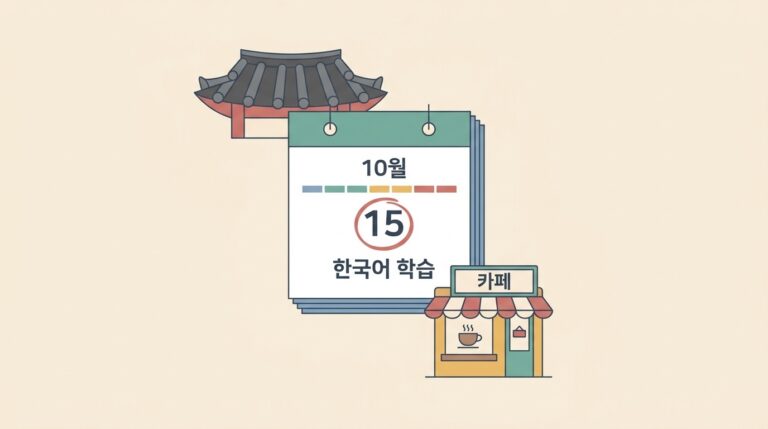
Phase 1: Empathy
안녕하세요! 매일한글 에디터입니다.
Picture this: You just woke up on a crisp Wednesday morning in Seoul. You threw on your favorite aesthetic outfit, hopped on Line 2, and marched with pure excitement toward that viral salt bread bakery in Seongsu-dong that you saved on Instagram six months ago. But when you arrive, there is no intoxicating smell of fresh butter. The metallic shutters are pulled down tight, and a small handwritten paper sign hangs on the glass: ‘오늘 쉽니다’ (Closed today).
You check your phone in disbelief. It is Wednesday! Why on earth is it closed? Suddenly, you remember your Korean friend casually mentioning something yesterday about a ‘red day.’ You just walked right into a Korean public holiday completely unprepared!
As a cultural navigator who has guided hundreds of foreign learners through their first Korean experiences, I see this exact scene play out every single season. Talking about holidays, days off, and calendar quirks in Korean isn’t just about passing a vocabulary quiz; it is about real survival, social connection, and knowing when your favorite subway lines will be packed or your neighborhood supermarket will shut its doors. Today, we are turning you from a confused tourist into a savvy insider who can effortlessly talk about Korean holidays with total confidence!
Phase 2: Core Expressions Deep Dive
1. 오늘 공휴일이에요? (Oneul gonghyuirieyo?)
- Pronunciation: [Oneul gong-hyu-i-re-yo?] (Think of gong like the musical instrument, hyu like “hue”, and il-i-e-yo sliding together as “ee-ray-yo”)
- Meaning: Literal: “Today is a public holiday?” / Nuance: “Wait, is today an official holiday?”
- K-Culture Moment: In office K-Dramas like Misaeng, you will see an intern arrive at an empty office, blinking in confusion before muttering this line into the void.
- Editor’s Insight: ‘공휴일’ (gonghyuil) is the formal term for an official, government-recognized public holiday. Adding ‘-이에요?’ creates an everyday polite question that is safe to use with shop owners, hotel clerks, and colleagues alike.
- Situation Spectrum: Casual: ⚠️ | Semi-formal: ✅ | Formal: ✅
- 🤔 Think About It: In your home country, do people distinguish between a bank holiday, a religious celebration, and an ordinary weekend? How does asking about official holidays reveal a society’s view on work-life balance?
2. 내일 빨간 날이에요! (Naeil ppalgan narieyo!)
- Pronunciation: [Nae-il bbal-gan na-ri-e-yo!] (Ppal has that crisp, popping double ‘P’ sound like in “popcorn”)
- Meaning: Literal: “Tomorrow is a red day!” / Nuance: “Tomorrow is a day off! Woohoo!”
- K-Culture Moment: Friends meeting after work at a pojangmacha (street food tent) clinking soju glasses and yelling this phrase because nobody has to wake up early tomorrow.
- Editor’s Insight: If you look at any standard printed Korean calendar, Sundays and statutory holidays are printed in bright red ink. While textbooks push ‘공휴일’, real Koreans in 95% of casual conversations say ‘빨간 날’ (red day). It carries an immediate feeling of joy and liberation!
- Situation Spectrum: Casual: ✅ | Semi-formal: ✅ | Formal: ⚠️
- 🤔 Think About It: Why do you think Koreans affectionately adopted the visual ink color (‘red day’) rather than reciting the legal name of the holiday?
3. 쉬는 날 언제예요? (Swineun nal eonjeyeyo?)
- Pronunciation: [She-neun nal eon-je-ye-yo?] (Swi sounds like “she” with rounded lips)
- Meaning: Literal: “When is your resting day?” / Nuance: “When is your day off?”
- K-Culture Moment: A romantic scene where two leads want to set up their first weekend date and casually check each other’s work schedules.
- Editor’s Insight: ‘쉬다’ (swida) means to rest or take a break. Combined with ‘날’ (day), ‘쉬는 날’ is the most versatile phrase to ask anyone when they are off work, regardless of whether it’s an official red day or just their personal shift schedule.
- Situation Spectrum: Casual: ⚠️ (drop ‘-예요’ to make it ‘언제야?’) | Semi-formal: ✅ | Formal: ⚠️
- 🤔 Think About It: Notice how Korean uses the gentle word ‘rest’ (쉬다) rather than ‘not working’ to describe time off. What does that say about the psychological relief of a break?
Phase 3: Textbook Korean vs. Real Korean
Situation 1: Talking about tomorrow’s holiday
- 📖 교과서 한국어 (Textbook): 내일은 법정 공휴일입니다. (Naeireun beopjeong gonghyuirimnida. / Tomorrow is a statutory public holiday.)
- 🗣️ 진짜 한국어 (Real-life): 내일 빨간 날이에요! (Naeil ppalgan narieyo! / Tomorrow is a red day!)
- 💡 왜 다를까?: Nobody talks like a legal statute at a cafe. Native speakers love vivid, visual expressions, and ‘빨간 날’ brings an instant, friendly smile to everyone’s face.
Situation 2: Asking someone about their days off
- 📖 교과서 한국어 (Textbook): 귀하의 휴무일이 언제입니까? (Gwiha-ui hyumuir-i eonje-imnikka? / When is your honorable holiday?)
- 🗣️ 진짜 한국어 (Real-life): 언제 쉬어요? (Eonje swieoyo? / When do you take a day off?)
- 💡 왜 다를까?: Rigid honorific nouns like ‘귀하’ (your honorable self) and ‘휴무일’ belong on formal government forms or corporate email footers, not in human conversations between peers.
Phase 4: K-Culture Deep Dive & Non-verbal Manners
4-1. 눈치 (Nunchi) & Gestures
When talking about holidays in Korea, context and timing matter! If your team manager is drowning in emergency paperwork on a Friday afternoon, skipping up to their desk with a beaming smile to say, “내일 빨간 날이에요!” lacks serious 눈치 (nunchi – social situational awareness).
When asking store clerks or restaurant owners if they will be open during a holiday, clasp your hands lightly in front of you, tilt your head slightly with polite curiosity, and point to the date on your phone screen if necessary. If they cross their arms into an ‘X’ shape, that is the universal Korean physical sign for ‘휴무’ (closed for the holiday)!
4-2. Culture Code: The Magic of ‘대체공휴일’ (Substitute Holidays)
Korea works hard, which means Koreans celebrate their time off with supreme passion! Whenever a national holiday falls on a Saturday or Sunday, the government frequently designates the upcoming Monday as a ‘대체공휴일’ (daeche gonghyuil – substitute holiday). When this happens, you will notice train tickets on KTX selling out in seconds weeks ahead as entire cities migrate toward coastal towns like Gangneung and Busan. Knowing whether an upcoming Monday is a substitute holiday will literally save you from being stranded at the train station!
Phase 5: Real-Life Roleplay Scenario
Background: It is Thursday afternoon in a cozy boutique cafe near Hongdae. You are chatting with Min-woo, your Korean language-exchange partner, about meeting up this weekend.
- Min-woo: 이번 주말에 뭐 해요? (Ibeon jumare mwo haeyo?)
🎭 Taps his calendar on his phone screen and smiles.
(What are you doing this weekend?) -
You: 주말에 친구 만나요. 그런데 월요일에 만날까요? (Jumare chin-gu mannayo. Geureonde woryoire mannalkkayo?)
🎭 Looking slightly puzzled, wondering if Monday is an option.
(I am meeting a friend on the weekend. But shall we meet on Monday?) -
Min-woo: 월요일이요? 다음 주 월요일 빨간 날이잖아요! (Woryoiriyo? Daeum ju woryoil ppalgan narijanayo!)
🎭 Eyes widening slightly in amusement.
(Monday? Next Monday is a red day, you know!) -
You: 아, 진짜요? 월요일 공휴일이에요? (A, jinjjayo? Woryoil gonghyuirieyo?)
🎭 Tilting head in surprise, checking your own phone.
(Ah, really? Is Monday a public holiday?) -
Min-woo: 네! 한글날 대체공휴일이에요. 회사 안 가요! (Ne! Hangeullal daeche gonghyuirieyo. Hoesa an gayo!)
🎭 Pumps fist under the table with quiet excitement.
(Yes! It is the Hangul Day substitute holiday. I don’t go to work!) -
You: 대박! 그럼 월요일에 쉬는 날이에요? (Daebak! Geureom woryoire swineun narieyo?)
🎭 Smiling brightly as you catch the excitement.
(Awesome! So Monday is your day off?) -
Min-woo: 네, 맞아요. 월요일에 성수동 갈래요? (Ne, majayo. Woryoire Seongsu-dong gallaeyo?)
🎭 Leaning forward enthusiastically.
(Yes, that’s right. Do you want to go to Seongsu-dong on Monday?) -
You: 좋아요! 같이 가요! (Joayo! Gachi gayo!)
🎭 High-fiving across the cafe table.
(Sounds great! Let’s go together!)
🔀 Interactive Branching Point:
What would you say if Min-woo asks: “다음 주 월요일에 은행 갈 수 있어요?” (Can I go to the bank next Monday?)
- Choice A: “네, 은행은 매일 열어요!” (Ne, eunhaeng-eun maeil yeoreoyo! / Yes, banks open every day!)
- Feedback: 🚫 Bad! Korean banks strictly close on red days and substitute holidays. You’ll end up sending your friend to locked glass doors!
- Choice B: “아니요, 빨간 날이라서 은행 쉬어요.” (Aniyo, ppalgan nariraseo eunhaeng swieoyo. / No, because it’s a red day, the bank is closed.)
- Feedback: 🌟 Best! Natural, perfectly polite, culturally accurate, and shows you understand how ‘빨간 날’ affects daily life.
- Choice C: “월요일은 법정 공휴일 규정에 따릅니다.” (Woryoireun beopjeong gonghyuil gyujeong-e ttareumnida. / Monday follows statutory holiday regulations.)
- Feedback: ⚠️ Risk! Grammatically correct, but sounds like an automated government hotline rather than a friend having coffee.
Phase 6: 10-Second Emotion Shadowing Drill
Let’s train your vocal cords! Repeat these sentences using natural pauses (/) and feeling the core emotion:
[😮 깜짝 놀라며 - Shocked & Surprised]
진짜요? / 오늘 / 빨간 날이에요?
(Jinjja-yo? / Oneul / ppalgan na-ri-e-yo?)
Really? / Today / is a red day?-
[😊 기쁘고 신나게 - Joyful & Celebratory]
와, / 내일 / 쉬는 날이에요! / 너무 좋아요!
(Wa, / naeil / swi-neun na-ri-e-yo! / Neomu jo-a-yo!)
Wow, / tomorrow / is a day off! / I’m so happy! -
[🥺 아쉽고 애교 섞어서 - Cute Disappointment]
카페가 / 오늘 / 쉬어요? / 아쉬워요…
(Kape-ga / oneul / swi-eo-yo? / A-swi-wo-yo…)
The cafe / is closed / today? / What a pity…
Phase 7: K-Culture Mini Dictionary
- 빨간 날 (Ppalgan nal): Literal “Red day.” The ubiquitous colloquial term for any official holiday or Sunday when offices and banks close.
- 황금연휴 (Hwanggeum yeonhyu): “Golden long weekend.” Refers to consecutive days off (like Chuseok, Seollal, or a holiday falling on Friday/Monday) where people take trips or binge K-dramas.
- 대체공휴일 (Daeche gonghyuil): “Alternative / Substitute public holiday.” When a holiday overlaps with a weekend, this designated weekday gives workers back their rest day.
- 연차 (Yeoncha): “Annual paid leave.” Often paired with red days by Korean office workers to create mini-vacations (e.g., “연차 썼어요!” – I used my paid leave!).
Phase 8: Traveler’s Survival Kit
Top 3 Survival Phrases for Travelers
- 오늘 문 열어요? (Oneul mun yeoreoyo?)
Pronunciation: [Oneul moon yeo-reo-yo?]
Pro Tip: Use this on the phone or at the doorstep of restaurants on holidays to ask if they are open today. - 공휴일에도 영업해요? (Gonghyuiredo yeongeop-haeyo?)
Pronunciation: [Gong-hyu-i-re-do yeong-eop-hae-yo?]
Pro Tip: A polished way to ask store staff: “Are you open even on public holidays?” - 내일 몇 시에 열어요? (Naeil myeot sie yeoreoyo?)
Pronunciation: [Nae-il myot she-eh yeo-reo-yo?]
Pro Tip: Perfect when checking holiday operating hours for museums, palaces, or theme parks.
Editor’s Travel Note
Never rely on Google Maps in Korea because local business hours aren’t updated accurately in real-time. Instead, download the Naver Map app for live holiday operation hours, where shop owners post their holiday schedules directly under the ‘소식’ (News) tab. Also keep in mind: while major department stores and banks close completely on Chuseok and Lunar New Year, convenience stores (CU, GS25) and most franchises remain open 24/7!
Phase 9: “One Step Deeper” (Thoughtful Reflection)
In many Western cultures, taking days off is viewed primarily as an individual right and an independent schedule. However, in Korean society, where group harmony and intense work ethics have historically dominated daily life, official holidays carry a deeply collective warmth. A ‘빨간 날’ (red day) is a nationwide, socially approved permission slip to finally exhale together without any workplace guilt. When you ask a Korean friend about their holiday plans, you aren’t just checking a calendar—you are connecting with their hard-earned moment of peace.
💬 Your Turn: What is the most memorable public holiday in your country, and what unique color or nickname would you give it? Share your thoughts in the comments below!
Phase 10: FAQ & Common Mistakes
Q: Are palaces like Gyeongbokgung open on public holidays?
A: Yes! In fact, royal palaces in Seoul often offer free admission on major national holidays like Chuseok, Seollal, and National Liberation Day (August 15th). However, keep in mind that their regular weekly closing day (often Tuesday) might shift if it coincides with a red day.
Q: What is the difference between ‘공휴일’ and ‘휴일’?
A: ‘공휴일’ (gonghyuil) specifically means a legally established public/national holiday designated by the state. ‘휴일’ (hyuil) is an umbrella term for any rest day, which includes ordinary weekends or personal days off.
Q: Do buses and subways stop running on Korean holidays?
A: No, public transit operates throughout all holidays! On major holidays like Seollal and Chuseok, Seoul subways and late-night buses often extend their operating hours past midnight to accommodate traveling families.
🚨 Common Mistakes (흔한 실수) Alert:
- Mistake: Saying “내일 빨간색 날이에요!” (Adding ‘-색’ for color).
Correct Action: Drop ‘색’ (color)! Simply say 빨간 날 (ppalgan nal). ‘빨간색’ sounds like you are describing a sheet of red construction paper. - Mistake: Asking an elder or boss “언제 놀아요?” (When do you play?).
Correct Action: Use ‘쉬다’ (to rest), not ‘놀다’ (to play). Say 언제 쉬세요? (Eonje swiseyo?). - Mistake: Confusing ‘쉬는 날’ with ‘쉬는 시간’.
Correct Action: ‘쉬는 날’ is a full day off; ‘쉬는 시간’ refers to a short recess or 10-minute break between classes or meetings.
Phase 11: Action Mission & Engagement
- 🥉 Bronze Mission (Solo): Look at your calendar right now. Find the next national holiday and record a voice memo saying: “[Month]월 [Date]일은 빨간 날이에요!”
- 🥈 Silver Mission (Social): Leave a comment under a Korean friend’s or K-pop idol’s Instagram post before a holiday wishing them: “연휴 잘 보내세요!” (Have a wonderful long weekend!).
- 🥇 Gold Mission (Real Life): Walk into a local Korean restaurant, cafe, or grocery mart and politely ask: “내일 쉬는 날이에요?” (Naeil swineun narieyo?).
🎮 K-Culture Mission: Watch any modern office K-drama (like Business Proposal or What’s Wrong with Secretary Kim). Listen closely for the word 빨간 날 or 연차 when characters celebrate an upcoming Friday!
Phase 12: Interactive Quiz Challenge
Q1. [Situation Judgement]
You want to tell your coworker casually that tomorrow is an official holiday and there is no work. Which phrase sounds most like a real Korean?
* (A) 내일은 공식적인 국가 휴무일로 제정되었습니다.
* (B) 내일 빨간 날이에요!
* (C) 내일 달력에 빨간색 칠해요.
Q2. [Fill-in-the-Blank]
Complete the question asking when someone has their day off:
“________ 날 언제예요?” (Hint: Comes from the verb meaning ‘to rest’)
Q3. [True or False Culture Quiz]
When a national holiday falls on a Sunday in Korea, workers lose that holiday and never get a replacement day off. (True / False?)
👉 Click to reveal answers & explanations!
- Q1 Answer: (B) 내일 빨간 날이에요!
Explanation: While (A) is grammatically formal, it sounds like a civil law code. (B) is the natural, everyday phrase everyone uses! - Q2 Answer: 쉬는 (Swineun)
Explanation: ‘쉬는 날’ combines ‘쉬다’ (to rest) and ‘날’ (day) to mean ‘day off.’ - Q3 Answer: False!
Explanation: Under Korea’s substitute holiday system (대체공휴일 제도), many major holidays that fall on a weekend are compensated with a day off on the following Monday!






