

Phase 1: Empathy (Immersive Storytelling Opening)
안녕하세요! 매일한글 에디터입니다. (Hello! I am your Daily Hangul editor.)
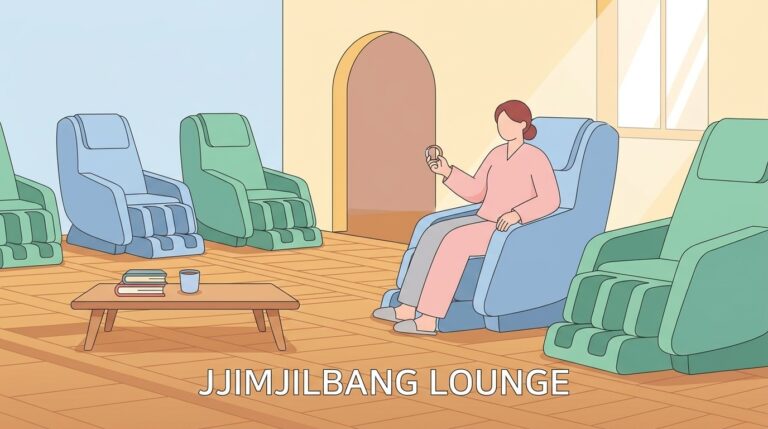
Picture this: You are at a famous Korean sauna, a jjimjilbang (찜질방). You’ve taken a soothing warm bath, changed into comfortable oversized cotton loungewear, and eaten a pair of roasted sauna eggs. You spot a row of luxurious, spaceship-like high-tech massage chairs glowing invitingly in the corner of the communal resting hall. Your shoulders are sore from carrying your heavy backpack across Seoul, and 15 minutes of mechanical kneading feels like paradise.
Excited, you walk up to an empty chair and climb in. But wait… there is no coin slot. Instead, there’s a flashing digital pad, a screen covered in unfamiliar Korean buttons like ‘전원’ and ‘시작’, and an intimidating beep every time you touch something. You glance at your wristband key—do you scan it? Tap it? Press a button? Meanwhile, a friendly elderly gentleman (harabeoji) is standing nearby, politely eyeing the seat. Your heart starts racing, your mind blanks, and you wonder: How do I make this chair work, and how do I ask for help without causing a scene?
Take a deep breath! You are definitely not the first traveler to feel bewildered in front of a Korean massage chair. Today, we have curated a tried-and-true phrase guide tested by dozens of our beginner learners. With just three core A2-level sentences, you will effortlessly unlock relaxation, navigate spa technology like a local, and handle communal etiquette with charm.
Phase 2: Core Expressions Deep Dive
1. 이거 어떻게 켜요? (한글)
- Pronunciation: Igeo eotteoke kyeoyo? (Sounds like: ee-guh uh-ttuh-keh kyuh-yo? – Think of ‘eotteoke’ sounding like the English word “autumn” mixed with “cake”, and ‘kyeo’ sounding like the start of “curious”.)
- Meaning: Literal: “How do [I] turn this on?” | Actual Nuance: “Could you show me how to start this machine?”
- K-Culture Moment: You will hear this everywhere in Korean variety shows like I Live Alone whenever a celebrity encounters new smart home appliances or electronic gadgets.
- Editor’s Insight: In Korean, you don’t need to specify “I” or “the massage chair.” Just pointing at the console and saying 이거 (this) keeps your Korean natural, simple, and friendly!
- Situation Spectrum: Casual ⚠️ | Semi-formal ✅ | Formal 🚫 (This polite ‘-요’ style is the gold standard for talking to friendly strangers in a public spa).
- 🤔 Think About It: In English, we often ask “Can you help me turn this on?” focusing on personal ability, whereas Korean asks “How does this turn on?” focusing on the process itself. How does your language frame everyday questions?
2. 키 어디에 찍어요? (한글)
- Pronunciation: Ki eodie jjigeoyo? (Sounds like: kee uh-dee-eh jjee-guh-yo? – ‘Jji’ has a sharp, bouncy ‘double jj’ sound like the ‘zz’ in “mozzarella”.)
- Meaning: Literal: “Where do [I] tap the key?” | Actual Nuance: “Where do I swipe or scan my electronic locker band?”
- K-Culture Moment: In K-Dramas like Hospital Playlist, characters at automated kiosks or transit turnstiles casually ask friends where to tap their cards with this exact verb 찍다 (jjikda).
- Editor’s Insight: While 찍다 literally means ‘to stamp’ or ‘to take a photo’, in modern Korean cashless culture it universally means ‘to tap/scan an RFID key or transit card’.
- Situation Spectrum: Casual ⚠️ | Semi-formal ✅ | Formal 🚫
- 🤔 Think About It: Why do you think Koreans use the sensory word “stamp” (찍다) instead of a technical loanword like “scan”? It reflects the tactile action of pressing the wrist key firmly onto the sensor!
3. 다 쓰셨어요? (한글)
- Pronunciation: Da sseusyeosseoyo? (Sounds like: dah sseu-syeo-ssuh-yo? – ‘sseu’ is a soft hiss, like blowing out a candle through your teeth).
- Meaning: Literal: “Did you use it all?” | Actual Nuance: “Are you finished using this chair?”
- K-Culture Moment: Often seen in office workplace dramas like Misaeng when colleagues check if someone has finished using the shared copy machine or meeting room.
- Editor’s Insight: The honorific infix -시- (-si-) shows respect to the person sitting in the chair. It avoids sounding impatient or demanding, instantly making you sound well-mannered.
- Situation Spectrum: Casual 🚫 | Semi-formal ✅ | Formal ✅
- 🤔 Think About It: In Western culture, we might ask “Are you in line?” or “Is this free?” In Korea, directly checking whether the previous person’s turn has respectfully concluded is the polite norm.
Phase 3: Textbook Korean vs. Real Korean
Situation 1: Asking if a massage chair is currently available
- 📖 교과서 한국어 (Textbook): 이 안마 의자는 사용 중입니까? (I anma uijaneun sayong jung-imnikka? – “Is this massage chair currently in use?”)
- 🗣️ 진짜 한국어 (Real-life): 여기 자리 있어요? (Yeogi jari isseoyo? – “Is anyone sitting here / Is this spot taken?”)
- 💡 왜 다를까? (Why is it different?): Textbook phrasing uses heavy Sino-Korean vocabulary (사용 중 = under use), which sounds like an official subway announcement. Locals simply ask if there is a ‘seat’ (자리).
Situation 2: Asking someone how much time remains on their chair
- 📖 교과서 한국어 (Textbook): 남은 사용 시간이 얼마나 됩니까? (Nameun sayong sigani eolmana doemnikka? – “How much remaining usage time is there?”)
- 🗣️ 진짜 한국어 (Real-life): 혹시 얼마나 남았어요? (Hoksi eolmana namasseoyo? – “Excuse me, about how much time is left?”)
- 💡 왜 다를까? (Why is it different?): Adding the polite buffer word 혹시 (hoksi – “by any chance”) softens the question, preventing you from sounding pushy or rushed in a tranquil lounge.
Phase 4: K-Culture Deep Dive & Non-Verbal Manners
4-1. 눈치 (Nunchi) & Gestures
- The Footwear Rule: Korean massage chairs almost always have built-in foot compartments. Never wear your rubber jjimjilbang slippers inside the foot rests! Leave your slippers neatly aligned on the floor beside or directly in front of the chair facing outward.
- The Timer Glance: Most chairs have a digital remote display showing a countdown (typically 15 or 20 minutes). If you are looking for a chair, use subtle nunchi (social awareness)—don’t hover directly over someone with 14 minutes left. Look for a screen showing “02:00” or “01:00” before standing at a discreet distance.
- The Two-Handed Wrist Tap: When scanning your electronic locker key, stabilize the wristband with both hands if the sensor fails to register on the first beep. It shows care and keeps the sensor clean.
4-2. Culture Code: The Jjimjilbang Relaxation Ecosystem
In Korean media (such as K-Dramas like Crash Landing on You or Secret Garden), the jjimjilbang is not just a bathhouse—it is an egalitarian communal living room. After baking in an ondol (heated stone) kiln room and sipping cold sweet rice punch (식혜), sitting in an automated massage chair represents the ultimate inexpensive luxury (usually just 2,000 to 3,000 KRW for 15 minutes). Because it is a shared sanctuary, people whisper softly and respect quiet zones around the massage chairs where people often nap.
Phase 5: Real-Life Roleplay Scenario
Setting: The peaceful communal rest area of Dragon Hill Spa. Soft ambient chatter, warm wooden floor. You are standing in front of an empty massage chair, looking puzzled by the electronic card reader.
Character: Auntie Suni (아줌마), a warm local regular sitting on a nearby bamboo mat folding laundry towels.
- You: 저기요… 죄송한데요. (Jeogiyo… joesonghandeyo. / “Excuse me… I am sorry to bother you.”)
🎭 Bowing head slightly and pointing toward the chair console. - Auntie Suni: 네? 학생, 왜 그래요? (Ne? Haksaeng, wae geuraeyo? / “Yes? Young traveler, what’s the matter?”)
🎭 Looking up with a curious, gentle smile. - You: 이거 어떻게 켜요? (Igeo eotteoke kyeoyo? / “How do I turn this on?”)
🎭 Pointing with two hands at the power switch. - Auntie Suni: 아, 그거 돈 넣는 거 아니고 키 찍어야 돼요. (A, geugeo don neonneun geo anigo ki jjigeoya dwaeyo. / “Ah, you don’t insert cash; you have to tap your locker key.”)
🎭 Miming tapping a watch against a sensor. - You: 아! 키 어디에 찍어요? (A! Ki eodie jjigeoyo? / “Ah! Where do I tap the key?”)
🎭 Holding up your RFID wristband with an inquiring face. - Auntie Suni: 여기 옆에 네모난 센서 보이죠? 거기에 대요. (Yeogi yeope nemonan senseo boijyo? Geogie daeyo. / “See that square sensor on the side? Put it against that.”)
🎭 Pointing her finger right at the illuminated sensor pad. - You: 아, 소리 났어요! 감사합니다! (A, sori nasseoyo! Gamsahamnida! / “Ah, it made a beep sound! Thank you so much!”)
🎭 Smiling warmly and sliding into the chair. - Auntie Suni: 시원하게 잘 받고 쉬어요! (Siwonhage jal batgo swieoyo! / “Enjoy the refreshing massage and get some rest!”)
🎭 Giving an encouraging nod.
🔀 Interactive Branching Point
When the massage chair finishes its 15-minute cycle, you notice another guest waiting nearby. What do you do?
* Option A: Say “다 썼어요! 앉으세요.” (Da sseosseoyo! Anjeuseyo. – “I’m all done! Please sit.”) while stepping aside and straightening your slippers.
👉 Best Result: Pure perfection! You show incredible manners, respect communal rotation, and earn an admiring nod from everyone in the room.
* Option B: Immediately tap your key again for another 30 minutes without making eye contact.
👉 Risk Result: While allowed if no one is waiting, doing multiple cycles back-to-back when other guests are standing nearby is considered poor nunchi (bad etiquette).
* Option C: Say nothing, get up slowly, and leave your slippers scattered in the aisle.
👉 Bad Result: You miss a chance to practice Korean and accidentally create a minor obstacle for other bathers.
Phase 6: 10-Second Emotion Shadowing Drill
Practice matching your pitch and pauses to these audio markers:
[🤔 Slightly confused & seeking help]
저기요… / 이거 / 어떻게 켜요?
(Jeogiyo… / igeo / eotteoke kyeoyo?)-
[💡 Curious & clarifying realization]
아! / 락커 키 / 어디에 찍어요?
(A! / rakkeo ki / eodie jjigeoyo?) -
[😊 Considerate & respectful tone]
혹시… / 다 / 쓰셨어요?
(Hoksi… / da / sseusyeosseoyo?)
Phase 7: K-Culture Mini Dictionary
- 안마 의자 (Anma uija) | Noun: Massage Chair
Usage: Found in jjimjilbang halls, major train stations, and shopping malls. Premium rental brands like Bodyfriend are staple status symbols in Korean homes. - 전자 키 (Jeonja ki) / 락커 키 (Rakkeo ki) | Noun: Electronic Key / Locker RFID Band
Usage: Your all-in-one passport inside a spa. You tap it to buy snacks, reserve massage chairs, and pay your total bill at the front desk upon checkout. - 양머리 (Yangmeori) | Noun: Sheep-head Towel Fold
Usage: The classic Korean bathhouse fashion where small face towels are rolled up to look like lamb horns—a beloved photo tradition among friends and couples! - 식혜 (Sikhye) | Noun: Traditional Sweet Rice Punch
Usage: The undisputed beverage king of Korean spas. Served ice-cold with sweet rice grains, it is the classic treat to sip while resting in the massage chair.
Phase 8: Traveler’s Survival Kit
Top 3 Survival Phrases
- 한 번 더 할게요. (Han beon deo halgeyo. – “I will do one more cycle.”)
Pro Tip: Use this if someone politely asks if you are finished, but you’d like to extend for another 15 minutes. - 강도 줄여주세요. (Gangdo juryeojuseyo. – “Please lower the intensity.”)
Pro Tip: Korean massage chairs can be surprisingly intense! If an attendant or friend is helping you adjust settings, this phrase saves your spine. - 영수증 찍혀요? (Yeongsujeung jjikhyeoyo? – “Will this show up on my checkout receipt?”)
Pro Tip: Good for confirming that your electronic wristband accurately billed your massage chair session.
Editor’s Travel Note
- Navigating to Top Spas: Before setting out, install the [KakaoMap app download for finding top jjimjilbangs] or use the [Naver Map app download guide] to check guest reviews and operating hours, as many spas operate 24/7.
- Payment Logistics: You never need cash inside a modern Korean sauna. Every massage chair session (around 2,000–3,000 KRW) records directly onto your wrist chip. Keep track of your taps so you aren’t surprised at the final checkout gate!
Phase 9: “한 발 더 깊이” (One Step Deeper)
In Western public spaces, privacy is often defined by physical boundaries—walls, doors, and private booths. In Korea, however, spaces like the jjimjilbang reflect a deeply communal cultural history where public relaxation is shared shoulder-to-shoulder. The massage chair area is not a private capsule, but a shared community comfort zone governed by mutual respect and subtle non-verbal awareness (눈치). When you ask “다 쓰셨어요?” (Are you finished?), you are acknowledging this unspoken social bond and participating in harmonious shared living.
💬 Your Turn: Have you ever experienced a shared wellness space like a sauna, hot spring, or public bathhouse? How does the etiquette in your home country compare to Korea’s communal spa culture? Share your thoughts below!
Phase 10: FAQ & Avoiding Misunderstandings
Q: What should I do if the massage chair stops moving halfway through?
A: Check the digital remote control first! Usually, a cycle lasts exactly 15 minutes. If it stops abruptly, the time simply expired, or the safety sensor triggered. Scan your wristband key on the pad again to reset it, or ask staff: 도와주세요! (Dowajuseyo! – “Please help me!”).
Q: Can children use the massage chairs in a jjimjilbang?
A: Most Korean bathhouses restrict children under 12 or below a certain height from using full-body massage chairs for safety reasons. Always check for warning signs labeled 어린이 사용 금지 (Eorini sayong geumji – Children prohibited).
Q: Do I need to wipe down the chair after I finish?
A: While it is not mandatory to sanitize the chair, standard courtesy (매너) dictates that you smooth down the leather backrest cushion and ensure you haven’t left any personal belongings (like glasses or your locker towel) behind.
🚨 Common Mistakes Alert Board
- Trying to feed cash into the remote holder:
Mistake: Looking frantically for a 1,000-won bill slot.
Correct Action: Modern jjimjilbangs are completely cashless; tap your wearable electronic wristband (전자 키) against the glowing RFID sensor. - Wearing sauna slippers onto the footrests:
Mistake: Putting your dirty floor slippers into the massage foot sleeve.
Correct Action: Step out of your slippers and place your bare or socked feet directly inside the fabric sleeves. - Shouting across the hall for help:
Mistake: Calling loudly across the hall when the machine won’t start.
Correct Action: Approach the nearest staff member or fellow bather quietly and ask softly: 이거 어떻게 켜요? (Igeo eotteoke kyeoyo?).
Phase 11: Action Missions
- 🥉 Bronze Mission (Solo Practice): Stand in front of your bathroom mirror with a watch or wristband. Practice tapping it against an imaginary sensor while smoothly saying out loud: 키 어디에 찍어요? three times.
- 🥈 Silver Mission (Social Audio Check): Record yourself saying 다 쓰셨어요? with polite, warm intonation on your voice memo app, then compare your pitch to our Phase 6 shadowing drill.
- 🥇 Gold Mission (Real-life Execution): Visit a Korean sauna (or any Korean supermarket rest area with massage chairs) and successfully initiate a session using only Korean phrases!
- 🎮 K-Culture Mission: Watch an episode of a Korean travel variety show (such as 2 Days & 1 Night) and spot when cast members use automated massage chairs or thermal pads during their rest stops.
Phase 12: Interactive Quiz Challenge
1. Situational Judgment:
You see an empty massage chair, but a towel is draped over the headrest and someone’s phone is charging nearby. What should you say to the person sitting on the mat next to it?
A) 비켜 주세요. (Bikyeo juseyo.)
B) 혹시 여기 자리 있어요? (Hoksi yeogi jari isseoyo?)
C) 키 어디에 찍어요? (Ki eodie jjigeoyo?)
2. Fill in the Blank:
To ask “How do I turn this on?”, fill in the missing word:
이거 __________ 켜요?
(A) 언제 / (B) 어디서 / (C) 어떻게
3. True or False Cultural Quiz:
True or False: In a Korean jjimjilbang, you should always pay for each massage chair cycle immediately using physical paper won coins or bills.
👉 Click to view answers and explanations!
- Answer: B – 혹시 여기 자리 있어요? is the polite, natural way to verify whether the seat is occupied before sitting down.
- Answer: C – 어떻게 (eotteoke) means “how”. The complete sentence is 이거 어떻게 켜요? (How do I turn this on?).
- Answer: False – Modern Korean saunas use RFID electronic keys (전자 키). You simply tap your wristband at the chair, and the total charges are settled upon leaving the facility!







