

Master Souvenir Shopping in Korea: Essential A1 Expressions & Etiquette
Phase 1: 공감 (Story-Immersive Opening)
안녕하세요! 매일한글 에디터입니다.
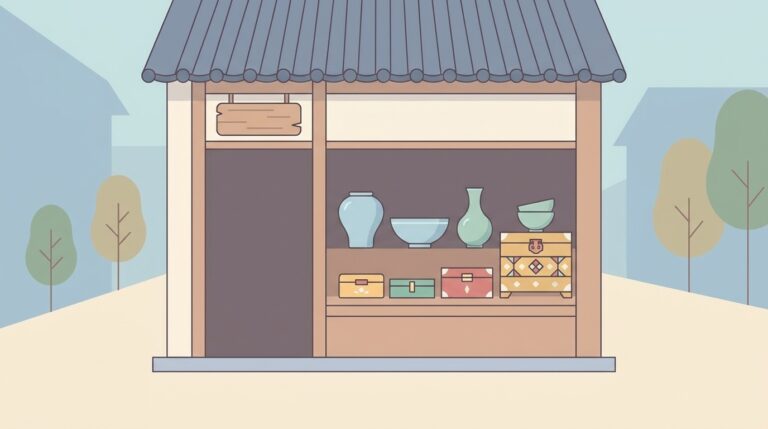
Picture this: You are strolling through the cobblestone alleys of Insa-dong in Seoul. The crisp autumn air smells faintly of sweet roasted chestnuts and traditional woodcrafts. You step inside a warm, charming boutique filled with shimmering mother-of-pearl jewelry boxes, cute embroidered pouches, and idol keychains. Your eyes lock onto the most exquisite traditional bookmark. You want to buy it for your best friend back home, but as you pick it up, the shop owner steps forward with a warm smile and asks, “뭐 찾으세요? (Mwo chajeuseyo? – What are you looking for?)”
Instantly, your mind goes blank. Your heart starts pounding. How do you ask how much it costs without sounding rude? Will they accept your credit card, or do you need cash? Should you point? What if you accidentally insult the artisan? Many beginner Korean learners freeze right here and end up walking out empty-handed, regretting missed opportunities. But here is the secret: you do not need hundreds of complex grammar patterns to enjoy shopping in Korea. Armed with just three golden expressions, tailored specifically for A1 beginners through thousands of real traveler feedback sessions at Daily Hangul, you will glide through any gift shop with relaxed confidence and authentic local charm.
Phase 2: 핵심 표현 3선 심층 분석 (3 Core Expressions)
1. 이거 얼마예요? (Igeo eolmayeyo?)
- Pronunciation: [Igeo eolmayeyo?] (Sounds like: ee-guh uhl-mah-yeh-yo)
- Meaning: Literal: “This, how much is it?” / Nuance: “How much is this?”
- K-Culture Moment: Seen in nearly every travel vlog and K-drama market scene, such as when characters browse vintage stalls in Hongdae or traditional markets in Hometown Cha-Cha-Cha.
- Editor’s Insight: ‘이거’ (Igeo) means ‘this item near me’, and ‘얼마예요?’ (Eolmayeyo?) is the polite standard way to ask for a price. Avoid omitting ‘-요’ (-yo) at the end, as dropping it sounds blunt to shop owners.
- Situation Spectrum: Casual (with friends): 🚫 | Semi-formal (Shopping): ✅ | Formal (Official business): ⚠️
- 🤔 Think About It: In English, we often ask “How much for this one?” In Korean, placing the subject “이거” (this) first centers the shared attention on the item before asking the value.
2. 이거 하나 주세요. (Igeo hana juseyo.)
- Pronunciation: [Igeo hana juseyo.] (Sounds like: ee-guh hah-nah joo-seh-yo)
- Meaning: Literal: “This, one, please give.” / Nuance: “I’ll take one of this, please.”
- K-Culture Moment: Used by foodies ordering street snacks in Myeongdong or purchasing unique stationery at character pop-up stores.
- Editor’s Insight: ‘하나’ (Hana) is the native Korean number for “one”. ‘주세요’ (Juseyo) is Korea’s magic polite request verb. If you want two, simply swap ‘하나’ for ‘둘’ (dul) or ‘두 개’ (du gae).
- Situation Spectrum: Casual: ⚠️ | Semi-formal (Shops/Cafes): ✅ | Formal: ✅
- 🤔 Think About It: Korean focuses directly on the action of giving politely (‘주세요’) rather than conditional expressions like “Could I possibly have…”. It is direct yet deeply respectful.
3. 카드 돼요? (Kadeu dwaeyo?)
- Pronunciation: [Kadeu dwaeyo?] (Sounds like: kah-deu dwae-yo)
- Meaning: Literal: “Card, does it work?” / Nuance: “Do you take credit card? / Can I pay by card?”
- K-Culture Moment: Every high-speed convenience store or street boutique checkout transaction across modern Seoul.
- Editor’s Insight: South Korea is virtually a cashless society, but in quaint flea markets or tiny artisan stalls, asking beforehand shows great manners. ‘돼요?’ (Dwaeyo?) comes from the verb ‘되다’ (to become/to be possible).
- Situation Spectrum: Casual: ⚠️ | Semi-formal: ✅ | Formal: ⚠️
- 🤔 Think About It: Notice how short Korean everyday business phrases are compared to English. Compact phrases with friendly intonation convey warmth and speed.
Phase 3: 교과서 한국어 vs 진짜 한국어 (Textbook vs. Real-Life)
Situation 1: Inquiring about a price
- 📖 교과서 한국어 (Textbook Korean): 이것의 가격은 얼마입니까? (Igeoseui gagyeogeun eolmaimnikka?)
- 🗣️ 진짜 한국어 (Real-Life Korean): 이거 얼마예요? (Igeo eolmayeyo?)
- 💡 왜 다를까? (Why is it different?): Textbook forms with ‘-입니까’ (-imnikka) sound like a formal news reporter interview or an army drill. Real Koreans use the polite, friendly ‘-요’ (-yo) ending for standard daily interactions.
Situation 2: Deciding to buy an item
- 📖 교과서 한국어 (Textbook Korean): 이것을 구매하기를 원합니다. (Igeoseul gumaehagireul wonhamnida.)
- 🗣️ 진짜 한국어 (Real-Life Korean): 이거 주세요. (Igeo juseyo.)
- 💡 왜 다를까? (Why is it different?): Translating “I want to purchase this” word-for-word feels stiff and robotic. Locals simply say “Please give me this” (이거 주세요).
Phase 4: K-Culture 딥다이브 & 비언어적 매너 (Culture Deep Dive & Non-Verbal Manners)
4-1. 눈치 (Nunchi) & Gestures: The Two-Hand Rule
In Korea, etiquette is written in your hands. When handing over your credit card, cash, or receiving a wrapped gift from the shopkeeper, always use two hands (두 손 – Du son). You don’t have to literally grip with both hands; simply rest your left fingers under your right forearm or wrist while extending your right hand. This non-verbal display of respect instantly softens any language barrier. Avoid pointing with a single index finger at delicate handmade crafts; instead, gesture open-palmed toward the shelf.
4-2. Culture Code: The Korean Art of “Seonmul” (선물)
Koreans have a vibrant gift-giving culture. When Koreans travel, they almost always bring back small, thoughtful souvenirs called Dapsnye or regional specialties for co-workers and friends. When the owner asks, “선물이에요? (Seonmuri-eyo? – Is it a gift?)”, answering “네! (Ne!)” will often prompt them to wrap each item individually in delicate paper pouches without extra charge.
Phase 5: 실전 롤플레이 시나리오 (Real-Life Roleplay Scenario)
Setting: Dalbit Craft Shop, a cozy artisan gift shop in Insa-dong.
Character (NPC): Mrs. Kim (김 사장님), an energetic artisan in her 50s holding a tray of handmade mother-of-pearl mirrors.
- Turn 1 (Mrs. Kim): 어서 오세요! 천천히 구경하세요. (Eoseo oseyo! Cheoncheonhi gugyeonghaseyo. – Welcome! Please take your time looking around.)
🎭 [Smiling warmly and gesturing toward the display shelves] - Turn 2 (Traveler): 안녕하세요! (Annyeonghaseyo! – Hello!)
🎭 [Bowing head slightly at 15 degrees] - Turn 3 (Mrs. Kim): 손거울 예쁘죠? 직접 만든 거예요. (Son-geoul yeppeujyo? Jikjeop mandeun geoyeyo. – Pretty hand mirror, right? I made it myself.)
🎭 [Holding up a shimmering turquoise mirror] - Turn 4 (Traveler): 와, 진짜 예뻐요! 이거 얼마예요? (Wa, jinjja yeppeoyo! Igeo eolmayeyo? – Wow, it’s really pretty! How much is this?)
🎭 [Leaning in with gentle, curious eyes] - Turn 5 (Mrs. Kim): 만 원이에요. 선물하실 거예요? (Man wonieieyo. Seonmulhasil geoyeyo? – It’s 10,000 won. Is it a gift?)
🎭 [Nodding and picking up a small gift box] - Turn 6 (Traveler): 네! 이거 하나 주세요. (Ne! Igeo hana juseyo. – Yes! Please give me one of this.)
🎭 [Pointing open-palmed toward the mirror] - Turn 7 (Mrs. Kim): 네, 예쁘게 포장해 드릴게요. (Ne, yeppeuge pojanghae deurilgeyo. – Sure, I will wrap it up nicely for you.)
🎭 [Carefully wrapping the item and handing over the bag] - Turn 8 (Traveler): 감사합니다. 카드 돼요? (Gamsahamnida. Kadeu dwaeyo? – Thank you. Can I pay with a card?)
🎭 [Offering the credit card with two hands]
🔀 인터랙티브 분기점 (Interactive Choice)
At Turn 8, how do you hand over payment?
* Choice A: Hand the card with your right hand while your left hand gently supports your right forearm, saying “카드 돼요? (Kadeu dwaeyo?)”
* Choice B: Drop the card onto the counter while tapping your foot and saying “Card!”
* Choice C: Say “너무 비싸요! 깎아주세요! (Neomu bissayo! Kkakkajuseyo! – Too expensive! Give me a discount!)”
Feedback:
* Choice A (Best Outcome): Perfection! Mrs. Kim smiles widely, praises your Korean, and even slips an extra souvenir postcard into your bag.
* Choice B (Bad Outcome): Tossing items or cards on the counter feels disrespectful in Korean culture. The atmosphere turns cold and awkward.
* Choice C (High Risk): Bargaining in small fixed-price boutique craft shops is considered impolite. Bargaining is reserved only for select wholesale flea markets.
Phase 6: 10초 감정 섀도잉 드릴 (10-Second Emotion Shadowing Drill)
Practice matching native rhythm and emotion using pause markers (/):
[😊 호기심 가득하고 밝게 - Curious & Bright]
저기요… / 이거 얼마예요? (Jeogiyo… / igeo eolmayeyo?)-
[✨ 확신에 차고 정중하게 - Confident & Polite]
마음에 들어요! / 이거 하나 주세요. (Maeume deureoyo! / igeo hana juseyo.) -
[💳 상냥하고 자연스럽게 - Friendly & Natural]
감사합니다! / 혹시… / 카드 돼요? (Gamsahamnida! / hoksi… / kadeu dwaeyo?)
Phase 7: K-Culture 미니 사전 (Mini Dictionary)
- 기념품 (Ginyeompum): Souvenir / Keepsake. Look for signs saying “기념품점” (Souvenir Shop) near tourist heritage landmarks.
- 영수증 (Yeongsujeung): Receipt. Clerks often ask: “영수증 드릴까요? (Yeongsujeung deurilkkayo? – Would you like a receipt?)”. Say “네” (Yes) or “괜찮아요” (Gwaenchanayo – No thank you).
- 봉투 (Bongtu): Shopping bag. Korea charges a nominal 50-100 KRW fee for bags by environmental law. Staff will ask: “봉투 필요하세요? (Bongtu piryohaseyo?)”.
- 계산 (Gyesan): Bill / Payment. When ready to pay, heading to the counter and saying “계산해 주세요 (Gyesan-hae juseyo – Please check me out)” works wonders.
Phase 8: 여행자를 위한 생존 키트 (Traveler Survival Kit)
Top 3 Survival Phrases for Shoppers
- 추천해 주세요. (Chucheonhae juseyo.)
Meaning: Please recommend something.
Pro Tip: Perfect when overwhelmed by dozens of souvenir choices. - 사진 찍어도 돼요? (Sajin jjigeodo dwaeyo?)
Meaning: May I take a photo?
Pro Tip: Many handcrafted or gallery-style shops prohibit photos; asking first shows top-tier manners. - 다른 색 있어요? (Dareun saek isseoyo?)
Meaning: Do you have a different color?
Pro Tip: Useful when you love the design but want another style.
Editor’s Travel Note
- Navigation: Never use Google Maps in Korea for walking routes, as it lacks walking directions due to local mapping regulations. Download the Naver Map Application for real-time indoor shop maps and subway exit navigation.
- Payment: Most international Visa and Mastercard chips work effortlessly across Korea. However, carry around 30,000 to 50,000 KRW cash for small heritage market vendors and subway transit card (T-Money) reloads.
Phase 9: “한 발 더 깊이” (Cultural Reflection)
In Korean culture, purchasing a gift is rarely a cold commercial transaction; it is an exchange of Jeong (정)—a uniquely Korean bond of warmth, attachment, and mutual empathy. When you greet a shopkeeper politely and present payment with two hands, you acknowledge their labor and craftsmanship. That tiny moment of cultural consideration transforms an ordinary tourist transaction into a memorable human connection.
💬 Your Turn: What is the first Korean souvenir you want to buy when you arrive in Seoul? An artisan stamp, K-Pop merchandise, or traditional tea? Leave a comment below!
Phase 10: FAQ & 오해 방지 (FAQ Schema & Common Mistakes)
Q: Can I negotiate or bargain prices in Korean souvenir stores?
A: In standard souvenir shops, department stores, and branded boutiques, prices are fixed. Aggressive bargaining is viewed as impolite. Only in traditional open-air flea markets (like Dongdaemun or Namdaemun wholesale alleys) can you gently ask “조금 깎아주세요 (Jogeum kkakkajuseyo – A little discount please)” if buying multiple items.
Q: What should I say if I am just browsing and do not want to buy yet?
A: Simply smile and say: “그냥 구경할게요 (Geunyang gugyeonghalgeyo – I’m just looking around, thank you).” Korean shopkeepers appreciate knowing you are comfortable browsing independently.
Q: Why do cashiers ask me something about ‘Bongtu’ every time I purchase?
A: Under Korean environmental regulations, single-use plastic and paper bags cannot be handed out for free. They are asking “봉투 필요하세요? (Bongtu piryohaseyo? – Do you need a bag?)”. If you brought your own tote, say “괜찮아요 (Gwaenchanayo – I am fine).”
🚨 흔한 실수 (Common Mistakes) Top 3
- Pointing directly with one index finger: Pointing directly at an artisan or an elder’s face is considered rude. Gesture with an open hand facing upward.
- Dropping the polite ‘-요’ ending: Saying “이거 얼마? (Igeo eolma?)” is intimate banmal (informal). Always attach ‘-요’ (-yo) -> “이거 얼마예요? (Igeo eolmayeyo?)”.
- One-handed payment toss: Handing payment with a single casual flick can make you look dismissive. Always use two hands or touch your elbow with your supporting hand.
Phase 11: 액션 미션 & 참여 유도 (Action Missions)
- 🥉 Bronze Mission (Self-Practice): Stand in front of your mirror with an item on your desk. Point with an open palm and say aloud 5 times: “이거 얼마예요?” (Igeo eolmayeyo?).
- 🥈 Silver Mission (Social Sharing): Post an Instagram story of your favorite Korean souvenir or travel wishlist item and caption it: “이거 하나 주세요!”
- 🥇 Gold Mission (Real-World Execution): Visit a local Korean supermarket, bakery, or your next Seoul trip shop and pay using the two-handed gesture while asking “카드 돼요?”.
- 🎮 K-Culture Media Mission: Watch an episode of any travel-based Korean variety show (like 2 Days & 1 Night) and spot when a cast member asks “얼마예요?”. Notice their tone and gestures!
Phase 12: 인터랙티브 퀴즈 챌린지 (Interactive Quiz)
Q1. You found a gorgeous hanbok keyring in Insa-dong and want to ask the price politely. Which phrase should you say?
a) 이거 어디예요? (Igeo eodieyo?)
b) 이거 얼마예요? (Igeo eolmayeyo?)
c) 이거 누구예요? (Igeo nuguyeyo?)
Q2. Fill in the blank:
To ask for one bookmark nicely, you say: “이거 _____ 주세요.” (Igeo _____ juseyo.)
(Hint: The native Korean word for ‘one’)
Q3. True or False:
In Seoul gift shops, it is customary to bargain 50% off on all displayed items. (True / False)
👉 Click here to reveal the answers and explanations!
Answers:
1. b) 이거 얼마예요? (Igeo eolmayeyo?) – ‘얼마’ means ‘how much’. (‘어디’ means where, ‘누구’ means who).
2. 하나 (Hana) – ‘이거 하나 주세요’ means ‘Please give me one of this’.
3. False – Most craft shops and city stores operate on fixed, clearly tagged pricing systems. Bargaining everywhere is a common tourist misconception!






