

Phase 1: 공감 (Story-Immersive Opening)
안녕하세요! 매일한글 에디터입니다.
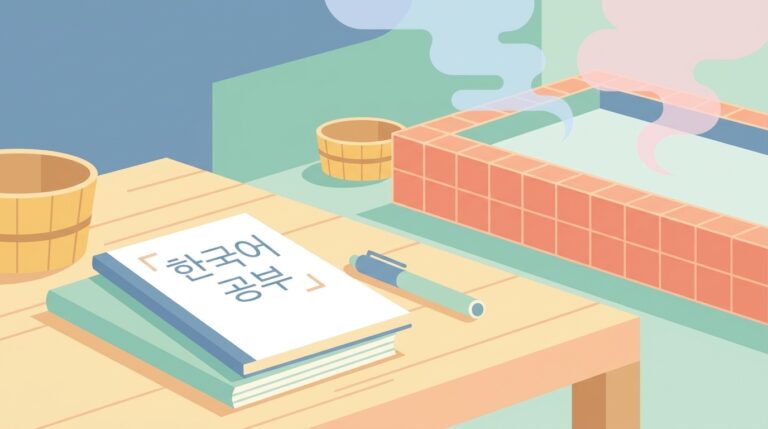
Picture this: after walking twenty thousand steps exploring the colorful alleys of Ikseon-dong, your feet are throbbing, and your back is aching. You decide it is finally time for the ultimate Korean relaxation experience—a traditional jjimjilbang (찜질방). You have watched your favorite K-drama actors relax in these warm havens, playfully sporting sheep-head towels and sipping cold sikhye. Full of excitement, you pay your admission, change out of your shoes, walk into the steamy bath hall, and take off your clothes. In front of you sits a massive, bubbling tub of hot herbal water emitting soothing steam. It looks so inviting that you instinctively take a direct stride toward the tub steps to soak your tired body.
Suddenly, an older Korean woman (an ajumma) turns her head and throws you the sharpest, most piercing laser-glare you have ever received. She points firmly back toward the plastic stools and faucets. You freeze in your tracks, naked and bewildered, wondering what terrible offense you just committed.
Don’t panic! You didn’t do anything malicious—you simply skipped the sacred golden rule of Korean bathhouses: you must shower thoroughly from head to toe before touching the bath water. In Korean culture, communal bath water is kept strictly pristine for pure soaking, not for cleaning dirt away. Many of our beginner students tell us this exact moment was the most intimidating hurdle of their trip to Korea. That is why I wrote this practical, judgment-free guide. Master these three beginner-friendly phrases and etiquette insights today, and you will navigate the shower stalls with the calm poise of a seasoned local!
Phase 2: 핵심 표현 3선 심층 분석 (Core 3 Expressions)
1. 먼저 씻고 들어갈게요 (Meonjeo ssitgo deureogalgeyo)
- Pronunciation: [meon-jeo ssit-go deu-reo-gal-ge-yo] (Sounds like: mun-jaw sit-go dew-raw-gal-geh-yo)
- Meaning:
- Literal: First wash and will enter.
- Real Nuance: “I will wash up thoroughly before getting into the tub.”
- K-Culture Moment: In slice-of-life dramas like Reply 1988, characters heading into communal baths naturally mutter this phrase to their companions to announce their courteous routine.
- Editor’s Insight: The magic word here is 먼저 (meonjeo), which means “first” or “beforehand.” Uttering this small phrase or using it with a companion tells everyone within earshot that you respect the shared space.
- Situation Spectrum: Casual ⚠️ | Semi-formal ✅ | Formal ⚠️
- 🤔 Think About It: In many Western wellness spaces, people dip into a hot tub first and shower afterward. Why do you think Korean society places the thorough wash strictly at the beginning?
2. 여기 자리 있어요? (Yeogi jari isseoyo?)
- Pronunciation: [yeo-gi ja-ri i-sseo-yo] (Sounds like: yaw-ghee jah-ree ee-ssuh-yo)
- Meaning:
- Literal: Here seat exists?
- Real Nuance: “Is this shower spot taken? / May I sit here?”
- K-Culture Moment: On weekend mornings, bathhouses get crowded. Regulars often leave personal toiletries (like small baskets or scrub towels) on a stool while briefly stepping into a sauna. Asking this avoids accidentally claiming someone’s claimed station.
- Editor’s Insight: 자리 (jari) means “seat,” “space,” or “spot.” You can reuse this versatile A2 building block at busy cafes in Hongdae or when looking for a bench on the Han River!
- Situation Spectrum: Casual ⚠️ | Semi-formal ✅ | Formal ⚠️
- 🤔 Think About It: How do people in your home country reserve public spots without sitting in them, and would leaving personal items behind feel safe?
3. 비누 어디에 있어요? (Binu eodie isseoyo?)
- Pronunciation: [bi-nu eo-di-e i-sseo-yo] (Sounds like: bee-noo uh-dee-eh ee-ssuh-yo)
- Meaning:
- Literal: Soap where at exists?
- Real Nuance: “Where is the soap?”
- K-Culture Moment: You sit down at an empty wash station with your mirror and handheld showerhead, but your plastic rack only has an empty tray. You turn to a neighbor or bathhouse attendant to locate the communal soap.
- Editor’s Insight: The structural formula [Noun] + 어디에 있어요? (eodie isseoyo?) is an essential survival pattern. Bathhouses almost always provide free bar soap on communal stands, though shampoo and conditioner are usually brought from home or purchased at the counter.
- Situation Spectrum: Casual ⚠️ | Semi-formal ✅ | Formal ⚠️
- 🤔 Think About It: In Korea, sharing a bar of soap mounted on a wall bracket is common practice in public bathhouses. How does your culture view communal toiletries?
Phase 3: 교과서 한국어 vs 진짜 한국어 (Textbook vs. Real Korean)
Situation 1: Letting your friend know you are heading to the shower first
- 📖 교과서 한국어 (Textbook): 저는 지금 샤워실에서 샤워를 하겠습니다. (Jeoneun jigeum syawosireseo syaworeul hagesseumnida. – “I shall now perform a shower in the shower room.”)
- 🗣️ 진짜 한국어 (Real-life): 먼저 씻을게요! (Meonjeo ssiseulgeyo! – “I’ll go wash up first!”)
- 💡 왜 다를까? (Why is it different?): Textbook sentences often rely on heavy loanwords like 샤워 (shower) and rigid future markers like -겠습니다. Real Koreans naturally use the native verb 씻다 (ssitda – to wash/cleanse) and the softer intention ending -(으)ㄹ게요.
Situation 2: Asking if you can borrow or use someone’s bar of soap
- 📖 교과서 한국어 (Textbook): 비누를 저에게 빌려주실 수 있습니까? (Binureul jeoege billyeojusil su isseumnikka? – “Are you capable of lending me the soap?”)
- 🗣️ 진짜 한국어 (Real-life): 비누 좀 써도 돼요? (Binu jom sseodo dwaeyo? – “May I use the soap for a second?”)
- 💡 왜 다를까? In Korean, the verb 빌리다 (to borrow/lend) is strictly for items you return intact (like an umbrella). For consumables like soap, use 쓰다 (sseuda – to use) with the polite permission pattern -도 돼요?, sweetened by the softening adverb 좀 (jom – a little/please).
Phase 4: K-Culture 딥다이브 & 비언어적 매너 (Culture Deep Dive & Non-Verbal Manners)
4-1. 눈치 (Nunchi) & Gestures in the Bathhouse
- Sit Down While Showering: This is the number one unspoken rule! Korean wash stations feature low mirrors, a faucet, and small plastic stools. Never shower while standing up if others are seated nearby—your splashing soapy water will spray onto other bathers. Sit down, adjust the water temperature, and keep the spray close to your body.
- The Modesty Towel Walk: When walking between the changing locker and the bath area, bathers lightly hold their small hand towel in front of their lower torso. Once seated at your stall, you can set the towel aside or balance it neatly on top of your head.
- Keep the Tub Water Pure: Never drop your towel into the hot tub water, and never rinse off soap inside the soaking tubs. If you need to tie up long hair, do so before stepping in.
- Gaze Etiquette: Bathhouse nunchi means adopting an unfocused, polite gaze. Avoid direct eye contact. If your eyes meet someone else’s, a gentle 15-degree nod of acknowledgment is the polite Korean response.
4-2. Cultural Code Analysis: The Bathhouse as a Sanctuary of Equality
In Korean culture, the bathhouse is a unique social equalizer. Inside the bath area, without suits, branded clothes, or smartphones, everyone is fundamentally equal. Bathing together—often termed mokyok culture (목욕 문화)—is deeply rooted in the concept of Jeong (정), building warm camaraderie and washing away the stresses of rapid modern city life.
Phase 5: 실전 롤플레이 시나리오 (Real-World Roleplay Scenario)
Setting: Haebaragi Spa (해바라기 스파), an authentic neighborhood bathhouse near Mapo. Steamy mist fills the air, water gently trickles into a green tea tub, and Sun-ja, a warm 60-year-old local regular, is organizing her toiletries nearby.
- Turn 1 (Sun-ja): 🎭 Notices you looking hesitant near the tub entrance, smiling warmly.
아가씨, 탕에 들어가기 전에 샤워해야 해요!
(Agassi, tange deureogagi jeone syawohaeya haeyo!)
“Dear, you need to shower before stepping into the tub!” -
Turn 2 (You): 🎭 Nodding politely with hands gently folded in front.
아, 네! 먼저 씻고 들어갈게요.
(A, ne! Meonjeo ssitgo deureogalgeyo.)
“Oh, yes! I will wash first before going in.” -
Turn 3 (Sun-ja): 🎭 Nodding approvingly and pointing to the row of plastic stools.
그래요, 저기 빈자리 가서 앉아요.
(Geuraeyo, jeogi binjari gaseo anjayo.)
“That’s right, go sit down at that empty spot over there.” -
Turn 4 (You): 🎭 Walking over to a station where a plastic basket sits nearby, speaking gently.
실례지만, 여기 자리 있어요?
(Sillyejiman, yeogi jari isseoyo?)
“Excuse me, is this spot taken?” -
Turn 5 (Sun-ja): 🎭 Waving her hand playfully to signal it is free.
아니, 없어. 그냥 써도 돼요.
(Ani, eopseo. Geunyang sseodo dwaeyo.)
“No, it’s not taken. You can just use it.” -
Turn 6 (You): 🎭 Sitting down on the stool, looking around for the cleanser.
감사합니다! 그런데 비누 어디에 있어요?
(Gamsahamnida! Geurende binu eodie isseoyo?)
“Thank you! By the way, where is the soap?” -
Turn 7 (Sun-ja): 🎭 Reaching over and tapping a green bar mounted on a wall bracket.
여기 벽에 붙어 있잖아. 이거 써요!
(Yeogi byeoge buteo itjana. Igeo sseoyo!)
“It’s right here mounted on the wall! Use this one!” -
Turn 8 (You): 🎭 Smiling gratefully and taking the soap to begin lathering.
친절하게 알려주셔서 정말 감사해요!
(Chinjeolhage allyeojusyeoseo jeongmal gamsahaeyo!)
“Thank you so much for explaining it kindly!”
🔀 Interactive Choice Point
You finish your head-to-toe scrub and are now clean and ready to soak in the hot herbal tub. How do you enter the water?
- Option A: Walk briskly to the edge, toss your used hand towel directly into the soaking water, and dive in.
- Feedback (Bad ❌): Major etiquette disaster! Putting cloth towels inside the clean soaking water is strictly forbidden, and diving will startle everyone.
- Option B: Step slowly into the water with your towel balanced neatly on top of your head or left on the dry tub rim.
- Feedback (Best ✅): Perfect! Folding your damp towel into a neat square and placing it on your head keeps your hair out of the water and prevents dizziness from the steam.
- Option C: Stand standing up on the steps of the tub and splash water vigorously over your shoulders.
- Feedback (Risk ⚠️): Standing and splashing creates ripples and cold drafts for bathers already relaxing beneath the surface. Lower yourself quietly into the water.
Phase 6: 10초 감정 섀도잉 드릴 (10-Second Shadowing Drill)
Practice these natural rhythm pauses marked by / with authentic emotional nuance:
[😊 Polite & Assuring]
아, 네! / 먼저 씻고 / 들어갈게요.
(A, ne! / Meonjeo ssitgo / deureogalgeyo.)-
[🙋 Courteous & Inquiring]
실례지만, / 여기 / 자리 있어요?
(Sillyejiman, / yeogi / jari isseoyo?) -
[🧼 Natural & Inquisitive]
저기요, / 비누 / 어디에 있어요?
(Jeogiyo, / binu / eodie isseoyo?)
Phase 7: K-Culture 미니 사전 (Mini Dictionary)
- 온탕 (Ontang) | Warm/Hot Soaking Tub
The standard heated bath (usually between 38°C and 42°C) used strictly for relaxed soaking after you have cleaned yourself. - 바가지 (Bagaji) | Plastic Water Scoop
The lightweight bowl found next to the tubs. Locals use it to scoop warm water and pour it over their chest and shoulders before stepping into the deep tub. - 이태리 타월 (Italy Towel) | Exfoliating Viscose Scrub Mitt
The famous rough green or yellow scrubbing cloth used throughout Korea for dead skin removal (ttae, 때). - 세신사 (Sesinsa) | Professional Body Scrub Specialist
The skilled professionals working at tables in the corner of the bath hall who provide full-body exfoliating scrubs.
Phase 8: 여행자를 위한 생존 키트 (Survival Kit for Travelers)
Top 3 Survival Phrases
- 수건 더 주세요 (Su-geon deo ju-se-yo)
Meaning: “Please give me more towels.”
Pro Tip: Men usually find stacks of towels inside the bath area, while women are handed two towels at the check-in front desk. If you need an extra one, ask at the counter. - 물 온도가 좋아요 (Mul on-do-ga jo-a-yo)
Meaning: “The water temperature is great.”
Pro Tip: A wonderful compliment to whisper to a neighbor enjoying the warm soak beside you. - 식혜 하나 주세요 (Sik-hye ha-na ju-se-yo)
Meaning: “One sweet malt rice punch, please!”
Pro Tip: Once you finish your bath and change into the cotton pajamas for the dry sauna lounge, order a cold cup of sikhye at the snack snack bar.
Editor’s Travel Note
- Shoe Locker Key = Digital Wallet: In modern Korean bathhouses, your wristband key opens your shoe locker, clothes locker, and acts as your electronic payment device at snack bars. Check out our comprehensive Naver Map navigation guide to find highly-rated, foreigner-friendly spas near Hongdae or Dongdaemun.
- Hydration Tip: Drink plenty of cold water before entering the dry sauna rooms or soaking in the hot herbal baths.
Phase 9: “한 발 더 깊이” (Deep Cultural Reflection)
In Western cultures, bathing is overwhelmingly viewed as a strictly private, solitary routine conducted behind locked doors. In Korea, however, communal bathing reflects a profound social contract built on mutual respect and shared mindfulness. By sitting down low so your water droplets do not splatter a stranger, and by thoroughly cleansing your body before entering the shared pool, you are actively performing an everyday act of care for your neighbors.
💬 Your Turn: Have you ever experienced public communal bathing in Korea or another country? What was the most surprising etiquette difference you observed? Tell us your thoughts in the comments below!
Phase 10: FAQ & 오해 방지 (FAQ Schema)
Q: Can I wear a swimsuit into the bath area of a Jjimjilbang?
A: No. Swimsuits are strictly prohibited in the gender-separated bath areas (mokyoktang). Everyone enters completely unclothed. However, you will wear provided t-shirts and shorts in the co-ed public dry sauna lounges (jjimjilbang area).
Q: What if I have tattoos? Will I be turned away?
A: While traditional, ultra-conservative neighborhood baths may occasionally express hesitation toward very large body suits, most modern urban Jjimjilbangs in Seoul, Busan, and Jeju welcome international travelers with tattoos without issue.
Q: Do I need to bring my own shampoo and soap?
A: Most bathhouses supply free bar soap mounted at each station. However, liquid body wash, shampoo, and conditioner are usually not provided for free. You can bring small travel bottles or purchase single-use packets at the counter for about 500 to 1,000 KRW.
🚨 흔한 실수 (Common Mistakes) Warning Board
- ❌ Mistake 1: Standing up under the showerhead and spraying soap across neighboring stations.
- Correct Action: Always sit on the provided plastic stool and keep the handheld shower spray directed downward toward your body.
- ❌ Mistake 2: Dipping your head, hair, or small towel directly into the soaking tub water.
- Correct Action: Tie up your hair, keep your head above water, and balance your folded towel on top of your head or on the dry ledge.
- ❌ Mistake 3: Walking into the soaking tubs dry without washing first.
- Correct Action: Head straight to the wash station and do a full soap-and-water cleanse before stepping one foot into the pool.
Phase 11: 액션 미션 & 참여 유도 (Action Missions)
- 🥉 Bronze Mission (Solo Practice): Stand in front of your bathroom mirror today and recite: “먼저 씻고 들어갈게요!” three times with a confident smile.
- 🥈 Silver Mission (Social Sharing): Share this guide with your travel buddy who is packing for an upcoming trip to South Korea.
- 🥇 Gold Mission (Real-world Challenge): On your next visit to a Korean bathhouse, sit at a wash station and naturally ask a neighbor or attendant: “여기 자리 있어요?” or “비누 어디에 있어요?”
🎮 K-Culture Mission: Watch an episode of a Korean variety show (like Running Man or Hangout with Yoo) filmed inside a bathhouse. Notice how guests sit and interact with their towels!
Phase 12: 인터랙티브 퀴즈 챌린지 (Interactive Quiz Challenge)
1. Situational Judgment
You walk into the bath hall and see an inviting green-tea hot bath. What should you do first?
* (A) Jump straight in to warm up your muscles.
* (B) Sit down on a plastic stool at a shower stall and wash thoroughly with soap.
* (C) Wash your towel in the tub.
2. Fill-in-the-Blank
Complete the sentence to ask if a seat is taken:
* “실례지만, 여기 ______ 있어요?” (Hint: the Korean word for ‘seat’ or ‘spot’)
3. True or False
- True or False: It is completely fine to take your small white modesty towel and submerge it in the hot bath water while soaking.
👉 Click here to reveal the answers and explanations!
- Answer: (B) Always wash thoroughly at a shower station before stepping into the soaking tub!
- Answer: 자리 (jari) – The complete phrase is: “실례지만, 여기 자리 있어요?” (Sillyejiman, yeogi jari isseoyo?)
- Answer: False! Submerging towels in the communal soaking water is considered unhygienic. Keep it on your head or on the dry pool rim.







