

Phase 1: Empathy (Story-Driven Opening)
안녕하세요! 매일한글 에디터입니다. (Hello! This is your Daily Hangul editor.)
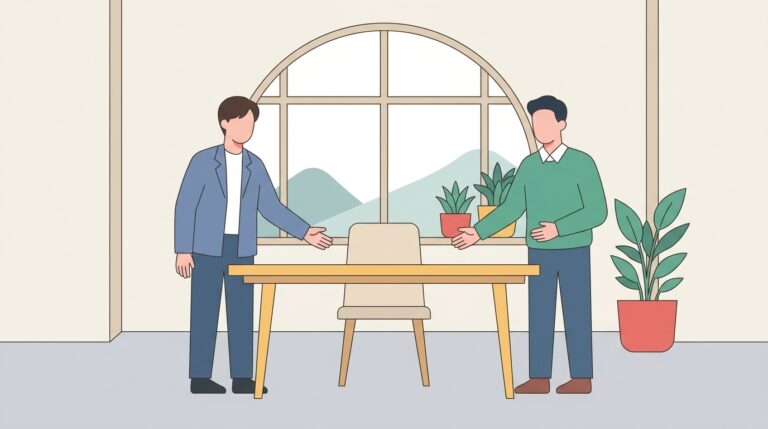
Picture this: You step off the high-speed elevator onto the 20th floor of a gleaming glass tower in Teheran-ro, Gangnam. Your heart is racing just a little. The automatic sliding doors whisper open, and you are ushered into an immaculate, sunlit boardroom. In the center sits an impressive polished wooden table surrounded by sleek ergonomic chairs. Your Korean host smiles warmly, bows slightly, and gestures with an open palm toward the table.
Suddenly, your mind freezes. Which chair are you supposed to take? Do you sit down immediately, or do you wait? What if you accidentally occupy the CEO’s reserved seat?
If you have ever watched iconic K-dramas like Misaeng (Incomplete Life) or King the Land, you know that Korean offices run on an unspoken dance of hierarchy and subtle consideration. Walking into a conference room without knowing seating protocol can make even the most confident professional feel like an awkward intern on day one. But here is the good news: knowing just a couple of courteous phrases and simple spatial cues will completely transform your experience. Over the last decade coaching expatriates and global teams, I have seen beginners turn this exact moment from an anxiety spike into an instant rapport-builder. Let’s make sure you step into your next business meeting looking polished, respectful, and completely at ease!
Phase 2: Top 3 Core Expressions (Deep Dive)
1. 여기 앉으세요 (Yeogi anjeuseyo)
- Pronunciation: Yeo-gi ahn-jeu-seh-yo (Sounds like: “Yaw-ghee an-jew-say-yo” with a gentle, rising-then-falling tone)
- Meaning: Literal: “Sit here.” | Real Nuance: “Please, take this seat right here / Please have a seat.”
- K-Culture Moment: You will hear this in almost every corporate drama when a polite team leader invites a newcomer or client to sit down before starting a discussion.
- Editor’s Insight: The suffix -세요 (-seyo) adds polite honorific softness. It transforms an imperative command into an inviting, hospitable offer.
- Situation Spectrum: Casual: ⚠️ | Semi-formal: ✅ | Formal: ✅
- 🤔 Think About It: In English, we often say “Take a seat” or “Grab a chair.” How does the Korean focus on “here” (여기) direct your physical harmony in the room?
2. 앉아도 돼요? (Anjado dwaeyo?)
- Pronunciation: Ahn-jah-doh dway-yo? (Rhymes loosely with: “Ahn-ja-dough dway-yo?”)
- Meaning: Literal: “Is sitting okay?” | Real Nuance: “May I sit here? / Is it okay if I sit down?”
- K-Culture Moment: Think of an eager junior associate gently asking permission before pulling out a chair at a bustling company dinner or meeting.
- Editor’s Insight: This is the ultimate A1 beginner superpower phrase. Combining the verb 앉다 (anta, to sit) with -도 돼요? (-do dwaeyo?, may I / is it allowed?) lets you ask for permission politely in any setting.
- Situation Spectrum: Casual: ✅ | Semi-formal: ✅ | Formal: ⚠️ (In very formal corporate settings, use 앉아도 될까요? / Anjado doelkkayo?)
- 🤔 Think About It: Why does Korean etiquette prioritize asking permission to sit, whereas Western cultures often expect guests to take initiative?
3. 편하게 앉으세요 (Pyeonhage anjeuseyo)
- Pronunciation: Pyeon-ha-ge ahn-jeu-seh-yo (Sounds like: “Pyun-ha-geh an-jew-say-yo”)
- Meaning: Literal: “Sit comfortably.” | Real Nuance: “Please make yourself at home / Please sit comfortably.”
- K-Culture Moment: The benevolent CEO in a weekend K-drama setting down a cup of green tea and putting an anxious visitor at ease.
- Editor’s Insight: 편하다 (Pyeonhada) means comfortable or convenient. When a host says this, they are actively releasing you from stiff physical formality. It is an invitation to breathe!
- Situation Spectrum: Casual: ⚠️ | Semi-formal: ✅ | Formal: ✅
- 🤔 Think About It: How does a host’s explicit permission to relax reflect the collective care embedded in Korean hospitality?
Phase 3: Textbook Korean vs. Real Korean
Situation 1: Inviting a client to take a seat
- 📖 Textbook Korean: 의자에 앉으십시오. (Uijae anjeusipsio. – “Please sit in the chair.”)
- 🗣️ Real Korean: 이쪽에 앉으세요. (Ijjoge anjeuseyo. – “Please sit over on this side.”)
- 💡 Why is it different? Nobody mentions the word “chair” (uija) in real life—it sounds robotic and overly clinical! Native speakers naturally point out the location (ijjok, this side/direction) with an inviting open hand.
Situation 2: Acknowledging an invitation to sit
- 📖 Textbook Korean: 네, 제가 앉겠습니다. (Ne, jega angetseumnida. – “Yes, I shall sit.”)
- 🗣️ Real Korean: 네, 감사합니다. (Ne, gamsahamnida. – “Yes, thank you.”)
- 💡 Why is it different? Announcing your physical action of sitting sounds like a dramatic play script. A warm smile, a slight head nod, and a simple “Thank you” (감사합니다) is natural and universally preferred.
Phase 4: K-Culture Deep Dive & Non-Verbal Manners
4-1. 눈치 (Nunchi) & Spatial Body Language
In a Korean conference room, communication begins long before words are spoken. Here are three non-verbal rules to keep in your back pocket:
1. The Open-Palm Guide: Never point with a single index finger to indicate a seat. Use your right hand, fingers gently held together with the palm turned slightly upward, supported lightly near the elbow or wrist by your left hand if you want to show maximum respect.
2. The Seniority Pause: Never flop into a chair first. Always wait until the senior host or client walks toward the table and begins to sit down. This simple 2-second pause demonstrates effortless nunchi (situational awareness).
3. The Micro-Bowing Sit: When lowering yourself into the chair, give a slight 15-degree nod of appreciation rather than collapsing backward.
4-2. Cultural Code: The Boardroom Geography (상석 vs. 하석)
Have you ever noticed in business dramas that the most powerful person never sits right next to the entrance? Korean seating plans follow traditional spatial principles:
* 상석 (Sangseok – Upper / Head Seat): Usually the seat farthest away from the door, often facing the window or entrance. This gives the senior leader a full view of the room and shields them from hallway drafts and foot traffic.
* 하석 (Haseok – Lower Seat): The seats closest to the entrance. Junior staff members typically sit here so they can easily accept food deliveries, welcome guests, or distribute printed materials.
* The Golden Rule for Guests: If you are a visiting client, your host will usually guide you directly to the 상석 (Sangseok) side. Do not decline frantically—graciously accept with a slight bow!
Phase 5: Interactive Role-Play Scenario
Setting: A modern, sunlit conference room at a creative agency in Mapo-gu, Seoul. You have arrived for a project kickoff meeting. You are greeted by Manager Park (박 팀장, Park Timjang).
- Turn 1 (Manager Park): 어서 오세요! 먼 길 오시느라 고생 많으셨어요. (Eoseo oseyo! Meon gil osineura gosaeng maneusyeosseoyo. – Welcome! Thank you for making the long trip here.)
🎭 Smiling broadly and bowing at 30 degrees. - Turn 2 (You): 안녕하세요, 팀장님! 초대해 주셔서 감사합니다. (Annyeonghaseyo, timjangnim! Chodaehae jusyeoseo gamsahamnida. – Hello, Manager Park! Thank you for inviting me.)
🎭 Returning the bow politely with hands clasped in front. - Turn 3 (Manager Park): 자, 이쪽으로 오세요. 창가 쪽 자리입니다. (Ja, ijjogeuro oseyo. Changga jjok jari-imnida. – Come this way, please. It’s the seat by the window.)
🎭 Extending right arm toward the far end of the table. - Turn 4 (You): 아, 감사합니다. (Ah, gamsahamnida. – Ah, thank you.)
🎭 Walking slowly toward the indicated chair. - Turn 5 (Manager Park): 여기 편하게 앉으세요. 음료는 따뜻한 커피 괜찮으세요? (Yeogi pyeonhage anjeuseyo. Eumryoneun ttatteut-han keopi gwaenchaneuseyo? – Please take a comfortable seat here. Is hot coffee alright for you?)
🎭 Pulling out a notepad and gesturing to the seat. - Turn 6 (You): 네, 커피 좋습니다! 감사합니다. (Ne, keopi joseumnida! Gamsahamnida. – Yes, coffee sounds great! Thank you.)
🎭 Placing your bag neatly beside the chair leg. - Turn 7 (Manager Park): 네, 편하게 계세요. 금방 준비해 드리겠습니다. (Ne, pyeonhage gyeseyo. Geumbang junbihae deurigetseumnida. – Yes, make yourself comfortable. I’ll have that ready right away.)
🎭 Nodding and turning toward the refreshment counter. - Turn 8 (You): 천천히 하세요. (Cheoncheonhi haseyo. – Please take your time.)
🎭 Sitting down gently with straight posture.
🔀 Branching Decision Point
Manager Park points to the big armchair facing the window and says: “여기 앉으세요! (Yeogi anjeuseyo!)” What do you do?
- Option A: Immediately sit down, lean back, and cross your legs comfortably while checking your smartphone.
- Option B: Say “감사합니다 (Gamsahamnida)”, wait for Manager Park to begin pulling his chair out, and then sit down with both feet on the floor.
- Option C: Say “아니에요! (Anieyo! – No!)” and dash over to sit in the small stool right beside the exit door because you want to be humble.
--- Decision Feedback ---
* **Option A (Bad):** ❌ Sitting immediately, crossing legs, and looking at your phone sends a signal of indifference or arrogance in a Korean corporate setting.
* **Option B (Best):** 🏆 Perfect! You acknowledge the host's hospitality, exhibit polite timing, and maintain respectful posture.
* **Option C (Risk):** ⚠️ Excessive modesty causes awkwardness. Refusing the host’s designated seat forces them to insist multiple times, disrupting the meeting rhythm.
Phase 6: 10-Second Emotion Shadowing Drill
Practice these lines aloud! Follow the pause markers (/) and embody the indicated emotion:
[💼 Polite and Welcoming]
“여기 / 앉으세요.” (Yeogi / anjeuseyo.) — Rising tone on ‘Yeogi’, gentle descent on ‘seyo’.-
[😊 Inquiring and Respectful]
“제가 / 여기 / 앉아도 돼요?” (Jega / yeogi / anjado dwaeyo?) — Soft lift at the end on ‘dwaeyo?’. -
[☕ Warm and Reassuring]
“편하게 / 앉으세요.” (Pyeonhage / anjeuseyo.) — Smooth, melodic glide across ‘Pyeonhage’.
Phase 7: K-Culture Mini Dictionary (4 Key Terms)
- 상석 (Sangseok) | VIP / Upper Seat
- The seat of honor in any room or vehicle. In meeting rooms, it is furthest from the door; in taxis, it is diagonally behind the driver.
- 하석 (Haseok) | Lower / Junior Seat
- The seat closest to the door or kitchen path, customarily taken by the youngest person or the facilitator to handle logistics.
- 눈치 (Nunchi) | Situational Awareness / Emotional Radar
- The subtle art of reading the room’s atmosphere, hierarchy, and unstated intentions within seconds.
- 회의실 (Hoe-uisil) | Meeting Room / Conference Room
- The physical space where formal discussions happen. Standard office etiquette applies strictly inside the 회의실.
Phase 8: Traveler & Expat Survival Kit
Top 3 Survival Phrases for Navigating Korean Spaces
- 여기 앉아도 돼요? (Yeogi anjado dwaeyo?)
- Meaning: “May I sit here?”
- Pro Tip: Use this at busy cafes, communal food courts, or KTX high-speed train waiting areas when chairs are tight.
- 자리 있어요? (Jari isseoyo?)
- Meaning: “Is this seat taken? / Do you have a table available?”
- Pro Tip: If you see personal belongings (like a bag or jacket) on a chair, always ask this before touching anything.
- 잠시만요 (Jamsimanyo)
- Meaning: “Excuse me / Just a moment.”
- Pro Tip: Say this gently when squeezing past someone’s chair in a cramped meeting room or restaurant.
🧳 Editor’s Travel Note
- Navigation Tip: Google Maps has limited transit accuracy in South Korea due to local data regulations. Be sure to check the download Naver Map app guide to find exact office building entrances, exits, and conference venues across Seoul.
- Transit Etiquette: On the Seoul Subway, never sit in the pink-marked “Pregnant Women Only” seats or the end-of-car seats reserved for seniors, even if the entire train is empty!
Phase 9: “One Step Deeper” (Reflective Question)
In traditional Korean culture, physical space is an extension of social respect. Where you position your body tells the people around you how much you value their comfort, age, and professional standing. Rather than viewing seating rules as rigid constraints, look at them as an intentional choreography designed to minimize friction and honor interpersonal harmony.
💬 Your Turn: How does your home culture handle boardroom seating? Do people sit wherever they want, or does executive rank dictate the head of the table? Share your perspective in the comments below!
Phase 10: FAQ & Avoiding Misunderstandings
Q: What should I do if no one explicitly tells me where to sit?
A: Look for the meeting organizer or senior Korean counterpart. Stand near the middle-to-lower section of the table (closer to the entrance) and ask politely: “어디 앉을까요?” (Eodi anjeulkkayo? – Where shall I sit?). They will gladly point you to the right chair.
Q: Can I cross my legs during a Korean business meeting?
A: When sitting across from senior executives, it is best to keep both feet planted flat on the floor or ankles loosely crossed under your chair. Crossing one leg high over the other so that the sole of your shoe faces someone is traditionally viewed as overly casual or dismissive.
Q: What if I accidentally sit in the CEO’s seat before they arrive?
A: Don’t panic! Simply stand up smoothly, smile, bow slightly, and say: “죄송합니다 (Joesonghamnida – I am sorry)” while stepping to an adjacent chair. Acknowledging the mistake with humility instantly earns respect.
🚨 Common Mistakes Warning Board
| Mistake | What Happens | Correct Action |
|---|---|---|
| Rushing to sit first | Looks impatient and unaware of group hierarchy. | Wait until the host or senior person gestures toward a seat or starts sitting down. |
| Slumping / Leaning back deeply | Communicates boredom or disrespect. | Sit upright with your back slightly off the chair’s backrest during initial introductions. |
| Putting bags on the conference table | Clutters the workspace and appears unprofessional. | Place your briefcase on the floor by your feet or on an empty side chair. |
Phase 11: Action Missions
- 🥉 Bronze Mission (Solo Practice): Stand in front of a mirror, gently gesture with your open right palm, and repeat “여기 앉으세요 (Yeogi anjeuseyo)” 5 times with a warm smile.
- 🥈 Silver Mission (Community Share): Leave a comment below introducing yourself and writing the phrase “앉아도 돼요? (Anjado dwaeyo?)” in Hangul without looking at notes.
- 🥇 Gold Mission (Real Life Application): The next time you are at a cafe or meeting with a Korean speaker, offer them a seat first using “여기 앉으세요!”
- 🎮 K-Culture Mission: Watch Episode 1 of the workplace drama Misaeng. Pay close attention to where the interns sit compared to the managers during their team meetings!
Phase 12: Interactive Quiz Challenge
Test your new business meeting superpowers!
Question 1: Scenario Judgment
You walk into a partner company’s meeting room. The host points to a chair with a nice view and says: “여기 앉으세요! (Yeogi anjeuseyo!)” What is the best response?
* A) “No way, I am too junior for this chair!”
* B) “네, 감사합니다!” (Ne, gamsahamnida!) with a polite bow, then take the seat.
* C) Pull out your phone and ignore the host.
Question 2: Fill in the Blank
When you want to ask permission politely: “May I sit here?”
* “여기 ________ 돼요?” (Yeogi ________ dwaeyo?)
Question 3: True or False
In Korean conference rooms, the seat closest to the door is traditionally reserved for the most senior VIP.
* (True / False)
👉 Click to reveal answers & explanations!
- Answer 1: B. Graciously accepting the host’s guidance with “네, 감사합니다” shows respect and keeps the meeting flowing smoothly.
- Answer 2: 앉아도 (anjado). The complete phrase is “여기 앉아도 돼요?” (Yeogi anjado dwaeyo?).
- Answer 3: False. The seat furthest from the door is the VIP seat (상석 – Sangseok). The seat closest to the door is the lower seat (하석 – Haseok), usually for juniors.







