

Phase 1: Empathy (Story-driven Opening)
안녕하세요! 매일한글 에디터입니다.
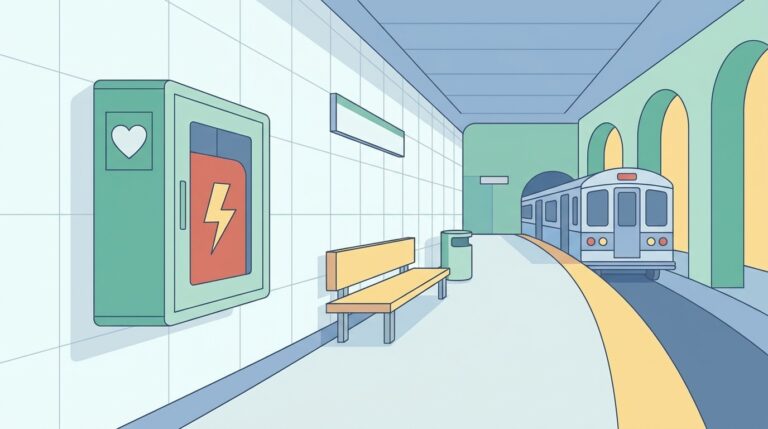
Imagine this: You are navigating the pulsing, neon-lit corridors of Seoul Subway Line 2 during peak evening rush hour. Train doors open, and a sea of exhausted commuters pours onto the platform. Suddenly, a dull thud cuts through the rhythmic chime of arriving subway trains. An elderly gentleman collapses right in front of you near transfer staircase #4. People freeze. Phones emerge, but a paralyzing hesitation hangs in the humid air—the classic psychological bystander effect amplified by linguistic fear. You know basic CPR, your hands remember the chest-compression cadence to Queen’s Stayin’ Alive, but your throat tightens. What is the emergency number here? How do you command a stranger to call for an ambulance without sounding rude or freezing them with formal, unnatural textbook prose? Can you legally touch a stranger in South Korea without facing a lawsuit?
If you have ever watched the intense hospital trauma scenes in Hospital Playlist (슬기로운 의사생활) or the high-octane emergency interventions in The First Responders (소방서 옆 경찰서), you know that in critical situations, language is not just a tool for chatting—it is literal life support. Advanced Korean learners at the C1 level often conquer business negotiations and literary prose, yet completely freeze when a high-stress, split-second medical crisis unfolds. This comprehensive guide draws directly from real-life case studies and feedback from long-term international residents in Korea. By mastering precise emergency Korean commands and understanding the legal nuances of Korea’s Good Samaritan protections, you will transform from an anxious onlooker into an authoritative, life-saving first responder who commands respect and coordinates chaos with calm clarity.
Phase 2: Core Expressions Deep Dive
1. 거기 파란색 셔츠 입으신 분, 119에 신고해 주세요! (Geogi paransaek syeocheu ibeusin bun, il-il-gu-e singohae juseyo!)
- Pronunciation: [Geogi pa-ran-saek syeo-cheu i-beu-sin bun, il-il-gu-e sin-go-hae ju-se-yo!] (Sound analogy: Think of bun like a soft English “boon” and gu like “goo”; shout clearly with a crisp down-pitch on sin-go).
- Meaning: Literal: “Person wearing a blue shirt over there, please report to 119!” | Nuance: “You in the blue shirt! Call 119 immediately!”
- K-Culture Moment: In episode 3 of The First Responders, the paramedic cuts through a panicked crowd by pointing straight at an onlooker’s distinct clothing rather than shouting into the void: “거기 체크무늬 재킷 입으신 분, 119에 신고해 주세요!” (Geogi che-keu-mu-nui jae-kit i-beu-sin bun, il-il-gu-e sin-go-hae ju-se-yo!)
- Editor’s Insight: In high-stress situations, general screams like “Someone call 119!” produce bystander paralysis (방관자 효과). Calling out an exact visual identifier (파란색 셔츠 입으신 분) while maintaining the polite honorific suffix -분 (bun) strikes the perfect psychological balance in Korea: it preserves societal respect while establishing undeniable, direct command.
- Situation Spectrum: Casual: ⚠️ (Too formal for friends, but mandatory here) | Semi-formal: ✅ | Formal: ✅
- 🤔 Think About It: Why does Korean culture preserve honorific morphology (-입으신 분, -해 주세요) even during a life-or-death crisis? How does this reflect the foundational expectation of collective civility under duress?
2. 의식이 없으니 즉시 심폐소생술 들어가겠습니다. (Uisigi eopseuni jeuksi simpyesosaengsul deureogagessseumnida)
- Pronunciation: [Ui-si-gi eop-seu-ni jeuk-si sim-pye-so-saeng-sul deu-reo-ga-get-seum-ni-da] (Phonetic tip: Sim-pye-so-saeng-sul flows like seem-pyeh-so-sang-sool; anchor the final -seumnida flat and resolute like a military officer).
- Meaning: Literal: “Consciousness is absent, so I will immediately enter into cardiopulmonary resuscitation.” | Nuance: “The patient is unresponsive; I am starting CPR right now!”
- K-Culture Moment: Remember in Hospital Playlist when Dr. Chae Song-hwa spots a collapsed visitor in the hospital garden? She checks the carotid pulse and firmly declares to the gathering crowd: “의식이 없으니 즉시 심폐소생술 들어가겠습니다.” (Uisigi eopseuni jeuksi simpyesosaengsul deureogagessseumnida).
- Editor’s Insight: The phrase -들어가겠습니다 (-deureogagessseumnida) literally means “I will enter into,” but in professional Korean jargon, it means initiating an immediate tactical or medical action. Using this phrasing signals to bystanders that you are trained, purposeful, and taking full responsibility for the scene.
- Situation Spectrum: Casual: 🚫 | Semi-formal: ⚠️ | Formal/Professional: ✅
- 🤔 Think About It: In your native tongue, would declaring your action out loud before starting chest compressions be expected, or would bystanders consider it a waste of precious seconds?
3. 지하철역 내에 비치된 자동심장충격기(AED) 좀 빨리 가져다주세요! (Jihacheol-yeok nae-e bichidoen jadongsimjangchunggyeokgi(AED) jom ppalli gajyeodajuseyo!)
- Pronunciation: [Ji-ha-cheol-lyeok nae-e bi-chi-doen ja-dong-sim-jang-chung-gyeok-gi jom ppal-li ga-jyeo-da-ju-se-yo!] (Sound analogy: Say ja-dong-sim-jang like “auto-heart” with explosive chung-gyeok sounding like a swift snap of fingers).
- Meaning: Literal: “Please quickly bring the Automated External Defibrillator stationed inside the subway station!” | Nuance: “Quickly grab the AED from the station wall and bring it here!”
- K-Culture Moment: Frequently heard in modern Korean disaster films like Exit (엑시트) when subway personnel and quick-witted citizens coordinate rescue supplies across multi-level underground facilities.
- Editor’s Insight: While almost everyone in Korea understands the English acronym “AED” (에이이디), elderly bystanders or panicked station workers might hesitate. Shouting both the official Korean terminology 자동심장충격기 and AED ensures zero ambiguity and speeds up device retrieval.
- Situation Spectrum: Casual: ⚠️ | Semi-formal: ✅ | Formal: ✅
- 🤔 Think About It: Notice the insertion of 좀 (jom – please/a bit) inside an urgent plea. Why does Korean soften desperate emergency commands with diminutive adverbs?
Phase 3: Textbook Korean vs. Real Korean
Situation 1: Calling for emergency help in a crowd
- 📖 교과서 한국어 (Textbook Korean): 응급 환자가 발생했으니 구급차를 불러 주십시오. (Eung-geup hwan-ja-ga bal-saeng-haet-seu-ni gu-geup-cha-reul bul-leo ju-sip-si-o.) – “An emergency patient has occurred, so please summon an ambulance.”
- 🗣️ 진짜 한국어 (Real-World C1 Korean): 여기 사람 쓰러졌어요! 119 좀 빨리 불러주세요! (Yeogi saram sseureojyeosseoyo! Il-il-gu jom ppalli bulleojuseyo!) – “Someone collapsed right here! Call 119 immediately!”
- 💡 왜 다를까? (Why is it different?): Formal textbooks teach the conceptual noun 응급 환자 (emergency patient) and the vehicle 구급차 (ambulance). On the street, native Koreans immediately report the visual state—사람 쓰러졌어요 (someone collapsed)—and directly state the dispatch agency number, 119, which activates instant public recognition.
Situation 2: Managing the crowd for airflow
- 📖 교과서 한국어 (Textbook Korean): 환자의 원활한 호흡을 위하여 뒤로 물러서 주시기를 당부드립니다. (Hwan-ja-ui won-hwal-han ho-heu-beul wi-ha-yeo dwi-ro mul-leo-seo ju-si-gi-reul dang-bu-deu-rim-ni-da.) – “We request that you step backward for the patient’s unobstructed breathing.”
- 🗣️ 진짜 한국어 (Real-World C1 Korean): 환자분 숨 쉬게 다들 뒤로 좀 물러서 주세요! 자리 좀 비켜주세요! (Hwanjabun sum swige dadeul dwiro jom mulleoseo juseyo! Jari jom bikyeojuseyo!) – “Everyone step back so the patient can breathe! Clear some space!”
- 💡 왜 다를까? (Why is it different?): The textbook phrase uses passive, bureaucratic committee-speak (당부드립니다). In an acute crisis, native leaders use short imperative structures (숨 쉬게, 비켜주세요) coupled with collective directives (다들 – everyone) to physically move curious crowds.
Phase 4: K-Culture Deep Dive & Non-verbal Manners
4-1. 눈치 (Nunchi) & Crisis Body Language
In Anglo-Western CPR training, instructors teach you to point aggressively with an outstretched index finger directly into someone’s chest: “You! Call 911!” In South Korea, pointing directly with a solitary index finger at an adult’s face is culturally received as an aggressive, accusatory gesture (삿대질 – satdaejil), which can induce instant defensive hesitation.
Instead, practice “Authoritative Open-Palm Directing”: extend your arm with your palm angled slightly upward or half-cupped, lock eyes directly with the person, and make a decisive nodding motion. When checking for responsiveness, tap both clavicles firmly (쇄골 부위) rather than slapping cheeks or shaking shoulders violently. Keep your posture grounded: kneeling squarely beside the victim’s chest with your shoulders positioned directly over your wrists.
4-2. Cultural Code Analysis: The Korean Good Samaritan Dilemma
Historically, South Korea struggled with bystander intervention due to fears of criminal liability or civil claims for unintentional rib fractures, particularly across cross-gender interventions. However, under Article 5-2 of the Emergency Medical Service Act (응급의료에 관한 법률 – 선한 사마리아인 법), civilian rescuers providing emergency medical care to victims in critical condition are exempt from civil liability and severe criminal penalty for accidental injury.
Koreans value collective harmony, but fear of legal controversy (구설수) remains palpable. This is why asserting vocal, professional terminology during intervention is essential. When you clearly state your assessment (“의식과 호흡이 없습니다!” – No consciousness or breathing!) and give direct instructions, you break the public’s anxiety barrier, allowing the collective spirit of Jeong (정) to mobilize the entire surrounding crowd into a synchronized rescue team.
Phase 5: Real-Life Roleplay Scenario
Setting: Seoul Subway Line 2, Gangnam Station platform at 6:45 PM. A passenger in his fifties suddenly slumps against an advertising pillar and collapses onto his back.
Characters:
* You (C1 Responder): A calm, decisive bystander certified in CPR.
* Station Master Kim (역무원 김 반장): An overwhelmed subway official running over with a radio.
1. You:
🎭 [Knocking firmly on the patient's clavicles while leaning close to inspect breathing]
선생님, 제 말 들리세요? 눈 좀 떠보세요! 호흡과 경동맥 맥박이 전혀 없습니다!
(Seonsaengnim, je mal deulliseyo? Nun jom tteoboseyo! Hoheupgwa gyeongdongmaek maekbagi jeonhyeo eopseumnida!)
"Sir, can you hear me? Open your eyes! There is no breathing and no carotid pulse!"

2. Station Master Kim:
🎭 [Running up out of breath, fumbling with his handheld transceiver]
어머나, 무슨 일입니까? 심장마비인가요? 어떻게 해야 하죠?
(Eomeona, museun irimnikka? Simjangmabi-ingayo? Eotteoke haeya hajyo?)
"Oh dear, what happened? Is it a cardiac arrest? What should we do?"

3. You:
🎭 [Looking firmly at Station Master Kim, open palm pointing decisively]
역무원님, 지금 즉시 119 종합상황실에 연락해서 심정지 환자 발생했다고 보고해 주세요!
(Yeongmuwonnim, jigeum jeuksi il-il-gu jonghapsanghwangsire yeollakhaeseo simjeongji hwanja balsaenghaetdago bogohae juseyo!)
"Station master, contact the 119 Emergency Center right now and report a cardiac arrest patient!"

4. Station Master Kim:
🎭 [Frantically pressing the radio talk button]
네, 알겠습니다! 바로 119에 무전 치고 위치 역삼 방면 승강장이라고 알리겠습니다!
(Ne, algessseumnida! Baro il-il-gu-e mujeon chigo wichi yeoksam bangmyeon seunggangjang-irago alligessseumnida!)
"Yes, understood! I'll radio 119 immediately and give our location as the Yeoksam-bound platform!"

5. You:
🎭 [Turning to a nearby commuter wearing a black padded coat]
거기 검은색 롱패딩 입으신 분, 개찰구 옆 벽면에 있는 자동심장충격기(AED) 좀 당장 가져와 주세요!
(Geogi geomeunsaek rongpaeding ibeusin bun, gaechalgu yeop byeongmyeone inneun jadongsimjangchunggyeokgi(AED) jom dangjang gajyeowa juseyo!)
"You in the black long puffer coat, please run and bring the AED from the wall next to the turnstiles right now!"

6. Station Master Kim:
🎭 [Shaving through the encircling onlookers with waving arms]
승객 여러분, 응급조치 중이니 환자분 숨 쉴 수 있게 뒤로 물러나 주십시오!
(Seunggaek yeoreobun, eunggeupjochi jung-ini hwanjabun sum swil su itge dwiro mulleona jusipsio!)
"Passengers, emergency care is underway, please back away so the patient can get air!"

7. You:
🎭 [Interlocking fingers, locking elbows at a 90-degree angle over the sternum]
제가 지금부터 가슴 압박 30회 실시하겠습니다. 하나, 둘, 셋, 넷...!
(Jega jigeumbuteo gaseum apbak samsip-hoe silsihagessseumnida. Hana, dul, set, net...!)
"I am beginning 30 chest compressions right now. One, two, three, four...!"

8. Station Master Kim:
🎭 [Rushing back and kneeling alongside with the retrieved green AED box]
AED 도착했습니다! 전원 켜고 패드 부착 준비하겠습니다!
(AED dochakhaessseumnida! Jeonwon kyeogo paedeu buchak junbihagessseumnida!)
"AED has arrived! I will turn on the power and prepare the pad placement!"
🔀 Interactive Branching Decision Point
The AED unit arrives, opens, and states via automated audio: “패드를 부착하세요” (Attach pads). The patient has a sweat-drenched chest under a heavy woolen thermal knit. What do you do?
- Option A: Remove clothing, wipe the chest dry immediately with a clean tissue or clothing item, and attach the pads firmly to the upper right chest and lower left rib cage.
- Option B: Hesitate to touch or rip the patient’s clothing due to gender privacy concerns, and stick the AED pads directly over the wool shirt.
- Option C: Stop CPR entirely, tell the station master to wait for 119 paramedics to arrive because using an electrical defibrillator without a doctor is dangerous.
[Decision Feedback]
* Best Choice (Option A): Spot on! Electrical current will not conduct through cloth and can cause thermal burns if moisture is present. Immediate pad adhesion is critical.
* Bad Choice (Option B): Catastrophic failure. AED pads cannot sense arrhythmia or deliver therapeutic shock over garments.
* High Legal/Health Risk (Option C): Critical error. Brain damage begins within 4 minutes. In Korea, the Good Samaritan Law explicitly covers the civilian use of AEDs during cardiac arrests.
Phase 6: 10-Second Emotional Shadowing Drill
Master the cadence of real-time emergency Korean. Note the pause markers (/) and embody the bracketed emotional states.
[🚨 긴박하고 단호하게 - Urgent & Resolute]
여기 / 호흡 정지 환자 발생했습니다! / 119에 즉시 신고해 주세요!
(Yeogi / hoheup jeongji hwanja balsaenghaesseumnida! / il-il-gu-e jeuksi singohae juseyo!)-
[🗣️ 또박또박 군더더기 없이 - Crisp & Focused]
검은색 모자 쓰신 분! / 역사 내에 있는 / 심장충격기 좀 가져다주세요!
(Geomeunsaek moja sseusin bun! / yeoksa nae-e inneun / simjangchunggyeokgi jom gajyeodajuseyo!) -
[🙏 간절하지만 침착하게 - Solemn & Steady]
구급대원 도착할 때까지 / 제가 계속해서 / 가슴 압박 이어가겠습니다!
(Gugeupdaewon dochakhal ttaekkaji / jega gyesokhaeseo / gaseum apbak ieogagessseumnida!)
Phase 7: K-Culture Mini Dictionary
- 골든타임 (Goldeun Taim) | The Golden Time (4-Minute Resuscitation Window)
- Essential loanword widely used by Korean medical professionals, media, and 119 personnel. In cardiac arrests, it refers exclusively to the first 4 minutes before irreversible cerebral hypoxia begins.
- 자동심장충격기 / 제세동기 (Jadong Simjang Chunggyeokgi / Jesedonggi) | Automated External Defibrillator (AED)
- While 제세동기 is medical terminology for defibrillator, standard public signage across Korea uses 자동심장충격기. Look for green-and-white heartbeat symbols in every subway station and apartment complex.
- 선한 사마리아인 법 (Seonhan Samariain Beop) | Good Samaritan Exemption Act
- The everyday legal term for Article 5-2 of the Emergency Medical Services Act. C1 learners should know this term to reassure bystanders who are too timid to assist.
- 깍지 끼다 (Kkakji kkida) | To interlock fingers
- The specific verb phrase used in Korean CPR instructions: “손가락을 깍지 끼고 손바닥 아래쪽으로 강하게 압박하세요” (Interlock fingers and compress firmly with the heel of the palm).
Phase 8: Traveler’s Survival Kit
Survival Expressions TOP 3
- 119에 외국인 통역 서비스 연결해 주세요. (Il-il-gu-e oegugin tong-yeok seobiseu yeongyeolhae juseyo!)
- Pro Tip: Korea’s 119 dispatch service has instant 3-way translation services for English, Chinese, Japanese, and 16 other languages.
- 환자가 당뇨/심장 질환이 있습니다. (Hwanjaga dangnyo/simjang jilhwani itseumnida.)
- Pro Tip: Stating underlying medical conditions (당뇨 – diabetes, 심장 질환 – heart disease) speeds up paramedic triage.
- 맥박은 뛰는데 숨을 쉬지 않습니다. (Maekbageun ttwineunde sumeul swiji anseumnida.)
- Pro Tip: Signals respiratory arrest requiring rescue breathing rather than chest compressions alone.
Editor’s Travel Note: Life-Saving Tech & Apps
- Emergency Medical Service Info App: Make sure you install the E-Gen 응급의료정보제공 App before traveling around Korea. It pinpoints real-time nearby AED locations, open late-night pharmacies (달빛어린이병원/당번약국), and emergency room beds with English interface support.
- Emergency Call Tip: When calling 119 from a foreign smartphone without a SIM, emergency roaming still connects instantly. If you cannot describe your location in Korean, locate the nearest utility pole; the 8-digit alpha-numeric coordinates printed on Korean utility poles give 119 dispatchers your pinpoint GPS coordinates instantly.
Phase 9: “한 발 더 깊이” (A Step Deeper)
In modern Korean metropolises, high-density living collides with acute legal sensitivity. While historic village culture flourished on Pumasi (품앗이 – reciprocal communal labor) and unquestioned intervention into neighbors’ lives, hyper-modernization has spawned hyper-caution (몸사림). Yet, when someone collapses in public, an implicit Korean collective contract awakens: the crowd will gladly mobilize the moment a clear, socially legitimate “director” surfaces. By deploying culturally calibrated language that pairs imperative authority with structural politeness, you resolve public hesitation and activate the powerful collective efficacy (공동체 의식) dormant in everyday Korean citizens.
💬 Your Turn: In your home country, is public intervention during medical emergencies legally mandated or strictly voluntary? How would you manage bystander hesitation without escalating panic? Share your thoughts below!
Phase 10: FAQ & Misconceptions
Q: Can an expat perform CPR in South Korea without a domestic Korean certification?
A: Yes, absolutely. Under Korea’s Emergency Medical Service Act, any bystander (regardless of nationality or domestic certification status) is legally permitted and strongly encouraged to administer bystander CPR and apply an AED in life-threatening scenarios without fear of criminal penalization.
Q: What if I break the patient’s ribs while performing chest compressions?
A: Rib fractures are an acknowledged secondary outcome of effective, high-depth chest compressions (5–6 cm depth at 100–120 bpm). Article 5-2 of the Emergency Medical Services Act provides civil and criminal immunity for unintentional injury sustained during emergency rescue procedures performed in good faith.
Q: What should I say when 119 dispatch picks up the phone?
A: State: “여기는 [Location Name]입니다. 사람이 쓰러져서 의식과 호흡이 없습니다. 심폐소생술 중입니다.” (Yeogineun [Location]imnida. Sarami sseureojyeoseo uisikgwa hoheubi eopseumnida. Simpyesosaengsul jung-imnida. – “This is [Location]. A person collapsed with no consciousness and no breathing. CPR is in progress.”)
🚨 Common Mistakes Board (흔한 실수 TOP 3)
- Mistake: Shouting “누가 119에 전화 좀 해줘요!” (Someone call 119!).
- Correct Action: Designate one individual using their specific clothing: “거기 회색 코트 입으신 여성분, 119에 신고해 주세요!”
- Mistake: Stopping chest compressions to check for a pulse every 15 seconds.
- Correct Action: Minimize compression interruptions. Continue compressions uninterrupted until the AED prompts analysis or 119 paramedics physically relieve you.
- Mistake: Hesitating to use an AED because the automated voice speaks in Korean.
- Correct Action: Standard Korean AEDs have universal, illuminated visual diagrams on the chassis matching the audio prompts. Follow the blinking red/green LED icons even if the rapid Korean audio feels overwhelming.
Phase 11: Action Missions & Engagement
- 🥉 Bronze Mission (Self-Practice): Stand before a mirror and pronounce the CPR declaration 5 times with unwavering, authoritative vocal projection: “의식이 없으니 즉시 심폐소생술 들어가겠습니다.”
- 🥈 Silver Mission (Shadowing & Recording): Record yourself performing the Phase 6 Emotional Shadowing Drill on your smartphone. Listen back to ensure you aren’t sounding apologetic or overly hesitant.
- 🥇 Gold Mission (Real-world Spatial Awareness): Next time you walk through a Korean subway station or department store, spot the nearest green AED box (자동심장충격기) and mentally construct your dispatch command in Korean referencing your exact location.
- 🎮 K-Culture Mission: Watch an episode of a Korean medical drama (e.g., Dr. Romantic or Hospital Playlist). Identify at least two imperative commands used by emergency personnel during a resuscitation scene and note their honorific endings.
Phase 12: Interactive Quiz Challenge
Test your situational instincts with these advanced emergency questions.
1. [Situational Judgment] You are at an express bus terminal. A man falls backward, gasping irregularly (agonal breathing / 임종호흡). What is your immediate linguistic and clinical reaction?
* A) Assume he is breathing fine, buy water, and say “물 좀 드셔보세요.”
* B) Recognize agonal breathing as cardiac arrest, designate a bystander to call 119, and shout: “비정상 호흡입니다. 즉시 심폐소생술 하겠습니다!”
* C) Wait until an official terminal security officer walks by.
2. [Fill in the Blanks] Complete the decisive command using C1-level honorifics:
“거기 안경 ( ) 분, 119에 신고하고 ( ) 좀 가져다주세요!”
3. [True or False Cultural Legal Quiz] In South Korea, foreign nationals can be sued for damages if they perform CPR on an unconscious citizen and cause rib fractures.
* True / False
👉 Click to view answers and expert explanations
- Answer: B
- Explanation: Agonal gasps (임종호흡) are not effective respirations; they are reflex signs of impending cardiac arrest. Immediate CPR declaration is vital.
- Answer: 쓰신 (sseusin) / 자동심장충격기 (jadongsimjangchunggyeokgi) or AED
- Explanation: The correct honorific verb for wearing glasses is 쓰다 -> 쓰신 분. The device is 자동심장충격기.
- Answer: False
- Explanation: Under the Good Samaritan provisions (선한 사마리아인 법), good-faith civilian rescuers—including registered foreigners and tourists—are protected from liability for involuntary harm during acute emergency life-saving actions.
- Explanation: Under the Good Samaritan provisions (선한 사마리아인 법), good-faith civilian rescuers—including registered foreigners and tourists—are protected from liability for involuntary harm during acute emergency life-saving actions.






