

Escaping the Fear: How to Pick the Perfect Korean Escape Room Theme
Phase 1: Empathy (Story-Driven Opening)
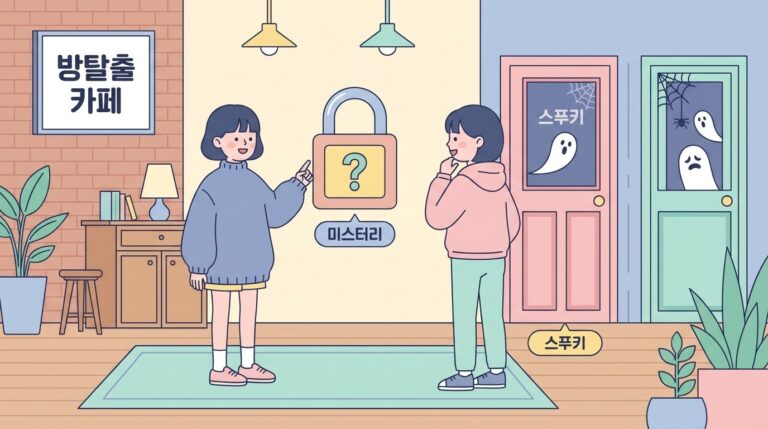
안녕하세요! 매일한글 에디터입니다. (Hello! I’m the Daily Hangul Editor.) Picture this: It is a rainy Friday evening in Hongdae. Neon signs reflect on the wet pavement, and your Korean friends pull you into an elevator heading up to a trending bangtalchul (방탈출, escape room) cafe. You walk into the lobby, where vintage padlocks and glowing mystery boards line the walls. Suddenly, your friend excitedly points at a poster drenched in crimson paint featuring a haunted mental hospital and asks, “이거 할래?” (Shall we do this one?). Your heart drops. You love solving clever puzzles and unlocking secret compartments, but you absolutely cannot handle sudden darkness, screaming ghosts, or jump scares!
Standing in that lobby, you want to suggest a fun Sherlock-style detective theme instead, but you freeze up because you don’t know how to express it in Korean without sounding like a buzzkill. Over the past decade of coaching learners in Seoul, I’ve heard this exact dilemma countless times: “Editor, I ended up trapped in a pitch-black zombie room curled into a ball because I didn’t know how to negotiate the theme!” Mastering just a few essential phrases will transform this awkward moment into a hilarious, collaborative team victory. Let’s make sure you pick the exact room you want with total confidence.
Phase 2: Core Expressions Deep Dive
1. 너무 무서운 건 못 해요 (Neomu museoun geon mot haeyo)
- Pronunciation: [Neomu museoun geon mot haeyo] (Sounds like: No-moo moo-suh-oon gun mote hae-yo — imagine saying “moo” like a cow, then “sun” without the ‘n’)
- Meaning: Literal: “I cannot do things that are too scary.” / Real Nuance: “I’m really not great with extreme horror, so let’s tone it down.”
- K-Culture Moment: Seen frequently on variety shows like Running Man or Great Escape, when idol cast members timidly back away as soon as the lights flicker.
- Editor’s Insight: Notice the use of 못 해요 (cannot do) rather than 안 해요 (will not do). In Korean politeness, framing your refusal around an inability rather than a stubborn unwillingness keeps the social atmosphere light and friendly.
- Situation Spectrum: Casual: ⚠️ (To friends: 너무 무서운 건 못 해) | Semi-formal: ✅ (너무 무서운 건 못 해요) | Formal: ✅ (너무 무서운 것은 잘 못합니다)
- 🤔 Think About It: In English, we often say “I hate horror.” Why does Korean culture favor expressing personal limits (“I can’t handle it”) over strong negative preferences?
2. 추리 테마로 할까요? (Churi temaro halkkayo?)
- Pronunciation: [Churi temaro halkkayo] (Sounds like: Choo-ree teh-mah-roh hal-kka-yo? — “churi” sounds like “chew” followed by “ree”)
- Meaning: Literal: “Shall we go with a deduction theme?” / Real Nuance: “How about we choose a detective/mystery theme instead?”
- K-Culture Moment: Think of Korean mystery shows like Netflix’s Busted! (범인은 바로 너!) where deduction and clue-hunting take center stage over frightening tricks.
- Editor’s Insight: 추리 (Churi) specifically means logical reasoning or detective mystery. Adding -로 할까요? (-ro halkkayo?) is the gold-standard Korean way to suggest an alternative without imposing your will.
- Situation Spectrum: Casual: ⚠️ (추리 테마로 할까?) | Semi-formal: ✅ (추리 테마로 할까요?) | Formal: ✅ (추리 테마로 진행하시겠습니까?)
- 🤔 Think About It: How does phrasing a suggestion as a collective question (“Shall we?”) foster harmony in group decisions?
3. 깜짝 놀라는 거 있어요? (Kkamjjak nollaneun geo isseoyo?)
- Pronunciation: [Kkamjjak nollaneun geo isseoyo] (Sounds like: Ggahm-jjak nohl-lah-neun guh eet-ssuh-yo? — emphasize the sharp double-k ‘kk’ like the clicking of a lock)
- Meaning: Literal: “Is there something that causes sudden surprise?” / Real Nuance: “Are there any jump scares in this room?”
- K-Culture Moment: Asking the staff at the counter right before signing the waiver form, just like panicked contestants on Korean YouTube escape room vlogs.
- Editor’s Insight: 깜짝 is an onomatopoeic/mimetic word describing a sudden startle or flinch. Escape rooms in Korea often feature mechanical drops or loud noises, and this question is your ultimate shield.
- Situation Spectrum: Casual: ⚠️ (깜짝 놀라는 거 있어?) | Semi-formal: ✅ (깜짝 놀라는 거 있어요?) | Formal: ✅ (깜짝 놀라는 요소가 있습니까?)
- 🤔 Think About It: In Korean, emotional bodily reactions often become vivid adverbs. Notice how “깜짝” mimics the rapid jump of your heart.
Phase 3: Textbook Korean vs. Real Korean
Situation 1: Telling your group you get scared easily
- 📖 교과서 한국어 (Textbook): 저는 공포 영화나 무서운 것을 좋아하지 않습니다. (Jeoneun gongpo yeonghwana museoun geoseul joahaji anseumnida. / “I do not like horror movies or scary things.”)
- 🗣️ 진짜 한국어 (Real-life): 저 완전 쫄보예요! (Jeo wanjeon jjolboyeyo! / “I’m a total scaredy-cat!”)
- 💡 왜 다를까? (Why the difference?): While the textbook sentence sounds like a stiff written survey, Koreans love lighthearted self-deprecation. Calling yourself a 쫄보 (jjolbo – coward/scaredy-cat) instantly breaks the ice and sets expectations with laughter.
Situation 2: Asking if a room is heavy on puzzle solving
- 📖 교과서 한국어 (Textbook): 이 테마는 논리적 추리력 시험이 많습니까? (I temaneun nollijeok churiryeok siheomi manseumnikka? / “Does this theme contain many tests of logical deduction?”)
- 🗣️ 진짜 한국어 (Real-life): 머리 쓰는 문제 많아요? (Meori sseuneun munje manayo? / “Are there a lot of brain-teaser puzzles?”)
- 💡 왜 다를까? (Why the difference?): Real Koreans rarely use formal Sino-Korean expressions like “논리적 추리력” in a casual game setting. Instead, they use the colorful colloquial idiom 머리를 쓰다 (to use one’s head).
Phase 4: K-Culture Deep Dive & Non-Verbal Manners
4-1. 눈치 (Nunchi) & Body Gestures at the Counter
When booking an escape room in Korea, decisions happen fast, often crowded around a tablet menu. If a friend proposes a high-scare room you dread, don’t abruptly say “No!” (아니요!). That breaks the team vibe. Instead, deploy subtle Korean non-verbal cues: lightly cross your forearms in a small ‘X’ below chest height, tilt your head slightly with an apologetic smile, and say: “아, 공포는 조금…” (Ah, gongponeun jogeum… / “Ah, horror is a bit…”). Leaving the sentence hanging is peak 눈치 (Nunchi)—it gives your group the space to pivot without anyone losing face.
4-2. The “Bangtalchul” Ecosystem & Roles
Escape rooms in Korea are high-tech art installations with multi-room sets, custom scents, dynamic lighting, and cinematic storylines popularized by hit shows like The Great Escape (대탈출). Korean groups strictly categorize players into two vital archetypes:
1. 탱커 (Taengkeo – Tanker): The fearless player who walks into dark rooms first, opens creaky closet doors, and inspects terrifying props.
2. 쫄보 (Jjolbo – Scaredy-cat): The player who cowers in the middle, solves number padlocks with trembling hands, and screams at every creak.
Knowing your role and claiming it early is an essential part of Korean recreational etiquette!
Phase 5: Real-Life Roleplay Scenario
Setting: The dimly lit lobby of “Key-Escape” in Hongdae. Neon locks glow behind the reception desk. Min-woo is scrolling through the tablet catalog, looking eager.
Characters:
* Min-woo (민우): Your energetic Korean friend who loves adrenaline.
* You (학습자): A clever puzzle lover who despises jump scares.
* Staff (직원): Helpful and waiting to register your team.
- Turn 1 (Min-woo): [📱 테블릿을 넘기며 신나게] 이 ‘폐병원’ 테마 어때? 후기 보니까 진짜 대박이래!
(I ‘pyebyeongwon’ tema eottae? Hugi bonikka jinjja daebagirae!)
🎭 Pointing enthusiastically at an eerie abandoned hospital theme on the screen.
“How about this ‘Abandoned Hospital’ theme? The reviews say it’s insane!” -
Turn 2 (You): [😅 살짝 난감한 표정으로 웃으며] 으아, 저는 너무 무서운 건 못 해요!
(Eua, jeoneun neomu museoun geon mot haeyo!)
🎭 Waving both hands gently in front of your chest.
“Whoa, I really can’t do anything too scary!” -
Turn 3 (Min-woo): [😲 눈을 동그랗게 뜨며] 아, 진짜? 무서운 거 완전 싫어해?
(A, jinjja? Museoun geo wanjeon sileohae?)
🎭 Lowering the tablet with a surprised, curious look.
“Oh, really? Do you hate scary stuff that much?” -
Turn 4 (You): [🙈 머리를 긁적이며 쑥스럽게] 네, 저 완전 쫄보예요. 추리 테마로 할까요?
(Ne, jeo wanjeon jjolboyeyo. Churi temaro halkkayo?)
🎭 Smiling sheepishly while tapping the detective category tab on the tablet.
“Yes, I’m a total scaredy-cat. Shall we go with a mystery theme instead?” -
Turn 5 (Min-woo): [🤔 턱을 괴고 고민하며] 음, 추리도 좋지! 이 ‘명탐정의 서재’ 어때 보여?
(Eum, churido joji! I ‘myeongtamjeong-ui seojae’ eottae boyeo?)
🎭 Leaning in to inspect the detective study description.
“Mmm, mystery is good too! How does this ‘Master Detective’s Study’ look?” -
Turn 6 (You): [👀 카운터의 직원을 바라보며 정중하게] 저기요, 혹시 이 테마 깜짝 놀라는 거 있어요?
(Jeogiyo, hoksi i tema kkamjjak nollaneun geo isseoyo?)
🎭 Making gentle eye contact with the staff behind the counter.
“Excuse me, does this theme happen to have any jump scares?” -
Turn 7 (Staff): [📋 예약 장부를 확인하며 친절하게] 전혀 없어요! 스토리 추리와 자물쇠 문제 위주예요.
(Jeonhyeo eopseoyo! Seutori churiroa jamulsoe munje wijuyeyo.)
🎭 Smiling reassuringly and shaking hands side to side.
“None at all! It focuses purely on story deductions and lock puzzles.” -
Turn 8 (Min-woo): [👏 손뼉을 짝 치며] 오, 딱이다! 그럼 이걸로 예약하자!
(O, ttagida! Geureom igeollo yeyakhaja!)
🎭 Clapping hands in satisfaction and handing the tablet to the staff.
“Oh, that’s perfect! Let’s book this one then!”
🔀 Interactive Decision Point!
Min-woo asks: “우리 공포 난이도 별 다섯 개짜리 도전해 볼까?” (Shall we challenge a 5-star horror difficulty?)
How will you respond?
- Option A: “싫어요. 절대 안 해요.” (Sireoyo. Jeoldae an haeyo.)
- Outcome (Bad): Too blunt! In Korean social dynamics, this cold, direct rejection cuts off the conversational flow and makes your friend feel awkward.
- Option B: “저 완전 쫄보라서 무서운 건 못 해요. 대신 추리 테마 어때요?” (Jeo wanjeon jjolboraseo museoun geon mot haeyo. Daesin churi tema eottaeyo?)
- Outcome (Best): 🌟 100/100! You admit your limit with charming humor, soften the refusal, and immediately offer an exciting alternative.
- Option C: “…네, 그냥 그거 해요.” (…Ne, geunyang geugeo haeyo.)
- Outcome (Risk): You will spend the next 60 minutes trembling on the floor with your eyes closed, crying for hints. Speak up kindly instead!
Phase 6: 10-Second Emotional Shadowing Drill
Practice these natural rhythm pauses (/) with the designated emotion:
[😅 쑥스럽고 인정하듯이]
저 / 완전 / 쫄보예요!
(Jeo / wanjeon / jjolboyeyo!)-
[🙋♂️ 밝고 부드럽게 제안하며]
추리 테마로 / 할까요?
(Churi temaro / halkkayo?) -
[🥺 눈을 동그랗게 뜨고 조심스럽게]
혹시 / 깜짝 놀라는 거 / 있어요?
(Hoksi / kkamjjak nollaneun geo / isseoyo?)
Phase 7: K-Culture Mini Dictionary
- 쫄보 (Jjolbo) | Coward / Scaredy-cat
- Real Usage: Highly popular slang in gaming, theme parks, and horror movies. Used endearing to describe yourself or teasingly to friends when flinching.
- 탱커 (Taengkeo) | The Tank / The Brave Vanguard
- Real Usage: Borrowed from gaming (RPG tank). In escape rooms, this is the designated MVP who fearlessly enters pitch-black rooms first.
- 삑딱쿵 (Ppiktakkung) | Jump Scare Sound Gimmick
- Real Usage: Slang describing the sudden mechanical sound (“ppik”), door slam (“ttak”), and drop (“kkung”) inside Korean themed escape rooms.
- 자물쇠 vs. 장치 (Jamulsoe vs. Jangchi) | Padlocks vs. Electronic Mechanisms
- Real Usage: Escape room enthusiasts categorize rooms by the ratio of traditional padlocks (자물쇠) to sensor-activated secret doors and gadgets (장치).
Phase 8: Survival Kit for Travelers
Top 3 Survival Phrases
- 힌트 몇 개 쓸 수 있어요? (Hinteu myeot gae sseul su isseoyo?)
- Meaning: How many hints can we use?
- Pro Tip: Most Korean escape rooms provide a smartphone or walkie-talkie offering 3 to 5 hints to qualify for a celebratory photo.
- 난이도가 어떻게 돼요? (Nanidoga eotteoke dwaeyo?)
- Meaning: What is the difficulty level?
- Pro Tip: Star ratings (별점) reflect puzzle complexity. Beginner groups should aim for 3 stars (별 세 개) or fewer.
- 영어 안내문 있어요? (Yeongeo annaemun isseoyo?)
- Meaning: Do you have English explanations/guides?
- Pro Tip: Many famous branches in Hongdae, Gangnam, and Myeongdong offer bilingual clues!
Editor’s Travel Note
- Booking in Advance: The best escape rooms in Seoul book out days in advance. Search for rooms using the Naver Map app download for navigation and booking. When browsing themes, look for tags like 추리 (Mystery), 스토리 (Story-driven), or 공포도 (Horror level). If the horror score says 0/5, you’re safe!
Phase 9: “한 발 더 깊이” (One Step Deeper)
In Korean culture, game play is rarely just about individual achievement; it is a shared social ritual known as Dongshim (동심) and collective bonding. When negotiating an escape room theme, Koreans prioritize the comfort of the most vulnerable member over individual thrills. Admitting you are a 쫄보 does not make you a burden; it signals vulnerability and trust, prompting friends to shift into protective, caring mode. This dynamic showcases how modern youth culture reinterprets ancient values of consideration (배려, baeryeo) in the neon-lit entertainment hubs of Seoul.
💬 Your Turn: Would you be the brave 탱커 (Tanker) or the trembling 쫄보 (Scaredy-cat) in a Korean escape room? Let us know in the comments below!
Phase 10: FAQ & Avoiding Misunderstandings
Q: Can non-Korean speakers enjoy Korean escape rooms?
A: Yes! Seoul has a large number of English-friendly escape rooms, especially in Hongdae and Gangnam. Look for rooms marked with “English Available” or ask the staff: “영어 지원 돼요?” (Yeongeo jiwon dwaeyo? / “Is English supported?”).
Q: What should I do if a horror room gets too intense inside?
A: Every room has emergency exit buttons and an intercom phone. You can pick up the phone and say: “중도 포기할게요” (Jungdo pogihalgeyo / “We would like to surrender/exit early”). Safety and comfort always come first.
Q: Do I need to pay extra for hints?
A: No, hints are included in your ticket price! However, using more than the designated limit (usually 3 hints) may forfeit your chance to earn the commemorative Polaroid souvenir photo.
🚨 Common Mistakes Warning Board
- Mistake: Confusing “무서워요” (It is scary) with “무서워해요” (He/she is scared of).
- Correct Action: When talking about your own feelings, always say: “저 무서워요!” (Jeo museowoyo!).
- Mistake: Shouting “안 해!” (I won’t do it!) when refusing a scary theme.
- Correct Action: Soften your speech using “~는 못 해요” (I cannot handle…) to avoid sounding genuinely angry.
- Mistake: Assuming all non-horror rooms are easy.
- Correct Action: Mystery rooms (추리) often feature higher cognitive difficulty. Always check the puzzle difficulty rating separately!
Phase 11: Action Missions & Community
- 🥉 Bronze Mission: Stand in front of your mirror and practice saying: “저 완전 쫄보예요!” three times with your most dramatic scared expression.
- 🥈 Silver Mission: Drop a comment below with your dream escape room genre using the formula: “저는 [Theme] 테마로 할래요!”
- 🥇 Gold Mission: When visiting an entertainment cafe or arcade in Korea, ask the clerk: “혹시 깜짝 놀라는 거 있어요?”
- 🎮 K-Culture Mission: Watch an episode of tvN’s Great Escape (대탈출) on YouTube and spot when the members scream “깜짝이야!” (What a shock!).
Phase 12: Interactive Quiz Challenge
1. Situational Judgment: Your Korean friend wants to book a theme with 5 ghost icons. How do you gently ask to switch to a detective puzzle?
* A) 추리 테마로 할까요? (Churi temaro halkkayo?)
* B) 방탈출 안 해요! (Bangtalchul an haeyo!)
* C) 자물쇠 주세요. (Jamulsoe juseyo.)
2. Fill-in-the-Blank: Complete the sentence to admit you are easily scared:
“저 완전 ________예요!” (Hint: slang for scaredy-cat)
3. True or False: In Korean escape room culture, admitting you are scared ruins the group harmony.
* True / False
🔍 Click here to reveal the answers and explanations!
- Answer: A — “추리 테마로 할까요?” is the most natural, polite way to propose a detective alternative.
- Answer: 쫄보 (Jjolbo) — “저 완전 쫄보예요!” is the quintessential colloquial way to say you’re a scaredy-cat!
- Answer: False — Quite the opposite! Openly sharing your limits allows your friends to take care of you, leading to great laughs and genuine group bonding (baeryeo).







