

Phase 1: Empathy (Immersive Storytelling Opening)
안녕하세요! 매일한글 에디터입니다.
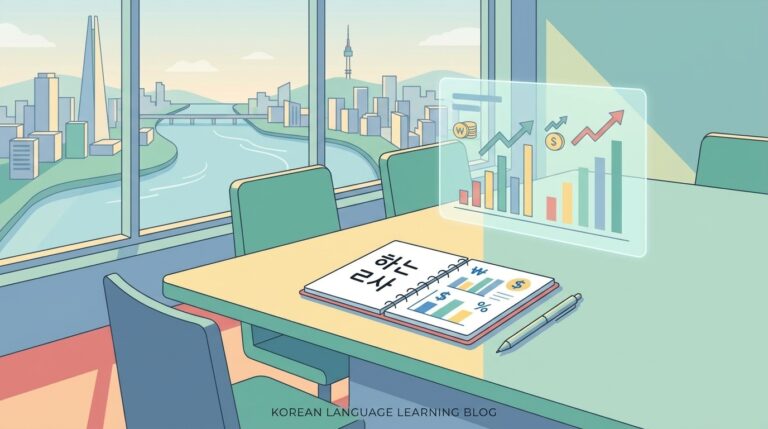
Picture this: You are seated on the 32nd floor of a glass skyscraper in Yeouido, Seoul’s premier financial district, gazing out across the Han River. Inside the executive boardroom, the tension is palpable. The Bank of Korea has just mirrored the Federal Reserve’s rate shift, and Director Park turns his gaze toward you: “자, 이번 금리 변동이 우리 수출입 마진에 미칠 파급효과를 어떻게 분석하고 계십니까?” (Ja, ibeon geumri byeondong-i uri suchurip majine michil pageuphyogwareul eotteoke bunseokhago gyesimnikka? / “Well, how do you analyze the ripple effect of this interest rate fluctuation on our import-export margins?”). At that precise moment, basic textbook Korean evaporates. High-stakes executive decision-making demands more than standard conversational proficiency; it requires the precise macroeconomic rhetoric, boardroom pragmatics, and subtle non-verbal composure expected of top-tier bilingual leaders in South Korea.
Many of our advanced C2 learners express deep frustration here: they understand complex financial news from Maeil Business Newspaper or the Korea Economic Daily, but they freeze when tasked with articulating sharp risk-mitigation strategies in front of Korean executives without sounding unnatural or academic. This guide is crafted directly from field debriefs with foreign financial analysts and cross-border project heads in Seoul. By mastering the linguistic nuances and cultural calculus laid out in this module, you will command executive attention, forecast volatility with surgical precision, and articulate corporate defense mechanisms like a seasoned Seoul insider.
Phase 2: Core Expressions (3 In-Depth Analyses)
1. 기준금리 인상에 따른 환차손을 선제적으로 헷지해야 합니다.
- Pronunciation: Gijungeumri insange ttareun hwanchasoneul seonjejeogeuro hetjihaeya hamnida. (Think: “Gee-joon-geum-ree in-sang-eh tta-reun hwan-cha-son-eul sun-jeh-jeok-eu-ro hedge-ee-hae-ya ham-nee-da”)
- Meaning: “We must preemptively hedge against foreign exchange losses caused by the benchmark interest rate hike.”
- K-Culture Moment: Echoing intense corporate war-room dramas like Misaeng or Agency, where financial controllers urgently propose derivatives strategies to prevent severe balance sheet shrinkage before quarterly reporting.
- Editor’s Insight: ‘선제적으로’ (preemptively) carries a highly proactive and responsible connotation in Korean management philosophy. Pairing it with the financial loanword ‘헷지하다’ (to hedge) demonstrates both contemporary financial fluency and decisive leadership.
- Situation Spectrum: Casual 🚫 | Semi-formal ⚠️ | Formal ✅
- 🤔 Think About It: Notice how Korean business terminology blends Sino-Korean compound nouns (선제적, 환차손) with adapted Western financial instruments (헷지). How does your native language handle the friction between local and global economic jargon?
2. 원자재 수입단가 상승으로 영업이익률 악화가 불가피합니다.
- Pronunciation: Wonjajae suipdanga sangseungeuro yeongeob-iingnyul akhwaga bulgahapnida. (Think: “Won-ja-jae soo-ip-dan-ga sang-seung-eu-ro young-up-ee-eeng-nyul ak-hwa-ga bool-ga-pee-ham-nee-da”)
- Meaning: “Given the surge in raw material import unit costs, the deterioration of our operating profit margin is inevitable.”
- K-Culture Moment: Seen in corporate crisis press conferences in dramas like Reborn Rich, where chief strategists present undeniable macro headwinds to board members to justify pricing adjustments.
- Editor’s Insight: The phrase ‘불가피하다’ (to be inevitable/unavoidable) conveys sober objectivity rather than helpless defeatism. It shields the speaker from personal blame by framing the challenge as an external systemic shock, which is critical during corporate risk presentations.
- Situation Spectrum: Casual 🚫 | Semi-formal ⚠️ | Formal ✅
- 🤔 Think About It: In Korean corporate culture, stating an unfavorable outcome using passive and objective expressions softens defensive pushback from superiors. How does this compare with the direct accountability model in Anglo-American boardrooms?
3. 유동성 경색 국면에서 보수적인 자금 운용 기조를 유지할 필요가 있습니다.
- Pronunciation: Yudongseong gyeongsaek gukmyeon-eseo bosujeogin jageum unyong gijoreul yujihal piryoga issseumnida. (Think: “Yoo-dong-sung gyung-saek gook-myeon-eh-suh bo-soo-juk-in ja-geum oon-yong gee-jo-reul yoo-jee-hal pee-ryo-ga eet-seum-nee-da”)
- Meaning: “Amid a phase of liquidity crunch, it is necessary to maintain a conservative stance on capital management.”
- K-Culture Moment: Reminiscent of strategic policy summits in films like Default (국가부도의 날), where government and banking elites debate liquidity thresholds before market panic sets in.
- Editor’s Insight: ‘기조’ (underlying tone/stance) and ‘국면’ (phase/aspect) are hallmarks of C2 economic discourse. Instead of stating “돈을 아껴야 합니다” (we must save money), using ‘보수적인 자금 운용 기조’ marks you instantly as a seasoned executive strategist.
- Situation Spectrum: Casual 🚫 | Semi-formal ⚠️ | Formal ✅
- 🤔 Think About It: Korean financial rhetoric places heavy emphasis on situational phases (국면) and overarching institutional stances (기조). Why do you think Korean organizational culture prefers describing the systemic environment before proposing concrete actions?
Phase 3: Textbook Korean vs. Real-World Korean
Situation 1: Explaining the pressure of borrowing costs on leveraged manufacturers
- 📖 Textbook Korean: 금리가 오르면 빚이 많은 회사들은 돈을 갚기 힘들어집니다. (Geumriga oreumyeon biji maneun hoesadeureun doneul gapgi himdeureojimnida. / “If interest rates rise, companies with a lot of debt have a hard time repaying money.”)
- 🗣️ Real-World Korean: 기준금리 인상 여파로 한계기업 중심의 차입금 상환 부담이 급격히 가중되고 있습니다. (Gijungeumri insang yeophwaro hangyegieop jungsimui chaipgeum sanghwan budami geupgyeokhi gajungdoego issseumnida. / “In the wake of the benchmark rate hike, debt servicing pressure is mounting sharply, particularly among marginal enterprises.”)
- 💡 Why the Difference? C2 professional discourse replaces conversational descriptors like ‘돈을 갚기 힘들다’ with formal accounting concepts such as ‘차입금 상환 부담 가중’ (mounting debt repayment burden), projecting objective macro analysis.
Situation 2: Forecasting margin compression due to currency volatility
- 📖 Textbook Korean: 환율이 너무 올라서 수입 제품을 팔아도 이익이 거의 안 남습니다. (Hwanyuri neomu ollaseo suip jepumeul paradao iigi geoui an namseumnida. / “Because the exchange rate rose so much, we make almost no profit even if we sell imported goods.”)
- 🗣️ Real-World Korean: 고환율 기조가 고착화되면서 수입 원자재의 마진 스프레드가 심각하게 축소되었습니다. (Gohwanyul gijoga gochakhwadoemyeonseo suip wonjajaeui majin seupeuredeuga simgakhage chuksodoeeotseumnida. / “As high exchange rate trends become entrenched, the margin spread on imported raw materials has contracted severely.”)
- 💡 Why the Difference? Native corporate specialists use technical terminology such as ‘마진 스프레드’ (margin spread) and ‘고착화’ (entrenchment/ossification) to summarize complex macroeconomic realities efficiently during executive decision-making.
Phase 4: K-Culture Deep Dive & Non-Verbal Etiquette
4-1. Boardroom Nunchi (눈치) & Non-Verbal Precision
When delivering macroeconomic risk analyses to Korean C-suite executives, non-verbal cues define how seriously your data is received. Avoid expressive Western gestures like expansive hand waving or aggressive index-finger pointing. Keep your elbows anchored close to the conference table, maintaining an open palm gesture when referencing projected charts on the slide deck.
When forecasting negative developments such as margin compression, maintain steady, calm eye contact while slightly softening your vocal volume. In Korean business psychology, dropping vocal pitch and delivering grim data with controlled restraint displays gravitas (무게감). Never show agitation or smirk when discussing competitors’ financial strains; corporate decorum in Seoul dictates sober, analytical humility at all times.
4-2. The Shadow of 1997: The Cultural Trauma of Liquidity Shocks
To truly grasp why Korean export-import enterprises react so aggressively to rate shifts and foreign exchange volatility, one must understand the collective memory of the 1997 Asian Financial Crisis (widely known in Korea simply as “IMF 사태”). Dramatic shifts in sovereign credit and rapid currency depreciation wiped out historic conglomerates overnight, searing an indelible risk aversion into the Korean corporate psyche.
Consequently, when interest rates hike in tandem with rising currency exchange rates (고환율·고금리), Korean management boards do not merely evaluate quarterly yields; they activate existential contingency playbooks. Proposing proactive currency hedges and defensive capital allocation is viewed not as pessimistic cowardice, but as the highest form of corporate loyalty and strategic foresight.
Phase 5: Real-World Roleplay Scenario
Setting: Executive Strategy Room at Han River Marine & Trading Co., Yeouido. Managing Director Park sits at the head of the conference table, reviewing the third-quarter export-import balance report alongside you, the Senior Risk Strategist.
Characters:
* Director Park (박 전무): A meticulous, veteran financial director who lived through multiple financial crises and values conservative foresight.
* You (Senior Analyst): The bilingual economic strategist presenting foreign exchange and interest rate stress-test models.
Director Park: 이번 한국은행 금융통화위원회의 기준금리 25bp 인상 결정, 우리 하반기 수출입 수지에 미치는 영향이 상당할 것 같은데 어떤가요? (Ibeon Hangugeunhaeng Geumyungtonghwawiwonhoeui gijungeumri 25bp insang gyeoljeong, uri habangi suchurip sujie michineun yeonghyang-i sangdanghal geot gateunde eotteongayo?)
“The Bank of Korea Monetary Policy Board’s decision to hike the benchmark rate by 25 basis points—it seems the impact on our second-half trade balance will be substantial. What is your assessment?”
🎭 Leaning forward, adjusting his reading glasses, and tapping the analytical chart with his fountain pen.
You: 네, 전무님. 고금리 기조로 인한 차입 비용 증가와 더불어, 원달러 환율 변동성 확대로 수입 결제 대금 부담이 급증하고 있습니다. (Ne, Jeonmunim. Gogeumri gijoro inan chaip biyong jeonggawwa deobureo, wondalleo hwanyul byeondongseong hwakdaero suip gyeolje daegeum budami geupjeunghago issseumnida.)
“Yes, Director Park. Alongside increased borrowing costs from high interest rates, the expanding volatility of the KRW/USD exchange rate is sharply escalating our import settlement burden.”
🎭 Maintaining steady eye contact with calm posture, gesturing with an open palm toward the cash flow forecast slide.
Director Park: 역시 그렇겠지. 특히 원자재 부문의 단가 상승이 영업이익률을 심각하게 갉아먹을 텐데, 구체적인 방어책은 마련되어 있습니까? (Yeoksi geureokgetji. Teukhi wonjajae bumunui danga sangseung-i yeongeob-iingnyureul simgakhage galgameogeul tende, guchejeogin bangeochaegeun maryeondoeeo issseumnikka?)
“As expected. In particular, the unit price surge in raw materials will severely erode our operating margins. Have we prepared concrete defensive measures?”
🎭 Frowning slightly while resting his chin in his hand, awaiting your immediate strategic counter-proposal.
You: 단기적으로는 선물환 계약을 통한 통화 헷지 비중을 현행 40%에서 70% 수준까지 선제적으로 확대할 것을 제안합니다. (Danjjeogeoroneun seonmulhwan gyeyageul tonghan tonghwa hetji bijungeul hyeonhaeng 40%eseo 70% sujunkkaji seonjejeogeuro hwakdaehal geoseul je-anhapnida.)
“In the short term, I propose preemptively increasing our currency hedging ratio via forward contracts from the current 40% to approximately 70%.”
🎭 Delivering the proposal in an even, measured tone, nod lightly to project analytical confidence.
Director Park: 70%라… 헷지 수수료 부담도 만만치 않을 텐데, 수출 대금 유입 시점과의 미스매칭 문제는 어떻게 조율할 생각인가요? (70%ra… Hetji susuryo budamdo manmanchi aneul tende, suchul daegeum yuip sijeomgwaui miseumaeching munjeneun eotteoke joyulhal saenggakingayo?)
“Seventy percent… Hedging fee overheads won’t be negligible. How do you intend to reconcile the mismatch in export proceeds inflow timing?”
🎭 Tilting his head back, watching your reaction closely to gauge your technical mastery over liquidity risk.
You: 결제 통화 다변화와 함께, 단기 외화 운전자금 라인을 사전에 확보하여 유동성 리스크를 상쇄하고자 합니다. (Gyeolje tonghwa dabyeonhwawa hamkke, dangi oehwa unjeonjageum raineul sajeone hwakbohaya yudongseong riseukeureul sangswaehagoja hamnida.)
“Along with diversifying settlement currencies, we intend to offset liquidity risk by securing short-term foreign currency working capital lines in advance.”
🎭 Pointing to the liquidity reserve table on the executive hand-out with two hands resting respectfully.
Director Park: 일리 있는 접근이군요. 그럼 원자재 공급선 다변화에 따른 비용 추계도 다음 보고 때 포함해 주십시오. (Illi inneun jeopgeun-igunyo. Geureom wonjajae gonggeupseon dabyeonhwawa ttareun biyong chugyedo daeum bogo ttae pohamhae jusipsio.)
“That is a valid approach. In that case, please include cost estimates for diversifying raw material supply chains in the next report.”
🎭 Nodding slowly with an approving expression, closing the analytical file on his desk.
You: 네, 전무님. 금리 민감도 시나리오별 손익 영향을 면밀히 검토하여 차주 월요일 회의 전까지 보고드리겠습니다. (Ne, Jeonmunim. Geumri mingamdo sinariobyeol sonik yeonghyang-eul myeonmilhi geomtohaya chaju woryoil hoeui jeonkkaji bogodeurigessseumnida.)
“Understood, Director Park. We will rigorously examine the profit and loss impact by interest rate sensitivity scenarios and report back before next Monday’s briefing.”
🎭 Standing up straight, bowing slightly at a 15-degree angle to conclude the executive interaction with decorum.
🔀 Interactive Decision Point
How would you conclude your summary recommendation to Director Park regarding export credit insurance?
- Option A: “금리 변동 위험을 회피하기 위해 무역보험공사의 환변동보험 인수를 즉각 신청해야 합니다.” (Gijungeumri byeondong wiheomeul hoepihagi wihae Muyeokboheomgongsaui hwanbyeondongboheom insureul jeukgak sincheonghaeya hamnida. / “To avert interest rate and exchange risks, we must immediately apply for exchange volatility insurance through K-SURE.”)
- Option B: “시장 상황을 조금 더 관망한 뒤 연말에 금리가 안정되면 그때 조치를 취해도 늦지 않습니다.” (Sijang sanghwangeul jogeum deo gwanmanghan dwi yeonmare geumriga anjeongdoemyeon geuttae jochireul chwihaedo neutji anhseumnida. / “If we wait and observe market conditions a bit more until interest rates stabilize at year-end, taking action then will not be too late.”)
- Option C: “선물환 시장이 너무 불안정하니 모든 외환 거래를 전면 중단하고 원화 결제만 고집해야 합니다.” (Seonmulhwan sijang-i neomu buranjeonghani modeun oehwan georaereul jeonmyeon jungdanhago wonhwa gyeoljeman gojiphaeya hamnida. / “Since the forward market is too unstable, we should suspend all FX transactions and insist solely on KRW settlement.”)
Feedback:
* Selection A (Best): Excellent. Demonstrates proactive corporate hedging using official institutional frameworks (K-SURE / 한국무역보험공사), cementing your reputation as a forward-thinking executive strategist.
* Selection B (Risk): Dangerous. Executive boards in South Korea despise passive procrastination (“관망”); failing to hedge against compounding interest rate volatility could expose the firm to catastrophic balance sheet losses.
* Selection C (Bad): Unrealistic. Demanding pure KRW settlement from global trading partners ignores commercial realities and will paralyze the company’s international supply chain operations.
Phase 6: 10-Second Emotional Shadowing Drill
Train your intonation, pausing, and authoritative cadence with these corporate stress-test declarations:
- Sentence 1:
[🧐 Analytical and Grave]
기준금리 인상에 따른 / 환차손 위험이 가시화되고 있으므로 / 선제적 리스크 관리가 시급합니다.
(Gijungeumri insange ttareun / hwanchason wiheomi gasiwhadoego isseumeuro / seonjejeok riseukeu gwalliga sigeuphamnida.)
“As the risk of foreign exchange losses due to benchmark rate hikes becomes visible / preemptive risk management is urgent.” -
Sentence 2:
[💼 Decisive & Executive]
원자재 가격 상승 압박을 상쇄하기 위해 / 결제 통화 다변화와 유동성 확보를 / 병행 추진하겠습니다.
(Wonjajae gagyeok sangseung apbageul sangswaehagi wihae / gyeolje tonghwa dabyeonhwawa yudongseong hwakboreul / byeonghaeng chujinhagessseumnida.)
“To offset upward price pressures on raw materials / we will concurrently pursue currency diversification and liquidity acquisition.” -
Sentence 3:
[🏛️ Sober Institutional Reassurance]
시장 불확실성이 상존하는 국면이지만 / 스트레스 테스트를 거쳐 / 재무 건전성을 견고히 유지하겠습니다.
(Sijang bulhwaksilseong-i sangjonhaneun gukmyeon-ijiman / seuteureseu tesuteureul geochyeo / jaemu geonjeonseongeul gyeongohi yujihagessseumnida.)
“Although this is a phase where market uncertainties coexist / through rigorous stress tests / we will solidly preserve our financial soundness.”
Phase 7: K-Culture Mini Dictionary
- 역마진 (Yeok-majin) | Negative Margin / Inverted Spread
Occurs when borrowing or procurement costs surpass selling prices, frequently triggered when domestic interest rates outpace operational cash flows. Used heavily in boardroom discussions regarding unprofitable export contracts. - 환노출 (Hwan-nochul) | FX Exposure
The financial exposure a trading corporation faces regarding foreign currency fluctuations. In executive reporting, minimizing ‘환노출도’ (exposure levels) is a core Key Performance Indicator (KPI). - 한계기업 (Han-gye-gieop) | Marginal Firm / Zombie Enterprise
Enterprises whose operational profits cannot cover interest expenses over three consecutive years (Interest Coverage Ratio < 1). Used in macro analysis to evaluate default contagion during aggressive rate-hiking cycles. - 외환보유액 (Oehwan-boyu-aek) | Foreign Exchange Reserves
The national war chest of foreign assets managed by the central bank. Corporate treasurers constantly monitor this macro indicator as an anchor for national credit default swap (CDS) premiums.
Phase 8: Expat Executive Survival Kit
TOP 3 Executive Expressions
- “변동금리 리스크 노출도를 재점검해야 합니다.” (Byeondonggeumri riseukeu nochuldoreul jaejeomgeomhaeya hamnida.)
Pro Tip: Use this during asset-liability committee meetings to demand an immediate audit of floating-rate loan balances. - “외환 포지션을 보수적으로 조정해 주십시오.” (Oehwan pojisyeoneul bosujeogeuro jojeonghae jusipsio.)
Pro Tip: A refined, non-confrontational command for treasury managers to balance long/short foreign currency positions. - “원자재 공급망 다변화가 시급한 시점입니다.” (Wonjajae gonggeupmang dabyeonhwaga sigeuphan sijeom-imnida.)
Pro Tip: Perfect transition phrase when shifting an economic presentation from grim macro diagnostics to actionable procurement strategy.
Editor’s Travel Note: Business Tech Essentials
When conducting corporate business or macroeconomic research in Seoul, download the 한국은행 경제통계시스템 (BOK ECOS) 공식 포털 app for primary statistical bulletins on policy rates, money supply, and real trade balances. Additionally, monitor institutional commentary using the 네이버 증권 모바일 플랫폼, which consolidates research house notes across Korean securities firms in real-time. For daily business commuting across financial centers like Yeouido and Teheran-ro, utilize Kakao T for business-class taxi hailing and pre-loaded corporate invoice accounting.
Phase 9: Step Deeper (Reflective Humanity)
In Korean corporate philosophy, economic adversity is rarely framed as mere individual hardship; it is perceived through the lens of collective endurance (위기 극복 DNA). Having rebuilt an entire modern industrial powerhouse from war and weathered systemic financial collapses, Korean enterprises expect their key leaders to demonstrate collective responsibility during monetary tightening cycles. Linguistic precision in the boardroom is not simply an intellectual showcase; it is a signal to your colleagues and superiors that you possess the analytical fortitude to protect the enterprise and its workers from macroeconomic storms.
💬 Your Turn: How does your home country’s corporate culture handle economic downturns and interest rate shocks? Does linguistic decorum become more conservative or more aggressive during volatile market phases? Share your comparative thoughts in the comments below!
Phase 10: FAQ & Common Pitfalls
Q: What is the exact communicative difference between 기준금리 (Benchmark Rate) and 시장금리 (Market Rate) in corporate reporting?
A: ‘기준금리’ (Gijungeumri) refers strictly to the base policy rate set by the Bank of Korea’s Monetary Policy Board. ‘시장금리’ (Sijanggeumri) encompasses dynamic commercial market yields such as corporate bonds (회사채), certificates of deposit (CD), and call rates. When analyzing cost pressures, specify which rate has shifted; confusing the two will immediately flag a lack of financial depth during an executive presentation.
Q: When is it appropriate to use English financial jargon like ‘헤지’ (Hedge) versus the Sino-Korean term ‘위험 회피’?
A: In executive reports and corporate presentations, both are recognized, but they play distinct roles. ‘헷지’ or ‘헤지’ is standard industry shorthand in treasury departments when discussing direct operational mechanisms (e.g., “통화 헷지 비중 확대”). In contrast, ‘위험 회피’ is favored in academic publications, official financial statements, or formal legal disclosures.
Q: Why do Korean executives prefer saying ‘불가피하다’ (inevitable) rather than ‘어쩔 수 없다’ (nothing can be done)?
A: While both express unavoidability, ‘어쩔 수 없다’ is a conversational, emotive expression that sounds defeatist and unpolished in a professional setting. ‘불가피하다’ is an objective, Sino-Korean analytical term indicating that external macroeconomic parameters have logically dictated the outcome, removing emotional passivity.
🚨 Common Mistakes Alert (TOP 3)
- Mistake: Saying “돈 빌리는 이자가 비싸졌어요” (Borrowing interest got expensive) in an executive meeting.
Correct Action: Use “조달 금리 상승으로 인한 금융 비용 부담이 가중되었습니다.” (Financing cost burdens have mounted due to elevated procurement rates). - Mistake: Overusing the absolute word “망하다” (ruined/bankrupted) when describing margin losses.
Correct Action: Use “수익성 악화 우려가 확산되고 있습니다” (Concerns over profitability deterioration are spreading). - Mistake: Confusing ‘환차손’ (FX losses) with ‘환차익’ (FX gains).
Correct Action: Pay close attention to the final character: ‘손’ (損) denotes loss, while ‘익’ (益) denotes profit or gain.
Phase 11: Action Missions
- Bronze Mission (Solo Practice): Read the Phase 6 Emotional Shadowing Drill out loud three times while recording your voice. Check your pausing at the
/marks to ensure you sound calm, measured, and authoritative. - Silver Mission (Social Sharing): Post a short reflection on LinkedIn or your language study blog summarizing how the latest central bank rate decision affects global supply chains using the phrase: “기준금리 변동에 따른 기업의 선제적 리스크 관리가 중요한 시점입니다.”
- Gold Mission (Real-World Execution): Watch a Korean economic news broadcast (e.g., SBS Biz or Korea Economic TV) covering recent interest rate deliberations. Identify at least three expressions learned in this guide (국면, 가중, 선제적) and take situational notes on how the anchors deliver them.
- 🎮 K-Culture Mission: Watch Episode 1 or 2 of the corporate drama Misaeng (미생) or the movie Default (국가부도의 날). Observe how senior executives modulate their body language and tone of voice when delivering unfavorable economic data to their executive committees.
Phase 12: Interactive Quiz Challenge
1. Situational Judgment:
You are delivering a briefing to your CEO on how recent US Federal Reserve rate hikes have elevated raw material procurement costs in Korean Won. Which sentence is most appropriate for this formal executive context?
* (A) 미국 금리가 올라서 우리 회사 재료비가 너무 많이 들어 걱정입니다.
* (B) 미 연준의 금리 인상 여파로 원자재 수입단가가 상승하여 영업이익률 둔화가 불가피합니다.
* (C) 환율이 망해서 수입 원자재는 이제 안 사는 게 좋습니다.
2. Fill-in-the-Blank:
“단기적인 외환 변동성 위험을 차단하기 위해 선물환 계약을 통한 통화 ( )를 선제적으로 집행해야 합니다.”
* Hint: An adapted Western financial instrument meaning to mitigate risk exposure.
3. True or False Cultural Concept:
In high-level Korean corporate meetings, presenting macroeconomic risks using emotional terms and dramatic body gestures is praised as demonstrating passion and transparency. (True / False)
👉 Click here for answers and detailed explanations!
- Question 1 Answer: (B)
Explanation: Option (B) uses sophisticated Sino-Korean executive vocabulary (‘미 연준’, ‘인상 여파’, ‘영업이익률 둔화가 불가피합니다’) tailored for C-suite reporting. Option (A) is too conversational, and Option (C) uses unprofessional slang (‘망해서’) and reckless recommendations. - Question 2 Answer: 헷지 (또는 헤지 / Hedge)
Explanation: ‘통화 헷지’ (currency hedging) is the standard operational term for locking in foreign exchange forward contracts to safeguard against currency fluctuations. - Question 3 Answer: False
Explanation: In Korean executive meetings, gravity (무게감), emotional self-control, and sober analytical restraint are seen as markers of true professional competence. Overly dramatic body language or emotional complaints are perceived as a lack of executive poise.






