

Beyond Gomawoyo: How to Express Deep Gratitude When Moved to Tears in Korean
Phase 1: Empathy (A Heartwarming Encounter in Seoul)
안녕하세요! 매일한글 에디터입니다. (Hello! This is your Daily Hangul editor.)
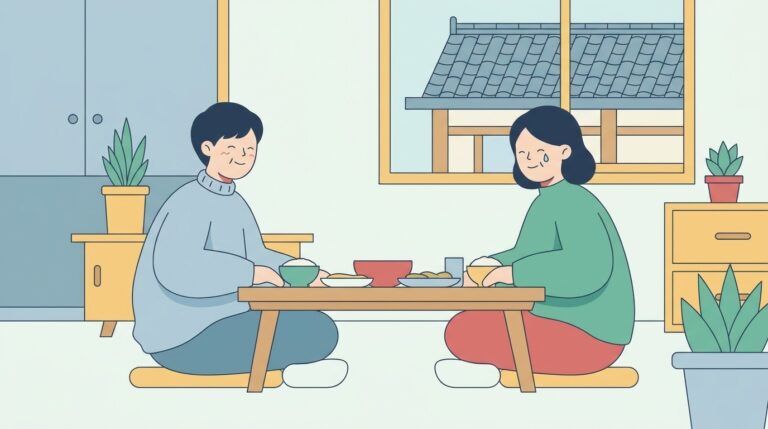
Picture this: You are having an exhausting, freezing evening in Seoul after getting lost in the rain. Your umbrella is broken, your phone battery is at 4%, and you shuffle into a modest neighborhood gukbap (soup with rice) restaurant. The elderly owner—a classic Korean halmeoni (grandmother)—notices your shivering hands. Without a word, she brings out a steaming bowl loaded with extra tender beef, a fresh plate of hot rolled omelet, and a warm thermos of barley tea. When you try to pay for the extras, she gently pats your shoulder and says, “Eat up, my child. It must be tough living far from family.”
At that exact second, your throat tightens. Warmth rushes to your eyes. You are genuinely, profoundly moved to tears by the kindness of a stranger. You desperately want to say something deeper than a simple, robotic “감사합니다 (Gamsahamnida).” But your mind freezes. Saying just “Thank you” feels almost dismissive of the massive wave of human warmth (jeong) you just received.
Every intermediate Korean learner hits this exact linguistic wall. In Korean culture, profound gratitude and tears are intimately connected. Today, based on years of real learner feedback and cultural immersion coaching, we will unlock the exact phrases, cultural non-verbal cues, and emotional nuances to show someone that their kindness truly touched your soul.
Phase 2: 3 Core Expressions for Deep Gratitude
Here are the three most natural expressions to convey that someone’s thoughtfulness brought you to tears.
1. 너무 감동받아서 눈물이 났어요 (Neomu gamdongbadasseo nunmuri nasseoyo)
- Pronunciation: [Neomu gam-dong-ba-da-sseo noon-moo-ri na-sseo-yo] (Think of ‘gamdong’ like ‘gum-dong’ and ‘nunmul’ like ‘noon-mool’—the liquid from the eye).
- Meaning:
- Literal: “I received so much emotional touch that tears came out.”
- Real Nuance: “Your kindness touched me so deeply that I couldn’t hold back my tears.”
- K-Culture Moment: You hear this constantly during K-Pop year-end award speeches or during final wrap-up parties in K-Dramas when actors thank their supportive crew.
- Editor’s Insight: Notice that Koreans use the passive-receptive verb 받다 (bada – to receive) with 감동 (gamdong – deep emotion). Emotion isn’t just felt internally; it is received as a gift from another person.
- Situation Spectrum:
- Casual (반말): 너무 감동받아서 눈물 났어 (Neomu gamdongbadasseo nunmul nasseo) ✅
- Semi-formal (해요체): 너무 감동받아서 눈물이 났어요 (Neomu gamdongbadasseo nunmuri nasseoyo) ✅
- Formal (하십시오체): 너무 감동받아서 눈물이 났습니다 (Neomu gamdongbadasseo nunmuri natseumnida) ✅
- 🤔 Think About It: In English, we often say “I am so thankful,” focusing on our own state. Why do you think Korean specifically attributes the emotion to receiving (받다) something precious from the other party?
2. 눈물 날 정도로 감사해요 (Nunmul nal jeongdoro gamsahaeyo)
- Pronunciation: [Noon-mool nal jeong-do-ro gam-sa-hae-yo] (Rhymes smoothly with ‘nal’ as in ‘null’, and ‘jeongdo’ like ‘jung-dough’).
- Meaning:
- Literal: “I am grateful to the degree that tears come out.”
- Real Nuance: “I am so overwhelmingly grateful that it brings tears to my eyes.”
- K-Culture Moment: When a host on a variety show receives unexpected heartfelt video letters from their mentors, they clasp their hands to their chest and utter this phrase.
- Editor’s Insight: The grammar pattern
-(으)ㄹ 정도로measures the intensity of an emotion against a physical reaction. It is humble yet intense without sounding overly dramatic or theatrical. - Situation Spectrum:
- Casual: 눈물 날 정도로 고마워 (Nunmul nal jeongdoro gomawo) ✅
- Semi-formal: 눈물 날 정도로 감사해요 (Nunmul nal jeongdoro gamsahaeyo) ✅
- Formal: 눈물 날 정도로 감사드립니다 (Nunmul nal jeongdoro gamsadeurimnida) ✅
- 🤔 Think About It: When was the last time someone helped you so selflessly that words alone felt inadequate?
3. 마음이 찡해서 울컥했어요 (Maeumi jjinghaeseo ulkeokaesseoyo)
- Pronunciation: [Mae-oo-mi jjing-hae-seo ool-keok-hae-sseo-yo] (The ‘jj’ is a crisp, tense ‘zz’ sound; ‘ulkeok’ sounds like liquid surging in a bottle).
- Meaning:
- Literal: “My heart tingled, so an emotional surge welled up in my throat.”
- Real Nuance: “My heart was so touched that I got a sudden lump in my throat.”
- K-Culture Moment: Seen in family reunions in dramas like Reply 1988 when a stern father silently tucks extra pocket money into his child’s worn-out shoes.
- Editor’s Insight: 찡하다 (Jjinghada) is a sensory onomatopoeia describing that sharp, stinging warmth in your nasal bridge right before crying. 울컥하다 (Ulkeokhada) describes that sudden lump in your throat. This combination sounds 100% native.
- Situation Spectrum:
- Casual: 마음이 찡해서 울컥했어 (Maeumi jjinghaeseo ulkeokhaesseo) ✅
- Semi-formal: 마음이 찡해서 울컥했어요 (Maeumi jjinghaeseo ulkeokaesseoyo) ✅
- Formal: 마음이 찡하여 울컥했습니다 (Maeumi jjinghayeo ulkeokhaetseumnida) ⚠️ (A bit too conversational for ultra-formal boardroom settings, but wonderful in speeches).
- 🤔 Think About It: How does naming a physical bodily sensation make your gratitude feel more genuine than abstract words?
Phase 3: Textbook Korean vs. Real Korean
Many foreign learners sound like walking 19th-century history textbooks when trying to express gratitude. Let’s fix that immediately.
Situation 1: Expressing deep thanks for a surprise birthday party thrown by close Korean friends
- 📖 Textbook Korean: 저는 여러분의 친절에 대단히 깊은 감동을 받았습니다. (Jeoneun yeoreobunui chinjeore daedanhi gipeun gamdongeul badatseumnida. – “I received an exceedingly profound emotional impression from everyone’s kindness.”)
- 🗣️ Real Korean: 진짜 감동이야… 나 진심으로 울 뻔했잖아. (Jinjja gamdong-iya… na jinsimeuro ul ppeonhaetjana. – “I’m so touched… I seriously almost cried, guys.”)
- 💡 Why is it different? Native speakers avoid stiff Sino-Korean adverbs like 대단히 (exceedingly) in intimate settings. Using the conversational
-(으)ㄹ 뻔하다(almost did something) conveys vulnerability and genuine friendship.
Situation 2: Thanking a college professor or team leader who wrote you an amazing recommendation letter
- 📖 Textbook Korean: 당신의 은혜에 눈물을 흘렸습니다. (Dangsinui eunhyee nunmureul heullyeotseumnida. – “I shed tears for your grace.”)
- 🗣️ Real Korean: 보내주신 말씀에 마음이 찡해서 울컥했습니다. 정말 감사드립니다. (Bonaejusin malsseume maeumi jjinghaeseo ulkeokhaetseumnida. Jeongmal gamsadeurimnida. – “Your kind words touched my heart and gave me a lump in my throat. Thank you so very much.”)
- 💡 Why is it different? The word 당신 (dangsin) can sound confrontational in spoken Korean, and 은혜 (grace/benevolence) sounds historical or religious. Specifying the gesture (보내주신 말씀) shows high-level respect and emotional sincerity.
Phase 4: K-Culture Deep Dive & Non-Verbal Manners
4-1. 눈치 (Nunchi) & Gestures: How to Cry with Politeness
In Korean culture, showing that someone’s generosity made you emotional is beautiful, but maintaining social decorum (예의) is vital:
1. The Double-Hand Clasp to the Chest: When tears well up, bring both palms together lightly over your chest or upper sternum, dipping your head slightly. It signals: “Your kindness hit right here in my heart.”
2. The Discrete Corner Dab: Avoid loud, dramatic sobbing. Take a tissue or the back of your sleeve and dab only the outer corner of your eye while smiling through the tears. This shows modesty.
3. The Soft Eye-Contact Break: When you feel a tear drop, gently break eye contact downwards for 2 seconds while saying “아, 울면 안 되는데… (Ah, ulmyeon an doeneunde – Ah, I shouldn’t cry…)”. It shows you are trying to be composed out of consideration for the other person.
4-2. Cultural Code: The Burden of Jeong (정) and Bo-eun (보은)
Why do Koreans often react to huge gifts by saying, “어떡해요! (What should I do!)” or “이러지 마세요! (Please don’t do this!)”?
In Korea, deep affection (정 – Jeong) creates a cycle of reciprocity (보은 – Bo-eun, repaying kindness). When someone does something that moves you to tears, you are not merely receiving a favor; you are entering a warm social debt of love. That’s why genuine gratitude in Korea always implies a future return: “I will definitely repay this warmth.”
Phase 5: Real-Life Roleplay Scenario
Setting: A chilly rooftop room (옥탑방) in Mangwon-dong. You have been in bed with a terrible flu for three days. Your warm-hearted Korean neighbor, Minho (민호), knocks on your door carrying a thermos of homemade miyeok-guk (seaweed soup) and cold medicine.
민호 (Minho) : 🎭 [걱정스러운 얼굴로 문을 열며] 수잔 씨, 괜찮아요? 연락이 안 돼서 걱정했잖아요.
               (Sujan ssi, gwaenchanhayo? Yeollagi an dwaeseo geokjeonghaetjanayo.)
               "Susan, are you okay? You didn't reply, so I was really worried."

수잔 (Susan) : 🎭 [목이 쉰 목소리로 문을 잡으며] 민호 씨... 감기 때문에 며칠 동안 누워만 있었어요.
               (Minho ssi... gamgi ttaemune myeochil dongan nuwomean isseosseoyo.)
               "Minho... I've been stuck in bed for days because of a bad cold."

민호 (Minho) : 🎭 [보온병과 약봉지를 쥐여주며] 이것 좀 받아요. 어머니가 보내주신 미역국 데워왔어요. 약 먹으려면 밥 굶으면 안 돼요.
               (Igeot jom badayo. Eomeoniga bonaejusin miyeokguk deowowasseoyo. Yak meogeuryeomyeon bap gulmeumyeon an dwaeyo.)
               "Take this. I heated up some seaweed soup my mom sent. You can't skip meals if you need to take medicine."

수잔 (Susan) : 🎭 [눈시울이 붉어지며 손을 모은다] 세상에... 저 혼자 있어서 많이 서러웠는데, 마음이 찡해서 울컥해요.
               (Sesange... jeo honja isseoseo mani seoreowonneunde, maeumi jjinghaeseo ulkeokhaeyo.)
               "Oh my goodness... I felt so lonely being sick all by myself, but this is so touching I'm getting choked up."

민호 (Minho) : 🎭 [손사래를 치며 웃는다] 에이, 울긴 왜 울어요! 이웃사촌끼리 당연한 건데.
               (Ei, ulgin wae ureoyo! Iutsachonkkiri dang-yeonhan geonde.)
               "Ayy, why are you crying! Neighbors are supposed to help each other like cousins."

수잔 (Susan) : 🎭 [보온병을 품에 꼭 안고] 진짜 눈물 날 정도로 감사해요. 저 다 나으면 꼭 맛있는 밥 살게요.
               (Jinjja nunmul nal jeongdoro gamsahaeyo. Jeo da naeumyeon kkok masinneun bap salgeyo.)
               "I'm so thankful that I could honestly cry. As soon as I recover, I will definitely buy you a delicious meal."

민호 (Minho) : 🎭 [안도하며 따뜻하게 미소 짓는다] 밥은 무슨! 얼른 국 먹고 푹 자요. 필요한 거 있으면 언제든 문자해요.
               (Babeun museun! Eolleun guk meokgo puk jayo. Pilyohan geo isseumyeon eonjedeun munjahaeyo.)
               "Forget buying a meal! Just eat your soup quickly and sleep well. Text me anytime if you need anything."

수잔 (Susan) : 🎭 [고개 숙여 정중하게 인사하며] 네, 민호 씨 덕분에 오늘 밤은 따뜻하게 잘 수 있을 것 같아요. 고마워요.
               (Ne, Minho ssi deokbune oneul bameun ttatteuthage jal su isseul geot gatayo. Gomawoyo.)
               "Yes, thanks to you, Minho, I think I can sleep warmly tonight. Thank you."
🔀 Interactive Choice Point: How would you react in Turn 4?
If Minho handed you the soup, what would you say?
* Option A: “너무 감동받아서 울컥했어요. 정말 고마워요, 민호 씨.” (I got choked up because I was so moved. Thank you so much, Minho.)
* 👉 Feedback: [BEST!] Perfectly balances genuine vulnerability with warm, natural intermediate phrasing.
* Option B: “왜 주시는 거예요? 저는 눈물이 납니다.” (Why are you giving this? Tears are coming out of me.)
* 👉 Feedback: [BAD] Sounds suspicious and interrogative (“Why are you giving this?”), while the second sentence sounds like an emotionless medical report.
* Option C: “선생님의 높은 은혜에 깊이 감복하여 눈물을 흘립니다.” (I deeply revere your high grace and shed tears.)
* 👉 Feedback: [RISK] Way too archaic. Minho will think you are acting in a Joseon Dynasty historical drama!
Phase 6: 10-Second Emotional Shadowing Drill
Shadow these sentences out loud. Focus on the breathing pauses (/) and match the emotional pitch milestone.
[🥺 감격하여 살짝 목이 메인 톤으로]- 진짜 / 너무 감동받아서 / 눈물이 날 것 같아요.
- (Jinjja / neomu gamdongbadasseo / nunmuri nal geot gatayo.)
- “Seriously / I’m so moved / that I think tears are about to fall.”
[🤲 가슴에 두 손을 얹고 따뜻한 톤으로]- 생각지도 못했는데 / 마음이 찡해서 / 울컥했어요.
- (Saenggakjido mothaenneunde / maeumi jjinghaeseo / ulkeokaesseoyo.)
- “I never even expected this / my heart tingled so much / that I got choked up.”
[😊 눈물을 닦으며 미소 짓는 톤으로]- 이렇게까지 신경 써 주시다니 / 눈물 날 정도로 감사해요.
- (Ireokekkaji singyeong sseo jusidani / nunmul nal jeongdoro gamsahaeyo.)
- “For you to care for me this much / I am grateful to the point of tears.”
Phase 7: K-Culture Mini Dictionary
- 울컥하다 (Ulkeokhada)
- Definition: A sudden surge of emotion welling up in the throat or chest.
- Usage: Used whenever unexpected kindness catches you off guard. (e.g., “편지를 읽는데 갑자기 울컥했어.” – I suddenly choked up while reading the letter.)
- 마음이 찡하다 (Maeumi jjinghada)
- Definition: A tingling, heart-tugging sensation caused by sympathy or deep gratitude.
- Usage: The quintessential Korean descriptor for touching human moments. (e.g., “할머니 뒷모습을 보는데 마음이 찡하더라.” – Seeing grandmother’s back made my heart ache with tenderness.)
- 감동 (Gamdong / 感動)
- Definition: Being deeply touched or impressed.
- Usage: Often paired with 받다 (to receive) or 주다 (to give): “감동을 주다” (to touch someone’s heart).
- 보답하다 (Bodaphada / 報答–)
- Definition: To repay a kindness, favor, or dedication.
- Usage: Essential for intermediate learners closing an emotional conversation: “이 은혜는 꼭 보답할게요.” (I will surely repay this kindness.)
Phase 8: Survival Kit for Travelers
Top 3 On-the-Go Gratitude Expressions
- “진짜 감동이에요!” (Jinjja gamdongieyo!)
- Pro Tip: Keep this in your pocket for when a guesthouse host or restaurant server gives you free service (free food/perks). It delivers instant joy.
- “어떡해요, 너무 감사해서 눈물 나요.” (Eotteokhaeyo, neomu gamsahaeseo nunmul nayo.)
- Pro Tip: Combine this with both hands holding your cheeks. It cuts through any language barrier with pure warmth.
- “어떻게 보답해야 할지 모르겠어요.” (Eotteoke bodaphaeya halji moreugesseoyo.)
- Pro Tip: Use this when someone goes massively out of their way to guide you through a confusing subway station.
Editor’s Travel Note
When traveling across Korea, you will frequently experience unexpected warmth from locals—from cab drivers returning lost items to strangers escorting you to bus stops. To navigate Korean cities smoothly while staying connected with these wonderful locals, ensure you follow our Naver Map app installation guide rather than relying on global apps that lack walking paths in Korea. Also, keep your T-Money card charged using the subway convenience store top-up system so you never get stranded when exploring hidden local alleyways.
Phase 9: Going One Step Deeper (한 발 더 깊이)
In Western individualistic cultures, crying is often treated as a private loss of emotional composure. In Korea’s communal society, however, sharing tears over someone’s generosity is considered the pinnacle of emotional sincerity (진심). When you tell someone that their action made you 울컥했다, you are telling them: “You tore down my walls; I am completely vulnerable with you.” It converts a simple transaction of help into lifelong 정 (Jeong).
💬 Your Turn: Have you ever experienced a moment in Korea—or with a Korean friend—that made you feel this kind of deep emotion? Share your story in the comments below!
Phase 10: FAQ & Avoiding Misunderstandings
Q: Can I use “울었어요 (I cried)” directly instead of “눈물이 났어요”?
A: You can, but “눈물이 났어요 (tears came out)” sounds much more natural and humble. Saying “저 울었어요 (I cried)” emphasizes the deliberate act of weeping, which can sound slightly blunt or heavy-handed, whereas “눈물이 났어요” focuses on the spontaneous physiological reaction to their kindness.
Q: Is “감동받았어요” appropriate to use with people older than me or in professional settings?
A: Yes! When paired with polite endings (e.g., “정말 감동받았습니다, 부장님”), it is 100% polite and widely used in corporate and academic settings to thank mentors for encouragement or thoughtful feedback.
Q: Does saying “눈물 날 것 같아요” sound melodramatic to Koreans?
A: Not at all! Koreans frequently use hyperbolic physical expressions to express emotion. As long as your facial expression and voice tone remain warm and sincere rather than sarcastic, it is received as a lovely compliment.
🚨 Common Mistakes Alert Board
| Foreign Learner Mistake | Why It Sounds Awkward | Correct Action (Do This!) |
|---|---|---|
| “당신의 은혜에 울었습니다.” | Using 당신 sounds rude; 은혜 is overly theatrical and biblical. | Say: “챙겨주셔서 마음이 찡했어요.” (I was touched by how you looked after me.) |
| “저는 너무 슬퍼서 눈물 났어요.” | 슬프다 means “sad.” You are thanking them, not mourning! | Say: “너무 감동받아서 눈물이 났어요.” (I was so touched that tears came.) |
| Standing rigid with arms crossed while saying thank you. | Body language contradicts your words in Korean etiquette. | Clasp both hands at your chest and bow slightly while speaking. |
Phase 11: Action Missions
Put this lesson into immediate practice with this 3-tier challenge:
* 🥉 Bronze Mission (Solo Practice): Stand in front of your mirror. Look into your eyes and recite: “진짜 감동받아서 울컥했어요 (Jinjja gamdongbadasseo ulkeokaesseoyo)” 5 times with a soft smile and misty eyes.
* 🥈 Silver Mission (Social Media): Find a heartwarming post by your favorite Korean celebrity, actor, or friend on Instagram or Weverse. Leave a comment saying: “보는 내내 마음이 찡해서 눈물 날 뻔했어요! (Watching this made my heart tingle so much I almost cried!)”
* 🥇 Gold Mission (Real Life): The next time someone does an unexpected favor for you, resist saying just “고마워요.” Instead, use: “생각지도 못했는데 너무 감동이에요! (I didn’t even expect this, I’m so touched!)”
* 🎮 K-Culture Mission: Watch an episode of a documentary show like Human Documentary People is Good (휴먼다큐 사람이 좋다) or a drama like Our Blues. Count how many times speakers use the word 울컥 or 찡하다 when talking about family and gratitude.
Phase 12: Interactive Quiz Challenge
Test your real-life comprehension below!
1. Situational Judgment
Your Korean language exchange partner spent 2 hours writing custom handwritten study flashcards for your upcoming TOPIK exam. Which response expresses the deepest, most natural gratitude?
* (A) 고맙습니다. 수고하셨습니다. (Gomapseumnida. Sugohasyeotseumnida.)
* (B) 정말 감동이에요… 저 진심으로 울컥했어요. (Jeongmal gamdongieyo… jeo jinsimeuro ulkeokaesseoyo.)
* (C) 당신의 호의에 눈물이 흐르고 있습니다. (Dangsinui houie nunmuri heureugo itseumnida.)
2. Fill-in-the-Blank
Complete the natural Korean expression below:
“이렇게까지 챙겨주시다니 정말 눈물 _____ 정도로 감사해요.”
3. Cultural True or False
- Statement: Saying that someone’s gift made you feel like crying (울컥하다) is considered an offensive sign of weakness in Korean business etiquette.
- (True / False)
👉 Click to reveal answers & explanations!
- Answer: (B)
- Explanation: Option (A) is too cold and routine (“Thanks, you worked hard”), while Option (C) uses awkward formal phrases (당신의 호의). Option (B) captures heartfelt emotion perfectly!
- Answer: 날 (nal)
- Explanation: From the verb phrase 눈물이 나다 (tears come out) + grammar pattern
-(으)ㄹ 정도로 (to the degree of). The combined phrase is 눈물 날 정도로.
- Explanation: From the verb phrase 눈물이 나다 (tears come out) + grammar pattern
- Answer: False
- Explanation: Quite the opposite! Stating that someone’s professional mentoring or support brought you to tears of gratitude shows exceptional respect and deep human connection (정), which strengthens business bonds in Korea.
- Explanation: Quite the opposite! Stating that someone’s professional mentoring or support brought you to tears of gratitude shows exceptional respect and deep human connection (정), which strengthens business bonds in Korea.







