

Phase 1: 공감 (Story-Immersive Opening)
안녕하세요! 매일한글 에디터입니다.
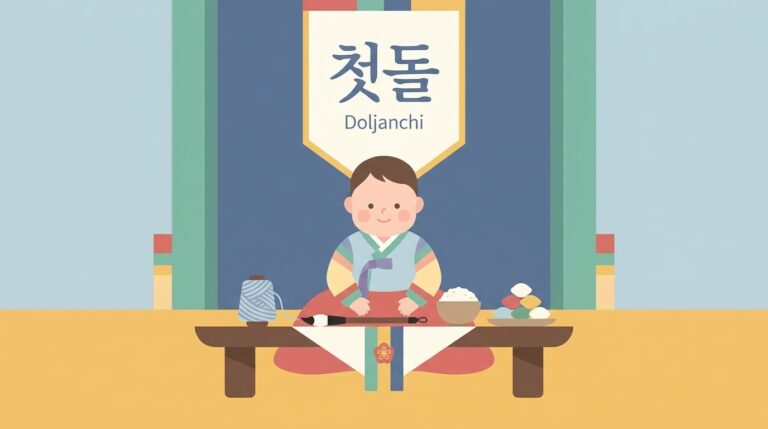
Imagine this: You have just been invited to your Korean coworker’s baby’s first birthday celebration, known as a 돌잔치 (Doljanchi). You are seated at a round banquet table surrounded by flowers, colorful rice cakes, and chatter. Suddenly, the chandelier lights dim. A mellow acoustic guitar soundtrack echoes across the speakers, and a massive screen drops from the ceiling displaying the title: “민준이의 365일간의 기적” (Minjun’s 365 Days of Miracles).
As the montage of sonograms, sleepless hospital nights, and tiny newborn yawns begins, quiet sniffling spreads across the room. The mother dabs her eyes with a handkerchief, the father smiles proudly, and everyone whispers affectionate remarks. You want to show your support, but your mind freezes. Saying a robotic “축하합니다 (Chukahamnida)” feels far too dry for this tearful, cinematic moment, yet saying nothing makes you feel like an awkward statue.
Don’t worry! Every foreign friend I’ve coached has faced this exact freeze-frame moment. Watching a baby’s growth video—아기 성장 동영상 (agi seongjang dongyeongsang)—is an emotional highlight where Korean guests bond over shared nostalgia and community warmth. By mastering just a few authentic phrases and cultural gestures, you will transform from an uncertain bystander into a heartwarming guest whom the parents will remember forever.
Phase 2: 핵심 표현 3선 심층 분석 (Core 3 Expressions)
1. 어머, 아기가 너무 귀여워요! (Eomeo, agiga neomu gwiyeowoyo!)
- Pronunciation: [Uh-muh, ah-gi-ga noh-moo gwi-yuh-wo-yo!] (Think of “Eomeo” like the English gasp “Oh my!” with a rising melody).
- Meaning: Literal: “Oh my, the baby is so cute!” | Nuance: A spontaneous burst of affection that validates the parents’ hard work.
- K-Culture Moment: Frequently heard on family reality programs like The Return of Superman (슈퍼맨이 돌아왔다) whenever a baby does an adorable first roll or giggles on camera.
- Editor’s Insight: Starting with 어머 (Eomeo) instantly signals that your reaction is heartfelt rather than rehearsed. It is expressive, endearing, and immediately softens the room.
- Situation Spectrum: Casual: ✅ | Semi-formal: ✅ | Formal: ⚠️
- 🤔 Think About It: In many Western parties, guests praise the outfit or setup first. Why do Korean celebrations place instant vocal adoration on the infant’s innocence?
2. 엄마 아빠 쏙 빼닮았네요! (Eomma appa ssok ppaedalmatneyo!)
- Pronunciation: [Uhm-ma ah-ppa ssok bbae-dal-man-neh-yo!] (The double consonant ssok sounds like a quick pop, resembling “soak” said with crisp tension).
- Meaning: Literal: “The baby completely took after mom and dad!” | Nuance: “The baby is the spitting image of you both!”
- K-Culture Moment: A classic line delivered by relatives and in-laws in K-dramas whenever a newborn appears on screen, highlighting lineage and family resemblance.
- Editor’s Insight: 쏙 (Ssok) is a vivid Korean ideophone expressing a clean, snug fit. Saying someone looks “ssok” like their parents implies harmony and biological blessing.
- Situation Spectrum: Casual: ✅ | Semi-formal: ✅ | Formal: ✅
- 🤔 Think About It: How does your native language describe family resemblance? Notice how Korean celebrates both parents equally in this phrase.
3. 건강하게 잘 자라렴. (Geonganghage jal jararyeom.)
- Pronunciation: [Guhn-gang-ha-geh jahl jah-rah-ryum.] (Rhyme “ryeom” softly, like a gentle whisper to a child).
- Meaning: Literal: “Grow well in health.” | Nuance: “May you blossom into a healthy, happy soul.”
- K-Culture Moment: Written on guestbook cards or whispered quietly during the video’s culminating screen message, expressing sincere collective blessings.
- Editor’s Insight: The ending -렴 (-ryeom) is a gentle, affectionate imperative used by elders or caring adults toward children. It carries the emotional weight of a protective prayer.
- Situation Spectrum: Casual: ✅ | Semi-formal: ✅ | Formal: 🚫 (Only spoken directly to the child or written in congratulatory notes).
- 🤔 Think About It: In Korea, wishing for good health (건강) almost always precedes wishing for wealth or success. What cultural priorities does this reveal?
Phase 3: 교과서 한국어 vs 진짜 한국어 (Textbook vs. Real-Life)
Situation 1: Remarking on how identical the baby looks to the parents
- 📖 교과서 한국어: 아기가 부모님을 닮았습니다. (Agiga bumonimeul dalmatseumnida. – The baby resembles the parents.)
- 🗣️ 진짜 한국어: 아빠(엄마) 완전 판박이네요! (Appa/eomma wanjeon panbaginey-yo! – The baby is a total carbon copy of the dad/mom!)
- 💡 왜 다를까?: Textbook phrasing is grammatically flawless but sounds like a medical diagnosis. 판박이 (Panbagi) comes from woodblock printing—suggesting an unmistakable, charming duplicate!
Situation 2: Expressing emotional touch during the video
- 📖 교과서 한국어: 동영상이 매우 감동적입니다. (Dongyeongsangi mae-u gamdongjeogimnida. – The video is very moving.)
- 🗣️ 진짜 한국어: 보는 내내 눈물 날 뻔했어요. (Boneun naenae nunmul nal ppeonhaesseoyo. – I almost burst into tears the whole time watching it.)
- 💡 왜 다를까?: Instead of abstract nouns like 감동 (moving/emotional), native speakers describe bodily sensations—such as fighting back tears—to show authentic empathy.
Phase 4: K-Culture 딥다이브 & 비언어적 매너 (Deep Dive & Non-Verbal Manners)
4-1. 눈치(Nunchi) & Gestures
- The Dimmed-Light Courtesy: When the growth video begins, pause all phone scrolling and silverware clinking. Giving your full visual focus to the projection screen is a crucial sign of respect (눈치, Nunchi).
- Synchronized Clapping: Whenever the video shows a big milestone—like the baby taking their first wobbly step or celebrating their 100th day (백일, Baegil)—join the room in light, warm applause.
- Eye Contact with the Parents: At the video’s conclusion, briefly turn your head toward the parents’ table. Offer a gentle nod, a warm smile, and place your hand lightly over your chest to mirror their emotional gratitude.
4-2. Cultural Code Analysis: The 365-Day Milestone
In pre-modern Korea, infant mortality was tragically high due to harsh winters and diseases. Reaching the first birthday was a monumental survival milestone for both the baby and the clan. While modern medicine has eliminated those ancient risks, the 돌잔치 (Doljanchi) remains a sacred ritual of collective resilience. The growth video is not merely home footage; it is a collaborative tribute honoring the mother’s labor, the father’s dedication, and the community’s guardianship.
Phase 5: 실전 롤플레이 시나리오 (Roleplay Simulation)
Setting: A stylish Doljanchi banquet hall in Gangnam. Soft cinematic music plays as the screen lights up with photos of baby “Si-woo.” Alex, an invited overseas colleague, sits beside Ji-hye, a fellow teammate.
- 지혜 (Ji-hye): (손수건을 꺼내며) 벌써 시우가 첫 돌이라니, 믿겨져요? (Beolsseo Si-uga cheot dorirani, mitgyeojyeoyo? / “Si-woo’s first birthday already… can you believe it?”) 🎭 Dabbing her eyes emotionally
- Alex: (스크린을 보며) 그러게요. 시간이 정말 빠른 것 같아요. (Geureogeyo. Sigani jeongmal ppareun geot gatayo. / “I know. Time really flies so fast.”) 🎭 Looking up attentively at the screen
- 지혜 (Ji-hye): 어머, 저 사진 봐요! 시우 신생아 때 모습 나와요. (Eomeo, jeo sajin bwayo! Si-u sinsaeng-a ttae moseup nawayo. / “Oh my, look at that photo! It’s Si-woo when he was a newborn.”) 🎭 Pointing gently at the screen with a wide smile
- Alex: (감탄하며) 어머, 아기가 너무 귀여워요! (Eomeo, agiga neomu gwiyeowoyo! / “Oh my, the baby is so adorable!”) 🎭 Gasps softly with a joyful expression
- 지혜 (Ji-hye): 그쵸? 그런데 눈매가 민수 대리님이랑 똑같지 않아요? (Geuchyo? Geurende nunmaega Minsu daerinim-irang ttokgatji anayo? / “Right? But don’t his eyes look exactly like Assistant Manager Minsu’s?”) 🎭 Leaning in with curious eyes
- Alex: 맞아요! 아빠 완전 판박이네요! (Majayo! Appa wanjeon panbaginey-yo! / “Totally! He is the spitting image of his dad!”) 🎭 Nodding enthusiastically
- 지혜 (Ji-hye): (영상이 끝나고 불이 켜지며) 아이고, 민수 대리님 눈물 흘리시네. (Aigo, Minsu daerinim nunmul heullisine. / “Oh dear, Minsu is tearing up.”) 🎭 Clapping softly along with the crowd
- Alex: (일어나서 박수를 치며) 보는 내내 저도 눈물 날 뻔했어요. (Boneun naenae jeodo nunmul nal ppeonhaesseoyo. / “I almost cried the whole time watching it too.”) 🎭 Offering respectful applause with a warm gaze
🔀 Interactive Choice Point
The video ends, and Assistant Manager Minsu approaches your table carrying baby Si-woo. What do you say first?
- Option A: “대리님, 아기가 부모를 닮아서 참 다행입니다.” (Daerinim, agiga bumoreul dalmaseo cham dahaeng-imnida. – “Manager, it is very fortunate the baby looks like the parents.”)
- Option B: “대리님, 축하드려요! 영상 보는 내내 뭉클했어요. 시우가 아빠 완전 판박이에요!” (Daerinim, chukadeuryeoyo! Yeongsang boneun naenae mungkeulhaesseoyo. Si-uga appa wanjeon panbagieyo! – “Congratulations! I felt so touched watching the video. Si-woo looks just like you!”)
- Option C: “음식이 정말 맛있네요. 뷔페 어디서 예약하셨어요?” (Eumsigi jeongmal masitneyo. Bwype eodiseo yeyakhasyeosseoyo? – “The food is delicious. Where did you book this buffet?”)
[Feedback Evaluation]
- Option A (Risk): Sounds accidentally backhanded! In Korean, saying it is 'fortunate' to look like parents can imply the opposite could have gone wrong.
- Option B (Best!): Combines congratulation, emotional empathy (뭉클했어요), and the cherished family-resemblance compliment. 100 points!
- Option C (Bad): Shifting immediately to food trivializes the emotional effort of the ceremony.
Phase 6: 10초 감정 섀도잉 드릴 (10-Second Shadowing Drill)
Practice matching natural cadence and vocal warmth using the pause slashes (/):
[🥺 뭉클하고 진심 어린 어조]- 영상 보는 내내 / 눈물 날 뻔했어요. / 정말 감동적이에요.
- (Yeongsang boneun naenae / nunmul nal ppeonhaesseoyo. / Jeongmal gamdongjeogieyo.)
- “While watching the video / I almost teared up. / It was genuinely touching.”
[👏 활기차고 밝은 축하]- 어머! / 아빠 쏙 빼닮았네요! / 건강하게 잘 자라렴!
- (Eomeo! / Appa ssok ppaedalmatneyo! / Geonganghage jal jararyeom!)
- “Oh my! / Spitting image of dad! / Grow up healthy and strong!”
Phase 7: K-Culture 미니 사전 (Mini Dictionary)
- 성장 동영상 (Seongjang Dongyeongsang) | Baby Growth Video | A professionally edited 3-to-5-minute video chronicling the baby’s birth, first steps, and funny milestones, played right before the highlight event.
- 돌잡이 (Doljabi) | First Birthday Fortune-Telling Ritual | A traditional event where the baby is encouraged to pick an item (thread for longevity, pencil for scholarship, money for wealth) to foretell their destiny.
- 돌잔치 (Doljanchi) | First Birthday Celebration | A grand celebration marking a baby’s 365th day on earth, bringing family, coworkers, and friends together.
- 금반지 (Geum-banji) | Pure Gold Baby Ring | A traditional gift (typically 1 Don / 3.75g of pure gold) given by close family or close friends to wish financial security for the child’s future.
Phase 8: 여행자를 위한 생존 키트 (Traveler’s Survival Kit)
Survival TOP 3 Expressions
- 축하드립니다! (Chukadeurimnida!) – “Congratulations!” (Pro Tip: Bow at 15 degrees while handing over the gift envelope with both hands).
- 식권은 어디서 받나요? (Sikkwoneun eodiseo bannayo?) – “Where do I receive the meal ticket?” (Pro Tip: At the reception desk after giving your envelope, you get a voucher for the banquet buffet).
- 사진 같이 찍어도 될까요? (Sajin gachi jjigeodo doelkkayo?) – “May we take a photo together?” (Pro Tip: Best requested right after the formal stage ceremonies conclude).
Editor’s Travel Note
- Finding the Venue: Doljanchi halls are often nestled inside large department stores, dedicated party venues, or hotels. Use the Naver Map navigation app to search for venue building names and basement parking entrances.
- Cash Envelope Manners: Never hand loose banknotes. Prepare crisp 50,000 KRW bills inside a clean white envelope (축의금 봉투). Write your name vertically on the bottom-left corner of the back flap.
Phase 9: “한 발 더 깊이” (Deep Reflection Essay)
In Western individualist cultures, raising a child is often viewed primarily as the private journey of the immediate parents. However, Korean society is rooted in the philosophy of 우리 (Uri – “Our / We”). When Koreans watch a baby’s growth video at a Doljanchi, they do not see just another person’s child; they see “our baby” flourishing into the village. This celebration is an unspoken social pact where every attendee silently vows to watch over the child as part of a collective safety net.
💬 Your Turn: Does your culture celebrate a child’s first birthday with a special ritual or video montage? Share your story in the comments below!
Phase 10: FAQ & 흔한 실수 (FAQ & Common Mistakes)
Q: Can I bring a physical toy or clothes instead of a cash envelope?
A: While baby clothes are accepted, cash envelopes (축의금) or gold rings are standard etiquette because the parents pay substantial buffet fees per person. Cash directly helps offset celebration costs.
Q: What should I wear to a Korean Doljanchi?
A: Think “smart casual” or neat business casual. Avoid overly dark funeral attire or overly flashy clubwear. A clean button-down shirt, slacks, or a modest dress is ideal.
Q: Should I clap while the video is playing?
A: Yes! Whenever a milestone appears (e.g., sitting up, eating solid foods), soft clapping and gentle gasps like “우와~” or “어머~” make the parents feel celebrated.
🚨 Common Mistakes
- Mistake 1: Comparing the baby’s looks unfavorably. Never say “The baby doesn’t look like either of you!” even in jest. Correct Action: Say “엄마 아빠 장점만 쏙 닮았네요!” (The baby took only the best traits from mom and dad!).
- Mistake 2: Leaving before the Doljabi ceremony. Leaving immediately after eating the buffet before the main event is seen as transactional. Correct Action: Stay seated at least until the Doljabi raffle wraps up.
- Mistake 3: Handing cash directly with one hand. Handing open cash looks careless. Correct Action: Always present the envelope with two hands while making respectful eye contact.
Phase 11: 액션 미션 & 참여 유도 (Action Missions)
- 🥉 Bronze Mission: Practice saying “어머, 아기가 너무 귀여워요!” three times in front of the mirror with an expressive smile.
- 🥈 Silver Mission: Watch an episode of The Return of Superman on YouTube and spot when the captions say 쏙 빼닮았다.
- 🥇 Gold Mission: Leave a warm Korean comment on a Korean friend’s baby Instagram post using “건강하게 잘 자라렴!”
- 🎮 K-Culture Bonus Mission: Search YouTube for “돌잔치 성장 동영상” to preview actual background music and pacing used by Korean families.
Phase 12: 인터랙티브 퀴즈 챌린지 (Interactive Quiz)
- Situational Judgment: The baby’s growth video ends, and everyone claps. You meet the mother’s eyes. What is the most natural comment?
- A) “동영상이 너무 길어서 지루했어요.” (The video was too long and boring.)
- B) “보는 내내 정말 뭉클했어요. 축하드려요!” (I felt so touched the entire time. Congratulations!)
- C) “아기가 왜 이렇게 많이 울어요?” (Why does the baby cry so much?)
- Fill in the Blank: “엄마 아빠 ______ 빼닮았네요!”
- Hint: The ideophone meaning a perfect, snug fit.
- True or False: At a Korean Doljanchi, handing loose cash without an envelope to the parents is considered friendly and casual.
👉 Click to reveal answers & explanations!
- Answer: B | Explaining your emotional touch (뭉클했어요) shares the parents’ joy authentically.
- Answer: 쏙 (Ssok) | “엄마 아빠 쏙 빼닮았네요!”
- Answer: False | Money must always be tucked into a formal congratulatory white envelope (축의금 봉투) and handed with two hands.







