

Finding a Noraebang in Korea: Your Ultimate Nightlife Navigation Guide
Phase 1: 공감 (Story-Driven Opening)
안녕하세요! 매일한글 에디터입니다.
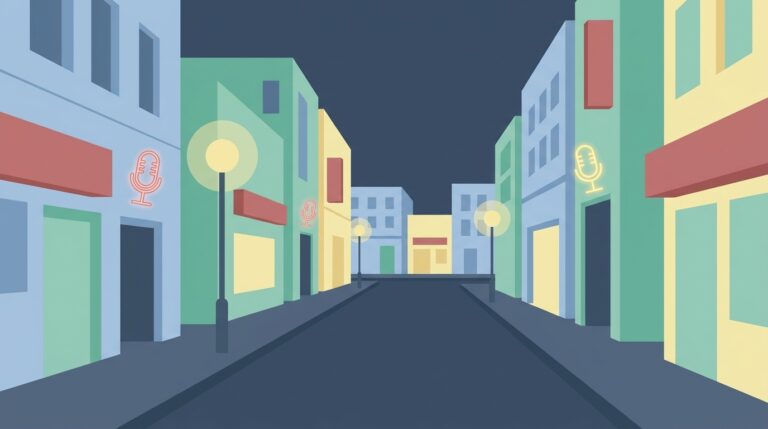
Imagine this: It is 10:30 PM in the buzzing neon heart of Hongdae, Seoul. You and your friends have just finished an incredible round of Korean BBQ—your bellies are full of savory pork belly, laughter is bubbling over, and someone suddenly exclaims, “We have to sing!” You step out onto the lively street, eager to find a karaoke room (노래방 – noraebang). But as you gaze up at the towering multi-story commercial buildings, you are met with a dizzying maze of glowing signs: 노래연습장, 코인노래방, 뮤직타운, K-POP 룸…
Which building actually has a singing room? Is it hidden in the basement (지하) or tucked away on the fifth floor? Many learners tell us this exact moment is where anxiety strikes: searching in English on navigation apps often leads to dead ends or outdated listings, and approaching bustling locals feels intimidating. But here is the good news: finding the perfect singing sanctuary does not require advanced grammar. With just three foundational A2-level questions, you can ask anyone on the street, read building signs effortlessly, and lead your crew straight to a disco-lit private booth in under two minutes. Let’s dive into this battle-tested guide crafted from real student experiences!
Phase 2: 핵심 표현 3선 심층 분석 (Deep Dive into 3 Core Expressions)
1. 근처에 노래방 있어요? (Geuncheo-e noraebang isseoyo?)
- Pronunciation: [Geun-cheo-eh no-rae-bang ee-sseo-yo?] (Think: “Gun”-chuh-air no-ray-bahng ee-so-yo?)
- Meaning: Literal: “In the vicinity, does a singing room exist?” / Real Nuance: “Is there a karaoke place around here?”
- K-Culture Moment: You hear this in nearly every youth K-Drama right after dinner scenes, when characters are figuring out where to head for their second round (2차).
- Editor’s Insight: The word 근처 (geuncheo) means “nearby / vicinity.” Pairing it with ~에 있어요? (~e isseoyo? / is there…?) is your ultimate Swiss Army knife for finding anything in Korea—from convenience stores to subway exits.
- Situation Spectrum: Casual (⚠️ only with close friends: 근처에 노래방 있어?) | Semi-formal (✅ everyday street use: 근처에 노래방 있어요?) | Formal (🚫 overly stiff for nightlife: 근처에 노래방이 있습니까?)
- 🤔 Think About It: In English, we usually ask “Where is the nearest karaoke?” but Koreans often ask “Does one exist nearby?” Why do you think Korean defaults to asking about existence (있어요?) before pinpointing location?
2. 코인 노래방 어디예요? (Koin noraebang eodiyeyo?)
- Pronunciation: [Ko-in no-rae-bang eo-di-ye-yo?] (Think: Co-in no-ray-bahng uh-dee-yeah-yo?)
- Meaning: Literal: “Coin singing room, where is it?” / Real Nuance: “Where is the coin karaoke?”
- K-Culture Moment: Seen in web dramas where students or solo travelers want to sing just three or four songs cheaply without renting a massive group room by the hour.
- Editor’s Insight: A standard 노래방 charges per hour (often 20,000 to 30,000 KRW), whereas a 코인 노래방 (often abbreviated as 코노 – kono) lets you pay per song (around 500 to 1,000 KRW for 2 songs) or in small 30-minute blocks. If you are solo or a duo, specify 코인 노래방!
- Situation Spectrum: Casual (⚠️ 코인 노래방 어디야?) | Semi-formal (✅ perfect: 코인 노래방 어디예요?) | Formal (🚫 코인 노래방이 어디입니까?)
- 🤔 Think About It: Korean youth culture created compact coin booths so people could destress alone without feeling social pressure. Does your hometown have private mini-entertainment spaces like this?
3. 몇 층에 있어요? (Myeot cheung-e isseoyo?)
- Pronunciation: [Myeot cheung-e ee-sseo-yo?] (Think: Myut-cheung-air ee-so-yo?)
- Meaning: Literal: “Which floor at is it?” / Real Nuance: “Which floor is it on?”
- K-Culture Moment: Walking into a busy Seoul commercial building lobby, staring at an elevator directory board packed with 15 different Korean restaurant and pub signs.
- Editor’s Insight: Korean entertainment spots love vertical real estate! Noraebangs are rarely on the first floor because ground-floor rent is expensive. They are almost always on the 2nd to 5th floor, or in the basement (지하 1층 – Jiha il-cheung). Remember: 몇 (myeot) means “which/how many” and 층 (cheung) means “floor.”
- Situation Spectrum: Casual (⚠️ 몇 층에 있어?) | Semi-formal (✅ standard politeness: 몇 층에 있어요?) | Formal (🚫 몇 층에 위치합니까?)
- 🤔 Think About It: In many Western cities, shops spread horizontally along streets. In Korea, entire neighborhoods stack vertically inside one building. How does this vertical lifestyle shape how we ask for directions?
Phase 3: 교과서 한국어 vs 진짜 한국어 (Textbook vs Real Korean)
Situation 1: Asking someone on the street where a karaoke is
- 📖 교과서 한국어 (Textbook): 노래방이 어디에 있는지 가르쳐 주시겠습니까? (Noraebang-i eodie inneunji gareuchyeo jusigesseumnikka? – “Would you please teach me where the singing room is situated?”)
- 🗣️ 진짜 한국어 (Real-World): 저기요, 혹시 근처에 노래방 있어요? (Jeogiyo, hoksi geuncheo-e noraebang isseoyo? – “Excuse me, by any chance is there a karaoke around here?”)
- 💡 왜 다를까? (Why the difference?): Real Koreans rarely use formal verbs like “teach/inform” (가르쳐 주다) for quick street directions. Adding 저기요 (Excuse me) and the magical softener 혹시 (by any chance) makes you sound instantly natural and polite.
Situation 2: Asking specifically for coin karaoke
- 📖 교과서 한국어 (Textbook): 동전 노래연습장이 이 건물 안에 있습니까? (Dongjeon noraeyeonseupjang-i i geonmul ane itsseumnikka? – “Does a coin singing practice establishment exist inside this building?”)
- 🗣️ 진짜 한국어 (Real-World): 여기 코노 몇 층이에요? (Yeogi kono myeot cheung-ieyo? – “Which floor is the coin noraebang on here?”)
- 💡 왜 다를까? (Why the difference?): Nobody says dongjeon noraeyeonseupjang on the street. Locals abbreviate 코인 노래방 (Coin Noraebang) to 코노 (Kono). Using 코노 immediately tags you as culturally savvy!
Phase 4: K-Culture 딥다이브 & 비언어적 매너 (Manners & Culture Dive)
4-1. 눈치 (Nunchi) & Gestures
- The Two-Finger Pointer: When pointing to building signs or asking if a noraebang is “over there,” avoid pointing directly at someone’s face with a single index finger. Koreans use an open hand or a soft gesture toward the building.
- The Quick Slight Bow (목인사 – Mok-insa): When approaching a pedestrian to ask directions at night, make gentle eye contact, give a 15-degree head nod, and start with 저기요 (Jeogiyo). This signals you are a friendly visitor asking for help, not a club promoter or street canvasser.
- Signboard Literacy (간판 읽기): Look for the glowing microphone symbol (🎤) or the letter B1 (Basement 1). Noraebang entrances often have colorful stairwells leading underground with posters of K-Pop artists.
4-2. 문화 코드 분석 (Cultural Code: 2차 & Kono Culture)
In Korea, a social night out is rarely finished after dinner. The evening is split into rounds: 1차 (Il-cha – 1st round, dinner), followed by 2차 (I-cha – 2nd round), which is almost universally noraebang or a casual pub. Noraebang is where workplace hierarchies soften, friends blow off steam through high-pitched ballad duets, and everyone bonds by waving tambourines. Meanwhile, 코인노래방 (Coin Noraebang) revolutionized Seoul over the past decade: high schoolers sing before cram school, and office workers sing two songs alone during lunch break to release stress!
Phase 5: 실전 롤플레이 시나리오 (Real-World Roleplay Scenario)
- Setting: A bustling alleyway in Sinchon near a convenience store. Neon lights buzz overhead.
- NPC: Min-jun (민준), a friendly university student wearing a stylish padded jacket holding an iced Americano.
-
Turn 1 (You): 저기요, 혹시 근처에 코인 노래방 있어요?
(Jeogiyo, hoksi geuncheo-e koin noraebang isseoyo?)
“Excuse me, is there a coin karaoke near here by any chance?”
🎭 행동: Politeness bow, holding phone in hand. -
Turn 2 (Min-jun): 아, 코노요? 네, 저기 올리브영 골목에 하나 있어요.
(A, konoyo? Ne, jeogi Ollibeuyeong golmoge hana isseoyo.)
“Ah, a coin noraebang? Yes, there is one in the alley right by that Olive Young over there.”
🎭 행동: Points with an open hand toward the brightly lit cosmetic store. -
Turn 3 (You): 아, 진짜요? 거기서 멀어요?
(A, jinjjayo? Geogiseo meoreoyo?)
“Oh, really? Is it far from there?”
🎭 행동: Leans in attentively with a thankful smile. -
Turn 4 (Min-jun): 아니요, 걸어서 1분밖에 안 걸려요. 빽다방 바로 맞은편 건물이에요.
(Aniyo, georeoseo il-bun-bakke an geollyeoyo. Ppaekdabang baro majeunpyeon geonmul-ieyo.)
“No, it only takes one minute on foot. It’s the building right opposite Paik’s Coffee.”
🎭 행동: Smiles warmly, tapping the side of his coffee cup. -
Turn 5 (You): 혹시 노래방이 몇 층에 있어요?
(Hoksi noraebang-i myeot cheung-e isseoyo?)
“By any chance, which floor is the singing room on?”
🎭 행동: Looking toward the tall building row. -
Turn 6 (Min-jun): 지하 1층에 있어요. 입구에 마이크 간판 크게 보여요.
(Jiha il-cheung-e isseoyo. Ipgue maikeu ganpan keuge boyeoyo.)
“It’s on Basement Level 1. You will clearly see a big microphone sign at the entrance.”
🎭 행동: Gestures downward with hand. -
Turn 7 (You): 친절하게 알려주셔서 정말 감사합니다!
(Chinjeolhage allyeojusyeoseo jeongmal gamsahamnida!)
“Thank you so much for telling me so kindly!”
🎭 행동: Giving a grateful 45-degree bow. -
Turn 8 (Min-jun): 아니에요! 노래 재미있게 부르세요!
(Anieyo! Norae jaemi-itge bureuseyo!)
“Not at all! Have fun singing!”
🎭 행동: Friendly wave as he walks toward the station.
🔀 인터랙티브 분기점 (What would you say next if the building has multiple doors?)
- Option A: 입구가 어디예요? (Ipguga eodiyeyo? – “Where is the entrance?”)
- Feedback (Best! ⭐): Perfect! Many Korean buildings have separate entrances for stairs, parking, and upper-level elevators. Asking for the 입구 (ipgu) gets you straight to the door.
- Option B: 문을 여세요. (Muneul yeoseyo. – “Open the door.”)
- Feedback (Bad ❌): This is an imperative command (“Open the door!”). It sounds aggressive to a stranger on the street.
- Option C: 어디로 들어가요? (Eodiro deureogayo? – “Which way do I enter?”)
- Feedback (Risk ⚠️): Grammatically acceptable and understood, but slightly blunt if used without a polite opening like 저기요 (Jeogiyo).
Phase 6: 10초 감정 섀도잉 드릴 (Emotion Shadowing Drill)
Practice these with the designated emotional feeling and natural pausing points (/)!
[😊 조심스럽고 친절하게 / Timidly and politely]- 저기요, / 혹시 근처에 / 노래방 있어요?
- (Jeogiyo, / hoksi geuncheo-e / noraebang isseoyo?)
[🤔 궁금하고 확실하게 확인하며 / Curious and clarifying]- 코인 노래방이에요, / 아니면 / 일반 노래방이에요?
- (Koin noraebang-ieyo, / animyeon / ilban noraebang-ieyo?)
- (Is it a coin noraebang, / or / a regular noraebang?)
[🎉 신나고 감사한 마음으로 / Excited and grateful]- 지하 1층이요? / 와, / 감사합니다!
- (Jiha il-cheung-iyo? / Wa, / gamsahamnida!)
- (Basement 1st floor? / Wow, / thank you!)
Phase 7: K-Culture 미니 사전 (Mini Dictionary)
- 코노 (Kono)
- Translation: Coin Noraebang (Slang compound word)
- Real-world usage: Used by young people 99% of the time instead of the full word 코인노래방. Example: “우리 밥 먹고 코노 갈래?” (Do you want to hit the coin karaoke after eating?)
- 서비스 (Seobiseu)
- Translation: Bonus free time / Free perks on the house
- Real-world usage: In traditional hourly noraebangs, the owner will frequently add 20 to 30 free minutes onto your room clock when your time runs low! Hearing the buzzer ring with extra 서비스 is pure euphoria.
- 탬버린 (Taembeorin)
- Translation: Tambourine
- Real-world usage: Essential equipment in every Korean noraebang. Even if you aren’t singing, your job as an enthusiastic friend is to vigorously shake the tambourine to the beat of your buddy’s song.
- 2차 (I-cha)
- Translation: Round Two (Second location of a night out)
- Real-world usage: The cornerstone of Korean socializing. Noraebang is the single most common 2차 destination for both corporate team dinners and college hangouts.
Phase 8: 여행자를 위한 생존 키트 (Traveler’s Survival Kit)
Top 3 Survival Phrases
- 카드 돼요? (Kadeu dwaeyo?)
- Pronunciation: [Kah-deu dway-yo?]
- Pro Tip: While coin noraebangs used to require physical 500 KRW coins or 1,000 KRW bills, almost all modern booths now accept credit cards and T-money directly at the song console!
- 현금 결제만 돼요? (Hyeongeum gyeoljeman dwaeyo?)
- Pronunciation: [Hyeon-geum gyeol-je-man dway-yo?]
- Pro Tip: Older retro noraebangs in traditional markets occasionally prefer cash. Always verify if your card doesn’t tap.
- 몇 시까지 해요? (Myeot si-kkaji haeyo?)
- Pronunciation: [Myut shi-kkah-jee hay-yo?]
- Pro Tip: Useful to check closing times, though in nightlife zones like Hongdae or Gangnam, many are open 24 hours (24시간 영업).
Editor’s Travel Note
- App Tip: Google Maps is notoriously inaccurate for walking navigation in South Korea due to local mapping regulations. Before your night out, make sure to finish your 네이버 지도 앱 다운로드 (Naver Map App Download). Simply type 노래방 or 코인노래방 into Naver Map to see exact floor numbers, prices, and whether rooms are available right now!
Phase 9: “한 발 더 깊이” (Cultural Reflection Essay)
In Western karaoke culture, singing is often an individual performance: one brave soul takes a stage in a crowded bar while everyone else watches from tables. In South Korea, noraebang is deeply rooted in collective 흥 (Heung – infectious communal joy) and the release of 한 (Han – built-up life stress and sorrow). Behind the closed soundproof door of your private room, social masks drop: your strict boss sings energetic 90s dance tracks, quiet classmates belt out rock anthems, and nobody judges off-key notes. It is a shared bonding ritual where mutual participation matters far more than musical talent.
💬 Your Turn: What is your ultimate go-to song when you want to unleash your energy, and who would you love to take to a Korean noraebang? Let us know in the comments below!
Phase 10: FAQ & 흔한 실수 (FAQ & Common Mistakes)
Q: Can foreigners enter a noraebang late at night without an ARC (Alien Registration Card)?
A: Yes! Standard travelers can enter noraebangs at night. However, minors (under 19) are strictly prohibited from remaining in singing rooms after 10:00 PM by Korean law. Noraebangs routinely check identification at night, so carry your physical passport.
Q: What is the difference between 노래연습장 and 노래빠 / 유흥주점?
A: Look for the sign 노래연습장 (Singing Practice Room) or 코인노래방. These are wholesome, family-friendly singing rooms open to everyone. If a venue is called 노래빠, 단란주점, or 유흥주점, it is an adult hostess entertainment parlor. Sticking to 노래연습장 or 코인노래방 ensures you find the right spot!
Q: Do I have to sing Korean songs in a Korean noraebang?
A: Not at all! Korean karaoke machines (made by TJ Media or Geumyoung) have tens of thousands of pop, rock, anime, and global songs in English, Japanese, Chinese, Spanish, and Vietnamese. Look for the button labeled 팝송 (Pop Song) on the giant remote control.
🚨 흔한 실수 (Common Mistakes)
- Mistake 1: Mistaking “B1” for a secret door. Many foreigners walk past buildings because the first floor has a chicken shop. Remember that 70% of older noraebangs are on the basement floor (지하 1층). Look for stairs leading down with neon musical signs.
- Mistake 2: Forgetting to take off shoes in traditional rooms. Some premium noraebangs have floor-seating (온돌 – Ondol) rooms. If you see a raised wooden ledge with slippers, take off your outdoor shoes before stepping in.
- Mistake 3: Throwing away the microphone cover. At the front desk, the attendant will hand you a small sealed pouch containing two soft cloth microphone covers (마이크 커버). Put them over the mics for hygiene before you sing!
Phase 11: 액션 미션 & 참여 유도 (Action Missions)
- 🥉 Bronze Mission (Solo Practice): Stand in front of your mirror and practice saying: “저기요, 근처에 코노 있어요?” five times smoothly without pausing.
- 🥈 Silver Mission (Map Challenge): Open Naver Map on your phone, search 코인노래방 around Hongik University Station (홍대입구역), and identify what floor the nearest one is located on.
- 🥇 Gold Mission (Real Life Action): When you land in Korea, do not use English translation apps at the door. Ask the building security guard or a shop cashier: “몇 층에 있어요?” and navigate your way using only Korean!
🎮 K-Culture Mission: Watch an episode of a slice-of-life K-Drama (like Hospital Playlist or Reply 1988). Spot the scene where the cast visits a noraebang—notice how they hold the tambourine and cheer each other on!
Phase 12: 인터랙티브 퀴즈 챌린지 (Interactive Quiz Challenge)
Question 1. Situation Judgment
You are standing in Gangnam with three friends after dinner. You want to sing for just 20 minutes without paying a heavy hourly room charge. What should you ask a passerby?
* (A) 저기요, 몇 층에 식당 있어요?
* (B) 저기요, 근처에 코인 노래방 있어요?
* (C) 저기요, 노래연습장 문 닫았어요?
👉 Click to reveal Answer & Explanation
Correct Answer: (B)
Explanation: Option (B) specifically asks for a 코인 노래방 (Coin Noraebang), which allows you to sing on a cheap per-song or short-time basis! Option (A) asks for a restaurant (식당), and Option (C) asks if the noraebang is closed.
Question 2. Fill in the Blank
Complete the sentence to ask which floor the venue is on:
“노래방이 _______ 층에 있어요?”
👉 Click to reveal Answer & Explanation
Correct Answer: 몇 (Myeot)
Explanation: 몇 (Myeot) is the interrogative word used with counting counters like 층 (cheung – floor) to ask “Which floor?”
Question 3. True / False Cultural Trivia
True or False: If the timer on your karaoke screen reaches 0 minutes, you must immediately drop the mic and leave, because bonus time (서비스) is illegal.
👉 Click to reveal Answer & Explanation
Correct Answer: False (F)!
Explanation: In standard hourly noraebangs, generous owners love giving 서비스 (Seobiseu – bonus time)! If you are energetic and order drinks, you might find an extra 20 or 30 minutes magically added to your screen for free!








I help maintain visitor information at PrivateNote. The separate question about the entrance is a useful addition to the floor-number example. Could the role-play also include “엘리베이터가 있어요?” and “입구까지 계단이 있어요?” for someone travelling with a person who needs step-free access? A map pin and a floor number do not explain the route from the street to the room. Pairing those questions with a reminder to confirm the entrance directly with the venue would make the navigation checklist more inclusive.