

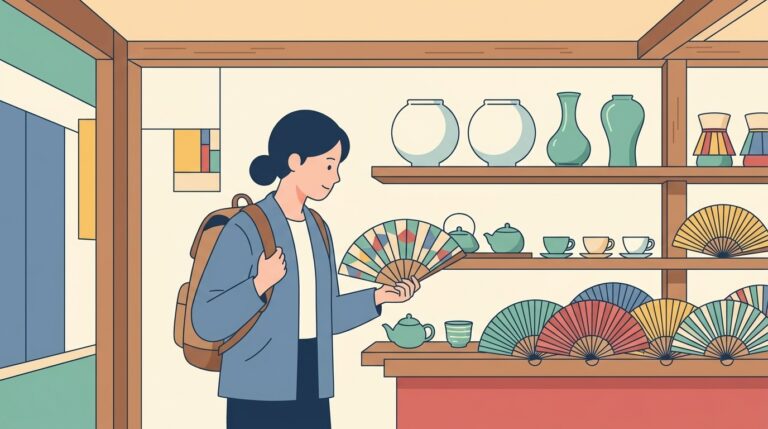
Phase 1: 공감 (Story Opening)
안녕하세요! 매일한글 에디터입니다.
Imagine this: You are strolling through the charming cobblestone alleys of Insadong in Seoul. Delicate wind chimes ring in the breeze, and vibrant traditional Korean crafts catch your eye. You step into a cozy souvenir boutique filled with mother-of-pearl jewelry boxes, cute hanbok keychains, and handmade ceramic soju cups. Your heart beats faster—not just from excitement, but from a sudden wave of panic. An older shopkeeper (a warm-looking sajangnim) smiles warmly and walks toward you. You desperately want to buy a gift for your best friend back home, but your mind goes completely blank. You end up pointing awkwardly at a shelf, holding up your phone screen, and whispering hesitant English words. Sound familiar?
You are not alone! Over 80% of our beginner learners tell us that gift shopping was their most intimidating moment in Korea. But here is the good news: shopping in Korea doesn’t require complex grammar. With just three golden phrases and a few cultural cues, you will instantly transform from a nervous tourist into an adorable, confident shopper whom shop owners love to pamper. Let’s dive into your ultimate souvenir shop survival guide!
Phase 2: 핵심 표현 3선 심층 분석
1. 이거 얼마예요? (Igeo eolmayeyo?)
- Pronunciation: [I-geo eol-ma-ye-yo] (Sounds like: “Ee-guh” + “All-mah-ye-yo”—think of saying “all my yellow” really fast!)
- Meaning: Literal: “How much is this?” | Nuance: A natural, polite question to ask the price of any single item in your hand or right in front of you.
- K-Culture Moment: In almost every travel K-drama, whenever the main lead browses a traditional flea market or night market, this is always the very first line they utter with curious eyes.
- Editor’s Insight: If you point at something farther away, simply swap “이거 (Igeo – this)” with “저거 (Jeogeo – that over there)”. That’s it!
- Situation Spectrum:
- Casual: ⚠️ (Only with close friends: 이거 얼마야?)
- Semi-formal: ✅ (이거 얼마예요? – standard polite form, perfect for shops!)
- Formal: ⚠️ (이것은 얼마입니까? – correct, but too stiff for small shops)
- 🤔 Think About It: In English, we often ask “How much for this?” or “What’s the price?” Korean attaches the polite ending “-예요 (-ye-yo)” directly to “얼마 (how much)”. Isn’t it wonderfully concise?
2. 추천해 주세요 (Chucheonhae juseyo)
- Pronunciation: [Chu-cheon-hae ju-se-yo] (Sounds like: “Choo-chun-heh joo-say-yo”—like a train going choo-choo, followed by say-yo!)
- Meaning: Literal: “Please recommend.” | Nuance: “What is popular or good here? I trust your taste!”
- K-Culture Moment: You will hear K-pop idols say this phrase in travel vlogs whenever they visit trendy cosmetic shops or souvenir stores in Myeongdong.
- Editor’s Insight: Adding a gentle nod while saying this makes the shopkeeper instantly enthusiastic. Korean sellers take great pride in showing off their best-sellers!
- Situation Spectrum:
- Casual: 🚫 (추천해 줘 – too blunt for elders)
- Semi-formal: ✅ (추천해 주세요 – warm, friendly, and respectful)
- Formal: ✅ (추천해 주시겠어요? – extra polite)
- 🤔 Think About It: In Western retail, asking for recommendations can sometimes invite a hard sales pitch. In Korea, asking for a recommendation creates an instant bond of connection (jeong).
3. 이걸로 주세요 (Igeollo juseyo)
- Pronunciation: [I-geol-lo ju-se-yo] (Sounds like: “Ee-gull-lo joo-say-yo”—rhymes with fellow!)
- Meaning: Literal: “Give me this one, please.” | Nuance: “I’ve made my choice! I will take this one.”
- K-Culture Moment: Watch any food or shopping variety show (like Seojin’s or street market tours); customers conclude their decision with this exact phrase.
- Editor’s Insight: Use this when you are ready to purchase. The particle “-로 (-ro/lo)” indicates your deliberate selection among various options.
- Situation Spectrum:
- Casual: 🚫 (이걸로 줘 – rude to shopkeepers)
- Semi-formal: ✅ (이걸로 주세요 – the gold standard in daily life)
- Formal: ⚠️ (이것으로 주십시오 – overly military-style)
- 🤔 Think About It: Unlike English “I’ll take this,” Korean focuses on receiving the item politely through “주세요 (juseyo – please give me)”.
Phase 3: 교과서 한국어 vs 진짜 한국어
Situation 1: Asking the price of an item
- 📖 교과서 한국어: 이것의 가격은 얼마입니까? (Igeos-ui gagyeog-eun eolma-imnikka? – “What is the monetary price of this object?”)
- 🗣️ 진짜 한국어: 이거 얼마예요? (Igeo eolmayeyo? – “How much is this?”)
- 💡 왜 다를까? Textbook phrases often rely on military or news-broadcast formality (-imnikka). Real locals favor conversational politeness (-haeyo style), which sounds much warmer and far less robotic.
Situation 2: Asking what is trending or popular
- 📖 교과서 한국어: 가장 잘 팔리는 상품은 무엇입니까? (Gajang jal pallineun sangpum-eun mueos-imnikka? – “What is the best-selling commercial merchandise?”)
- 🗣️ 진짜 한국어: 어떤 게 제일 잘 나가요? (Eotteon ge jeil jal nagayo? – “Which one is flying off the shelves?”)
- 💡 왜 다를까? The verb phrase “잘 나가다 (jal nagada)” literally means “goes out well,” but native speakers use it daily to describe trendy, best-selling goods.
Phase 4: K-Culture 딥다이브 & 비언어적 매너
4-1. 눈치(Nunchi) & Body Gestures at the Counter
When you are ready to pay, there is a golden non-verbal etiquette you must remember: The Two-Hand Rule. Whenever you hand your credit card or cash to the clerk—and when you receive your receipt and bag back—use both hands! You can either hold the card with both hands or rest your left hand gently under your right wrist or forearm. This tiny movement signals immense respect and will earn you warm smiles every single time.
Also, practice sensory awareness (nunchi). Many traditional souvenir stores feature fragile porcelain, lacquered woodwork, or delicate bookmarks. Don’t pick up items by their delicate edges; admire them gently, and if you need an item from a high shelf, make eye contact and invite the clerk over.
4-2. Culture Code: The Magic of “선물 (Gift)” and “덤 (Deom)”
Gift-giving (seonmul) is deeply woven into Korean social fabric. When Koreans travel, they almost always bring back small, thoughtful souvenirs for colleagues, family, and neighbors. Because of this, souvenir shops specialize in individually wrapped gift sets.
Even more delightful is the traditional concept of 덤 (Deom)—a complimentary bonus item given with love! If you purchase multiple items, don’t be surprised if the friendly owner slips a cute bookmark or a postcard into your shopping bag, saying with a grin: “서비스예요! (Seobiseu-yeyo! – It’s on the house!)”.
Phase 5: 실전 롤플레이 시나리오
- Location: Dahmso Traditional Craft Shop, Insadong, Seoul.
- Character: Auntie Myeong-ja (사장님 / Shop Owner) — A cheerful, energetic lady in her 50s wearing an elegant apron, passionate about traditional crafts.
— Dialogue Start —
- Auntie Myeong-ja: 어서 오세요! 천천히 구경하세요. (Eoseo oseyo! Cheoncheonhi gugyeonghaseyo.)
🎭 (Wipes the wooden counter with a friendly, welcoming smile)
“Welcome! Please take your time looking around.” -
You: 안녕하세요! 혹시 어떤 게 제일 잘 나가요? (Annyeonghaseyo! Hoksi eotteon ge jeil jal nagayo?)
🎭 (Bows head slightly and glances at the display of colorful bookmarks and keychains)
“Hello! By any chance, which one is the most popular?” -
Auntie Myeong-ja: 외국 분들한테는 이 자개 손거울이 최고 인기예요! (Oeguk bundeolhanteneun i jagae son-geouri choego ingiyeyo!)
🎭 (Gently picks up a shimmering mother-of-pearl pocket mirror to display the reflection)
“For travelers from abroad, this mother-of-pearl pocket mirror is the most popular!” -
You: 우와, 예쁘다! 이거 얼마예요? (Uwa, yeppeuda! Igeo eolmayeyo?)
🎭 (Leans in with sparkle in your eyes, carefully touching the smooth lacquer)
“Wow, so pretty! How much is this?” -
Auntie Myeong-ja: 만 원이에요. 선물용으로 아주 좋아요. (Man won-ieyo. Seonmulyong-euro aju joayo.)
🎭 (Nods proudly, pointing toward the pre-packed gift box behind her)
“It is 10,000 won. It’s wonderful for gifts.” -
You: 좋아요! 이걸로 두 개 주세요. (Joayo! Igeollo du gae juseyo.)
🎭 (Holds up two fingers cheerfully and smiles)
“Great! Please give me two of these.” -
Auntie Myeong-ja: 예쁘게 포장해 드릴게요. 자, 이건 서비스예요! (Yeppeuge pojanghae deurilgeyo. Ja, igeon seobiseu-yeyo!)
🎭 (Neatly boxes the mirrors in hanji paper and slips in an extra traditional bookmark)
“I will wrap them nicely for you. Here, this is a free gift for you!” -
You: 정말 감사합니다! (Jeongmal gamsahamnida!)
🎭 (Accepts the shopping bag using both hands with a deep polite nod)
“Thank you so much!”
— Dialogue End —
🔀 Interactive Choice Point
You are about to pay, but you notice you only have a credit card and no cash. What do you do?
- Choice A: Hand your credit card with one hand while looking at your phone and say: “카드! (Kadeu!)”
- Result: 🚫 Bad! While understood, handing a card with one hand and shouting a blunt noun sounds impatient and impolite to an elder.
- Choice B: Walk away quietly because you assume small traditional market shops only accept physical Korean won banknotes.
- Result: ⚠️ Risk! Almost 99% of shops in Korea (even small souvenir stalls in Insadong) accept credit cards. Walking away means missing your dream souvenir!
- Choice C: Hold your card with two hands and ask gently: “카드 돼요? (Kadeu dwaeyo? – Do you take cards?)”
- Result: ✅ Best! Natural, respectful, and crystal-clear. The shopkeeper will warmly reply: “네, 돼요! (Yes, we do!)”.
Phase 6: 10초 감정 섀도잉 드릴
Practice speaking with real human emotion! Breathe in, mimic the pauses (/), and unleash your inner actor:
[😊 Bright & Friendly]
이거 / 얼마예요?
(Igeo / eolmayeyo?)
[Tip: Raise your pitch slightly on “-요?” to sound super warm and curious!]-
[🤔 Curious & Interested]
어떤 게 / 인기 많아요?
(Eotteon ge / ingi manayo?)
[Tip: Pause slightly after “어떤 게” to sound thoughtful.] -
[🎉 Decisive & Cheerful]
좋아요! / 이걸로 / 주세요!
(Joayo! / Igeollo / juseyo!)
[Tip: Say “좋아요!” with a clean, happy beat, then land firmly on “주세요!”]
Phase 7: K-Culture 미니 사전
- 기념품 (Ginyeompum) | Souvenir / Keepsake
Literally “commemorative item.” Look for this word on street signboards or storefront banners across tourist destinations. - 선물 (Seonmul) | Gift / Present
Koreans love giving small items to express appreciation. When buying gifts, mention “선물이에요 (Seonmul-ieyo)” and shops will often provide special wrapping. - 포장 (Pojang) | Packaging / Gift-wrapping
Say “포장해 주세요 (Pojanghae juseyo)” when you want your purchase boxed or wrapped in elegant traditional paper. - 덤 (Deom) | Complimentary bonus / Extra freebie
The ancient Korean virtue of generosity in commerce. It refers to extra goods given without charge to foster heartfelt human warmth.
Phase 8: 여행자를 위한 생존 키트
Survival Expressions TOP 3
- 카드 돼요? (Kadeu dwaeyo?)
- Romanization: Ka-deu dwae-yo?
- Pro Tip: Never worry about cash machines again. Just show your card and ask this 3-syllable lifesaver!
- 포장해 주세요 (Pojanghae juseyo)
- Romanization: Po-jang-hae ju-se-yo
- Pro Tip: Perfect for gifts. They will wrap it nicely so your fragile items survive your flight home.
- 영수증 버려 주세요 (Yeongsujeung beoryeo juseyo)
- Romanization: Yeong-su-jeung beo-ryeo ju-se-yo
- Pro Tip: Means “Please throw away the receipt.” Koreans use this almost daily when paying for small items.
Editor’s Travel Note
- Navigation in Korea: Google Maps does not provide walking paths accurately in Korea due to local spatial security laws. Make sure to download the Naver Map app before your trip for real-time pinpoint directions down to the smallest souvenir kiosk.
- Payment Culture: South Korea is practically a cashless society. Major foreign Visa and Mastercard credit cards work effortlessly in 99% of souvenir boutiques, convenience stores, and cafes. However, keep 10,000–20,000 won in cash for tiny street food stalls!
Phase 9: “한 발 더 깊이” (생각 질문)
In many parts of the world, shopping transactions are purely functional: you pay money, take an object, and leave. But in traditional Korean markets and boutiques, a brief exchange between buyer and seller is touched by Jeong (정)—an unspoken communal warmth and affection. When a shopkeeper offers you a tiny complimentary bookmark or asks where you are traveling from, they aren’t just selling a commodity; they are sharing a piece of hospitality.
💬 Your Turn: In your home country, how do locals interact with shopkeepers? Do you prefer quick, contactless self-checkouts, or do you enjoy small conversations with local sellers? Drop your thoughts in the comments below!
Phase 10: FAQ & 오해 방지
Q: Can I haggle for discounts in Korean souvenir shops?
A: As a general rule, fixed-price systems (jeongchalje) apply in modern shops, underground shopping centers, and boutiques. Haggling is frowned upon for individual items. However, if you purchase several items in outdoor traditional markets (like Namdaemun), you may playfully ask: “조금만 깎아 주세요 (Jogeumman kkakka juseyo – Please give a little discount)” with a friendly smile!
Q: What is the difference between “이거 (Igeo)” and “그거 (Geugeo)”?
A: “이거 (Igeo)” refers to something right near you (the speaker). “그거 (Geugeo)” refers to an item close to the listener (the shopkeeper). If the mirror is right in front of the cashier, you can say: “그거 보여주세요 (Geugeo boyeojuseyo – Please show me that one near you)”.
Q: Do I need to tip the shopkeeper for nice wrapping?
A: Absolutely not! Korea has a strictly zero-tipping culture. Tipping can actually cause confusion or awkwardness. A sincere two-handed bow and saying “감사합니다 (Gamsahamnida)” is the best reward possible.
🚨 Common Mistakes Alert (TOP 3)
- Handing payment cards with one single hand: Elders perceive this as dismissive. Always use two hands!
- Using “저기요 (Jeogiyo)” aggressively: While “저기요” means “Excuse me,” screaming it across a quiet craft shop disrupts the peace. Make eye contact first, give a slight bow, or say a gentle “저기요~”.
- Saying “안녕 (Annyeong)” to older shopkeepers: “Annyeong” is casual talk for close peers and kids. Always stick to the respectful “안녕하세요 (Annyeonghaseyo)”.
Phase 11: 액션 미션 & 참여 유도
- 🥉 Bronze Mission (Self-Practice): Stand before a mirror. Pick up your favorite notebook, hand it forward with both hands, and say clearly out loud: “이거 얼마예요? (Igeo eolmayeyo?)” three times!
- 🥈 Silver Mission (Social Sharing): Screenshot your favorite souvenir photo from a travel blog or Instagram, post it to your Story, and tag our account with the caption: “이걸로 주세요!”
- 🥇 Gold Mission (Real Action): On your next trip to Korea (or at a local K-mart in your town), ask the cashier “카드 돼요? (Kadeu dwaeyo?)” instead of speaking English!
🎮 K-Culture Mission: Watch an episode of a Korean variety show featuring traditional markets (such as Amazing Saturday or street food vlogs). Listen carefully: How many times do you hear the word “얼마 (eolma)” or “주세요 (juseyo)”? Count them and tell us in the comments!
Phase 12: 인터랙티브 퀴즈 챌린지
Q1. [Situation Judgement]
You find a gorgeous traditional fan in Bukchon Hanok Village. You want to ask the friendly shopkeeper how much it costs. Which sentence is the most natural and polite?
– (A) 이거 얼마예요? (Igeo eolmayeyo?)
– (B) 이것의 가격을 말하십시오. (Igeos-ui gagyeog-eul malsimhasipsio.)
– (C) 얼마야? (Eolmaya?)
Q2. [Fill-in-the-Blank]
When you have decided on the gift you want and want to tell the clerk “Please give me this one,” fill in the blank:
“이걸로 _______! (Igeollo _______!)”
Q3. [True or False Culture Quiz]
In Korea, it is polite to tip the souvenir shopkeeper 10% if they wrap your gift nicely in traditional hanji paper. (True / False)
👉 Click here to reveal the answers and explanations!
Answers:
1. (A) 이거 얼마예요? (Igeo eolmayeyo?)
Explanation: Option (A) is the golden polite standard. (B) sounds like a robotic military command, and (C) is casual talk that might offend a shop owner.
2. 주세요 (juseyo)
Explanation: “이걸로 주세요 (Igeollo juseyo)” literally means “Please give me this one.”
3. False
Explanation: Korea is a zero-tipping country. Polite smiles, two-handed exchanges, and heartfelt “감사합니다 (Thank you)” are all you need!







