

Phase 1: 공감 (Story-driven Empathy Opening)
안녕하세요! 매일한글 에디터입니다.
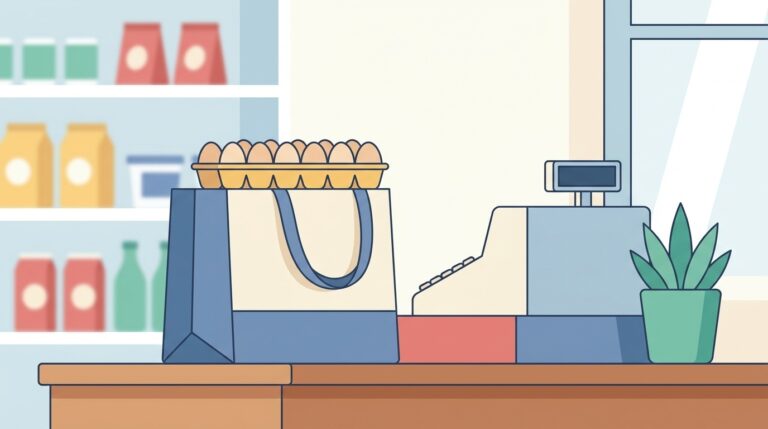
Imagine this classic Korean grocery shopping scenario: You walk into a bustling local mart in Seoul on a breezy Friday evening. You grab fresh tofu, sweet Korean strawberries, spicy Shin Ramyun, and a pristine carton of eggs. When you reach the cashier, you witness the legendary Korean ppalli-ppalli (hurry-hurry) speed—beeps fly by like lightning! In a flustered scramble, you shove heavy glass soy sauce bottles right on top of your fragile eggs into your canvas tote bag. By the time you step off the subway and unpack in your kitchen… crunch. A tragic puddle of raw yolk at the bottom of your bag.
Many of our beginner learners tell us: “I knew how to say egg, but in that fast-paced mart rush, I froze and couldn’t ask the cashier to keep them separate!” Today’s guide is built straight from those real learner struggles. By mastering just three simple phrases today, you will protect your fragile groceries, sound natural, and shop like a savvy Seoul local without sweating at the checkout counter.
Phase 2: 핵심 표현 3선 심층 분석 (Top 3 Core Expressions)
1. 계란은 따로 담아 주세요. (Gyeraneun ttaro dama juseyo.)
- Pronunciation: [Gye-ran-eun tta-ro da-ma ju-se-yo] (Think: “Gye” sounds like “get” without the ‘t’, and “ttaro” has a crisp, popping double ‘t’ sound like “stop”)
- Meaning: “Please pack the eggs separately.” (Literal: “As for eggs, pack separately, please.”)
- K-Culture Moment: You will often see this in Korean slice-of-life variety shows like I Live Alone (나 혼자 산다), where celebrities meticulously pack delicate food items at traditional markets to prevent kitchen disasters.
- Editor’s Insight: The topic marker 은 (eun) highlights “the eggs” specifically from the rest of your haul, while 따로 (ttaro) means “separately”. It’s courteous, clear, and prevents immediate grocery crushing.
- Situation Spectrum:
- Casual (with friends packing together): ⚠️ 계란은 따로 담아줘 (Gyeraneun ttaro damajwo)
- Semi-formal (Polite standard for shops): ✅ 계란은 따로 담아 주세요 (Gyeraneun ttaro dama juseyo)
- Formal (Super official): 🚫 계란은 별도로 포장해 주십시오 (Too stiff for a neighborhood mart!)
- 🤔 Think About It: In English, we often ask “Could you put this in a separate bag?” Notice how Korean puts the focus noun first (계란은) to alert the busy cashier before giving the action request (따로 담아 주세요).
2. 깨지기 쉬우니까 조심해 주세요. (Kkaejigi swiunikka josimhae juseyo.)
- Pronunciation: [Kkae-ji-gi swi-u-ni-kka jo-sim-hae ju-se-yo] (Pronounce “Kkae” sharply, like the ‘c’ in “car” with extra tension, and “swi” rhymes with “we”)
- Meaning: “It breaks easily, so please be careful.” (Literal: “Because it is easy to break, do caution, please.”)
- K-Culture Moment: Seen frequently in K-Dramas when a character carries a fragile birthday cake or traditional ceramics home on the bumpy Seoul bus.
- Editor’s Insight: 깨지다 (kkaejida) means “to break/shatter” (used for fragile things like eggs, glass, or pottery), combined with -기 쉽다 (-gi swipda) meaning “easy to”. The connector -(으)니까 (-(eu)nikka) gently explains why the cashier should handle the item with extra TLC.
- Situation Spectrum:
- Casual: ⚠️ 깨지기 쉬우니까 조심해 (Kkaejigi swiunikka josimhae)
- Semi-formal: ✅ 깨지기 쉬우니까 조심해 주세요 (Kkaejigi swiunikka josimhae juseyo)
- Formal: ⚠️ 파손 우려가 있으니 주의해 주십시오 (Sounds like a corporate shipping label)
- 🤔 Think About It: Why give the reason first? Korean requests soften naturally when you present the circumstance (because it breaks easily) before the imperative (please be careful).
3. 맨 위에 올려 주세요. (Maen wie ollyeo juseyo.)
- Pronunciation: [Maen wi-e ol-lyeo ju-se-yo] (“Maen” sounds like English “man”, “wi” sounds like Nintendo “Wii”)
- Meaning: “Please place it right on top.” (Literal: “At the very top, place it, please.”)
- K-Culture Moment: You’ll hear grocery-loving Korean moms drop this exact instruction while supervising family cart loading at large discount supermarkets like E-Mart or Lotte Mart.
- Editor’s Insight: 맨 (maen) is a handy prefix meaning “the absolute / the very” (e.g., 맨 앞 = the very front, 맨 뒤 = the very back). 위에 (wi-e) means “on top”. Using this tells the clerk exactly where to position the egg carton inside your bag.
- Situation Spectrum:
- Casual: ⚠️ 맨 위에 올려줘 (Maen wie ollyeojwo)
- Semi-formal: ✅ 맨 위에 올려 주세요 (Maen wie ollyeo juseyo)
- Formal: ⚠️ 상단에 적재하여 주십시오 (Way too mechanical)
- 🤔 Think About It: Notice how spatial words (위, 아래, 앞, 뒤) are super compact building blocks in Korean compared to multi-word English prepositions.
Phase 3: 교과서 한국어 vs 진짜 한국어 (Textbook vs. Real-World Korean)
Situation 1: Asking the clerk not to put heavy stuff on your eggs
- 📖 교과서 한국어 (Textbook): 계란 파손을 방지하기 위해 별도로 수납해 주십시오. (Gyeran pason-eul bangjihagi wihae byeoldoro sunaphae jusipsio.)
- 🗣️ 진짜 한국어 (Real-life Native): 계란은 맨 위에 올려 주세요! (Gyeraneun maen wie ollyeo juseyo!)
- 💡 왜 다를까? (Why is it different?): Textbook Korean often uses Sino-Korean formal vocabulary (파손, 방지, 수납) that sounds robotic at a local grocery till. Native speakers keep verbs visual, active, and light: put it on top!
Situation 2: When grabbing an extra plastic bag specifically for delicate groceries
- 📖 교과서 한국어 (Textbook): 손잡이 달린 비닐 봉투 한 개를 추가로 결제해 주시겠습니까? (Sonjabi dallin binil bongtu han gaereul chugaro gyeoljehae jusigessseumnikka?)
- 🗣️ 진짜 한국어 (Real-life Native): 봉투 하나 따로 주세요. (Bongtu hana ttaro juseyo.)
- 💡 왜 다를까? (Why is it different?): Koreans value conversational speed during checkouts. A simple noun + number + 따로 주세요 gets you the extra bag instantly without awkward grammatical gymnastics.
Phase 4: K-Culture 딥다이브 & 비언어적 매너 (Deep Dive & Body Language)
4-1. 눈치 (Nunchi) & Gestures at Korean Checkouts
- The Sequence Trick: Do not put your eggs at the front of the conveyor belt! Korean cashiers scan items as they appear. Always place heavy items (water bottles, giant watermelons, tin cans) onto the conveyor belt first, and rest your egg tray at the very end.
- The Two-Handed Handover: If handing the egg carton to the cashier directly, use both hands (두 손 공손히) or support your right elbow with your left hand. This non-verbally signals: “This is delicate!”
- Gentle Pointing: Instead of pointing with a single index finger (which can feel slightly aggressive in Korean culture), point with an open palm toward the top of your bag while saying 맨 위에 올려 주세요.
4-2. Cultural Code: The Eco-Bag Revolution & “Jayeon Pojangdae”
Ever since Korea banned free disposable single-use plastic bags, grocery stores sell standard municipal waste trash bags (종량제 봉투 – Jongnyangje bongtu) or require you to bring personal reusable bags (장바구니 – Jangbaguni). Furthermore, most Korean supermarkets feature a 자율 포장대 (Self-Packing Station) filled with free recycled cardboard boxes, scissors, and kraft paper tape. If you buy several fragile items, Korean locals frequently prefer packing their own cardboard box at this station rather than risking an eco-bag crush!
Phase 5: 실전 롤플레이 시나리오 (Real-World Role-Play Scenario)
- Location: Neighborhood supermarket (동네 마트) in Mangwon-dong, Seoul.
- Characters: You (The cautious shopper) & Auntie Cashier (Speedy but sweet Mart Imo).
- 마트 이모: 봉투 필요하세요? (Bongtu piryohaseyo?)
🎭 Scans items at 100 miles per hour.
(Do you need a shopping bag?) -
나 (You): 네, 종량제 봉투 하나 주세요. (Ne, jongnyangje bongtu hana juseyo.)
🎭 Hands over reusable canvas eco-bag as well.
(Yes, please give me one standard trash bag.) -
마트 이모: 포인트 카드 있으세요? (Pointeu kadeu isseuseyo?)
🎭 Reaches for the 30-egg tray.
(Do you have a store membership points card?) -
나 (You): 없어요. 아, 이모님! 계란은 따로 담아 주세요. (Eopseoyo. A, imonim! Gyeraneun ttaro dama juseyo.)
🎭 Smiles politely and gestures toward the eggs.
(I don’t have one. Ah, Auntie! Please pack the eggs separately.) -
마트 이모: 알겠어요. 이거 깨지기 쉬우니까 조심해야지. (Algesseoyo. Igeo kkaejigi swiunikka josimhaeyaji.)
🎭 Sets the eggs aside safely on the bagging counter.
(Understood. These break easily so we must be careful.) -
나 (You): 네, 캔 음료 다 넣고 맨 위에 올려 주세요! (Ne, kaen eumryo da neoko maen wie ollyeo juseyo!)
🎭 Points softly with an open hand to the top of the bag.
(Yes, please put the canned drinks in first and place the eggs right on top!) -
마트 이모: 그래요. 자, 계란 맨 위에 살짝 얹었어요! (Geuraeyo. Ja, gyeran maen wie saljjak eonjeosseoyo!)
🎭 Neatly perches the carton atop the bag.
(Sure thing. Here, I rested the eggs gently right on top!) -
나 (You): 감사합니다! 수고하세요~ (Gamsahamnida! Sugohaseyo~)
🎭 Gives a 15-degree appreciative nod and picks up bag.
(Thank you so much! Have a great shift~)
🔀 Interactive Decision Point!
The cashier accidentally starts piling a heavy 2-liter bottle of bottled water right toward your egg carton! What do you say?
- Option A: “야! 계란 깨져!” (Ya! Gyeran kkaejeo!)
- 🚫 Risk: Extreme informal speech (반말). You will sound very rude to someone older than you!
- Option B: “죄송하지만, 계란 깨질 수 있으니까 위에 올려 주세요!” (Joesonghajiman, gyeran kkaejil su isseunikka wie ollyeo juseyo!)
- ✅ Best: Perfect polite tone! It acknowledges the busy cashier respectfully while protecting your eggs immediately.
- Option C: (Stay silent, look panicked, and hope the eggshell holds up.)
- ⚠️ Bad: Guaranteed egg soup inside your bag on your walk home!
Phase 6: 10초 감정 섀도잉 드릴 (10-Second Shadowing Drill)
Practice these lines out loud with the tone tags! Slash marks (/) indicate natural breath pauses.
- [😊 Friendly & Urgent]
이모님! / 계란은 / 따로 담아 주세요!
(I-mo-nim! / Gye-ran-eun / tta-ro da-ma ju-se-yo!) -
[🥺 Soft & Courteous Request]
깨지기 쉬우니까 / 조심해 주세요~
(Kkae-ji-gi swi-u-ni-kka / jo-sim-hae ju-se-yo~) -
[👍 Confident & Cheerful Guide]
무거운 거 밑에 두고, / 계란은 / 맨 위에 올려 주세요!
(Mu-geo-un geo mit-e du-go, / gye-ran-eun / maen wi-e ol-lyeo ju-se-yo!)
Phase 7: K-Culture 미니 사전 (Mini Grocery Dictionary)
- 장바구니 (Jangbaguni)
Meaning: Shopping basket / Reusable tote bag.
Everyday Use: Bringing your own 장바구니 can save you 50 to 100 KRW on bag fees and shows eco-consciousness in Korean society. - 종량제 봉투 (Jongnyangje bongtu)
Meaning: Government-regulated trash bag.
Everyday Use: When cashiers ask “봉투 필요하세요?”, they will usually provide this. You can pack your groceries in it, take it home, and later use it for regular household garbage! - 자율 포장대 (Jayul pojangdae)
Meaning: Self-service packing counter.
Everyday Use: Located near the supermarket exit; stocked with leftover cardboard produce boxes and tape so customers can securely box delicate foods. - 깨지다 (Kkaejida)
Meaning: To break, smash, or shatter.
Everyday Use: Used for eggs, glass cups, phone screens, and even metaphorically for broken plans (약속이 깨졌어요).
Phase 8: 여행자를 위한 생존 키트 (Traveler’s Survival Kit)
Survival Expressions Top 3
- 계란 따로 주세요. (Gyeran ttaro juseyo.)
Pro Tip: The shortest, fastest, panic-free version to keep eggs away from heavy groceries. - 박스에 담아 갈게요. (Bakseue dama galgeyo.)
Pro Tip: Tell this to the cashier if you plan to use the supermarket’s free self-packing box station. - 영수증 버려 주세요. (Yeongsujeung beoryeo juseyo.)
Pro Tip: “Please discard the receipt for me”—handy right after paying.
Editor’s Travel Note 💡
If you want to avoid grocery hauling altogether during long stays in Korea, consider using local delivery services. You can download and explore logistics via the 네이버 지도 앱 다운로드 to find nearby Hanaro Mart or E-Mart branches within walking distance. Also, foreign credit cards (Visa/Mastercard) work seamlessly at almost all modern grocery counters in South Korea!
Phase 9: “한 발 더 깊이” (Cultural Reflection Essay)
Korean checkout lanes can initially feel intimidating due to the sheer speed of cashiers. This is not unfriendliness; it is the manifestation of ppalli-ppalli (빨리빨리), rooted in the consideration that slowing down inconveniences the shoppers waiting behind you. However, Koreans deeply respect practical requests when phrased politely. When you proactively communicate how to care for your fragile items, cashiers view you not as a helpless tourist, but as a considerate, proactive member of the shared community.
💬 Your Turn: Have you ever experienced a shopping mishap in Korea, or had delicate foods break in transit? Share your stories or drop your practice sentences in the comments below!
Phase 10: FAQ & 오해 방지 (FAQ & Common Mistakes)
Q: What is the difference between “깨지다” and “부서지다”?
A: 깨지다 (kkaejida) is used when brittle materials shatter (eggs, glass, mirrors, chinaware). 부서지다 (buseojida) refers to things crumbling, breaking into chunks, or collapsing (cookies, wooden furniture, waves crashing on rocks).
Q: Can I bring my own backpack to pack groceries in Korea?
A: Yes! Backpacks and tote bags are welcome. Simply tell the cashier: “제 가방에 담을게요” (Je gabang-e dameulgeyo – “I will pack it in my bag”).
Q: Do cashiers pack the groceries for you in Korea?
A: In hypermarkets (like E-Mart or Homeplus) and convenience stores, cashiers generally scan items and slide them over; you are expected to pack your own bags quickly. In smaller neighborhood marts, cashiers will often assist with basic bagging if you buy a trash bag from them.
🚨 흔한 실수 (Common Mistakes) Checklist
- ❌ Mistake 1: Saying “계란 만지지 마세요” (Don’t touch the eggs). This sounds confrontational and accusing!
➡️ Correct Action: Say “계란은 따로 담아 주세요” (Please pack the eggs separately). - ❌ Mistake 2: Putting eggs on the checkout belt first underneath soda bottles.
➡️ Correct Action: Keep eggs at the very rear of your conveyor belt sequence. - ❌ Mistake 3: Forgetting to ask for a bag until payment is already finished.
➡️ Correct Action: Request “종량제 봉투 주세요” right when the cashier begins scanning.
Phase 11: 액션 미션 & 참여 유도 (Action Missions)
- 🥉 Bronze Mission (Solo): Say the sentence “계란은 맨 위에 올려 주세요” 3 times in front of your mirror with an open-palm gesture.
- 🥈 Silver Mission (Social): Leave a comment below translating this sentence into Korean without looking at the notes: “Please pack it separately, it breaks easily!”
- 🥇 Gold Mission (Real Life): Next time you visit a Korean grocery store or local Asian market, use “따로 담아 주세요” while holding delicate produce!
- 🎮 K-Culture Bonus Mission: Watch an episode of a Korean variety show or food vlog and listen for the word 따로 (ttaro) used in cooking or dining!
Phase 12: 인터랙티브 퀴즈 챌린지 (Interactive Quiz)
1. 상황 판단 퀴즈 (Situational Choice)
You bought a heavy jar of Kimchi and a box of fresh eggs. How should you ask the cashier to safely load the eggs?
* A) 계란을 김치 밑에 깔아 주세요.
* B) 계란은 맨 위에 올려 주세요.
* C) 계란은 필요 없어요.
👉 정답 및 해설 보기 (Click to see Answer)
정답: B) 계란은 맨 위에 올려 주세요.
해설: (A) means put the eggs under the kimchi (instant smash!), and (C) means you don’t need eggs. (B) correctly requests to place them safely on top!
2. 빈칸 채우기 퀴즈 (Fill in the Blank)
“이거 _________ 쉬우니까 조심해 주세요!” (Because this breaks easily, please be careful!)
* (Hint: The verb meaning ‘to break/shatter’)
👉 정답 및 해설 보기 (Click to see Answer)
정답: 깨지기 (Kkaejigi)
해설: 깨지다 (to break) + -기 쉽다 (easy to) becomes 깨지기 쉬우니까.
3. 문화 상식 True / False (Culture True/False)
True or False: In South Korea, grocery stores give you free thin plastic shopping bags whenever you buy eggs.
👉 정답 및 해설 보기 (Click to see Answer)
정답: False
해설: By environmental law, single-use shopping bags are not free in Korean supermarkets. You must bring a reusable bag (장바구니), purchase a standard waste disposal bag (종량제 봉투), or pack your groceries into a box at the self-packing counter (자율 포장대).







