

Mastering Bokbi: How to Negotiate Real Estate Commission in Korea Like a Pro
Phase 1: Empathy (Story Opening)
안녕하세요! 매일한글 에디터입니다.
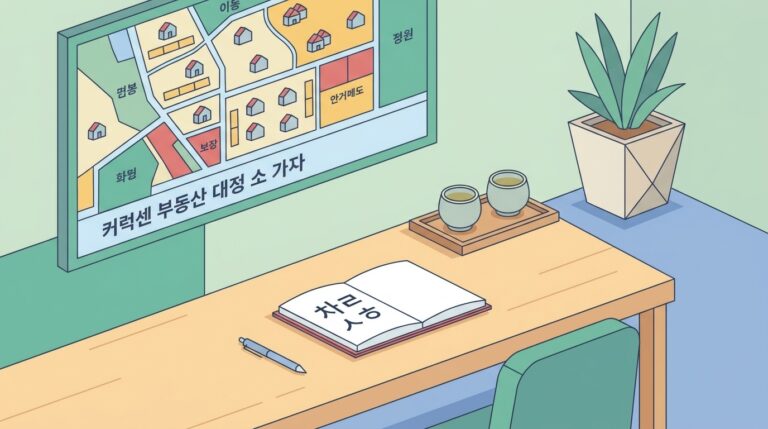
Picture this: You have just spent three exhausting weeks apartment hunting across Seoul. You trekked up the steep slopes of Bongcheon-dong, scrutinized sunlight angles in Mapo officetels, and finally found it—the perfect sun-drenched one-room with a clean countertop and a reasonable maintenance fee. You sit down at the local budongsan (부동산, real estate agency), clinking paper cups filled with sweet Maxim Mocha Gold coffee with the agency owner. But right as the lease is spread across the wooden desk, the realtor slides over a small slip of paper: the junggae susuryo (중개 수수료, brokerage commission), colloquially called bokbi (복비). Looking at the number, your stomach sinks slightly—it is calculated at the absolute statutory maximum ceiling, and you are not sure if it is rude or taboo to negotiate in Korea.
If you have watched K-Dramas like Because This Is My First Life, you know the sheer psychological weight housing carries in Korea. Moving here is not just a financial transaction; it is a sensitive interpersonal dance. Many international residents assume real estate commissions are fixed like a convenience store price tag, while others offend realtors by bluntly haggling as if they were in a tourist flea market. This guide is built directly on real learner feedback and standard tenancy practices. By mastering intermediate-level negotiation formulas, you will not only save several hundred thousand won, but you will also earn the deep respect of your neighborhood budongsan sajangnim (agency director).
Phase 2: 3 Core Expressions In-Depth
1. 중개 수수료율 협의가 가능한가요? (Junggae susuryoyul hyeob-uiga ganeunghangayo?)
- Pronunciation: [Jung-gae soo-soo-ryo-yool hyeo-bwi-ga gah-neung-hang-gah-yo?] (Sound metaphor: Think of ‘Jung’ like the psychologist Carl Jung, ‘soo-soo’ like the name Sue repeated, and ‘yool’ like a gentle blend of you and wool.)
- Meaning: Literal: “Is consultation on the brokerage fee rate possible?” / Real Nuance: A textbook, highly polite opening move signaling that you know the fee is an adjustable ceiling rather than a mandatory flat rate.
- K-Culture Moment: Heard frequently in realistic lifestyle dramas when a shrewd, budget-conscious tenant reviews a lease without sparking an emotional confrontation.
- Editor’s Insight: In Korean business culture, asking if something is 협의 가능 (hyeob-ui ganeung, negotiable) creates zero friction because it does not directly demand a discount; it merely checks the boundaries of flexibility.
- Situation Spectrum: Casual: 🚫 | Semi-formal: ⚠️ | Formal: ✅
- 🤔 Think About It: In your home country, is real estate commission fixed by regulation or freely floated? Why does Korean use the gentle word ‘협의’ (consultation) rather than ‘할인’ (discount) in contract settings?
2. 법정 상한 요율 내에서 조금만 조율해 주실 수 있을까요? (Beopjeong sanghan yoyul nae-eseo jogeumman joyulhae jusil su isseulkkayo?)
- Pronunciation: [Beop-jeong sang-han yo-yool nae-eh-seo joh-geum-man joh-yool-hae joo-sil soo ee-sseul-kkah-yo?] (Sound metaphor: ‘Beop’ rhymes with ‘cup’ with a soft b, and ‘joyul’ rhymes with ‘so cool’ swapped with a soft ‘j’ and ‘y’.)
- Meaning: Literal: “Could you tune it a little bit within the statutory ceiling rate?” / Real Nuance: “I am well aware of the legal upper limit, so let us find a reasonable middle ground without making things uncomfortable.”
- K-Culture Moment: The linguistic weapon of choice for experienced professionals who know their legal rights while maintaining pristine social grace.
- Editor’s Insight: The verb 조율하다 (joyulhada) literally means “to tune an instrument.” Using this instead of 깎다 (kkakda, to slash/cut) frames your request as bringing balance to a mutual agreement rather than taking money out of the broker’s pocket.
- Situation Spectrum: Casual: 🚫 | Semi-formal: ⚠️ | Formal: ✅
- 🤔 Think About It: Notice how Korean speakers prefer musical and harmonious metaphors (조율) when resolving financial disputes. How does musical metaphor reshape conflict resolution?
3. 현금영수증 발행해 주시는 거죠? (Hyeongeum-yeongsujeung balhaenghae jusineun geojyo?)
- Pronunciation: [Hyeon-geum-yeong-soo-jeung bal-haeng-hae joo-si-neun geo-jyo?] (Sound metaphor: ‘Hyeon-geum’ sounds like ‘hyon-gum’, and ‘jeung’ sounds like the last syllable of ‘merging’ with a sharp ‘j’.)
- Meaning: Literal: “You will issue a cash receipt, right?” / Real Nuance: An indirect tactical question. In Korea, real estate agents must legally issue cash receipts for tax deduction purposes, which also guarantees the transaction stays transparent.
- K-Culture Moment: A classic line delivered by pragmatic young renters who want year-end tax settlements (yeonmal jeongsan) done right.
- Editor’s Insight: Ending with -죠? (-jyo?) establishes a gentle presumption of mutual understanding. It shows you assume the broker runs an honorable, compliant business.
- Situation Spectrum: Casual: 🚫 | Semi-formal: ✅ | Formal: ✅
- 🤔 Think About It: Cash receipts in Korea are directly connected to the National Tax Service (NTS). Why is issuing a cash receipt often connected with whether VAT (부가세) is included in the fee?
Phase 3: Textbook Korean vs. Real Korean
Situation 1: Asking for a reduction in fee
- 📖 교과서 한국어 (Textbook Korean): 수수료를 깎아 주세요. (Susuryoreul kkak-a juseyo. / Please give me a discount on the fee.)
- 🗣️ 진짜 한국어 (Real Korean): 사장님, 이번에 계약 잘 됐으니까 복비 조금만 신경 써주세요~ (Sajangnim, ibeone gyeyak jal dwaesseunikka bokbi jogeumman singyeong sseojuseyo~ / Boss, since this contract went so smoothly, please take good care of my brokerage fee~)
- 💡 왜 다를까?: Using 깎아 주세요 sounds childish or adversarial in contract negotiations. Real locals address the agent warmly as 사장님 (boss/director) and ask them to 신경 써주다 (pay special caring attention), shifting the context from a transactional demand to an exercise of personal generosity (jeong).
Situation 2: Noting that the fee calculation is higher than expected
- 📖 교과서 한국어 (Textbook Korean): 계산이 법정 요율보다 높습니다. (Gyesani beopjeong yoyulboda nopsumnida. / The calculation is higher than the statutory rate.)
- 🗣️ 진짜 한국어 (Real Korean): 요율표 기준보다 살짝 높게 책정된 것 같은데, 다시 한번 확인해 주실 수 있나요? (Yoyulpyo gijunboda saljjak nopge chaekjeongdoen geot gateunde, dasi hanbeon hwaginhae jusil su发布 있나요? / It seems to be set slightly higher than the standard rate table; could you please double-check it for me once more?)
- 💡 왜 다를까?: Direct accusations of overcharging make Koreans lose face (che-myeon), triggering defensive friction. Using softening hedges like 살짝 (slightly) and -인 것 같다 (it seems to be) lets the agent correct the math gracefully without embarrassment.
Phase 4: K-Culture Deep Dive & Non-verbal Manners
4-1. 눈치 (Nunchi) & Body Language
Negotiating bokbi is 30% vocabulary and 70% timing and non-verbal cues.
* The Golden Timing: Never negotiate the fee before finding a place you love. Bringing up commission rates on your first step into an office signals that you might be a high-maintenance, distrustful client. The best moment is right after all lease terms (deposit, monthly rent, move-in date) are agreed upon, immediately before putting official stamps (dojang) onto the paperwork.
* Body Posture & Coffee Etiquette: When the broker offers you canned coffee or instant tea, accept it with both hands. During negotiation, tilt your head slightly (about 15 degrees) while looking over the estimate sheet, and speak in a calm, lowered pitch. Leaning forward slightly shows earnestness, not aggression.
4-2. Cultural Code: The Meaning of “복비 (Bokbi)”
Why do Koreans call brokerage fees Bokbi (福費), literally translating to “Good Fortune Fee”? Historically, village matchmakers and community elders who brokered land or marriages were gifted money wrapped in white envelopes to share in the auspicious fortune of the new household. Today, while real estate is governed by strict civil law, this lingering cultural archetype means agents expect to be treated as neighborhood guides and guardians rather than mere service vendors. Honoring this cultural mindset will unlock far better discounts than waving statutory law paragraphs in their faces.
Phase 5: Real Role-play Scenario
Setting: Inside “Haengbok Real Estate” (행복부동산) near Sinchon Station. Sunlight hits the wall map showing subway line extensions. Characters: Alex (a foreign student moving into a studio) and Mr. Park (a veteran realtor in his late 50s).
- Mr. Park: 자, 계약서 다 작성했고요. 여기 중개보수 계산서 확인해 보세요. (Ja, gyeyakseo da jakseonghaetgoyo. Yeogi junggaebosu gyesanseo hwaginhae boseyo. / All right, the contract is fully written. Please take a look at the brokerage fee calculation statement here.)
- Alex: 🎭 Looking carefully at the sheet, nodding politely 네, 사장님. 좋은 집 찾아주셔서 정말 감사해요. (Ne, sajangnim. Joeun jip chajajusyeoseo jeongmal gamsahaeyo. / Yes, Director. Thank you so much for finding such a great place for me.)
- Mr. Park: 아이고, 학생이 마음에 든다니 나도 기분이 좋네. (Aigo, haksaengi maeume deundani nado gibuni jonne. / Ah, I feel great too seeing that you like it so much.)
- Alex: 🎭 Tilting head slightly, pointing gently at the fee line 그런데 사장님, 요율이 상한선인 0.4%로 계산된 것 같아요. 혹시 요율 협의가 조금 가능할까요? (Geureonde sajangnim, yoyuri sanghanseonin 0.4%ro gyesandoen geot gatayo. Hoksi yoyul hyeob-uiga jogeum ganeunghalkkayo? / By the way, Director, it looks like the rate was calculated at the ceiling of 0.4%. Would it be possible to consult on the rate slightly?)
- Mr. Park: 🎭 Scratching his head, smiling slightly 요즘 경기가 워낙 안 좋아서 우리도 남는 게 별로 없어요, 학생. (Yojeum gyeonggiga wonak an joaseo urido namneun ge byeollo eopseoyo, haksaeng. / The economy is quite tough these days, so there isn’t much left for us either, student.)
- Alex: 🎭 Smiling warmly, leaning in with both hands on the table 제가 유학생이라 예산이 조금 빠듯해서요. 복비 조금만 신경 써주시면 이사 떡도 꼭 들고 찾아올게요! (Jega yuhaksaeng-ira yesani jogeum ppadeuthaeseoyo. Bokbi jogeumman singyeong sseojusimyeon isa tteokdo kkok deulgo chajaolgeyo! / Since I am an international student, my budget is a bit tight. If you could take care of the fee a little, I promise to bring moving rice cakes when I settle in!)
- Mr. Park: 🎭 Chuckling at the sincere touch 하하, 한국 물정 잘 아네! 그럼 10만 원 빼줄 테니까 깔끔하게 계산합시다. (Haha, hanguk muljeong jal ane! Geureom simman-won ppaejul tenikka kkalkkeumhage gyesanhapsida. / Haha, you know Korean customs well! I will take off 100,000 won, so let’s settle it cleanly.)
- Alex: 🎭 Bowing head deeply 배려해 주셔서 정말 감사합니다, 사장님! 현금영수증 처리도 부탁드릴게요. (Baeryeohae jusyeoseo jeongmal gamsahamnida, sajangnim! Hyeongeum-yeongsujeung cheorido butakdeurilgeyo. / Thank you so much for your kind consideration, Director! I would also appreciate a cash receipt.)
🔀 Interactive Branching Moment
When Mr. Park hesitated in Turn 5 citing the tough economy, how would you respond?
* Option A: “법적으로 0.4%는 상한선일 뿐 의무가 아니잖아요! 50% 깎아주세요!” (Legally 0.4% is just the ceiling, not mandatory! Give me 50% off!)
* Feedback: [Bad] This hostile confrontation destroys rapport. In Korean real estate, an agent who feels disrespected can refuse to help if complications arise with the landlord later.
* Option B: “제가 예산이 조금 빠듯해서요. 복비 조금만 신경 써주시면 감사하겠습니다.” (My budget is slightly tight. I would be very grateful if you could look after the fee a little.)
* Feedback: [Best] Perfect balance! Showing vulnerability combined with respectful deference invites the elder Korean broker to exercise benevolence (deok).
* Option C: Say nothing, sigh inwardly, and immediately transfer the full amount.
* Feedback: [Risk] You lose out on the customary room for negotiation, potentially overpaying by 100,000 to 300,000 won which could have furnished your home.
Phase 6: 10-Second Emotional Shadowing Drill
Practice these lines using the rhythm slashes / as pauses and absorbing the designated emotional cue:
[😊 미소 머금고 정중하게 - Polite and with a warm smile]- 사장님, / 좋은 방 보여주셔서 감사해요. / 복비 조금만 / 신경 써주실 수 있죠? (Sajangnim, / joeun bang boyeojusyeoseo gamsahaeyo. / bokbi jogeumman / singyeong sseojusil su itjyo? / Director, / thank you for showing me such a good room. / You can look after my commission fee a bit, / right?)
[🤝 조심스럽지만 확실하게 - Tactful yet firm and clear]- 법정 상한 요율 내에서 / 조금만 조율해 주시면 / 바로 송금해 드릴게요. (Beopjeong sanghan yoyul nae-eseo / jogeumman joyulhae jusimyeon / baro song-geumhae deurilgeyo. / If you adjust it slightly within the statutory ceiling rate, / I will wire the payment right away.)
[💼 똑 부러지고 단정하게 - Crisp, business-like and transparent]- 계좌이체 해드리고 / 현금영수증 발행 부탁드리겠습니다. (Gyejwa-iche haedeurigo / hyeongeum-yeongsujeung balhaeng butakdeurigessumnida. / I will do a bank transfer / and please issue a cash receipt.)
Phase 7: K-Culture Mini Dictionary
- 복비 (Bokbi): [Noun] Colloquial word for real estate brokerage commission. While official paperwork uses 중개보수 (brokerage remuneration), using 복비 in spoken conversation sounds natural and culturally grounded.
- 법정 요율 (Beopjeong yoyul): [Noun] Statutory ceiling rate. Defined under the Korean Licensed Real Estate Agents Act. For ordinary residential leases under 50 million won or between 50 to 200 million won, the statutory ceiling is typically 0.4% to 0.5% of the converted transaction amount.
- 현금영수증 (Hyeongeum-yeongsujeung): [Noun] Official Cash Receipt. Even if you pay via direct account transfer (gye-jwa i-che), you are legally entitled to register your Korean phone number or alien registration number for tax deductions.
- 특약사항 (Teug-yaksahang): [Noun] Special agreement clauses. Hand-typed conditions added to the bottom of standard lease agreements regarding pet ownership, wall drilling, or commission settlements.
Phase 8: Survival Kit for Expats & Tenants
Survival Expressions TOP 3
- 계산서 다시 뽑아주실 수 있나요? (Gyesanseo dasi ppobajusil su发布 있나요? / Could you print out the calculation breakdown again?)
- Pro Tip: Asking for the printed breakdown causes agents to naturally correct any bloated rounding errors without awkward confrontation.
- 부가세 포함된 금액인가요? (Bugase pohamdoen geumaegin-gayo? / Is this amount inclusive of VAT?)
- Pro Tip: General agencies may charge 10% VAT, while simplified tax-filers (gan-i gwasaeja) can only charge 4% or zero. Always verify.
- 영수증 번호 등록해 주세요. (Yeongsujeung beonho deungnokhae juseyo. / Please register the receipt under my phone number.)
- Pro Tip: Provide your 010 mobile number immediately after transferring the fee to lock in your year-end tax credit.
Editor’s Travel & Housing Note
Before stepping into a physical shop, download and browse the Naver Real Estate portal app or apps like Zigbang. Both have built-in 중개보수 계산기 (brokerage commission calculators). Type in your target deposit (bojeunggeum) and monthly rent (wolse) beforehand. Knowing the exact legal ceiling down to the last single won gives you instant negotiation confidence.
Phase 9: A Step Deeper (Reflection Question)
In Western rental markets, contracts tend to be rigid, cold, and legally binary from the first encounter. In South Korea, however, a rental lease still operates under the cultural framework of gyeonmun and jeong (relational bond). The broker does not merely draft paperwork; they mediate disputes when a water pipe freezes in January or when a landlord hesitates to return your deposit. Negotiating the fee is an exercise in saving face (che-myeon): you acknowledge the broker’s professional dignity, and they display magnanimity by offering a gracious concession.
💬 Your Turn: How are real estate fees handled where you come from? Is it considered impolite to negotiate commissions with housing agents in your culture, or is it expected? Share your experiences in the comments below!
Phase 10: FAQ & Common Mistakes
Q: Can a real estate agent legally charge whatever they want in Korea?
A: Absolutely not. The Korean Licensed Real Estate Agents Act strictly establishes statutory upper ceiling rates based on transaction brackets. Charging even a single won above this ceiling is an administrative violation subject to license suspension.
Q: When is the exact moment I should pay the brokerage fee?
A: By custom and standard contract terms, the brokerage fee is transferred on the moving day (jandgeum-nal, the day you pay the remaining balance and receive keys), not when you sign the deposit down-payment contract.
Q: What if the agent insists that VAT (부가세) is extra?
A: If the brokerage is a general taxpayer (ilban gwasaeja), they can legally levy 10% VAT, provided they issue an official Tax Invoice (segeum gyesanseo) or Cash Receipt. If they refuse to provide a receipt, they cannot demand the extra VAT.
🚨 Common Mistakes Alert Board
- Mistake: Demanding a fee cut before viewing any properties.
- Correct Action: Establish friendly rapport first, select the apartment, and bring up the adjustment right before finalizing the contract.
- Mistake: Using aggressive street-market terms like 깎아주세요 (Kkak-a juseyo).
- Correct Action: Use refined diplomatic phrases such as 조율해 주실 수 있을까요? (Joyulhae jusil su isseulkkayo?).
- Mistake: Forgetting to request a cash receipt because you transferred the money via mobile banking.
- Correct Action: Bank transfers are considered cash! Always provide your phone number and say: 현금영수증 발행해 주세요 (Hyeongeum-yeongsujeung balhaenghae juseyo).
Phase 11: Action Missions
- 🥉 Bronze Mission (Solo Practice): Look up a random studio on a Korean real estate app, calculate the maximum statutory commission using an online calculator, and practice saying: 법정 상한 요율 내에서 조금만 조율해 주실 수 있을까요? three times in front of the mirror.
- 🥈 Silver Mission (Social Share): Share this guide or post one of today’s key vocabulary terms (like 복비 or 특약사항) on your social feed or study group, tagging someone preparing to move to Korea.
- 🥇 Gold Mission (Real Life Application): Next time you visit an agency, greet the agent with 안녕하세요 사장님!, accept their beverage with two hands, and use the 조율 (joyul) formula during your rental paperwork.
- 🎮 K-Culture Mission: Watch an episode of a modern slice-of-life K-drama depicting a home move (e.g., My Liberation Notes or Because This Is My First Life) and see if you can spot the word 복비 or observe how characters interact with neighborhood realtors.
Phase 12: Interactive Quiz Challenge
Test your knowledge before signing your next Korean rental contract!
- Situational Judgment: You are finalizing a lease contract. The agent presents a fee calculated at the maximum legal rate. Which response is the most socially adept?
- (A) “이거 불법 아닌가요? 신고하겠습니다!”
- (B) “사장님, 좋은 집 찾아주셔서 감사해요. 복비 조금만 신경 써주실 수 있나요?”
- (C) “싸게 안 해주면 계약 안 합니다.”
- Fill in the Blank: In polite real estate negotiation, instead of using 깎다 (to cut/slash), it is much better to use the musical metaphor meaning to tune or adjust: “법정 요율 내에서 조금만 ______해 주실 수 있나요?”
-
True / False: In South Korea, real estate agents are legally required to issue an official Cash Receipt (현금영수증) for commission paid via mobile bank transfer upon customer request.
Click to reveal answers & explanations
- Answer: (B)
- Explanation: Expressing gratitude first and appealing to the agent’s goodwill with 신경 써주실 수 있나요? creates a cooperative atmosphere. (A) and (C) are unnecessarily antagonistic.
- Answer: 조율 (Joyul)
- Explanation: 조율하다 means to harmonize or adjust fine details diplomatically.
- Answer: True
- Explanation: Brokerage services are mandatory cash-receipt issuance businesses. You are legally entitled to register your transaction for tax credit purposes!
- Explanation: Brokerage services are mandatory cash-receipt issuance businesses. You are legally entitled to register your transaction for tax credit purposes!







