

Caught Slipping Banmal in Korea? How to Turn an Awkward Mistake into Instant Charm
안녕하세요! 매일한글 에디터입니다. (Annyeonghaseyo! I’m your Daily Hangul editor.)
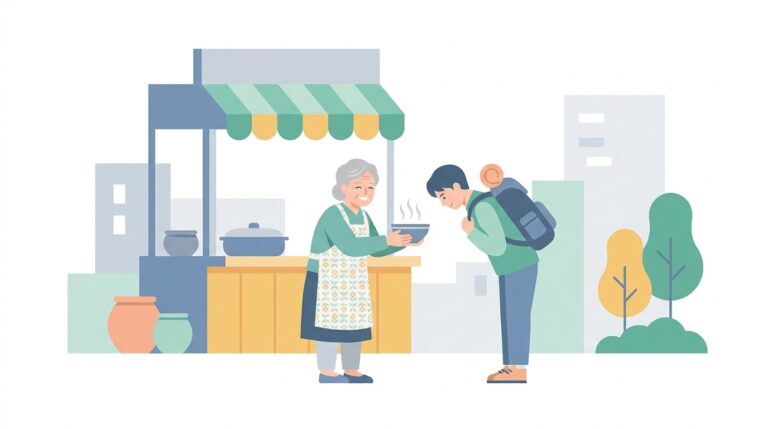
Picture this: You are sitting at a cozy street pojangmacha in Jongno on a crisp autumn evening. The fragrant steam of bubbling tteokbokki and simmering fishcake broth surrounds you. The warm-hearted grandmother running the stall scoops an extra ladle of savory broth into your bowl with a toothy grin. Overwhelmed with gratitude, you smile brightly, look her in the eye, and beam: “고마워! (Gomawo!)”
For a split second, time freezes. The sound of clinking soju glasses around you fades. Your K-drama radar goes into full code red—wait, did you just use casual banmal with a grandmother old enough to be your matriarch?!
Before you melt into the pavement from sheer embarrassment, take a deep breath. Accidental speech level slips happen to literally every foreign learner tackling the intricate Korean honorific system. Here is the secret: Koreans know their language hierarchy is challenging, and an accidental slip from an earnest foreigner is rarely met with anger. In fact, if handled with the right cultural tact and charming self-correction, it can transform an awkward freeze-up into an adorable bonding moment. Drawing from ten years of navigating local Korean subtleties and guiding hundreds of international learners, I’m here to show you exactly how to bounce back with style, warmth, and genuine Korean charm.
Phase 2: Core 3 Expressions In-Depth Analysis
1. 제가 아직 한국어가 서툴러서요! (Jega ajik hangugeoga seotulleoseoyo!)
- Pronunciation: [Je-ga a-jik han-gu-geo-ga seo-tul-leo-seo-yo] (Sounds like: Jay-gah ah-jeek hahn-goo-gaw-gah saw-tool-law-saw-yo)
- Meaning: “Because my Korean is still a bit clumsy!” (Literal: I yet Korean clumsy because) vs Nuance: “Please excuse my rough edges; my heart is polite even if my grammar slipped!”
- K-Culture Moment: Think of international K-Pop idols on variety shows like Knowing Bros who accidentally drop honorifics when excited and immediately wave their hands while using this phrase to save the day.
- Editor’s Insight: The adjective ‘서툴다’ (seotulda) conveys sincere vulnerability rather than total ignorance. It reassures your listener that you respect their status, but your tongue simply tripped.
- Situation Spectrum: Casual: ✅ | Semi-formal: ✅ | Formal: ✅
- 🤔 Think About It: In Western languages, saying “My English is clumsy” can sound insecure. In Korean, acknowledging your limitations right away displays modesty and respect. How does acknowledging human imperfection build trust in your own culture?
2. 아이고, 죄송합니다! 반말이 나와버렸어요. (Aigo, joesonghamnida! Banmari nawabeoryeosseoyo.)
- Pronunciation: [A-i-go, joe-song-ham-ni-da! Ban-ma-ri na-wa-beo-ryeot-seo-yo] (Sounds like: Ah-ee-go, jway-song-hahm-nee-dah! Bahn-mah-ree nah-wah-baw-ryeot-saw-yo)
- Meaning: “Oh my goodness, I am so sorry! Informal speech just slipped right out.”
- K-Culture Moment: Classic workplace K-drama scenes where a junior employee gets caught up in office banter with a senior manager, blurts out casual slang, covers their mouth in horror, and exclaims this exact sentence.
- Editor’s Insight: The grammar form ‘-아/어 버리다’ (-a/eo beorida) expresses an action completed unintentionally beyond your control. You are literally saying the banmal escaped all by itself!
- Situation Spectrum: Casual: ✅ | Semi-formal: ✅ | Formal: ⚠️
- 🤔 Think About It: Why do you think separating your honest intention from the physical mistake helps defuse social tension faster than a cold, robotic apology?
3. 너그럽게 봐주세요~ (Neogeureopge bwajuseyo~)
- Pronunciation: [Neo-geu-reop-ge bwa-ju-se-yo] (Sounds like: Naw-geu-rawp-geh bwah-joo-seh-yo)
- Meaning: “Please overlook it with generosity~” (Literal: Generously look upon me)
- K-Culture Moment: Contestants on Korean audition survival shows making a minor vocal slip during evaluations, flashing an apologetic smile, and appealing to the judges’ warm hearts.
- Editor’s Insight: ‘너그럽다’ (neogeureopda) means broad-minded and forgiving. Combined with ‘-아/어 주세요’, it appeals directly to Jeong (정)—the quintessential Korean concept of communal warmth and empathy.
- Situation Spectrum: Casual: ✅ | Semi-formal: ✅ | Formal: 🚫
- 🤔 Think About It: In many corporate Western environments, asking a superior to “look kindly upon an error” might sound unprofessional. In Korea, what does this reveal about personal relationships coexisting with formal hierarchies?
Phase 3: Textbook Korean vs Real Korean
Situation 1: Right after making an accidental speech-level blunder
- 📖 교과서 한국어: 실례했습니다. 다음부터는 존댓말을 쓰겠습니다. (Sillyehaessumnida. Daeumbuteoneun jondaetmareul sseugessumnida. – “I have committed a discourtesy. From next time I will utilize honorifics.”)
- 🗣️ 진짜 한국어: 앗, 실수! 깜빡하고 반말을 했어요, 죄송해요! (At, silsu! Kkamppakhago banmareul haesseoyo, joesonghaeyo! – “Oops, my mistake! I spaced out and used banmal, so sorry!”)
- 💡 왜 다를까? Textbook Korean sounds like you are delivering a legal deposition. Real native speakers use punchy, spontaneous interjections like ‘앗 (At)’ and the descriptive verb ‘깜빡하다 (to space out)’ to demonstrate authentic embarrassment.
Situation 2: Asking for patience while speaking with elders or locals
- 📖 교과서 한국어: 제가 외국인이니 언어적 양해를 구합니다. (Jega oegugini-ni eoneojeok yanghaereul guhamnida. – “Because I am a foreign national, I seek your linguistic understanding.”)
- 🗣️ 진짜 한국어: 아직 존댓말이 입에 안 붙어서요, 귀엽게 봐주세요! (Ajik jondaetmari ibe an buteoseoyo, gwiyeopge bwajuseyo! – “Honorifics haven’t stuck to my tongue yet, please look at it adorably!”)
- 💡 왜 다를까? Demanding foreign privilege creates emotional distance. Using the idiomatic expression ‘입에 안 붙다 (not sticking to the mouth)’ proves you are actively trying, making locals instantly smile.
Phase 4: K-Culture Deep Dive & Non-Verbal Manners
4-1. 눈치 (Nunchi) & Body Language Mechanics
When Banmal accidentally escapes your mouth, non-verbal cues carry 80% of your defense:
* The Two-Handed Mouth Cover: The instant you realize you dropped the ‘-요’ or ‘-습니다’, lightly tap your lips with an index finger or cover your mouth with both hands in light shock. This immediately signals that your brain recognized the error.
* The Double-Palm Clasp (합장): Clasp both hands in front of your chest in a light prayer position, accompanied by a polite 30-degree quick bow.
* The Sheepish Smile (머쓱한 웃음): Do not look stoic or nonchalant! A slightly bashful, warm grin conveys: “I know I messed up, please rescue me!”
4-2. Cultural Code Analysis: The “Foreigner Grace Window”
In popular Korean reality shows like Running Man or talk shows featuring international guests, foreign banmal moments are comedy gold. That is because the rigid Confucian hierarchy can occasionally feel suffocating even for Koreans. When a foreigner speaks casually without malice, it momentarily pierces the bubble of strict social protocol.
However, context is king. Koreans grant a generous grace window to foreigners who exhibit sincerity (진심). If an elder perceives that you are speaking casual Korean because you genuinely forgot or are struggling to conjugate verbs, they react with maternal or paternal affection (귀여움). But if you speak banmal out of arrogance or disregard for their customs, that grace vanishes in a heartbeat.
Phase 5: Real Role-Play Scenario
Setting: A bustling street pojangmacha in Mapo. The chilly night air is thick with the scent of spicy ddeokbokki and garlic soup.
NPC: “Mapo Imo” (Auntie Park, 58) — energetic, clad in a floral apron, brandishing a large broth ladle with an infectious laugh.
- Turn 1 (Imo): 어서 와요! 날씨 추운데 어묵 국물부터 한 잔 마셔! (Eoseo wayo! Nalssi chuunde eomuk gungmulbuteo han jan masyeo! – “Welcome! It’s freezing out, drink a warm cup of fishcake broth first!”) 🎭 Hands you a steaming paper cup with a broad grin.
- Turn 2 (You): 와, 냄새 진짜 좋다. 고마워! (Wa, naemsae jinjja jota. Gomawo! – “Wow, smells so good. Thanks!”) 🎭 Accepts the cup joyfully, dropping the polite ‘-요’ without thinking.
- Turn 3 (Imo): 응? 고마워어~? 우리 언제부터 말 놓는 사이가 됐을까, 하하! (Eung? Gomawo-eo~? Uri eonjebuteo mal nonneun saiga dwaesseulkka, haha! – “Huh? ‘Thanks’? Since when did we become casual buddies who drop honorifics, haha!”) 🎭 Raises an eyebrow with an amused, mock-scolding smirk.
- Turn 4 (You): 앗! 아이고, 죄송합니다! 반말이 나와버렸어요. (At! Aigo, joesonghamnida! Banmari nawabeoryeosseoyo. – “Ack! Oh gosh, I’m so sorry! Banmal just slipped right out.”) 🎭 Covers mouth with both hands, eyes widening in panic.
- Turn 5 (Imo): 아이구 괜찮아, 한국말 배우는 중이구나? 발음은 아주 차지네! (Aigu gwaenchana, hangukmal baeuneun jung-iguna? Bareumeun aju chaljine! – “Oh it’s totally fine, you’re learning Korean, aren’t you? Your pronunciation is surprisingly snappy!”) 🎭 Chuckles warmly while scooping tteokbokki onto a green plastic plate.
- Turn 6 (You): 네, 맞아요. 아직 존댓말이 서툴러요. 너그럽게 봐주세요! (Ne, majayo. Ajik jondaetmari seotulleoyo. Neogeureopge bwajuseyo! – “Yes, that’s right. My honorifics are still clumsy. Please overlook it generously!”) 🎭 Bows head lightly with an earnest, sheepish smile.
- Turn 7 (Imo): 아이고 귀여워라! 예뻐서 어묵 하나 서비스로 더 줄게! (Aigo gwiyeowora! Yeppeoseo eomuk hana seobiseuro deo julge! – “Aww how adorable! Because you are so charming, I’ll give you an extra fishcake on the house!”) 🎭 Plops another fishcake skewer into your soup bowl.
- Turn 8 (You): 대박! 이모님, 정말 감사합니다! (Daebak! Imonim, jeongmal gamsahamnida! – “Jackpot! Auntie, thank you so very much!”) 🎭 Receives the skewer with both hands and bows deeply.
🔀 Interactive Decision Point
Suppose Auntie catches your banmal slip in Turn 3. What do you do?
- Choice A: Freeze up, say nothing at all, and stare silently at your phone in shame.
- Choice B: Lightly tap your lips, clasp your hands together, and say “앗, 죄송합니다! 아직 한국어가 서툴러서요~” with a warm smile.
- Choice C: Shrug casually and reply: “영어에는 존댓말이 없잖아 (In English there’s no honorifics, you know).”
Outcome & Feedback:
* Choice A (Risk): Silent freezing leaves locals confused. Silence is often interpreted as stubbornness or sullen defiance in Korea. Keep the communication channel open!
* Choice B (Best!): Outstanding! You instantly signaled cultural literacy, acknowledged your grammatical slip, and engaged her warmth. This is the exact reaction that earns you free dumplings!
* Choice C (Bad): Massive cultural foul! Shifting blame onto your native language in casual speech comes across as dismissive and defensive toward local etiquette.
Phase 6: 10-Second Emotion Shadowing Drill
Practice these three key emotional inflection patterns aloud. Pay special attention to the pause markers (/) and the emotional mindset:
[😱 당황하여 반사적으로 사과하기 - Shocked & Reflexive]- “앗! / 죄송합니다! / 제가 반말을 / 해버렸어요!”
(At! / Joesonghamnida! / Jega banmareul / hae-beo-ryeot-seo-yo!)
- “앗! / 죄송합니다! / 제가 반말을 / 해버렸어요!”
[🥺 애교 섞인 겸손한 부탁 - Pleading with Endearing Warmth]- “아직 연습 중이라 / 서툴러요… / 너그럽게 / 봐주세요~”
(Ajik yeonseup jung-ira / seotulleoyo… / Neogeureopge / bwajuseyo~)
- “아직 연습 중이라 / 서툴러요… / 너그럽게 / 봐주세요~”
[😊 안도하며 싹싹하게 감사하기 - Relieved & Bright Gratitude]- “이해해 주셔서 / 정말 / 감사합니다!”
(Ihaehae jusyeoseo / jeongmal / gamsahamnida!)
- “이해해 주셔서 / 정말 / 감사합니다!”
Phase 7: K-Culture Mini Dictionary
- 존댓말 (Jondaetmal) | Polite/Honorific Language | The linguistic system of showing social elevation and respect to elders, unfamiliar people, clients, and service staff.
- 반말 (Banmal) | Casual/Informal Language | Non-honorific speech permitted exclusively between equal-age close friends, family members speaking downward, or children.
- 눈치 (Nunchi) | Situational Wit & Social Intuition | The non-verbal radar used to assess hierarchy, mood, and unspoken expectations in any room across Korea.
- 서비스 (Seobiseu) | Complimentary Item / On the House | A hospitality tradition where restaurant and shop owners gift bonus food or items to patrons whose attitude they appreciate.
Phase 8: Traveler’s Survival Kit
Top 3 Instant Recovery Expressions
- 실수했어요, 죄송해요! (Silsuhaesseoyo, joesonghaeyo!)
- Meaning: “I made an honest mistake, so sorry!”
- Pro Tip: The fastest way to reset expectations if you accidentally drop a casual ending.
- 한국어 배우는 중이에요. (Hangugeo baeuneun jung-ieyo.)
- Meaning: “I am in the middle of learning Korean.”
- Pro Tip: Drops conversational expectations immediately and brings out local helpfulness.
- 천천히 말씀해 주세요. (Cheoncheonhi malsseumhae juseyo.)
- Meaning: “Please speak slowly for me.”
- Pro Tip: Prevents rapid-fire response dialect when aunties get too excited talking with you!
Editor’s Travel Note
When wandering through traditional food alleys in Insadong or Gwangjang Market, rely on local navigation tools rather than Western apps. Be sure to use the Naver Map app for local navigation to find tucked-away food stalls with authentic ratings. Also, while credit cards are universal in Seoul, traditional food vendors appreciate having a crisp 10,000 KRW bill or a prepaid transit card ready for quick, cheerful transactions.
Phase 9: “One Step Deeper” (Reflective Essay)
In Korean, grammar is never just syntax; it is an active map of human relationships. While English builds intimacy by breaking barriers down to a first-name basis, Korean honorifics (존댓말) establish intimacy by respecting personal boundaries first. Yet, beneath this structured social hierarchy beats the rhythm of Jeong (정)—the shared current of mutual compassion. When you stumble over casual speech, you aren’t committing an unforgivable taboo; you are simply demonstrating that you are an earnest human navigating an intricate social landscape. Sincerity always outshines mechanical perfection in Korea.
💬 Your Turn: Have you ever accidentally used informal language with an elder, teacher, or boss in Korean or another language? Share your funniest cringe story in the comments below!
Phase 10: FAQ & Avoiding Misunderstandings
Q: Will Korean elders get genuinely offended if I accidentally say “고마워” instead of “감사합니다”?
A: In virtually every everyday situation, absolutely not! Unless your voice drips with mocking sarcasm or bad attitude, native speakers immediately identify non-native cadence and understand that verb endings are hard. A quick bow and an earnest apology will clear the air instantly.
Q: Can I just add “-요 (-yo)” onto the end of any Banmal sentence to make it polite?
A: Yes! For everyday spoken conversation, taking the basic informal sentence and affixing the polite suffix “-요” (먹어 -> 먹어요, 고마워 -> 고마워요) transforms it into standard polite Korean (해요체). While there are specialized honorific verbs for elders (like 진지 드세요 instead of 밥 먹어요), adding -요 keeps you 90% safe.
Q: If an older restaurant owner or taxi driver speaks Banmal to me first, can I speak Banmal back to them?
A: Never! This is the most dangerous trap for intermediate learners. When elders speak casual Korean to you, it is an expression of paternal warmth and familiarity (친근함). Speaking banmal back to them equates to placing yourself above or equal to an elder, which breaches fundamental Korean manners. Always keep your Jondaetmal firmly in place!
🚨 Common Mistakes Board
- Mistake 1: The Poker Face Defense: Keeping a blank, unreadable face when catching your own slip. (Correct Action: Smile sheepishly, make eye contact, and tap your mouth playfully.)
- Mistake 2: Over-Dramatizing the Apology: Apologizing as though you damaged someone’s car. (Correct Action: Keep it light, cheerful, and humble—a warm “앗, 반말이 나와버렸어요!” is plenty.)
- Mistake 3: Symmetrical Banmal Assumption: Assuming that if they speak casually, you can too. (Correct Action: Always maintain polite 존댓말 regardless of what speech level the other party uses with you.)
Phase 11: Action Mission & Engagement
- 🥉 Bronze Level: Stand in front of your mirror, tap your lips with an index finger, and repeat “앗, 반말이 나와버렸어요! 제가 아직 한국어가 서툴러서요~” 5 times with natural expression.
- 🥈 Silver Level: Record a brief 10-second voice note practicing the Phase 6 Shadowing Drill, tag our community handle, and share your best dramatic voice!
- 🥇 Gold Level: During your next language exchange session or visit to a Korean business, consciously preface your chat with “아직 존댓말이 서툴지만 열심히 할게요!” and watch how warmly the atmosphere shifts.
- 🎮 K-Culture Mission: Watch any episode of Running Man or Omniscient Interfering View featuring an overseas celebrity. Spot the moment someone makes an honorific slip-up and notice how the host laughs and smoothens the conversation!
Phase 12: Interactive Quiz Challenge
Test your situational instincts with these three quick questions:
1. Situational Judgment: You are ordering iced Americano at a busy cafe in Hongdae. You mistakenly tell the 22-year-old barista “아메리카노 줘 (Give me an Americano)” instead of “아메리카노 주세요”. How should you correct this on the spot?
* A) Laugh out loud and say “너도 반말해! (You speak banmal too!)”
* B) Quickly say “앗, 주세요! 아직 말이 서툴러요, 죄송해요!” with a slight nod.
* C) Pretend you do not speak Korean and switch immediately to English.
2. Fill in the Blank: Complete this classic, endearing Korean sentence used to appeal to someone’s forgiveness:
* 아직 존댓말이 서툴러서요, [__________] 봐주세요! (Hint: Generously / kindly)
3. True or False: If an older market auntie asks you “몇 살이야? (How old are you?)”, it is completely natural for you to answer “스물다섯 살이야 (I’m 25!)” using casual Banmal.
👉 Click here to reveal the answers and explanations!
- Answer: B. Quickly self-correcting by appending ‘주세요’ and acknowledging the verbal stumble with a nod is textbook natural etiquette.
- Answer: 너그럽게 (Neogeureopge). The full sentence is: 아직 존댓말이 서툴러서요, 너그럽게 봐주세요! (My honorifics are still clumsy, please overlook it generously!)
- Answer: False. Even if an elder addresses you in Banmal, you must respond in polite Jondaetmal: “스물다섯 살이에요 (I am 25 years old)”. Casual speech flows down from age, not back up!







