

Master the Language of Korean Luxury & Fashion Marketing: An Insider C1 Guide
Phase 1: Empathy (Story Immersion Opening)
안녕하세요! 매일한글 에디터입니다. (Hello! It’s your Daily Hangul editor.)
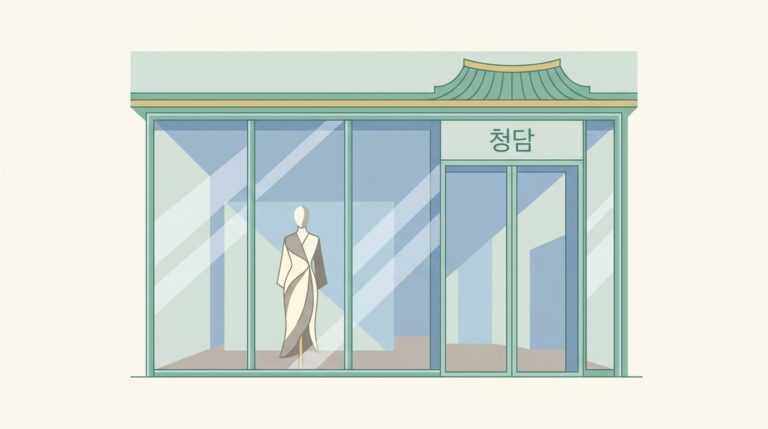
Picture this: You are sitting in an ultra-sleek conference room overlooking the dazzling skyline of Cheongdam-dong, Seoul’s undisputed epicenter of haute couture. Across the marble table sit senior marketing directors from top domestic beauty giants and global fashion houses. Suddenly, someone leans forward, sips their iced Americano, and drops a sentence packed with high-level industry jargon: “이번 F/W 시즌에는 단순 노출보다 Z세대의 디깅 소비를 유도하며 브랜드의 희소성을 극대화해야 합니다.” Everyone nods sagely—except you feel a knot tighten in your stomach. While your textbook taught you basic business phrases like “이 제품은 인기가 많습니다” (This product is popular), real-world Korean boardrooms operate on an entirely different linguistic echelon.
Over the past decade as a cultural navigator in Seoul, I’ve watched countless brilliant advanced learners freeze up when entering the hyper-dynamic K-beauty and luxury ecosystem. Why? Because Korean luxury branding blends fast-paced internet consumer culture, celebrity fandom dynamics, and sophisticated Sino-Korean economic lexicon. By mastering this unit, you won’t just survive strategic presentations; you will understand the cultural subtext behind pop-up stores in Seongsu, ambassador contracts in K-pop, and the psychological levers of Korean retail prestige. Trust me, today’s deep dive is built straight from the field notes of professionals thriving right here in Seoul.
Phase 2: Core 3 Expressions In-Depth
1. 희소성을 극대화하다 (Huisoseong-eul geukdaehwaghada)
- Pronunciation: [Hee-so-seong-eul geuk-dae-hwa-ha-da] (Sounds like “Hee-so” like in ‘heat’, “sung” like ‘song’, followed by “geuk-dae-hwa” sounding punchy like ‘cook-day-hwa’)
- Meaning: Literally “To maximize scarcity.” In nuance, it refers to deliberate, engineered exclusivity—deliberately restricting supply or window of availability to drive feverish luxury demand.
- K-Culture Moment: You will hear brand consultants on YouTube analysis channels or luxury business panels discussing why Hermès or Chanel limits the number of bags an individual can purchase per year in Seoul department stores.
- Editor’s Insight: 희소성 (稀少性) comes from Sino-Korean roots meaning rare (희) and scarce (소). In luxury marketing, you never say “수량을 적게 만들다” (make few quantities); you deploy 희소성을 극대화하다 to frame scarcity as a refined strategic art.
- Situation Spectrum: Casual 🚫 | Semi-formal ⚠️ | Formal ✅
- 🤔 Think About It: In many Western markets, supply chain limitations can be seen as logistical hurdles. In Korea, how does engineered scarcity (희소성) trigger the collective consumer mindset known as FOMO?
2. 앰버서더를 앞세운 디깅 마케팅 (Aembeoseodeo-reul apsaeun diging maketing)
- Pronunciation: [Am-beo-seo-deo-reul ap-sae-un di-ging ma-ke-ting] (Think of English “ambassador” with a crisp Korean vowel, followed by “up-say-oon”, and the buzzword “digging marketing”)
- Meaning: Literally “Digging marketing spearheaded by brand ambassadors.” It refers to hyper-targeted marketing that leverages celebrity ambassadors to engage passionate fandoms who will delve (“dig”) intensely into everything the icon wears or does.
- K-Culture Moment: In K-Drama behind-the-scenes or entertainment industry documentaries, agencies analyze how luxury brands sign rookie K-Pop idols early to capture global hyper-engaged Gen Z fandoms.
- Editor’s Insight: 디깅 (digging) is an indispensable modern Korean marketing buzzword. It denotes consumers who deeply immerse themselves in a specific niche or hobby. When paired with 앞세우다 (to put at the forefront), it reveals proactive, aggressive strategic positioning.
- Situation Spectrum: Casual ⚠️ | Semi-formal ✅ | Formal ✅
- 🤔 Think About It: Does your native language distinguish between passive fans and active “diggers” when designing luxury endorsements?
3. 프리미엄화 전략을 펼치다 (Peurimieomhwa jeollyag-eul pyeolchida)
- Pronunciation: [Peu-ri-mi-eom-hwa jeol-lyak-eul pyol-chi-da] (Fluid glide: “P’ree-mee-um-hwa”, followed by “jull-lyahk-eul”, concluding with “pyeohl-chee-da”)
- Meaning: Literally “To roll out / unfold a premiumization strategy.” Contextually, it describes repositioning a mass product line into an aspirational, top-tier echelon through sophisticated branding, packaging, and high pricing.
- K-Culture Moment: Seen regularly in business journalism covering Korean cosmetics conglomerates (like Amorepacific or LG Household & Health Care) upgrading traditional herbal skincare lines to compete with European heritage brands.
- Editor’s Insight: The verb 펼치다 (to unfold/spread out) adds narrative elegance and grand scale to 전략 (strategy). It sounds far more commanding and visionary than merely using 하다 (to do) or 쓰다 (to use).
- Situation Spectrum: Casual 🚫 | Semi-formal ✅ | Formal ✅
- 🤔 Think About It: How does “unfolding” a strategy (전략을 펼치다) convey a more dynamic, deliberate aesthetic than simply “implementing” a plan?
Phase 3: Textbook Korean vs. Real Korean
Situation 1: Describing massive demand and extreme queueing for a luxury collection
- 📖 Textbook Korean: 이 명품 가방은 매우 인기가 있어서 사기 어렵습니다. (I myeongpum gabang-eun maeu ingiga isseoseo sagi eoryeopseumnida. / This luxury bag is very popular, so it is difficult to buy.)
- 🗣️ 진짜 한국어: 이거 지금 완전 품절 대란이라 오픈런 뛰어야 겨우 구해요. (Igeo jigeum wanjeon pumjeol daeran-ira opeunreon ttwieoya gyeou guhaeyo. / This is in an absolute sellout craze right now, so you practically have to sprint an open-run just to get your hands on one.)
- 💡 왜 다를까?: In real Korean luxury commerce, 품절 대란 (out-of-stock crisis/craze) and 오픈런 (open-run: rushing into department stores the second doors open) are core cultural concepts describing consumer frenzy. Textbook Korean sounds sterile and understates the cultural phenomenon.
Situation 2: Explaining a marketing initiative targeted at younger generations
- 📖 Textbook Korean: 우리는 젊은 세대를 공략하기 위해 연예인을 활용합니다. (Urineun jeolmeun sedae-reul gongryeokhagi wihae yeon-yein-eul hwalyonghamnida. / We utilize celebrities to target the younger generation.)
- 🗣️ 진짜 한국어: 이번 프로젝트는 MZ세대를 타깃으로 대세 아이돌과 협업해 락인(Lock-in) 효과를 노리고 있어요. (Ibeon peurojekteu-neun em-ji sedae-reul tagit-euro daese aidol-gwa hyeob-eop-hae rag-in hyogwa-reul norigo isseoyo. / For this project, we’re collaborating with trending idols targeting the MZ generation to aim for a lock-in effect.)
- 💡 왜 다를까?: Native corporate executives constantly integrate loanwords like 타깃 (target), 협업/콜라보 (collaboration), and economic terminology like 락인 효과 (lock-in effect) to sound incisive, strategic, and contemporary.
Phase 4: K-Culture Deep Dive & Non-Verbal Manners
4-1. 눈치 (Nunchi) & Gestures in Korean Luxury Business Meetings
When pitching a branding strategy to Korean executives, non-verbal cues (비언어적 태도) establish authority and mutual respect:
1. The Subtle Two-Hand Document Handover: When presenting lookbooks, marketing decks, or swatches, hand them over using both hands, gently tilting your head forward. Never slide materials across the desk with one hand.
2. The Attentive Nod with Controlled Eye Contact: Staring unblinkingly into a senior director’s eyes is perceived as aggressive. Alternate between direct eye contact when stating your key metric (e.g., ROI, projected impression count) and softening your gaze toward your notes while nodding thoughtfully (경청의 끄덕임) as they speak.
3. Modulating Voice Pitch for Professional Gravity: High-pitched, overly animated pitch can unintentionally sound inexperienced in luxury settings. Lower your voice resonance slightly, delivering Sino-Korean strategic terminology with deliberate, measured pacing.
4-2. Cultural Code Analysis: The Pop-Up & Global Ambassador Phenomenon
Notice how luxury campaigns in Seoul have migrated away from traditional billboards to experiential “Pop-up Stores” (팝업스토어) in Seongsu-dong and Dosan Park? In Korea, luxury is no longer just about ownership; it is about 경험 소비 (experience consumption). Brands transform physical venues into interactive art exhibits where visitors upload photos to Instagram within seconds. Concurrently, K-pop idols serve as global human mega-channels. A luxury brand doesn’t just sign an idol for runway appearances; they engineer social media moments that drive organic digital engagement across millions of enthusiastic domestic and overseas fans.
Phase 5: Real Roleplay Scenario
Setting: A sunlit executive meeting room inside a luxury boutique branding agency in Apgujeong, Seoul.
Characters:
* 수진 팀장 (Team Leader Soojin): Sharp, impeccably tailored, highly pragmatic senior marketing director at a top luxury consultancy.
* You (C1 Brand Strategist): An ambitious consultant presenting the domestic rollout strategy for a heritage European jewelry house entering the Korean market.
수진 팀장: 자, 이번 유럽 본사 미팅 앞두고 우리 리브랜딩 전략 핵심 좀 다시 짚어보죠. 한국 시장 진입 키포인트가 뭡니까?
(Ja, ibeon yureop bonsa miting apdugo uri ribeuraending jeollyak haeksim jom dasi jipeobojyo. Hanguk sijang jinip kipointeuga mwomnikka?)
🎭 [Sits upright, pen poised over an iPad, studying your face intently]
“Now, ahead of this European headquarters meeting, let’s re-examine the core of our rebranding strategy. What is our key point for entering the Korean market?”
You: 무엇보다 단순 매장 확장이 아닌, 희소성을 극대화하는 팝업 중심의 프리미엄화 전략을 펼쳐야 합니다.
(Mueotboda dansun maejang hwakjang-i anin, huisoseong-eul geukdaehwahaneun pab-eop jungsim-ui peurimieomhwa jeollyag-eul pyeolchyeoya hamnida.)
🎭 [Slides the conceptual mood board forward with both hands, voice calm and composed]
“Above all, rather than mere store expansion, we must roll out a premiumization strategy centered around pop-ups that maximize exclusivity.”
수진 팀장: 일리 있네요. 하지만 요즘 성수동 팝업스토어도 포화 상태잖아요. 차별점이 없으면 묻힐 텐데요?
(Illi inneyo. Hajiman yojeum Seongsu-dong pab-eop-seuto-eodo pohwa sangtaejanh-ayo. Chabyeoljeom-i eopseumyeon muthil tende-yo?)
🎭 [Frowns slightly, tapping her pen softly against the notebook]
“That has merit. But Seongsu-dong pop-up stores are saturated these days. Without differentiation, it will just get buried, won’t it?”
You: 그래서 대세 K-Pop 앰버서더를 앞세운 디깅 마케팅을 접목해 팬덤의 자발적 바이럴을 유도할 계획입니다.
(Geuraeseo daese K-Pop aembeoseodeo-reul apsaeun diging maketing-eul jeommok-hae paendeom-ui jabaljeok baireol-eul yudohal gyehoek-imnida.)
🎭 [Points crisply to the digital engagement conversion model on the screen]
“That’s why we plan to combine digging marketing spearheaded by a top-trending K-Pop ambassador to induce voluntary viral engagement from fandoms.”
수진 팀장: 팬덤 유입은 좋지만, 자칫 하이엔드 브랜드 고유의 헤리티지가 퇴색될 위험은 없나요?
(Paendeom yuip-eun jochiman, jachit hai-endeu beuraendeu goyu-ui heritijiga toesaekdoel wiheom-eun eomnayo?)
🎭 [Crosses arms, leaning forward with a probing, analytical gaze]
“Fandom inflow is great, but isn’t there a risk that the high-end brand’s inherent heritage might get diluted?”
You: 오프라인 공간은 철저히 헤리티지 아카이브로 구성하고, 앰버서더 협업 콘텐츠는 디지털 한정판에 집중시켜 균형을 맞출 겁니다.
(Opeurain gonggan-eun cheoljeohi heritiji akaibeuro guseonghago, aembeoseodeo hyeob-eop kontencheu-neun dijiteol hanjeongpan-e jipjungsikyeo gyunhyeong-eul matchul geomnida.)
🎭 [Delivers the statement with firm eye contact and measured conviction]
“We will balance it by configuring physical spaces strictly as heritage archives, while concentrating ambassador collaboration content on digital limited editions.”
수진 팀장: 좋습니다! 포지셔닝이 명확하네요. 본사 임원진도 이 설득 논리라면 납득할 것 같습니다.
(Joeumnida! Pojisyeon-ing-i myeonghwakhaneyo. Bonsa imwonjin-do i seoldeuk nolli-ramyeon naptteuk-hal geot gatseumnida.)
🎭 [Relaxes shoulders, offering a subtle, approving smile while making a checkmark on her sheet]
“Excellent! The positioning is distinct. I think HQ executives will be convinced by this line of persuasion.”
You: 감사합니다. 바로 세부 실행 타임라인 준비해서 공유해 드리겠습니다.
(Gamsahamnida. Baro sebu silhaeng taimrain junbihaeseo gong-yuhae deurigesseumnida.)
🎭 [Gives a polite, crisp nod of appreciation]
“Thank you. I will prepare and share the detailed execution timeline right away.”
🔀 Interactive Branching Moment
Imagine Team Leader Soojin asks: “이번 시즌 한정판 제품의 가격 책정(Pricing)은 어떻게 가져가는 게 좋을까요?” (How should we approach the pricing of this season’s limited edition product?)
- Choice A: “경쟁사보다 훨씬 싸게 책정해서 누구나 쉽게 살 수 있게 대중화해야 합니다.” (Price it much cheaper than competitors to popularize it so anyone can buy it easily.)
- Choice B: “기존 라인업 대비 20% 높게 책정해 프리미엄 브랜드로서의 가치와 가격 저항선을 정면 돌파해야 합니다.” (Price it 20% higher than existing lines to confront price resistance head-on and assert its value as a premium brand.)
- Choice C: “소비자 반응을 봐야 하니 일단 할인을 많이 때리고 사은품을 왕창 줍시다.” (Let’s see consumer reaction by first slapping on big discounts and giving away tons of free gifts.)
Feedback & Strategy Breakdown:
* Choice A (Bad): Suggesting a down-market volume play (대중화) directly contradicts the core philosophy of luxury branding. You risk destroying the label’s hard-won prestige.
* Choice B (Best): Superb! Demonstrates authentic understanding of luxury price elasticity (가격 저항선 돌파) and reinforces brand equity through elevated pricing and aspirational signaling.
* Choice C (Risk): Excessive discounting (할인을 때리다) and mass giveaways cheapen luxury heritage and sound overly colloquial and unprofessional in an executive briefing.
Phase 6: 10-Second Emotional Shadowing Drill
Train your intonation and pacing by matching your breath and emotional conviction to the markers below:
[💼 전문적이고 자신감 있게 / Professional & Confident]
단순 노출을 넘어 / 고객의 자발적 유입을 이끄는 / 락인 전략이 필수적입니다.
(Dansun nochul-eul neomeo / gogaek-ui jabaljeok yuip-eul ikkeuneun / rag-in jeollyag-i pilsujeog-imnida.)
“Moving beyond mere exposure / a lock-in strategy that drives voluntary customer inflow / is absolute imperative.”-
[🎯 단호하고 예리하게 / Decisive & Incisive]
무리한 할인 행사보다는 / 브랜드의 희소성을 지키는 편이 / 장기적으로 유리합니다.
(Murihan harin haengsabodaneun / beuraendeu-ui huisoseong-eul jikkineun pyeon-i / janggijeog-euro yurihamnida.)
“Rather than unreasonable discount promotions / protecting the brand’s exclusivity / is advantageous in the long run.” -
[🤝 설득력 있고 신뢰감 있게 / Persuasive & Trustworthy]
글로벌 앰버서더의 영향력과 / 로컬 팝업 공간의 시너지를 / 극대화해 보겠습니다.
(Geullobeol aembeoseodeo-ui yeonghyangryeok-gwa / rokeol pab-eop gonggan-ui sineoji-reul / geukdaehwahae bogesseumnida.)
“We will maximize / the synergy between our global ambassador’s influence / and the local pop-up venue.”
Phase 7: K-Culture Mini Dictionary
-
오픈런 (O-peun-reon)
Translation: Open-run (Queueing up prior to opening hours to rush into luxury boutiques).
Usage: Frequently deployed in retail performance reviews: “신규 컬렉션 론칭 당일 백화점에 오픈런 행렬이 이어졌습니다.” (On the launch day of the new collection, lines of open-runners formed at the department store.) -
디깅 소비 (Di-ging So-bi)
Translation: Digging consumption (Immersive, niche-driven consumer purchasing behavior).
Usage: Crucial in market analysis decks: “디깅 소비 성향을 가진 매니아층을 선점해야 브랜드 충성도가 올라갑니다.” (We must capture enthusiast demographics with digging consumption tendencies to elevate brand loyalty.) -
헤리티지 (He-ri-ti-ji)
Translation: Heritage (Historical prestige, tradition, and storied craftsmanship of a brand).
Usage: Used when defending luxury pricing: “우리 브랜드의 헤리티지를 스토리텔링으로 녹여내야 합니다.” (We need to infuse our brand’s heritage into storytelling.) -
팝업의 성지 (Pab-eop-ui Seong-ji)
Translation: The Mecca of Pop-Ups (Referring to trend-incubating Seoul neighborhoods like Seongsu-dong).
Usage: Vital in commercial real estate and brand activations: “성수동이 팝업의 성지로 떠오르면서 글로벌 브랜드의 쇼케이스 경쟁이 치열합니다.” (As Seongsu emerged as the Mecca of pop-ups, showcase competition among global brands intensified.)
Phase 8: Survival Kit for Travelers & Field Observers
Top 3 Survival Phrases for Luxury Flagships & Boutiques
- 혹시 이 라인 재고가 남아있나요?
(Hoksi i rain jaegoga nam-a-innayo?)
Pro Tip: Elegant way to ask sales associates (셀러님) if limited edition luxury stock exists without sounding overly aggressive. - 웨이팅 등록은 어디서 하면 되나요?
(Weiting deungnok-eun eodiseo hamyeon doenayo?)
Pro Tip: Essential for Seongsu pop-ups and flagship boutiques using digital kiosk queues (like CatchTable). - 선착순 구매 한도가 정해져 있나요?
(Seonchak-sun gumae handoga jeonghaejyeo innayo?)
Pro Tip: Use this when inquiring whether a limited capsule collection has purchase caps per customer.
Editor’s Travel Note
When conducting market research in Seoul, seamless navigation is vital. Google Maps offers limited foot-transit accuracy in South Korea; you should search for and install the Naver Map App before heading to the Cheongdam Luxury Fashion Street (청담 명품거리) or Dosan Park (도산공원). If visiting high-traffic pop-ups in Seongsu, bring a credit card (Visa/Mastercard or local payment like Samsung Pay), as nearly all temporary brand showcases operate completely cashless (현금 없는 매장). Department store flagships (e.g., Shinsegae Gangnam or Hyundai Seoul) require identity verification (Passport) for immediate duty-free tax refunds on luxury retail!
Phase 9: “One Step Deeper” (Reflective Essay)
In contemporary Korean society, luxury consumption is rarely a solitary, quiet indulgence. Rather, it serves as a dynamic dialogue between individual prestige and collective recognition. Sociologists often point to Korea’s hyper-dense urban living and pervasive social connectivity, where visual trends diffuse at breakneck speeds. Luxury brands in Korea are not merely selling handcrafted leather or fine fragrance; they are offering tickets of belonging and cultural fluency. When someone lines up for an open-run or visits a high-concept Seongsu installation, they are participating in a shared contemporary ritual of aesthetic validation.
💬 Your Turn: In your home culture, is luxury considered an understated, personal expression, or does it thrive on collective social validation like in Korea? Share your perspective in the comments below! (여러분의 나라에서는 럭셔리 브랜드 소비를 개인의 취향으로 보나요, 아니면 사회적 트렌드로 보나요?)
Phase 10: FAQ & Avoiding Misunderstandings
Q: Why do Koreans refer to luxury goods as ‘명품’ (Myeongpum) instead of just ‘럭셔리’ (Luxury)?
A: 명품 (名品) literally translates to “masterpiece” or “distinguished item.” While the English loanword 럭셔리 emphasizes wealth and high cost, 명품 culturally conveys superior artisanal craftsmanship, status, and historical prestige. Professional marketers alternate between both, using 럭셔리 브랜드 for corporate classification and 명품 when addressing consumer desirability.
Q: Is it disrespectful to use marketing buzzwords like ‘MZ세대’ or ‘디깅’ in formal presentations?
A: Not at all! In modern Korean corporate strategy, staying abreast of socio-cultural buzzwords signifies that you understand market trends. However, ensure that you anchor these buzzwords with robust Sino-Korean business concepts such as 구매 전환율 (purchase conversion rate) or 수익성 제고 (profitability enhancement) to preserve intellectual weight.
Q: What is the polite way to refer to luxury boutique staff in Korea?
A: Never shout “여기요!” (Over here!) in a luxury boutique. Address sales specialists politely as 매니저님 (Manager-nim) or 직원분 (Staff member). In contemporary luxury slang among VIP shoppers, associates are often respectfully called 셀러님 (Seller-nim).
🚨 Common Mistakes (흔한 실수) Breakdown
| Mistake | Why It Fails | Correct Action | Correct Expression |
|---|---|---|---|
| “우리는 비싸게 팔아서 돈을 많이 벌 거예요.” | Sounds overly blunt, greedy, and uneducated in a strategic briefing. | Reframe through premiumization and brand equity terminology. | “프리미엄화 전략을 통해 객단가와 수익성을 동시에 제고하겠습니다.” |
| Using “너/당신” when addressing colleagues in meetings | Highly inappropriate; breaks Korean corporate hierarchy etiquette. | Use organizational title + 님 (팀장님, 대리님). | “팀장님 말씀대로 시장 조사를 보강하겠습니다.” |
| Calling luxury brands “비싼 상표” (Cheap vocabulary) | 상표 simply means trademark/label; it lacks marketing refinement. | Use high-level terms like 하이엔드 브랜드 or 명품 하우스. | “글로벌 명품 하우스들의 마케팅 전략을 벤치마킹했습니다.” |
Phase 11: Action Missions
- 🥉 Bronze Mission (Solo Practice): Read the 3 sentences in the Phase 6 Shadowing Drill aloud 5 times each. Record your voice on your smartphone and compare your intonation against the emotional markers.
- 🥈 Silver Mission (Social Interaction): Find a Korean Instagram post by a fashion brand (e.g., Gentle Monster or Tamburins). Write a one-sentence comment in natural Korean evaluating their concept: “공간 기획을 통해 브랜드의 헤리티지와 희소성을 잘 보여주네요!”
- 🥇 Gold Mission (Real-Life Execution): During your next visit to a Korean department store, boutique, or language exchange meetup, initiate a conversation using the phrase: “이번 시즌 신상 라인업은 프리미엄화 전략이 돋보이네요.”
- 🎮 K-Culture Mission: Watch an episode of a fashion/corporate-themed K-Drama (like Search: WWW or Celebrity). Note down at least two scenes where characters analyze marketing strategy or open-runs, identifying how many loanwords vs. Sino-Korean words they use!
Phase 12: Interactive Quiz Challenge
Test your mastery of Korean luxury branding discourse. Answer the three questions below, then toggle open the answer key!
Question 1 (Situational Judgment)
You are pitching a proposal to launch a high-end niche fragrance line in Seoul. Which statement sounds most professional and convincing to Korean executives?
* (A) 물건을 무조건 조금만 만들어서 사람들을 안달 나게 합시다.
* (B) 한정판 팝업스토어를 통해 희소성을 극대화하고 프리미엄화 전략을 펼쳐야 합니다.
* (C) 가격을 반값으로 후려쳐서 대학생들에게 몽땅 팝시다.
Question 2 (Fill-in-the-Blank)
완성도 높은 마케팅을 위해서는 글로벌 [ ]를 앞세운 디깅 마케팅을 통해 코어 팬덤을 구축해야 합니다.
(Hint: The word for a celebrity brand representative).
Question 3 (True or False Cultural Insight)
In South Korea’s retail landscape, the phrase 오픈런 (Open-run) only refers to running marathons in public parks on weekends.
* (True / False)
🔍 Click here to reveal the Quiz Answers & Detailed Explanations!
- Question 1 Answer: (B)
Explanation: (B) uses sophisticated strategic phrasing (희소성을 극대화하다, 프리미엄화 전략을 펼치다). Option (A) sounds childishly informal (안달 나게 하다), while Option (C) relies on crude slang (후려치다) and ruins luxury positioning. -
Question 2 Answer: 앰버서더 (Ambassador)
Explanation: Modern Korean marketing constantly references 앰버서더를 앞세운 마케팅 when discussing the integration of prominent K-pop stars and actors into brand elevation strategies. -
Question 3 Answer: False
Explanation: While it playfully borrows the English word “run,” 오픈런 in contemporary Korean consumer culture specifically designates crowds waiting overnight or rushing into luxury department stores the moment doors unlock to purchase scarce goods.







