

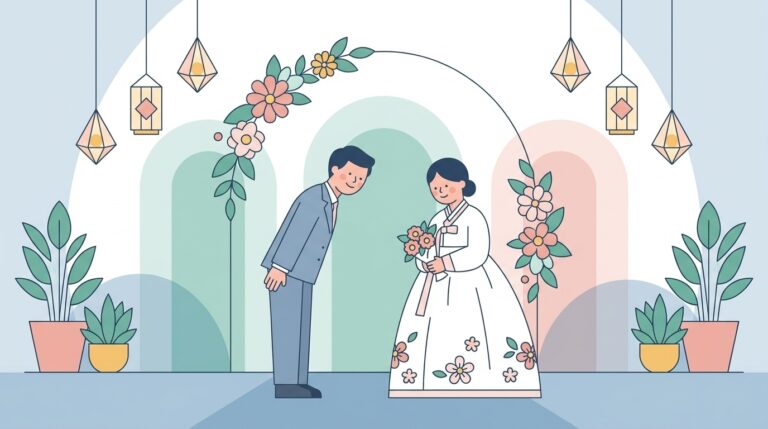
Attending a Korean Wedding: How to Ask About the Honeymoon Like a Native Friend
Phase 1: 공감 (Story-Driven Opening)
안녕하세요! 매일한글 에디터입니다. (Hello! This is your Daily Hangul editor.)
Imagine stepping into a gleaming wedding hall in Gangnam, Seoul. The scent of fresh lilies fills the air, soft piano music plays in the background, and everyone is dressed to the nines. You see your Korean friend or coworker glowing with happiness beside their new spouse. You wait in line to congratulate them, your heart racing just a bit. You want to show genuine warmth and ask where they are heading for their honeymoon, but your mind suddenly freezes. Should you say “신혼여행 어디 가요?” or is that too casual? What if you sound like an interrogator instead of a caring friend?
Many beginner learners tell us they dread small talk at Korean weddings because they worry about politeness levels. But here is the secret: in Korean wedding culture, asking about the honeymoon is considered one of the sweetest, most natural conversation starters! It immediately shifts the energy from formal nervousness to bright vacation excitement. We crafted this guide using real-life tips from our Daily Hangul learners so that you can confidently share your blessings and ask about their trip without awkward pauses.
Phase 2: 핵심 표현 3선 심층 분석 (Top 3 Core Expressions)
1. 신혼여행 어디로 가세요? (Sinhon-yeohaeng eodiro gaseyo?)
- Pronunciation:
sin-hon-yeo-haeng eo-di-ro ga-se-yo?(Sounds like: seen-hone-yuh-hang uh-dee-roh gah-say-yo) - Meaning: Literal: “Where to are you going for honeymoon?” / Real Nuance: “Where are you heading for your honeymoon?” (Polite, gentle, and universally safe).
- K-Culture Moment: The classic question asked by colleagues and distant relatives when visiting the bride in the waiting room in K-dramas like Queen of Tears.
- Editor’s Insight: The little particle “-로” (-ro) means “toward” or “to.” Adding it softens the sentence, turning a blunt “where are you going” into a gentle inquiry about their destination.
- Situation Spectrum: Casual ⚠️ | Semi-formal ✅ | Formal ✅
- 🤔 Think About It: In English, we easily say “Where are you guys going?” to almost anyone. Why does Korean use the honorific suffix “-세요” (-seyo) even when speaking to someone of similar age at their wedding?
2. 신혼여행 어디 가? (Sinhon-yeohaeng eodi ga?)
- Pronunciation:
sin-hon-yeo-haeng eo-di ga?(Sounds like: seen-hone-yuh-hang uh-dee gah?) - Meaning: Literal: “Honeymoon where go?” / Real Nuance: “Where are you going for your honeymoon?” (Casual peer talk).
- K-Culture Moment: Best friends teasing the groom while snapping selfies before the ceremony starts.
- Editor’s Insight: Notice that both the directional particle “-로” (-ro) and the honorific “-세요” (-seyo) are dropped. Use this only with close friends of your age or younger.
- Situation Spectrum: Casual ✅ | Semi-formal 🚫 | Formal 🚫
- 🤔 Think About It: Removing honorifics signals emotional closeness (chinhan sai), but using it with the wrong person breaks social etiquette. How does your native language mark intimacy?
3. 좋은 데 가시네요! (Joeun de gasineyo!)
- Pronunciation:
jo-eun de ga-si-ne-yo!(Sounds like: joh-eun deh gah-she-neh-yo!) - Meaning: Literal: “You are going to a good place!” / Real Nuance: “Oh, that sounds wonderful! What a great place to go!”
- K-Culture Moment: The enthusiastic guest reaction when the newlyweds reveal they are flying to Bali, Hawaii, or Paris.
- Editor’s Insight: Even if you are not personally familiar with the island or city they mention, this is the ultimate polite reaction. It validates their choice and adds to the festive mood.
- Situation Spectrum: Casual ⚠️ | Semi-formal ✅ | Formal ✅
- 🤔 Think About It: Koreans love using supportive vocal reactions called chuimsae. Responding with positive energy is considered an essential social courtesy.
Phase 3: 교과서 한국어 vs 진짜 한국어 (Textbook vs. Real Korean)
Situation 1: Asking where the couple is traveling
- 📖 교과서 한국어: 귀하의 신혼여행지는 어디입니까? (Gwihaui sinhon-yeohaengjineun eodi-imnikka?)
- 🗣️ 진짜 한국어: 신혼여행 어디로 가세요? (Sinhon-yeohaeng eodiro gaseyo?)
- 💡 왜 다를까?: The word “귀하” (you/honored party) and “신혼여행지” (honeymoon destination) sound like an official government survey or a hotel check-in form. In real conversation, dropping the subject pronoun and using conversational honorifics sounds far more sincere.
Situation 2: Wishing them a wonderful trip
- 📖 교과서 한국어: 신혼여행을 행복하게 보내십시오. (Sinhon-yeohaengeul haengbokhage bonaesipsio.)
- 🗣️ 진짜 한국어: 재미있게 잘 다녀오세요! (Jaemi-itge jal danyeo-oseyo!)
- 💡 왜 다를까?: The imperative textbook ending “-십시오” feels rigid and military-like. Saying “잘 다녀오세요” (“Go and come back well/safely!”) wraps genuine warmth and excitement into everyday Korean.
Phase 4: K-Culture 딥다이브 & 비언어적 매너 (Culture Deep Dive & Manners)
4-1. 눈치 (Nunchi) & Body Language
Timing is crucial at a Korean wedding. The couple is running on adrenaline, greeting hundreds of guests, and posing for non-stop photos.
* Best Timing: Greet the bride in the bridal waiting room (shinbu daegisil) 20-30 minutes before the ceremony, or chat briefly with the groom when you see him in the lobby.
* Body Language: Keep your hands clasped neatly around your midriff, maintain warm eye contact with a gentle smile, and offer a light head bow (around 15 degrees) as you speak. Avoid lingering too long if a line of guests is waiting behind you.
4-2. Cultural Code: The Honeymoon Trend
In 1980s and 90s Korea, Jeju Island (Jejudo) was the undisputed king of honeymoon spots. Today, while Jeju remains beloved for quick romantic getaways, top overseas destinations include Hawaii, Bali, Guam, the Maldives, and Western Europe. Asking about the destination often sparks fun travel conversations during the banquet dinner (piroyeon).
Phase 5: 실전 롤플레이 시나리오 (Real-Life Roleplay Scenario)
- Setting: Inside the brightly lit bridal waiting room (shinbu daegisil). Beautiful flower arrangements surround Minji, your newlywed colleague.
- Characters: Minji (the smiling bride) & You (a supportive colleague).
-
[Turn 1] You: 🎭 (Stepping forward with a bright smile and a slight bow) 민지 씨, 오늘 정말 예뻐요! 축하해요! (Minji ssi, oneul jeongmal yeppeoyo! Chukahaeyo! / Minji, you look truly gorgeous today! Congratulations!)
- [Turn 2] Minji: 🎭 (Beaming and clasping her hands) 와, 와주셔서 정말 감사해요! (Wa, wajusyeoseo jeongmal gamsahaeyo! / Wow, thank you so much for coming!)
- [Turn 3] You: 🎭 (Curious tone, tilting head lightly) 오늘 끝나고 바로 가세요? 신혼여행 어디로 가세요? (Oneul kkeutnago baro gaseyo? Sinhon-yeohaeng eodiro gaseyo? / Are you leaving right after today? Where are you heading for your honeymoon?)
- [Turn 4] Minji: 🎭 (Excited whisper) 저희 내일 아침에 발리로 떠나요! (Jeohui naeil achime Balliro tteonayo! / We are leaving for Bali tomorrow morning!)
- [Turn 5] You: 🎭 (Nodding with delight) 우와, 발리요? 좋은 데 가시네요! (Uwa, Balliyo? Joeun de gasineyo! / Wow, Bali? What a wonderful destination!)
- [Turn 6] Minji: 🎭 (Laughing softly) 푹 쉬고 맛있는 거 많이 먹고 오려고요. (Puk swigo masinneun geo mani meokgo oryeogoyo. / We plan to get plenty of rest and eat lots of delicious food.)
- [Turn 7] You: 🎭 (Waving both hands gently) 푹 쉬시고, 재미있게 잘 다녀오세요! (Puk swisigo, jaemi-itge jal danyeo-oseyo! / Rest well and have a fantastic, safe trip!)
- [Turn 8] Minji: 🎭 (Bowing slightly from her seat) 네! 다녀와서 회사에서 봬요! (Ne! Danyeowaseo hoesa-eseo bwaeyo! / Yes! I will see you at the office after we return!)
🔀 Interactive Choice Point
Minji just said: “저희 내일 아침에 발리로 떠나요!” (We are leaving for Bali tomorrow morning!). What should you say next?
* Option A: “우와, 발리요? 좋은 데 가시네요! 잘 다녀오세요!”
* Option B: “발리는 왜 가요? 재미없어요.”
* Option C: “신혼여행 어디 가?”
- Option A Feedback [BEST]: Perfect balance of genuine excitement and cultural warmth. It praises her destination and wishes her a safe journey.
- Option B Feedback [BAD]: Dismissing someone’s honeymoon destination right before their wedding will instantly freeze the room in horror!
- Option C Feedback [RISK]: She literally just told you where she is going! Asking the same question again—and dropping into casual speech (banmal)—creates total social confusion.
Phase 6: 10초 감정 섀도잉 드릴 (10-Second Emotion Shadowing Drill)
Practice reading these aloud with the pause markers (/) and emotional tone guides!
[😊 Warm and polite]
민지 씨, / 신혼여행 / 어디로 가세요?
(Minji ssi, / sinhon-yeohaeng / eodiro gaseyo?)-
[🤩 Genuinely delighted & impressed]
우와, / 하와이요? / 진짜 좋은 데 가시네요!
(Uwa, / Hawayo? / Jinjja joeun de gasineyo!) -
[🎉 Cheerful and affectionate blessing]
사진 많이 찍으시고, / 재미있게 / 잘 다녀오세요!
(Sajin mani jjigeusigo, / jaemi-itge / jal danyeo-oseyo!)
Phase 7: K-Culture 미니 사전 (Mini Dictionary)
- 신혼여행 (Sinhon-yeohaeng) | Honeymoon
- Meaning: Composed of “신혼” (newlywed) + “여행” (travel/trip). It refers specifically to the honeymoon trip taken right after the wedding ceremony.
- 신부대기실 (Sinbu daegisil) | Bridal Waiting Room
- Meaning: The beautifully decorated room where the bride sits before the ceremony to take photos with friends, family, and colleagues.
- 피로연 (Piroyeon) | Wedding Reception / Banquet
- Meaning: The banquet held after the ceremony, usually featuring an extensive buffet where guests eat and the couple visits tables to say thanks.
- 축의금 (Chug-uigeum) | Congratulatory Money
- Meaning: The cash gift presented in a clean white envelope at the reception desk before entering the wedding hall.
Phase 8: 여행자를 위한 생존 키트 (Traveler’s Survival Kit)
TOP 3 Essential Phrases
- 결혼 축하드려요! (Gyeolhon chukadeuryeoyo!)
- Meaning: “Congratulations on your wedding!”
- Pro Tip: Say this with a polite bow right when you approach the bride, groom, or their parents.
- 식권 어디서 받아요? (Sikkweon eodiseo badayo?)
- Meaning: “Where do I get the meal ticket?”
- Pro Tip: You receive your meal coupon when you hand in your congratulatory envelope (chug-uigeum) at the reception desk.
- 신혼여행 잘 다녀오세요! (Sinhon-yeohaeng jal danyeo-oseyo!)
- Meaning: “Have a safe and wonderful honeymoon!”
- Pro Tip: Use this as your goodbye line when parting ways with the couple at the buffet.
Editor’s Travel Note
Korean wedding venues often have dedicated shuttle buses from nearby subway stations. To avoid missing the ceremony, check exact exit gates on the Naver Map navigation app download. When giving your cash gift, use crisp, fresh bills from an ATM, write your name vertically on the back left of the envelope, and pick up your buffet voucher right away!
Phase 9: 한 발 더 깊이 (Reflective Cultural Essay)
In Western weddings, asking detailed personal questions might occasionally feel like prying into private plans. However, Korean wedding culture is deeply communal (jeong). In Korea, asking “신혼여행 어디로 가세요?” is not an invasion of privacy; rather, it is an active expression of care and celebration. When you take the initiative to ask about their trip, you acknowledge that their joy is shared by everyone in the room.
💬 Your Turn: What is the customary topic people discuss with newlyweds in your home country? Share your cultural traditions in the comments below!
Phase 10: FAQ & 오해 방지 (FAQ Schema)
Q: Can I just say “신혼여행 어디 가요?” instead of “어디로 가세요?”
A: Yes! “어디 가요?” (Eodi gayo?) is polite and grammatically correct. However, adding the honorific suffix “-세요” (gaseyo) shows extra respect and refinement, which fits the formal, celebratory mood of a wedding perfectly.
Q: What if they are not going on a honeymoon immediately?
A: Some couples delay their trip due to work schedules. If they answer, “나중에 가요” (We’re going later), simply reply with: “아, 그렇군요! 나중에 좋은 데 다녀오세요!” (Ah, I see! Have a wonderful trip when you go!).
Q: Is it rude to ask how much their honeymoon cost?
A: Yes, absolutely! Asking about prices, flight costs, or hotel expenses is considered inappropriate at a wedding. Focus solely on their destination, food, and relaxation.
🚨 Common Mistakes (흔한 실수 TOP 3)
- Mistake: Using informal speech (banmal) like “어디 가?” to an older colleague or senior bride.
- Correct Action: Always default to “신혼여행 어디로 가세요?” (Sinhon-yeohaeng eodiro gaseyo?).
- Mistake: Staying too long in the bridal suite having a 10-minute conversation.
- Correct Action: Keep your chat to 1-2 minutes so other guests have time to take photos.
- Mistake: Forgetting to offer the standard blessing reaction.
- Correct Action: When they name a destination, always follow up with “좋은 데 가시네요!” (What a great place!).
Phase 11: 액션 미션 & 참여 유도 (Action Missions)
- 🥉 Bronze Mission: Say “신혼여행 어디로 가세요?” out loud three times in front of the mirror, matching your facial expression to the friendly mood.
- 🥈 Silver Mission: Write a sample congratulatory comment using “좋은 데 가시네요! 잘 다녀오세요!” in the comments below.
- 🥇 Gold Mission: Use this expression at an upcoming Korean wedding or when congratulating a Korean friend or teacher getting married!
- 🎮 K-Culture Mission: Watch an episode of a modern wedding scene in a K-drama (like Marry My Husband or Because This Is My First Life) and see if you can spot guests chatting about the honeymoon!
Phase 12: 인터랙티브 퀴즈 챌린지 (Interactive Quiz)
Quiz 1. Situational Judgment
You are greeting your team manager (부장님) at his wedding. Which phrase should you use to ask about his honeymoon?
* (A) 부장님, 신혼여행 어디 가?
* (B) 부장님, 신혼여행 어디로 가세요?
* (C) 부장님, 귀하의 신혼여행지는 어디입니까?
👉 Click to reveal answer
Answer: (B)
Explanation: (B) is the most polite, natural, and respectful expression. (A) uses rude informal language (banmal) with a superior, while (C) sounds like an unnatural written survey.
Quiz 2. Fill-in-the-Blank
Complete the natural reaction phrase when someone tells you their travel destination:
“우와, 제주도요? 정말 좋은 데 _______!” (Wow, Jeju Island? What a wonderful place!)
* Hint: It ends with the polite honorific “-시네요” (gasineyo).
👉 Click to reveal answer
Answer: 가시네요 (gasineyo)
Full sentence: “우와, 제주도요? 정말 좋은 데 가시네요!”
Quiz 3. True or False
In Korean wedding halls, it is customary to stand and chat in the bridal waiting room (shinbu daegisil) for 15 minutes to keep the bride company.
* (A) True
* (B) False
👉 Click to reveal answer
Answer: (B) False
Explanation: Bridal suites are busy photo locations where dozens of guests queue up. A brief, warm greeting of 1 to 2 minutes followed by a photo is polite etiquette!







